Indian Polity
SC Status and Religious Conversion
For Prelims: Supreme Court of India, Article 341, Article 14, Article 15, Article 25
For Mains: Constitutional provisions related to SC status (Article 341, 1950 Order), Religion and caste intersection in India, Affirmative action and reservation policies
Why in News?
The Supreme Court of India in Chinthada Anand v. State of Andhra Pradesh (2026) ruled that a person professing any religion other than Hinduism, Buddhism, or Sikhism cannot be recognised as a member of a Scheduled Caste (SC) community.
- The Court clarified that conversion to any other religion (such as Christianity or Islam) results in the “immediate and complete loss of Scheduled Caste status from the moment of conversion, regardless of birth.”
Summary
- The Supreme Court of India held that SC status is limited to Hindus, Sikhs, and Buddhists, and is immediately lost upon conversion to other religions.
- The issue remains debated, with arguments on equality and social justice versus constitutional limits, highlighting the need for data-driven policy reform.
What did the Supreme Court Rule on SC Status and Religious Conversion?
- Immediate Loss Upon Conversion: The two-judge bench ruled that conversion to any religion outside of Hinduism, Sikhism, or Buddhism (such as Christianity or Islam) results in the "immediate and complete loss" of SC status from the exact moment of conversion.
- This happens regardless of the caste the person was born into.
- The Concept of "Professing": The Court clarified that "professing" a religion means publicly practicing it.
- Because religions like Christianity and Islam do not theologically recognize the caste system, a person cannot publicly practice them while simultaneously claiming SC status to secure statutory benefits. The two are mutually exclusive.
- Loss of Statutory Protection: As a result of losing SC status, a convert cannot claim protection under specialized laws meant for Scheduled Castes, such as the SC/ST (Prevention of Atrocities) Act, 1989.
- Rules for Reconversion: If a convert wishes to reclaim their SC status by reconverting to Hinduism, Sikhism, or Buddhism, they must provide strict, unimpeachable proof.
- This includes demonstrating genuine renunciation of the converted religion, adoption of original caste practices, and clear acceptance back into the original caste community.
- Contrast with Scheduled Tribes (ST): The Supreme Court of India noted that under the Constitution (Scheduled Tribes) Order, 1950, there is no religion-based restriction on ST status.
- An ST individual who converts to Christianity or Islam does not automatically lose their tribal status, provided they continue to maintain their tribal customs, identity, and are accepted by their community.
- If identity and customs were completely lost after conversion, ST status may be denied, but if it persists, benefits can continue.
Judicial Pronouncements Regarding the Scheduled Caste (SC) Status
- C.M. Arumugam v. S. Rajgopal (1976): The Supreme Court recognised caste as social, but required proof of continued discrimination and community acceptance to retain SC status after conversion.
- Soosai v. Union of India (1985): The Supreme Court denied SC status to Dalit Christians due to lack of empirical evidence of discrimination.
- K.P. Manu v. Chairman, Scrutiny Committee (2015): The Supreme Court allowed reconversion-based restoration of SC status, subject to proof and acceptance by the original caste community.
Who is Legally Eligible for Scheduled Caste (SC) Status in India?
- Constitution (Scheduled Castes) Order, 1950: SC eligibility is strictly governed by Clause 3 of the Constitution (Scheduled Castes) Order, 1950.
- Under Clause 3 of this Order, a person must publicly profess (practice) Hinduism, Sikhism, or Buddhism to be legally recognized as a member of a Scheduled Caste.
- Hinduism was the only religion included in the original 1950 Order.
- Sikhism was added via a parliamentary amendment in 1956.
- Buddhism was added via an amendment in 1990.
- Under Clause 3 of this Order, a person must publicly profess (practice) Hinduism, Sikhism, or Buddhism to be legally recognized as a member of a Scheduled Caste.
- Strict Exclusions: Individuals who profess religions such as Christianity, Islam, Judaism, or Zoroastrianism are legally barred from holding SC status, regardless of their ancestral background or historical disadvantages.
- Constitutional Framework: Under Article 341 of the Constitution, the President of India has the power to specify the castes, races, or tribes that are officially deemed Scheduled Castes.
- Once the initial Presidential list was published, only the Parliament of India has the authority to add or remove communities from the SC list through legislation.
- State and Territory Specificity: SC status is State/Union Territory-specific, not an absolute national designation.
- A community recognized as a Scheduled Caste in one state (e.g., Uttar Pradesh) may be categorized as an Other Backward Class (OBC) or a general category in another state (e.g., Maharashtra).
- To claim statutory benefits, a person must belong to a caste that is officially notified in their specific State or UT of origin.
Commissions Regarding SC Status
- Kaka Kalelkar Commission (1955) & Mandal Commission (1980): Both recognized that caste-based discrimination extended into non-Hindu religions, paving the way for OBC reservations for certain Christian and Muslim communities.
- Justice Ranganath Mishra Commission (2007): Recommended that SC status should be completely de-linked from religion and made religion-neutral, like ST status.
- Justice K.G. Balakrishnan Commission (Current): In 2022, the Union Government appointed a three-member commission headed by former CJI K.G. Balakrishnan to examine the sensitive issue of granting SC status to new persons who have historically belonged to the SCs but have converted to religions other than Hinduism, Buddhism, and Sikhism.
What are the Arguments Regarding Extending SC Status to Dalit Christians and Muslims?
|
Arguments in Favour of Inclusion |
Arguments Against Inclusion |
|
Recommendations of Statutory Commissions: The Justice Ranganath Mishra Commission (2007), have empirically documented severe social backwardness among Dalit converts and recommended delinking SC status from religion. |
Unique Historical Burden: The SC category was specifically created to address "Untouchability," a practice uniquely rooted in the Hindu Varna system. Opponents argue that religions of non-Indian origin do not share this specific historical baggage. |
|
Inconsistency in Affirmative Action: ST and OBC are identified irrespective of their religion. Denying this same religion-neutral approach exclusively to the SC category is seen as arbitrary. Critics argue that making SC status conditional on religion violates Article 14 (Right to Equality), Article 15 (Prohibition of discrimination on grounds of religion), and Article 25 (Freedom to profess and practice any religion).
|
Overburdening the SC Quota: Adding millions of Dalit Christians and Muslims to the SC list would heavily overburden the constitutionally fixed SC quota, severely shrinking the quota for existing beneficiaries who suffered historical systemic oppression. |
|
Intersectionality of Disadvantage: Dalit converts often face a double disadvantage: caste-based discrimination continues even after conversion, as social hierarchies persist, while they are also denied the state protections and reservation benefits available to their Hindu counterparts. |
Difficulty in Identification: Because Islam and Christianity officially deny the existence of caste, it is administratively complex to establish clear, historical records of untouchability for individuals in these faiths compared to those in the Hindu fold. |
Way Forward
- Reliance on Empirical Data: The resolution of this complex issue must be guided by objective, contemporary data rather than ideological stances.
- The findings of the ongoing Justice K.G. Balakrishnan Commission will be crucial in scientifically determining whether the historical disabilities of untouchability actually persist among Dalit converts to Christianity and Islam.
- Re-evaluating the Framework of Backwardness: Policymakers could explore aligning the criteria for Scheduled Castes with those of Scheduled Tribes (STs) and Other Backward Classes (OBCs), which are religion-neutral.
- If social and educational backwardness is the core metric for affirmative action, a transition toward religion-agnostic criteria may better serve the spirit of Article 14 (Right to Equality).
- Strengthening Universal Anti-Discrimination Laws: Irrespective of whether Dalit converts are granted SC status, the State must recognize that caste-based discrimination is a sociological reality.
- Strengthening general civil rights protections and anti-discrimination frameworks to protect vulnerable individuals, regardless of their religious affiliation, is essential.
Conclusion
The Supreme Court of India reaffirmed that SC status is legally restricted to Hindus, Sikhs, and Buddhists under the 1950 Order. However a balanced, data-driven legislative approach is needed to ensure inclusive social justice without diluting existing protections.
|
Drishti Mains Question: “The determination of Scheduled Caste status in India reflects a tension between constitutional text and social realities.” Discuss. |
Frequently Asked Questions (FAQs)
1. What does Clause 3 of the Constitution (Scheduled Castes) Order, 1950 state?
It restricts SC status to persons professing Hinduism, Sikhism, or Buddhism, excluding other religions.
2. What happens to SC status after religious conversion?
It is immediately lost upon conversion to religions like Christianity or Islam, regardless of birth.
3. Can a person regain SC status after reconversion?
Yes, but only with strict proof of original caste, genuine reconversion, and community acceptance.
4. How is ST status different from SC status in terms of religion?
ST status is religion-neutral and depends on continuity of tribal identity and customs.
5. Which commission recommended delinking SC status from religion?
The Justice Ranganath Mishra Commission recommended making SC status religion-neutral.
UPSC Civil Services Examination, Previous Year Question (PYQ)
Prelims
Q. Which one of the following categories of Fundamental Rights incorporates protection against untouchability as a form of discrimination? (2020)
(a) Right against Exploitation
(b) Right to Freedom
(c) Right to Constitutional Remedies
(d) Right to Equality
Ans: (d)
Q. If a particular area is brought under the Fifth Schedule of the Constitution of India, which one of the following statements best reflects the consequence of it? (2022)
(a) This would prevent the transfer of land of tribal people to non-tribal people.
(b) This would create a local self-governing body in that area.
(c) This would convert that area into a Union Territory.
(d) The State having such areas would be declared a Special Category State.
Ans: (a)
Mains
Q. Whether the National Commission for Scheduled Castes (NCSC) can enforce the implementation of constitutional reservation for the Scheduled Castes in the religious minority institutions? Examine. (2018)
Q. What are the two major legal initiatives by the State since Independence addressing discrimination against Scheduled Tribes (STs)? (2017)
Governance
Punjab-Rajasthan Water Dispute
For Prelims: Inter-state Water Dispute, Irrigation, Hydropower, Sutlej River, Indus Waters Treaty 1960, Supreme Court, Paddy, Sugarcane, Inter-State River Water Disputes Act, 1956, Article 262, Article 21, Tribunals, Drip Irrigation, Mulching
For Mains: Key facts regarding the Punjab-Rajasthan water sharing dispute, Reasons for rising inter-state water disputes, Disputes resolution provisions regarding inter state water disputes and way forward.
Why in News?
Punjab Chief Minister has reignited a long-standing inter-state water dispute by demanding Rs 1.44 lakh crore from Rajasthan for drawing 18,000 cusecs of water since 1960, citing a colonial-era royalty agreement and the state's worsening groundwater crisis.
Summary
- The Punjab-Rajasthan dispute highlights the friction between the Riparian Principle and historical tripartite agreements amidst India’s worsening water stress.
- While constitutional provisions like Article 262 seek adjudication via tribunals, political and agricultural demands often lead to "conflictual federalism."
- Future resolution lies in Digital Twins technology and a shift toward benefit-sharing models.
What are the Key Facts Regarding the Punjab-Rajasthan Water Sharing Dispute?
- Historical Basis (1920s Agreement): The dispute references a commercial arrangement between Maharaja Ganga Singh of Bikaner and undivided Punjab under British rule for water from the Sutlej River via the Gang (Bikaner) Canals. Royalty payments continued until around 1960.
- Indus Waters Treaty (IWT 1960) Shift: The IWT 1960 granted India control over the eastern rivers (Sutlej, Beas, Ravi) for “unrestricted use”, enabling internal reallocation.
- Post-1960, water sharing was treated as an inter-state allocation rather than a paid commercial arrangement, and Rajasthan stopped making payments.
- Tripartite Agreement (1981): It was signed between Punjab, Haryana, and Rajasthan, with the backing of then Prime Minister Indira Gandhi.
- It allocated 8.6 million acre feet (out of 17.17 MAF) to Rajasthan—the largest share—despite it being a non-riparian state, supporting the expansion of the Indira Gandhi Canal.
- Punjab Termination of Agreements Act, 2004: Punjab enacted the Punjab Termination of Agreements Act, 2004, seeking to scrap water-sharing agreements, but it protected existing utilisation, ensuring ongoing supplies to Rajasthan were not disrupted.
- In 2016, the Supreme Court held that a state cannot unilaterally terminate inter-state agreements, effectively restoring the earlier legal framework.
- Punjab's Latest Riparian Claim: The state invokes the riparian principle—states through which rivers flow have primary rights. Rajasthan, being a non-riparian state (not in the basin of Ravi, Beas, or Sutlej), receiving the largest share is deemed inequitable, especially given current water stress.
Provisions Related to Inter-State Water Sharing
- Constitutional Provisions:
- State List (Entry 17): Water is primarily a State subject. This includes water supplies, irrigation, canals, drainage, embankments, water storage, and water power.
- Union List (Entry 56): The Central Government has the power to regulate and develop inter-state rivers and river valleys to the extent declared by Parliament to be expedient in the public interest.
- Entry 32 of the Concurrent List: It is related to shipping and navigation on inland waterways as regards mechanically propelled vessels, and the rule of the road on such waterways.
- Article 262: It empowers Parliament to adjudicate disputes relating to inter-state rivers. Crucially, it allows Parliament to exclude the jurisdiction of the Supreme Court and other courts in such disputes.
- Statutory Frameworks: Under the authority of Article 262, Parliament enacted the Inter-State River Water Disputes (ISWD) Act, 1956.
- If a State Government believes a water dispute has arisen and cannot be settled by negotiations, it can request the Central Government to refer the matter to a Tribunal (to be formed within one year of the request, as per the 2002 amendment).
- The decision (Award) of the Tribunal, once published in the Official Gazette, has the same force as an order or decree of the Supreme Court.
- Supreme Court Judgements:
- State of Karnataka v. State of Tamil Nadu (2018): The SC reduced Karnataka's water release burden, recognising drinking water needs of Bengaluru and declaring the river a "National Asset."
- The Punjab Termination of Agreement Act, 2004 (2016): A Presidential Reference where the SC declared Punjab's law—which unilaterally cancelled all water-sharing agreements—as unconstitutional.
- State of Tamil Nadu v. State of Kerala (2014): The SC struck down the Kerala Irrigation and Water Conservation (Amendment) Act, 2006, which had tried to restrict the water level. The Court ruled that Kerala could not interfere with a judicial order under the guise of "safety legislation."
- Narmada Bachao Andolan v. Union of India (2000): While primarily about the Sardar Sarovar Dam construction and R&R (Resettlement and Rehabilitation), the SC affirmed that the Narmada Water Disputes Tribunal (NWDT) award was final and binding, and that water is a part of the Right to Life (Article 21).
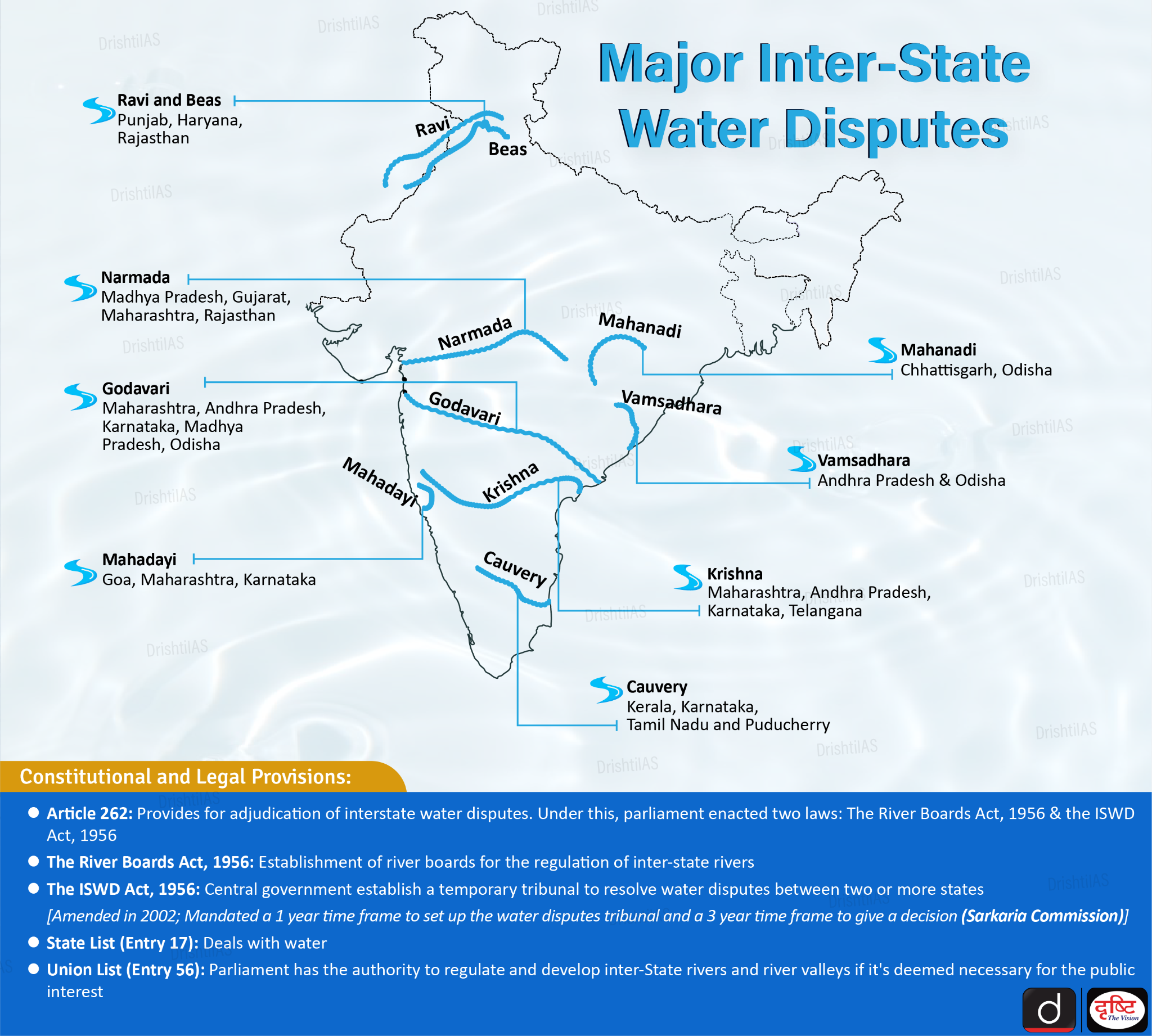
What are the Reasons for Rising Inter-state Water Disputes?
- Increasing Water Scarcity: Rapid population growth and urbanization have heightened the demand for water. As the per capita availability of water declines, states become more protective of their existing shares, leading to a zero-sum game mentality.
- E.g., India’s per capita water availability plummeted from a water-abundant 5,200 cubic meters in 1950 to a water-stressed 1,400–1,500 cubic meters in 2024, with projections for 2050 (1,191 cubic meters) dangerously approaching the 1,000 cubic meters water scarcity threshold.
- Agricultural Intensification: The transition to water-intensive crops (like paddy in Punjab or sugarcane in Maharashtra) has led to massive groundwater depletion. Punjab’s demand is fueled by extreme water stress; the state has the highest groundwater extraction rate in India (156.36%), significantly exceeding the national average of 60.63%.
- Jurisdictional Conflicts: Water is largely a state subject (Entry 17, State List), while inter-state rivers fall under central purview (Entry 56, Union List). This division, coupled with states asserting greater autonomy, often leads to "conflictual federalism," where states prioritize their own interests over cooperative basin-wide management.
- Politicization and Hydro-Politics: Water issues are frequently entangled with electoral politics, regional identities, and vote-bank considerations. States may adopt rigid positions or unilateral actions to appeal to domestic constituencies, delaying negotiated settlements.
- Riparian vs. Non-Riparian Debate: Upper riparian states (where the river originates) often claim primary rights to use the water for their own development, while lower riparian states claim rights based on historical usage and downstream necessity, e.g., the Punjab-Rajasthan inter-state water dispute.
- Inefficiency of Tribunals: Under the Inter-State River Water Disputes Act, 1956, tribunals are often criticised for extreme delays. Some disputes, like the Cauvery dispute, have lasted over 30 years, during which time political and environmental conditions shift, making the final "award" difficult to implement.
What Measures can be Taken to Resolve Interstate River Water Disputes?
- Shift to Benefit-Sharing over Water-Sharing: Traditional disputes focus on volumetric allocation (how many cusecs of water). A more innovative approach focuses on the collective benefits derived from the river.
- E.g., States can cooperate by specializing in crops that suit their agro-climatic zones. A water-surplus state could grow water-intensive crops for a water-deficit state, which in turn provides industrial or energy benefits.
- Digital Twins of River Basins: Create a high-resolution 3D digital model of the entire basin using satellite imagery (like RISAT) and AI. This allows for "What-If" simulations to predict how a new dam or a drought year will affect all riparian parties objectively.
- Institutional & Legal Innovations: Move away from ad hoc tribunals to a Single Permanent Inter-State River Water Disputes Tribunal with specialised benches (as proposed in the ISWD (Amendment) Bill, 2019) to ensure institutional memory and speed.
- Mandate a "Mediation-First" approach through a DRC composed of neutral experts before any legal adjudication. This reduces the adversarial nature of the conflict.
- Demand-Side Management & Ecological Integrity: Implement a "Water Budget" for each state where they must prove they are using efficient techniques (like Drip Irrigation or Mulching) before asking for a larger share of the river.
- A mandatory percentage of water must remain in the river to maintain its health, which prevents "Basin Closure" where no water reaches the sea.
- Cooperative Federalism: Encourage bilateral or multi-state agreements on joint projects, such as linking canals or shared storage, to convert potential conflicts into collaborative opportunities. High-performing states could receive "Blue Grants" or extra central funding.
Conclusion
The Punjab-Rajasthan dispute underscores the shift from "water-sharing" to "survival-sharing" in a water-stressed India. Resolving such conflicts requires moving beyond historical riparian claims toward a Basin-Scale Management approach, leveraging Cooperative Federalism and technology like Digital Twins to ensure ecological integrity and national water security.
|
Drishti Mains Question: Discuss the constitutional and legal mechanisms available for resolving inter-state water disputes. Evaluate their effectiveness. |
Frequently Asked Questions (FAQs)
1. What is the core legal basis of Punjab’s claim against Rajasthan in the water dispute?
Punjab invokes the riparian principle and a colonial-era commercial agreement, arguing that Rajasthan, as a non-riparian state, has no inherent right to the largest allocation from the Sutleut waters.
2. Which constitutional provision deals with water disputes?
Article 262 empowers Parliament to adjudicate disputes and exclude Supreme Court jurisdiction.
3. What is the riparian principle?
It grants primary rights over river water to states through which the river naturally flows.
4. What is the role of the ISWD Act, 1956?
It provides for Tribunal-based adjudication of disputes, whose awards have binding legal force.
UPSC Civil Services Examination, Previous Year Question (PYQ)
Mains
Q. Constitutional mechanisms to resolve the inter-state water disputes have failed to address and solve the problems. Is the failure due to structural or process inadequacy or both? Discuss. (2013)
Important Facts For Prelims
Biopharma SHAKTI Scheme
Why in News?
The Union Budget 2026-27 introduced the Biopharma SHAKTI scheme to revolutionise the domestic production of biologics and biosimilars by shifting from traditional animal testing to advanced Non-Animal Methodologies (NAMs), e.g., organoids.
What is the Biopharma SHAKTI Scheme?
- About: The Biopharma SHAKTI (Strategy for Healthcare Advancement through Knowledge, Technology, and Innovation) scheme is a flagship initiative designed to transition India from a leader in generic drugs to a global powerhouse for high-value biologics and biosimilars.
- It aligns with the National Biopharma Mission (NBM), 2017, which aims to transform India into a USD 100 billion leading global biotech industry by 2025 and capture 5% of the global pharmaceutical share.
- Financial Outlay: The government has allocated Rs 10,000 crore over 5 years (starting FY 2026–27) to build an end-to-end ecosystem for advanced biopharmaceuticals.
- Disease Focus: Prioritises affordable domestic production of therapies for non-communicable diseases (NCDs) such as cancer, diabetes, and autoimmune disorders.
- Manufacturing Shift: Encourages the adoption of NAMs like organoids, organ-on-a-chip, and 3D bioprinting to reduce costs and improve the predictive accuracy of drug safety (replicate human biology more accurately than animal cells).
- Infrastructure & Academia: Establishment of 3 new National Institutes of Pharmaceutical Education and Research (NIPERs).
- Upgradation of 7 existing NIPERs into centers of excellence for translational research.
- Creation of a national network of over 1,000 accredited clinical trial sites to accelerate drug development.
- Regulatory Reform: Strengthening the Central Drugs Standard Control Organisation (CDSCO) with a dedicated "Scientific Review Cadre" to align approval timelines with international benchmarks.
- Significance: The initiative responds to the rise of NCDs like diabetes, cancer, and cardiovascular diseases—which now account for 63% of all deaths in India—as well as to 100% (and potential 250%) US tariffs on branded and patented pharmaceutical drugs.
India’s Pharmaceutical Sector
- Global Market Standing: India remains the 3rd largest pharmaceutical producer by volume (11th by value), supplying 20% of global generic medicines and a majority of the world’s diphtheria, tetanus and pertussis (DPT), Bacillus Calmette-Guerin (BCG) and measles vaccines.
- Economic Scale: As per the Economic Survey 2025-26, the sector reached an annual turnover of Rs 4.72 lakh crore in FY25, with over 10,500 manufacturing units and a 7% CAGR in exports over the last decade.
- Expansion into Med-Tech: India has become globally competitive in medical devices, exporting high-end equipment like MRI scanners, CT scanners, and cardiac stents to 187 countries.
Biologics and Biosimilars
- Biologics (Innovator Drugs): Unlike traditional "small-molecule" drugs (like Aspirin) made through chemical synthesis, biologics are produced using living systems (bacteria, yeast, or animal cells).
- They are massive—often 200 to 1,000 times larger than chemical drugs—with complex 3D structures. E.g., Insulin, Monoclonal Antibodies (mAbs) for cancer, vaccines, and gene therapies.
- Biosimilars (Generic of Biologics): Biosimilar is a biologic product that is highly similar to a previously approved "reference" biologic, with no clinically meaningful differences in safety or efficacy. They are typically 30%–70% cheaper than the original biologic.
- Because they are made in living cells, it is impossible to create an identical copy. Therefore, they are "similar," not "generic."
What are Non-Animal Methodologies (NAMs)?
- About: NAMs, also known as New Approach Methodologies, are a suite of innovative scientific technologies used to assess the safety and efficacy of drugs, chemicals, and biologics without relying on traditional animal testing.
- NAMs prioritize human-relevant data by using human cells, tissues, and sophisticated computer models, aiming to replace, reduce, or refine (the 3Rs) the use of animals in research.
- Core Technologies of NAMs:
- Organ-on-a-Chip (OoC): Microfluidic devices lined with living human cells that mimic the physiological environment and mechanical forces (like blood flow or breathing) of specific organs.
- Organoids: 3-dimensional, self-organizing "mini-organs" grown from human stem cells that replicate the complex structure and genetic profile of a patient’s actual organ.
- 3D Bioprinting: Use "bio-inks" (cells and nutrients) to print human tissue structures layer-by-layer, allowing researchers to study how drugs penetrate solid tumors or skin.
- In Silico Models: Advanced AI and computer simulations that predict how a new molecule will interact with the human body based on massive datasets of known chemical reactions.
- Ex Vivo Systems: Using human tissues or organs (often from surgical leftovers or donors) kept alive outside the body for short-term testing.
- Advantages for Drug Development: NAMs offer higher predictive accuracy by using human biology, avoiding tragedies like the 2006 Northwick Park trial where a drug safe in monkeys proved toxic to humans (multiple organ failure).
- They also deliver cost and time efficiency, reducing drug development costs by 10–26% and shortening candidate identification by nearly 20%.
- It enables precision medicine through patient-derived organoids for personalized treatment.
- Regulatory support has strengthened with laws such as India's New Drugs and Clinical Trials (Amendment) Rules 2023 formally recognizing NAMs as valid alternatives to animal data.
Frequently Asked Questions (FAQs)
1. What is Biopharma SHAKTI scheme?
A Rs 10,000 crore flagship initiative (Union Budget 2026-27) to boost domestic production of biologics and biosimilars using Non-Animal Methodologies (NAMs).
2. What are Non-Animal Methodologies (NAMs)?
Innovative technologies like organoids and organ-on-a-chip that use human cells to replicate human biology, offering higher predictive accuracy than animal testing.
3. How does the scheme address India’s disease burden?
It prioritizes affordable therapies for Non-Communicable Diseases (NCDs), which account for 63% of all deaths in India.
4. Why are organoids superior to animal models for testing biologics?
Organoids are derived from human stem cells, allowing them to replicate human receptor binding and immune responses more accurately than animal cells.
UPSC Civil Services Examination, Previous Year Question (PYQ)
Q. Which of the following are the reasons for the occurrence of multi-drug resistance in microbial pathogens in India? (2019)
- Genetic predisposition of some people
- Taking incorrect doses of antibiotics to cure diseases
- Using antibiotics in livestock farming
- Multiple chronic diseases in some people
Select the correct answer using the code given below.
(a) 1 and 2
(b) 2 and 3 only
(c) 1, 3 and 4
(d) 2, 3 and 4
Ans: (b)
Rapid Fire
AssamSAT Mission
Assam became the 1st Indian State to float a tender for a group of earth-observation satellites, dubbed AssamSAT, aimed at enhancing disaster response and securing the state's international borders.
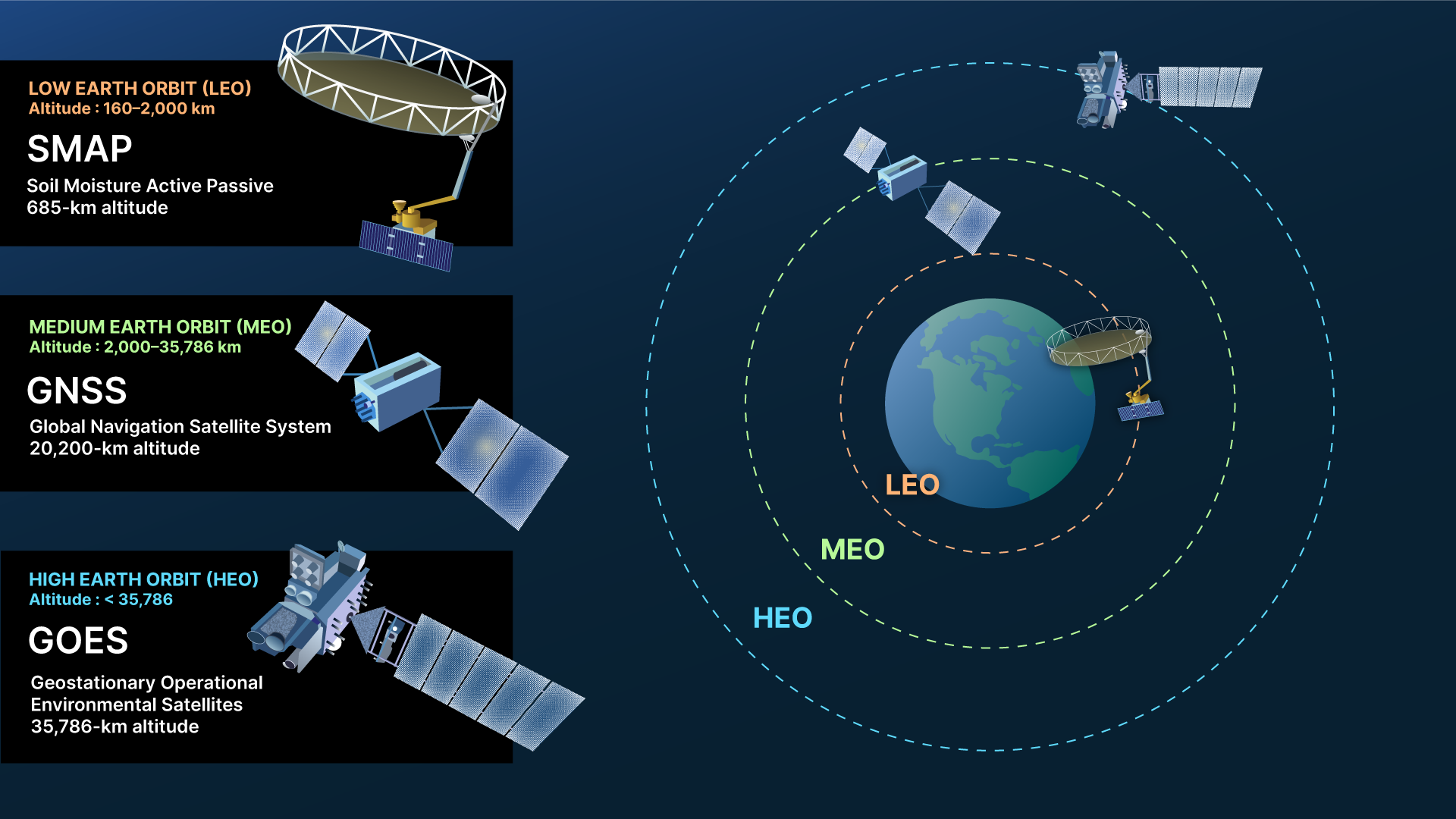
- Technological Specifications: Assam has asked private companies to design, build, launch, and operate at least 5 satellites in Low-Earth Orbit (LEO).
- Due to heavy cloud cover over Assam for half the year, the satellites are expected to carry Synthetic Aperture Radars (SAR), which can pierce through clouds and darkness.
- Current Mechanism: Currently, State disaster management agencies seeking satellite data submit requests to the National Remote Sensing Centre, which processes and fulfils those requests.
Low Earth Orbit (LEO)
- About: LEO refers to the region of space relatively close to Earth’s surface, typically at altitudes between 160 km and 2,000 km. It is the most common orbit for satellites due to its proximity to the planet and lower launch energy requirements.
- Key Characteristics:
- High Speed: To stay in orbit and counter Earth's gravity, satellites in LEO must travel at approximately 7.8 km/s (about 28,000 km/h).
- Short Orbital Period: A typical LEO satellite completes a full revolution around Earth in just 90 to 120 minutes, meaning it circles the globe about 14–16 times a day.
- Benefits: Being close to the surface allows for high-resolution imaging (critical for disaster management and surveillance) and low latency (essential for real-time communication and high-speed internet).
- Major Uses & Examples:
|
Use Case |
Examples |
|
Human Spaceflight |
The International Space Station (ISS) and China's Tiangong Space Station orbit at roughly 400–420 km. |
|
Remote Sensing |
High-resolution imaging satellites (like AssamSAT) use LEO to monitor floods, borders, and forests. |
|
Communication |
Large constellations like Starlink (SpaceX) provide global internet and phone coverage with minimal lag. |
|
Scientific Research |
The Hubble Space Telescope orbits in LEO and captures clear images of the universe. |
| Read More: Earth Observation Satellite EOS-04 |
Rapid Fire
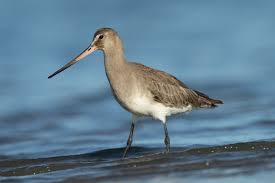
Hudsonian Godwit
The Hudsonian godwit is one of 42 species proposed for international protection at the UN Convention on the Conservation of Migratory Species of Wild Animals (CMS COP15) held in Campo Grande, Brazil.
- The 95% population decline of the Hudsonian godwit has spotlighted the urgent need for global conservation efforts.
Hudsonian godwit
- About: The Hudsonian godwit (Limosa haemastica) is a migratory shorebird capable of flying 11,000 km non-stop during its 30,000 km annual migration from its breeding grounds in the Arctic to its southern summer habitat in Patagonia (South America).
- Conservation Crisis: The Hudsonian godwit is classified as Vulnerable on the IUCN Red List. Its survival is heavily dependent on a highly predictable "geological clock" and abundant food resources at stopover sites, both of which are currently crumbling.
- Primary Threats:
- Climate Change (Arctic): Shifting spring timelines have created an ecological mismatch between when godwit chicks hatch and the peak availability of the insects they eat.
- Habitat Alteration (South America): A boom in salmon and oyster farming in southern Chile has led to heavy infrastructure development in crucial intertidal feeding zones.
- Wetland Loss (North America): Changes in US agricultural practices have made the shallow water wetlands the birds rely on for resting and refueling increasingly rare.
Convention on the CMS
- The Convention on the Conservation of Migratory Species of Wild Animals (CMS), also known as the Bonn Convention, is a legally binding international treaty under UNEP that provides a global framework for the protection of migratory species and their habitats across national boundaries.
- Under CMS range states (countries the birds pass through) are legally obliged to protect species listed as at risk of extinction, conserve and restore their habitats, and prevent obstacles to their migration.
- Adopted in 1979 in Bonn, Germany, and enforced in 1983, it addresses the unique challenge of species that cyclically cross borders for breeding, feeding, and migration, requiring coordinated international action.
- CMS operates through two appendices:
- Appendix I includes endangered migratory species requiring strict protection, such as bans on hunting and habitat restoration, with 188 species listed, including India’s Great Indian Bustard, Siberian Crane, Olive Ridley Turtle, and Leatherback Turtle.
- Appendix II focuses on species with unfavourable conservation status, promoting international cooperation through agreements and MoUs.
- The Conference of the Parties (COP) serves as the decision-making body, reviewing implementation and updating conservation measures.
| Read more: State of the World's Migratory Species |
Rapid Fire
IVFRT Scheme
The Union Cabinet has approved the extension of the Immigration, Visa, Foreigners Registration & Tracking (IVFRT) Scheme for a five-year period from 1st April 2026, to 31st March 2031, with a financial outlay of Rs 1,800 crore, aligning it with the new Immigration and Foreigners Act, 2025.
- About: The IVFRT scheme, initially approved in 2010, is a core e-Governance initiative of the Ministry of Home Affairs aimed at modernising and integrating immigration, visa issuance, and foreigner registration processes in India.
- It facilitates legitimate travel while strengthening national security through improved tracking and data integration.
- The system links key stakeholders such as Indian Missions abroad, Immigration Check Posts (ICPs), Foreigners Regional Registration Offices (FRROs), and security agencies into a unified framework.
- Technological Modernization: The scheme adopts emerging technologies such as biometrics, self-service kiosks, and mobile-based services to ensure a contactless and faceless visa process.
- Security & Surveillance: A critical component is the tracking of foreigners within the country to manage illegal migration and ensure compliance with visa norms.
- Operational Efficiency: The system has already achieved a 100% contactless and faceless visa process, reducing e-Visa clearance times (91.24% cleared within 72 hours) and cutting average manual clearance at posts to 2.5–3 minutes.
- The Fast Track Immigration-Trusted Traveller Programme (FTI-TTP) utilizes automated e-gates at 13 major airports, further reducing clearance time to 30 seconds for Indian nationals and Overseas Citizenship of India cardholders.
- Economic Impact: By streamlining entry processes, the scheme provides a major boost to tourism, medical travel, and the business sectors, enhancing India’s Ease of Doing Business.
| Read more: Immigration and Foreigners Act, 2025 |
Rapid Fire
HALEU-Thorium Fuel
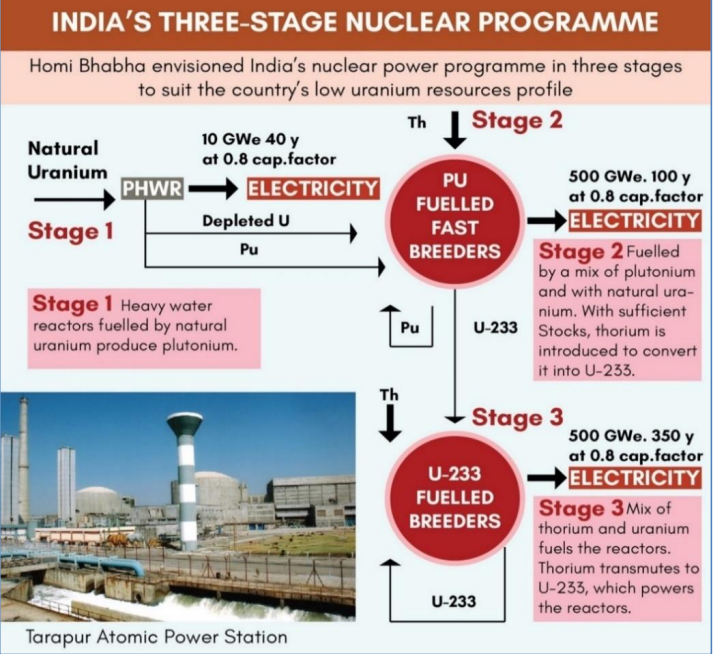
A study by the Bhabha Atomic Research Centre(BARC) has raised concerns about the suitability of HALEU-thorium (HALEU-Th) fuel for India’s reactors, even as the country explores boosting nuclear energy using its vast thorium reserves under the three-stage nuclear programme.
- About: HALEU-Th combines enriched uranium (U-235) with thorium, where thorium acts as a fertile material that can generate fissile U-233, supporting long-term fuel sustainability.
- Benefits: Simulation results showed that HALEU-Th provides higher burn-up (energy output) and produces significantly less radioactive waste compared to conventional fuels.
- Concern: The study warned that HALEU-Th reduces the effectiveness of reactor safety systems (shutdown rods) and would require significant design modifications, making it impractical for immediate use.
- Global Development: It is developed for advanced reactors and Small Modular Reactor (SMRs), with ANEEL (Advanced Nuclear Energy for Enriched Life) fuel tested in the US and explored in India for possible use in Pressurised Heavy Water Reactor(PHWRs) after a policy push like the SHANTI Act.
| Read more: HALEU Fuel Cycle as an Alternative to FBRs |