Indian Economy
Decade of the Startup India Initiative
For Prelims: National Startup Day, Startup India Initiative, Department for Promotion of Industry and Internal Trade, Small Industries Development Bank of India, MAARG Portal
For Mains: Government initiatives to promote startups and entrepreneurship in India, Role of startups in economic growth, Employment, and innovation, Challenges faced by India’s startup ecosystem
Why in News?
On the occasion of National Startup Day (16th January 2026), Prime Minister highlighted a decade of the Startup India Initiative at Bharat Mandapam, New Delhi, marking India’s transformation from a policy-led push for entrepreneurship in 2016 to one of the world’s largest startup ecosystems, aligned with the vision of Viksit Bharat 2047.
Summary
- A decade of the Startup India Initiative (launched in 2016) has transformed India into one of the world’s largest startup ecosystems, with over 2 lakh DPIIT-recognised startups, more than 120 unicorns, and nearly 50% of new startups emerging from Tier II and Tier III cities, aligning entrepreneurship with the vision of Viksit Bharat 2047.
- Despite strong policy support and digital public infrastructure, India’s startup ecosystem faces structural challenges such as low R&D intensity (0.64% of GDP), limited domestic risk capital, funding slowdown, infrastructure gaps beyond metros, and weak deep-tech scale-up, requiring a shift from rapid expansion to sustainable, innovation-driven growth.
What is the Startup India Initiative?
- About: Launched on 16th January 2016, the Startup India Initiative aims to support entrepreneurs, strengthen the startup ecosystem, and shift India from a job-seeking to a job-creating economy.
- A startup is a small, new, or young company founded by entrepreneurs to introduce a new product or service, disrupt an existing market, or even create a new one.
- The Startup India Initiative is implemented by a dedicated Startup India team under the Department for Promotion of Industry and Internal Trade (DPIIT).
- Key Objectives:
- Nurture Innovation: To create a conducive environment for the development and scaling of innovative products and solutions.
- Promote Entrepreneurship: To simplify the regulatory burden and support entrepreneurs at every stage of their journey.
- Enable Investment: To facilitate access to funding and capital for startups.
- Economic Growth: To drive sustainable economic growth and generate large-scale employment opportunities.
- Major Schemes & Support Pillars:
- Fund of Funds for Startups (FFS): A flagship initiative of DPIIT under the Startup India Action Plan, managed by Small Industries Development Bank of India (SIDBI), with a Rs 10,000 crore corpus to support SEBI-registered AIFs that invest in startups.
- This expands domestic risk capital and strengthens the entrepreneurial ecosystem.
- Credit Guarantee Scheme for Startups (CGSS): Enables collateral-free loans to startups through eligible financial institutions and is operationalised by National Credit Guarantee Trustee Company (NCGTC).
- Startup India Seed Fund Scheme (SISFS): A Rs 945 crore corpus providing financial assistance for early-stage requirements like proof of concept, prototyping, and market entry.
- Startup India Hub: A single-window digital platform that connects startups with investors, mentors, incubators, academic institutions, corporates, and government bodies, enabling collaboration across India’s entrepreneurial ecosystem.
- States’ Startup Ranking Framework (SRF): Assesses States and Union Territories on startup-friendly policies and implementation, promoting competitive federalism by classifying them as Best Performers, Top Performers, Leaders, Aspiring Leaders, and Emerging Startup Ecosystems.
- Mentorship & Networking: Initiatives like the Mentorship, Advisory, Assistance, Resilience, and Growth (MAARG) Portal and the Startup India Investor Connect Portal bridge the gap between founders, mentors, and investors.
- Fund of Funds for Startups (FFS): A flagship initiative of DPIIT under the Startup India Action Plan, managed by Small Industries Development Bank of India (SIDBI), with a Rs 10,000 crore corpus to support SEBI-registered AIFs that invest in startups.
- Impact & Achievements (as of Dec 2025): India has over 2 lakh DPIIT-recognised startups, placing it among the largest startup ecosystems globally.
- Nearly 44,000 startups registered with the government in 2025, the highest annual addition since the launch of Startup India.
- While major hubs such as Bengaluru, Hyderabad, Mumbai, and Delhi-NCR continue to lead, nearly 50% of startups now originate from Tier II and Tier III cities, reflecting deepening decentralisation.
- The ecosystem has also seen sharp unicorn (a startup valued at USD 1 billion or more) growth, rising from 4 unicorns in 2014 to over 120, with a combined valuation exceeding USD 350 billion.
What are the Other Schemes Strengthening India’s Startup Ecosystem?
- Atal Innovation Mission (AIM): Implemented by NITI Aayog to foster a culture of innovation through Atal Tinkering Labs, Community Innovator Fellowship (CIF), incubators, Youth Co:Lab program, and mission-driven innovation programmes.
- AIM 2.0 focuses on scaling innovation and closing ecosystem gaps through initiatives like Language Inclusive Program of Innovation (LIPI) for vernacular innovation.
- AIM 2.0 includes the Deeptech Reactor to support the commercialisation of long-gestation deep-tech innovations and the Atal Sectoral Innovation Launchpads (ASIL) program to create iDEX-like platforms in central ministries for integrating and procuring solutions from startups.
- GENESIS (Gen-Next Support for Innovative Startups): A deep-tech startup platform by the Ministry of Electronics and Information Technology (MeitY) focused on scaling technology startups, especially in Tier II and III cities.
- MeitY Startup Hub (MSH): Acts as a national platform to promote technology-led startups by connecting incubators, Centres of Excellence, academia, and industry.
- TIDE 2.0 Scheme : Technology Incubation and Development of Entrepreneurs (TIDE) 2.0 Scheme is a MeitY initiative supporting Information and Communication Technology (ICT) and emerging-technology startups in areas such as AI, IoT, blockchain, robotics, clean tech, and healthcare.
- NIDHI (National Initiative for Developing and Harnessing Innovations): The National Initiative for Developing and Harnessing Innovations (NIDHI) launched by the Department of Science and Technology to convert ideas and innovations into scalable startups through incubators and seed support.
- Startup Village Entrepreneurship Programme (SVEP): Implemented under DAY-NRLM to promote rural entrepreneurship and self-employment at the grassroots level.
- ASPIRE Scheme: A Ministry of MSME initiative to promote innovation, skilling, and entrepreneurship in rural and underserved areas through Livelihood Business Incubators.
- Prime Minister’s Employment Generation Programme (PMEGP): A flagship credit-linked subsidy scheme implemented by Khadi and Village Industries Commission (KVIC) under the Ministry of MSME, to support micro-enterprise creation and self-employment.
- As a Central Sector Scheme, it provides Margin Money support of 25% (rural) and 15% (urban) for General Category beneficiaries, while Special Categories are eligible for higher subsidies of 35% (rural) and 25% (urban).
What are the Challenges Faced by Startups in India?
- Infrastructure Constraints: High operational costs and inadequate infrastructure, particularly in Tier II, Tier III, and rural areas, hinder startup scalability.
- Poor internet connectivity, weak logistics, and unreliable power supply significantly raise costs and reduce competitiveness.
- Consumer-Centric Bias over Deep-Tech Innovation: Most Indian startups focus on consumer-facing services like fintech and food delivery, while deep-tech sectors such as EVs, semiconductors, and AI remain underdeveloped.
- This reflects structural economic conditions rather than a lack of entrepreneurial ambition.
- Segmented Demand Structure: India’s startup models reflect the country’s uneven demand structure, where the rich primarily provide capital, the middle-income group forms the main price-sensitive consumer base, and the poor largely remain unmonetisable while supplying labour.
- As a result, startups focus on scalable consumer models rather than breakthrough innovation, limiting progress in high-technology sectors.
- Limited Domestic Venture Capital: A risk-averse policy and investment environment discourages long-term, high-capital investments in deep-tech sectors, increasing dependence on foreign capital and exposing startups to global financial volatility.
- Funding Slowdown and Startup Closures: The ecosystem has witnessed a slowdown, with over 5,000 startup closures, particularly in Maharashtra, due to funding shortages and rising competition.
- Seed funding fell by 25% and D2C funding declined by 18% in 2024.
- Venture capitalists increasingly prefer low-risk, quick-return sectors like e-commerce, limiting funding for innovation-intensive ventures amid macroeconomic and political uncertainty.
- Low R&D Intensity: India’s R&D expenditure remains low at about 0.64% of GDP, with greater emphasis on basic research than on applied, commercially viable innovation, constraining deep-tech development.
- Exit and IPO Challenges: Underperforming startup IPOs, high valuations, and profitability concerns have weakened exit options, increasing investor caution and reducing capital inflows.
What Steps can Strengthen India’s Startup Ecosystem?
- Deepen Domestic Risk Capital: Enable pension funds, insurance companies, and sovereign funds to invest in startups, especially in deep-tech and long-gestation sectors.
- Strengthen Industry–academia Linkages: Promote structured collaboration between startups and institutions such as Indian Space Research Organisation, Defence Research and Development Organisation, Indian Institutes of Technology, and Indian Institute of Science for applied research and commercialisation.
- Align Skill India and Atal Tinkering Labs with advanced skills in AI, data analytics, and deep-tech while preventing brain drain.
- Boost Applied R&D and Mission-mode Funding: Provide outcome-based grants under initiatives like IndiaAI Mission, India Semiconductor Mission, and National Quantum Mission to support high-risk innovation.
- Support Deep-tech Scale-up: Create patient capital windows and testing infrastructure for AI, EVs, robotics, space, and clean energy startups.
- Improve Infrastructure Beyond Metros: Strengthen digital connectivity, logistics, and power supply in Tier II, Tier III, and rural regions to reduce startup costs.
- Simplify Regulations: Ensure predictable tax policies, faster IPR processing, and stronger exit mechanisms through IPOs, acquisitions, and secondary markets.
- Promote Green and Sustainable Innovation: Encourage startups in electric mobility, clean energy, and climate technologies aligned with Mission LiFE.
Conclusion
A decade into Startup India, the ecosystem is shifting from rapid growth to sustainable scaling. Built on demographic strength, digital public infrastructure, and sustained reforms, startups are driving innovation, employment, and global integration, and will remain central to India’s journey towards a USD 7.3 trillion economy by 2030 and Viksit Bharat 2047.
|
Drishti Mains Question: Despite rapid growth, India’s startup ecosystem faces structural challenges. Analyse these challenges and suggest measures to overcome them. |
Frequently Asked Questions (FAQs)
1. What is the Startup India Initiative?
It is a flagship programme launched in 2016 to promote entrepreneurship, innovation, and job creation, implemented by DPIIT.
2. What are the major funding support schemes under Startup India?
Key schemes include the Fund of Funds for Startups (₹10,000 crore), Startup India Seed Fund Scheme (₹945 crore), and Credit Guarantee Scheme for Startups.
3. What is the significance of the States’ Startup Ranking Framework?
It promotes competitive federalism by ranking States and UTs based on startup-friendly policies and implementation.
UPSC Civil Services Examination Previous Year Question (PYQ)
Prelims
Q. With reference to ‘Stand Up India Scheme’, which of the following statements is/are correct? (2016)
- Its purpose is to promote entrepreneurship among SC/ST and women entrepreneurs.
- It provides for refinance through SIDBI,
Select the correct answer using the code given below.
(a) 1 only
(b) 2 only
(c) Both 1 and 2
(d) Neither 1 nor 2
Ans: C
Q. What does venture capital mean? (2014)
(a) A short-term capital provided to industries
(b) A long-term start-up capital provided to new entrepreneurs
(c) Funds provided to industries at times of incurring losses
(d) Funds provided for replacement and renovation of industries
Ans: (b)


Governance
WEF Global Risks Report 2026
For Prelims: World Economic Forum, Cybersecurity, Protectionism, Artificial Intelligence, Trojans, Gini Index
For Mains: Emerging global risks and their implications for India, Cybersecurity as a national security and governance challenge, Geoeconomic fragmentation and India’s economic resilience, Inequality as a risk multiplier for social and political stability
Why in News?
The World Economic Forum (WEF) Global Risks Report 2026 has identified cybersecurity as the biggest risk for India in 2026, while geoeconomic confrontation has emerged as the single most severe global risk, overtaking armed conflict and climate threats.
Summary
- The Global Risks Report 2026 identifies cybersecurity as India’s biggest risk and geoeconomic confrontation as the most severe global threat, with rising inequality, weak public services, and strategic instability amplifying the impact of external shocks on India’s governance and economy.
- Addressing these risks requires stronger digital and economic resilience, treating inequality as a macro-risk, countering hybrid threats and disinformation, and embedding climate resilience into India’s long-term development and security strategy.
What are the Key Findings of the Global Risks Report 2026?
Global Risk Outlook
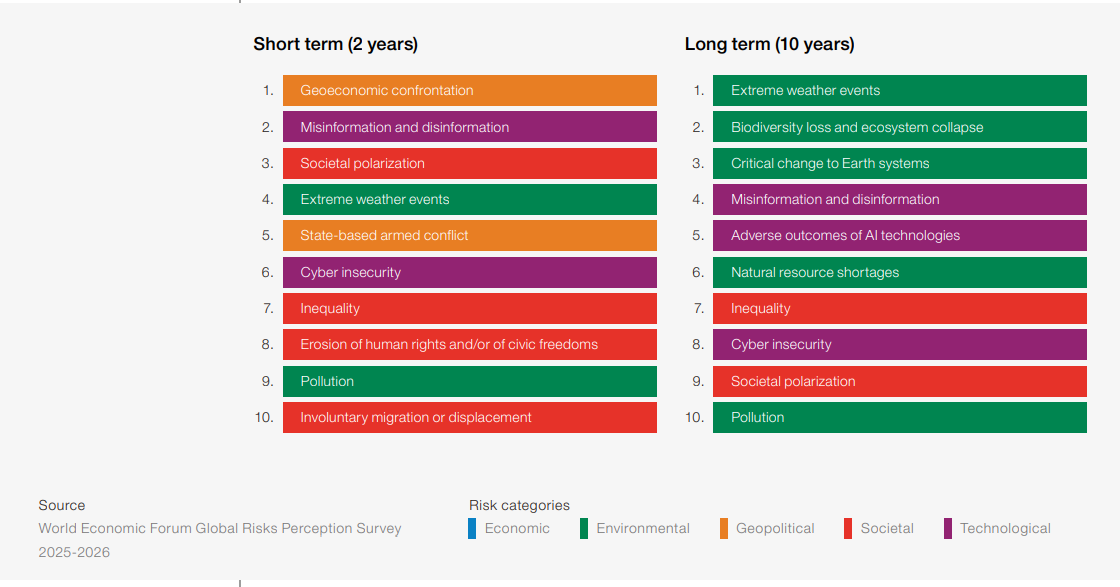
- In the immediate term (2026), Geoeconomic Confrontation has emerged as the biggest global risk, overtaking armed conflict and extreme weather events as the most likely trigger of a global crisis.
- Geoeconomic Confrontation refers to the strategic use of economic tools such as trade restrictions, sanctions, investment controls, and technology bans by states to advance geopolitical interests and constrain rivals, weakening multilateralism and rising protectionism.
- State-based armed conflict ranks second globally, reflecting ongoing wars and regional spillover risks.
- Climate-related risks like extreme weather events rank next, alongside societal polarisation.
- Technological risks are rising globally, with misinformation and disinformation ranking 5th worldwide, reflecting growing threats to democratic processes and social trust.
- At the same time, adverse outcomes of Artificial Intelligence (AI) technologies have entered the top 10 global risks, highlighting concerns over job displacement, ethical misuse, and security challenges.
- Cyber insecurity ranks 9th globally, underscoring increasing digital vulnerability as economies and governance systems become more digitally dependent.
- Over the long term (next ten years), climate-related risks dominate, with extreme weather events, biodiversity loss, and critical changes to Earth systems at the top.
India Risk Outlook
- Cybersecurity is the top risk for India in 2026, reflecting dependence on digital governance, fintech, and critical digital infrastructure.
- Income and wealth inequality is the second biggest risk for India, highlighting social and regional disparities.
- Other key risks for India include:
- Insufficient public services and social protections (this includes concerns regarding education, infrastructure, and pensions).
- Economic downturn (fears of recession or stagnation).
- State-based armed conflict (this includes proxy wars, civil wars, coups, or terrorism).
- India’s risk profile shows a stronger focus on societal and governance-related risks compared to the global geopolitical emphasis.
- The findings underline the need for strong digital security, inclusive growth, and resilient public service delivery in India.
World Economic Forum (WEF)
- The World Economic Forum (WEF) is an international public–private cooperation body headquartered in Geneva (Switzerland), founded in 1971 by Klaus Schwab (a German professor), which promotes stakeholder capitalism and provides a global platform for dialogue on economic, social, and governance issues, most notably through its annual Davos meeting.
- WEF regularly publishes globally recognized reports, including the Global Competitiveness Report and the Global Gender Gap Report, Energy Transition Index, and Global Risk Report.
Global Risk
- It is defined as the possibility of the occurrence of an event or condition that, if it occurs, would negatively impact a significant proportion of global GDP, population or natural resources.
What are the Major Risks Facing India in the Emerging Global Risk Landscape?
- Cybersecurity Risk as a Systemic National Vulnerability: According to the Data Security Council of India, India recorded 369.01 million malware detections in 2025, highlighting persistent exposure to cyber threats.
- Trojans (43.38%) and Infectors (34.23%) dominate attacks, indicating a shift towards targeted and sophisticated campaigns, while mobile threats remain significant, driven by malware (42%) and adware (26%), reflecting the commercialisation of cybercrime.
- India’s rapid digital leap in governance (DBT, Aadhaar-linked services), finance (UPI, fintech), and critical infrastructure has outpaced cyber resilience.
- Cyber threats have evolved into systemic risks that can undermine elections, financial systems, power grids, and public trust, going far beyond isolated IT failures.
- The growing concentration of data and digital platforms creates single-point vulnerabilities, turning cyber insecurity into a strategic national risk rather than a purely technical issue.
- Income and Wealth Inequality as a Risk Multiplier: While the World Bank’s Gini Index for India stands at about 25.5 (2022–23) placing India among countries with relatively lower measured income inequality.
- The Oxfam report highlights that in 2022, the top 1% of Indians captured 22.6% of national income, pointing to deep and widening disparities that are not fully reflected in consumption-based Gini measures.
- Rising inequality in India amplifies economic shocks for informal and marginalised workers, increasing the risks of social unrest, political polarisation, and institutional distrust while eroding the social contract and weakening the state’s ability to mobilise public cooperation during crises.
- Insufficient Public Services and Social Protection Capacity: It remains a key vulnerability for India, as public health expenditure is only 1.9% of GDP, well below the 2.5% target set for 2025 under the National Health Policy, 2017.
- India spends around 5% of GDP on social protection (excluding health), compared to the global average of around 13% (World Social Protection Report 2024-26, ILO).
- Combined with capacity gaps in health, education, urban infrastructure, and social security, this weakens shock absorption and transforms climate extremes, economic volatility, and external disruptions into domestic governance challenges.
- Geoeconomic Shocks: India’s deep integration with global trade, energy markets, and capital flows exposes it to geoeconomic shocks, evident in the record Foreign portfolio investment (FPI) outflow of USD 18.9 billion in 2025, driven by global trade tensions, currency volatility, fears of US tariffs, and stretched market valuations, which heightened volatility in equities and the rupee.
- Slowdowns in major economies quickly spill over into India through weaker exports, investment uncertainty, job losses, and rising fiscal pressure on welfare and subsidies.
- State-Based Armed Conflict and Strategic Instability: Regional geopolitical tensions have intensified India’s security risks, as reflected in the 2025 Pahalgam attack, the blast near Delhi’s Red Fort, and continued cross-border terrorism by Pakistan-backed groups.
- At the same time, rising urban terrorism, lone-wolf and white-collar terrorism, and persistent internal insurgencies strain border security, defence spending, and investor confidence.
- Prolonged instability can divert state capacity from development and heightens exposure to hybrid threats like cyber warfare, misinformation, and economic coercion.
What Steps are Needed to Reduce India’s Vulnerability to Emerging Global Risks?
- Strengthen Economic Resilience: Reduce supply-chain and capital-flow vulnerabilities by scaling up domestic manufacturing under Make in India and PLI schemes.
- Diversifying trade through Free Trade Agreement (FTA) and maintaining strong buffers via forex reserves and counter-cyclical fiscal policy, in line with IMF recommendations.
- Treat Inequality As A Macro-Risk: Address inequality through formalisation and income security using PM-JDY, and Ayushman Bharat, since high inequality has amplified distress among informal workers during crises like the pandemic and inflationary episodes.
- Build Capacity Against Hybrid Threats: India must adopt a whole-of-government and whole-of-society approach to counter hybrid threats that blend terrorism, cyber attacks, disinformation, and economic coercion.
- Building capacity against hybrid threats requires real-time intelligence fusion through a statutory Multi-Agency Centre, stronger cyber and financial surveillance under the PMLA, 2002 and integrated security responses via a National Security Strategy, especially in urban areas.
- Protect Information Integrity: Counter disinformation through 'FACT Principle' strategy adopted by Election Commission of India, IT Rules 2021, institutionalised fact-checking, and digital literacy initiatives such as PM-DISHA, aligned with OECD and EU approaches that treat information integrity as a national security concern.
- Strengthening counter-disinformation and information warfare capabilities is equally vital to address cyber and psychological dimensions of hybrid threats.
- Embed Climate Resilience In Development: Mainstream adaptation via the National Action Plan on Climate Change, Mission LiFE, National Disaster Management Plan, climate-resilient infrastructure under Gati Shakti, and urban reforms through Smart Cities, consistent with reducing long-term fiscal and conflict risks.
Conclusion
The Global Risks Report 2026 makes clear that India’s vulnerability lies in the convergence of cyber insecurity, inequality, geoeconomic shocks, and security threats, where external disruptions can rapidly spill over into domestic instability without stronger resilience and governance capacity.
|
Drishti Mains Question: Evaluate India’s preparedness to deal with hybrid threats combining terrorism, cyber attacks, and disinformation. |
Frequently Asked Questions (FAQs)
1. What is the biggest risk for India in 2026 according to the Global Risks Report 2026?
Cybersecurity is identified as India’s top risk due to deep dependence on digital governance, fintech, and critical digital infrastructure.
2. Why is geoeconomic confrontation considered the most severe global risk?
Rising protectionism, trade fragmentation, and capital flow volatility increase the risk of global economic crises and spillovers to emerging economies.
3. How does inequality increase India’s vulnerability to global shocks?
High income concentration weakens social cohesion, amplifies distress among informal workers, and erodes public trust during crises.
4. Why are cyber threats termed systemic risks?
Cyber attacks can disrupt elections, financial systems, power grids, and public trust, creating single-point failures across governance and economy.
5. What measures are critical to reduce India’s global risk exposure?
Strengthening digital security, reducing inequality, building economic resilience, countering hybrid threats, and embedding climate resilience in development are key.
UPSC Civil Services Examination, Previous Year Questions (PYQs)
Prelims
Q. The Global Competitiveness Report is published by the (2019)
(a) International Monetary Fund
(b) United Nations Conference on Trade and Development
(c) World Economic Forum
(d) World Bank
Ans: (c)
Q. Which of the following gives ‘Global Gender Gap Index’ ranking to the countries of the world? (2017)
(a) World Economic Forum
(b) UN Human Rights Council
(c) UN Women
(d) World Health Organization
Ans: (a)


Important Facts For Prelims
Foundation Day of Lokpal of India
Why in News?
The Lokpal of India observed its Foundation Day on 16th January, marking the coming into force of Section 3 of the Lokpal and Lokayuktas Act, 2013, which provided for the establishment of the Lokpal in 2014.
What are the Key Facts About Lokpal of India?
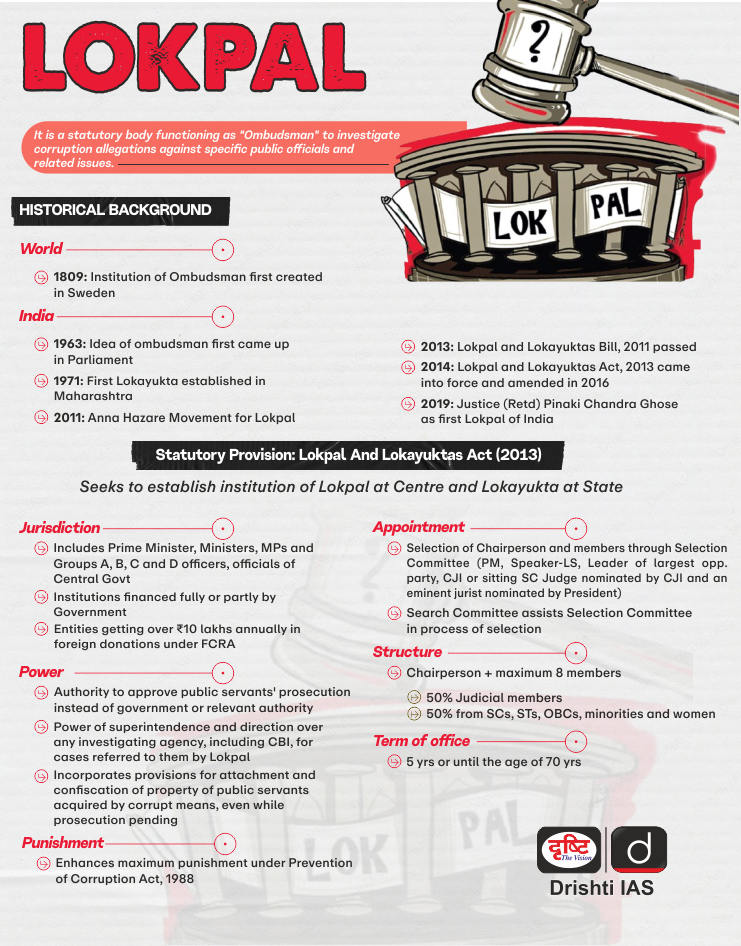
- Establishment of Lokpal of India: The idea of a Lokpal was first mooted in 1963, inspired by the Ombudsman model, and was formally recommended by the First Administrative Reforms Commission in 1966.
- India ratified the UN Convention Against Corruption in 2011, leading to the passage of the Lokpal and Lokayuktas Act in 2013, which came into force on 16th January 2014, formally establishing the Lokpal under Section 3 of the Act.
- Before the enactment of the Lokpal and Lokayuktas Act, 2013, several states had already set up Lokayukta institutions through their own laws, with Maharashtra being the first to establish a Lokayukta in 1971.
- Composition of Lokpal: The Lokpal consists of a Chairperson and up to eight Members, with at least 50% being Judicial Members and a mandatory 50% representation from SC, ST, OBC, minorities, and women.
- Members hold office for five years or until attaining the age of 70 years, whichever is earlier, ensuring both expertise and social inclusivity in the institution.
- Appointment Process: The Chairperson and Members of the Lokpal are appointed by the President of India based on the recommendations of a Selection Committee comprising the Prime Minister, Speaker of the Lok Sabha, Leader of Opposition, the Chief Justice of India or a nominee, and one eminent jurist nominated by the President.
- Eligibility Criteria: The Chairperson must be a serving or former Chief Justice of India or a Supreme Court Judge.
- Judicial Members are drawn from serving or former Supreme Court Judges or Chief Justices of High Courts.
- Non-Judicial Members must possess impeccable integrity and at least 25 years of experience in fields specified under the Act.
- Jurisdiction of Lokpal: The Lokpal has jurisdiction over the Prime Minister (with exclusions relating to national security, foreign relations, atomic energy, space, and public order), Union Ministers, Members of Parliament, and Group A to D Central Government officials.
- It also covers entities receiving substantial government funding or foreign contributions under specified conditions.
- Powers and Functions: The Lokpal has powers of superintendence over investigations conducted by the Central Bureau of Investigation (CBI) in cases referred to it and exercises powers of a civil court during preliminary inquiries.
- It can authorise search and seizure, recommend prosecution or disciplinary action, issue guidelines to the CVC, and suggest systemic reforms to address institutional corruption.
- Filing of Complaints: Any individual, NGO, company, trust, limited liability partnership (LLP) even foreign nationals (with passport) can file complaints.
- Complaints must relate to offences under the Prevention of Corruption Act, 1988.
- Complaints can be submitted online or offline in the prescribed format under the Lokpal (Complaint) Rules, 2020, within a limitation period of seven years.
- Confidentiality and Safeguards: The Lokpal ensures strict confidentiality of complainants, witnesses, and public servants during inquiry and investigation.
- Complaint Handling Mechanism: Complaints are generally placed before the Lokpal Bench within 15 working days after scrutiny.
- Even defective complaints are considered, with opportunities given for rectification, and public servants are granted multiple stages to present their defence, ensuring adherence to principles of natural justice.
- Significance of Lokpal: The Lokpal strengthens India’s anti-corruption framework by providing an independent, statutory mechanism to hold high public functionaries accountable.
- By combining investigative authority with procedural fairness and confidentiality, it reinforces public trust and ethical governance in a democratic system.
Lokpal and Lokayuktas Act, 2013
- The Lokpal and Lokayuktas Act, 2013 mandates the establishment of the Lokpal at the Union level and Lokayuktas at the State level to inquire into complaints of corruption against specified public functionaries.
- The Act aims to strengthen transparency, accountability, and integrity in public administration through an independent and statutory anti-corruption framework.
- The Act was amended in 2016 to allow the leader of the single largest opposition party in the Lok Sabha to be a member of the Lokpal Selection Committee in the absence of a formally recognised Leader of Opposition.
- The Lokayukta is a state-level anti-corruption authority established to investigate complaints and allegations against public servants.
- The Lokayukta and Upalokayukta are appointed by the Governor after consultation with the Chief Justice of the State High Court and the Leader of the Opposition in the State Legislative Assembly.
- In most states, the Lokayukta holds office for a non-renewable term of five years or until attaining the age of 70 years, whichever is earlier, and enjoys security of tenure, as removal is possible only through an impeachment motion passed by the state legislature.
Frequently Asked Questions (FAQs)
1. What is the Lokpal of India?
The Lokpal is an independent statutory body established under the Lokpal and Lokayuktas Act, 2013 to inquire into corruption complaints against specified public functionaries.
2. Who comes under the jurisdiction of the Lokpal?
The Lokpal covers the Prime Minister (with exceptions), Union Ministers, MPs, and Group A–D Central Government officials, along with certain funded bodies.
3. How are the Chairperson and Members of the Lokpal appointed?
They are appointed by the President based on recommendations of a Selection Committee comprising the PM, Speaker, Leader of Opposition, CJI or nominee, and an eminent jurist.
4. What powers does the Lokpal have in corruption cases?
The Lokpal can order inquiries and investigations through agencies like the CBI, exercise civil court powers, and recommend prosecution or disciplinary action.
5. What was the significance of the 2016 amendment to the Lokpal Act?
It allowed the leader of the single largest opposition party in the Lok Sabha to be part of the Selection Committee in the absence of a recognised Leader of Opposition.
UPSC Civil Services Examination, Previous Year Question (PYQ)
Prelims
Q. Consider the following statements: (2019)
- The United Nations Convention against Corruption (UNCAC) has a ‘Protocol against the Smuggling of Migrants by Land, Sea and Air’.
- The UNCAC is the ever-first legally binding global anti-corruption instrument.
- A highlight of the United Nations Convention against Transnational Organized Crime (UNTOC) is the inclusion of a specific chapter aimed at returning assets to their rightful owners from whom they had been taken illicitly.
- The United Nations Office on Drugs and Crime (UNODC) is mandated by its member States to assist in the implementation of both UNCAC and UNTOC.
Which of the statements given above are correct?
(a) 1 and 3 only
(b) 2, 3 and 4 only
(c) 2 and 4 only
(d) 1, 2, 3 and 4
Ans: (c)
Mains
Q. ‘A national Lokpal, however strong it may be, cannot resolve the problems of immorality in public affairs.’ Discuss (2013)


Important Facts For Prelims
Guidelines for Virtual Digital Assets
Why in News?
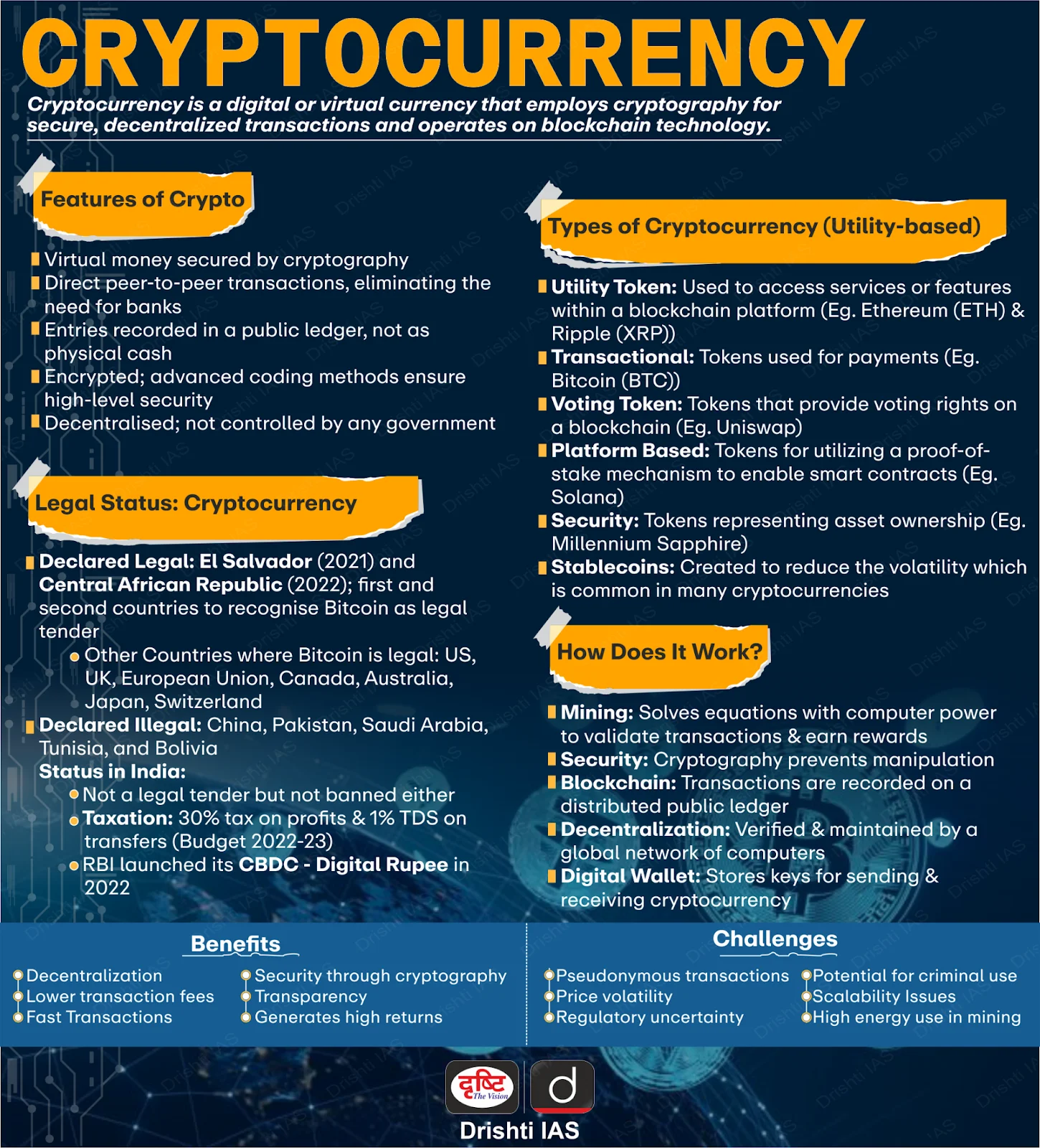
The Financial Intelligence Unit–India (FIU-IND) has introduced stringent new Anti-Money Laundering (AML) and Know Your Customer (KYC) guidelines for Virtual Digital Assets (VDAs) service providers to curb financial crimes in India’s cryptocurrency ecosystem.
What are the New FIU-IND Guidelines for Virtual Digital Assets?
- Enhanced Verification: Mandatory live selfie with liveliness detection (eye-blink/head movement) and geographic tracking (latitude, longitude, timestamp, IP) during user onboarding to prevent static/deepfake fraud.
- Multi-Layer KYC: Requires PAN + secondary ID (Aadhaar/Passport/Voter ID), OTP verification for email/mobile, and “penny-drop” bank account confirmation via a Rs 1 transaction.
- Risk-Based Monitoring: KYC updates every 6 months for high-risk clients and annually for others; enhanced due diligence for entities linked to tax havens, FATF grey/black lists, politically exposed persons (PEPs) or non-profit organisations (NPOs).
- Crackdown on Opaque Instruments: Strongly discourages Initial Coin Offerings (ICOs) and Initial Token Offerings (ITOs) and prohibits facilitation of anonymity-enhancing crypto tumblers and mixers.
- Crypto tumblers and mixers are services that enhance transaction privacy by pooling and scrambling funds from multiple users, then redistributing them to break the traceable link on the public blockchain ledger.
- Regulatory Compliance: Crypto exchanges must register as PMLA reporting entities, maintain 5-year client/transaction records, and report suspicious transactions to the FIU.
- A cryptocurrency exchange is a digital platform that allows users to buy, sell, and trade cryptocurrencies for other digital assets or traditional fiat money. E.g., Coinbase.
What are Virtual Digital Assets (VDAs)?
- About: VDAs are digitally represented values using cryptographic technology that have been formally defined and regulated in India to address taxation, financial integrity, and money-laundering risks amid their rapid growth.
- Key Types of VDAs:
- Cryptocurrencies: Digital currencies used as a medium of exchange.
- Non-Fungible Tokens (NFTs): Unique digital assets representing ownership of art, collectibles, or virtual goods.
- Utility Tokens: Provide access to specific services or platforms within a blockchain ecosystem.
- Asset/Security Tokens: Represent ownership or stake in real-world assets.
- Legal Definition in India: Statutorily defined under Section 2(47A) of the Income Tax Act, 1961, inserted by the Finance Act, 2022.
- Includes any information, code, number, or token (excluding Indian and foreign currency) generated through cryptographic means, representing digital value.
- Explicitly covers Non-Fungible Tokens (NFTs) and any other digital asset notified by the Central Government. Primarily encompasses cryptocurrencies (Bitcoin, Ethereum), NFTs, and similar tokens.
- Regulatory and Taxation Framework in India:
- Taxation: 30% flat tax on income from transfer of VDAs (effective from 1st April 2022). No deductions allowed except cost of acquisition; losses cannot be set off or carried forward.
- 1% TDS applicable on specified transactions under Section 194S of the Income Tax Act, 1961.
- Anti-Money Laundering Oversight: Since March 2023, VDA activities are covered under the Prevention of Money Laundering Act, 2002 (PMLA). Crypto exchanges and wallet providers are treated as reporting entities and must register with FIU-IND.
- Taxation: 30% flat tax on income from transfer of VDAs (effective from 1st April 2022). No deductions allowed except cost of acquisition; losses cannot be set off or carried forward.
Financial Intelligence Unit – India (FIU-IND)
- About: FIU-IND is India’s central agency responsible for receiving, analysing, and disseminating financial intelligence to combat money laundering and terrorist financing in India.
- Institutional Status: Functions under the Department of Revenue, Ministry of Finance, and derives its powers from the Prevention of Money Laundering Act, 2002 (PMLA). Reports directly to the Economic Intelligence Council (EIC), chaired by the Finance Minister.
- Regulatory Role in Crypto Sector: The FIU-IND is the single-point regulator for cryptocurrency exchanges under the PMLA, requiring mandatory registration, KYC compliance, and reporting of suspicious transactions.
- Crypto is not legal tender in India but is taxable under the Income-Tax law.
UPSC Civil Services Examination, Previous Year Question (PYQ)
Q. With reference to “Blockchain Technology”, consider the following statements: (2020)
- It is a public ledger that everyone can inspect, but which no single user controls.
- The structure and design of blockchain is such that all the data in it are about cryptocurrency only.
- Applications that depend on basic features of blockchain can be developed without anybody’s permission.
Which of the statements given above is/are correct?
(a) 1 only
(b) 1 and 2 only
(c) 2 only
(d) 1 and 3 only
Ans: (d)
Q. Consider the following pairs: (2018)
Terms sometimes seen in news Context/Topic
- Belle II experiment — Artificial Intelligence
- Blockchain technology —Digital/ Cryptocurrency
- CRISPR – Cas9 —Particle Physics
Which of the pairs given above is/are correctly matched?
(a) 1 and 3 only
(b) 2 only
(c) 2 and 3 only
(d) 1, 2 and 3
Ans: (b)


Important Facts For Prelims
Commonwealth Conference of Speakers and Presiding Officers
Why in News?
The Prime Minister inaugurated the 28th Commonwealth Conference of Speakers and Presiding Officers (CSPOC) in the historic Central Hall (formerly Chamber of Princes) of Old Parliament.
- India hosts CSPOC after 16 years, previously in 1971, 1986, and 2010, reflecting its growing prominence in parliamentary diplomacy.
- CSPOC holds its main conference biennially (every two years), with a Standing Committee meeting in the intervening year. Its core objectives are to uphold impartiality in presiding officers, advance knowledge of parliamentary democracy, and strengthen parliamentary institutions.
What is the Commonwealth?
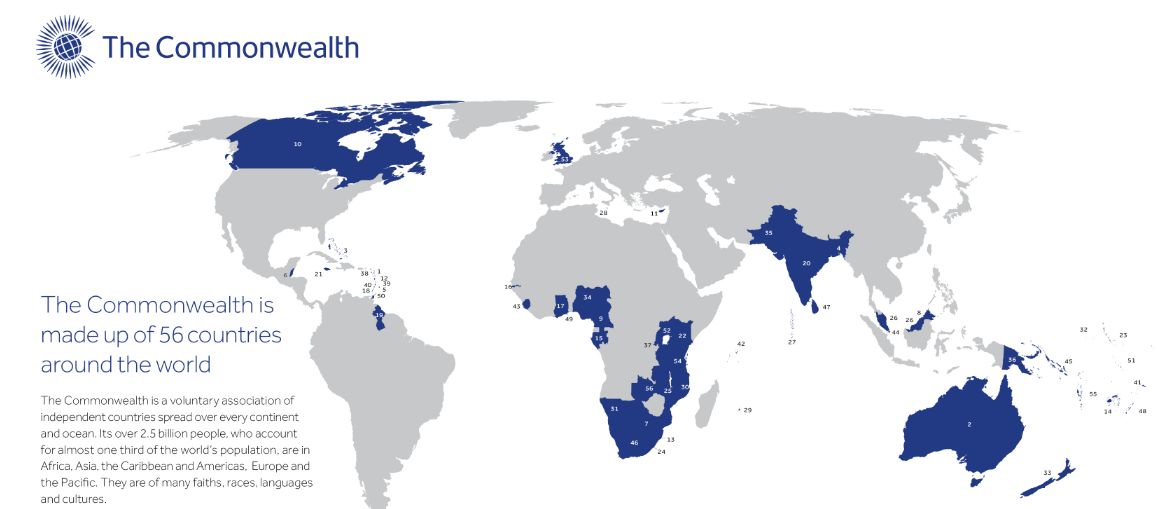
- About: It is a voluntary association of 56 independent and equal countries, primarily consisting of former territories of the British Empire.
- As of January 2026, 15 Commonwealth countries recognize King Charles III (who succeeded Queen Elizabeth II in 2022) as their head of state. E.g., Canada, New Zealand.
- Barbados removed Queen Elizabeth II as its head of state in 2021 and became a republic.
- Genesis: It evolved from the equality principles of the 1926 Imperial Conference (London) to the 1949 London Declaration, which established the modern Commonwealth by admitting republics and non-British monarchies. Gabon and Togo joined in 2022.
- India's Role: India is the largest member by population, the 4th largest financial contributor, and has hosted major events like the 1983 Commonwealth Summit and the 2010 Commonwealth Games in New Delhi. India will host the Commonwealth Games 2030.
- Values and Governance: It is guided by the Commonwealth Charter, promoting development, democracy, and peace, with the Commonwealth Secretariat in London supporting member states in achieving these goals.
Chamber of Princes
- Location: Located within the old Parliament House (Samvidhan Sadan). It is also known as Narendra Mandal and was later remodelled into the Library Hall.
- Establishment & Function: It was established in 1920 under the Government of India Act, 1919, as a British-created consultative body. It functioned from 1921 to 1947, allowing India's princely states to raise issues with the Crown through sittings presided over by the Viceroy.
- Post-Independence Role: It housed the Supreme Court of India from its inauguration on 28th January, 1950, until August 1958. Prior to that, the Federal Court of India had sat there from 1937 to 1950.
Frequently Asked Questions (FAQs)
1. What is the Commonwealth Conference of Speakers and Presiding Officers (CSPOC)?
The CSPOC is a biennial conference of parliamentary leaders to uphold impartiality in presiding officers and strengthen parliamentary democracy.
2. What was the historical significance of the 'Chamber of Princes'?
Established by the Government of India Act, 1919, it functioned from 1921 to 1947 as a consultative body for princely states with the British Crown. Post-independence, it housed the Federal Court (1937–1950) and the Supreme Court of India (1950–1958).
3. Describe the genesis of the modern Commonwealth of Nations.
The modern Commonwealth evolved from the 1926 Imperial Conference to the 1949 London Declaration, which admitted republics and non-British monarchies, transforming it into a voluntary association of independent states.
UPSC Civil Services Examination Previous Year Question (PYQ)
Q. Consider the following statements: (2010)
- The Commonwealth has no charter, treaty or constitution.
- All the territories/countries once under the British empire (jurisdiction/rule/mandate) automatically joined the Commonwealth as its members.
Which of the statements given above is/are correct?
(a) 1 only
(b) 2 only
(c) Both 1 and 2
(d) Neither 1 nor 2
Ans: (a)


Important Facts For Prelims
MHA’s New SOP on Cyber Financial Frauds
Why in News?
In a major step to strengthen India’s cybercrime response, the Ministry of Home Affairs has approved a new Standard Operating Procedure (SOP) for handling cyber financial frauds under the National Cybercrime Reporting Portal (NCRP).
- The move aims to ensure faster refund of defrauded money, especially in small-value cases, and improve victim-centric grievance redressal.
What is the New SOP on Cyber Financial Frauds?
- About: The new SOP for cyber financial fraud cases under the Cyber Financial Crime Reporting and Management System (CFCFRMS) is implemented through the National Cybercrime Reporting Portal and coordinated by the Indian Cyber Crime Coordination Centre.
- It provides a uniform, pan-India framework for handling online financial fraud.
- Core Objective: SOP aims to ensure quick freezing of fraudulent transactions, faster restoration of money to victims, and accountability of financial intermediaries, while shifting cybercrime response towards a victim-centric and time-bound model.
- Reliefs Under SOP: For frauds below Rs 50,000, refunds can be processed without a court order.
- If no court or restoration order exists, banks must lift the freeze within 90 days, preventing indefinite blocking of funds.
- Need: India lost over Rs 52,000 crore to cyber frauds in six years, victims often faced delays, prolonged account freezes, and lack of clarity.
- The SOP addresses these systemic gaps and strengthens trust in the digital payments ecosystem.
- Standardise Processes Across Institutions: The SOP lays down a common procedure for banks, NBFCs, payment aggregators, e-commerce platforms, stock-trading apps, and mutual fund houses, ensuring consistency, faster coordination, and reduced ambiguity in handling cyber fraud complaints.
- Digital Systems: Following two new modules will be developed under NCRP, which will improve coordination between financial institutions, law enforcement agencies, and victims.
- Grievance Redressal Module for tracking and resolving complaints.
- Money Restoration Module for faster refund of defrauded amounts.
National Cybercrime Reporting Portal (NCRP)
- The NCRP under the Indian Cyber Crime Coordination Centre, was dedicated to the nation in 2020. Unlike the earlier CCPWC portal, which covered only child sexual abuse and rape-related content, the revamped NCRP enables reporting of all types of cybercrime across India through a single platform.
- Key features include nationwide cybercrime reporting, special focus on online Child Sexual Abuse Material (CSAM), case-status tracking, multi-level monitoring dashboards, and support through Cyber Volunteers and the Vani–CyberDost chatbot.
- The NCRP integrates the Citizen Financial Cyber Fraud Reporting and Management System (CFCFRMS), which connects 85+ banks and payment intermediaries and enables reporting of financial frauds via the 1930 national helpline, allowing swift coordination between law enforcement agencies, banks, RBI, NPCI, and other stakeholders to prevent fund siphoning and restore losses.
Note: In another development, the Union government has set up a high-level inter-departmental committee under the Ministry of Home Affairs to tackle the growing menace of “digital arrest” scams, which have already led to losses of around Rs 3,000 crore based on reported complaints alone and have disproportionately affected the elderly and vulnerable.
- The committee brings together key agencies like the Reserve Bank of India and the Central Bureau of Investigation, and has engaged platforms such as Google and WhatsApp to plug real-time enforcement gaps, stop police and court impersonation, and tighten safeguards against large-scale fraud.
| Read more: SC Directions on 'Digital-Arrest' Scams |
Frequently Asked Questions (FAQs)
1. What is the new SOP on cyber financial frauds?
It is a uniform, pan-India procedure approved by the MHA to handle cyber financial fraud cases through NCRP and CFCFRMS.
2. What major relief does the SOP provide to victims?
For frauds below Rs 50,000, refunds can be processed without a court order, and banks must lift fund freezes within 90 days if no order exists.
3. Which institutions are covered under the SOP?
Banks, NBFCs, payment aggregators, e-commerce platforms, stock-trading apps, and mutual fund houses.
4. Why is NCRP important in India’s cybercrime framework?
NCRP enables nationwide reporting of all cybercrimes, integrates CFCFRMS, and connects 85+ banks and intermediaries via the 1930 helpline for swift action.
UPSC Civil Services Examination, Previous Year Questions (PYQs)
Prelims
Q1. In India, under cyber insurance for individuals, which of the following benefits are generally covered, in addition to payment for the loss of funds and other benefits? (2020)
- Cost of restoration of the computer system in case of malware disrupting access to one’s computer
- Cost of a new computer if some miscreant wilfully damages it, if proved so
- Cost of hiring a specialised consultant to minimise the loss in case of cyber extortion
- Cost of defence in the Court of Law if any third party files a suit
Select the correct answer using the code given below:
(a) 1, 2 and 4 only
(b) 1, 3 and 4 only
(c) 2 and 3 only
(d) 1, 2, 3 and 4
Ans: (b)
Q.2 In India, it is legally mandatory for which of the following to report on cyber security incidents? (2017)
- Service providers
- Data centres
- Body corporate
Select the correct answer using the code given below:
(a) 1 only
(b) 1 and 2 only
(c) 3 only
(d) 1, 2 and 3
Ans: (d)
Mains
Q. What are the different elements of cyber security ? Keeping in view the challenges in cyber security, examine the extent to which India has successfully developed a comprehensive National Cyber Security Strategy. (2022)


Rapid Fire
Rani Ahilyabai Holkar
An inquiry has been ordered into allegations that a structure containing a statue of Devi Ahilyabai Holkar was demolished during renovation work at Manikarnika Ghat in Varanasi, Uttar Pradesh.
- The Manikarnika Ghat renovation project, undertaken under a private company’s CSR initiative, aims to modernise facilities and address environmental issues.
Rani Ahilyabai Holkar
- Birth & Background: Ahilyabai was born on 31st May 1725 in Chondi, Ahmednagar (Maharashtra), her father, Mankoji Rao Shinde, was the village head.
- Marriage & Early Life: She was married to Khanderao Holkar in 1733, the son of Malhar Rao Holkar, the ruler of Malwa and the founder of the Holkar dynasty.
- Ahilyabai was widowed in 1745 after Khanderao died in the siege of Kumher Fort.
- Malhar Rao Holkar prevented Ahilyabai from committing sati and trained her in military and administrative matters.
- Ascension to Power: After the death of Malhar Rao Holkar in 1766 and her son Male Rao Holkar in 1767, Ahilyabai Holkar took charge of Malwa and became the ruler of Indore in 1767.
- She appointed Tukoji Rao Holkar as army commander and made Maheshwar in Madhya Pradesh the Holkar dynasty’s capital.
- Contributions: Ahilyabai Holkar rebuilt the Kashi Vishwanath and Somnath temples in the 18th century, restoring key Jyotirlingas of Lord Shiva, and patronised scholars such as Khushali Ram, Marathi poet Moropant, and Shahir Anantaphandi.
- She holds deep cultural importance in Varanasi and is revered by the Pal (Gadariya) community as an ancestral figure, with her birth anniversary actively celebrated.
- She also promoted women’s education, widow remarriage, and opposed practices like sati, while uplifting the Bhil and Gond tribes and lower castes.
- She made Maheshwar and Indore major trade hubs, promoting the Maheshwari weaving industry and making Maheshwari sarees renowned across India, now registered with a Geographical Indication (GI) tag.

| Read more: 300th Birth Anniversary of Ahilyabai Holkar |
Rapid Fire
China’s Entry In Spice Market
China has begun cultivating and exporting chillies and cumin, two of India’s most critical spice exports, at lower and more competitive prices, posing a potential challenge to India’s long-standing dominance as the world’s largest spice supplier.
- Chillies form the backbone of India’s spice exports, accounting for over 25% of total export volume and value. Cumin, meanwhile, is among the most in-demand high-value spices, particularly in West Asia, Europe, and the Americas, where it is widely used in food processing and culinary applications.
- Export Performance: In 2024–25, India recorded strong growth in spice export volumes, with chilli powder exports rising 35% to 80.6 million kg and total chilli exports increasing 19% to over 700,000 tonnes, compared to 15% growth in 2023–24.
- Price Pressure: Despite higher volumes, chilli export earnings declined 11% due to severe global price pressure, even as cumin exports surged 39% to 2.29 lakh tonnes from 1.65 lakh tonnes in 2023–24.
- China’s Strategy: China is strengthening its presence in the global spice market by focusing on high-demand chilli varieties such as paprika (for colour and mild flavour) and Teja chilli (for high pungency and pharmaceutical use), while importing raw Indian chillies, processing them domestically, and re-exporting finished products to third-country markets at competitive prices.
- Impact on Indian Agriculture: India is simultaneously facing supply-side challenges:
- Chilli acreage has declined by nearly 35% in Andhra Pradesh, Telangana, and Karnataka, the country’s key chilli-producing states. Cumin cultivation area has fallen by 7–8%.
- These declines are driven by weather-related crop losses and persistently low export prices, which have discouraged farmers from sowing chillies and cumin, particularly during the kharif season.
| Read more: Journey of Spices in India |


Rapid Fire
World’s First Repository of Mountain Ice Cores
Recently, scientists inaugurated the world’s first global repository of mountain ice cores at Concordia Research Station on the Antarctic Plateau to preserve vital climate records threatened by rapid glacier loss due to global warming.
- The facility, known as the Ice Memory Sanctuary, has been developed by the Ice Memory Foundation, a consortium of European research institutions from France, Italy, and Switzerland.
- The ice vault is a cave carved into compacted snow and maintained at a constant temperature of around –52°C, ensuring long-term preservation of ice cores for future scientific research.
- The first ice cores stored in the sanctuary were drilled from Mont Blanc in France and the Grand Combin massif in Switzerland, and transported to Antarctica over a 50-day journey using refrigerated ships and aircraft.
- Ice cores act as atmospheric time capsules, formed through long-term compaction of snow and preserving traces of gases, aerosols, dust, pollutants, and other indicators of past climate conditions.
- These samples enable scientists to reconstruct historical changes in climate, including atmospheric composition, environmental pollution, and the pace and causes of climate change across centuries.
- The Ice Memory project, launched in 2015, has already identified and drilled cores from 10 glacier sites worldwide, with plans to expand storage and establish an international convention over the next decade to safeguard these samples for future generations.
| Read more: India's Tryst with Antarctica |