Indian Economy
NITI Aayog Report on Convergence of MSME Schemes
For Prelims: Micro, Small and Medium Enterprises (MSMEs), GDP, Udyam Registration Portal, Udyam Assist Platform (UAP), Khadi and Village Industries, Gram Swaraj, Sustainable Development Goal, Scheme of Fund for Regeneration of Traditional Industries (SFURTI), Micro and Small Enterprises – Cluster Development Programme (MSE-CDP), ASPIRE, MSME Innovative.
For Mains: MSMEs and their role in the Indian economy, Need for convergence of various MSME schemes and NITI Aayog’s recommendations for MSME schemes convergence
Why in News?
NITI Aayog has released a report titled “Achieving Efficiencies in MSME Sector through Convergence of Schemes”, outlining a strategic roadmap to strengthen the effectiveness of government support for India’s Micro, Small and Medium Enterprises (MSMEs).
- It recommends a two-pronged approach for convergence of 18+ MSME schemes, comprising information convergence and process convergence.
- The first integrates central and state data for better decisions. The second unifies schemes to reduce redundancy and streamline service delivery, fostering a cohesive MSME ecosystem.
Summary
- NITI Aayog advocates converging 18+ MSME schemes to eliminate fragmentation.
- The sector is vital, contributing ~30% to GDP and 45% to exports.
- Fragmented schemes across ministries reduce efficiency and outreach.
- NITI Aayog’s convergence framework integrates data and processes to create a simplified, efficient, and outcome-driven MSME support system.
What are MSMEs?
- About: MSMEs are businesses defined and categorized based on their investment in plant, machinery, or equipment and their annual turnover and are the foundation stone of India’s economic framework.
- Government spending on the MSME sector has risen sharply to Rs 22,094 crores in 2023-24 from Rs 6,717 crores in 2019-20.
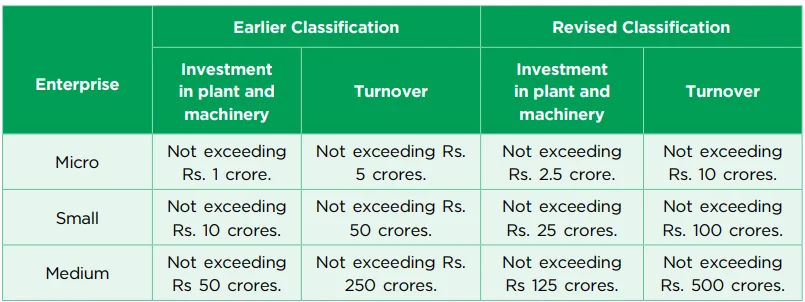
- Classification: The MSME sector is classified in accordance with the Micro, Small and Medium Enterprises Development (MSMED) Act, 2006, based on investment in plant and machinery and turnover, with a revised classification effective from 1st April, 2025.
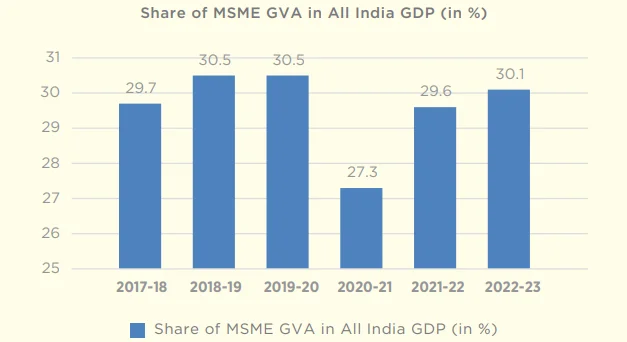
- Economic Contribution: The MSME sector contributes between 27% and 30% to India's GDP, employs 62% of the country’s workforce (approximately 28.13 crores), and accounts for about 45% of the country’s exports.
- Growth and Performance: The sector grew at an average of 8.6% between 2000 and 2016, outperforming the industrial sector (7.6%), and has the capacity to produce 6,000 distinct products.
- Formalization Initiatives: Over 90% of MSMEs in India continue to operate in the informal sector, with only 9% transitioning from unregistered status. To promote formalization, the government has introduced the Udyam Registration Portal and the Udyam Assist Platform (UAP).
- The Udyam Registration Portal enables self-registration, while the Udyam Assist Platform (UAP) help integrate Informal Micro Enterprises (IMEs) into the formal sector. There are 3.94 crore MSMEs registered on the Udyam Portal and 2.71 crore informal micro enterprises on the Udyam Assist Platform.
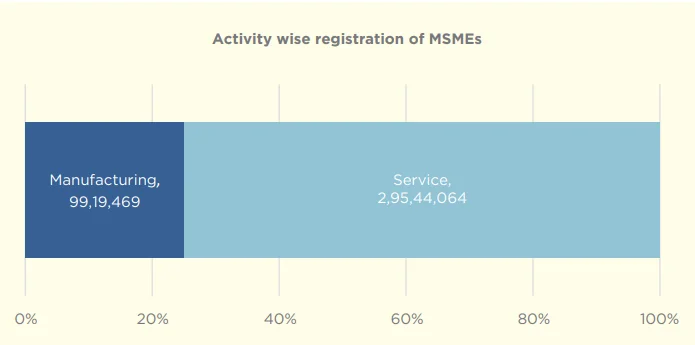
- Composition & Regional Presence: As of October 2024, 25% of registered MSMEs are in manufacturing, while 75% are involved in service activities. 51% of MSMEs are in rural areas, and 49% are in urban areas.
- Key Organizations Attached to Ministry of MSMEs:
- Office of the Development Commissioner (DC-MSME): Implements MSME policies and programs, advises on policy, offers consultancy, facilitates technology upgrades, and develops human resources through training.
- Khadi and Village Industries Commission (KVIC): Promotes rural employment through khadi and village industries by producing saleable articles, fostering self-reliance, and providing training, research, and raw materials.
- Coir Board: Develops the coir industry by promoting exports, advancing research, and improving workers' living conditions.
- National Small Industries Corporation (NSIC): Promotes MSME growth through marketing support, credit facilitation, raw material provision, and a network of technical service centers across India.
- National Institute for Micro, Small and Medium Enterprises (NIMSME): Premier training institute offering capacity-building programs for entrepreneurs and officials to enhance MSME capabilities and competitiveness.
- Mahatma Gandhi Institute for Rural Industrialisation (MGIRI): Accelerates sustainable rural industrialization by attracting professionals to Gram Swaraj, empowering traditional artisans, and encouraging innovation through R&D and pilot studies.
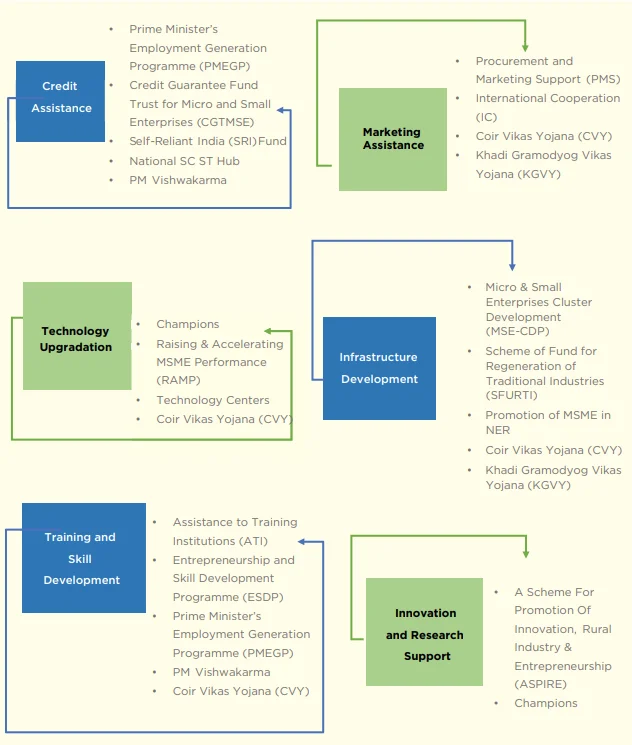
- Key MSME Schemes:
What is the Need of the Convergence of Schemes for MSMEs?
- Multiple Schemes, Similar Goals: Various ministries and departments (e.g., Ministry of MSME, Rural Development, Handicrafts, Coir Board) run programmes with overlapping objectives (e.g., for coir, leather, handicrafts, village industries). This leads to the same target beneficiaries being served by multiple, uncoordinated schemes, wasting resources.
- Enhance Efficiency and Impact of Resources: Converging schemes enables better planning and pooled central and state financial resources, preventing scattered investments. The shared use of physical and institutional infrastructure also avoids wasteful duplication, thereby improving overall cost-effectiveness.
- Simplify Access for Beneficiaries: Convergence creates a single platform for MSME scheme mobilization, enabling easier access without approaching multiple agencies. This coordinated approach minimizes confusion from similar schemes, ensuring clearer communication and higher uptake among beneficiaries.
- Improve Governance and Delivery: Information convergence integrates scattered ministry data into a single system, enabling better beneficiary tracking and informed policymaking. This unified mechanism for inspection and monitoring, using a shared resource pool, enhances accountability, and transparency.
- Align with National and Global Best Practices: The report references Sustainable Development Goal 17 (Partnerships for the goals), emphasizing multi-sectoral collaboration as key to effective governance. It also implements recommendations from past committees (like the PM's Task Force on MSMEs) that have long advocated for a single platform to ensure benefits reach targets without leakage.
What are the Key Recommendations of the NITI Aayog‘s Report for Convergence of Schemes for MSMEs?
- Centralized Portal for MSMEs: The report proposes an AI-powered centralized digital platform integrating MSME schemes, compliance, finance, and market intelligence. It would feature information, process, compliance, and market research modules, supported by AI chatbots, dashboards, and mobile access for real-time support to MSMEs.
- Convergence of Cluster Development Schemes: Integration of the Scheme of Fund for Regeneration of Traditional Industries (SFURTI) with the Micro and Small Enterprises – Cluster Development Programme (MSE-CDP).
- It proposes a dedicated sub-scheme for traditional industries, a unified governance structure under MSE-CDP, and consolidated funding with earmarked resources to preserve crafts, arts, and endangered traditional industries while improving scale and efficiency.
- Convergence of Skill Development Programmes: The report proposes rationalising skill initiatives into a three-tier structure covering entrepreneurship and business skills, MSME technical skills, and training for rural and women artisans.
- This approach merges overlapping schemes, improves coordination among institutions, and retains targeted programmes to promote inclusion, and entrepreneurship.
- Marketing Assistance Wing: To streamline MSME marketing support, the report proposes a dedicated Marketing Wing with domestic and international components.
- The domestic wing would facilitate MSME participation in national exhibitions, trade fairs, and buyer-seller meets, while the international wing would support global market access through overseas trade fairs, B2B events, and buyer-seller meets.
- MSME Innovative & A Scheme For Promoting Innovation, Rural Industry & Entrepreneurship (ASPIRE): The report recommends integrating ASPIRE into MSME Innovative as a special category for agro-rural enterprises. Existing ASPIRE funds can continue, while future MSME Innovative budgets earmark a share for agro-rural incubators. This integration broadens access to advanced incubation without restricting.
Conclusion
The NITI Aayog report underscores that convergence of MSME schemes is critical to enhance efficiency, reduce duplication, and improve service delivery. By integrating data, processes, and institutional efforts, convergence can create a unified, outcome-oriented MSME ecosystem, maximising public investment and accelerating inclusive economic growth.
|
Drishti Mains Question Examine the significance of the MSME sector for India's economy and the rationale of the MSMEs scheme convergence for strengthening the MSME sector in India. |
Frequently Asked Questions (FAQs)
1. How do MSMEs contribute to India’s economy?
MSMEs contribute 27–30% to GDP, employ 62% of the workforce, and account for ~45% of exports.
2. Why is convergence of MSME schemes needed?
To eliminate duplication and fragmentation across ministries, simplify beneficiary access, optimize resource utilization, and improve governance, as highlighted by the PM's Task Force on MSMEs and SDG 17.
3. What are the key government portals for MSME formalization?
The Udyam Registration Portal (2020) enables self-registration, while the Udyam Assist Platform (2023), with SIDBI, integrates Informal Micro Enterprises (IMEs) into the formal sector.
UPSC Civil Services Examination, Previous Year Question:(PYQ)
Prelims
Q1. Consider the following statements with reference to India : (2023)
- According to the Micro, Small and Medium Enterprises Development (MSMED) Act, 2006, the ‘medium enterprises’ are those with investments in plant and machinery between `15 crore and `25 crore.
- All bank loans to the Micro, Small and Medium Enterprises qualify under the priority sector.
Which of the statements given above is/are correct?
(a) 1 only
(b) 2 only
(c) Both 1 and 2
(d) Neither 1 nor 2
Ans: (b)
Q2. What is/are the recent policy initiative(s)of Government of India to promote the growth of the manufacturing sector? (2012)
- Setting up of National Investment and Manufacturing Zones
- Providing the benefit of ‘single window clearance’
- Establishing the Technology Acquisition and Development Fund
Select the correct answer using the codes given below:
(a) 1 only
(b) 2 and 3 only
(c) 1 and 3 only
(d) 1, 2 and 3
Ans: (d)
Q3. Which of the following can aid in furthering the Government’s objective of inclusive growth? (2011)
- Promoting Self-Help Groups
- Promoting Micro, Small and Medium Enterprises
- Implementing the Right to Education Act
Select the correct answer using the codes given below:
(a) 1 only
(b) 1 and 2 only
(c) 2 and 3 only
(d) 1, 2 and 3
Ans: (d)
Mains
Q.1 “Industrial growth rate has lagged behind in the overall growth of Gross-Domestic-Product(GDP) in the post-reform period” Give reasons. How far are the recent changes in Industrial Policy capable of increasing the industrial growth rate? (2017)
Q.2 Normally countries shift from agriculture to industry and then later to services, but India shifted directly from agriculture to services. What are the reasons for the huge growth of services vis-a-vis the industry in the country? Can India become a developed country without a strong industrial base? (2014)


Governance
Prime Minister’s Internship Scheme
For Prelims: Prime Minister’s Internship Scheme, National Apprenticeship Promotion Scheme, Skill India Mission, Pradhan Mantri Kaushal Vikas Yojana 4.0
For Mains: Government Schemes for Youth Employment and Skill Development, Design and Implementation Challenges of Flagship Welfare Schemes, Education–Industry Skill Gap in India
Why in News?
Data from the Controller General of Accounts show severe underutilisation of funds under the Prime Minister’s Internship Scheme (PMIS), pointing to weaknesses in the scheme’s design, demand, and implementation barely a year after its launch.
What is the Prime Minister’s Internship Scheme (PMIS)?
- About: The PMIS, under the Ministry of Corporate Affairs, announced in the Union Budget 2024–25, aims to provide one crore internship opportunities over five years in top 500 companies to enhance the employability of youth aged 21–24 years.
- Benefits: The scheme offers a Minimum Stipend of Rs 5,000 per month, a One-Time Grant of Rs 6,000, and Insurance Coverage under PM Jeevan Jyoti Bima Yojana and PM Suraksha Bima Yojana, along with exposure to diverse sectors and leading companies.
- Internship Duration: The internship lasts 12 months, with at least half of the period spent in real workplace or job-based experience, not classroom training.
- Eligibility: Candidates must be 21–24 years old, possess Minimum Class 10 Qualification or above (ITI, Polytechnic, Graduation etc.), and should not be engaged in Full-Time Employment or Regular Education (distance or online education allowed).
- Ineligible Candidates: Graduates from IITs, IIMs, NLUs, IISERs, holders of professional or postgraduate degrees (CA, CMA, CS, MBA, MBBS, etc.), candidates trained under National Apprenticeship Promotion Scheme (NAPS)/ National Apprenticeship Training Scheme (NATS).
- Income of any family member exceeds Rs 8 lakh for FY 2023-24 , families with regular government employees, and applicants already in any government skill, apprenticeship, or internship programme are ineligible.
- Significance: PMIS aims to enhance employability by providing structured, real-world industry exposure to youth.
- Bridge the education–industry gap through hands-on training in top companies.
- Expand access to internships beyond elite institutions and urban centres.
- Support youth from low-income households with financial assistance during internships.
- Build a skilled workforce aligned with industry needs and national economic growth.
What are the Key Concerns Regarding the Prime Minister’s Internship Scheme (PMIS)?
- Severe Underutilisation of Funds: As of November 2025, the Ministry of Corporate Affairs has spent only about 4% of its FY26 budget, despite an allocation of over Rs 11,500 crore, of which around 94% was earmarked for PMIS.
- This sharp underspending reflects weak uptake of the scheme and a clear gap between budgetary intent and execution capacity.
- Low Acceptance Rates: Despite high application numbers, less than one-third of internship offers are accepted, suggesting the scheme does not adequately meet candidate expectations.
- The mismatch between applicant preferences and internship locations or roles points to flaws in design and coordination.
- Poor Completion Numbers: Very few interns have completed the programme, raising concerns about retention, quality of engagement, and institutional support.
- Inadequate Financial Incentive: The Rs 5,000 monthly stipend is insufficient to cover basic living costs, reducing the scheme’s attractiveness, especially in urban centres.
- Credibility Gap: The sharp contrast between the ambitious target of one crore internships and weak pilot outcomes risks undermining policy credibility.
What are India's Major Skill Development Initiatives?
- Skill India Mission: A flagship initiative to skill, reskill, and upskill youth through industry-relevant training. It focuses on employability, entrepreneurship, and future-ready skills, with over 6 crore individuals trained, including in AI, robotics, green energy, and Industry 4.0.
- Restructured Skill India Mission (2022–26), merges Pradhan Mantri Kaushal Vikas Yojana 4.0 (PMKVY 4.0), the Pradhan Mantri National Apprenticeship Promotion Scheme (PM-NAPS), and the Jan Shikshan Sansthan (JSS) Scheme into a single Central Sector Scheme.
- All courses under the Skill India Program are aligned with the National Skills Qualifications Framework (NSQF) and integrated with DigiLocker and the National Credit Framework.
- Pradhan Mantri Kaushal Vikas Yojana (PMKVY): Launched in 2015, PMKVY provides free, short-term skill training to enhance employability.
- Across four phases, it has trained over 1.63 crore candidates (as of July 2025), with a focus on reskilling, upskilling, and recognition of prior learning.
- Jan Shikshan Sansthan (JSS): A community-based vocational programme for non-literates, neo-literates, and school dropouts, offering flexible and low-cost training.
- Over 26 lakh beneficiaries were trained between FY 2018–19 and 2023–24.
- Pradhan Mantri National Apprenticeship Promotion Scheme (PM-NAPS): Aims to expand apprenticeships by providing 25% stipend support through DBT to youth aged 14–35.
- As of May 2025, 43.47 lakh apprentices have been engaged across States and UTs.
- Rural Self Employment and Training Institutes (RSETIs): Bank-led residential training centres focused on entrepreneurship and self-employment for rural youth.
- RSETIs trained over 5.67 million candidates as of June 2025.
- Deen Dayal Upadhyaya Grameen Kaushalya Yojana (DDU-GKY): A demand-driven, placement-linked skilling scheme under NRLM targeting rural youth unemployment.
- It promotes wage employment and inclusive rural development.
- PM Vishwakarma Yojana: Launched in 2023 to support traditional artisans and craftspeople in 18 trades.
- PM Vishwakarma Yojana provides skill training, toolkits, collateral-free credit, digital incentives, and market linkages.
- Skill India Digital Hub (SIDH): A technology-enabled platform using Aadhaar-based verification for skilling delivery.
- SIDH supports real-time monitoring and integrates skilling with education and entrepreneurship systems.
- Centres of Excellence at NSTIs: Established in 2025 at Hyderabad and Chennai to strengthen advanced skilling. They focus on instructor training and emerging areas such as AI, robotics, and green technologies.
What Measures can Strengthen the Prime Minister’s Internship Scheme (PMIS)?
- Recalibrate Stipend Using Living-Cost Benchmarks: Drawing from Germany’s dual vocational training system and India’s NAPS, stipends should be region-linked to minimum living costs to improve offer acceptance and completion rates.
- Mandate Learning Outcomes and Certification: PMIS internships should have predefined skill outcomes and end with nationally recognised certification aligned with NSQF, ensuring internships translate into measurable employability.
- Strengthen Industry Accountability: Since companies are selected based on CSR spending, PMIS should require outcome reporting (completion, skill acquisition, placement) as part of CSR disclosures, similar to social audit norms under Indian welfare schemes.
- Improve Candidate–Company Matching Using Skill Mapping: Lessons from Skill India Digital platforms show that poor matching reduces retention.
- PMIS should integrate skill profiling, location preference, and sector fit before offers are made.
- Following practices under NATS and international youth employment programmes, companies should receive incentives for high completion rates and post-internship hiring.
- Decentralise Outreach Through Local Institutions: Use ITIs, polytechnics, and district employment offices, as done under PMKVY, to expand awareness beyond urban and elite institutions.
Conclusion
The PMIS has strong intent but weak execution, as reflected in low fund utilisation and poor participation outcomes. Gaps in stipend levels, and internship quality have limited its impact so far. Course correction is needed to turn scale into meaningful employability gains.
|
Drishti Mains Question: How can India integrate internships, apprenticeships, and formal skilling into a coherent employability framework? |
Frequently Asked Questions (FAQs)
1. What is the Prime Minister’s Internship Scheme (PMIS)?
PMIS is a Ministry of Corporate Affairs scheme launched in Budget 2024–25 to provide one crore internships in top companies over five years to improve youth employability.
2. Who is eligible for PMIS?
Youth aged 21–24 years with minimum Class 10 qualification, not in full-time employment or regular education, are eligible.
3. What are the key benefits under PMIS?
A Rs 5,000 monthly stipend, a one-time Rs 6,000 grant, insurance coverage, and 12 months of industry exposure.
4. What are the major concerns with PMIS implementation?
Severe underutilisation of funds, low offer acceptance, poor completion rates, and inadequate financial incentives.
5. How can PMIS be strengthened?
By revising stipends, mandating skill certification, improving candidate–company matching, strengthening CSR accountability, and decentralising outreach.
UPSC Civil Services Examination Previous Year Question (PYQ)
Prelims
Q. With reference to Pradhan Mantri Kaushal Vikas Yojana, consider the following statements: (2018)
- It is the flagship scheme of the Ministry of Labour and Employment.
- It, among other things, will also impart training in soft skills, entrepreneurship, and financial and digital literacy.
- It aims to align the competencies of the unregulated workforce of the country to the National Skill Qualification Framework.
Which of the statements given above is/are correct?
(a) 1 and 3 only
(b) 2 only
(c) 2 and 3 only
(d) 1, 2 and 3
Ans: (c)
Mains
Q. “Demographic Dividend in India will remain only theoretical unless our manpower becomes more educated, aware, skilled and creative.” What measures have been taken by the government to enhance the capacity of our population to be more productive and employable? (2016)
Important Facts For Prelims
MS Sahoo Committee for NPS Reforms
Why in News?
The Pension Fund Regulatory and Development Authority (PFRDA) has established a high-level committee to design a regulatory framework for assured payouts under the National Pension System (NPS), aiming to address post-retirement income certainty.
- In a separate development, PFRDA has issued the NPS Vatsalya Scheme Guidelines 2025, providing comprehensive information on the NPS Vatsalya.
What are the Key Facts Regarding the Newly Constituted Committee on NPS?
- About: It is a 15-member panel headed by MS Sahoo, former chairperson of the Insolvency and Bankruptcy Board of India (IBBI). It is constituted as a standing advisory committee on structured pension payouts and can invite external specialists for consultation.
- Objectives: The primary objective is to formulate guidelines for legally enforceable, market-based guarantees under the NPS.
- This involves defining key parameters like lock-in periods and pricing, establishing risk management norms with capital requirements, and examining tax implications for in-system payouts.
- Significance: It marks a shift from exit flexibility to income certainty in retirement, addressing a key gap in India's pension system. This aims to boost confidence in long-term savings and strengthen financial security, aligning with the Viksit Bharat 2047 vision for financial independence in old age.
National Pension System (NPS)
- About: Introduced on 1st January 2004, NPS is a market-linked, contributory pension scheme designed to provide individuals with a retirement income, replacing the Old Pension System (OPS).
- Working of NPS: Administered by the PFRDA under the PFRDA Act, 2013, NPS is funded jointly by the employee and the government. Employees contribute 10% of their basic pay and dearness allowance, matched by a 14% contribution from the government.
- Subscribers can select from various schemes, pension fund managers, and private companies to invest their contributions. Unlike OPS, NPS does not offer an assured pension.
- Need for NPS: The previous OPS was unfunded, lacking a dedicated corpus, which caused government pension liabilities to balloon from Rs 3,272 crore (1990-91) to over Rs 1.9 lakh crore (2020-21), creating an unsustainable fiscal burden.
- Transition to UPS: Faced with opposition due to lower guaranteed returns and employee contributions compared to OPS, the government formed the Somanathan Committee in 2023. Its recommendations have led to the new Unified Pension Scheme (UPS), shifting the focus toward greater income certainty in retirement
What is NPS Vatsalya?
- About: NPS Vatsalya is a dedicated, long-term contributory savings scheme under the NPS designed exclusively for the financial security of minors. It aims to nurture a culture of savings and financial literacy from an early age.
- Eligibility and Operational Features: Open to all Indian citizens, including NRI/OCI, below 18 years, with the minor as the sole beneficiary.
- The account is opened in the minor's name but operated by a parent/legal guardian.
- The minimum initial and annual contribution is Rs 250, with no upper limit; contributions can also be gifted.
- Flexibility and Withdrawal Provisions: Allows partial withdrawals after 3 years for specific purposes like education and medical treatment, limited to 25% of the minor's own contributions.
- Transition Upon Attaining Majority: Between 18 and 21 years, the subscriber can continue with NPS Vatsalya, shift to the standard NPS Tier I, or exit.
- Exit rules mandate using a minimum 20% of the corpus to purchase an annuity, with full withdrawal permitted if the total corpus is Rs 8 lakh or less.
Frequently Asked Questions (FAQs)
1. What is the purpose of the MS Sahoo committee?
The committee is tasked with formulating guidelines for legally enforceable, market-based guaranteed payouts under NPS to enhance income certainty after retirement.
2. How does NPS differ from the Old Pension Scheme (OPS)?
Unlike OPS, NPS is market-linked, contributory, and does not offer an assured pension, with contributions from both the employee (10%) and government (14%).
3. Who is eligible for NPS Vatsalya?
All Indian citizens, including NRI/OCI, below 18 years, with the minor as the sole beneficiary, operated by a parent or legal guardian.
UPSC Civil Services Examination, Previous Year Questions (PYQs)
Q. Who among the following can join the National Pension System (NPS)? (2017)
(a) Resident Indian citizens only
(b) Persons of age from 21 to 55 only
(c) All State Government employees joining the services after the date of notification by the respective State Governments
(d) All Central Government employees including those of Armed Forces joining the services on or after 1st April, 2004
Ans (c)
Q. Regarding ‘Atal Pension Yojana’, which of the following statements is/are correct? (2016)
- It is a minimum guaranteed pension scheme mainly targeted at unorganised sector workers.
- Only one member of a family can join the scheme.
- Same amount of pension is guaranteed for the spouse for life after the subscriber's death.
Select the correct answer using the code given below:
(a) 1 only
(b) 2 and 3 only
(c) 1 and 3 only
(d) 1, 2 and 3
Ans: (c)


Important Facts For Prelims
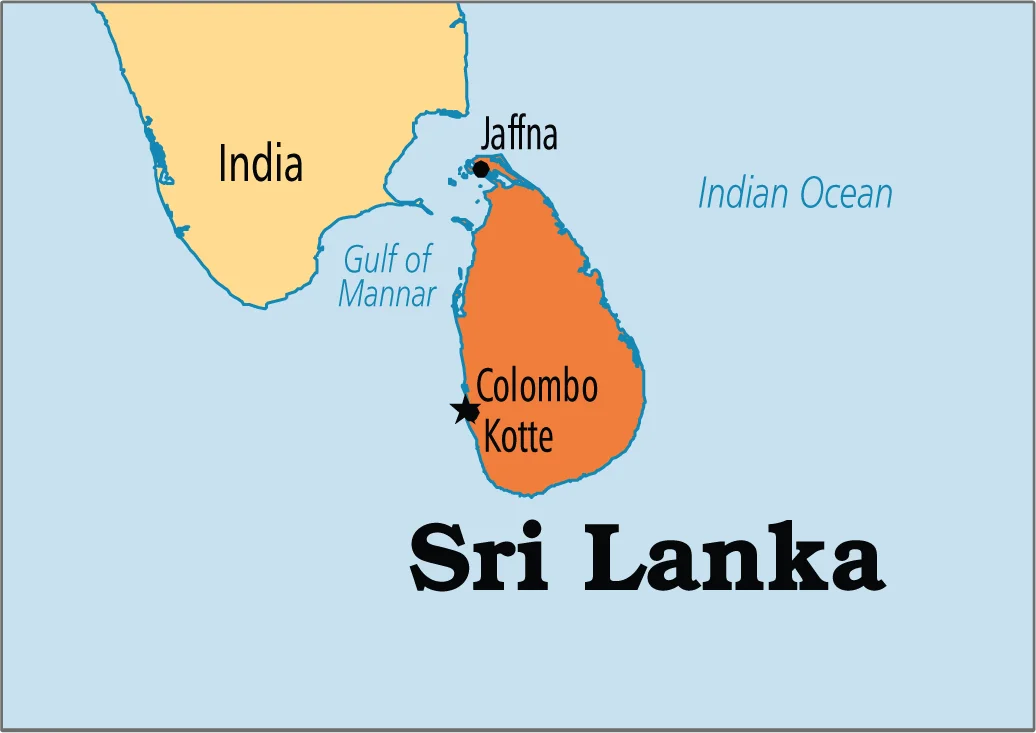
UN Flags Unaddressed Violence in Sri Lanka’s Civil War
Why in News?
The Office of the High Commissioner for Human Rights (UN Human Rights) has released a report titled “We lost everything – even hope for justice”, highlighting conflict-related sexual violence, primarily by security forces, against Tamil civilians during Sri Lanka’s decades-long civil war.
What are the Key Highlights of the UN Human Rights Report on Violence in Sri Lanka?
- Violence During the Civil War: Sexual violence was systematically used during Sri Lanka’s civil war, primarily by State security forces, as a method of intimidation, punishment, and control.
- The violence largely targeted Tamil civilians, including actual or perceived supporters of the Liberation Tigers of Tamil Eelam (LTTE).
- Lack of Accountability and Justice: Even years after the war ended in 2009, survivors continue to be denied justice.
- The absence of investigations, prosecutions, and reparations has created a deep-rooted culture of impunity.
- Impact on Survivors: Victims continue to suffer chronic physical injuries, infertility, psychological trauma, and suicidal tendencies. Persistent surveillance, stigma, and intimidation have led to widespread under-reporting.
- UN Recommendations: The UN states that conflict-related sexual violence may amount to war crimes or crimes against humanity.
- It calls on Sri Lanka to acknowledge past abuses, issue a formal apology, implement survivor-centred reforms, establish an independent prosecution mechanism, and ensure psychological and social support for survivors.
What are the Key Facts About the Sri Lankan Civil War (1983–2009)?
- Ethnic and Social Background: Sri Lanka’s population is ~75% Sinhalese (largely Buddhist) and ~11% Sri Lankan Tamils (largely Hindu), marked by linguistic, religious, and political divisions.
- Tamils trace historical links to South India’s Chola Kingdom as traders and settlers.
- Early tensions were driven less by culture and more by power, representation, and control of the State.
- Colonial Roots of Tensions: Under British rule, divide-and-rule policies and preferential access to English education and civil service jobs for Tamils, especially in Jaffna, generated resentment among the Sinhalese majority.
- Buddhism and Sinhala language were marginalized, laying the groundwork for post-independence ethnic backlash.
- Post-Independence Discrimination: After independence in 1948, successive governments enacted policies that disenfranchised Tamils, including the Ceylon Citizenship Act (1948), Sinhala Only Act (1956), and university standardisation policies.
- State-sponsored Sinhalese settlement in Tamil areas further intensified grievances.
- Sinhalese nationalism further disenfranchised Indian-origin Tamils, who were denied citizenship rights and relegated to statelessness (a person is not recognized as a citizen by any country).
- Rise of Tamil Militancy: Systematic discrimination led to the radicalisation of Tamil youth and the emergence of militant groups.
- The Liberation Tigers of Tamil Eelam (LTTE), formed in 1976 under Velupillai Prabhakaran, sought a separate Tamil homeland, while political fronts like the Tamil United Liberation Front (TULF) demanded a separate Tamil Eelam.
- Outbreak of Civil War (1983): The conflict escalated into full-scale civil war after the Black July riots of 1983, when anti-Tamil pogroms followed an LTTE attack on soldiers.
- Thousands of Tamils were killed, pushing the island into nearly three decades of armed conflict.
- India’s Involvement: The Sirimavo–Shastri (1964) and Sirimavo–Indira Gandhi (1974) Pacts promised Indian citizenship to six lakh Indian-origin Tamils, but poor implementation and the Sri Lankan civil war stalled the process, leaving many stateless.
- India initially supported Tamil militants due to regional concerns and but later shifted course under the Indo–Sri Lanka Accord (1987), signed by then Prime Minister Rajiv Gandhi and President J. R. Jayewardene, by deploying the Indian Peace Keeping Force (IPKF).
- Operation Pawan was India’s IPKF mission in Sri Lanka under the 1987 Indo–Sri Lanka Accord, marking India’s first major overseas peacekeeping operation.
- The IPKF aimed to disarm the LTTE and secure the Jaffna Peninsula. It conducted counter-insurgency operations from 1987 to 1990, preventing the LTTE from retaking Jaffna.
- In 1991, Prime Minister Rajiv Gandhi was assassinated by an LTTE suicide bomber, a direct fallout of India’s intervention in Sri Lanka.
- 13th Amendment to Sri Lanka’s Constitution: It was enacted after the Indo–Sri Lanka Accord (1987), sought to address the ethnic conflict by devolving powers to provincial councils.
- It allowed provinces to legislate on subjects like education, health, agriculture, and transport, while land and police powers remained with the Centre.
- However, devolution remained partial, and the Tamil-majority North and East saw prolonged central rule, limiting the amendment’s intended impact.
- Opposition from Sinhala nationalists and delays in provincial elections have further weakened its implementation.
- Escalation and Eelam Wars: After India’s exit, the war intensified through multiple phases marked by suicide bombings, mass killings, and military offensives.
- Major battles in Jaffna, Elephant Pass, and Mullaitivu caused heavy losses on both sides and widespread civilian suffering.
- End of the War (2009): The civil war ended in May 2009 when the Sri Lankan Army defeated the LTTE and killed its leader Velupillai Prabhakaran, marking a decisive military victory for the State.
- Post-War Reality: Despite the war’s end, many Tamils remain displaced, and allegations of human rights abuses, surveillance, and discrimination persist, cultural Sinhalisation continues to affect reconciliation.
Frequently Asked Questions (FAQs)
1. What was the Sri Lankan Civil War?
It was a nearly three-decade armed conflict (1983–2009) between the Sri Lankan government and the Liberation Tigers of Tamil Eelam (LTTE) over Tamil demands for a separate homeland.
2. What were the main causes of the Sri Lankan Civil War?
Ethnic discrimination, language policies like the Sinhala Only Act (1956), unequal access to education and jobs, and state-sponsored settlement in Tamil areas triggered Tamil alienation and militancy.
3. Who were the Liberation Tigers of Tamil Eelam (LTTE)?
The LTTE was a Tamil separatist militant organisation, formed in 1976 under Velupillai Prabhakaran, aiming to establish an independent Tamil Eelam in northern and eastern Sri Lanka.
4. What event marked the beginning of the civil war in 1983?
The war escalated after the Black July riots (1983), which followed an LTTE attack killing 13 soldiers and led to large-scale anti-Tamil violence.
5. What role did India play in the Sri Lankan Civil War?
India intervened through the Indo–Sri Lanka Accord (1987) and deployed the Indian Peace Keeping Force (IPKF) under Operation Pawan to disarm the LTTE and restore peace.
UPSC Civil Services Examination Previous Year Question (PYQ)
Prelims
Q. Consider the following statements: (2020)
- The value of Indo-Sri Lanka trade has consistently increased in the last decade.
- “Textile and textile articles” constitute an important item of trade between India and Bangladesh.
- In the last five years, Nepal has been the largest trading partner of India in South Asia.
Which of the statements given above is/are correct?
(a) 1 and 2 only
(b) 2 only
(c) 3 only
(d) 1, 2 and 3
Ans: (b)
Q. Elephant Pass, sometimes seen in the news, is mentioned in the context of the affairs of which one of the following? (2009)
(a) Bangladesh
(b) India
(c) Nepal
(d) Sri Lanka
Ans: (d)
Mains
Q. In respect of India-Sri Lanka relations, discuss how domestic factors influence foreign policy.(2013)
Rapid Fire
78th Army Day
The Indian Army marked its 78th Army Day on 15th January 2026 with a historic parade in Jaipur, Rajasthan, emphasising the force’s shift towards modern, agile, and technology-driven warfare.
- Historic Venue: This was the 4th Army Day Parade held outside Delhi, following events in Bengaluru (2023), Lucknow (2024), and Pune (2025), and marked the first instance it was organised outside a cantonment.
- Historical Significance: The day commemorates 15th January 1949, when Field Marshal KM Cariappa became the first Indian Commander-in-Chief, marking full military sovereignty.
- Theme & Focus: The 2026 theme is “Year of Networking and Data Centricity” that highlighted the Army’s push for digital transformation, AI-driven warfare, cyber resilience, and integrated battle management systems.
- Strategic Displays: The parade featured the debut of Bhairav Battalion contingents, representing new lean, agile formations for rapid response.
- Indigenous Tech Showcase: A wide array of Made-in-India systems was displayed, including T-90 & Arjun tanks, K-9 Vajra, Dhanush, ATAGS, BrahMos, Pinaka, and a range of drones (Prabal, Switch, Baaz).
- With approximately 1.4 million active personnel, the Indian Army is the world's largest army, surpassing that of China.
- Cultural Highlights: Performances of Rajasthani folk dances like Kalbelia and Gair, Chenda (traditional percussion instrument from Kerala) performance, and traditional martial arts such as Kalaripayattu and Malkhamb showcased India's diverse cultural heritage.
| Read More: Evolving Warfare and Need for India's Defence Transformation |


Rapid Fire
151st Foundation Day of IMD and Automatic Weather Stations
India has announced a major upgrade in urban weather forecasting with the deployment of 200 Automatic Weather Stations (AWS) across Delhi, Mumbai, Chennai, and Pune, reinforcing disaster preparedness and hyper-local forecasting during the 151st Foundation Day (15th January 1875–2026) of the India Meteorological Department (IMD).
- Automatic Weather Stations (AWS): It is a meteorological station that records and transmits weather data automatically.
- AWS increases the density, reliability, and frequency of surface weather observations, especially in remote or inhospitable areas.
- They provide continuous, high-resolution data, reduce human error and operational costs, and standardise measurements across networks through advanced digital sensors and automated reporting.
- AWS supports agriculture, aviation, urban planning, public safety, and disaster management.
- IMD: It is India’s principal agency for meteorological observations, weather forecasting, and seismology, functioning under the Ministry of Earth Sciences.
- Headquartered in New Delhi, it provides critical forecasts and warnings for agriculture, aviation, shipping, and disaster management.
- Achievements of IMD: Over the last decade, IMD has achieved major technological advancements, with forecast accuracy improving by 40–50%, cyclone track prediction accuracy rising by 35–40%, and seasonal forecast errors reducing from about 7.5% to nearly 2.5%.
- Its weather radar network now covers around 87% of India’s geographical area.
- IMD has expanded Doppler Weather Radars, aerosol monitoring systems, and ultra-short-range forecasts (up to 3 hours), while inaugurating a Model Observatory, 3D-printed AWS, and Agro-Automatic Weather Station, showcasing indigenous, cost-effective meteorological technologies.
- Mission Mausam, led by IMD, reflects a long-term focus on advanced weather science, climate resilience, and public welfare.
- India now provides weather and disaster-related satellite support to Bangladesh, Nepal, Bhutan, and Sri Lanka, strengthening South Asian regional cooperation.
- Its weather radar network now covers around 87% of India’s geographical area.
| Read more: 150th Foundation Day of IMD and Mission Mausam |
Rapid Fire
Japan’s Deep-Sea Rare Earth Mining Initiative
Japan has embarked on the world’s first experimental attempt to extract rare earth elements from the deep-sea at a depth of about 6,000 metres, using its deep-sea scientific drilling vessel Chikyu.
- The initiative is driven by Japan’s effort to reduce heavy dependence on China, which accounts for nearly two-thirds of global rare-earth mining and over 90% of refined output.
- About Minami Torishima: The test mission is being conducted near Minami Torishima, a remote island located within Japan’s Exclusive Economic Zone (EEZ) in the Pacific Ocean.
- The area around Minami Torishima is estimated to contain over 16 million tonnes of rare-earth deposits, including reserves sufficient for 730 years of dysprosium and 780 years of yttrium, both critical for electric vehicles, electronics, wind turbines, and defence systems.
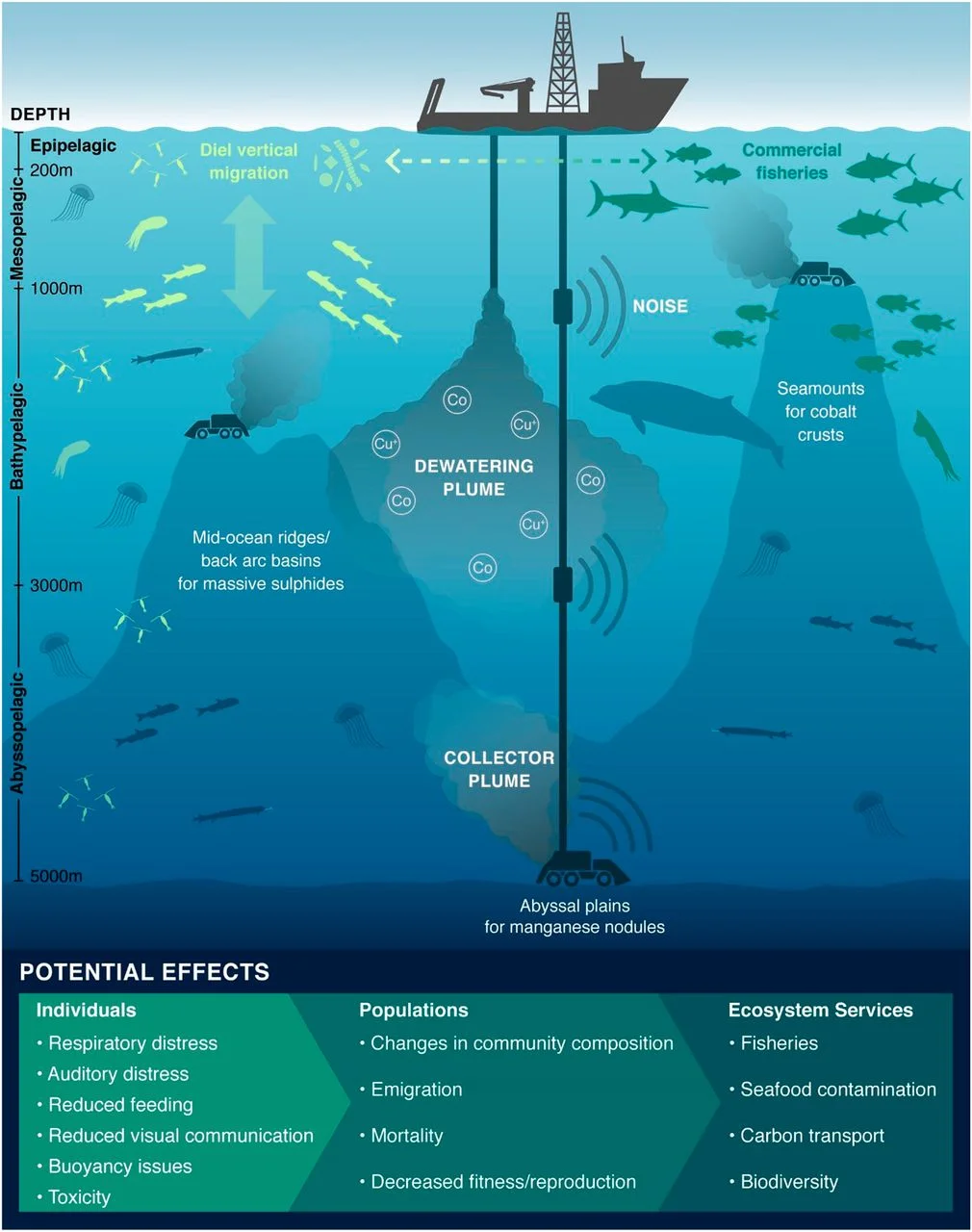
- Deep sea mining: It involves extracting mineral deposits, from ocean depths below 200 metres, an area that covers two-thirds of the world’s seafloor,for industrial use.
- It operates through three methods — collecting polymetallic nodules, mining seafloor sulphide deposits and stripping cobalt-rich crusts.
- Environmental groups warn that deep-sea mining threatens marine ecosystems and biodiversity, even as the International Seabed Authority (ISA) works on a global regulatory framework for mining in international waters.
- Rare Earth Elements (REEs): Rare earths are a group of 17 metals that are difficult to extract and refine but are essential for electric vehicle batteries, wind turbines, electronics, smartphones, computers and missile systems.
| Read more: Deep Sea Mining |


Rapid Fire
India–Israel Joint Ministerial Declaration on Fisheries and Aquaculture
At the 2nd Global Summit on “Blue Food Security: Sea the Future 2026”, India and Israel signed a Joint Ministerial Declaration of Intent to deepen cooperation in fisheries and aquaculture.
- Declaration on Fisheries and Aquaculture: It provides a comprehensive framework to deepen bilateral cooperation in the fisheries and aquaculture sector.
- The Declaration prioritises joint research and innovation in advanced aquaculture systems such as Recirculating Aquaculture Systems (RAS), biofloc, cage culture, aquaponics, mariculture, and seaweed cultivation, along with genetic improvement, broodstock development, and pathogen-free seed production to enhance productivity and resilience.
- It stresses sustainable fishing, capacity building, and trade facilitation, and the creation of Indo–Israel Centres of Excellence, strengthening the Blue Economy and food security of both nations.
- Fisheries and Aquaculture: India is the second-largest fish producer in the world after China, contributing about 8% of global fish production.
- Fish production rose sharply to 184.02 lakh tonnes in 2023–24, nearly doubling from 95.79 lakh tonnes in 2013–14, driven mainly by inland fisheries and aquaculture.
- The Blue Revolution (launched in 2015–16) laid the foundation for sectoral growth, while the Pradhan Mantri Matsya Sampada Yojana (PMMSY), launched in 2020, aims to reform the value chain, enhance production, and improve the socio-economic welfare of fishers and fish farmers.
| Read more: India's Blue Economy Potential |