


Important Facts For Prelims
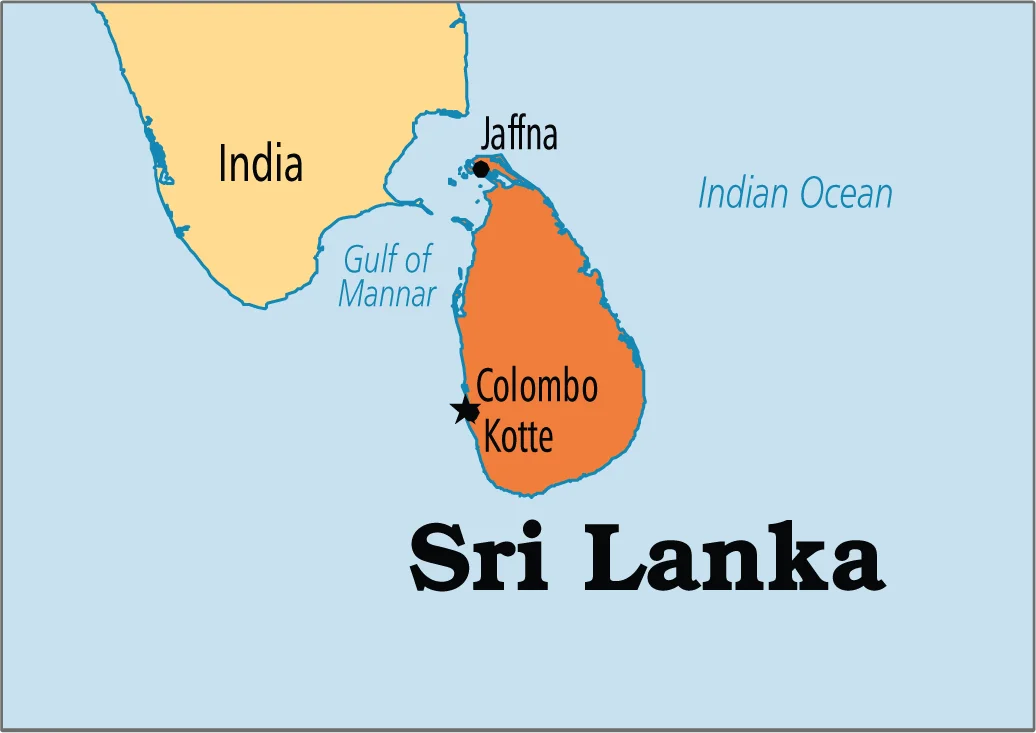
UN Flags Unaddressed Violence in Sri Lanka’s Civil War
- 16 Jan 2026
- 11 min read
Why in News?
The Office of the High Commissioner for Human Rights (UN Human Rights) has released a report titled “We lost everything – even hope for justice”, highlighting conflict-related sexual violence, primarily by security forces, against Tamil civilians during Sri Lanka’s decades-long civil war.
What are the Key Highlights of the UN Human Rights Report on Violence in Sri Lanka?
- Violence During the Civil War: Sexual violence was systematically used during Sri Lanka’s civil war, primarily by State security forces, as a method of intimidation, punishment, and control.
- The violence largely targeted Tamil civilians, including actual or perceived supporters of the Liberation Tigers of Tamil Eelam (LTTE).
- Lack of Accountability and Justice: Even years after the war ended in 2009, survivors continue to be denied justice.
- The absence of investigations, prosecutions, and reparations has created a deep-rooted culture of impunity.
- Impact on Survivors: Victims continue to suffer chronic physical injuries, infertility, psychological trauma, and suicidal tendencies. Persistent surveillance, stigma, and intimidation have led to widespread under-reporting.
- UN Recommendations: The UN states that conflict-related sexual violence may amount to war crimes or crimes against humanity.
- It calls on Sri Lanka to acknowledge past abuses, issue a formal apology, implement survivor-centred reforms, establish an independent prosecution mechanism, and ensure psychological and social support for survivors.
What are the Key Facts About the Sri Lankan Civil War (1983–2009)?
- Ethnic and Social Background: Sri Lanka’s population is ~75% Sinhalese (largely Buddhist) and ~11% Sri Lankan Tamils (largely Hindu), marked by linguistic, religious, and political divisions.
- Tamils trace historical links to South India’s Chola Kingdom as traders and settlers.
- Early tensions were driven less by culture and more by power, representation, and control of the State.
- Colonial Roots of Tensions: Under British rule, divide-and-rule policies and preferential access to English education and civil service jobs for Tamils, especially in Jaffna, generated resentment among the Sinhalese majority.
- Buddhism and Sinhala language were marginalized, laying the groundwork for post-independence ethnic backlash.
- Post-Independence Discrimination: After independence in 1948, successive governments enacted policies that disenfranchised Tamils, including the Ceylon Citizenship Act (1948), Sinhala Only Act (1956), and university standardisation policies.
- State-sponsored Sinhalese settlement in Tamil areas further intensified grievances.
- Sinhalese nationalism further disenfranchised Indian-origin Tamils, who were denied citizenship rights and relegated to statelessness (a person is not recognized as a citizen by any country).
- Rise of Tamil Militancy: Systematic discrimination led to the radicalisation of Tamil youth and the emergence of militant groups.
- The Liberation Tigers of Tamil Eelam (LTTE), formed in 1976 under Velupillai Prabhakaran, sought a separate Tamil homeland, while political fronts like the Tamil United Liberation Front (TULF) demanded a separate Tamil Eelam.
- Outbreak of Civil War (1983): The conflict escalated into full-scale civil war after the Black July riots of 1983, when anti-Tamil pogroms followed an LTTE attack on soldiers.
- Thousands of Tamils were killed, pushing the island into nearly three decades of armed conflict.
- India’s Involvement: The Sirimavo–Shastri (1964) and Sirimavo–Indira Gandhi (1974) Pacts promised Indian citizenship to six lakh Indian-origin Tamils, but poor implementation and the Sri Lankan civil war stalled the process, leaving many stateless.
- India initially supported Tamil militants due to regional concerns and but later shifted course under the Indo–Sri Lanka Accord (1987), signed by then Prime Minister Rajiv Gandhi and President J. R. Jayewardene, by deploying the Indian Peace Keeping Force (IPKF).
- Operation Pawan was India’s IPKF mission in Sri Lanka under the 1987 Indo–Sri Lanka Accord, marking India’s first major overseas peacekeeping operation.
- The IPKF aimed to disarm the LTTE and secure the Jaffna Peninsula. It conducted counter-insurgency operations from 1987 to 1990, preventing the LTTE from retaking Jaffna.
- In 1991, Prime Minister Rajiv Gandhi was assassinated by an LTTE suicide bomber, a direct fallout of India’s intervention in Sri Lanka.
- 13th Amendment to Sri Lanka’s Constitution: It was enacted after the Indo–Sri Lanka Accord (1987), sought to address the ethnic conflict by devolving powers to provincial councils.
- It allowed provinces to legislate on subjects like education, health, agriculture, and transport, while land and police powers remained with the Centre.
- However, devolution remained partial, and the Tamil-majority North and East saw prolonged central rule, limiting the amendment’s intended impact.
- Opposition from Sinhala nationalists and delays in provincial elections have further weakened its implementation.
- Escalation and Eelam Wars: After India’s exit, the war intensified through multiple phases marked by suicide bombings, mass killings, and military offensives.
- Major battles in Jaffna, Elephant Pass, and Mullaitivu caused heavy losses on both sides and widespread civilian suffering.
- End of the War (2009): The civil war ended in May 2009 when the Sri Lankan Army defeated the LTTE and killed its leader Velupillai Prabhakaran, marking a decisive military victory for the State.
- Post-War Reality: Despite the war’s end, many Tamils remain displaced, and allegations of human rights abuses, surveillance, and discrimination persist, cultural Sinhalisation continues to affect reconciliation.
Frequently Asked Questions (FAQs)
1. What was the Sri Lankan Civil War?
It was a nearly three-decade armed conflict (1983–2009) between the Sri Lankan government and the Liberation Tigers of Tamil Eelam (LTTE) over Tamil demands for a separate homeland.
2. What were the main causes of the Sri Lankan Civil War?
Ethnic discrimination, language policies like the Sinhala Only Act (1956), unequal access to education and jobs, and state-sponsored settlement in Tamil areas triggered Tamil alienation and militancy.
3. Who were the Liberation Tigers of Tamil Eelam (LTTE)?
The LTTE was a Tamil separatist militant organisation, formed in 1976 under Velupillai Prabhakaran, aiming to establish an independent Tamil Eelam in northern and eastern Sri Lanka.
4. What event marked the beginning of the civil war in 1983?
The war escalated after the Black July riots (1983), which followed an LTTE attack killing 13 soldiers and led to large-scale anti-Tamil violence.
5. What role did India play in the Sri Lankan Civil War?
India intervened through the Indo–Sri Lanka Accord (1987) and deployed the Indian Peace Keeping Force (IPKF) under Operation Pawan to disarm the LTTE and restore peace.
UPSC Civil Services Examination Previous Year Question (PYQ)
Prelims
Q. Consider the following statements: (2020)
- The value of Indo-Sri Lanka trade has consistently increased in the last decade.
- “Textile and textile articles” constitute an important item of trade between India and Bangladesh.
- In the last five years, Nepal has been the largest trading partner of India in South Asia.
Which of the statements given above is/are correct?
(a) 1 and 2 only
(b) 2 only
(c) 3 only
(d) 1, 2 and 3
Ans: (b)
Q. Elephant Pass, sometimes seen in the news, is mentioned in the context of the affairs of which one of the following? (2009)
(a) Bangladesh
(b) India
(c) Nepal
(d) Sri Lanka
Ans: (d)
Mains
Q. In respect of India-Sri Lanka relations, discuss how domestic factors influence foreign policy.(2013)



