Indian Economy
Gati Shakti Cargo Terminals and India’s Logistics Transformation
For Prelims: Gati Shakti Cargo Terminals, PM Gati Shakti National Master Plan, World Bank Logistics Performance Index, Dedicated Freight Corridors
For Mains: Role of logistics infrastructure in India’s economic growth, PM GatiShakti National Master Plan and integrated infrastructure planning
Why in News?
Gati Shakti Cargo Terminals (GCTs) have emerged as a central driver behind India’s logistics costs falling to 7.97% of GDP, highlighting the impact of PM Gati Shakti National Master Plan in creating an integrated, efficient, and multimodal logistics ecosystem.
Summary
- Gati Shakti Cargo Terminals, backed by PM GatiShakti and logistics reforms, have helped reduce India’s logistics costs to 7.97% of GDP by improving multimodal connectivity, rail-based freight, and supply-chain efficiency.
- Despite progress, road dominance, last-mile gaps, capacity constraints, and sustainability challenges remain, requiring continued infrastructure investment, digital adoption, and green logistics measures.
What are the Gati Shakti Cargo Terminals (GCTs)?
- About: GCTs are modern multi-modal railway cargo hubs developed under the GCT Policy, 2021 of the Ministry of Railways, designed to integrate rail with road, ports, and airports.
- Need for GCTS: Earlier, freight movement in India was scattered across different transport modes without seamless linkages, resulting in inefficient handling and longer turnaround times, high logistics costs, congestion, and higher emissions
- GCTs address this gap by acting as strategic nodes in the logistics chain, connecting multiple modes of transport and significantly reducing cargo handling time, costs, and environmental impact.
- Operational Features: The Engine-on-Load (EOL) system enables trains to depart immediately after loading or unloading.
- GCTs integrated with mechanised loading systems, silos, and modern cargo-handling infrastructure significantly reduce detention time and ensure optimal utilisation of railway assets.
- Sustainability and Cost Efficiency: Rail transport is cleaner and more cost-efficient than road transport, with costs less than half and nearly 90% lower carbon emissions.
- Since 2014, shifting freight to rail has moved 2,672 million tonnes of cargo and saved 143.3 million tonnes of CO₂, supporting India’s decarbonisation goals.
- Key GCTs Driving Logistics Growth: The Manesar (Haryana) GCT, India’s largest automobile terminal, can handle 4.5 lakh vehicles annually and is linked through the Haryana Orbital Rail Corridor.
- In the Northeast, the Moinarband and Cinnamara terminals in Assam strengthen regional trade by handling petroleum, food grains, fertilisers, and containers, with more terminals under construction.
- The New Sanjali GCT in Gujarat, built on private land along the Western Dedicated Freight Corridor, represents a major step toward high-speed, green logistics.
- Progress Under GCTs: Indian Railways has approved 306 GCTs, with a combined capacity of 192 million tonnes per annum; 118 are already commissioned.
- Freight revenues from GCTs grew fourfold between 2022–23 and 2024–25, reaching Rs 12,608 crore.
Gati Shakti Multi-Modal Cargo Terminal (GCT) Policy, 2021
- The GCT Policy aims to accelerate modern cargo terminal development, encourage private participation, and strengthen India’s freight ecosystem, while aligning infrastructure growth with industry demand to position India as a global logistics hub.
- It provides cost exemptions, freight rebates, railway-supported infrastructure, and commercial use of surplus land under Rail Land Development Authority (RLDA), helping create a seamless multimodal logistics network.
Logistics Landscape in India
- India ranks as the 4th largest economy globally, reinforcing the scale and complexity of its logistics needs.
- Logistics contributes 13–14% of GDP and supports livelihoods for over 22 million people, making it a core economic pillar.
- It acts as the backbone of Make in India, enabling manufacturing expansion and global value-chain integration.
- India improved to 38th rank in the World Bank Logistics Performance Index (2023), with a target of top 25 by 2030.
- Inland waterways cargo reached 145.5 million tonnes (2024–25), reflecting growing multimodal transport use.
- The number of operational national waterways increased from 24 to 29, expanding low-cost, green logistics options.
- The Logistics sector employs over 22 million people and is creating millions of new jobs.
What are India’s Key Initiatives Related to Logistics?
- National Logistics Policy (NLP) (2022): NLP launched to lower logistics costs as a percentage of GDP, improve efficiency, and create a seamless, integrated logistics ecosystem, supported by digital platforms to enhance ease of doing business.
- PM GatiShakti National Master Plan (2021): Introduced in October 2021 to integrate all modes of transport into a unified network, bringing together 57 ministries and 36 States/UTs with 1,700 data layers for coordinated infrastructure planning.
- Dedicated Freight Corridors (DFCs): The Ministry of Railways is currently developing two Dedicated Freight Corridors (DFCs), namely, the Eastern Dedicated Freight Corridor(EDFC) from Ludhiana to Sonnagar (1337 Km) and the Western Dedicated Freight Corridor (WDFC) from Jawaharlal Nehru Port Terminal (JNPT) to Dadri (1506 Km).
- These are developed to enable high-capacity, energy-efficient freight movement, reduce congestion on passenger routes, and lower logistics costs.
- Multi-Modal Logistics Parks (MMLPs): Under Bharatmala Pariyojana, MMLPs are large integrated hubs that combine road, rail, air, and warehousing facilities to cut freight costs, reduce congestion, and improve supply-chain efficiency.
- Logistics Data Bank (LDB): LDB is a digital platform that tracks EXIM cargo in real time, enhancing transparency, predictability, and efficiency across the supply chain.
- It has tracked over 75 million EXIM containers (as of October 2024).
- Unified Logistics Interface Platform (ULIP): A single digital interface integrating data from multiple ministries, enabling shipment tracking, ETAs, and better inventory management.
- e-Way Bill System: A mandatory paperless system for goods above Rs 50,000, streamlining inter-state movement and improving compliance.
- Gati Shakti Vishwavidyalaya (GSV): India’s first university dedicated to transport and logistics education, aimed at creating a skilled workforce.
- LEADS (Logistics Ease Across Different States): An annual index assessing logistics performance of States/UTs to guide policy reforms and investments.
What are the Key Challenges in India’s Logistics Sector?
- High logistics costs: India's logistics cost is estimated at 7.97% of GDP in 2023-24 higher than developed economies, making Indian exports less competitive.
- Higher freight cost impacts sectors like textiles and auto components, reducing price competitiveness abroad.
- Road Dominance & Congestion: India relies heavily on road transport (60–65% of freight), which is inefficient compared to rail.
- Highways often face congestion, poor maintenance, and frequent toll delays, leading to slower turnaround times.
- Rail Capacity Constraints: Although cheaper, rail freight suffers from capacity shortages and prioritizing passenger traffic.
- The lack of "last-mile" connectivity to railway sidings often forces businesses back onto roads.
- Port Inefficiencies: While turnaround times have improved, Indian ports still lag behind global competitors in draft depth (ability to handle mega-ships) and evacuation speed, leading to high detention and demurrage charges.
- Compliance Burden: Despite the success of GST (Goods and Services Tax), interstate movements can still be slowed by varying state-level documentation requirements and "checkpost" mentalities in enforcement.
- Fragmentation: The sector is highly fragmented, with millions of small fleet operators owning fewer than five trucks.
- This makes it difficult to standardize pricing, quality, or compliance across the industry.
- Technology & Digitalization Gaps: While platforms like ULIP and LDB exist, adoption is uneven among small players.
- Small transporters still rely on manual documentation despite e-way bills.
- Environmental sustainability challenges: Road-heavy freight causes high emissions. Road transport presently accounts for 12% of India's energy-related CO2 emissions and is a key contributor to urban air pollution.
What Measures can Strengthen India’s Logistics Sector?
- Accelerate Infrastructure Development: Fast-track DFCs and multimodal projects; adopt PM GatiShakti–style monitoring for all major logistics assets.
- Example: Mumbai Trans Harbour Link (2024) improved access to JNPT and cut transit time.
- Improve Last-mile Connectivity: Prioritise links to ports, industrial hubs, and economic corridors to reduce delays and costs.
- Streamline Regulations: Implement single-window clearances nationwide; expand faceless customs assessment and build on e-SANCHIT to digitise all approvals.
- Promote Technology Adoption: Incentivise AI, IoT, blockchain via tax benefits; expand ULIP coverage; support logistics startups with data access and pilots.
- Enhance skills: Align training with industry needs; expand specialised institutes; partner with e-commerce firms for last-mile training; launch a national logistics certification.
- Upgrade Warehousing Chains: Create a national warehousing grid; incentivise Grade-A warehouses and cold storage; mandate quality standards.
- Promote green logistics: Introduce logistics-specific carbon credits; tax breaks for green tech; develop green freight corridors; roll out a green logistics certification.
Conclusion
Gati Shakti Cargo Terminals are reducing logistics costs, strengthening multimodal connectivity, and promoting green freight movement. Along with PM GatiShakti and digital reforms, they are laying the foundation for a globally competitive logistics ecosystem in India.
|
Drishti Mains Question: “Gati Shakti Cargo Terminals represent a paradigm shift in India’s freight logistics.” Examine their role in reducing logistics costs and promoting sustainability. |
Frequently Asked Questions (FAQs)
Q. What are Gati Shakti Cargo Terminals (GCTs)?
Modern multi-modal railway cargo hubs under the GCT Policy, 2021 that integrate rail with road, ports, and airports for faster freight movement.
Q. Why are GCTs important for India’s logistics sector?
They reduce turnaround time, logistics costs, congestion, and emissions by replacing fragmented freight handling with integrated hubs.
Q. How do GCTs support sustainability?
By shifting freight to rail, which is cheaper and emits nearly 90% less CO₂ than road transport, aiding India’s decarbonisation goals.
Q. What role does PM GatiShakti play in logistics reforms?
It enables coordinated, multimodal infrastructure planning across ministries and states using a single digital platform.
Q. What are the key challenges still facing India’s logistics sector?
Road dominance, last-mile gaps, rail capacity constraints, fragmented operators, uneven digital adoption, and environmental concerns.
UPSC Civil Services Examination Previous Year Question (PYQ)
Q. The Gati-Shakti Yojana needs meticulous coordination between the government and the private sector to achieve the goal of connectivity. Discuss. (2022)


Indian Economy
Digital Transformation of India’s Dairy Sector
For Prelims: National Dairy Development Board (NDDB), Pashu Aadhaar, Basic Animal Husbandry Statistics, White Revolution, Operation Flood, Amul, White Revolution 2.0, Malnutrition, Lumpy Skin Disease, Methane, Sanitary and Phytosanitary (SPS).
For Mains: Steps taken for digitalizing India's dairy sector, Status of dairy sector in India, Key challenges facing India's dairy industry and way forward.
Why in News?
The National Dairy Development Board (NDDB) has spearheaded the digital transformation of India's dairy sector by implementing integrated platforms and innovative tools to improve efficiency, transparency, traceability, and farmer welfare.
What Steps have been Taken for Digitalizing India's Dairy Sector?
- National Digital Livestock Database: The National Digital Livestock Mission (NDLM) was launched to create a unified ecosystem called Bharat Pashudhan. It issues a unique 12-digit "Pashu Aadhaar" for all livestock, with over 35.68 crore tags generated to serve as the primary key for health and productivity transactions.
- Automatic Milk Collection System (AMCS): It digitizes daily milk collection by recording quantity, quality, and fat content, automates farmer payments, and provides real-time SMS alerts to farmers and data insights to cooperatives. Covering over 26,000 Dairy Cooperative Societies, it benefits 17.3 lakh milk producers in 12 states/UTs.
- NDDB Dairy ERP (NDERP): This comprehensive enterprise resource planning (ERP) platform covers Finance, Inventory, Sales, Manufacturing, HR, and Payroll for dairy operations, accessible via web and mobile apps (mINDERP). Integrated with AMCS, it provides an end-to-end digital solution from cow to consumer, including mass-balancing in production to reduce processing losses.
- Information Network for Animal Productivity & Health (INAPH): Captures real-time data on breeding, nutrition, and health services at the farmer’s doorstep, enabling monitoring and assessment of livestock development programs.
- Semen Station Management System (SSMS): It manages the entire bull lifecycle, semen production, quality control, biosecurity, and farm/fodder management, along with the distribution of Frozen Semen Doses (FSDs). It is linked with Information Network for Semen Production and Resource Management (INSPRM) and INAPH to ensure real-time data sharing, traceability, and standardized operations across 38 semen stations.
- Internet-based Dairy Information System (i-DIS): It is a centralized platform for data collection, sharing, and analysis across milk unions, federations, and allied units, tracking procurement, sales, manufacturing, distribution, and input supply to create a national cooperative dairy industry database.
- Milk Route Optimisation using GIS: A free, web-based dynamic GIS tool provides route planning and optimisation for milk collection and distribution, reducing transportation distance, fuel costs, and time to improve operational efficiency for cooperatives.
What is the Status of the dairy sector in India?
- Global Position: India continues to maintain its position as the world’s largest producer of milk since 1998 (followed by the US and Pakistan), contributing about 25% of global milk output.
- Total milk production reached 247.87 million tonnes in 2024–25, a 3.58% increase from 239.30 million tonnes in 2023-24.
- India ranks 49th in milk exports. New Zealand is the world’s largest exporter of milk and dairy products, while China is the largest importer of dairy goods globally.
- Per Capita Availability: Increased significantly from 319 grams/day (2014–15) to 485 grams/day (2024–25), indicating improved nutritional security and dairy productivity.
- Top Producing States: As per the Basic Animal Husbandry Statistics 2025, the top milk-producing states are Uttar Pradesh (15.66%), Rajasthan (14.82%), Madhya Pradesh (9.12%), Gujarat (7.78%), and Maharashtra (6.71%). Together, these five states contribute 54.09% of India’s total milk production.
- Growth by Cattle Category: Production increased across all major categories, with Exotic/Crossbred Cattle showing the highest growth at 4.97%, followed by Indigenous/Non-descript Cattle at 3.51%, and Buffaloes at 2.45%.
- Contribution of Dairy in Agricultural GDP: The milk group (milk, ghee, butter, and lassi) accounted for about 40% of the total output value from agriculture, livestock, forestry, and fishing in 2022–23.
White Revolution and Operation Flood
- About: The White Revolution refers to India's dramatic increase in milk production and is synonymous with Operation Flood, the world's largest dairy development programme.
- It was launched on 13th January 1970 by the NDDB under the leadership of Dr. Verghese Kurien, known as the Father of the White Revolution.
- Implementation and Objectives: Implemented in three phases (1970–1980, 1981–1985, and 1985–1996), its objectives were achieving national milk self-sufficiency and establishing a national milk grid linking rural producers to over 700 urban centers.
- The program also aimed to eliminate middlemen for fair farmer profits and modernize infrastructure by promoting cooperative societies based on the successful Anand model of Amul.
- Socio-Economic Impact: This initiative transformed India from a milk-deficient, import-dependent nation into the global leader in milk production, surpassing the United States in 1998. It significantly enhanced rural livelihoods, empowered millions of small and marginal farmers (many of them women), and created a sustainable cooperative ecosystem.
White Revolution 2.0
- About: White Revolution 2.0, the contemporary successor initiative, was formally launched on 19th September 2024 by the Ministry of Cooperation to build upon the original White Revolution while addressing modern challenges in productivity, women empowerment, and malnutrition.
- Key Targets and Objectives: Its key objectives include increasing daily milk procurement by cooperatives by ~50% (from 660 lakh kg/day to 1,007 lakh kg/day by 2028–29), expanding the cooperative network in uncovered villages, and enhancing productivity via genetic improvement, embryo transfer, and IVF.
What are the Key Challenges Facing India's Dairy Industry?
- Climate & Environmental Vulnerabilities: Milk yields have declined sharply—by 10–30% in northern states—posing a serious risk to nearly 30% of national production, a trend driven in part by intensifying heatwaves as 2024 was confirmed by the World Meteorological Organization as the warmest year on record with global temperatures averaging 1.55°C above pre-industrial levels.
- Outbreaks such as Lumpy Skin Disease caused a 10% output drop in 2022–23, while mastitis leads to annual losses of Rs 14,000 crore.
- Economic Viability & Rising Costs: Over 30 years, cattle feed prices surged by 246% due to rising costs of key ingredients (e.g., oilseed cakes), severely eroding farmer profits. Rising costs risks demand destruction as milk becomes a top food expenditure item, costing Rs 314/month in rural and Rs 466/month in urban India.
- Structural & Productivity Deficits: Average milk yields are low at 8.55 kg/day for exotic/crossbred and 3.44 kg/day for indigenous animals, with wide regional disparities such as Punjab's 13.49 kg/day versus West Bengal's 6.30 kg/day. Furthermore, over 70% of marketable milk is handled by the unorganized sector, resulting in poor quality control, inadequate cold chains, and limited credit access.
- Breeding & Genetic Sustainability Concerns: An over-reliance on crossbreeding, with a national average of 30% reaching 96% in Kerala, risks eroding native breeds vital for biodiversity and disease resistance. The push for sex-sorted semen, aiming for 90% female calves, also raises concerns over the disposal of unproductive females, a problem exacerbated by anti-slaughter laws.
- Environmental Footprint: Livestock account for roughly 32% of human-caused methane emissions, posing a significant climate challenge.
How can India's Dairy Industry be Improved?
- Genetic Improvement & Breeding Technologies: Sex-Sorted (SS) semen should be deployed to increase female calves from high-yield indigenous breeds like Kankrej and Gir, boosting the future population of milk-producing cows.
- Technologies like Embryo Transfer (ET) can enable a single High-Genetic-Merit cow to produce up to 12 calves yearly, while scaling In Vitro Fertilisation (IVF) can allow for 33-35 calves per donor cow annually to rapidly multiply elite genetics.
- Enhance Nutrition & Reduce Environmental Impact: Promote easily digestible forages like legumes and grains, and use specific feed additives to reduce methane emissions by shortening fermentation and inhibiting methane-producing microbes.
- Additionally, expand Total Mixed Ration (TMR) plants—like Amul's in Gujarat—to produce ready-to-eat, nutrient-rich fodder mixes from maize, jowar, and oat grass, and capture the released methane for biogas production to create a circular economy.
- Digital & Precision Technologies: IoT collars and AI-based udder scanners should be deployed for the early detection of diseases like mastitis, while automated milking machines reduce contamination and labor costs. The Bharat Pashudhan database, with its 12-digit livestock IDs, must be fully implemented to track health, breeding, and milk quality for every animal.
- Strengthen Infrastructure & Market Access: Installing solar-powered chilling units at village levels will increase formal milk processing and reduce spoilage, while equipping collection centers with quality-testing tools and improved Sanitary and Phytosanitary (SPS) standards is essential to access premium global markets.
Conclusion
- India’s dairy sector, built on the cooperative legacy of the White Revolution, is now transitioning into a tech-driven, farmer-centric ecosystem. By fully leveraging digital platforms, genetic technologies, and sustainable practices, India can ensure its global leadership translates into resilient growth, fairer farmer incomes, and enhanced nutritional security for all.
|
Drishti Mains Question: Examine the role of digital technologies in improving efficiency and transparency in India’s dairy sector. |
Frequently Asked Questions (FAQs)
1. What is Bharat Pashudhan?
Bharat Pashudhan is India’s unified digital livestock ecosystem under NDLM, issuing 12-digit Pashu Aadhaar IDs for health, breeding, and productivity tracking of animals.
2. Which are India’s top milk-producing states?
Uttar Pradesh (15.66%), Rajasthan (14.82%), Madhya Pradesh (9.12%), Gujarat (7.78%), and Maharashtra (6.71%) collectively contribute 54.09% of national milk output.
3. How does the dairy sector contribute to greenhouse gas emissions?
Livestock are a major source of methane, accounting for roughly 32% of India's human-caused methane emissions through enteric fermentation and manure management.
UPSC Civil Services Examination, Previous Year Question (PYQ)
Mains
Q. How far is Integrated Farming System (IFS) helpful in sustaining agricultural production? (2019)
Q. Explain various types of revolutions, took place in Agriculture after Independence in India. How have these revolutions helped in poverty alleviation and food security in India? (2017)
Q. Livestock rearing has a big potential for providing non-farm employment and income in rural areas. Discuss suggesting suitable measures to promote this sector in India. (2015)
Important Facts For Prelims
Marine and Space Biotechnology
Why in News?
India is strengthening its focus on marine and space biotechnology under the Blue Economy framework, Deep Ocean Mission and BioE3 initiative to reduce import dependence and build leadership in next-generation biomanufacturing.
What is Marine Biotechnology?
- About: It involves the study and application of marine microorganisms, algae, and other ocean life to develop bioactive compounds, industrial enzymes, biomaterials, food ingredients and biostimulants.
- These organisms are naturally adapted to extreme pressure, salinity, low light and nutrient-poor conditions, making them highly valuable for climate-resilient biomanufacturing applications.
- India’s Current Status: Cultivated marine biomass (mainly seaweed) remains modest at ~70,000 tonnes annually. India continues to import agar, carrageenan, and alginates used in food, pharmaceuticals, cosmetics, and medical products.
- Policy Initiatives: Policy initiatives such as Blue Economy framework, Deep Ocean Mission and BioE3 aim to promote integrated marine biomanufacturing, linking cultivation, extraction, and downstream applications.
- Key actors include ICAR–Central Marine Fisheries Research Institute (CMFRI), private firms like Sea6 Energy and ClimaCrew, and state-level initiatives exploring high-value marine bio-products.
- Significance: India possesses a coastline of over 11,000 km and an Exclusive Economic Zone exceeding 2 million sq km, giving access to one of the world’s richest marine biodiversity reservoirs.
- Marine biomanufacturing can unlock new sources of food, chemicals, biofuels and biomaterials while reducing stress on land, freshwater and agriculture.
What is Space Biotechnology?
- About: Space biotechnology studies how microbes, plants, and human biological systems behave under microgravity and radiation conditions. Its applications include:
- Space-based food production
- Closed-loop life-support regeneration
- Microbial biomanufacturing of materials
- Astronaut health management, including microbiome and probiotic research
- India’s progress: ISRO’s microgravity biology programme is conducting experiments on microbes, algae, and biological systems.
- Research supports long-duration human spaceflight missions by addressing nutrition, health, and sustainability in space.
- Private-sector participation remains limited as the field is still nascent and research-intensive.
- Significance: Space biotechnology is critical for India’s human spaceflight ambitions by enabling safe food production, life-support regeneration and long-duration astronaut health management.
|
Global Initiatives in Marine and Space Biotechnology |
|
|
Country/Region |
Key Initiatives |
|
European Union |
Large-scale marine bioprospecting(Under Horizon Europe), algae biomaterials and bioactive compound programmes supported by shared research infrastructure. |
|
China |
Rapid expansion of seaweed aquaculture integrated with deep-sea exploration and industrial marine bioprocessing. |
|
USA & Australia |
Extensive marine and space biotechnology research ecosystems. |
|
USA (NASA), ESA, JAXA, China (Tiangong) |
Microgravity research on protein crystallisation, plant growth, microbiomes, regenerative medicine and closed-loop life-support systems. |
Frequently Asked Questions (FAQs)
1. What is the Deep Ocean Mission?
It is India’s flagship mission for deep-sea exploration, manned submersibles, and bioprospecting of marine bioresources for minerals, energy and biotechnology.
2. What is the Blue Economy Framework?
It is India’s policy approach for sustainable use of ocean resources for economic growth, livelihoods, climate resilience and marine-based industries.
3. What is the BioE3 Initiative?
It is India’s bioeconomy expansion initiative focused on Economy, Environment and Employment through high-value biomanufacturing and green bioprocessing.
UPSC Civil Services Examination, Previous Year Question (PYQ)
Prelims
Q. Other than resistance to pests, what are the prospects for which genetically engineered plants have been created? (2012)
- To enable them to withstand drought
- To increase the nutritive value of the produce
- To enable them to grow and do photosynthesis in spaceships and space stations
- To increase their shelf life
Select the correct answer using the codes given below:
(a) 1 and 2 only
(b) 3 and 4 only
(c) 1, 2 and 4 only
(d) 1, 2, 3 and 4
Ans: (c)
Q. Mycorrhizal biotechnology has been used in rehabilitating degraded sites because mycorrhiza enables the plants to (2013)
- resist drought and increase absorptive area
- tolerate extremes of pH
- resist disease infestation
Select the correct answer using the codes given below:
(a) 1 only
(b) 2 and 3 only
(c) 1 and 3 only
(d) 1, 2 and 3
Ans: (d)


Rapid Fire
Bhairav Battalion
The Bhairav Battalions, the Indian Army's newly raised modern warfare force, will make their debut in the Army Day Parade in Jaipur.
Bhairav Battalion
- About: The Bhairav Battalions are high-speed, offensive formations of the Indian Army, designed to bridge the operational gap between Para Special Forces and regular infantry units.
- The Bhairav Battalion is a specialized formation that fills the operational gap between the strategic Para Special Forces (SF) and the tactical Ghatak Platoons. While Ghataks function at the battalion level for localized assaults, and Para SF execute deep, strategic missions behind enemy lines, Bhairav Battalions provide rapid-response for immediate border contingencies or short-notice offensives.
- It is a 2025 Indian Army initiative for modernization and force restructuring to meet the demands of hybrid and technology-driven warfare.
- Composition: Each battalion is a compact, integrated formation of about 200-250 personnel, drawn from infantry, artillery, air defence, and signals. The Army applies the "Sons of the Soil" recruitment concept, prioritizing local soldiers for superior terrain and climatic familiarity in their deployment sectors.
- Deployment: 15 Bhairav Battalions have been raised so far, with plans to expand to 23–25 battalions. They are being placed under corps and division-level formations, especially in sectors considered sensitive, Rajasthan, Jammu, Ladakh and the Northeast.
- Focus on Unmanned and Hybrid Warfare: These units are a cornerstone of the Army's push for unmanned warfare and are trained to employ drones for targeting enemy bases and formations deep inside hostile territory. To support this, the force is creating a pool of over one lakh drone operatives.
| Read More: Evolving Warfare and Need for India's Defence Transformation |
Rapid Fire
Source Code of Smartphones
The Union government and the MAIT (Manufacturers’ Association for Information Technology) (apex body representing India's electronics & ICT hardware sector) have refuted reports claiming that smartphone manufacturers would be required to disclose their source code, clarifying that no such demand is under consideration.
- Source Code: It is the fundamental set of programmed instructions that controls a smartphone’s operating system, hardware functions, and applications, enabling the device to run securely and efficiently.
- While parts of Android are open-source, manufacturers add proprietary modifications and hardware-specific adaptations.
- However, the source code is kept confidential because it protects commercial secrets and acts as a critical security barrier, preventing misuse and exploitation.
- Limitations of Source Code Disclosure: Full source code disclosure is rare globally, except in limited defence contexts.
- Revealing internal code can increase vulnerability to cyberattacks and data breaches.
- Even global firms like Apple do not share full source code with governments.
- Regulation of Source Code: No law mandates public disclosure of source code by private companies in India.
- Earlier telecom-related standards, including the Indian Telecom Security Assurance Requirements (ITSAR), 2023 issued by the National Centre for Communication Security (NCSS) under the Department of Telecommunications (DoT), which mentioned source code disclosure, were amended in 2025 to remove such provisions.
- Earlier, smartphones were covered under the Mandatory Testing and Certification of Telecommunication Equipment (MTCTE) framework, which stems from the Indian Telegraph (Amendment) Rules, 2017.
- However, after the Telecommunications Act, 2023, the DoT and MeitY removed smartphones from MTCTE, as they already undergo certification under standards set by the Bureau of Indian Standards (BIS).
- Policy oversight follows a consultative, non-intrusive approach, now any security review requires only internal test reports excluding intellectual property (IP).
- The framework balances cybersecurity, ease of doing business, and IP protection, in line with global practices.
| Read more: India's Quest for Technological Sovereignty |


Important Facts For Prelims
Governor’s Rule in Chakma Autonomous District Council
Why in News?
The Governor of Mizoram has extended Governor’s Rule in the Chakma Autonomous District Council (CADC) for another six months, citing continued political instability despite the State Cabinet opposing the extension.
- Governor’s Rule was first imposed in the CADC in July 2025 due to prolonged political instability.
Chakma Autonomous District Council (CADC)
- It was constituted in 1972 under the Sixth Schedule of the Indian Constitution to protect the political and cultural interests of the Chakma people in Mizoram.
- It exercises legislative, executive, and judicial powers over designated subjects within its jurisdiction.
- The Chakma People: They are the second-largest Scheduled Tribe in Mizoram after the Mizo, speaking Chakma (Changma Bhajchare).
- They are a Buddhist community traditionally practising Jhum cultivation and are settled across the Chittagong Hill Tracts and parts of northeast India (primarily Mizoram, Tripura, and Arunachal Pradesh).
What are the Key Facts About the Autonomous District Council?
- Constitutional Basis: Autonomous District Councils (ADCs) are established under the Sixth Schedule read with Article 244(2) to provide self-governance to tribal areas in Assam, Meghalaya, Tripura and Mizoram (AMTM).
- The arrangement seeks to protect tribal land, culture and customary laws while operating within India’s federal framework, reflecting asymmetric federalism
- Administrative Structure: Sixth Schedule areas are organised into Autonomous Districts, which may be further divided into Autonomous Regions. Each district has a District Council, and each region a Regional Council.
- The Governor has the authority to create, alter or reorganise these units, indicating strong executive oversight.
- Composition and Tenure: An ADC has a maximum of 30 members—26 elected and up to 4 nominated by the Governor. Elected members hold office for five years, while nominated members serve during the pleasure of the Governor.
- The Bodoland Territorial Council, Assam is an exception with 46 members.
- Legislative Powers: District and Regional Councils can legislate on land, forests (excluding reserved forests), inheritance, marriage and social customs, and regulation of non-tribal moneylending and trade.
- All such laws require the assent of the Governor, limiting absolute autonomy.
- Applicability of Laws: Central and State laws do not apply automatically to Sixth Schedule areas. In Assam's autonomous districts under the Sixth Schedule, applicability is decided by the Governor (or the Council for specific subjects).
- In Meghalaya, Tripura and Mizoram, Central laws require Presidential notification, while State laws require Governor’s notification.
- Governor’s Administrative Powers: The Governor may appoint a commission of inquiry into ADC administration and, based on its recommendations, dissolve a District or Regional Council and assume its functions temporarily. Such intervention, though constitutionally valid, is expected to respect the federal spirit.
- Under the Sixth Schedule, the Governor may appoint a commission of inquiry into ADC and, based on its findings, the Governor may dissolve the District or Regional Council and assume its functions temporarily.
- Although constitutionally permitted, this intervention often referred to as Governor’s Rule in Autonomous District Councils is expected to be exercised in consultation with the State Government and in a manner consistent with the federal spirit of the Constitution.
- Judicial Powers: ADCs may establish village councils or courts to try cases between Scheduled Tribe members.
- However, they cannot try cases involving the death penalty, life imprisonment or imprisonment of five years or more, unless empowered by the Governor. The High Court’s jurisdiction is defined by gubernatorial rules.
- Significance: ADCs enable tribal self-rule and protection of customary institutions, making them central to inclusive governance in the North-East.
Frequently Asked Questions (FAQs)
1. What is the Chakma Autonomous District Council (CADC)?
It is an Autonomous District Council constituted in 1972 under the Sixth Schedule to protect the political and cultural interests of the Chakma people in Mizoram.
2. What is Governor’s Rule in Autonomous District Councils?
It refers to a situation where the Governor dissolves an ADC and temporarily assumes its functions after an inquiry, as permitted under the Sixth Schedule.
3. Under which constitutional provision are ADCs established?
ADCs are established under the Sixth Schedule read with Article 244(2) of the Constitution.
4. Do Central and State laws automatically apply to ADC areas?
No, their applicability depends on notifications—by the Governor or the President—varying across Sixth Schedule states.
5. Why are ADCs important for North-East India?
ADCs enable tribal self-rule, protect customary laws and land rights, and promote inclusive governance in tribal regions.
UPSC Civil Services Examination, Previous Year Questions (PYQs)
Prelims
Q. Which of the following provisions of the Constitution of India have a bearing on Education? (2012)
- Directive Principles of State Policy
- Rural and Urban Local Bodies
- Fifth Schedule
- Sixth Schedule
- Seventh Schedule
Select the correct answer using the codes given below:
(a) 1 and 2 only
(b) 3, 4 and 5 only
(c) 1, 2 and 5 only
(d) 1, 2, 3, 4 and 5
Ans: d
Q. The provisions in Fifth Schedule and Sixth Schedule in the Constitution of India are made in order to (2015)
A. protect the interests of Scheduled Tribes
B. determine the boundaries between States
C. determine the powers, authority and responsibilities of Panchayats
D. protect the interests of all the border States
Ans: A
Rapid Fire
First Indian Appointed to Chair the ABDM
Senior Indian diplomat DB Venkatesh Varma has been nominated by the UN Secretary General to chair the Advisory Board on Disarmament Matters (ABDM) for the 2026–27 term.
- The ABDM has earlier included Indian diplomats as members, but 2026 marks the first time an Indian has been appointed as its Chair.
- ABDM: It was established in 1978 following the 10th Special Session of the UN General Assembly.
- It functions as an expert advisory body to the UN Secretary-General on issues related to arms limitation and disarmament.
- Composition: The ABDM consists of 15 members, selected by the Secretary-General from all regions of the world based on their expertise in disarmament and international security.
- The Director of United Nations Institute for Disarmament Research (UNIDIR) serves as an ex officio member, and the chairpersonship rotates annually by region or discussion theme.
- Working & Sessions: The ABDM meets twice a year, alternating between New York and Geneva.
- Its agenda is framed around requests from the Secretary-General as well as the Board’s own recommendations.
- After each session, the Chair submits a private report to the Secretary-General, who in turn presents an annual report to the UN General Assembly on the Board’s activities.
- Functions: The Board advises the Secretary-General on arms control and disarmament policies, supports research and studies within the UN system, acts as the Board of Trustees of UNIDIR, and guides the UN Disarmament Information Programme, contributing to global peace and security through expert-led cooperation.
| Read more: Nuclear Disarmament: India's Balancing Act |


Rapid Fire
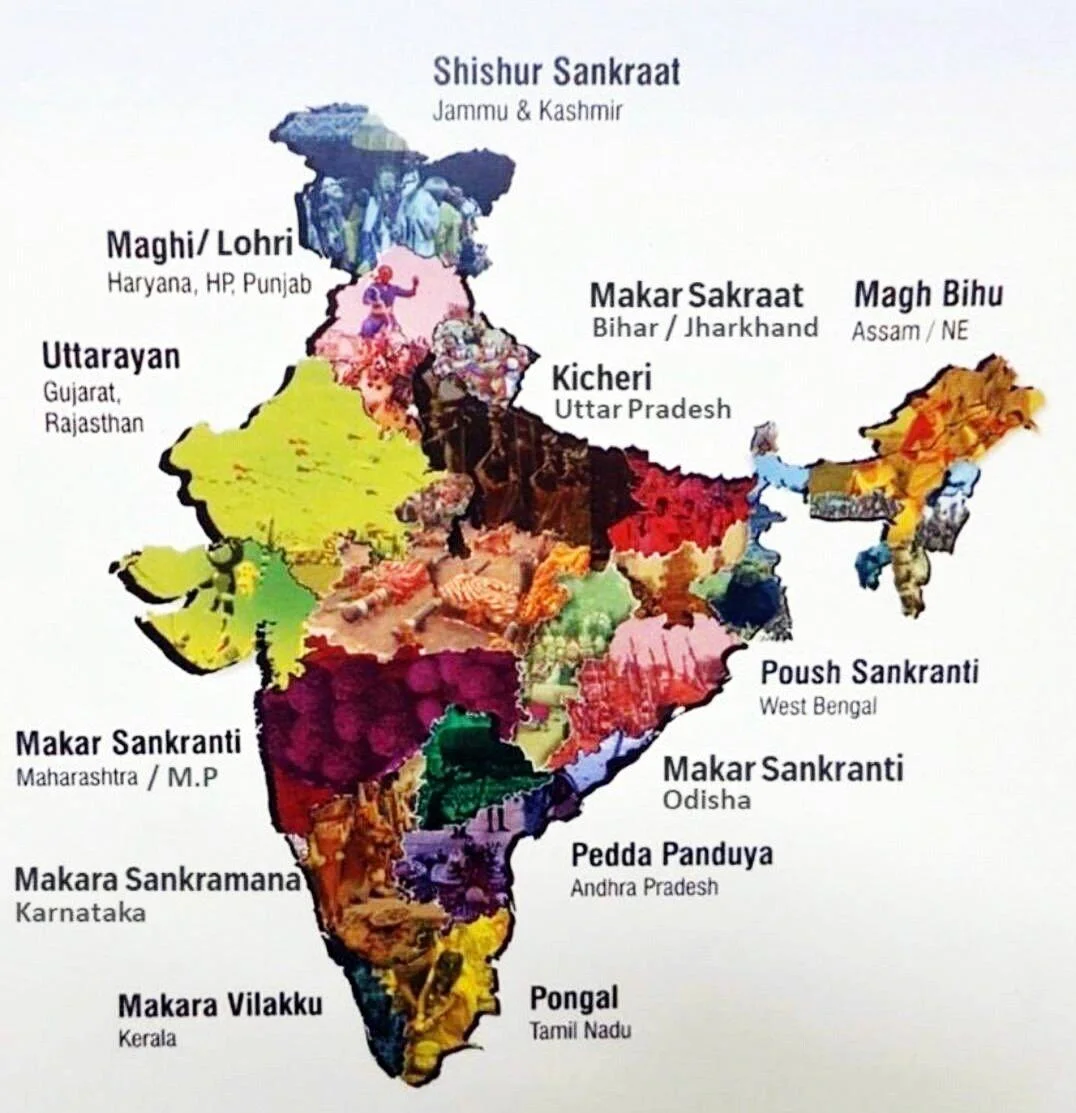
Makar Sankranti 2026
Makar Sankranti is a pan-India harvest festival, observed on 14th January, marked by regionally diverse customs and celebrations.
- Solar & Astronomical Basis: Unlike most Hindu festivals, it follows the solar calendar, falling consistently around 14th January, marking the Sun’s northward journey (Uttarayan) into Capricorn (Makara).
- It represents the shift from winter to warmer months, symbolizing the end of inactivity.
- Agrarian & Seasonal Significance: It is primarily a harvest festival, signaling the end of winter and the start of a new agricultural cycle, fostering gratitude for nature’s abundance.
- Regional Diversity: Celebrated under various names and customs:
- Pongal in Tamil Nadu (a four-day festival with kolam decorations).
- Lohri in Punjab (bonfires and community singing).
- Magh Bihu in Assam (feasts, meji bonfires, and community meals).
- Khichdi in Bihar (traditional rice and lentil dish).
- Kite-flying in Gujarat and Rajasthan (e.g., Ahmedabad’s International Kite Festival).
- Social & Unifying Message: Traditions of exchanging sweets (like sesame-jaggery preparations) promote harmony, sharing, and community bonding, reinforcing social goodwill.
| Read More: Harvest Festivals |