Biodiversity & Environment
Year-End Review 2025: Ministry of Environment, Forest and Climate Change
For Prelims: Aravalli, Madhav Tiger Reserve, All India Tiger Estimation, Elephant Reserves, Protected Areas, Project Cheetah, Gandhisagar Wildlife Sanctuary, Project Dolphin, Sloth Bear, Gharial, Snow Leopard, Carbon Credit Trading Scheme (CCTS), National Clean Air Programme (NCAP), Nagar Van Yojana, MISHTI Programme, Ramsar Sites, Extended Producer Responsibility (EPR), PARIVESH 2.0, PM Gatishakti NMP, Sovereign Green Bonds, Coral Reefs, Critical Mineral.
For Mains: Key Achievements and reforms of the Ministry of Environment, Forest and Climate Change in the year 2025. Further steps needed to strengthen environmental conservation.
Why in News?
In its Year-End Review 2025, the Ministry of Environment, Forest and Climate Change (MoEFCC) detailed India’s key achievements in environmental conservation, climate resilience, and institutional reforms.
- The document marks 2025 as a year of consolidating the nation’s transition toward sustainable and ecologically restorative growth.
Summary
- India enhanced forest cover, wildlife reserves, and urban greenery, achieving global recognition in forest gain.
- Major reforms included Green Credit Programme, Van Amendment Rules, PARIVESH 2.0, and environmental clearance simplifications.
- Future priorities focus on legal enforcement, circular economy, renewable energy, climate-resilient infrastructure, and community-led ecosystem restoration.
What are the Key Achievements of the Ministry of Environment, Forest and Climate Change in the year 2025?
- Forest Conservation & Green Cover: India improved to 9th globally in forest area (FAO 2025) and retained 3rd position worldwide in annual net forest gain.
- Unveiled a Detailed Action Plan for Aravalli Landscape Restoration and 36,025 hectare area restored in 2025.
- Wildlife Conservation: New Madhav Tiger Reserve (Madhya Pradesh) declared; 6th All India Tiger Estimation initiated. Elephant Reserves increased to 33 in 2025 (up from 26 in 2014).
- Protected Areas increased to 1,134 (from 745 in 2014); Community Reserves increased to 309.
- Project Cheetah entered expansion phase with introduction into Gandhisagar Wildlife Sanctuary (MP). The total cheetah population reached 30, including 19 cubs born in India.
- Launched 5 national-level projects (including Project Dolphin Phase II, Sloth Bear, Gharial, a Centre of Excellence for Human-Wildlife Conflict Management, and a Project on "Tigers Outside Tiger Reserve") and 4 national-level action plans for covering River Dolphins, Tigers, Snow Leopard and Bustards.
- Climate Change Leadership: Installed capacity from non-fossil fuels crossed 50% in June 2025, 5 years ahead of schedule (2030). Carbon Credit Trading Scheme (CCTS) operationalized.
- Air Quality & Urban Environment: 103 cities recorded reduced PM10 levels (2024-25 vs 2017-18); 22 cities met National Ambient Air Quality Standards under the National Clean Air Programme (NCAP).
- 75 new projects sanctioned in 2025 under the Nagar Van Yojana.
- Coastal, Wetland & Mangrove Conservation: 4,536 Ha of mangroves restored in 2025 under the MISHTI Programme.
- Added 11 new Ramsar Sites, bringing India's total to 96 – the highest in Asia. Udaipur and Indore are designated as India's first Ramsar Wetland Cities.
- 18 beaches certified as Blue Flag beaches as of 2025-26.
- Waste Management & Circular Economy: 71,401 producers and 4,447 recyclers registered on Extended Producer Responsibility (EPR) portal (as of 03.12.2025). Approx. 375.11 lakh tonnes of waste recycled.
- Environmental Awareness: Mission LiFE mobilized over 6 crore participants in over 34 lakh LiFE events; 4.96 crore pledges taken (Meri LiFE portal data).
What are the Major Reforms Undertaken by the Ministry of Environment, Forest and Climate Change in the year 2025?
- Revised Framework for GCP: Revised Green Credit Programme (GCP) expanded participation to public/private entities for restoring degraded forest land.
- Green Credits issued after 5 years for achieving ≥40% canopy density (1 credit per tree older than 5 years).
- Van (Sanrakshan Evam Samvardhan) Amendment Rules, 2025: Expanded land bank creation in degraded/government/recorded forest lands (≤0.4 canopy).
- Streamlined approvals for critical/strategic/deep-seated/atomic mineral mining with enhanced Compensatory Afforestation (CA) norms.
- Environment Protection (Management of Contaminated Sites) Rules, 2025: Provided framework for identification, assessment and remediation of contaminated sites.
- Environment Audit Rules, 2025: Introduced cadre of Certified Third-Party Environmental Auditors for on-site verification and compliance audits, reinforcing Trust Based Compliance.
- PARIVESH 2.0: PARIVESH 2.0 achieved complete automation in clearance management and integrated GIS for real-time decision support. Served as a single-window interface integrated with PM Gatishakti NMP, National Single Window System (NSWS), CAMPA’s digital payment gateway, and QCI-NABET’s accreditation portal.
- Environmental Clearance & Ease of Doing Business Reforms: Mining projects of minerals reclassified from ‘minor’ to ‘major’ with lease area up to 5 hectares appraised as Category ‘B2’ under EIA Notification, 2006.
- Green Belt requirements rationalized for industrial estates/parks and individual industries based on pollution potential.
What Further Steps are Needed to Strengthen Environmental Conservation in India?
- Strengthen Legal Systems and Enforcement: Strengthen AI-based sensors for pollution tracking while establishing accountability through independent audits of regulators and expanding the National Green Tribunal's jurisdiction. Furthermore, make the Right to a Clean and Healthy Environment a standalone Fundamental Right and legally codify the regulations such as the Polluter Pays Principle.
- Green Financing & Economic Instruments: Develop a robust domestic CCTS, making offsets mandatory for high-polluting sectors like steel, cement, and thermal power, while scaling up sovereign green bonds. Additionally, mandate that 50% of Corporate Social Responsibility (CSR) spending be directed to environmental projects.
- Urban Planning: Enforce climate-centric urban planning with mandatory green belts, net-zero building codes, and mixed land use by institutionalizing "Sponge City" frameworks and Nature-based Solutions (NbS) in master plans for Blue-Green Infrastructure. Integrate initiatives like AMRUT 2.0 and the Smart Cities Mission with sustainable drainage, urban forestry, and renewable-powered public transport.
- Build Coastal & Forest Resilience: Integrate Van Dhan Vikas Kendras with afforestation and prioritize the ecological restoration of degraded ecosystems.
- For coastal resilience, adopt Integrated Coastal Zone Management with "Living Shorelines" of mangroves and coral reefs and build disaster-resilient infrastructure in vulnerable Himalayan and coastal areas using mandatory Climate Risk Assessments.
- Transitions in Energy, Transport, Agriculture & Industry: Decarbonize transport by promoting electric vehicles, hydrogen fuel-cell vehicles, and bio-CNG buses. Promote Climate-Smart Agriculture through precision farming, conservation tillage, and resilient seed varieties, while developing domestic "Urban Mining" clusters for critical mineral recycling.
Conclusion
In 2025, India's MoEFCC consolidated significant gains in green cover, wildlife conservation, and climate action while pioneering major regulatory and digital governance reforms, positioning the country as a global leader in integrating ecological sustainability with transformative economic growth.
|
Drishti Mains Question: Evaluate the policy measures required to strengthen India’s environmental conservation, renewable energy transition, and climate-resilient infrastructure. |
Frequently Asked Questions (FAQs)
1. What is India’s global ranking in forest area as per FAO 2025?
India ranks 9th globally in forest area and 3rd in annual net forest gain.
2. What significant target was achieved in India's non-fossil fuel capacity in 2025?
Installed capacity from non-fossil fuels crossed 50% in June 2025, achieving this NDC target five years ahead of the 2030 schedule.
3. How many mangroves were restored under the MISHTI Programme in 2025?
A total of 4,536 hectares of mangroves were restored in 2025.
UPSC Civil Services Examination, Previous Year Questions (PYQs)
Prelims
Q. Consider the following statements : (2023)
- In India, the Biodiversity Management Committees are key to the realization of the objectives of the Nagoya Protocol.
- The Biodiversity Management Committees have important functions in determining access and benefit sharing, including the power to levy collection fees on the access of biological resources within its jurisdiction.
Which of the statements given above is/are correct?
(a) 1 only
(b) 2 only
(c) Both 1 and 2
(d) Neither 1 nor 2
Ans: (c)
Q. With reference to the circumstances in Indian agriculture, the concept of “Conservation Agriculture” assumes significance. Which of the following fall under the Conservation Agriculture? (2018)
- Avoiding the monoculture practices
- Adopting minimum tillage.
- Avoiding the cultivation of plantation crops
- Using crop residues to cover soil surface
- Adopting spatial and temporal crop sequencing/crop rotations
Select the correct answer using the code given below:
(a) 1, 3 and 4
(b) 2, 3, 4 and 5
(c) 2, 4 and 5
(d) 1, 2, 3 and 5
Ans: (c)
Mains
Q. “The most significant achievement of modern law in India is the constitutionalization of environmental problems by the Supreme Court.” Discuss this statement with the help of relevant case laws. (2022)
Q. How does biodiversity vary in India? How is the Biological Diversity Act,2002 helpful in the conservation of flora and fauna? (2018)


Biodiversity & Environment
10 Years of Paris Agreement
For Prelims: Paris Agreement, UNFCCC, Nationally Determined Contributions (NDCs), Kyoto Protocol vs. Paris Agreement, Climate Finance, Common but Differentiated Responsibilities (CBDR)
For Mains: Global Climate Governance: UNFCCC, Paris Agreement, Kyoto Protocol, India’s Climate Commitments and Energy Transition
Why in News?
The Paris Agreement(2015) completed ten years in November 2025, triggering a global re-evaluation of its effectiveness and relevance.
Summary
- The Paris Agreement created universal participation in climate action and mainstreamed mitigation, adaptation, and climate finance through NDCs, transparency, and global stocktakes.
- However, it continues to suffer from weak accountability, persistent finance and equity gaps, and inadequate ambition, underscoring the need for stronger commitments, predictable climate finance, and a better alignment between development priorities and climate action.
What is Paris Agreement?
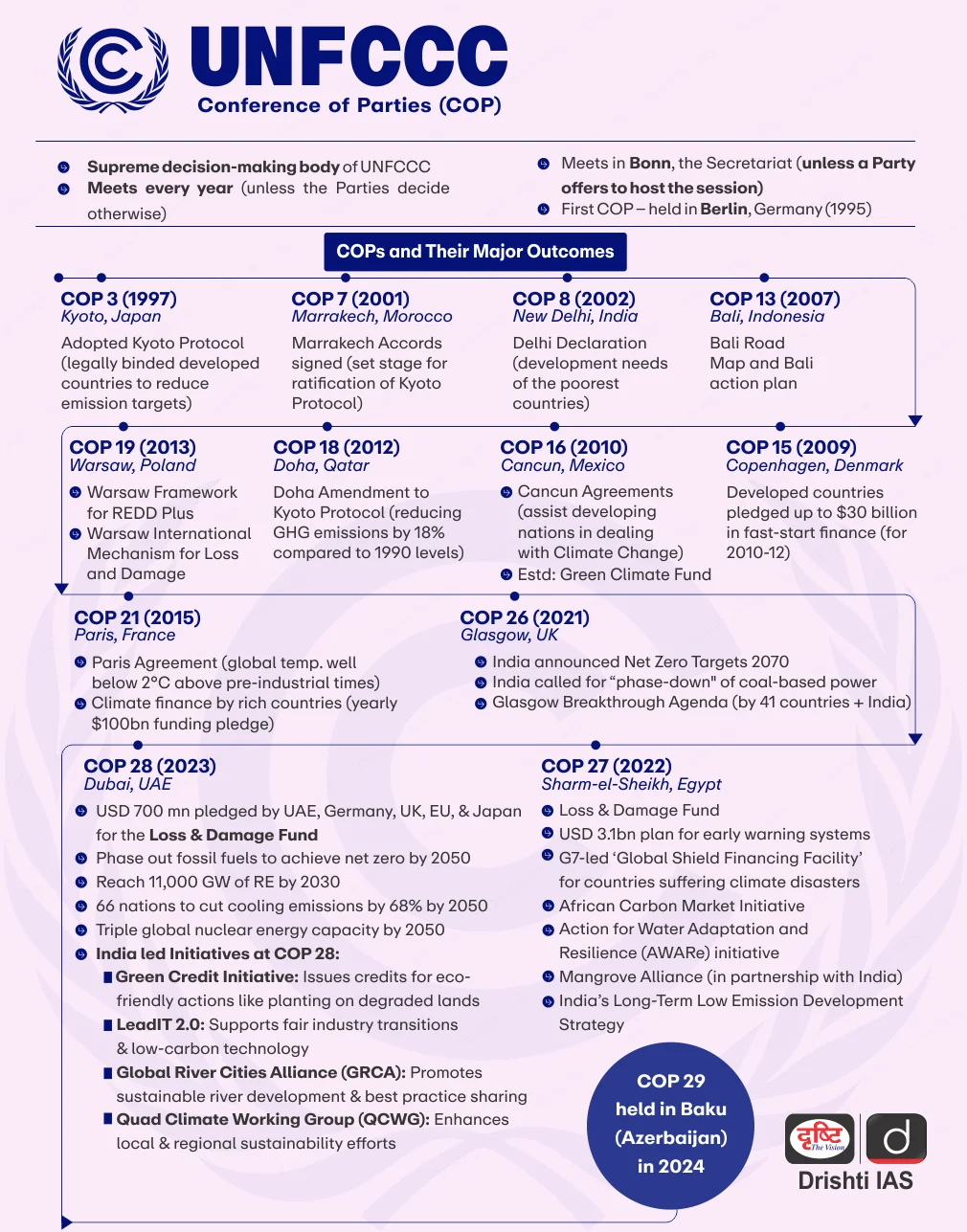
- About: The Paris Agreement is a legally binding global climate agreement adopted in 2015 (21st Conference of the Parties (COP)) under the UN Framework Convention on Climate Change.
- It replaced the Kyoto Protocol, expanding climate responsibility to all countries.
- Objective: It aims to limit global warming to well below 2°C, with efforts to restrict it to 1.5°C above pre-industrial levels.
- Working Procedure: The Paris Agreement follows a five-year cycle of progressively stronger climate action by countries.
- Every five years, countries submit updated Nationally Determined Contributions (NDCs), outlining plans for emission reduction (mitigation) and climate resilience (adaptation).
- In 2023, the first Global Stocktake concluded at COP28, calling for faster action on mitigation, adaptation, and climate finance by 2030, including a push to transition away from fossil fuels.
- Countries are encouraged to submit long-term low-emission development strategies, though these are voluntary.
- The Paris Rulebook, finalised at COP24 (Katowice, Poland) and COP26 (Glasgow, Scotland), laid down detailed rules for implementing the Agreement.
- Key Achievements:
- Universal Participation: Nearly all countries (194 States plus the European Union)committed to climate action under a single framework.
- Climate Finance Commitment: Developed countries committed to mobilising USD 100 billion per year up to 2025 to support developing countries in climate mitigation and adaptation.
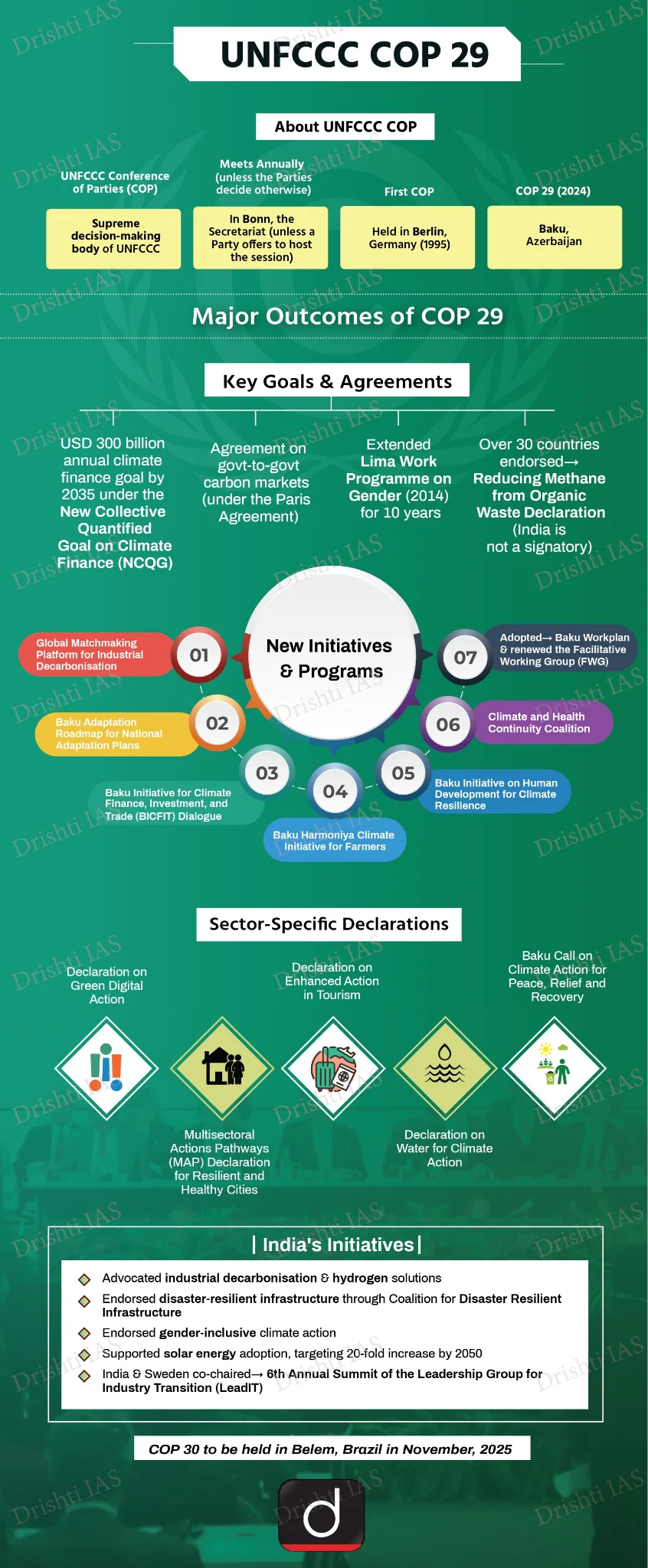
- At COP29 (Baku, Azerbaijan, 2024), a New Collective Quantified Goal (NCQG) was agreed, setting a higher target of at least USD 300 billion annually by 2035.
- Equity principle: The Paris agreement embedded Common But Differentiated Responsibilities (CBDR), recognising differing national capacities and responsibilities.
- Mainstreaming of Climate Policy: Climate action integrated into national laws, budgets, and development plans (e.g. EU Green Deal, India’s Mission LiFE).
- Boost to Climate Finance and Markets: Expansion of green bonds, carbon markets, and climate investments, though still inadequate.
India and Paris Agreement
- India submitted its Intended Nationally Determined Contribution (INDC) to the UNFCCC in 2015, which was adopted as its first Nationally Determined Contribution (NDC) under the Paris Agreement for the period up to 2030.
- The updated NDC commits India to promoting a sustainable lifestyle through the LIFE (Lifestyle for Environment) movement, following a cleaner and climate-friendly development pathway, reducing emissions intensity of GDP by 45% from 2005 levels by 2030, and achieving about 50% of installed electricity capacity from non-fossil fuel sources.
- It also aims to create an additional carbon sink of 2.5 - 3 billion tonnes of CO₂ equivalent, strengthen climate adaptation in vulnerable sectors, mobilise finance from domestic and developed-country sources, and enhance technology transfer and climate R&D.
- India reaffirmed its commitment to the UNFCCC and Paris Agreement, stating that this update is a key step toward its long-term net-zero target by 2070
- Achievements: India achieved 50% of its electricity capacity from non-fossil sources in 2025, well ahead of the 2030 target, and committed to Net Zero emissions by 2070 at COP26.
- It has demonstrated global leadership through initiatives such as the International Solar Alliance (ISA), Coalition for Disaster Resilient Infrastructure (CDRI), and the LiFE movement, while aligning its climate vision with “Viksit Bharat 2047” and positioning solar and green hydrogen as key drivers of growth and employment.
What are the Concerns Regarding the Paris Agreement?
- Voluntary Commitments: The Paris Agreement replaced the Kyoto Protocol’s legally binding emission targets for developed countries with voluntary NDCs, weakening accountability.
- Equity Concerns: Uniform emissions reduction expectations dilute the principle of CBDR and ignore historical emissions of developed countries, and LDCs (Least Developed Countries) and SIDS (Small Island Developing States) face existential risks without adequate support.
- Climate Finance Gap: India rejected the NCQG, criticising it for its inadequacy. The USD 300 billion pledge was deemed insufficient for addressing the climate challenges faced by developing nations.
- India, alongside other Global South countries, has been advocating for at least USD 1.3 trillion annually to meet the growing demands of climate change mitigation and adaptation in developing nations, with USD 600 billion as grants or grant-equivalent resources.
- Mitigation-centric Approach: Excessive focus on emission reduction sidelines adaptation and resilience, crucial for vulnerable nations.
- Development Constraints: Climate obligations and measures like carbon border taxes (e.g. (CABM) restrict energy and industrial choices of developing economies.
- Insufficient Ambition: Current NDCs place the world on a 2.5–2.9°C warming path, fall far short of the 1.5°C and even 2°C targets, risking severe climate impacts.
What Measures are Needed to Strengthen Climate Action?
- Shift From Voluntary To Enforceable Action: Climate commitments must move beyond voluntary pledges to legally backed, time-bound national policies, including sector-wise carbon budgets and measurable milestones.
- Balance Mitigation With Adaptation: Climate action should give equal priority to adaptation, with greater investment in climate-resilient infrastructure, agriculture, water systems, and early warning mechanisms.
- Bridge The Climate Finance Gap: Developed countries must fulfil and scale up climate finance commitments, while reforms in multilateral banks, green bonds, and blended finance reduce costs for developing nations.
- Reinforce Equity And Climate Justice: The principle of common but differentiated responsibilities and respective capabilities (CBDR-RC) must guide implementation, ensuring policy space for developing countries and fairness in trade measures like carbon border taxes.
- Accelerate Technology Access: Affordable access to renewables, storage, green hydrogen, and grid technologies should be expanded through technology transfer, patent pooling, and South–South cooperation.
- Strengthen Climate Science And Governance: Robust climate action requires credible science, transparent data, and countering climate misinformation, supported by strong monitoring and verification mechanisms.
China Model in Climate Action
- The China model of climate action follows a development-first approach, allowing emissions to rise during rapid industrialisation while simultaneously building massive capacities in renewable energy, electrification, and clean technologies.
- After achieving economic scale and energy security, China has committed to peaking emissions before 2030 and reaching net zero by 2060, demonstrating that early investment in clean energy can enable faster decarbonisation at a later stage.
Conclusion
The Paris Agreement enabled global participation but suffers from weak accountability, finance gaps, and equity concerns. Strengthening climate action requires enforceable commitments, assured finance, and equal focus on adaptation and mitigation. For India, aligning climate goals with development offers a balanced and pragmatic pathway forward.
|
Drishti Mains Question: Critically examine the effectiveness of the Paris Agreement after a decade. What structural limitations constrain its success? |
Frequently Asked Questions (FAQs)
1. What is the Paris Agreement and when was it adopted?
The Paris Agreement is a legally binding global climate treaty adopted in 2015 at COP21 under the UNFCCC to limit global warming to below 2°C, preferably 1.5°C.
2. What are Nationally Determined Contributions (NDCs)?
NDCs are country-specific climate action plans submitted every five years, outlining emission reduction and adaptation measures.
3. What was the significance of the first Global Stocktake at COP28?
The Global Stocktake (2023) assessed collective progress and called for faster action on mitigation, adaptation, and climate finance by 2030.
4. Why is the Paris Agreement criticised for weak accountability?
It relies on voluntary NDCs rather than legally binding emission targets, with no penalties for non-compliance.
UPSC Civil Services Examination, Previous Year’s Question (PYQs)
Prelims:
Q. The term ‘Intended Nationally Determined Contributions’ is sometimes seen in the news in the context of (2016)
(a) pledges made by the European countries to rehabilitate refugees from the war-affected Middle East
(b) plan of action outlined by the countries of the world to combat climate change
(c) capital contributed by the member countries in the establishment of Asian Infrastructure Investment Bank
(d) plan of action outlined by the countries of the world regarding Sustainable Development Goals
Answer: (b)
Q. With reference to the Agreement at the UNFCCC Meeting in Paris in 2015, which of the following statements is/are correct? (2016)
- The Agreement was signed by all the member countries of the UN and it will go into effect in 2017.
- The Agreement aims to limit the greenhouse gas emissions so that the rise in average global temperature by the end of this century does not exceed 2°C or even 1.5°C above pre-industrial levels.
- Developed countries acknowledged their historical responsibility in global warming and committed to donate $1000 billion a year from 2020 to help developing countries to cope with climate change.
Select the correct answer using the code given below.
(a) 1 and 3 only
(b) 2 only
(c) 2 and 3 only
(d) 1, 2 and 3
Answer: (b)
Mains
Q1. The Intergovernmental Panel on Climate Change (IPCC) has predicted a global sea level rise of about one metre by AD 2100. What would be its impact in India and the other countries in the Indian Ocean region? (2023)
Q2. Discuss global warming and mention its effects on the global climate. Explain the control measures to bring down the level of greenhouse gases which cause global warming, in the light of the Kyoto Protocol, 1997. (2022)
Q3. Describe the major outcomes of the 26th session of the Conference of the Parties (COP) to the United Nations Framework Convention on Climate Change (UNFCCC). What are the commitments made by India in this conference? (2021)


Important Facts For Prelims
Ayushman Bharat
Why in News?
Ayushman Bharat has gained renewed attention after the government reported significant progress in primary healthcare delivery, health insurance coverage, digital health integration, and health infrastructure development.
What are the Key Facts About Ayushman Bharat?
- About: Ayushman Bharat is a flagship health sector reform programme of the Government of India, launched in 2018, with the objective of achieving Universal Health Coverage (UHC) in line with the National Health Policy, 2017 and the Sustainable Development Goals (SDGs), particularly the principle of “leave no one behind”.
- It aims to transform India’s healthcare system by shifting from a fragmented and sectoral approach to a comprehensive, need-based continuum of care.
- It covers preventive, promotive, curative, rehabilitative, and palliative services across primary, secondary, and tertiary levels of healthcare.
Components of Ayushman Bharat:
Ayushman Arogya Mandir (AAM)
- About: AAM is the primary healthcare pillar of Ayushman Bharat, created by upgrading Sub-Health Centres and rural and urban Primary Health Centres.
- AAMs, earlier known as Health and Wellness Centres (HWCs), aim to bring comprehensive healthcare services closer to communities.
- Objective: To provide Comprehensive Primary Health Care through a continuum of care approach, addressing nearly 80–90% of an individual’s lifetime healthcare needs at the primary level.
- Scope of Services: AAMs strengthen reproductive, child health, and communicable disease services while expanding care for non-communicable diseases such as hypertension, diabetes, and common cancers, with the gradual integration of mental health, geriatric, palliative, trauma care, and wellness services like yoga.
- Service Delivery Mechanism: AAMs focus on community outreach and population-based screening, ensuring early detection, timely referral, treatment adherence, follow-up care, and local availability of essential medicines and diagnostics.
- Achievements: As of November 2025, around 1.82 lakh AAMs are operational, having already exceeded the target of 1.5 lakh centres in 2022.
- These centres have recorded nearly 495 crore patient visits and enabled about 42 crore teleconsultations.
- Over 6.5 crore yoga and wellness sessions have also been organised, reflecting the scale of service delivery at the primary healthcare level.
Pradhan Mantri - Jan Arogya Yojana (AB PM-JAY)
- About: AB PM-JAY is the second pillar of Ayushman Bharat, launched in 2018 at Ranchi, Jharkhand, and is the world’s largest publicly funded health assurance scheme.
- Originally introduced as the National Health Protection Scheme, it subsumed the Rashtriya Swasthya Bima Yojana, integrating existing beneficiaries into a single national health coverage framework.
- Objective and coverage: PM-JAY aims to provide health insurance cover of up to Rs 5 lakh per family per year for secondary and tertiary care hospitalisation.
- It targets over 12 crore poor and vulnerable families, covering nearly 55 crore beneficiaries belonging to the bottom 40% of India’s population, identified using deprivation and occupational criteria under Socio-Economic Caste Census 2011 (SECC 2011).
- Key features: The scheme offers cashless and paperless treatment at empanelled public and private hospitals across the country.
- It imposes no restriction on family size, age, or gender, and covers all pre-existing diseases from the first day.
- Nationwide portability allows beneficiaries to access healthcare services anywhere in India.
- Achievements: By December 2025, over 42 crore Ayushman Cards had been issued, enabling nearly 11 crore hospital admissions.
- The scheme has promoted gender equity, with women accounting for nearly half of all cards and hospitalisations.
- Further, the launch of the Ayushman Vay Vandana Card has extended PM-JAY benefits to all citizens aged 70 years and above, potentially covering around 6 crore elderly persons.
- Digital initiatives such as the Ayushman App have simplified self-verification and card creation.
- The expansion of PM-JAY to Delhi and Odisha in 2025 has further strengthened its national coverage.

Pradhan Mantri Ayushman Bharat Health Infrastructure Mission (PM-ABHIM)
- About: PM-ABHIM a centrally sponsored scheme (CSS), is the third pillar of Ayushman Bharat, launched in 2021 with an outlay of about Rs 64,000 crore to strengthen healthcare infrastructure and system capacity across the country during 2021–26.
- Core objective: It focuses on building capacity across primary, secondary, and tertiary care, with special emphasis on pandemic and disaster preparedness, over and above the National Health Mission.
- PM-ABHIM provides for the creation of AAMs, Urban Health and Wellness Centres in slum areas, Block Public Health Units, District Integrated Public Health Laboratories, and Critical Care Hospital Blocks.
- It also supports biomedical research on Covid-19 and other infectious diseases and strengthens capacities under the One Health approach to prevent, detect, and respond to zoonotic outbreaks.
- Achievements: PM-ABHIM has approved large-scale upgradation and creation of public health facilities to strengthen primary, secondary, and tertiary care.
Ayushman Bharat Digital Mission (ABDM)
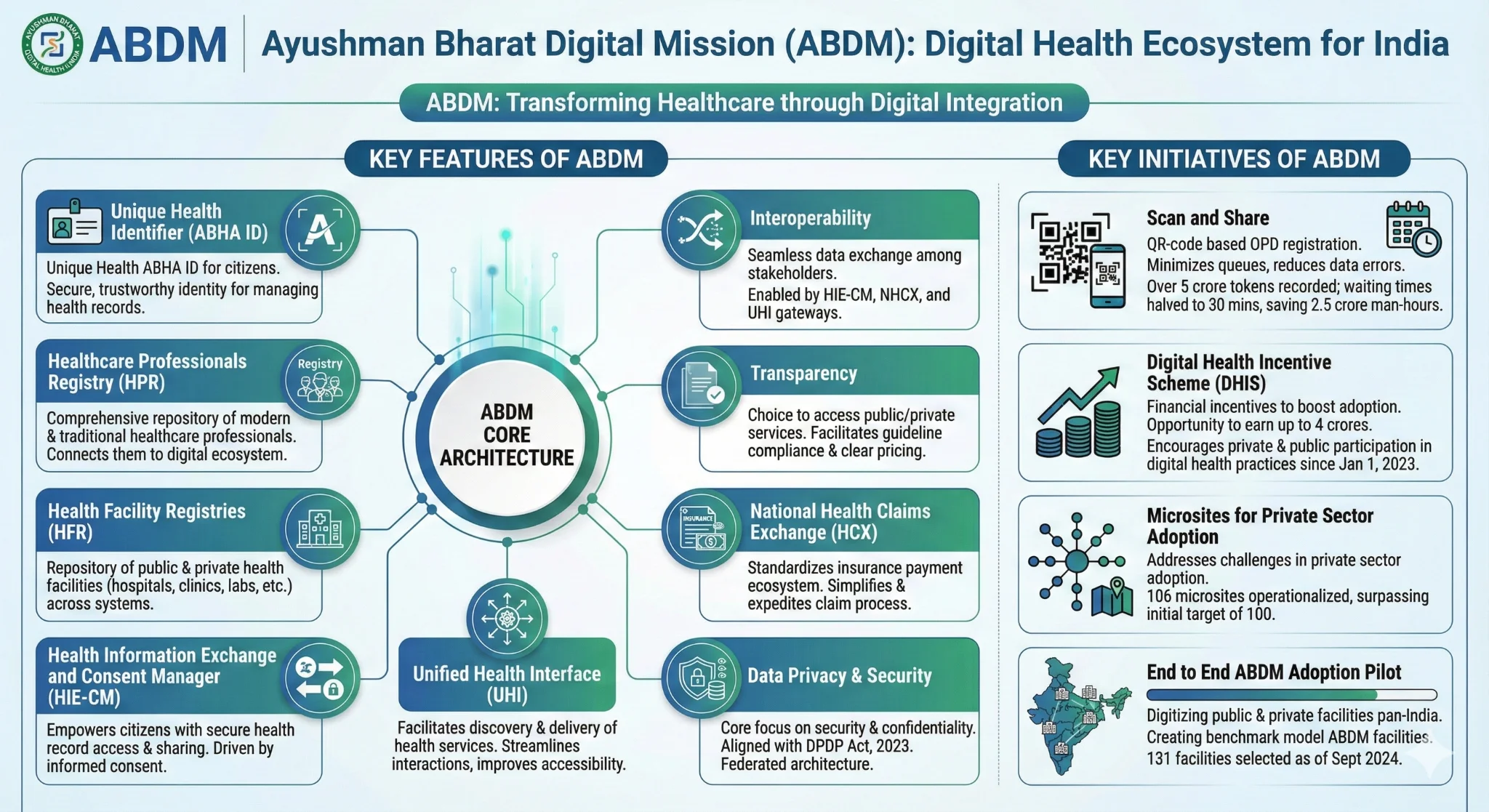
- About: Launched in 2021, ABDM aims to build a citizen-centric, interoperable digital health ecosystem in India.
- It enables individuals to securely store, access, and share their medical records (such as prescriptions, diagnostic reports, and discharge summaries) based on informed consent, thereby creating a longitudinal health record and ensuring continuity of care.
- Digital architecture and components: The technological framework of ABDM is built around four key registries that establish a trusted digital identity across the health ecosystem:
- The Ayushman Bharat Health Account (ABHA) for citizens, the Healthcare Professional Registry (HPR), the Health Facility Registry (HFR), and the Drug Registry.
- Interoperability and data exchange are enabled through three gateways—the Health Information Consent Manager (HIE-CM), the National Health Claims Exchange (NHCX), and the Unified Health Interface (UHI)—which together support seamless, secure, and consent-based digital health services.
- Data Privacy and Security: ABDM places strong emphasis on the security, confidentiality, and privacy of health data, aligned with the Digital Personal Data Protection Act, 2023.
- Its federated architecture ensures secure, consent-based sharing of patient health information without centralised data storage.
- Achievements: As of 2024, over 67 crore ABHA IDs have been created, with more than 42 crore health records linked.
- About 3.3 lakh health facilities and 4.7 lakh healthcare professionals have been registered on the national digital health registries.
Frequently Asked Questions (FAQs)
1. What is Ayushman Bharat?
Ayushman Bharat is India’s flagship health reform launched in 2018 to achieve Universal Health Coverage through primary care, insurance, infrastructure, and digital health integration.
2. What is the role of Ayushman Arogya Mandirs?
They provide comprehensive primary healthcare, addressing up to 80–90% of lifetime health needs through preventive, promotive, and curative services.
3. How does PM-JAY support financial protection?
PM-JAY provides ₹5 lakh per family per year for secondary and tertiary hospitalisation with cashless and paperless access across empanelled hospitals.
4. Why is PM-ABHIM important for public health?
PM-ABHIM strengthens health infrastructure, disease surveillance, critical care capacity, and pandemic preparedness across all levels of care.
5. What is the significance of ABDM?
ABDM creates an interoperable digital health ecosystem enabling longitudinal health records, consent-based data sharing, and continuity of care.
UPSC Civil Services Examination, Previous Year Question (PYQ)
Prelims
Q. With reference to Ayushman Bharat Digital Mission, consider the following statements: (2022)
- Private and public hospitals must adopt it.
- As it aims to achieve universal health coverage, every citizen of India should be part of it ultimately.
- It has seamless portability across the country.
Which of the statements given above is/are correct?
(a) 1 and 2 only
(b) 3 only
(c) 1 and 3 only
(d) 1, 2 and 3
Ans: B
Q. With reference to the National Rural Health Mission, which of the following are the jobs of ‘ASHA’, a trained community health worker? (2012)
- Accompanying women to the health facility for antenatal care checkup
- Using pregnancy test kits for early detection of pregnancy
- Providing information on nutrition and immunization.
- Conducting the delivery of baby
Select the correct answer using the codes given below:
(a) 1, 2 and 3 only
(b) 2 and 4 only
(c) 1 and 3 only
(d) 1, 2, 3 and 4
Ans: (a)
Mains
Q. The public health system has limitations in providing universal health coverage. Do you think that the private sector could help in bridging the gap? What other viable alternatives would you suggest? (2015)


Rapid Fire
Suryastra Rocket Launcher
The Indian Army has signed an emergency procurement contract with NIBE Limited for the indigenous Suryastra long-range rocket launcher, enabling fast-track acquisition within the Emergency Procurement framework.
- The system is being domestically produced under a technology collaboration with Elbit Systems, while the Defence Acquisition Council has extended Emergency Procurement powers to allow contract signing until 15 January 2026.
Suryastra
- About: Suryastra is India’s first Made-in-India, multi-calibre, long-range rocket launcher system developed by Pune-based NIBE Limited in collaboration with Israel’s Elbit Systems.
- It leverages Elbit’s PULS (Precise & Universal Launching System) architecture to deliver precision surface-to-surface strikes at ranges of up to 150 km and 300 km, marking the first domestic production of a high-precision rocket launcher with 300 km strike capability.
- It has demonstrated a high accuracy of less than five metres circular error probable (CEP) in trials and can also fire loitering munitions up to 100 km.
- Key Capabilities:
- Multi-Calibre Capability: A single launcher can fire multiple types of rockets and guided munitions, enhancing operational flexibility and reducing logistical burden.
- High Tactical Mobility: Mounted on a BEML High Mobility Vehicle (HMV), it enables rapid deployment, shoot-and-scoot operations, reduced vulnerability to counter-battery fire, and effective operations across diverse terrains.
- Strategic Significance: It combines Israeli rocket technology with Indian manufacturing, aligning with the Aatmanirbhar Bharat initiative.
- This enhances deep-strike deterrence and signals a doctrinal shift toward long-range, precision, mobile artillery.

| Read More: Self-Reliance in Defence Sector |


Rapid Fire
Sunrise Festival 2025–26
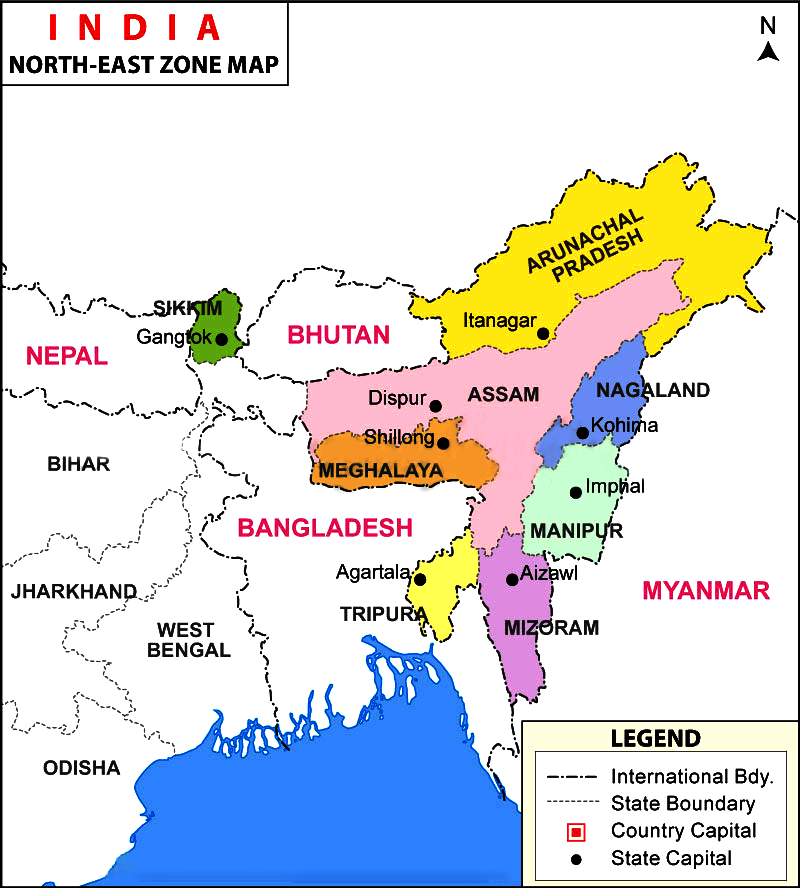
Arunachal Pradesh celebrated the inaugural Sunrise Festival 2025-26 at Dong village in Anjaw district, the easternmost point where sunrise first touches Indian territory.
Sunrise Festival
- About: It is an adventure-led cultural tourism festival to establish Arunachal Pradesh as a global hub for nature, culture, adventure, and heritage celebrations centered around the sunrise.
- Cultural Significance: Dong is home to the indigenous Meyor (Zakhring) tribe, known as the Sunrise People, whose culture, traditions, and belief systems are deeply rooted in sun worship.
- Showcasing Tribal Diversity: It featured cultural presentations from multiple tribes of Arunachal Pradesh namely Mishmi, Singhpho, Galo, Wancho, Nocte, Adi, Apatani, Nyishi, and Monpa, offering a living showcase of state’s rich and diverse indigenous heritage.
Dong Village
- Location and Strategic Importance: It is located in Anjaw district’s Dong Valley at the tri-junction of India, China, and Myanmar. It lies just 7 km from Walong, a major theatre of the 1962 Chinese aggression.
- Physiography: It is located on the left bank of the Lohit River, a key tributary of the Brahmaputra River system.
- Global Recognition: It gained global attention when the Millennium Sunrise on 1st January 2000 was witnessed here by visitors from across the world.
| Read More: Recognising the Heterogeneity of Northeast India |


Rapid Fire
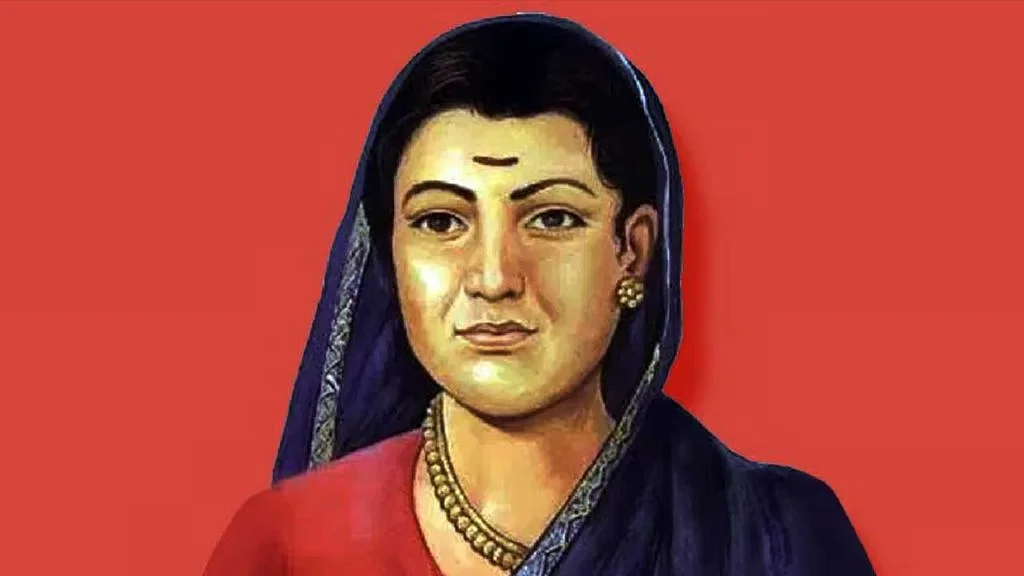
Birth Anniversary of Savitribai Phule
Recently, the Union Home and Cooperation Minister paid tribute to Savitribai Phule on her 194th birth anniversary on 3rd January 2026.
About Savitribai Phule
- Savitribai Phule was born on 3rd January 1831 in Satara (Maharashtra). She rose from illiteracy to become India’s first female teacher and a pioneering feminist–social reformer from the Mali community.
- At the age of 9, she was married to Jyotiba Phule, who took charge of her education.
Contributions
- Social Mobilisation for Women’s Rights: In 1848, she founded India’s first Indian-run girls’ school at Bhide Wada, Pune and institutionalised inclusive education through dedicated reformist trusts like the Native Female School, Pune and the Society for Promoting the Education of Mahars, Mangs and Etceteras in the 1850s.
- In 1852, she founded the Mahila Seva Mandal to create awareness about women’s rights and simultaneously campaigned against child marriage and supported widow remarriage.
- In 1863, Jyotirao and Savitribai founded Balhatya Pratibandhak Griha, India's first home to combat female infanticide, support pregnant and exploited Brahmin widows and nurture their children.
- Champion of Caste and Gender Equality: She institutionalised social equality by opening schools for marginalised and “untouchable” communities and by initiating the first Satyashodhak marriage, dowry-free, priest-free and non-Brahminical, challenging caste and patriarchal hierarchies in colonial India.
- Literary Contribution: She authored Kavya Phule (1854) and Bavan Kashi Subodh Ratnakar (1892) using poetry to promote education and social liberation among oppressed communities.
- Martyr of Compassion: Savitribai Phule died in 1897 while caring for a patient affected by the bubonic plague, symbolising selfless public service.
| Read more: Savitri Bai Phule |


Rapid Fire
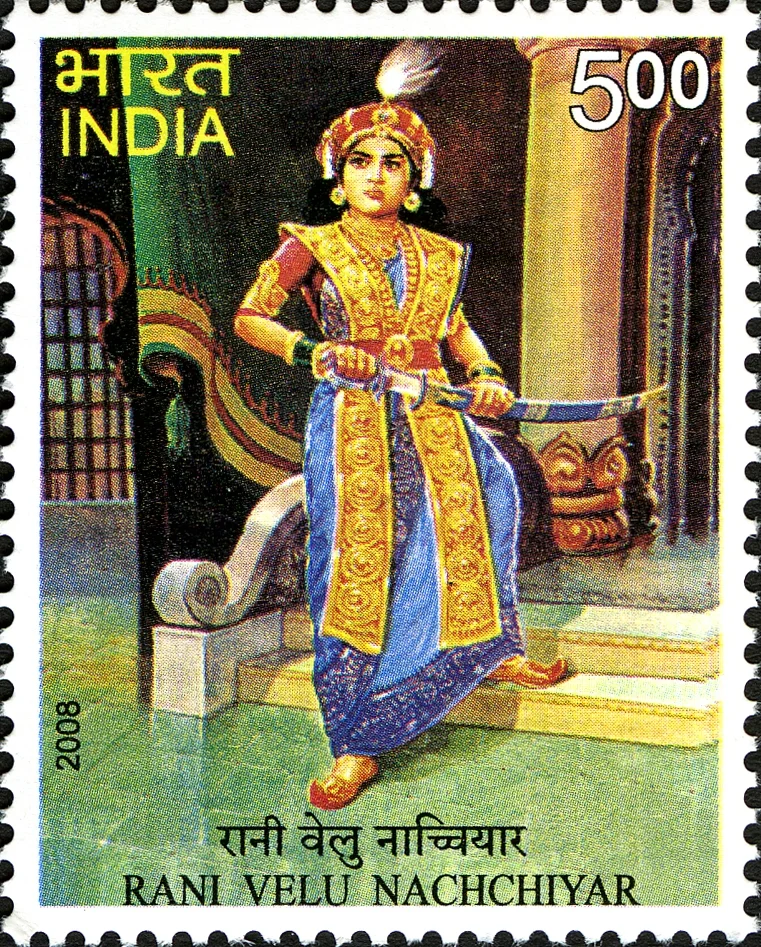
Birth Anniversary of Rani Velu Nachiyar
The Prime Minister paid tribute to Rani Velu Nachiyar on 3rd January 2026 on her 296th birth anniversary.
- About: Rani Velu Nachiyar, also known as ‘Veeramangai’, was born on 3rd January 1730 in the Ramnad Kingdom of Ramanathapuram in present-day Tamil Nadu.
- Pioneer of Anti-Colonial Resistance: She is revered as the first Indian queen to launch an organised armed resistance against the British East India Company, asserting indigenous self-rule long before the national freedom movement.
- Her revolt represents the earliest phase of organised anti-colonial assertion in South India.
- Ruler of Sivaganga: After the death of her husband Muthuvaduganathaperiya Udaiyathevar, she ascended the throne of Sivaganga in 1780 and ruled till 1790, restoring indigenous political authority in the region.
- She died on 25th December 1796, a few years after the end of her reign.
- Military Innovations: She deployed the first recorded human bomb in Indian military history as a tactical weapon against colonial forces.
- She also organised the first trained women’s military unit, institutionalising women’s participation in warfare in the late eighteenth century.
- Expertise: A polyglot ruler, she was proficient in French, English and Urdu, reflecting her intellectual depth and diplomatic acumen.
| Read more: Rani Velu Nachiyar Birth Anniversary |