Indian Economy
Achieving Sustainability in Rice Production
For Prelims: Rice, Kharif Crop, Golden Rice, CRISPR-Cas9, Methane, GHG, Particulate Matter, Millets, Oilseeds, Minimum Support Price (MSP), System of Rice Intensification (SRI), Drip/sprinkler Irrigation, Genome-edited Crops, FPOs, SDGs, Soil Health Cards, Pradhan Mantri Fasal Bima Yojana (PMFBY),
For Mains: Key facts regarding rice, concerns associated with rice farming, and steps needed for sustainable agriculture.
Why in News?
India has overtaken China to become the world’s largest rice producer in 2025, and now accounts for 40% of global rice exports, with shipments crossing 20 million metric tonnes.
- However, it also raises concerns over rice being a water-intensive crop and a form of virtual water export, especially in water-stressed regions.
Summary
- India has become the world’s largest rice producer and exporter, supplying 40% of global exports, but rice occupies 25% cropped area and is highly water-intensive.
- Groundwater depletion, emissions, residue burning, and climate stress make rice-centric farming unsustainable.
- Subsidy reform, diversification, DSR/SRI, and climate-resilient genome-edited crops are vital for sustainable food security.
What are Key Facts Regarding Rice?
- About: Rice is the staple food for most Indians, with about 65% consuming it daily and approximately 25% of the total cropped area under its cultivation.
- India is the world’s largest producer and exporter of rice, followed by China (2nd) and Bangladesh (3rd).
- Climatic & Soil Requirements: It is a kharif crop (sown in June-July and harvested in September-October).
- Requires high temperature (>25°C), optimal at 30°C day/20°C night, tolerating up to 40°C briefly.
- Needs high humidity and above 100 cm of rainfall. Given India’s predominantly tropical monsoon climate, rice is cultivated in most regions, primarily through irrigation.
- Thrives in soils with a pH of 5.5–6.5 and good water-holding capacity and drainage.
- Cropping Intensity: In southern states and West Bengal, two or three crops (e.g., Aus, Aman, Boro in West Bengal) can be grown annually.
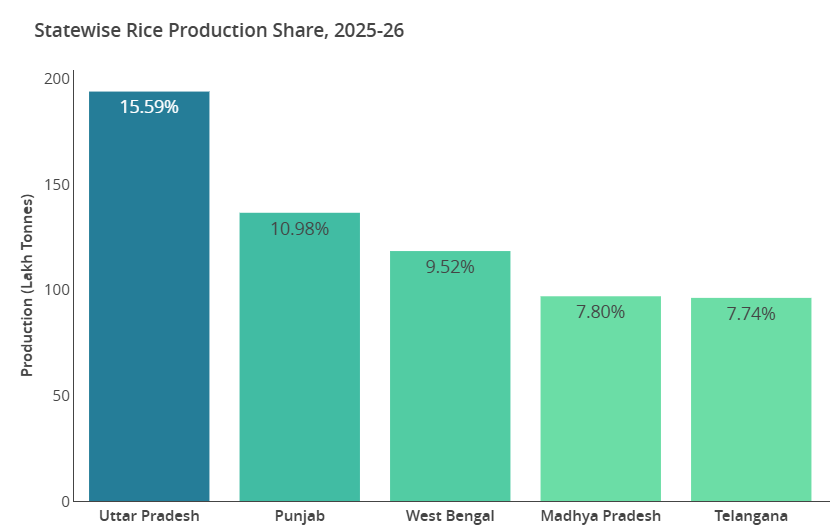
- In 2025–26, the top three states by rice production share are Uttar Pradesh, Punjab, and West Bengal.
- Cultivation Techniques:
- Traditional Transplantation: Seeds sown in a nursery; seedlings transplanted to the main field after 25–35 days. Labour and water-intensive, requiring around 25–27 irrigations, but maximizes yield. This is widely practiced across India.
- Direct Seeding of Rice (DSR): Pre-germinated seeds are directly drilled into the field using a machine that saves water and labour. Best suited for heavy/medium-textured soils (high clay content) with good water retention and rich in plant-available iron.
Government Initiatives Regarding Sustainability
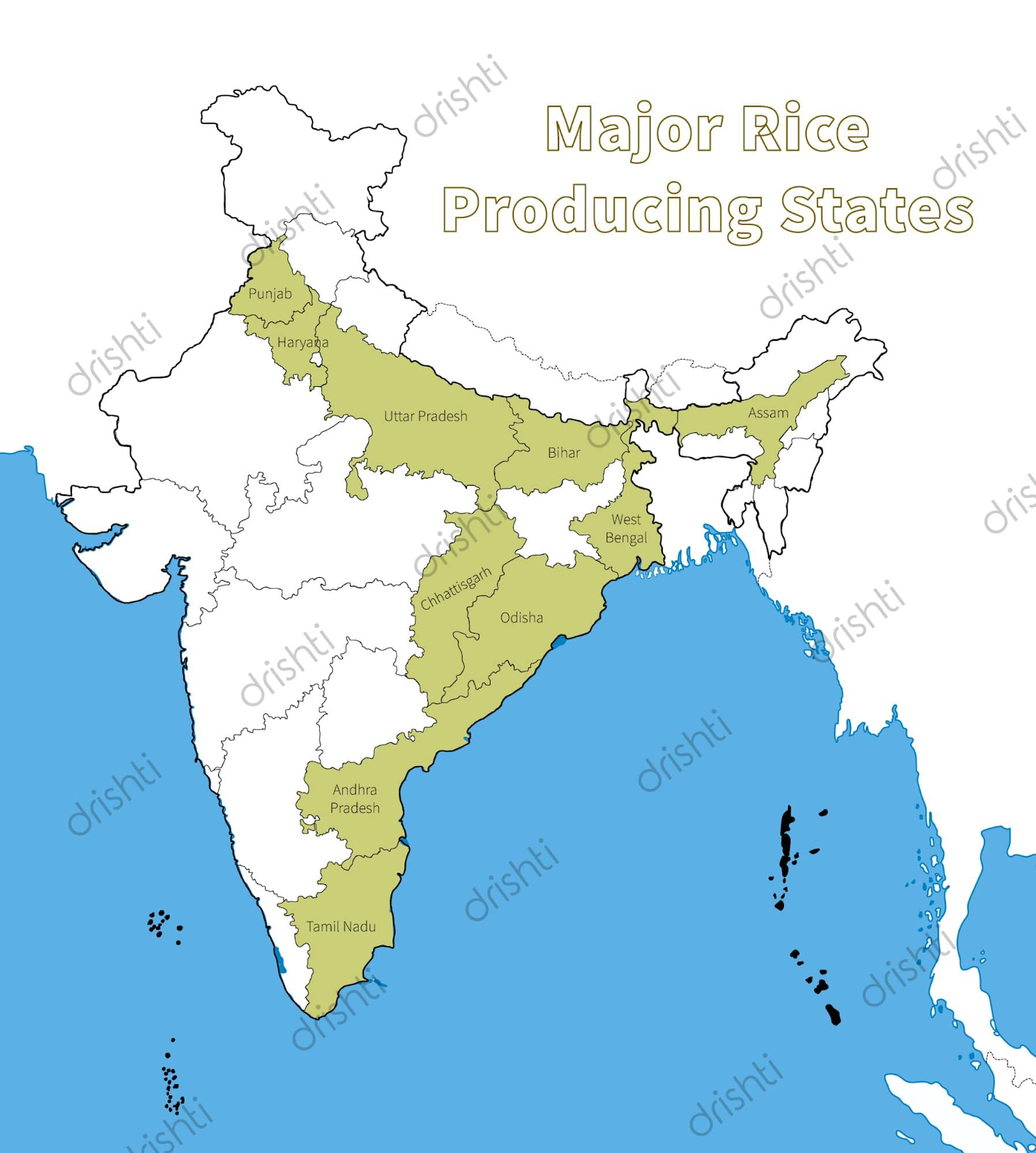
- Water-Smart Agriculture Push: Government promotes Direct Seeded Rice (DSR), micro-irrigation, and crop diversification away from water-intensive paddy in Punjab–Haryana under Pradhan Mantri Krishi Sinchayee Yojana (PMKSY) and state action plans.
- Climate-Resilient Varieties: ICAR is scaling drought, salinity, and heat-tolerant rice varieties under the National Innovations in Climate Resilient Agriculture (NICRA).
- Millets vs Rice Policy Signal: Through International Year of Millets (2023) follow-up, the government is encouraging diversification from rice in water-stressed regions to improve sustainability.
- Fortified Rice Rollout: Fortified rice distribution under NFSA and PM-POSHAN has been expanded nationwide to address anaemia and micronutrient deficiency.
- Methane Reduction Focus: India has begun integrating Alternate Wetting and Drying (AWD) and improved paddy practices into climate action to reduce methane emissions from rice cultivation.
What are the Key Concerns Associated with Rice Cultivation in India?
- Rapid Decline in Water Table: Producing 1 kg of rice in India consumes 3,000–4,000 litres of water, 20–60% higher than the global average. In major rice states like Punjab and Haryana, groundwater has plummeted from ~30 feet to 80–200 feet, with most aquifers classified as over-exploited or critical due to extracting 35–57% more than is recharged annually.
- Groundwater-intensive rice cultivation represents an inter-generational equity issue, as it transfers ecological debt to future generations through aquifer depletion.
- Environmental Concerns: Flooded rice paddies, by creating anaerobic soil, are a major source of methane, contributing 10–20% of India's agricultural GHG emissions. Post-harvest residue burning in Punjab and Haryana further exacerbates air pollution by releasing particulate matter and carbon monoxide.
- Health Concerns: Flooded rice cultivation in regions with arsenic-contaminated groundwater leads to high arsenic uptake in grains, linking consumption to serious health risks like cancer. Concurrent heavy pesticide use compounds toxicity, with studies confirming elevated arsenic levels in staple foods (rice, wheat, and potatoes) across 11 hotspot districts in Bihar.
- Economic Concerns: Farmers are forced into debt to fund costly deeper borewells and pumps, with smallholders hit hardest as these costs severely dent their meagre incomes. Punjab spends about Rs 39,000 per hectare on fertiliser and power subsidies for rice.
- Prolonged flooded rice monoculture causes soil micronutrient imbalances (such as zinc and iron deficiency) leading to a growing need for higher fertiliser use over time.
- Climatic Concerns: Climate change, through rising temperatures and erratic rainfall, threatens to reduce rice yields by 6–10% or more, with northern and eastern India's rainfed systems most susceptible to production failures.
- World Bank and Nature Sustainability studies highlight that rice cultivation in north-west India fuels a vicious energy–water–climate cycle, where subsidised electricity promotes groundwater over-extraction, raises carbon emissions from pumping, and locks farmers into unsustainable practices.
- Global Food Security Implications: As the supplier of 40% of the world's rice exports, any significant reduction in India's production due to water scarcity would have major implications for global food security and prices.
What Steps Are Needed to Promote Sustainable Agriculture in India?
- Reforming Subsidy Structures: Shift from input-heavy subsidies to direct income and ecosystem-service payments that reward water saving, soil carbon enhancement, and crop diversification. Furthermore, guarantee a Minimum Support Price (MSP) and robust government procurement for diversified crops like millets, pulses, and oilseeds.
- Technological Adoption and Water Conservation: Scale up water-efficient techniques like System of Rice Intensification (SRI), and drip/sprinkler irrigation while fast-tracking the adoption of genome-edited crops (e.g., drought-tolerant Kamala rice). Combining precision irrigation with digital advisory services (AI-based weather, soil moisture sensors) can reduce water use by 30–40% without yield loss.
- Strengthening Policy Frameworks: Enforce bans on new borewells in critical zones and promote participatory groundwater management, while strengthening FPOs and cooperatives for collective action to cut costs. Community-led groundwater governance (including water budgeting and crop planning) is more effective than top-down regulation alone.
- Resilience Against Climate Change: Actively promote crop diversification and agroforestry to break the rice–wheat monoculture and enhance climate resilience. Support in-situ residue management and ex-situ utilization alongside soil health cards, as these are low-cost, high-impact adaptation strategies for smallholders.
- Enhancing Farmer Income and Risk Mitigation: Facilitate loans for adopting sustainable technology and scale up the Pradhan Mantri Fasal Bima Yojana (PMFBY), while supporting food processing for better price realization. Furthermore, develop cold chains, warehouses, and agro-processing units in rural clusters to reduce post-harvest losses and generate non-farm employment.
Conclusion
India’s rise as the world’s leading rice producer underscores the urgent water–energy–climate–health nexus, where short-term food security must be balanced with long-term sustainability. Achieving this requires subsidy reforms, crop diversification, and the adoption of water-efficient, climate-resilient practices to protect farmer welfare and environmental health.
|
Drishti Mains Question: Q. India’s dominance in global rice production has intensified groundwater stress. Examine the causes and suggest sustainable policy solutions |
Frequently Asked Questions (FAQs)
1. Why is rice cultivation a concern in India?
Because rice requires 3,000–4,000 litres of water per kg, leading to over-exploited aquifers and rapid groundwater decline.
2. What is Direct Seeding of Rice (DSR)?
A water- and labour-saving technique where seeds are directly sown, reducing irrigation needs and emissions.
3. Why does India’s rice production matter globally?
India supplies 40% of global rice exports, so any production shock can significantly affect global food prices and food security
UPSC Civil Services Examination, Previous Year Question (PYQ)
Prelims
Q. In the context of India, which of the following is/are considered to be practice(s) of eco-friendly agriculture? (2020)
- Crop diversification
- Legume intensification
- Tensiometer use
- Vertical farming
Select the correct answer using the code given below:
(a) 1, 2 and 3 only
(b) 3 only
(c) 4 only
(d) 1, 2, 3 and 4
Ans: (a)
Mains
Q. Suggest measures to improve water storage and irrigation systems to make its judicious use under the depleting scenario. (2020)
Q. Elaborate on the impact of the National Watershed Project in increasing agricultural production from water-stressed areas. (2019)


International Relations
US Intervention in Venezuela and the Revival of the Monroe Doctrine
For Prelims: Venezuela, Monroe Doctrine, Multilateralism, United Nations Charter
For Mains: Monroe Doctrine and its relevance in the 21st century, Impact of great power rivalry on the Global South
Why in News?
The US conducted a military operation in Venezuela,, codenamed Operation Absolute Resolve, resulting in the capture of President Nicolás Maduro, his wife Cilia Flores, and other senior officials. The action, justified under a “Trump Corollary” to the Monroe Doctrine (1823), marks a sharp escalation in US interventionism in Latin America.
Summary
- The US military intervention in Venezuela and the capture of President Nicolás Maduro signal a revival of the Monroe Doctrine, reflecting renewed American interventionism to counter rival powers and secure strategic interests, especially energy resources, in the Western Hemisphere.
- For India, the conflict has limited economic impact due to low trade and reduced oil imports, but it raises concerns over strategic autonomy, global sovereignty norms, and the stability of a multipolar world order.
What is Monroe Doctrine?
- About: The Monroe Doctrine, articulated by President James Monroe in 1823, laid down the following principles:
- Non-colonisation: European powers should not establish new colonies in the Americas.
- Non-interference: Any attempt by external powers to influence Western Hemisphere nations would be viewed as hostile to the US.
- US Restraint in Europe: The US would not interfere in European wars or internal affairs.
- Evolution:
- Roosevelt Corollary (1904): President Theodore Roosevelt, it expanded the Monroe Doctrine by asserting the US right to exercise “international police power” in Latin American countries to address chronic wrongdoing, instability, or governance failures, thereby justifying direct US intervention.
- Cold War Era: Invoked to counter Soviet influence in Cuba, Central America, and South America.
- Post–Cold War: Largely de-emphasised in favour of multilateralism, until its recent revival.
- Contemporary Phase: Revived selectively to assert US strategic dominance in the Western Hemisphere, as seen in recent actions toward Venezuela.
- “Trump Corollary” to the Monroe Doctrine is projected as a restoration of US power and strategic priorities, aimed at safeguarding American security interests in the Western Hemisphere.
Why Did the US Intervene in Venezuela?
- Narco-terrorism and Security Narrative: US charged Maduro and senior officials with narco-terrorism and drug trafficking, portraying the regime as a direct security threat to the US and linking it to the US fentanyl crisis, thereby providing a legal-political justification for action.
- Oil and Resource Geopolitics: Venezuela possesses the world’s largest proven crude oil reserves (over 300 billion barrels or a fifth of the proven oil reserves all over the world), yet it accounts for less than 1% of global oil production.
- Years of US sanctions, economic crisis, and infrastructure decay have sharply limited output.
- The US views control over Venezuelan oil infrastructure as critical for energy security, price stability, and strategic leverage in global energy markets
- Countering Extra-Regional Powers: Venezuela’s deepening ties with China, Russia, and Iran were viewed as a challenge to US dominance in the Western Hemisphere, prompting Washington to reassert its primacy under a revived Monroe-style framework.
- However, the US–Venezuela conflict has raised serious concerns in Mexico, Colombia, and Cuba, signalling a renewed phase of US interventionism in the region.
- It highlights fears of sovereignty erosion through military pressure, sanctions, and under the pretext of counter-narcotics and security based justifications.
- However, the US–Venezuela conflict has raised serious concerns in Mexico, Colombia, and Cuba, signalling a renewed phase of US interventionism in the region.
Use of Military Force Under International Law
- General Prohibition: Article 2(4) of the United Nations Charter prohibits states from using or threatening military force against another state’s territorial integrity or political independence.
- Self-defence: Article 51 of the UN Charter allows force only in response to an armed attack, subject to necessity and proportionality, and actions must be reported to the UN Security Council.
- Former Enemy States: Article 107 of the UN Charter once allowed force against WWII enemy states, but it is now obsolete.
- Collective Security: Under Articles 24 and 25, the UN Security Council may authorise collective military action to address threats to international peace.
- Humanitarian Operations: The UN Security Council can authorise limited force in peacekeeping or humanitarian missions.
What is the Impact of the US-Venezuelan Conflict on India?
- Minimal Trade Impact: According to Global Trade Research Initiative (GTRI), the conflict will have a negligible impact on India’s trade, as bilateral commerce has already collapsed under US sanctions.
- India’s exports to Venezuela stood at just USD 95.3 million in FY2025, mainly pharmaceuticals.
- Limited Energy Exposure: India’s crude oil imports from Venezuela fell by 81.3% in FY2025, declining to USD 255.3 million, compared to USD 1.4 billion in FY2024.
- As a result, the current conflict is unlikely to materially affect India’s energy security in the short term.
- If sanctions on Venezuela are eased or recalibrated, discounted Venezuelan crude could re-enter global markets, strengthening India’s long-term crude supply diversification and procurement flexibility.
- This would enhance India’s bargaining power with West Asian suppliers and offer an alternative amid US pressure to reduce reliance on Russian oil.
- Strategic Autonomy: India has consistently advocated for non-interventionism and regime change through democratic processes rather than external military force.
- The US action complicates India's balancing act between the Global South (which opposes intervention) and its strategic partnership with the US.
Venezuela
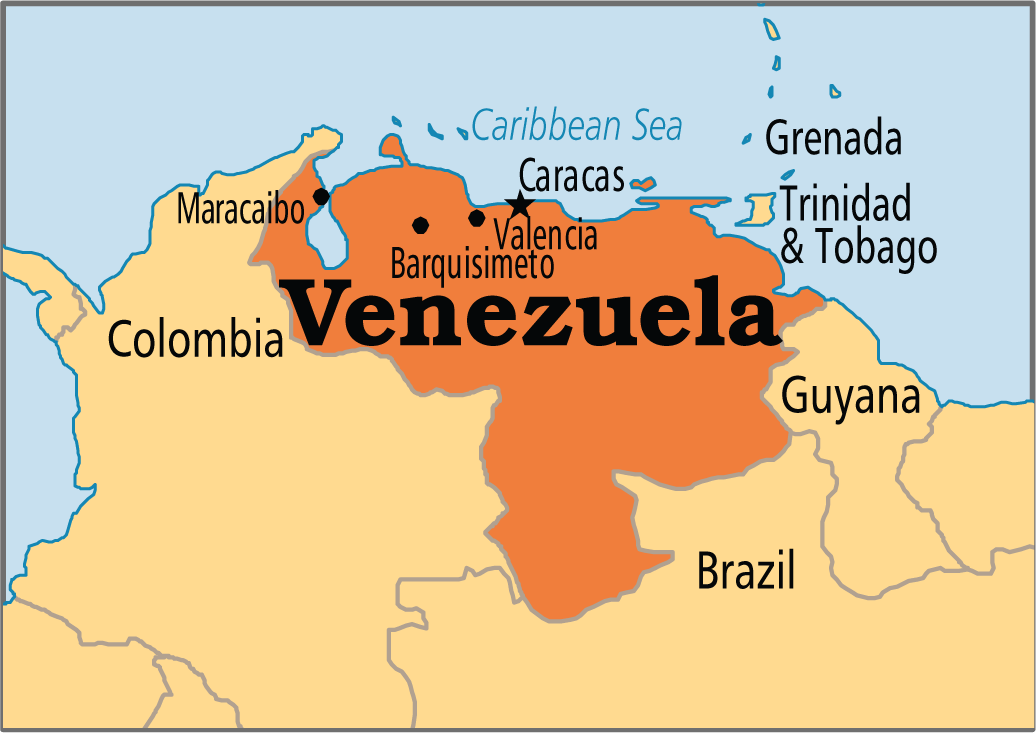
- Location & Boundaries: Venezuela is located at the northern end of South America, with coastlines along the Caribbean Sea and the Atlantic Ocean, and shares land borders with Guyana to the east, Brazil to the south, and Colombia to the southwest and west .
- Political System & Capital: It is a federal multiparty republic with a unicameral legislature, and Caracas serves as the capital.
- Natural Resources & Economy: Venezuela is resource-rich, possessing petroleum, natural gas, iron ore, gold, bauxite, and diamonds, with the economy historically dominated by oil.
- The country holds the world’s largest proven crude oil reserves and is a founding member of OPEC, making it strategically critical in global energy geopolitics.
- Physical Geography: Venezuela features diverse landforms including the Andes Mountains, Lake Maracaibo, the Llanos plains, the Guiana Highlands, and the Orinoco River system, which shapes its ecology and economy.
- The country’s highest point is Pico Bolívar, and the world’s highest waterfall, Angel Falls, is located in the Guiana Highlands.
- Its major rivers include the Orinoco and Rio Negro, while Lake Maracaibo, the largest lake in South America.
- Cultural & Ecological Importance: Venezuela hosts UNESCO-recognised sites like Canaima National Park and Angel Falls, highlighting its ecological and natural heritage.
- Islands & Territorial Disputes: It administers several Caribbean islands such as Margarita and Los Roques, and has a long-standing territorial dispute with Guyana over the Essequibo region, along with maritime disputes with Colombia.
Conclusion
The US intervention marks a bold revival of the Monroe Doctrine, reasserting American hegemony to counter external influence and challenge the global multipolar order. While aiming to restore democracy, this unilateral action risks destabilizing Latin America and raising sovereignty concerns across the Global South.
|
Drishti Mains Question: Q. The revival of the Monroe Doctrine in the 21st century presents a challenge to the emerging multipolar world order.Discuss |
Frequently Asked Questions (FAQs)
- What is the Monroe Doctrine?
It is a 1823 US foreign policy doctrine opposing European colonisation or interference in the Western Hemisphere and asserting US security interests in the region. - What is the “Trump Corollary” to the Monroe Doctrine?
It refers to a contemporary reinterpretation asserting US political, economic, and military dominance in Latin America to counter rival powers and hostile regimes. - Why did the US intervene in Venezuela?
The US cited narco-terrorism charges, energy security concerns, and Venezuela’s ties with China, Russia, and Iran as key justifications.
UPSC Civil Services Examination, Previous Year Questions (PYQs)
Prelims
Q. Consider the following statements : (2024)
Statement-I: Recently, Venezuela has achieved a rapid recovery from its economic crisis and succeeded in preventing its people from fleeing/emigrating to other countries.
Statement-II: Venezuela has the world’s largest oil reserves.
Which one of the following is correct in respect of the above statements?
- Both Statement-I and Statement-II are correct and Statement-II explains Statement-I
- Both Statement-I and Statement-II are correct, but Statement-II does not explain Statement-I
- Statement-I is correct, but Statement-II is incorrect
- Statement-I is incorrect, but Statement-II is correct
Ans: D


Important Facts For Prelims
Somnath Swabhiman Parv
Why in News?
The Prime Minister stated that the thousand-year survival of the Somnath temple symbolizes India's indomitable spirit, as the nation celebrates Somnath Swabhiman Parv (1026–2026) for a millennium of unbroken faith and resilience.
What are the Key Facts Regarding the Somnath Temple?
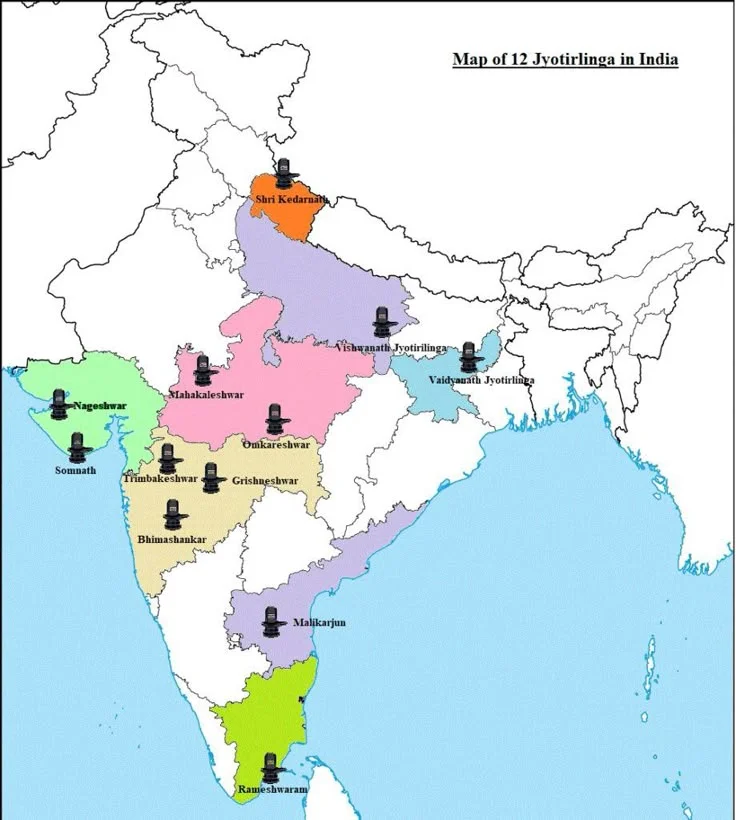
- About: The Somnath Temple, located at Prabhas Patan on Gujarat’s coast, is the first Jyotirling among the 12 holy Shiva Jyotirlingas, as stated in the Shiva Purana and Dwadasha Jyotirling Stotram.
- References to the temple are found in ancient texts like Skandpuran, Shreemad Bhagavat, Shivpuran, and the Rig-Veda.
- It is also the Neejdham Prasthan Leela site where Lord Shri Krishna took his last journey.
- Identified as a Tirthdham of immense antiquity, revered alongside Ganga, Yamuna, and Saraswati in Vedic literature.
- Construction: According to tradition, it was built in phases—first in gold by Somraj (Moon God), then in silver by Ravana, later in wood by Lord Krishna.
- King Bhimdev I (or Bhima I) of the Solanki dynasty rebuilt the temple in stone after its destruction by Mahmud of Ghazni in 1026 CE.
- Geographical Significance: Situated at the confluence of Kapila, Hiran, and Saraswati rivers with the Arabian Sea.
- Abadhit Samudra Marg (Tirth Stambh) indicates an uninterrupted sea route to the South Pole, with the nearest landmass ~9,936 km away, reflecting ancient Indian geographical knowledge.
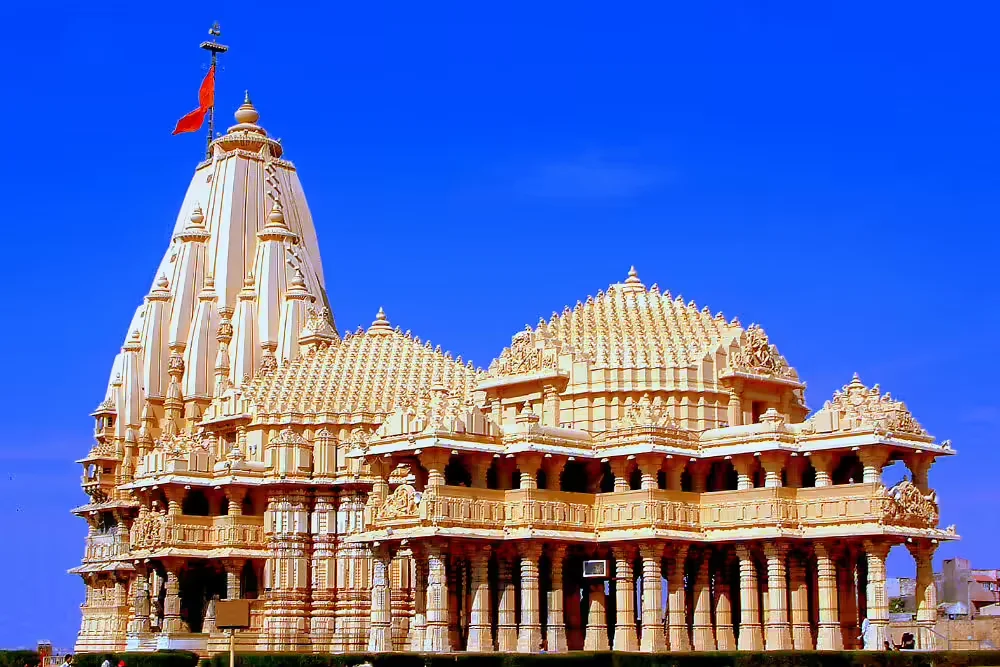
- Architectural Features: It is built in the Kailas Mahameru Prasad style. The structure includes Garbhgruh, Sabhamandap, and Nrityamandap. It has a 155-foot-high Shikhar.
- Cycles of Destruction & Rebuilding: First major attack in 1026 AD by Mahmud of Ghazni; documented by Persian scholar Al-Biruni.
- The temple was looted and destroyed multiple times, including in 1026, 1297, 1394, and 1706 CE (Aurangzeb). 2026 marks 1,000 years since the first attack, a significant civilisational milestone.
- The 7th existing temple was rebuilt post-independence as a symbol of national resurgence. Sardar Vallabhbhai Patel initiated the reconstruction in 1947. The Pran-Pratistha was performed by President Dr. Rajendra Prasad on 11th May, 1951. Reconstruction was supported by KM Munshi, author of “Somanatha: The Shrine Eternal”.
- Cultural and Intellectual Significance: Visited by Swami Vivekananda in 1890s, who described Somnath as embodying India’s national life-current—destroyed and reborn repeatedly.
- Revered by saints across traditions, including Jain Acharya Hemchandracharya.
- Maintained ritual continuity by Maharani Ahilyabai Holkar during adverse political conditions.
- Core Civilisational Message: Somnath symbolises faith over fanaticism, creation over destruction, and the eternity of Indian civilisation, echoing the Gita’s message of the indestructible soul.
Kailas Mahameru Prasad Style
- About: It refers to a distinctive form of Hindu temple architecture primarily associated with the Chalukya (or Chaulukya/Solanki) tradition, prominent in western India, particularly Gujarat.
- Exemplar and Symbolism: The term Kailas Mahameru Prasad evokes the temple's design as a grand edifice symbolizing Mount Kailasa (abode of Shiva) and Mount Meru (the cosmic mountain in Hindu cosmology), emphasizing a towering, majestic shikhara (spire) and intricate craftsmanship.
- Key Architectural Characteristics: It falls under the broader Nagara school of North Indian temple architecture but incorporates regional elements from the Chalukya/Solanki period (often classified under Māru-Gurjara architecture).
- Features include a high shikhara (around 50 meters in Somnath), elaborate carvings, a garbhagriha (sanctum), sabha mandapa (assembly hall), and nritya mandapa (dance hall).
- The style showcases the expertise of Gujarat's traditional master masons, known as Sompura Salats.
12 Jyotirlingas and their Location
|
Name |
City |
State |
|
Somnath |
Prabhas Patan |
Gujarat |
|
Mallikarjuna |
Srisailam |
Andhra Pradesh |
|
Mahakaleshwar |
Ujjain |
Madhya Pradesh |
|
Omkareshwar |
Mandhata Island |
Madhya Pradesh |
|
Kedarnath |
Kedarnath |
Uttarakhand |
|
Bhimashankar |
Pune (Khed) |
Maharashtra |
|
Kashi Vishwanath |
Varanasi |
Uttar Pradesh |
|
Trimbakeshwar |
Trimbak |
Maharashtra |
|
Baidyanath |
Deoghar |
Jharkhand |
|
Nageshwar |
Dwarka |
Gujarat |
|
Rameshwaram |
Rameshwaram |
Tamil Nadu |
|
Grishneshwar |
Ellora |
Maharashtra |
Frequently Asked Questions (FAQs)
1. What is the historical significance of the year 1026 CE for Somnath?
It marks the first major invasion and destruction of the temple by Mahmud of Ghazni, an event commemorated a millennium later by the Somnath Swabhiman Parv (1026-2026).
2. Who led the reconstruction of Somnath Temple after Independence?
Sardar Vallabhbhai Patel initiated reconstruction in 1947; Pran-Pratistha was performed by Dr Rajendra Prasad in 1951.
3. What is Abadhit Samudra Marg at Somnath?
It is a sea-facing axis (Tirth Stambh) indicating an uninterrupted sea route to the South Pole (~9,936 km).
UPSC Civil Services Examination, Previous Year Questions (PYQs)
Q. The Prime Minister recently inaugurated the new Circuit House near Somnath Temple at Veraval. Which of the following statements are correct regarding Somnath Temple?
- Somnath Temple is one of the Jyotirlinga shrines.
- A description of Somnath Temple was given by Al-Biruni.
- Pran Pratishtha of Somnath Temple (installation of the present day temple) was done by President S. Radhakrishnan.
Select the correct answer using the code given below:
(a) 1 and 2 only
(b) 2 and 3 only
(c) 1 and 3 only
(d) 1, 2 and 3
Ans: (a)


Rapid Fire
Rabies as Notifiable Disease
The Delhi government has decided to declare human rabies a notifiable disease under the Epidemic Diseases Act, 1897, aiming to achieve zero human deaths from dog-mediated rabies.
Notifiable Disease
- About: Notifiable diseases are those legally mandated to be reported to public health authorities under laws like the Epidemic Diseases Act, 1897. The primary framework for surveillance is the Integrated Disease Surveillance Programme (IDSP), managed by the National Centre for Disease Control (NCDC).
- Implications of Notification: Once a disease is declared notifiable, all healthcare providers (public and private), hospitals, and medical practitioners are legally obligated to report suspected, probable, and confirmed cases to designated authorities, ensuring comprehensive data collection.
- Commonly Notified Diseases: While lists vary state wise, diseases commonly declared notifiable across many states include Tuberculosis, Dengue, Malaria, Cholera, Hepatitis, Measles, Leptospirosis, and Polio. Covid-19 was universally declared notifiable during the pandemic.
- Recent examples of newly notified diseases include snakebite in 2024 and human rabies in 2025.
- Decentralized and Non-Uniform System: India lacks a single, uniform national list of notifiable diseases. The authority to declare a disease notifiable rests primarily with state/UT (with legislative assembly) governments, leading to variations in the list of diseases across different states and union territories.
- Global Commitment: The International Health Regulations (2005) (IHR) under the World Health Organization (WHO) are a legally binding international law that require memeber countries to inform the WHO about public health risks or events that may have international health implications, irrespective of their origin or source.
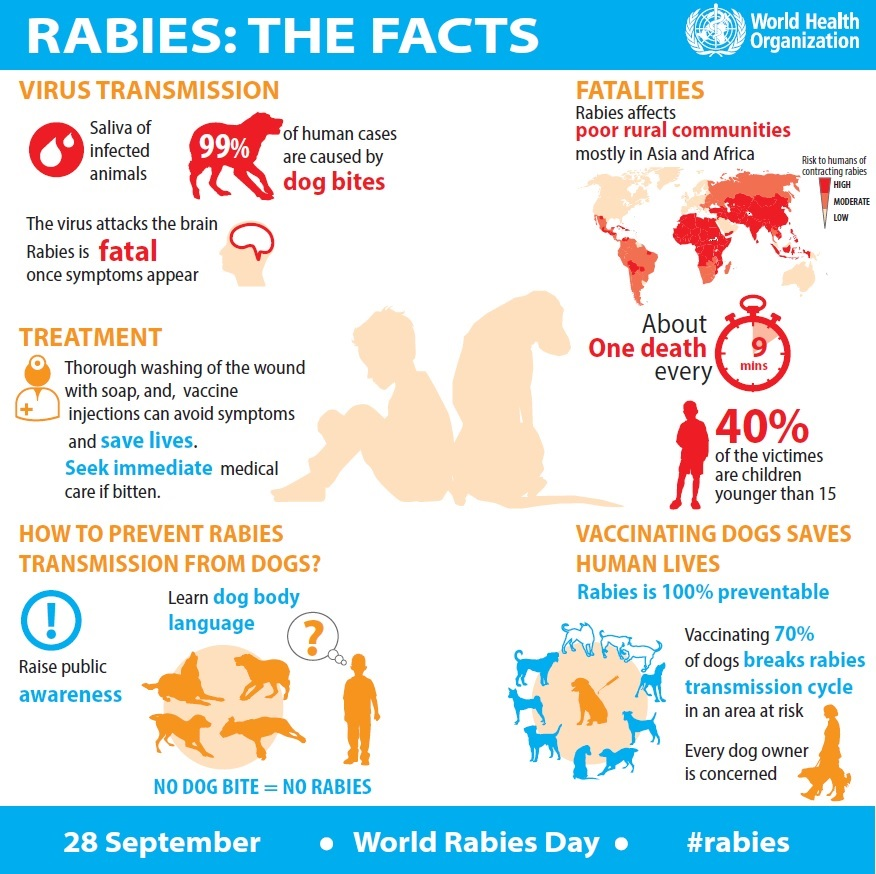
| Read More: Rabies in India |


Rapid Fire
Govt Lifts Import Curbs on Low Ash Metallurgical Coke
India has withdrawn import restrictions on low ash metallurgical coke (ash content below 18%) after imposing a provisional anti-dumping duty, balancing trade protection with assured raw material availability for the steel sector.
- Earlier, in December 2025, the Directorate General of Foreign Trade (DGFT) had extended import restrictions on low ash metallurgical coke from 1st January to 30th June 2026 due to the absence of anti-dumping duty.
- However, after the Ministry of Finance approved the imposition of anti-dumping duty, the rationale for restrictions ceased, leading DGFT to remove the quantitative import curbs.
- India has imposed a provisional anti-dumping duty ranging from USD 60 to USD 130 per tonne on low ash metallurgical coke imports.
- Anti-dumping Duty: It is a trade remedial measure imposed on imports sold below their normal value when such dumping causes material injury to domestic producers, aimed at restoring fair competition rather than restricting import quantities.
- Metallurgical coke (met coke): It is a high-carbon, low-impurity fuel obtained from coking coal, used as a key input in blast furnace steelmaking, and produced by heating coal in the absence of air (destructive distillation) in coke ovens.
- It acts as both a fuel and a reducing agent in blast furnaces, helping convert iron ore into molten iron.
- Low ash and ultra-low phosphorous variants are especially important for high-grade steel manufacturing.
- India has large proven coking coal reserves (16.5 billion tonnes of medium-quality and 5.13 billion tonnes of prime-quality coal), yet imports nearly 85% of its coking coal because much of the domestic coal is not suitable for metallurgical use, leaving the steel sector and overall economic stability vulnerable to external supply shocks.
| Read more: Coking Coal as Critical Mineral |


Rapid Fire
Green Paradox in Urban Greening
A global study covering 761 cities across 105 countries, including India, shows that urban greening does not always cool cities and that poorly planned tree and vegetation planting can worsen heat, particularly in dry and water-scarce regions.
- Urban Heat Drivers: Cities are heating up due to global climate change and the urban heat island effec, where concrete and asphalt trap more heat than surrounding rural areas.
- Temperature Regulation Capability: The study used a metric called Temperature Regulation Capability, defined as the temperature difference between vegetated surfaces and built-up surfaces such as concrete and asphalt.
- A negative value indicates that vegetation is cooler than built-up areas (cooling effect), while a positive value indicates that vegetation is warmer (warming effect), helping the study assess when and where urban greening reduces or intensifies city heat.
- Study Findings: Overall, vegetation cooled most cities, but nearly one-fourth of cities, mainly with low rainfall (<1,000 mm), experienced net warming instead.
- Green Paradox in Dry Regions: In arid and semi-arid cities, limited water availability weakens evapotranspiration (release of water vapour), reducing the cooling effect of vegetation.
- At the same time, vegetation can absorb more solar radiation than some built surfaces, which can increase surface temperatures.
- During heat stress and low humidity, plants further restrict water loss, sharply cutting evaporative cooling and intensifying urban heat.
- This is crucial for India, where many cities require climate-appropriate vegetation and integrated heat-mitigation planning.
| Read more: Urban Heat Island Effect |


Rapid Fire
China’s People-Centred Global Governance Initiatives
At the 25th Shanghai Cooperation Organization Tianjin Summit, 2025, China proposed the Global Governance Initiative (GGI), building on its earlier Global Development Initiative (2021), Global Security Initiative (2022), and Global Civilization Initiative (2023).
- The four initiatives place people at the centre of global governance, focusing on tangible welfare gains and dignity. They aim to reform global governance through shared development, common security, and inclusive cooperation.
- Global Governance Initiative (GGI): It calls for a more just and equitable global governance system, with inclusive reforms that deliver tangible improvements in people’s well-being.
- Global Development Initiative (GDI): It focuses on people-centred development by protecting livelihoods and ensuring equitable sharing of growth benefits, aligned with the 2030 Agenda for Sustainable Development, and development cooperation.
- Global Security Initiative (GSI): Emphasises peace through dialogue and consultation, respecting sovereign development paths.
- Global Civilization Initiative (GCI): Promotes mutual respect among civilisations and shared human values.
- Strategic implication: The four initiatives collectively project China’s alternative vision of multilateralism, challenging existing global governance structures while appealing to the Global South.
India’s People-centric Global Initiatives
- International Solar Alliance (ISA): Focuses on climate justice, affordable energy access, and sustainable development for developing countries.
- Coalition for Disaster Resilient Infrastructure (CDRI): Promotes resilient infrastructure to protect livelihoods and reduce disaster risks, particularly in vulnerable regions.
- Mission LiFE (Lifestyle for Environment): Global movement encouraging behavioural change and sustainable consumption through people-led climate action.
- Digital Public Infrastructure (DPI) Model: India’s advocacy of open, inclusive digital public goods (payments, identity, service delivery) to improve governance and inclusion worldwide.
- Vaccine Maitri: Treats health as a global public good, supporting equitable access during crises.
- Vasudhaiva Kutumbakam (G20, 2023): India’s G20 theme emphasised people-centric, inclusive, and sustainable development, especially for the Global South.
| Read more: Good Governance |