
Science & Technology
India-AI Impact Summit 2026
For Prelims: India-AI Impact Summit 2026, Artificial Intelligence, India AI Mission, Pax Silica initiative, Digital Public Infrastructure
For Mains: Role of AI in inclusive development and governance, India’s Digital Public Infrastructure as a global model, AI and socio-economic transformation in the Global South
Why in News?
The India-AI Impact Summit 2026 commenced at Bharat Mandapam in New Delhi, organised by the Ministry of Electronics and Information Technology (MeitY), marking the first major global Artificial Intelligence (AI) summit hosted in the Global South and showcasing India’s leadership in inclusive, development-focused AI.
- The Summit is hosted under the India AI Mission, shifting the global narrative from "AI Safety" to "AI for Development and Impact."
Summary
- The India AI Impact Summit 2026 positions India as a Global South leader by shifting the focus from AI safety to AI for development, guided by the principles of People, Planet, and Progress and promoting inclusive, responsible AI governance.
- Through the IndiaAI Mission, digital public infrastructure, and global partnerships, the summit advances AI-driven solutions for healthcare, agriculture, climate resilience, governance, and economic growth while strengthening digital sovereignty and workforce readiness.
What are the Key Highlights of the India-AI Impact Summit 2026?
- Theme and Philosophy: The summit is anchored in Indian ethos, specifically the motto "Sarvajana Hitaya, Sarvajana Sukhaya" (Welfare for all, happiness for all). It is structured around two conceptual frameworks:
- The Three Sutras (Pillars): People, Planet, and Progress.
- People: Developing AI that empowers citizens through healthcare, education, and financial inclusion.
- Planet: Using AI for sustainable practices, climate resilience, and resource efficiency.
- Progress: Harnessing AI for economic growth, governance, and public service delivery.
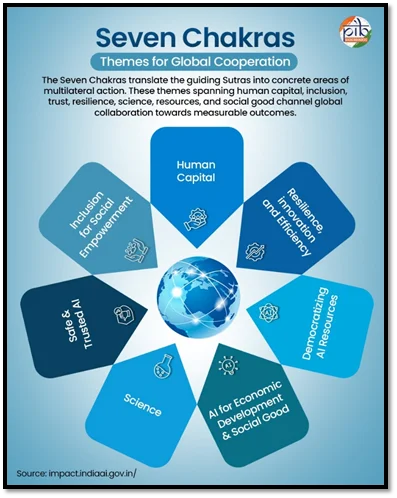
- The Seven Chakras (Working Groups): Focused themes including Health, Agriculture, Safe & Trusted AI, Science, Inclusion, Democratizing AI Resources, and Economic Development.
- The Three Sutras (Pillars): People, Planet, and Progress.
- Key Institutional Frameworks: The India AI Impact Summit 2026 is anchored by key institutional frameworks including MeitY, the IndiaAI Mission, Software Technology Parks of India (STPI) and the Digital India initiative.
- Together these provide policy direction, ecosystem support, innovation infrastructure, and digital foundations to ensure AI adoption aligns with national priorities, inclusive governance, and scalable implementation.
- Expected Outcomes: At least 15 tangible deliverables focused on AI governance, innovation, and inclusive growth.
- India’s entry into the US-led Pax Silica initiative to build a resilient global electronics and semiconductor supply chain.
- Global cooperation on AI governance and ethics, possibly through multistakeholder frameworks rather than a formal treaty body.
- Strengthening AI for jobs and public service delivery, highlighting AI’s role in employment generation and governance efficiency.
- Expansion of India’s AI Safety Institute model, promoting collaborative research on AI safety and standards.
.webp)
Significance of India-AI Impact Summit 2026
- Voice of the Global South: Unlike earlier global AI summits that focused on risks and regulation for developed nations, India’s summit emphasizes developmental outcomes. It showcases how AI can address Global South challenges such as healthcare access, agricultural productivity, and language barriers.
- Democratization of Technology: India is showcasing its Digital Public Infrastructure (DPI) model (like UPI and Aadhaar) as a blueprint for AI.
- The summit advocates for "AI Commons"—making compute power, datasets, and models accessible to developing nations rather than being monopolized by a few tech giants.
- Shift from ‘Regulation’ to ‘Innovation’: The New Delhi summit emphasizes Applied AI.
- The focus is on use cases—how AI can actually be deployed on the ground to improve Human Development Index (HDI) indicators.
- Strategic Diplomacy: By hosting this summit, India positions itself as a bridge power between the developed West (which owns the technology) and the developing South (which needs the technology), reinforcing its diplomatic leverage in technology governance.
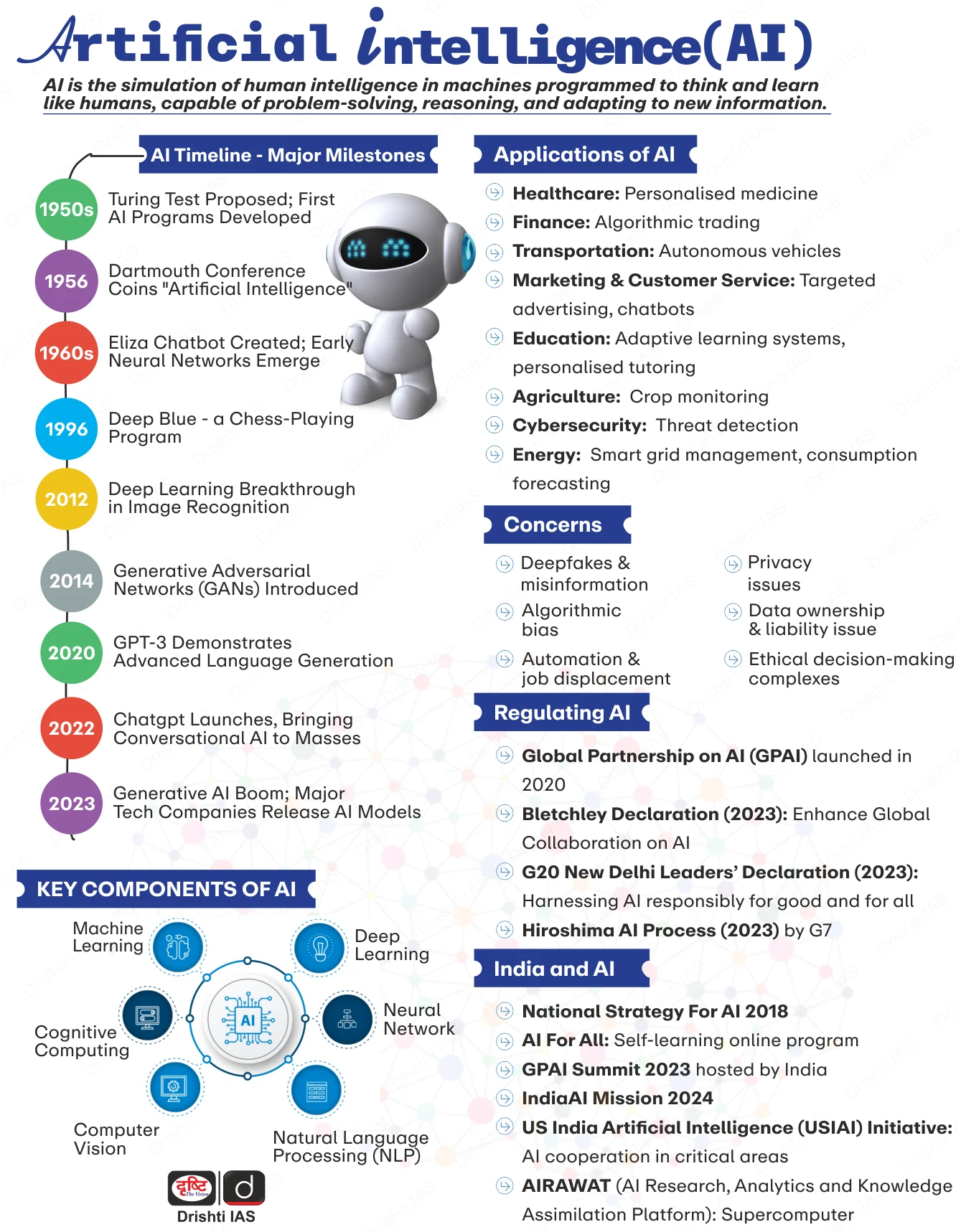
Note: Artificial Intelligence (AI) is the ability of machines to perform tasks that normally require human intelligence. It enables systems to learn from experience, adapt to new situations, and solve complex problems independently.
- AI uses datasets, algorithms, and large language models to analyse information, recognise patterns, and generate responses.
- Over time, these systems improve their performance, allowing them to reason, make decisions, and communicate in ways similar to humans.
What is the Significance of AI for India?
For People: Bridging Social Inequities
- Healthcare: AI-driven diagnostics are bridging the doctor-patient ratio (currently ~1:834 in India).
- Tools like Qure.ai (radiology) and automated blood/urine analysis are providing "lab-grade" results in rural clinics.
- Education: Platforms like DIKSHA and adaptive learning systems personalize curriculum for students with different learning speeds, while AI translation removes the "English barrier" for rural learners.
- YUVAi: Youth for Unnati and Vikas with AI, a national programme aimed at enabling students from Classes 8 to 12 with AI and social skills in an inclusive manner.
- Linguistic Inclusion: With Bhashini, AI enables real-time translation across 22 Scheduled Indian languages, ensuring that digital governance is not restricted by language.
- Sarvam Vision an indigenous model optimized for Indian languages and high-accuracy document processing (OCR), reducing reliance on foreign proprietary models.
For the Planet: Precision and Sustainability
- Agriculture: AI models analyze satellite imagery and soil data to provide localized weather advisories and pest predictions.
- Initiatives like Kisan E-Mitra (AI chatbot) help farmers optimize fertilizer use, reducing costs and environmental runoff.
- MausamGPT an AI-powered chatbot currently under development to provide personalized, conversational climate and weather advisories to farmers in regional languages.
- Energy Management: AI serves as a tool for "Climate-Smart" development, critical for India's 2070 Net Zero targets.
- AI integrates with smart grids to predict peak loads and manage the intermittency of renewable energy (solar/wind), enhancing the efficiency of India’s transition to green energy.
- Flood Forecasting: Systems like BrahmaSATARK use AI-integrated physics modeling to provide impact-based forecasts for the Brahmaputra and Ganga basins.
For Progress: Economic and Governance Transformation
- Governance: AI is projected to add USD 500–600 billion to India's GDP by 2030 through productivity gains.
- India is integrating AI into its Digital Public Infrastructure (Aadhaar, UPI, DigiLocker).
- For example, MuleHunter.AI identifies "mule accounts" in banking to prevent fraud and automates the translation of complex court judgments to improve legal accessibility.
- Digital Sovereignty: Through the IndiaAI Mission, India is building its own compute capacity (38,000+ GPUs) and indigenous models like BharatGen (world’s first government-funded multimodal Large Language Model (LLM) initiative for AI-driven public services).
- This ensures that India’s data stays within its borders and AI models are "culturally representative."
AI Ecosystem in India at Present
- Over 6 million people are employed in the tech and AI ecosystem. India’s AI talent pool is projected to grow over 12.5 lakh by 2027, reflecting strong demand in data science, AI engineering, and analytics.
- To support this growth, MeitY’s FutureSkills PRIME programme has attracted over 18.56 lakh registrations, with more than 3.37 lakh course completions, strengthening India’s AI-ready workforce.
- As of 2025, the country hosts 1,800+ Global Capability Centres, including more than 500 focused on AI.
- India has around 1.8 lakh startups, and nearly 89% of new startups launched last year used AI in their products or services.
- On the NASSCOM AI Adoption Index, India scores 2.45 out of 4, showing that 87% of enterprises are actively using AI solutions.
- Leading sectors in AI adoption include industrial and automotive, consumer goods and retail, banking, financial services and insurance, and healthcare. Together, they contribute around 60% of AI’s total value.
- A Boston Consulting Group (BCG) report confirms that 26% of Indian companies have achieved AI maturity at scale.
What is the India AI Mission?
- About: The IndiaAI Mission, approved by the Cabinet in March 2024 with a budget of Rs 10,371 crore, is a transformative initiative aimed at establishing India as a global leader in AI through the vision of "Making AI in India and Making AI Work for India."
- The mission is implemented by IndiaAI, an independent business division under the MeitY.
- The Seven Pillars of the IndiaAI Mission:
- IndiaAI Compute: Provides affordable access to high-end GPUs, with over 38,000 onboarded and eligible users can access AI compute at up to 40% reduced cost under the India AI Mission.
- IndiaAI Application Development: Promotes AI solutions for India-specific challenges in sectors like healthcare, agriculture, governance, climate change, and cybersecurity through hackathons and approved applications.
- AIKosh (Dataset Platform): Offers a national repository of datasets and AI models, hosting 3,000+ datasets and 243 models across 20 sectors to accelerate AI development.
- IndiaAI Foundation Models: Supports development of indigenous large multimodal AI models using Indian languages and data, with startups like Sarvam AI and Gnani AI selected in the first phase.
- IndiaAI FutureSkills: Builds AI talent through fellowships, academic programmes, and AI labs in Tier 2 and Tier 3 cities to expand workforce readiness.
- IndiaAI Startup Financing: Provides funding and global expansion support to AI startups, including market access initiatives in Europe.
- Safe and Trusted AI: Ensures responsible AI adoption through projects on bias mitigation, privacy, explainability, governance testing, and the IndiaAI Safety Institute.
Conclusion
The India AI Impact Summit 2026 redefines global technology governance by prioritizing developmental outcomes over existential risks, marking the first such leadership from the Global South. Ultimately, it positions India as a "bridge power" that aligns AI innovation with the human-centric principles of People, Planet, and Progress.
|
Drishti Mains Question: “India AI Impact Summit 2026 marks a shift from AI safety to AI for development.” Discuss its implications for the Global South. |
Frequently Asked Questions (FAQs)
1. What is the core objective of the India AI Impact Summit 2026?
It aims to promote AI for development, inclusive growth, and responsible governance, shifting focus from risk-centric regulation to practical deployment.
2. What are the “Three Sutras” of the summit?
People, Planet, and Progress—focusing on social empowerment, sustainability, and economic growth through AI.
3. What is the IndiaAI Mission?
A ₹10,371 crore initiative (2024) to build sovereign AI capabilities through compute access, datasets, indigenous models, skilling, and responsible AI frameworks.
4. How does AI support inclusive development in India?
AI improves healthcare diagnostics, personalized education, language translation, and financial inclusion through Digital Public Infrastructure.
5. Why is India’s AI approach significant for the Global South?
It emphasizes affordable access, AI commons, and developmental use cases, offering a scalable model for emerging economies.
UPSC Civil Services Examination Previous Year Question (PYQ)
Prelims
Q. With the present state of development, Artificial Intelligence can effectively do which of the following? (2020)
- Bring down electricity consumption in industrial units
- Create meaningful short stories and songs
- Disease diagnosis
- Text-to-Speech Conversion
- Wireless transmission of electrical energy
Select the correct answer using the code given below:
(a) 1, 2, 3 and 5 only
(b) 1, 3 and 4 only
(c) 2, 4 and 5 only
(d) 1, 2, 3, 4 and 5
Ans: (b)
Q. The terms ‘WannaCry, Petya and EternalBlue’ sometimes mentioned in the news recently are related to (2018)
(a) Exoplanets
(b) Cryptocurrency
(c) Cyber attacks
(d) Mini satellites
Ans: (c)
Mains
Q. Introduce the concept of Artificial Intelligence (AI). How does AI help clinical diagnosis? Do you perceive any threat to privacy of the individual in the use of AI in healthcare?(2023)
Q. What are the main socio-economic implications arising out of the development of IT industries in major cities of India?(2022)
Q. “The emergence of the Fourth Industrial Revolution (Digital Revolution) has initiated e-Governance as an integral part of government”. Discuss. (2020)
International Relations
India-Bangladesh Relations
For Prelims: 1971 Liberation War, Akhaura-Agartala Rail Link, India-Bangladesh Friendship Pipeline, Maitree Setu
For Mains: India-Bangladesh Relations, Key issues, Measures to address the issue.
Why in News?
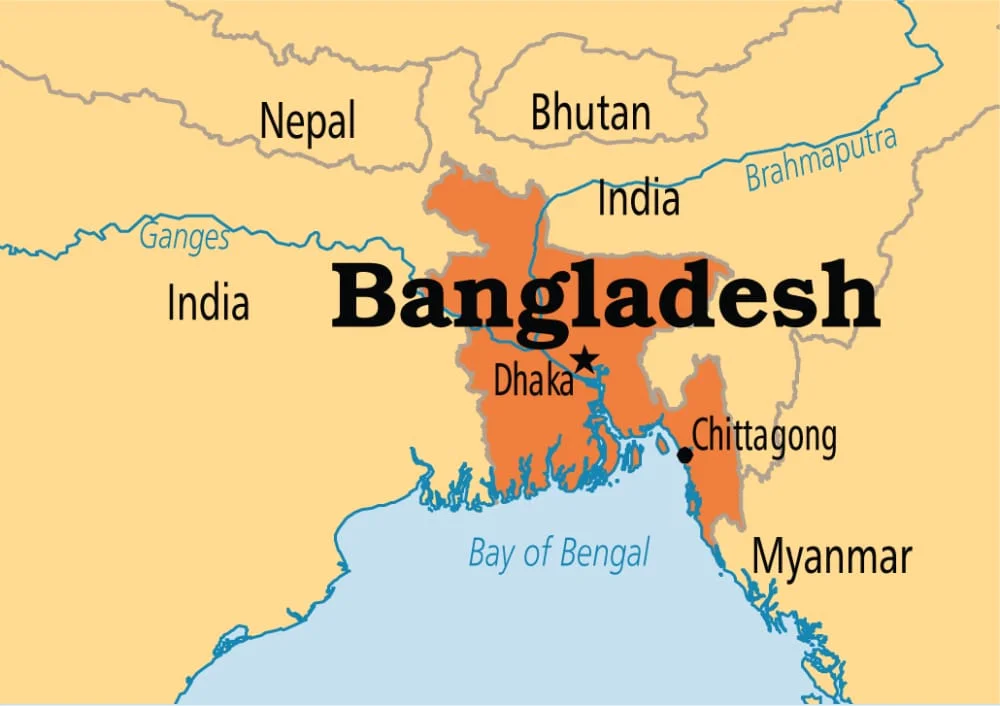
The Bangladesh Nationalist Party (BNP), led by Tarique Rahman, has secured a landslide victory in the general elections held in February 2026. This marks a significant paradigm shift in Bangladesh’s politics, ending the interim period that followed the ouster of the Sheikh Hasina regime (Awami League) in August 2024.
- India’s Prime Minister swiftly congratulated Tarique Rahman, signaling India’s readiness to engage with the new dispensation regardless of past animosities.
Summary
- The BNP’s 2026 victory marks a major shift in Bangladesh’s politics, reviving security concerns for India such as insurgency risks, minority safety, China’s growing influence, and anti-India sentiment, while testing India’s Neighbourhood First policy.
- Despite challenges, deep economic, energy, and connectivity interdependence makes engagement essential, requiring India to adopt pragmatic diplomacy, strengthen people-to-people ties, and set clear security red lines to stabilise bilateral relations.
What is the Historical Context of India- Bangladesh Relations under BNP Rule?
- BNP: It was founded by General Ziaur Rahman, who steered Bangladesh away from its initial secular foundations towards a more Islamic identity, often improving ties with Pakistan.
- The 2001-2006 Era (Strained Ties): The previous BNP-Jamaat coalition government is often cited as the "lowest point" in bilateral relations.
- Security Concerns: India accused the regime of harboring Northeast insurgent groups (United Liberation Front of Assam (ULFA), National Democratic Front of Bodoland (NDFB)).
- Terrorism: Increasing radicalization and cross-border terror threats.
- China Factor: A distinct pivot towards China in defense and infrastructure.
- The "Golden Chapter" (2009-2024): Under Sheikh Hasina, relations flourished with the resolution of the Land Boundary Agreement (2015), connectivity projects, and a crackdown on anti-India insurgents.
- India-Bangladesh bilateral trade reached USD 13 billion in FY 2023–24, making Bangladesh India’s largest trade partner in the subcontinent.
- Duty-free access was provided on most tariff lines under the South Asian Free Trade Area (SAFTA) agreement under Hasina’s administration.
- The Interim Period (2024-2026): Following the student-led revolution and Hasina’s flight to India, anti-India sentiment surged in Bangladesh, driven by the perception that India had unconditionally backed an "authoritarian" regime.
India-Bangladesh Relations
- Historical Background: India–Bangladesh relations were built on a strong foundation during the 1971 Liberation War, when India provided decisive military and diplomatic support, fostering trust and shared secular values.
- The partnership was formalised through the 1972 Treaty of Friendship and the 1974 Land Boundary Agreement, which created the initial legal framework for bilateral ties.
- Trade: In FY25, total trade reached USD 13.51 billion, with India exporting USD 11.46 billion and importing USD 2.05 billion.
- India mainly exports fuels, petroleum products, and cotton inputs, while importing garments, footwear, and textile goods, reflecting strong economic complementarity.
- Power and Energy Cooperation: Bangladesh imports 1160 MW of electricity from India. The Maitree Super Thermal Power Plant (1320 MW) built with Indian assistance.
- The India-Bangladesh Friendship Pipeline for High-Speed Diesel; Indian PSUs involved in oil exploration and supply.
- Development Partnership: India has extended 3 Lines of Credits (LoCs) worth nearly USD 8 billion for infrastructure projects in roads, railways, ports, and a dedicated USD 500 million Defence LoC.
- Grant assistance for specific projects like the Akhaura-Agartala rail link and dredging.
- Connectivity & Transport: Cross-border rail links such as Agartala–Akhaura, the use of Chittagong and Mongla ports for Indian cargo, revival of old rail routes like Haldibari–Chilahati and Petrapole–Benapole, expanded inland waterways trade under the Protocol on Inland Water Transit and Trade, and the Maitri Setu over the Feni River (connecting Sabroom in India's Tripura state with Ramgarh in Bangladesh) have together improved connectivity.
What are the Emerging Challenges in India-Bangladesh relations?
- The "Hasina" Factor & Extradition: Sheikh Hasina has been sheltering in India since 2024.
- The new BNP government, under pressure from its base and coalition partners, is likely to demand her extradition to face trial for "crimes against humanity" committed during the 2024 uprising.
- Security and Insurgency: There are apprehensions in the Indian security establishment that the "Chicken’s Neck" corridor (Siliguri Corridor) could again become vulnerable if the new regime relaxes vigilance on Northeast insurgent groups or allows Pakistan to expand its footprint.
- The return of a hostile regime (BNP-Jamaat) revives the "safe haven" fear for Northeast insurgents (ULFA, etc.).
- Border Control: Notably, Jamaat-e-Islami has won significant seats along the border districts of West Bengal, Assam, and the Siliguri corridor. This poses a direct tactical security threat regarding infiltration and smuggling.
- The Rise of Islamist Politics: Historically, regime changes in Bangladesh (2001, 2024) are accompanied by immediate, widespread violence against religious minorities (perceived as Awami League vote banks).
- There are concerns regarding the safety of minority communities (Hindus) in Bangladesh and the potential rise of radicalism, which could spill over into bordering Indian states (West Bengal, Assam).
- A refugee influx (like in 1971) would destabilize the sensitive demography of Assam and West Bengal.
- Geopolitical Balancing: The BNP has historically advocated a policy of "Look East" (towards China) and closer ties with the Islamic world (including Pakistan) to balance India’s influence.
- Beijing is likely to leverage this shift to fast-track Belt and Road Initiative (BRI) projects.
- The "India Out" Sentiment: Anti-India rhetoric remains potent in university campuses and student movements.
- Even if not explicitly stated in the BNP manifesto, this sentiment limits the new government's ability to be seen as "friendly" to India.
What Steps Can India and Bangladesh Take to Reset Bilateral Relations?
- De-hyphenation from Awami League: India must decisively move past the perception of being an "Awami League-only" ally.
- Engaging with the BNP and the broader Bangladeshi civil society is essential to restore public goodwill.
- India should shift from regime-to-regime deals to people-to-people connect. Easing visa regimes for medical tourism and education can act as a soft power bridge.
- Pragmatic Engagement: Engaging with BNP is a strategic necessity. High-level visits (potentially by the PM) could be offered to confer international legitimacy to the new regime, but strictly in exchange for concrete security guarantees.
- Economic Interdependence as a Stabilising Tool: India can leverage its trade surplus to encourage cooperative behaviour while ensuring fair market access for Bangladeshi goods.
- Continued Indian supply of cotton yarn, power, and essential commodities can stabilise Bangladesh’s economy while reinforcing interdependence.
- CEPA & LDC Graduation: As Bangladesh graduates from the Least Developed Country (LDC) status in 2026, it will lose duty-free access to Western markets.
- India can fast-track the Comprehensive Economic Partnership Agreement (CEPA) to offer duty-free access to the massive Indian market, acting as an economic cushion contingent on political stability.
- Establish Clear "Red Lines": India must unambiguously communicate its non-negotiables to the new government:
- Zero Tolerance for Indian insurgents on Bangladeshi soil.
- Protection of Minorities is a prerequisite for normal ties.
- No Hostile Assets like Chinese developments at Mongla and Payra ports must not evolve into dual-use facilities (e.g., submarine docking) that threaten the Eastern Naval Command.
- Domestic Coordination: The Centre must coordinate effectively with Chief Ministers of border states (West Bengal, Assam, Meghalaya, Tripura, Mizoram) to form a unified political consensus.
- Border security must be depoliticized and treated as a national priority.
Conclusion
The BNP’s 2026 victory signals a structural test for India’s Neighbourhood First policy, raising security concerns. India must adopt a pragmatic, interest-based approach that leverages economic and geographic advantages to safeguard its security.
A stable, neutral, and prosperous Bangladesh remains vital for India’s Act East policy and the security of its Northeast.
Frequently Asked Questions (FAQs)
1. Why is Bangladesh important to India’s Neighbourhood First policy?
Bangladesh is central due to its geographic location, connectivity to the North-East, and role in regional stability and Act East policy.
2. What are the major security concerns for India under BNP rule?
Concerns include insurgent safe havens, ISI influence, minority insecurity, and threats to the Siliguri Corridor.
3. How significant is India–Bangladesh trade?
With trade around USD 13–14 billion annually, Bangladesh is India’s largest trading partner in South Asia, reflecting strong economic interdependence.
4. What role does energy cooperation play in bilateral ties?
India exports electricity, supplies diesel via the Friendship Pipeline, and supports projects like the Maitree Thermal Plant, ensuring mutual energy security.
5. How will Bangladesh’s LDC graduation in 2026 affect relations?
Loss of duty-free access to Western markets may push Bangladesh to seek CEPA with India, deepening economic integration.
UPSC Civil Services Examination, Previous Year Question (PYQ)
Prelims:
Q. With reference to river Teesta, consider the following statements: (2017)
- The source of river Teesta is the same as that of Brahmaputra but it flows through Sikkim.
- River Rangeet originates in Sikkim and it is a tributary of river Teesta.
- River Teesta flows into Bay of Bengal on the border of India and Bangladesh.
Which of the statements given above is/are correct?
(a) 1 and 3 only
(b) 2 only
(c) 2 and 3 only
(d) 1, 2 and 3
Ans: (b)
Mains
Q. Analyze internal security threats and transborder crimes along Myanmar, Bangladesh and Pakistan borders including Line of Control (LoC). Also discuss the role played by various security forces in this regard. (2018)
Biodiversity & Environment
NGT Approved Great Nicobar Project
For Prelims: National Green Tribunal (NGT), Great Nicobar Project, Coral Reefs, NITI Aayog, Andaman and Nicobar Archipelago, National Commission for Scheduled Tribes (NCST), Exclusive Economic Zone, United Nations Convention on the Law of the Sea, 1982 (UNCLOS), Ten Degree Channel, Tropical Rainforest, Forest Rights Act, 2006.
For Mains: Overview of the Great Nicobar Island project, its strategic value, key challenges, and the path to sustainable implementation.
Why in News?
The National Green Tribunal (NGT) has approved the Rs 81,000-crore Great Nicobar project, stating that it found “no good ground” to intervene, while imposing stringent conditions to safeguard the environment.
- NGT acknowledged the "strategic importance of the project" and noted that "adequate safeguards" have been incorporated in the environmental clearance to mitigate ecological impacts.
Summary
- The National Green Tribunal has approved the strategically vital Great Nicobar Project, imposing stringent conditions to protect coastlines, coral reefs, and endangered species.
- Concerns over deforestation, tribal displacement, and seismic vulnerability persist.
- Successful implementation requires rigorous enforcement of safeguards and genuine consultation with PVTGs like the Shompen and Nicobarese under the Forest Rights Act, 2006.
What Environmental Safeguards Have Been Imposed by the NGT?
- Prevention of Erosion: The NGT directed that construction (including foreshore development) must not cause erosion or adverse shoreline changes near the project area or along any of the islands.
- Protection of Sandy Beaches: It specifically ordered that there shall be "no loss of sandy beaches," recognizing these beaches as critical nesting sites for turtles and birds, and as natural protection for the islands.
- Protection of Coral Reefs: It ordered the Ministry of Environment, Forest and Climate Change (MoEFCC) to take "all measures" to protect coral reefs along the coastal stretch and to ensure "coral regeneration through proven scientific methods." Any existing scattered coral must be "translocated" as per Zoological Survey of India (ZSI) suggestions.
- Protection of Endangered Species: The environmental clearance contains specific conditions for the protection of Leatherback sea turtles, Nicobar megapode, Saltwater crocodiles, Robber crab, Nicobar macaque and other endemic bird species of the Great Nicobar island.
- Binding Nature of Conditions: The NGT stipulated that the government is bound by the conditions in the environmental clearance and must ensure these are not violated at any stage of project implementation.

What is the Great Nicobar project?
- About: The Great Nicobar Island (GNI) Project, conceived by the NITI Aayog and launched in 2021, is a mega infrastructure initiative aimed at transforming the southernmost island of the Andaman and Nicobar archipelago into a strategic and economic hub. It aligns with India's Maritime Vision 2030 and Amrit Kaal Vision 2047.
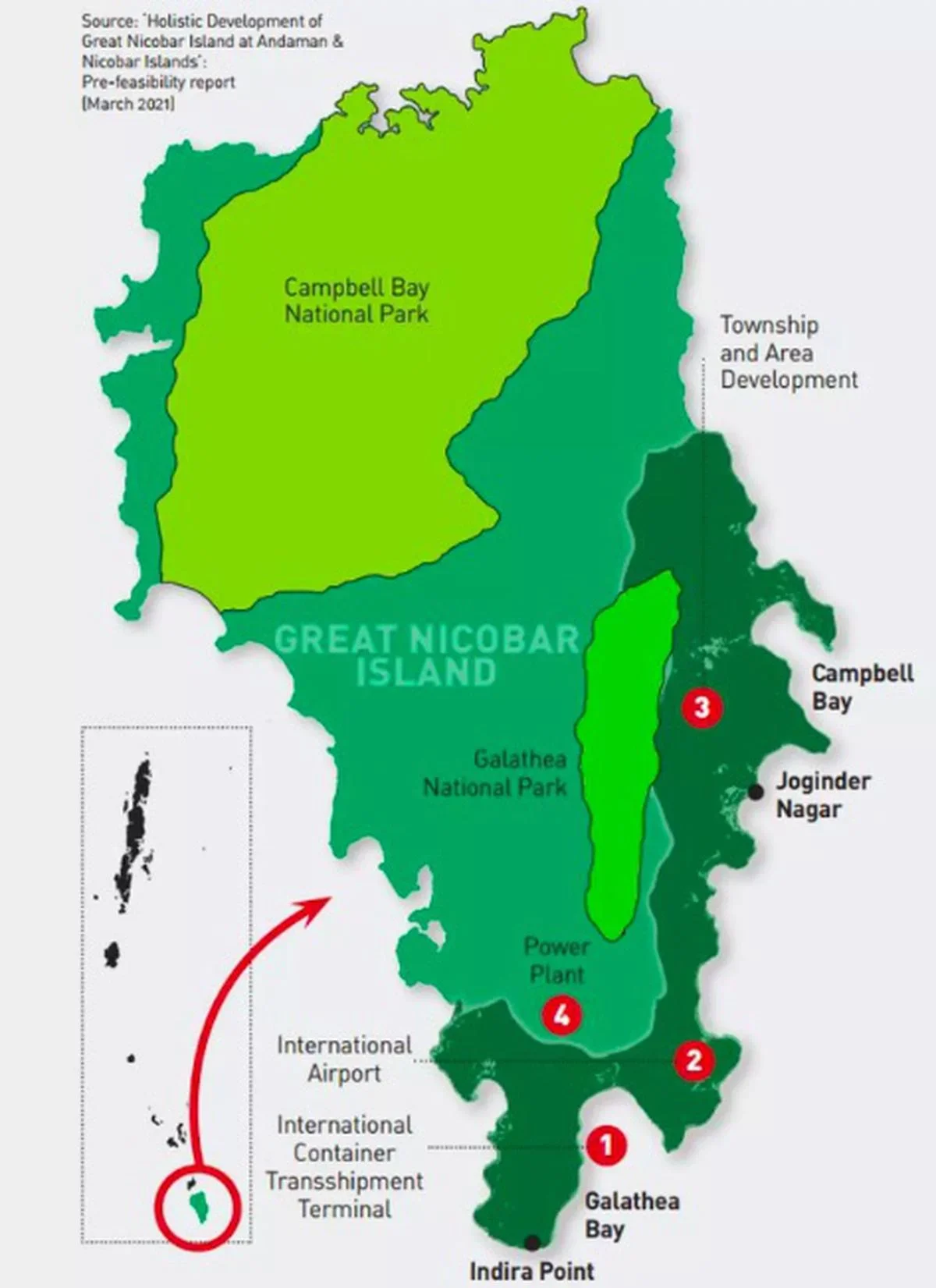
- Project Overview: It involves development at Galathea Bay, Pemmaya Bay, and Nanjappa Bay. The island is approximately equidistant from Colombo (Sri Lanka), Port Klang (Malaysia), and Singapore, placing India at the centre of regional sea trade.
- Key Infrastructure Components:
- International Container Transhipment Terminal (ICTT): Aimed at enabling Great Nicobar to become a major player in the regional and global maritime economy by participating in cargo transhipment.
- Greenfield International Airport: To enhance civilian connectivity, tourism, and provide dual-use defence capability.
- Greenfield Township: To support the projected population and economic activities.
- Gas and Solar-Based Power Plant: To meet the energy requirements of the new infrastructure.
- Tribal Safeguards: Development requires mandatory consultation with tribal welfare bodies (Andaman Adim Janjati VikasSamiti (AAJVS), Ministry of Tribal Affairs), as per the Jarawa (2004) and Shompen (2015) Policies. Consultation with the National Commission for Scheduled Tribes (NCST) under Article 338A(9) confirms tribal interests will be protected.
- Environmental Safeguards: The project includes 8 wildlife corridors for safe animal movement. Compensatory afforestation for felled trees is planned in Haryana, as the islands already have over 75% forest cover.
What is the Strategic Significance of the Great Nicobar Project?
- Chokepoint Proximity: The island's location near the Malacca, Sunda, and Lombok Straits—critical waterways connecting the Indian Ocean to the Pacific—enables India to monitor vital sea lanes for global trade and energy supply.
- It also gives India proximity to Sabang (Indonesia), and the proposed Kra Canal (Thailand), underscoring its central role in Indo-Pacific sea routes.
- Maritime Domain Awareness: It strengthens India's capacity to track naval movements, particularly concerning China's increasing presence in the Indian Ocean Region (IOR) and the military facility being built on the Coco Islands (Myanmar), located just 55 km north of India's Andaman & Nicobar Islands.
- First Line of Defence: The Andaman & Nicobar Islands serve as India's first line of maritime defence, sharing sea boundaries with Myanmar, Thailand, Indonesia, and Bangladesh. This grants India a vast exclusive economic zone and continental shelf under the United Nations Convention on the Law of the Sea, 1982 (UNCLOS).
- Military Deterrence: The project facilitates the deployment of additional military forces, larger warships, aircraft, missile batteries, and troops, enabling close surveillance and building strong military deterrence.
- Economic Significance: The ICTT aims to reduce India's reliance on foreign transhipment ports like Singapore and Colombo, integrating India into global supply chains.
Great Nicobar Island
- Andaman and Nicobar Islands: It consists of 836 islands, geographically divided into the Andaman group to the north and the Nicobar group to the south by the Ten Degree Channel, which is approximately 150 km wide.
- Great Nicobar Island: It is the largest island in the Nicobar group, predominantly covered with tropical rainforest. It hosts Indira Point, the southernmost point of India, located just 90 nautical miles from Sumatra, Indonesia.
- Ecological Significance: The island is home to two national parks namely Campbell Bay National Park and Galathea Bay National Park. It also contains the Great Nicobar Biosphere Reserve, which was included in the UNESCO Man and Biosphere Programme in 2013.
- Demographic Profile: The island has small populations of indigenous tribal communities, including the Shompen and Nicobarese, along with a few thousand non-tribal settlers. Other indigenous tribes historically associated with the region include the Onge and Andamanese.
What Concerns are Associated with the Great Nicobar Project?
- Impact on Indigenous Tribes: The project threatens to dispossess the Nicobarese of their ancestral land, much of which was devastated during the 2004 Indian Ocean tsunami, uprooting communities with deep cultural and historical ties.
- Environmental and Ecological Concerns:
- Rampant Deforestation: The project will clear 130 sq km of primary tropical rainforest (approximately 15% of GNI's land mass). Actual tree felling may exceed 10 million.
- Threat to Wildlife: The project threatens leatherback sea turtles in the Galathea Bay Wildlife Sanctuary, which was designated in 1997 for their conservation but was denotified in 2021 for the port.
- ICRZ Violations Alleged: Petitions alleged that 700 hectares of the proposed project fell within ICRZ areas, where development is strictly prohibited under the ICRZ Notification, 2019.
- Compensatory Afforestation Issues: The diversion of pristine Nicobar forests is being "compensated" with land in Haryana and Madhya Pradesh, which critics argue fails to replicate the lost biodiversity of the unique island ecosystem.
- Geological Concerns: The island's geology comprises tertiary sandstone, limestone, and shale over volcanic rocks, which amplify seismic shaking and are prone to liquefaction during earthquakes.
- Legal Concerns: The Supreme Court-appointed Shekhar Singh Commission (2002) recommended a total ban on tree felling in tribal reserves and national parks, along with afforestation before felling—a rule currently not being followed.
What Steps are Needed to Ensure the Sustainability of the Great Nicobar Project?
- Ecological Conservation Strategies: Consider innovative legal mechanisms such as conferring legal personhood status upon the Great Nicobar ecosystem, ensuring conservation-centric decision-making.
- Establish long-term ecological monitoring for parameters like soil health, coastal erosion, and carbon emissions, with adaptive measures to safeguard turtle nesting sites and prevent habitat fragmentation.
- Safeguarding Tribal Rights: Design resettlement packages that acknowledge pre-tsunami habitation patterns and implement restricted access protocols during construction to protect tribal communities.
- Mandate the inclusion of Tribal Councils of Great and Little Nicobar Islands in project-related deliberations, upholding their statutory rights under the Forest Rights Act, 2006.
- Institutional Oversight and Transparency: Create a multi-stakeholder independent oversight authority comprising environmental experts, tribal representatives, and government nominees to monitor compliance with environmental and social safeguards, ensuring transparency and accountability.
- Sustainable Economic Opportunities: Promote green employment in sectors like renewable energy, ecologically responsible tourism, and low-impact offshore activities. Align project outcomes with India's international commitments to biodiversity conservation and climate action.
Conclusion
The National Green Tribunal's approval of the Great Nicobar Project with stringent environmental conditions represents a calibrated attempt to balance national strategic interests with ecological preservation. However, successful implementation hinges on rigorous enforcement of safeguards, genuine consultation with indigenous PVTGs, and transparent institutional oversight to ensure development does not come at an irreversible cost.
|
Drishti Mains Question: Examine the strategic significance of the Andaman and Nicobar Islands in India's maritime security framework. |
Frequently Asked Questions (FAQs)
1. What is the Great Nicobar Island Project?
It is a mega infrastructure project to develop a transshipment port, international airport, township, and power plant on Great Nicobar Island to serve as a strategic and economic hub.
2. What is the strategic significance of the Great Nicobar Island?
Its proximity to the Malacca Strait and other choke points allows India to monitor vital sea lanes, counter Chinese influence (e.g., Coco Islands), and project military power in the Indo-Pacific region.
3. What were the key environmental concerns raised against the project?
Concerns included massive deforestation (130 sq km), threat to endangered species like leatherback turtles, alleged ICRZ violations, and the ecological impact on coral reefs and the Galathea Bay Wildlife Sanctuary.
UPSC Civil Services Examination, Previous Year Question (PYQ)
Prelims
Q. Consider the following statements: (2018)
- The Barren Island volcano is an active volcano located in the Indian territory.
- Barren Island lies about 140 km east of Great Nicobar.
- The last time the Barren Island volcano erupted was in 1991 and it has remained inactive since then.
Which of the statements given above is/are correct?
(a) 1 only
(b) 2 and 3
(c) 3 only
(d) 1 and 3
Ans: (a)
Q. Which one of the following pairs of islands is separated from each other by the ‘Ten Degree Channel’? (2014)
(a) Andaman and Nicobar
(b) Nicobar and Sumatra
(c) Maldives and Lakshadweep
(d) Sumatra and Java
Ans: (a)
Mains
Q. Environmental impact assessment studies are increasingly undertaken before the project is cleared by the government. Discuss the environmental impacts of coal- fired thermal plants located at Pitheads.(2023)
Q. Project ‘Mausam’ is considered a unique foreign policy initiative of Indian government to improve relationships with its neighbours. Does the project have a strategic dimension? Discuss. (2015)
Important Facts For Prelims
International Conference on Dam Safety 2026
Why in News?
The International Conference on Dam Safety (ICDS) 2026 concluded successfully in Bengaluru, serving as a pivotal platform for strengthening India’s dam safety ecosystem.
What are the Key Highlights of ICDS 2026?
- Dam Safety Framework: The conference emphasized the implementation of the Dam Safety Act, 2021 and the Dam Rehabilitation and Improvement Project (DRIP) to ensure the safety and longevity of India's dams.
- Sediment Management: Reservoir sedimentation was identified as a major threat to water security, highlighting the need for preventive measures such as catchment treatment and remote sensing.
- Experts recommended simplified risk screening and dam-break assessment tools to prioritize safety measures across India's large dam portfolio.
- Flood Management: The importance of forecast-informed and basin-level coordinated reservoir operations was underscored, utilizing dynamic rule curves and real-time data sharing to manage floods and droughts.
- Emergency Preparedness: The conference called for strengthening Emergency Action Plans (EAPs), floodplain zoning, and early warning systems to enhance community preparedness and institutional response.
International Conference on Dam Safety (ICDS) 2026
- The ICDS 2026 is the second in the series organized under DRIP Phase II & III, the first was held in Jaipur in 2023.
- It was jointly organized by the Government of Karnataka, Ministry of Jal Shakti, Central Water Commission (CWC), IISc Bangalore, and the World Bank.
What is the Dam Rehabilitation and Improvement Project (DRIP)?
- DRIP: It is a flagship initiative by the Ministry of Jal Shakti, designed to enhance the structural safety and operational efficiency of dams in India.
- Financial assistance provided by the World Bank and Asian Infrastructure Investment Bank (AIIB). Each phase of DRIP receives USD 500 million in external assistance.
- Need: India ranks third globally (after China and the USA) in the number of large dams, with a portfolio of 6628 dams (National Register of Specified Dams, 2025).
- Ensuring the safety and operational efficiency of this aging infrastructure is critical for water security making DRIP necessary.
- Objectives
- Safety Improvement: To improve the safety and operational performance of selected existing dams and associated appurtenances in a sustainable manner.
- Institutional Strengthening: To strengthen the dam safety institutional setup in participating States as well as at the Central level.
- Revenue Generation: To explore incidental revenue generation for sustainable operation and maintenance of dams.
- Funding Pattern: The funding pattern of the scheme is 80:20(Special Category States), 70:30(General Category States) and 50:50(Central Agencies).
- The Scheme also has provision of Central Grant of 90% of loan amount for special category States (Manipur, Meghalaya and Uttarakhand).
- Phases:
- Phase I (2012–2021): Successfully completed the rehabilitation of 223 dams across 7 states, establishing basic safety protocols and guidelines.
- Phase II & III (2021–2031): Currently ongoing, these phases target 736 dams across 19 states, emphasizing climate resilience, advanced monitoring, and sustainable revenue generation.
Dam Safety Act, 2021
- The Act establishes a comprehensive framework for surveillance, inspection, operation, and maintenance of large dams to ensure safety and prevent dam failure disasters.
- Dam Safety Act 2021 provides for four tiers of institutional mechanism: establishment of National Committee on Dam Safety (NCDS) and National Dam Safety Authority (NDSA) at Centre level and establishment of State Committee on Dam Safety and the State Dam Safety Organization at State level.
- Under the Act, dam owners are responsible for the safe construction, operation, and maintenance of dams. They must set up dam safety units for regular inspections, especially during monsoons and disasters, and prepare Emergency Action Plans, risk assessments, and expert safety evaluations to prevent failures.
Frequently Asked Questions (FAQs)
1. What is the objective of the Dam Rehabilitation and Improvement Project (DRIP)?
DRIP aims to enhance the structural safety, operational efficiency, and institutional capacity of dam management in India with World Bank and AIIB support.
2. Why is reservoir sedimentation a concern for India?
Sedimentation reduces storage capacity, weakens dam efficiency, and threatens long-term water security and flood control.
3. What institutional framework is created under the Dam Safety Act, 2021?
It establishes the National Dam Safety Authority and National Committee at the Centre, along with State Dam Safety Organizations and Committees.
4. How does ICDS 2026 contribute to dam safety in India?
It promotes best practices in sediment management, flood forecasting, risk assessment, and emergency preparedness to strengthen dam safety.
5. Why is DRIP important for India’s water security?
With over 6,600 large dams, DRIP ensures safe operation and climate resilience of aging infrastructure critical for irrigation, power, and drinking water.
UPSC Civil Services Examination, Previous Year Questions (PYQs)
Prelims
Q. Consider the following pairs: (2022)
Reservoirs : States
Ghataprabha : Telangana
Gandhi Sagar : Madhya Pradesh
Indira Sagar : Andhra Pradesh
Maithon : Chhattisgarh
How many pairs given above are not correctly matched?
A. Only one pair
B. Only two pairs PAY
C. Only three pairs
D. All four pairs
Ans: C
Q. On which one of the following rivers is the Tehri Hydropower Complex located? (2008)
(a) Alaknanda
(b) Bhagirathi
(c) Dhauliganga
(d) Mandakini
Ans: (b)
Mains
Q. Suppose the Government of India is thinking of constructing a dam in a mountain valley bound by forests and inhabited by ethnic communities. What rational policy should it resort to in dealing with unforeseen contingencies? (2018)
Rapid Fire
Ol Chiki Script
The President of India inaugurated the Centenary Celebration of the Ol Chiki script in New Delhi, organized by the Ministry of Culture, marking 100 years of the script's existence and its pivotal role in preserving Santal identity.
- A commemorative coin and postage stamp were released to mark the completion of 100 years of the script.
- Invention & History: The Ol Chiki script was invented by Pandit Raghunath Murmu in 1925 to provide a distinct script for the Santhali language, which was previously written in Roman, Devanagari, Oriya, or Bengali scripts.
- Pandit Raghunath Murmu of Odisha’s Mayurbhanj district authored High Serena (1936), the first book in Ol Chiki, and works like Bidu-Chandan that reflect Santhali culture.
- Linguistic Structure: The script consists of 30 letters and is designed to be entirely phonetic, meaning each symbol corresponds directly to a specific sound.
- The Ol Chiki script accurately represents glottal stops and specific vowel patterns inherent to Santhali, which belongs to the Austroasiatic language family.
- Geographic Reach: It is the primary medium for Santhali speakers across Jharkhand, Odisha, West Bengal, Bihar, and Assam.
- Constitutional Status: The Santhali language, written in Ol Chiki, was included in the Eighth Schedule of the Constitution of India through the 92nd Constitutional Amendment Act in 2003.
- Democratic Accessibility: In a landmark move for linguistic justice, the Constitution of India was translated into Santhali using the Ol Chiki script in December 2025.
| Read more: Translation of India's Constitution into Ol Chiki Script |
Rapid Fire
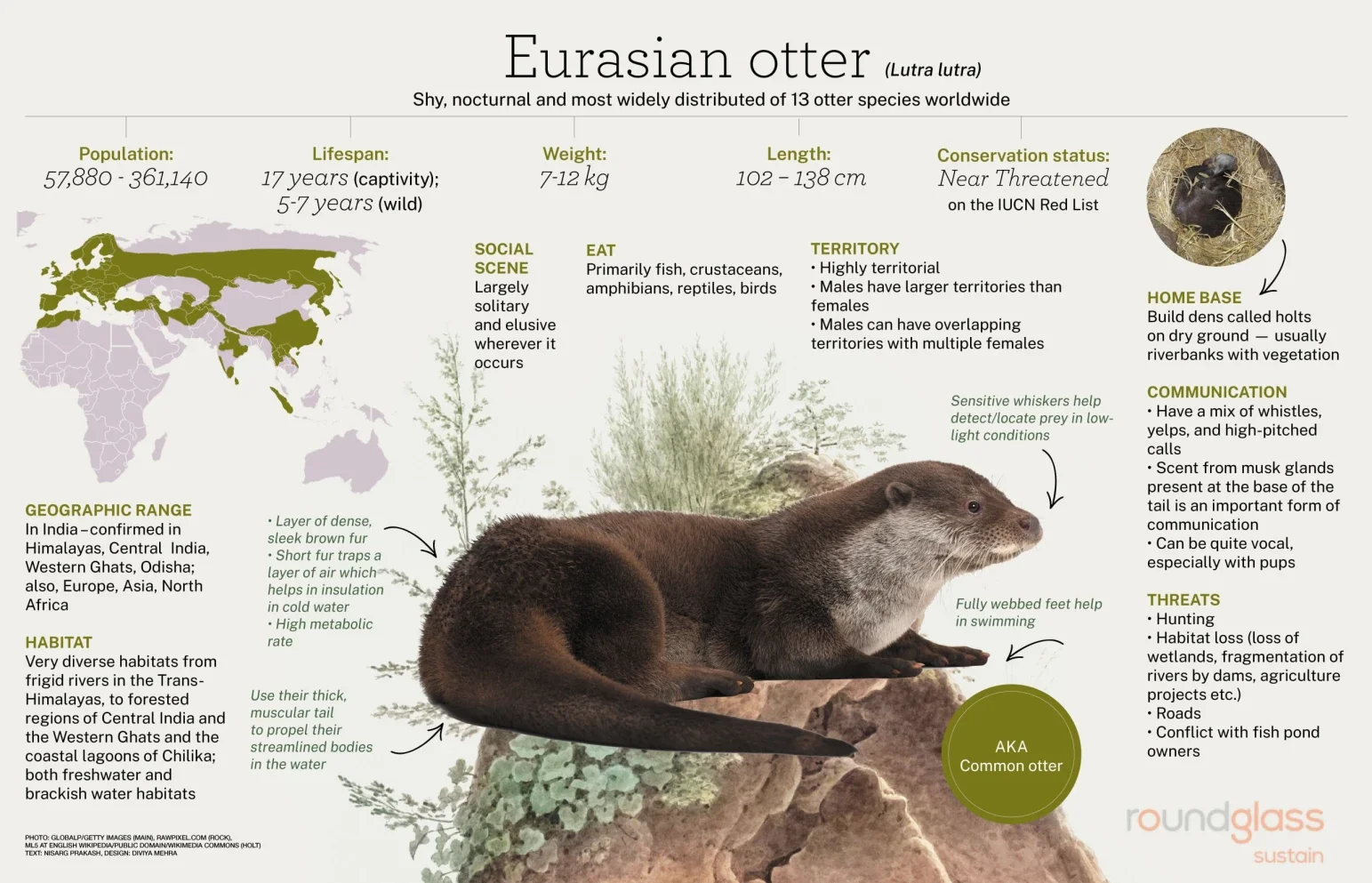
Eurasian Otter in Kashmir
A chance sighting of the Eurasian Otter along the Sindh Canal has provided the first direct photographic evidence of the species in the Kashmir Valley, once considered locally extinct in parts of the valley.
Eurasian Otter
- About: The Eurasian Otter (Lutra lutra), also known as the European or common otter, belongs to the genus Lutra, and family Mustelidae (weasel family).
- Physical Profile: They possess a streamlined body, webbed feet, powerful tail for propulsion, and prominent whiskers (vibrissae) to detect prey underwater. Males are generally larger than females.
- Diet: Primarily carnivorous, with fish comprising approximately 80% of their diet (e.g., eels, salmonids). They also consume amphibians, crustaceans, waterbirds, small mammals, reptiles, insects, and eggs.
- Behaviour: They are generally solitary, territorial, and mostly active at night (nocturnal) or during twilight (crepuscular). They build dens known as holts near water bodies.
- Ecological Significance: As an apex predator of freshwater ecosystems, the otter is a keystone species and a bio-indicator of aquatic health. Its presence signifies clean water, stable prey populations, and functional riparian habitats.
- Conservation Status:
- IUCN Red List: Near Threatened (globally)
- CITES: Appendix I
- Wildlife (Protection) Act, 1972: Schedule II
- Other Otter Species in India: India is home to 3 otter species. Besides the Eurasian Otter (found in the Himalayas, northeast India, and Western Ghats), the other two are the Smooth-coated Otter (found throughout India) and the Small-clawed Otter (found in the Himalayas and southern India).
| Read More: Smooth-coated Otters |
Rapid Fire
PM RAHAT Scheme
In its first major decision after relocating to Seva Teerth, the Union Government launched the PM RAHAT (Road Accident Victim Hospitalization and Assured Treatment) Scheme.
PM RAHAT Scheme
- About: It is an initiative of the Ministry of Road Transport and Highways to provide immediate, cashless treatment to road accident victims.
- It focuses on timely medical care, as nearly 50% of road accident deaths can be prevented if victims receive hospital treatment within the Golden Hour (the first hour after a serious injury).
- Cashless Treatment and Coverage: Victims on any road (e.g., national highways, state roads, and city streets) are entitled to cashless treatment up to Rs 1.5 lakh per victim for the first 7 days.
- Stabilization care is guaranteed for up to 24 hours in non-life-threatening cases and 48 hours in life-threatening cases, subject to police authentication.
- Implementation and Access: It operates through a technology-driven framework that creates a seamless digital link from accident reporting to claim settlement, combining:
- Electronic Detailed Accident Report (eDAR) platform (from the Ministry of Road Transport and Highways).
- Transaction Management System (TMS 2.0) of the National Health Authority.
- Funding Mechanism: Hospitals will be reimbursed through the Motor Vehicle Accident Fund (MVAF). If the offending vehicle is insured, payment will be made from contributions by General Insurance Companies. In uninsured and hit-and-run cases, expenses will be covered through the Government of India budgetary allocation.
- Emergency Response Integration: The scheme is integrated with the Emergency Response Support System (ERSS) dial 112, allowing any individual (victim or Good Samaritan) to request ambulance services and locate the nearest designated hospital.
- Grievance Redressal: District-level accountability is ensured by designating a Grievance Redressal Officer, nominated by the District Road Safety Committee (chaired by the District Collector/District Magistrate/Deputy Commissioner), to address the grievances of victims.
| Read More: Rising Road Accidents in India, Seva Teerth |
Rapid Fire
India–Thailand Air Exercise
The Indian Air Force (IAF) conducted an In-situ Exercise with the Royal Thai Air Force (RTAF) in the Indian Ocean Region (IOR), expanding strategic partnership under India's Act East Policy 2014.
- Exercise Overview: The IAF deployed Su-30MKI multirole fighters, IL-78 mid-air refuelling tankers, and Airborne Warning and Control System (AWACS) aircraft. The RTAF participated with its SAAB Gripen jets.
- In-situ Exercise: IAF forces operated from airbases in the Andaman and Nicobar Islands, while Thai Gripens operated from bases within Thailand.
- Objective: It aimed to demonstrate IAF's reach and interoperability with a Friendly Foreign Country (FFC) in the IOR, highlighting the strategic importance of the Andaman and Nicobar Command (ANC) as a forward hub.
- Significance: This exercise reflects the deepening "Act East" partnership between India and Thailand, expanding into the aerospace domain.
- This is complemented by Thailand's own 'Act West' policy 2016, which aligns with India's regional outreach, underpinned by their maritime proximity.
| Read More: India's Act East Policy |
Rapid Fire
Exercise Vajra Ghaat
The Indian Army conducted Exercise Vajra Ghaat at the Pokhran Field Firing Range in Jaisalmer, demonstrating the operational readiness and combat capabilities of the K9 Vajra self-propelled artillery gun system in desert warfare conditions.
- Objective: The primary aim was to validate refined Tactics, Techniques, and Procedures (TTP) for enhancing battlefield survivability and operational effectiveness.
- The exercise was spearheaded by the White Tiger Division. It showcased the Army's ability to swiftly deploy heavy artillery assets in the harsh terrain of the Thar Desert.
- Outcome: The validation of refined TTPs during the drill is expected to strengthen the Army's combat posture in the western sector.
- K9 Vajra: It is a tracked self-propelled howitzer derived from South Korea’s K9 Thunder, the backbone of the South Korean Army.
- Designed for long-range fire with a high rate of accuracy, it is compatible with Indian and North Atlantic Treaty Organisation (NATO)-standard ammunition and features all-welded steel armour for protection.
- The system was procured under the ‘Buy Global’ category of the Defence Procurement Procedure.
| Read more: K9-Vajra |



