Science & Technology
New Delhi Declaration on AI Impact
For Prelims: India-AI Impact Summit 2026, Artificial Intelligence, Pax Silica, deep-tech, Graphics Processing Unit, Sarvam-30B and Sarvam-105B
For Mains: Role of AI in inclusive development and governance, India’s Digital Public Infrastructure as a global model, AI and socio-economic transformation in the Global South
Why in News?
The India-AI Impact Summit 2026 concluded with 89 countries and international organizations including major powers like the United States and China signing the New Delhi Declaration rooted in the principle of “Sarvajan Hitaya, Sarvajan Sukhaya,” emphasizing equitable sharing of Artificial Intelligence (AI) benefits.
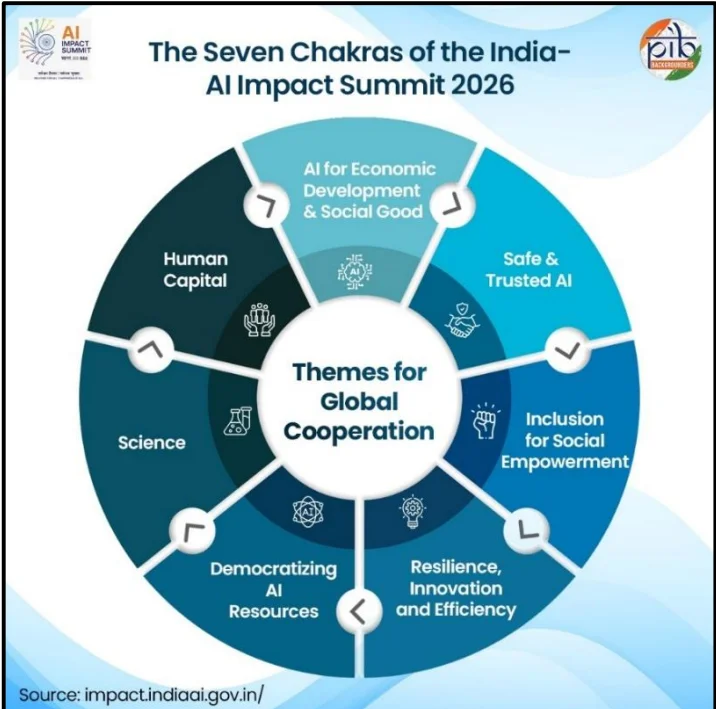
- The non-binding declaration is structured around seven ‘Chakras’ and represents the broadest multilateral consensus on AI to date.
Summary
- The New Delhi Declaration on AI Impact 2026, signed by 89 countries, promotes democratic access to AI, trusted and ethical frameworks, global research collaboration, and inclusive growth guided by Indian principles like Vasudhaiva Kutumbakam and Sarvajan Hitaya.
- India leveraged the summit to advance sovereign AI, semiconductor security, massive compute expansion, MSME AI adoption, and IndiaAI Mission 2.0, positioning itself as a global AI leader while addressing concerns around regulation, workforce disruption, and sustainability.
What are the Key Highlights of the New Delhi Declaration on AI Impact?
- Democratizing AI Resources: Affordable digital infrastructure and connectivity are essential to unlock AI’s full potential.
- Guided by Vasudhaiva Kutumbakam, the declaration stresses equitable access to AI resources so all countries can develop and deploy AI for public benefit.
- It notes the Charter for the Democratic Diffusion of AI, a voluntary framework to expand access to foundational AI tools, support local innovation, and build resilient AI ecosystems while respecting national laws.
- Economic Growth and Social Good: The declaration promotes open and accessible AI solutions to improve scalability and adaptability.
- The declaration notes the Global AI Impact Commons as a voluntary initiative that provides a practical platform to promote the adoption, replication, and scaling of successful AI use cases across regions.
- Secure and Trusted AI: The declaration recognises development of the Trusted AI Commons, a voluntary platform offering shared tools, benchmarks, and best practices to support responsible and adaptable AI.
- Science: Removing barriers and expanding AI research infrastructure can accelerate scientific innovation through global collaboration.
- The declaration notes the International Network of AI for Science Institutions as a voluntary platform to connect researchers and pool AI capabilities.
- Access for Social Empowerment: The declaration supports development of a voluntary and collaborative platform to facilitate exchange of learning, knowledge, and scalable practices to advance AI adoption for social empowerment.
- Human Capital: Harnessing AI’s potential requires strong skilling, reskilling, and AI literacy initiatives.
- The declaration highlights workforce development efforts supported by guiding principles and playbooks to prepare societies for an AI-driven economy.
- Resilience, Innovation, and Efficiency: Energy-efficient and resilient AI systems are essential to manage growing resource demands.
- The declaration emphasises that the Voluntary Guiding Principles on Resilient, Innovative, and Efficient AI will guide the development of robust and efficient AI systems. It also recognises the Playbook on Advancing Resilient AI Infrastructure as a key knowledge resource supporting resilient AI development.
|
Click here to Read: India-AI Impact Summit 2026 |
What are India's Strategic Outcomes of AI Impact Summit 2026?
- Pax Silica Alliance: India formally joined the US-led Pax Silica coalition, aiming to secure semiconductor supply chains and access to critical minerals.
- This move supports diversification and reduces reliance on any single global power.
- India also signed a Joint Statement on the 'India-US AI Opportunity Partnership' as a bilateral addendum to the declaration.
- Major Investment Commitments: Over USD 250 billion pledged for infrastructure, including data centers and semiconductor fabrication plants.
- Around USD 20 billion committed to deep-tech venture capital, strengthening India’s innovation ecosystem.
- GPU Expansion and Compute Capacity: The government announced a massive ramp-up of its compute muscle, adding 20,000 Graphics Processing Units (GPUs) to its existing 38,000, with a target to cross 100,000 GPUs by the end of 2026.
- Launch of IndiaAI Mission 2.0: The summit marked the rollout of the next phase of India’s national AI strategy, focusing on scaling compute infrastructure, datasets, and AI adoption across sectors.
- India also presented the MANAV Vision (Moral, Accountable, National Sovereignty, Accessible, Valid), a human-centric framework to guide Artificial Intelligence (AI) development with ethics, inclusivity, and national sovereignty at its core.
- UPI-Style AI Playbook for MSMEs: India plans to package AI solutions into a standardized “playbook” for small businesses and MSMEs, inspired by the success of the Unified Payments Interface (UPI), to accelerate widespread adoption.
- Push for Sovereign AI: India is prioritizing indigenous foundation models that are trained and hosted domestically, ensuring data sovereignty and strategic autonomy. Companies like Sarvam AI are central to this effort.
- At the summit, Sarvam AI unveiled two large language models Sarvam-30B (30 billion parameters) and Sarvam-105B (105 billion parameters). This milestone signals India’s entry into the group of nations capable of developing frontier AI models from scratch.
- Sarvam AI unveiled Sarvam Kaze, a made-in-India smart glasses initiative positioned as an alternative to Meta’s Ray-Ban smart glasses, integrating AI-powered vision and audio capabilities.
- BharatGen launched Param2, a 17-billion-parameter model supporting 22 Indian languages, and unveiled Sutra, an AI news anchor that converts policy discussions into multilingual reports.
- At the summit, Sarvam AI unveiled two large language models Sarvam-30B (30 billion parameters) and Sarvam-105B (105 billion parameters). This milestone signals India’s entry into the group of nations capable of developing frontier AI models from scratch.
- Global Fund for Equitable AI Access: The UN Secretary-General urged technology companies to support a USD 3-billion global fund to ensure equitable access to AI, and announced the appointment of a 40-member UN scientific panel on AI and a global dialogue on AI governance set to begin in Geneva in July 2026.
| Click here to Read: India’s M.A.N.A.V. Vision for AI |
What are the Concerns Regarding the New Delhi Declaration on AI Impact?
- Non-Binding and Voluntary Nature: The commitments are framed as "voluntary" and "non-binding." Phrases like "taking note of" and "recognizing" do not create mandatory obligations for signatory nations.
- There is no international body or verification mechanism to ensure that countries actually follow the principles of "Democratic Diffusion" or "Trusted AI."
- Absence of Redlines: Unlike the EU AI Act, the declaration does not explicitly prohibit "high-risk" or "destructive" AI practices such as predictive policing or biometric surveillance, leaving them to national laws.
- The "Silent" Labor Crisis: While "reskilling" was a priority, there was little structured discussion on the immediate threat to India’s 5.8 million IT workforce, specifically entry-level coding and administrative roles most vulnerable to Generative AI.
- The declaration was largely seen as a "government-industry" alliance, with minimal engagement from labor unions or the workforce itself.
- Infrastructure and Sustainability Challenges: India lacks advanced computing infrastructure, semiconductor manufacturing, and hyperscale data centres required for competitive AI development.
- There is a growing risk of India becoming a “data colony,” supplying data and talent while foreign firms retain ownership of high-value AI platforms.
- Data centres consume massive water resources ( around 11 lakh litres per day), intensifying stress in water-scarce regions.
- Expansion of data centres in cities like Bengaluru exacerbates urban water shortages and raises environmental sustainability concerns.
What Measures can India take to Ensure AI Serves as a Tool for Inclusive Growth?
- Operationalizing the "Three Sutras": The summit’s core principles—People, Planet, and Progress—must be translated into measurable projects:
- People (Human-Centric AI): Implementing the MANAV Vision by embedding ethical guardrails into every public-sector AI application.
- Planet (Sustainable AI): Advancing Green AI by incentivizing the development of energy-efficient algorithms and powering data centers with renewable energy, as pledged by domestic giants like Adani.
- Progress (Economic Inclusion): Launching the MSME AI Stack (on the lines of UPI) to provide small businesses with affordable, ready-to-use AI tools to boost productivity.
- Semiconductor Synergy: Aligning with ISM 2.0 (India Semiconductor Mission) to develop indigenous AI chips, reducing long-term reliance on foreign supply chains.
- Institutionalizing Global Governance: The New Delhi Declaration is a starting point for a more formal global architecture:
- India should work towards a common set of technical benchmarks within the Trusted AI Commons to move beyond "non-binding" promises to interoperable safety standards.
- Establish cross-border regulatory sandboxes where signatory nations can test AI applications in health and agriculture under shared ethical guidelines.
- Addressing the Labor and Ethics Gap: Implementing the Reskilling Playbook at a massive scale through initiatives like Bodhan AI, ensuring that the youth cohort is "AI-ready" rather than "AI-displaced."
- Passing specific legislations or guidelines to mandate a "Glass Box" approach (transparency), ensuring that AI decision-making in governance is verifiable and lawful.
Conclusion
The New Delhi Declaration 2026 marks a historic shift toward the "Democratic Diffusion" of technology, successfully bridging the global digital divide through the Three Sutras of People, Planet, and Progress. Ultimately, the success of this summit lies in transforming its voluntary frameworks into a tangible, inclusive reality for the Global South.
|
Drishti Mains Question: Q. The New Delhi Declaration on AI Impact 2026 marks a paradigm shift from 'AI Safety' to 'Democratic Diffusion' of technology. Discuss |
Frequently Asked Questions (FAQs)
1. What is the New Delhi Declaration 2026?
A voluntary global framework adopted at the AI Impact Summit to promote democratic access, trusted AI, and equitable benefits from AI technologies.
2. What is meant by “Democratic Diffusion of AI”?
It refers to expanding access to foundational AI tools and infrastructure to enable all countries, especially the Global South, to innovate and benefit.
3. What is Sovereign AI and why is it important for India?
Sovereign AI involves domestically developed and hosted AI models to ensure data sovereignty, national security, and technological independence.
4. What are the key concerns regarding the declaration?
Its non-binding nature, lack of enforcement mechanisms, absence of clear redlines on high-risk AI, and limited focus on immediate job displacement risks.
5. How does IndiaAI Mission 2.0 support inclusive growth?
It expands compute infrastructure, promotes MSME AI adoption, supports skilling initiatives, and fosters indigenous AI innovation.
UPSC Civil Services Examination Previous Year Question (PYQ)
Prelims
Q. With the present state of development, Artificial Intelligence can effectively do which of the following? (2020)
- Bring down electricity consumption in industrial units
- Create meaningful short stories and songs
- Disease diagnosis
- Text-to-Speech Conversion
- Wireless transmission of electrical energy
Select the correct answer using the code given below:
(a) 1, 2, 3 and 5 only
(b) 1, 3 and 4 only
(c) 2, 4 and 5 only
(d) 1, 2, 3, 4 and 5
Ans: (b)
Q. The terms ‘WannaCry, Petya and EternalBlue’ sometimes mentioned in the news recently are related to (2018)
(a) Exoplanets
(b) Cryptocurrency
(c) Cyber attacks
(d) Mini satellites
Ans: (c)
Mains
Q. Introduce the concept of Artificial Intelligence (AI). How does AI help clinical diagnosis? Do you perceive any threat to privacy of the individual in the use of AI in healthcare? (2023)
Q. What are the main socio-economic implications arising out of the development of IT industries in major cities of India? (2021)
Q. “The emergence of the Fourth Industrial Revolution (Digital Revolution) has initiated e-Governance as an integral part of government”. Discuss. (2020)


Governance
International Mother Language Day
For Prelims: International Mother Language Day, UNESCO, ,National Education Policy (NEP) 2020, DIKSHA, PM eVIDYA, Article 29, Special Officer for Linguistic Minorities, Indian Sign Language (ISL).
For Mains: Key facts regarding the International Mother Language Day, key findings of the UNESCO SoER 2025 Report, need of mother tongue based education, key challenges in implementing MTB-MLE and way forward.
Why in News?
As the world observes International Mother Language Day on 21st February, UNESCO’s 7th 'State of the Education Report for India 2025', titled Bhasha Matters: Mother Tongue and Multilingual Education, reframes linguistic diversity as a cornerstone of quality learning.
Summary
- The UNESCO SoER 2025 highlights that while NEP 2020 strongly endorses mother-tongue-based education, a significant gap between policy and classroom practice exists.
- A major learning crisis persists as 44% of children face a language mismatch at school, underscoring the need for robust MTB-MLE implementation.
- The report calls for urgent action, including teacher training, leveraging digital infrastructure like DIKSHA, and establishing a National Mission for MTB-MLE.
International Mother Language Day
- About: The United Nations Educational, Scientific and Cultural Organization (UNESCO) declared 21st February as International Mother Language Day in 1999, celebrating it globally since 2000 to promote linguistic and cultural diversity and multilingualism.
- The theme for International Mother Language Day 2026 is "Youth Voices on Multilingual Education."
- Historical Origin: The day commemorates the sacrifices made during the Bangla Language Movement in Dhaka (then East Pakistan) on 21st February 1952, where students were killed while advocating for the recognition of their mother language, Bangla.
- Objective: The primary aim is to protect linguistic heritage, cultural diversity, and intellectual traditions worldwide.
- Crisis of Language Loss: The UN estimates that a language disappears every two weeks, taking with it an entire cultural and intellectual heritage. This loss is exacerbated by globalization and the pursuit of foreign languages for economic opportunities.
What is the UNESCO SoER 2025 Report for India?
About
- It is an annual flagship publication by the UNESCO Regional Office for South Asia, offering evidence-based analysis of key themes in India's education landscape while aligning with SDG 4 (quality education) and UNESCO's inclusive learning commitments.
- The report urgently calls for strengthening Mother-Tongue-Based Multilingual Education (MTB-MLE) and provides a comprehensive roadmap to make inclusive education a national priority.
Core Focus
- Access, Inclusion, and Equity: Ensuring all learners, particularly tribal children, girls, and those with disabilities, can participate in school through languages they understand.
- Contextual and Lifelong Learning: Embedding local languages and cultural knowledge across all stages of education, from school to teacher training.
- Appreciation of Linguistic Diversity: Recognizing children's full linguistic repertoires as assets and promoting an understanding of India's diversity.
- Skills for Sustainable Futures: Using multilingual learning to build cognitive flexibility and stronger foundations for learning additional languages, including English.
- Institutionalization: Strengthening policies, teacher education, and digital ecosystems to support sustainable MTB-MLE.
Key Findings
- Policy Alignment: Mother-tongue-based multilingual education is steadily moving from the margins to the centre of India’s education reforms. It is now increasingly recognized as critical to achieving the goals of the National Education Policy (NEP) 2020 and global commitments like the International Decade of Indigenous Languages (2022–2032).
- They endorse mother-tongue-based instruction, multilingual pedagogy, and culturally responsive learning.
- State-Level Planning is Underway: Systematic language mapping—essential for decisions on the medium of instruction, teacher deployment, and material development—is expanding across the country but is not yet a universal practice.
- Vibrant Community-Led Practices: The report highlights compelling examples of schools and communities co-creating learning materials rooted in local knowledge and oral traditions in languages such as Saora, Kui, Gondi, Santali, Khasi, and Mizo. These demonstrate the educational value of Indigenous knowledge systems, though they remain localized.
- Promising Ground Realities: It highlights successful models already at work in India:
- Odisha’s Tribal Programme: A long-standing Multilingual Education (MLE) programme covering 21 tribal languages across 17 districts, supporting nearly 90,000 children.
- Digital Innovation: The use of DIKSHA-enabled multilingual resources in Telangana and national initiatives like PM eVIDYA and AI4Bharat show how technology can create local-language content and document endangered languages.
- Institutional Collaboration is Growing: Several promising initiatives demonstrate the value of collaboration between ministries, SCERTs, Tribal Research Institutes (TRIs), NGOs, and technology partners. This coordination is creating space for more contextually grounded pedagogy.
Why is Mother-Tongue-Based Education Critical for India?
- Learning Crisis: A 2022 NCERT report reveals a startling statistic. Nearly 44% of children in India enter school speaking a language that is different from the medium of instruction.
- Pedagogical and Cognitive Benefits: Mother tongue instruction enables deeper comprehension by reducing cognitive load, leading to stronger foundational literacy, enhanced critical thinking, and improved academic performance, unlike early non-native immersion which causes lower outcomes.
- Cultural Preservation: Language is the vehicle for indigenous and traditional knowledge. Mother-tongue education builds self-esteem by validating a child's identity and counters "language death" among endangered linguistic communities.
- Social Equity: It acts as a great equalizer by breaking the "English Elite" monopoly. For marginalized groups like tribal (Adivasi) communities, it prevents the "triple disadvantage" that leads to high dropout rates.
- NEP 2020 Alignment: The policy mandates instruction in the home language until at least Grade 5, preferably till Grade 8, marking a shift from the colonial-era mindset.
Constitutional Framework for Language and Linguistic Landscape of India
Constitutional Framework
- Article 29: Article 29 grants all citizens the right to conserve their language, script, or culture, and prohibits discrimination against any citizen on grounds of language.
- Article 120: Provides for the conduct of parliamentary business in Hindi or English, but grants members the right to express themselves in their mother tongue if they cannot adequately express themselves in Hindi or English.
- Part XVII (Articles 343-351): Articles 343-351 deal exclusively with official languages at the union and state levels.
- Article 350A: It places an obligation on every State and local authority to provide adequate facilities for instruction in the mother-tongue at the primary stage of education to children from linguistic minority groups.
- Article 350B: Provides for the appointment of a Special Officer for Linguistic Minorities by the President. This officer investigates matters related to safeguards for linguistic minorities and reports to the President, who then places these reports before Parliament and the concerned state governments.
- Eighth Schedule: Recognizes 22 official languages, including Assamese, Bengali, Gujarati, Hindi, Kannada, Kashmiri. Languages added later include Sindhi (by 21st Amendment Act, 1967), Konkani, Manipuri, and Nepali (by 71st Amendment Act, 1992), and Bodo, Dogri, Maithili, and Santhali (by 92nd Amendment Act, 2003).
Linguistic Landscape
- Unparalleled diversity: Home to 1,369 mother tongues, including 121 languages spoken by over 10,000 people, with a Linguistic Diversity Index of 0.914, one of the highest in the world.
- Language families: Languages belong to four major families i.e., Indo-Aryan (78% of speakers), Dravidian (20%), Austro-Asiatic (1.2%), and Tibeto-Burman (0.8%).
- Language endangerment: Nearly 200 languages are vulnerable or endangered, disproportionately affecting Tibeto-Burman and Austro-Asiatic languages.
- Double Divide: A rigid hierarchy exists where English is at the top, followed by dominant regional languages, while Indigenous and tribal languages are at the bottom, largely excluded from education, governance, and digital spaces.
What are the Key Challenges in Implementing MTB-MLE in India?
- Language Mismatch: Young learners, particularly in tribal areas, often begin school in a language they do not speak at home, hampering early participation and comprehension.
- Lack of Materials: There is limited availability of textbooks and learning materials in children's own languages, especially where scripts are still developing.
- Teacher Preparedness: Many teachers persist with monolingual practices as multilingual pedagogy, translanguaging, and transknowledging remain inconsistently embedded in pre-service and in-service programmes, leaving educators underprepared for multilingual lesson design.
- Premature Transition: An early switch to regional or global languages often disrupts learning before a strong foundation in the mother tongue is established.
- Digital Exclusion: Tribal and minoritized languages are under-represented on digital platforms. Accessibility features are inconsistent, and connectivity gaps persist in remote regions.
- Fragmented Efforts: Institutional responsibilities are often fragmented, and there is a lack of language-disaggregated data to support coordinated planning.
What are the Key Recommendations of the UNESCO SoER 2025 Report?
- Establish a National Mission: Create a high-level National Mission for MTB-MLE to strengthen institutional coordination, provide strategic leadership, and oversee the sustainable implementation of these recommendations across the country.
- Invest in Inclusive Language Technologies: Bridge the digital divide by investing in tools for lesser-known languages, improving accessibility features (like Indian Sign Language (ISL) and Braille), and ensuring connectivity reaches remote regions.
- Ensure Sustainable and Equitable Financing: Guarantee long-term, predictable, and targeted financing for all aspects of MTB-MLE, including teacher preparation, material development, and digital inclusion.
- Strengthen Teacher Systems: Revamp teacher recruitment, deployment, and professional standards to prioritize and assess multilingual competence.
- Utilize platforms like DIKSHA to create and disseminate inclusive, multilingual teacher support resources and learning materials.
- Institutionalize Community Participation: Create formal mechanisms to systematically integrate Indigenous knowledge, oral traditions, and community participation into school curricula and practice.
Conclusion
India’s linguistic diversity is its strength, yet a learning crisis persists due to a language mismatch in schools. The UNESCO report underscores that realizing NEP 2020's vision requires moving beyond policy to action. By investing in teacher training, digital inclusion, and community participation, MTB-MLE can bridge the gap and ensure equitable learning.
|
Drishti Mains Question: Q. Discuss the challenges in implementing Mother-Tongue-Based Multilingual Education (MTB-MLE) in India. Suggest measures to overcome them |
Frequently Asked Questions (FAQs)
1. What is the significance of International Mother Language Day?
Observed on 21st February, it was declared by UNESCO in 1999 to promote linguistic diversity and multilingualism, commemorating the 1952 Bangla Language Movement in Dhaka.
2. What is the core focus of UNESCO’s State of the Education Report (SoER) 2025 for India?
The 2025 report, Bhasha Matters, advocates institutionalising Mother-Tongue-Based Multilingual Education (MTB-MLE) to ensure access, equity, inclusion, and sustainable learning outcomes.
3. Why is Mother-Tongue-Based Multilingual Education (MTB-MLE) critical in India?
As per NCERT (2022), nearly 44% of children enter school in a language different from the medium of instruction, leading to learning gaps, weak FLN, and higher dropout risks.
4. Which constitutional provisions safeguard linguistic rights in India?
Key provisions include Article 29 (cultural rights), Article 350A (mother-tongue instruction at primary level), Article 350B (Special Officer for Linguistic Minorities), and the Eighth Schedule (22 languages).
UPSC Civil Services Examination, Previous Year Questions (PYQs)
Prelims
Q. Consider the following statements: (2021)
- 21st February is declared to be the International Mother Language Day by UNICEF.
- The demand that Bangla has to be one of the national languages was raised in the Constituent Assembly of Pakistan.
Which of the above statements is/are correct?
(a) 1 only
(b) 2 only
(c) Both 1 and 2
(d) Neither 1 nor 2
Ans: (b)
Q. With reference to India, the terms ‘HaIbi, Ho and Kui’ pertain to (2021)
(a) dance forms of Northwest India
(b) musical instruments
(c) pre-historic cave paintings
(d) tribal languages
Ans: (d)
Mains
Q. National Education Policy 2020 is in conformity with the Sustainable Development Goal-4 (2030). It intends to restructure and reorient the education system in India. Critically examine the statement. (2020)
Q. Are we losing our local identity for the global identity? Discuss. (2019)


Important Facts For Prelims
Freedom of Speech in Parliament
Why in News?
The Budget Session of Parliament 2026 has raised concerns about Members of Parliament (MPs) freedom of speech, as the expunction of speeches has prompted questions about the safeguards provided under Article 105.
How is the Freedom of Speech of MPs Protected and Regulated?
- Constitutional Protection:
- Article 105(1) (Freedom of Speech in Parliament): Guarantees MPs the freedom to speak freely in the House and its committees while Parliament is in session and conducting business.
- This protection allows MPs to express views without fear, enabling robust debate, scrutiny of the executive, and effective lawmaking.
- It is a special parliamentary privilege and operates separately from the general freedom of speech available to citizens under Article 19 (which is subject to specific "reasonable restrictions" (such as public order or morality).
- Article 105(2) (Immunity from Legal Proceedings): It grants MPs complete immunity from civil or criminal liability for anything said or any vote given in Parliament or its committees.
- The protection is absolute in scope, ensuring that courts cannot question or penalise members for statements made during parliamentary proceedings.
- This safeguard prevents intimidation through litigation and preserves the independence of legislative deliberations.
- Extension of Protection to Non-Members: The immunity under Article 105(2) extends to individuals who are constitutionally entitled to participate in parliamentary proceedings, such as the Attorney General of India.
- This ensures continuity and openness in debate by protecting all authorised participants from legal repercussions.
- Article 121: Limits parliamentary speech by prohibiting discussion on the conduct of judges of the Supreme Court and High Courts, except during impeachment proceedings.
- This provision balances legislative freedom with judicial independence, ensuring that the judiciary is not subjected to casual or politically motivated criticism within Parliament.
- Article 105(1) (Freedom of Speech in Parliament): Guarantees MPs the freedom to speak freely in the House and its committees while Parliament is in session and conducting business.
- Regulation Through Rules of Procedure:
- Expunction: Rule 380 of the Rules of Procedure and Conduct of Business in Lok Sabha gives the Speaker the discretion to expunge any words or expressions used in debate that are considered defamatory, indecent, unparliamentary, or undignified.
- Sub Judice Matters: Members cannot discuss cases currently being adjudicated in a court of law.
- Personal Allegations: Making defamatory or incriminatory allegations against any person without prior notice to the Speaker is prohibited.
- High Authority: Reflecting negatively on the conduct of persons in high constitutional authority is restricted.
- Fellow Members: Questioning the bona fides (good faith) of fellow members is generally against the rules.
- Internal Checks Against Misuse: The Committee of Privileges examines cases of breach or misuse of parliamentary privilege. It ensures MPs do not abuse immunity to defame or harm individuals who otherwise have limited legal remedies.
Supreme Court (SC) Judgments Regarding the Freedom of Speech of MPs
- Tej Kiran Jain v. N. Sanjiva Reddy (1970): The SC upheld absolute immunity for MPs under Article 105(2). Emphasised that the word “anything” has the widest scope. Reinforced that parliamentary speech is beyond judicial scrutiny.
- P.V. Narasimha Rao v. State (1998): The SC held that MPs are immune from prosecution for bribery if it is directly connected to a vote given in Parliament.
- Raja Ram Pal v. Hon’ble Speaker, Lok Sabha (2007): SC held that the parliamentary privileges are subject to judicial review if constitutional limits are violated.
- Kaushal Kishor v. State of Uttar Pradesh (2023): The SC held that a Minister’s statement is not automatically the Government’s position, and the Government is not liable unless it officially endorses the remarks.
- Sita Soren v. Union of India (2024): The SC overruled the 1998 P.V. Narasimha Rao judgment, and held that MPs and MLAs do not have immunity from prosecution for accepting bribes to vote or speak in the House.
- It ruled that bribery is a criminal act and is not protected under Article 105(2) or Article 194(2) (grants protection to MLAs).
Frequently Asked Questions (FAQs)
1. What does Article 105 of the Constitution provide?
Article 105 grants MPs freedom of speech in Parliament and immunity from legal proceedings for anything said or any vote given in the House or its committees.
2. Can courts question statements made by MPs in Parliament?
No. Parliamentary speech enjoys immunity under Article 105(2), though criminal acts like bribery are not protected.
3. What is the purpose of expunction in parliamentary proceedings?
Expunction removes defamatory, indecent, or unparliamentary words to maintain decorum while preserving meaningful debate.
4. What role does the Committee of Privileges play?
It examines breaches or misuse of parliamentary privilege and ensures immunity is not abused to harm individuals or undermine legislative integrity.
UPSC Civil Services Examination, Previous Year Questions (PYQ)
Prelims
Q. One of the implications of equality in society is the absence of (2017)
A. Privileges
B. Restraints
C. Competition
D. Ideology
Ans: (A)
Mains
Q. The ‘Powers, Privileges and Immunities of Parliament and its Members’ as envisaged in Article 105 of the Constitution leave room for a large number of un-codified and un-enumerated privileges to continue. Assess the reasons for the absence of legal codification of the ‘parliamentary privileges.’ How can this problem be addressed? (2014)


Important Facts For Prelims
Green Ammonia
Why in News?
The Solar Energy Corporation of India (SECI) succeeded in its green ammonia auction under the SIGHT programme, setting new global price benchmarks and establishing India as a potential leader in the emerging clean ammonia market.
What is Green Ammonia?
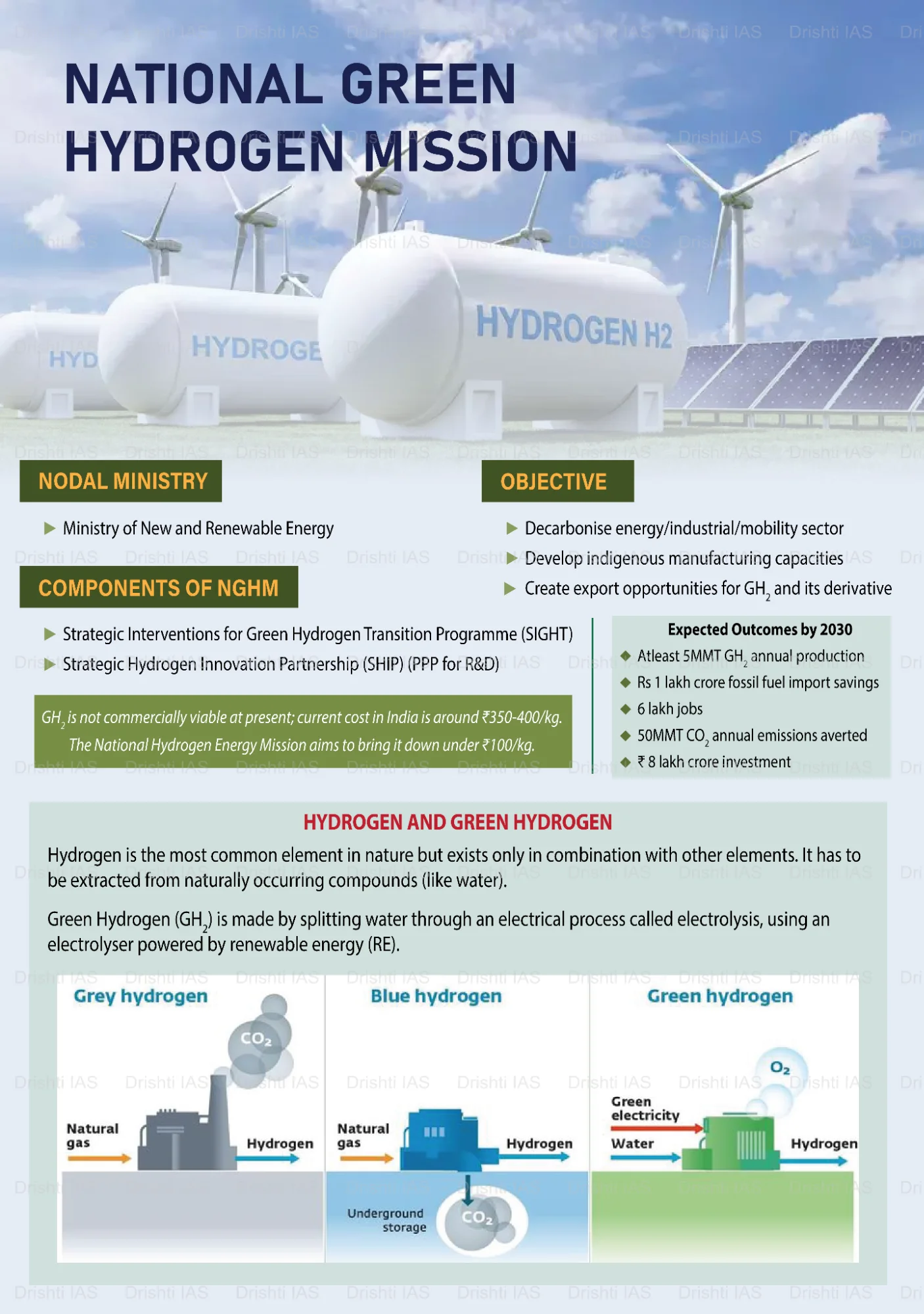
- About: Green ammonia refers to ammonia (NH₃) synthesized through a sustainable process that relies entirely on renewable energy sources, resulting in a near-zero carbon footprint, unlike conventional methods.
- Production Process: It utilizes the established Haber-Bosch process but with key modifications:
- Green Hydrogen Production: Renewable energy (solar, wind, hydro) powers electrolysis, splitting water (H₂O) into green hydrogen and oxygen.
- Nitrogen Extraction: Nitrogen (N₂) is separated from atmospheric air.
- Ammonia Synthesis: Hydrogen and nitrogen are combined under high pressure and temperature using a catalyst, powered entirely by renewable electricity.
- Comparison with Other Ammonia Types:
|
Type of Ammonia |
Source/Production Method |
Carbon Emissions Profile |
Key Characteristics |
|
Grey/Brown Ammonia |
Produced from fossil fuels – Natural Gas via Steam Methane Reforming (SMR) or coal gasification |
Highest CO₂ emissions (no carbon capture) |
Conventional method; carbon-intensive; widely used in fertilizer industry |
|
Blue Ammonia |
Produced from fossil fuels (SMR or gasification) with Carbon Capture and Storage (CCS) |
Moderate emissions (partially reduced through CCS) |
Transitional low-carbon option; depends on CCS efficiency |
|
Green Ammonia |
Produced using renewable energy through water electrolysis to generate green hydrogen, combined with nitrogen |
Near-zero emissions |
Fully decarbonized pathway; aligned with climate goals and energy transition |
- Environmental Significance: Conventional ammonia production is one of the world's largest industrial emitters, accounting for nearly 2% of global CO₂ emissions. It emits approximately 2–3 tons of CO₂ per ton of ammonia produced. This carbon emission can be curbed by green ammonia.
- Applications:
- Green Fertilizer: Decarbonizes the global food chain by replacing fossil-fuel-based feedstock for agriculture.
- Carbon-Free Fuel: Can be used in maritime shipping (replacing heavy fuel oil) and power generation (co-firing with coal or in dedicated turbines). While combustion produces NOx, it can be managed with technologies like Selective Catalytic Reduction (SCR).
- Hydrogen Carrier: Addresses hydrogen's storage and transport challenges. Ammonia is easier to liquefy (at -33°C) than hydrogen (below -253°C) and can leverage existing infrastructure. It can be "cracked" back into hydrogen at its destination.
Strategic Interventions for Green Hydrogen Transition (SIGHT) Scheme
- About: The SIGHT scheme is a financial incentive programme under the National Green Hydrogen Mission. It is implemented by the Ministry of New and Renewable Energy (MNRE) through SECI via competitive bidding.
- Objectives: The scheme aims to stimulate domestic electrolyser manufacturing and boost production of green hydrogen and its derivatives, such as green ammonia.
- Its objectives include achieving cost competitiveness against fossil fuels, ensuring technology advancement, and enabling progressive localization aligned with global standards.
- Two Key Components:
- Component I (Electrolyser Manufacturing): Focuses on indigenous manufacturing of electrolysers. Incentives are performance-linked, based on energy efficiency and localization.
- Component II (Green Hydrogen Production): Targets production of green hydrogen and derivatives (notably green ammonia). Implemented through competitive bidding modes. It offers financial support and long-term offtake agreements (7–10 years) to de-risk investments.
Frequently Asked Questions (FAQs)
1. What is Green Ammonia?
Green ammonia is NH₃ produced using renewable energy-powered electrolysis, resulting in near-zero carbon emissions compared to fossil fuel-based methods.
2. How does Green Ammonia differ from Grey and Blue Ammonia?
Grey ammonia uses fossil fuels without carbon capture; Blue ammonia includes CCS; Green ammonia relies entirely on renewable energy and green hydrogen.
3. What is the objective of the SIGHT Scheme?
The scheme promotes electrolyser manufacturing and green hydrogen production through financial incentives and competitive bidding.
UPSC Civil Services Examination, Previous Year Questions (PYQs)
Q. Consider the following heavy industries: (2023)
- Fertilizer plants
- Oil refineries
- Steel plants
Green hydrogen is expected to play a significant role in decarbonizing how many of the above industries?
(a) Only one
(b) Only two
(c) All three
(d) None
Ans: (c)
Q. With reference to green hydrogen, consider the following statements : (2023)
- It can be used directly as a fuel for internal combustion.
- It can be blended with natural gas and used as fuel for heat or power generation.
- It can be used in the hydrogen fuel cell to run vehicles.
How many of the above statements are correct?
(a) Only one
(b) Only two
(c) All three
(d) None
Ans: (c)
Q. Hydrogen fuel cell vehicles produce one of the following as “exhaust” (2010)
(a) NH3
(b) CH4
(c) H2O
(d) H2O2
Ans: (c)


Rapid Fire
National Monetisation Pipeline 2.0
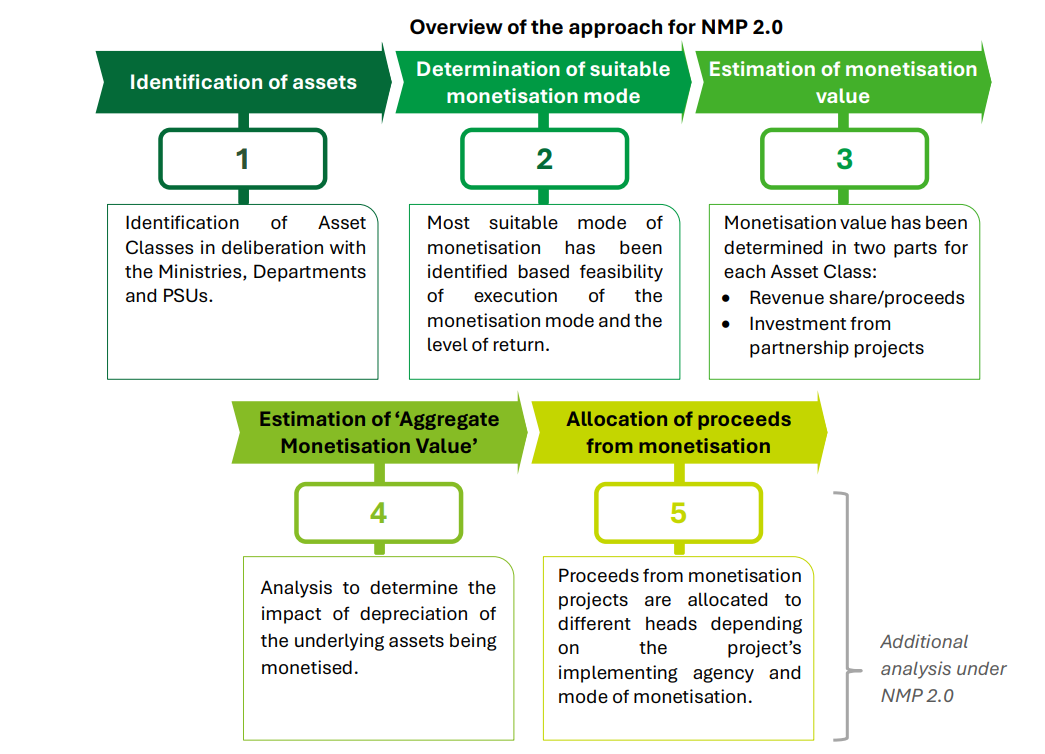
The Union Minister for Finance and Corporate Affairs launched the National Monetisation Pipeline 2.0 (NMP 2.0), developed by NITI Aayog to operationalise the Asset Monetisation Plan 2025–30, as announced in the Union Budget 2025–26.
- NMP Success: The launch noted that NMP 1.0 successfully met nearly 90% of its Rs 6 lakh crore target, providing a baseline of "best practices" for the second phase.
- NMP 2.0: The Union Budget 2025–26 proposed NMP 2.0 to expand sustainable infrastructure financing through monetisation of operational public assets.
- It provides a medium-term roadmap, asset visibility for private investors, and a guidance framework outlining methodology and implementation.
- NMP 2.0 focuses on "Asset Recycling," where private sector efficiency is leveraged to unlock capital from brownfield assets for reinvestment in new infrastructure (CAPEX) without increasing the government's budgetary outgo.
- Participating Sectors: The pipeline covers key sectors, including Roads, Railways, Power, Oil & Gas, Civil Aviation, Ports, Telecom, Coal, and Mines.
- Governance Framework: Progress will be monitored by the Core Group of Secretaries on Asset Monetisation (CGAM), chaired by the Cabinet Secretary, ensuring a "whole of government" approach.
- Revenue Allocation: Proceeds from asset monetisation projects are allocated to different heads based on the implementing agency, including the Consolidated Fund of India (for Ministry-led projects), PSU/Port Authorities (for entity-led projects), and the State Consolidated Fund (primarily from mining royalties).
- A separate head records direct private investment in monetisation projects involving construction or major maintenance components.
- NMP 2.0 Award Targets: The pipeline estimates an aggregate potential of Rs 16.72 lakh crore, including private sector investment of Rs 5.8 lakh crore, which is 2.6 times higher than NMP 1.0.
- Monetisation Instruments: Transactions will involve Public-Private Partnership (PPP) concessions, Infrastructure Investment Trusts (InvITs), and securitization of cash flows.
- Economic Vision: Aligned with Viksit Bharat, the project aims to optimize resources and provide a clear roadmap to private investors for long-term participation in India's growth.
| Read more: National Monetisation Pipeline |


Rapid Fire
India and France Amend Double Taxation Avoidance Convention
India and France have signed an amending protocol to the India-France Double Taxation Avoidance Convention (DTAC, 1992), introducing key changes to capital gains taxation, the Most-Favoured-Nation (MFN) clause, and incorporating provisions of the multilateral Base Erosion and Profit Shifting (BEPS) framework.
- The amendments are designed to provide greater tax certainty for taxpayers and are expected to boost the flow of investment, technology, and personnel between the two nations.
Key Changes Made in India-France DTAC
- Capital Gains Taxation: The Protocol provides full taxing rights in respect of capital gains arising from the sale of shares of a company, to the jurisdiction where such company is a resident.
- Most-Favoured-Nation (MFN) Clause: The agreement formally deletes the MFN Clause from the Protocol to the DTAC, thereby bringing to rest all issues relating to it.
- Taxation of Dividends: The agreement modifies the taxation of income from dividends by replacing a single rate of 10% with a split rate, i.e., 5% for those holding at least 10% of capital and 15% of tax for all other cases.
- Fees for Technical Services (FTS): It modifies the definition of 'Fees for Technical Services' (FTS) by aligning it with the definition in the India-US Double Taxation Avoidance Agreement.
- Permanent Establishment (PE): The Protocol expands the scope of 'Permanent Establishment' (PE) by adding Service PE.
- Tax Cooperation: It updates provisions on Exchange of Information and introduces a new article on Assistance in Collection of Taxes, as per international standards, to facilitate seamless exchange and strengthen mutual tax cooperation.
- BEPS Alignment: The Protocol incorporates within the DTAC the applicable provisions of the BEPS Multilateral Instrument (MLI), which had already become applicable consequent to the signing and ratification of MLI by India and France.
| Read More: India-France Special Global Strategic Partnership |
Rapid Fire
V.O. Chidambaranar Port
The Union Minister of Ports, Shipping and Waterways inaugurated and laid the foundation for infrastructure and green energy projects worth over Rs 1,500 crore at V.O. Chidambaranar (VOC) Port in Tuticorin, Tamil Nadu.
- VOC Port: Originally known as Tuticorin Port, it was renamed in 2011 to honor V.O. Chidambaranar, the legendary freedom fighter who launched the Swadeshi Steam Navigation Company in 1906 to challenge the British maritime monopoly.
- VOC Port is an artificial, all-weather deep-sea port located on the Coromandel Coast, playing a pivotal role in India’s maritime trade with the Mediterranean region, Europe, and the United States.
- Location: VOC Port, located on the Coromandel Coast in the Gulf of Mannar, is an artificial, all-weather deep-sea port strategically positioned near the East–West international sea route, giving it a strong advantage in India’s trade with the Mediterranean, Europe, and the US.
- Sheltered Waters: VOC Port is naturally sheltered from storms and cyclones due to the presence of Sri Lanka to its southeast.
- Port Modernaisation: It is the first Indian port to produce and use green hydrogen on-site, with a pilot project active since late 2025.
- It is the first in India to deploy a Digital Twin platform, creating a real-time virtual replica of port operations for predictive maintenance and data-driven optimization.
- In February 2026, it became the first Indian port to implement an advanced anti-drone system using radar and radio frequency technologies to safeguard critical infrastructure.
- Cultural Preservation: The VOC Maritime Heritage Museum serves as a cultural landmark, highlighting the maritime history of the Coromandel Coast.
- Outer Harbour Project: Current expansions aim to handle larger vessels and mega-carriers, positioning the port as a future transshipment hub of South India.
| Read more: Indian Ports Act, 2025 |


Rapid Fire
Anjadip Vessel
The Indian Navy is set to commission Anjadip, an indigenous Anti-Submarine Warfare Shallow Water Craft (ASW-SWC) at Eastern Naval Command at Chennai Port, reinforcing its capabilities to counter underwater threats in the vital littoral waters.
- Strategic Importance: Anjadip is the 3rd of eight ships in the ASW-SWC project, representing a major step towards 'Aatmanirbhar Bharat' in defence. It is built by Garden Reach Shipbuilders & Engineers (GRSE), Kolkata.
- It marks another key milestone in the transformation of the Indian Navy into a formidable 'Builder's Navy', emphasizing self-reliance in warship construction.
- Primary Role & Nickname: It has been engineered to function as a 'Dolphin Hunter', tasked with detecting, tracking, and neutralizing enemy submarines in coastal areas.
- Indigenous Weaponry & Sensors: The warship is equipped with a state-of-the-art indigenous weapons and sensor package, which includes the Hull Mounted Sonar 'Abhay', alongside Lightweight Torpedoes and ASW Rockets.
- Beyond its core ASW function, the highly manoeuvrable ship is capable of conducting Coastal Surveillance, Low-Intensity Maritime Operations (LIMO), and Search & Rescue (SAR) missions.
- It features a high-speed Water-Jet Propulsion system, allowing it to achieve a top speed of 25 knots for rapid response.
- Significance of Anjadip Island: The vessel is named after the Anjadip Island (part of Goa), which is strategically located in the Arabian Sea. Vasco da Gama claimed the island as Portuguese crown territory on 24th September, 1498, during his first voyage to India.
| Read More: Indigenisation Efforts of Navy |


Rapid Fire
E175 Jets in India
In a major push for "Make in India" in the aviation sector, Adani Defence & Aerospace and Brazil’s Embraer have signed an enhanced MoU to establish a Final Assembly Line (FAL) for E175 regional jets in India.
- The partnership aims to build a comprehensive Regional Transport Aircraft (RTA) ecosystem, covering manufacturing, supply chain management, and pilot training.
- E175 Jet: The E175 jet, with a seating capacity of up to 88 passengers, is specifically designed for high-frequency operations connecting Tier-2 and Tier-3 cities.
- India is projected to require at least 500 aircraft in the 80–146 seat segment over the next two decades.
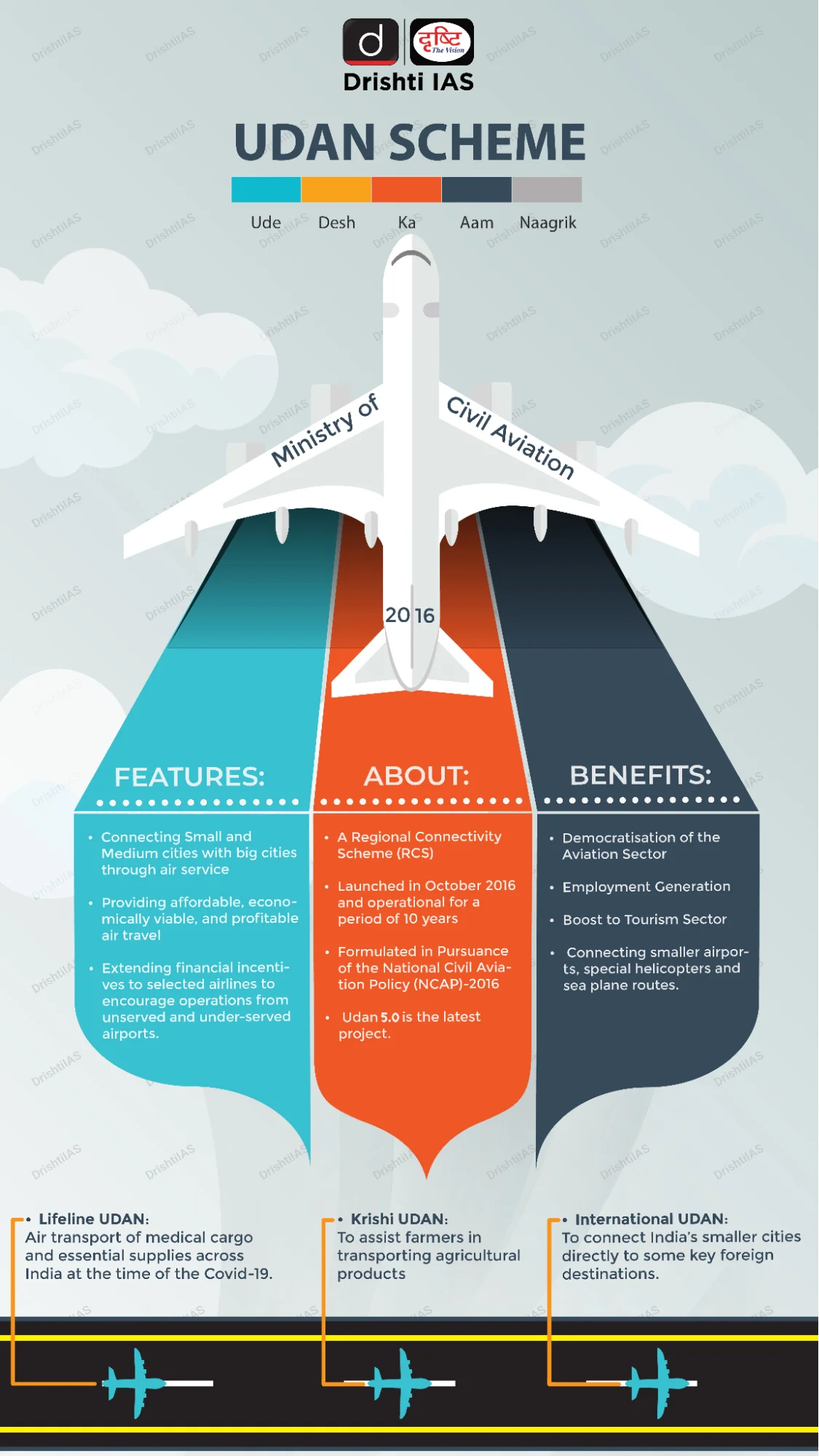
- Support for UDAN Scheme: The project aligns with the Regional Connectivity Scheme (RCS-UDAN), addressing the critical need for an indigenous aviation ecosystem to support economic expansion in underserved markets.
- Industrial Scope: Beyond assembly, the collaboration focuses on aftermarket services and securing orders to sustain the viability of the proposed assembly line.
|
Read more: UDAN Scheme |