International Relations
India- Finland Relations
For Prelims: Finland, 5G, 6G, Quantum Communications, North Atlantic Treaty Organisation, Baltic Sea
For Mains: India–Nordic Countries Relations, India–European Union Economic and Strategic Cooperation
Why in News?
The President of Finland, Alexander Stubb, paid a State Visit to India as the Chief Guest at the 11th Raisina Dialogue, during which India–Finland relations were upgraded to a Strategic Partnership in Digitalization and Sustainability, along with renewed environmental cooperation agreements.
Summary
- India and Finland upgraded their ties to a Strategic Partnership in Digitalization and Sustainability during the visit of President Alexander Stubb for the Raisina Dialogue, signing agreements on migration, green energy, and emerging technologies such as 5G, 6G, AI, and quantum communication.
- Both countries aim to expand trade, boost startup collaboration, and strengthen environmental cooperation, including co-hosting the World Circular Economy Forum 2026, while addressing challenges like trade imbalance and geopolitical differences.
What are the Key Outcomes of Finland's President Visit to India?
- Elevation of Bilateral Relations: The relationship has been officially upgraded to a "Strategic Partnership in Digitalization and Sustainability," acknowledging a shared vision for a green and technologically advanced future.
- India and Finland agreed to establish a dedicated Consular Dialogue between their respective Foreign Ministries. This mechanism aims to strengthen coordination on consular issues, mobility, and the welfare of citizens.
- Key MoUs and Agreements Signed:
- Migration and Mobility Partnership: Finland is a major destination for Indian tech professionals. This MoU establishes a framework to seamlessly facilitate the mobility of skilled Indian talent to Finland.
- Environmental Cooperation (Renewal): Building on a 2020 agreement, this covers sustainability initiatives including bioenergy, waste-to-energy solutions, power storage, green hydrogen, and renewable energy systems (wind, solar, small hydro).
- Cooperation in Statistics: An MoU to exchange best practices and collaborate in the field of official government statistics.
- Digitalization, Technology, and Innovation
- Joint Task Force on 6G: Established to drive advanced 6G research, partnering the University of Oulu (Finland) with the Bharat 6G Alliance.
- Cross-sectoral Joint Working Group on Digitalization: Created to advance cooperation in emerging technologies like High-performance computing (HPC), 5G, 6G, Quantum Communications/Computing, and Artificial Intelligence (AI).
- Joint Research Calls: An implementation arrangement was established between India's Department of Science and Technology (DST) and the Finnish Innovation Funding Agency (Business Finland).
- Indo-Finland Startup Corridor: Aimed at boosting ecosystem connectivity by ensuring active participation of Indian startups in Finland’s Slush event, and Finnish startups in India’s Startup Mahakumbh.
- Trade and Multilateral Cooperation
- Bilateral Trade Target: Both nations aim to double bilateral trade by 2030, heavily capitalizing on the recently concluded India-EU Free Trade Agreement.
- World Circular Economy Forum (WCEF): India's Ministry of Environment, Forest and Climate Change (MoEFCC) and the Finnish Innovation Fund (SITRA) announced they will co-host the WCEF in India in 2026.
How are India- Finland Relations?
- Trade and Economic Relations: In 2023–24, India’s exports to Finland stood at USD 582.65 million, while imports from Finland reached USD 913.48 million, resulting in a trade deficit of USD 330.83 million for India.
- India’s major exports to Finland include medicinal and pharmaceutical products, textiles and apparel, metal manufactures, and electrical machinery and components.
- India primarily imports specialized industrial machinery, electrical equipment, paper and paperboard products, metalliferous ores, and metal scrap from Finland.
- Exports of heterocyclic compounds, key intermediates used in pharmaceuticals and specialty chemicals, have surged in India’s trade with Finland, rising from 1% in 2022 to 28% in 2025, making them the largest export category.
- Foreign Direct Investment (FDI): In 2023, Finland ranked 40th among countries investing in India.
- However, actual investment will be higher as many Finnish companies like Nokia have been in India since the 1990s and further expansion are not accounted as FDI.
- Technology and Digital Cooperation: A Joint Declaration of Intent on Digitalization was signed between the two countries in 2019.
- Both countries are collaborating in emerging technologies such as 5G and 6G communications, cybersecurity, digital infrastructure, and startup ecosystems.
- With support from Finland architects, India built the world’s highest railway bridge over the Chenab River and established the largest bamboo-to-bioethanol refinery at Numaligarh in Assam.
- Indian Diaspora: About 20,000 Indians live in Finland, making them a significant contributor to Finland’s economy and cultural diversity, despite Finland having a relatively small population of about 5.6 million.
What are the Key Challenges in India-Finland Relations?
- Trade Deficit: The trade balance remains consistently skewed in Finland's favor. India's exports are largely restricted to traditional sectors (apparel, textiles, basic machinery), while it imports high-value tech and electronic equipment.
- Lack of Deep Logistical Connectivity: Unlike major European economic hubs (such as Germany, France, or the UK), direct logistical connectivity between India and Helsinki (capital of Finland) is comparatively weak.
- This lack of seamless connectivity increases freight costs and transit times, inherently discouraging high-frequency Business-to-Business (B2B) exchanges and robust supply chain integration.
- The Russia Factor: Finland, which shares a land border with Russia, abandoned decades of military non-alignment to join North Atlantic Treaty Organisation (NATO) and supports strict Western sanctions against Russia.
- India, however, follows a policy of Strategic Autonomy, maintaining economic, energy, and defence ties with Moscow, creating occasional differences in strategic outlook.
What Steps can Strengthen India-Finland Relations?
- Leveraging the EU-India FTA: With the newly concluded Free Trade Agreement between India and the EU, Indian export sectors (like textiles, pharmaceuticals, and IT services) must aggressively tap into the Finnish market to meet the 2030 bilateral trade doubling target.
- Skilling Ecosystems: India must actively align its vocational education and training standards (under the Skill India Mission) with European standards to fully utilize the newly signed Migration and Mobility MoU.
- Leading the Green Transition: Co-hosting the WCEF in 2026 provides India a unique platform to establish itself as a Global South leader in circular economy practices, waste management, and sustainable development.
- Global Peacemaker Role: As conflicts continue to destabilize the global supply chain, India should leverage its strong relations with both Western nations (like Finland/EU) and the Global South to act as a credible mediator in international forums.
Key Facts About Finland
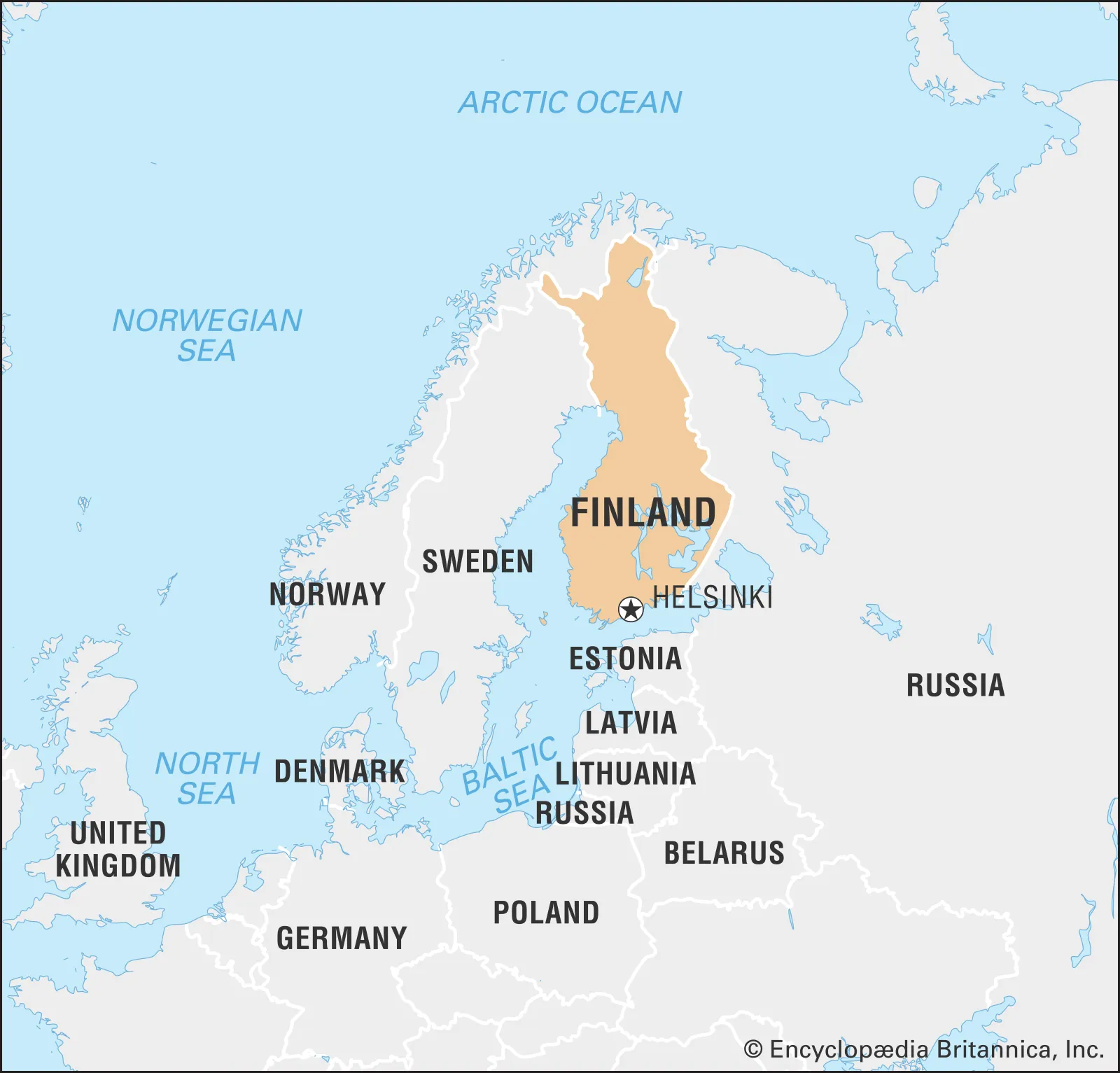
- Geographical Location: Finland is located in Northern Europe and forms an important part of the Fennoscandian Peninsula.
- It shares land borders with Russia (east), Sweden (west), and Norway (north).
- The country is bordered by the Gulf of Bothnia in the west, the Gulf of Finland in the south, and the Baltic Sea in the southwest.
- Physical Geography; Finland is famously known as the “Land of a Thousand Lakes,” though it actually has over 188,000 lakes, with Lake Saimaa being the largest.
- The northern region Lapland lies largely within the Arctic Circle and is inhabited by the indigenous Sámi people.
- Geopolitical and Strategic Significance: Finland joined NATO as a member in April 2023, ending decades of military non-alignment after the Russia–Ukraine war, thereby significantly extending NATO’s land border with Russia.
- It is also a member of the European Union (since 1995) and the Nordic Council, promoting regional cooperation among Nordic countries.
- Role in Arctic Governance: Finland is one of the eight permanent members of the Arctic Council (India is an observer), giving it an important role in Arctic governance, climate research, and polar cooperation.
- This also makes Finland an important partner for India’s Arctic Policy and scientific research.
- Environmental and Economic Highlights: Finland is the most forested country in Europe, with over 70% forest cover dominated by Taiga (boreal) forests.
- It has set an ambitious target to achieve carbon neutrality by 2035 and was the first country to adopt a national circular economy roadmap (2016), hosting the World Circular Economy Forum (WCEF) in 2017.
- Social and Governance Indicators: Finland has been ranked the world’s happiest country for eight consecutive years (2018–2025) in the World Happiness Report, due to strong social welfare systems and high trust in institutions.
- It also ranks among the top countries in the World Press Freedom Index and Corruption Perceptions Index, reflecting strong governance and transparency.
|
Drishti Mains Question: Discuss the strategic significance of India’s partnership with Nordic countries, particularly Finland, in the domains of digital innovation and sustainability. |
Frequently Asked Questions (FAQs)
1. What is the significance of the India–Finland Strategic Partnership in Digitalization and Sustainability?
It strengthens cooperation in emerging technologies, green energy, digital infrastructure, and innovation ecosystems, aligning both countries toward a technology-driven and sustainable future.
2. What is the Migration and Mobility Partnership between India and Finland?
It provides a framework to facilitate the movement of skilled Indian professionals to Finland, especially in technology sectors facing labour shortages.
3. What is the World Circular Economy Forum (WCEF)?
The WCEF is a global platform promoting circular economy practices, and India will co-host the 2026 edition with Finland’s Innovation Fund SITRA.
4. Why is Finland strategically important for India’s Arctic policy?
Finland is a permanent member of the Arctic Council, making it an important partner for Arctic research, climate studies, and polar governance cooperation.
5. What challenge affects India–Finland trade relations?
The trade balance favors Finland, as India mainly exports traditional goods while importing high-value technology and industrial equipment from Finland.
UPSC Civil Services Examination, Previous Year Questions (PYQs)
Mains
Q. The expansion and strengthening of NATO and a stronger US-Europe strategic partnership works well for India.' What is your opinion about this statement? Give reasons and examples to support your answer. (2023)
Governance
India’s Digital Transformation and Growth Story
For Prelims: Digital India programme, Digital Public Infrastructure (DPI), BharatNet, Optical Fibre Cable, Aadhaar, Direct Benefit Transfers (DBT), Unified Payments Interface, National Supercomputing Mission (NSM), MeghRaj, Pradhan Mantri Gramin Digital Saksharta Abhiyan (PMGDISHA), DIKSHA (Digital Infrastructure for Knowledge Sharing), SWAYAM (Study Webs of Active-Learning for Young Aspiring Minds), PM-WANI (Prime Minister Wi-Fi Access Network Interface), Atal Innovation Mission (AIM), IndiaAI Kosh, IndiaAI Mission, Startup India, CoWIN, Encryption, National Education Policy (NEP), 2020.
For Mains: Key achievements of India under the Digital India Programme, Key facts regarding the Digital India Programme, Key challenges in India's digital growth story and steps needed to boost and safeguard the digital ecosystem in India.
Why in News?
India's digital transformation, anchored in the Digital India programme (2015) , has evolved from a connectivity mission into a comprehensive empowerment journey, leveraging Digital Public Infrastructure (DPI), massive connectivity drives, and targeted skilling initiatives to systematically bridge the digital divide and bring every citizen into the mainstream of the digital economy.
Summary
- India’s Digital India Programme has significantly expanded digital connectivity, Digital Public Infrastructure, and digital services, integrating millions into the digital economy.
- Initiatives such as BharatNet, UPI, Aadhaar, and PM-WANI have strengthened governance and financial inclusion.
- However, digital divide, cybersecurity risks, and infrastructure gaps remain critical challenges.
What are the Key Achievements of India Under the Digital India Programme?
- Universal Digital Connectivity: BharatNet connected over 2.15 lakh Gram Panchayats and expanded optical fibre cable deployment from 19.35 lakh route km (2019) to 42.36 lakh route km (2025). 99.9% district has 5G coverage with over 5.18 lakh Base Transceiver Stations (December 2025).
- Reduced data costs from Rs 269 per GB (2014) to Rs 8–10 per GB (2025-26).
- Achieved broadband subscriptions of 100 crore in November 2025, a sixfold increase from 13.15 crore a decade earlier.
- Digital Public Infrastructure (DPI): Issued over 143 crore unique digital IDs (Aadhaar) enabling targeted welfare delivery and Direct Benefit Transfers (DBT).
- Unified Payments Interface (UPI) processes nearly Rs 28.33 lakh crore in monthly transactions and handles 21.7 billion transactions monthly.
- DigiLocker boasts over 62 crore registered users offering secure, paperless storage and sharing of official documents.
- High-Performance Computing: National Supercomputing Mission (NSM) deployed 38 supercomputers with combined capacity of 44 Petaflops across institutions nationwide supporting Artificial Intelligence (AI), climate modelling, biotechnology, and advanced manufacturing.
- Over 2,170 Ministries and Departments are hosting applications on secure, and scalable government cloud platform MeghRaj.
- Digital Literacy: Pradhan Mantri Gramin Digital Saksharta Abhiyan (PMGDISHA) trained 6.39 crore rural households (as of March 2024) against a target of 6 crore empowering one person per rural household with digital skills.
- Digital Learning Platform: DIKSHA (Digital Infrastructure for Knowledge Sharing) hosts over 19,698 courses for school education and teacher training. Achieved 18.23 crore enrolments and 14.57 crore completions.
- SWAYAM (Study Webs of Active-Learning for Young Aspiring Minds) offers 18,500+ courses from leading institutions for higher education and awarded 53.7 lakh certifications.
- INSPIRE-MANAK (Million Minds Augmenting National Aspirations and Knowledge) provides Rs 10,000 prototype grants with mentoring at district, state, and national levels. In 2025-26, it has mobilised 11.47 lakh ideas with 52% from girls and 84% from rural schools.
- Rights-Based Digital Inclusion: Unique Disability ID (UDID) sub-scheme (under the Rights of Persons with Disabilities Act, 2016) generated over 1.34 lakh digital disability cards streamlining access to welfare benefits for persons with disabilities nationwide.
- Indian Sign Language Research and Training Centre developed the world's largest Indian Sign Language digital repository with 3,189 e-content videos.
- Last-Mile Digital Access: Over 6.5 lakh Village Level Entrepreneurs (VLEs) operate Common Service Centres (CSCs) under Digital India programme bridging the digital divide for citizens lacking devices, reliable connectivity, or digital literacy.
- PM-WANI (Prime Minister Wi-Fi Access Network Interface) deployed 4,09,111 Wi-Fi hotspots nationwide promoting decentralised, licence-free public Wi-Fi model encouraging local entrepreneurship.
- Digital Skilling and Innovation: Atal Innovation Mission (AIM) established over 10,000 Atal Tinkering Labs (ATLs) across 722 districts engaging 1.1 crore students with hands-on experience in robotics, AI, and IoT.
- FutureSkills Prime, ranked 3rd globally in the European Commission's Pact for Skills Report 2024, equips learners with industry-relevant skills in AI, cloud computing, cybersecurity, and data analytics.
- IndiaAI Kosh, under IndiaAI Mission, hosts 9,500+ datasets and 273 AI models across 20 sectors supporting startups, researchers, and innovators nationwide.
- Startup and Entrepreneurship: Under Startup India, recognised startups grew from 400 in 2016 to over 2 lakh in 2025 generating 21 lakh jobs. 50% of startups now operate in Tier-II and Tier-III cities enabling local economic growth.
- 72 Atal Incubation Centres (AICs) have nurtured 3,500+ startups and supported 1,000+ women-led ventures.
Digital India Programme
- About: It is a flagship initiative administered by the Ministry of Electronics and Information Technology (MeitY). It was launched in July 2015 that seeks to transform India into a digitally empowered society and a knowledge economy.
- The programme integrates various digital technologies to deliver government services electronically, enhance connectivity, promote digital inclusion, and drive economic growth through innovation and efficiency.
- Core Vision: The programme rests on 3 interconnected vision areas:
- Digital infrastructure as a utility to every citizen.
- Governance and services on demand, ensuring seamless, transparent, and paperless delivery.
- Digital empowerment of citizens through literacy, skills, and access to digital resources.
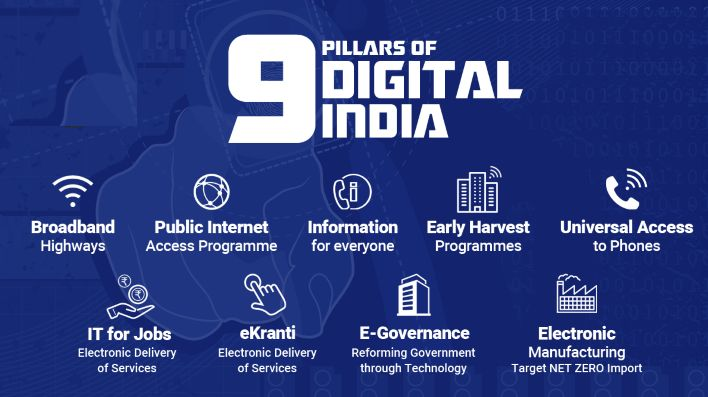
- Nine Pillars: The implementation framework is structured around 9 pillars:
What are the Key Challenges in India's Digital Growth Story?
- Persistent Digital Divide: NSSO data reveals that only 24% of rural households have internet access compared to 66% in cities, hindering inclusive growth and access to e-health and education.
- According to the National Family Health Survey (2019-21), only 1 in 3 women (33%) in India have ever used the internet. Only 31.2% of people taking online AI courses in India in 2025 were women.
- Tribal populations and backward classes remain disadvantaged, creating a "digital underclass".
- Cybersecurity Challenges: The country witnessed 13.91 lakh cybersecurity incidents in 2022 and emerged as the 2nd most targeted nation globally for cyber attacks. Compounding this, India faces a severe shortage of about 7,90,000 cybersecurity professionals.
- Infrastructure and Connectivity Bottlenecks: India's digital infrastructure lags global standards, ranking 25th globally for mobile internet speeds as of November 2024. Issues like low broadband speeds, patchy 5G rollout, and insufficient fiber-optic networks, particularly in remote areas, limit effective access to digital services.
- E.g., BharatNet has faced repeated deadline delays (from 2014–15 to beyond 2025), major cost overruns (from Rs 20,000 crore to over Rs 1.39 lakh crore), and frequent fiber cuts leading to widespread downtime.
- Inefficiencies in Public Digital Systems: Key public platforms face challenges related to scalability, data accuracy, and technical glitches. For instance, Aadhaar has experienced instances of identity fraud, while systems like CoWIN have highlighted gaps in usability for non-urban populations.
- Digital Literacy and Skill Gaps: The NSS 78th Round Survey (2020-21) indicates a computer literacy rate of only 24.7% among individuals aged 15 and above. A National Skill Development Corporation report estimates a deficit of 29 million skilled workers, particularly in high-demand sectors like Information Technology (IT), Banking, Financial Services, and Insurance (BFSI).
- Environmental Impact of Digital Expansion: Rapid digitalization has led to a surge in e-waste, rising from 1.01 million metric tonnes (MT) in 2019-20 to 1.751 million MT in 2023-24. High energy consumption by data centers raise serious environmental sustainability concerns.
What Steps are Needed to Boost India's Digital Growth Story?
- Enhancing Cybersecurity Infrastructure: Promote R&D of indigenous cybersecurity technologies and encryption standards to enhance data sovereignty. Create a dedicated Cyber Security Service cadre similar to other civil services for handling national-level cyber threats.
- Strengthening DPI: Conduct regular, mandatory security audits of all DPI components (Aadhaar, UPI, DigiLocker, GSTN) by independent agencies to ensure robust oversight. Establish geographically distributed backup and disaster recovery centres for all critical DPI systems for uninterrupted service during emergencies.
- Digital Literacy and Cyber Awareness: Launch PMGDISHA 2.0 with focus on cybersecurity awareness, safe online practices, and protection against financial frauds. Create a network of "Cyber Jagrukta Champions" at gram panchayat level and integrate mandatory cyber hygiene modules in school curricula under National Education Policy (NEP), 2020 framework.
- Strengthening Legal and Regulatory Framework: Comprehensively revise the Information Technology Act, 2000 to address emerging challenges like deepfakes, AI-generated misinformation, and crypto-related crimes. Establish regulatory sandboxes for emerging technologies (AI, blockchain, IoT) to test security implications.
- Strengthening Rural Digital Ecosystem: Rural digital infrastructure must be strengthened by continuously augmenting bandwidth, implementing robust security for PM-WANI hotspots, and establishing block-level cybersecurity cells connected to district units.
Conclusion
India's decade-long Digital India journey has successfully built world-class Digital Public Infrastructure (DPI), connecting over a billion people and fostering innovation. However, to sustain this momentum, the nation must urgently bridge the persistent digital divide, tackle escalating cybersecurity threats, and implement robust data protection frameworks. A comprehensive strategy focused on digital literacy, indigenous technology, and inclusive access is essential to ensure a secure and equitable digital future for all.
|
Drishti Mains Question: Despite rapid digital expansion, India continues to face a digital divide. Analyse the challenges and suggest policy measures to address them. |
Frequently Asked Questions (FAQs)
1. What is the objective of the Digital India Programme?
It aims to transform India into a digitally empowered society and knowledge economy through digital infrastructure, e-governance, and digital empowerment.
2. What is BharatNet and why is it important?
BharatNet (2011) is a rural broadband project connecting over 2.15 lakh Gram Panchayats with optical fibre, enabling digital services and internet connectivity in rural India.
3. What is PM-WANI?
PM-WANI (2020) promotes licence-free public Wi-Fi hotspots through Public Data Offices, expanding affordable broadband access and local entrepreneurship.
UPSC Civil Services Examination Previous Year Question (PYQ)
Prelims
Q. Consider the following: (2022)
- Aarogya Setu
- CoWIN
- DigiLocker
- DIKSHA
Which of the above are built on top of open-source digital platforms?
(a) 1 and 2 only
(b) 2, 3 and 4 only
(c) 1, 3 and 4 only
(d) 1, 2, 3 and 4
Ans: (d)
Q. Which of the following is/are the aim/aims of “Digital India” Plan of the Government of India? (2018)
- Formation of India’s own Internet companies like China did.
- Establish a policy framework to encourage overseas multinational corporations that collect Big Data to build their large data centres within our national geographical boundaries.
- Connect many of our villages to the Internet and bring Wi-Fi to many of our schools, public places and major tourist centres.
Select the correct answer using the code given below:
(a) 1 and 2 only
(b) 3 only
(c) 2 and 3 only
(d) 1, 2 and 3
Ans: (b)
Q. Regarding ‘DigiLocker’, sometimes seen in the news, which of the following statements is/are correct? (2016)
- It is a digital locker system offered by the Government under Digital India Programme.
- It allows you to access your e-documents irrespective of your physical location.
Select the correct answer using the code given below:
(a) 1 only
(b) 2 only
(c) Both 1 and 2
(d) Neither 1 nor 2
Ans: (c)
Mains
Q. “The emergence of the Fourth Industrial Revolution (Digital Revolution) has initiated e-Governance as an integral part of government”. Discuss. (2020)
Q. How can the ‘Digital India’ programme help farmers to improve farm productivity and income? What steps has the Government taken in this regard? (2015).
Important Facts For Prelims
Weapons in the US–Israel–Iran Conflict
Why in News?
The US–Israel bloc and Iran conflict has spotlighted a new era of warfare, marked by one of the most technologically complex drone and missile battles in modern military history.
What Major Weapons and Defence Systems Used in the US–Israel–Iran Conflict?
Iran's Arsenal:
- Shahed-136 & Shahed-131 Drones: Low-cost loitering munitions (often called kamikaze drones) deployed in massive "swarm tactics."
- They are designed to fly low and slow, acting as decoys to saturate and financially exhaust expensive enemy air defense systems.
- Shahab-3 Missile: A medium-range ballistic missile with a range of approximately 2,000 km. It forms the backbone of Iran's long-range deterrence and strike capability across the Middle East.
- Fattah Missile: Claimed by Iran to be a next-generation hypersonic weapon capable of reaching speeds of up to Mach 15 and hit targets at distances of up to 1,400 km.
- Fattah’s purported maneuverability is designed to bypass traditional anti-missile shields.
- Khorramshahr Missile: A highly destructive ballistic missile deployed in recent barrages against military installations.
- Bavar-373: Long-range air defence system designed to intercept aircraft and ballistic missiles, comparable to advanced surface-to-air missile systems.
- Sevom-e-Khordad: Mobile air defence system capable of targeting aircraft and cruise missiles, enhancing survivability through rapid relocation.
- Tor-M1: Short-range system used to intercept precision-guided munitions, drones, and low-flying cruise missiles.
- Majid & Azarakhsh: Systems designed to counter drones and low-flying aerial threats, protecting critical facilities.
- Paveh Cruise Missile: It is a land-attack cruise missile. It has a range of 1,650 km and can alter its course mid-flight, making it a severe threat to US regional bases.
- Sejjil & Emad Missiles: The Sejjil is a solid-fueled medium-range ballistic missile (making it much faster to launch than the liquid-fueled Shahab-3, reducing the time the US/Israel has to detect it).
- The Emad is Iran’s first precision-guided, long-range ballistic missile with a maneuverable re-entry vehicle (MaRV).
US Arsenal
- B-2 Spirit Stealth Bomber: A highly advanced, low-radar-signature aircraft used to penetrate heavily defended airspace.
- B-2 Stealth Bombers bat-like flying wing design reduces detection and evades enemy air defenses.
- GBU-57 MOP (Massive Ordnance Penetrator): A 30,000-pound "bunker-buster" bomb.
- The B-2 bomber is the only aircraft capable of delivering this weapon, which is specifically used to destroy deeply buried and hardened Iranian nuclear facilities (e.g., at Fordow and Natanz).
- Tomahawk Cruise Missiles: Subsonic, low-altitude precision missiles launched to strike inland targets while avoiding radar.
- The Tomahawk Cruise Missile uses GPS, Inertial Navigation System (INS), TERCOM (terrain mapping), and DSMAC (digital scene matching) for high precision.
- LUCAS Drone (Low-Cost Uncrewed Combat Attack System): US's newly debuted one-way attack drone. It is an inexpensive, expendable munition designed as a direct counter-tactic to Iran's Shahed swarms.
- The drone can be launched from runways, ground vehicles, or ships for low-cost precision strikes.
- PrSM (Precision Strike Missile): A short-range ballistic missile recently making its combat debut, fired from US M-142 HIMARS systems to hit targets up to 400 km away.
- THAAD (Terminal High Altitude Area Defense): An advanced US anti-ballistic missile system designed to intercept short-, medium-, and limited intermediate-range ballistic missiles during the final stage of their flight, both inside and outside the Earth’s atmosphere, providing a critical high-altitude defensive layer.
- THAAD uses “hit-to-kill” kinetic interception technology, where interceptor missiles destroy incoming targets by directly colliding with them at extremely high speeds.
- THAAD is also highly mobile and rapidly deployable, allowing the US to position it in regions facing missile threats.
- Patriot Missile System (PAC-3): A heavily utilized US-made defense system that successfully intercepts lower-altitude threats like cruise missiles and drones.
- APKWS (Advanced Precision Kill Weapon System): A cost-effective defense solution.
- It converts standard unguided Hydra rockets into USD 25,000 laser-guided weapons, allowing forces to destroy slow-moving drones without wasting multi-million dollar interceptors.
- Coyote Anti-Drone System: Alongside the APKWS, the US relies heavily on Coyote—a radar-guided, jet-powered interceptor drone that actively hunts and crashes into Shahed drones.
- SM-3 & SM-6 (US Navy): Sea-based interceptors. SM-3 destroys ballistic missiles during midcourse flight, while SM-6 targets missiles, aircraft, and drones in the terminal phase.
- Indirect Fire Protection Capability (IFPC): Uses AIM-9X (a premier, short-range, infrared-tracking, air-to-air, and surface-launched interceptor missile) to defend bases from drones and rockets, helping conserve expensive Patriot missiles.
- MQ-9 Reaper Drones: Long-endurance uncrewed aerial vehicles used for continuous surveillance, target painting, and carrying precision Hellfire missiles.
- Boeing P-8I: A multi-mission, long-range maritime patrol aircraft designed for Anti-Submarine Warfare (ASW), Anti-Surface Warfare, Intelligence, Surveillance and Reconnaissance (ISR), Maritime Domain Awareness, and Search and Rescue operations.
Israel Arsenal
- Blue Sparrow missile: It is an air-launched quasi-ballistic missile, part of the Sparrow missile family (which also includes the Black Sparrow and Silver Sparrow).
- Originally designed as a practice target for Israel’s Arrow missile defence system, it was later adapted for offensive air-to-surface missions.
- The missile has a range of nearly 2,000 km. It is typically launched from fighter aircraft such as F-15 jets and follows a quasi-ballistic trajectory, briefly exiting the atmosphere before re-entering to strike its target, making interception by air-defence systems more difficult.
- Jericho Missile Family:
- Jericho-2: A medium-range ballistic missile (MRBM) with a range of 1,500–3,000 km.
- Jericho-3: An intermediate-range ballistic missile (IRBM) capable of striking targets 4,800–6,500 km away, forming the core of Israel's strategic deterrence.
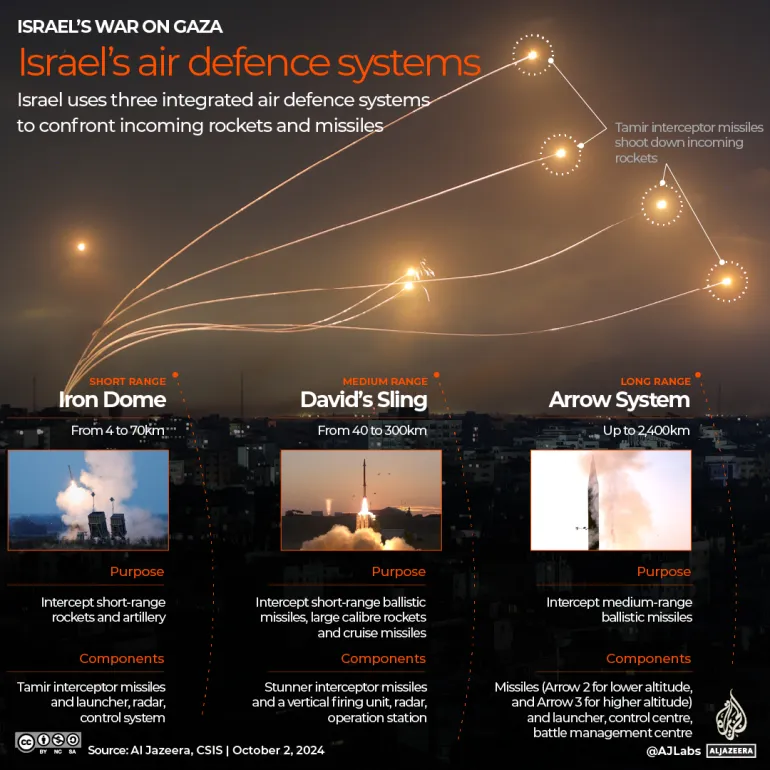
- Arrow-2 & Arrow-3: Long-range ballistic missile defence. Arrow-3 intercepts missiles outside the atmosphere (exo-atmospheric), while Arrow-2 operates within the atmosphere.
- David’s Sling: Designed to intercept medium- to long-range rockets, cruise missiles, and tactical ballistic missiles, bridging the gap between Arrow and Iron Dome.
- Iron Dome: Short-range defence system effective against rockets, artillery shells, and drones, with high success rates against low-speed threats.
- Iron Beam: Directed-energy laser system that destroys drones and small projectiles at low cost, reducing reliance on expensive interceptors.
- C-Dome: The naval version of the Iron Dome, deployed on Israel's Sa'ar 6-class corvettes to protect its offshore gas rigs and maritime borders from Houthi and Iranian drone swarms.
- F-35I “Adir”: Israel is the only Middle Eastern country operating this fifth-generation stealth fighter, enabling deep strikes inside Iranian airspace by evading air-defence systems such as Bavar-373.
|
Read more: US-Israel Attack on Iran |
Frequently Asked Questions (FAQs)
1. What are Shahed-136 drones used by Iran?
Shahed-136 arelow-cost loitering munitions (kamikaze drones) used in swarm attacks to overwhelm enemy air defence systems.
2. What is the role of the Iron Dome system?
Iron Dome is Israel’sshort-range air defence system designed to intercept rockets, artillery shells, and drones with high success rates.
3. What is the Blue Sparrow missile?
Blue Sparrow is anair-launched quasi-ballistic missile developed by Israel, originally designed as a target for the Arrow defence system and later adapted for offensive strikes.
4. What is THAAD and how does it work?
THAAD (Terminal High Altitude Area Defense) is aUS anti-ballistic missile system that intercepts incoming missiles during their high-altitude terminal phase.
5. Why is the F-35I “Adir” significant for Israel?
The F-35I is afifth-generation stealth fighter jet that enables Israel to conduct deep strikes while evading advanced air defence systems.
UPSC Civil Services Examination, Previous Year Questions (PYQs)
Prelims
Q. With reference to Unmanned Aerial Vehicles (UAVs), consider the following statements:(2025)
- All types of UAVs can do vertical landing.
- All types of UAVs can do automated hovering.
- III. All types of UAVs can use battery only as a source of power supply.
How many of the statements given above are correct?
(a) Only one
(b) Only two
(c) All the three
(d) None
Ans: (d)
Q. What is "Terminal High Altitude Area Defence (THAAD)", sometimes seen in the news? (2018)
(a) An Israeli radar system
(b) India's indigenous anti-missile programme
(c) An American anti-missile system
(d) A defence collaboration between Japan and South Korea.
Ans: (c)
Important Facts For Prelims
Hybrid Electric Vehicles
Why in News?
Delhi's upcoming Electric Vehicle (HEV) policy plans to extend road tax and registration fee exemptions, currently available for battery electric vehicles (BEVs), to hybrid electric vehicles (HEVs) as well.
What are Hybrid Electric Vehicles?
- About: A Hybrid Electric Vehicle (HEV) is an automobile that combines a conventional internal combustion engine (ICE) with an electric propulsion system to achieve better fuel efficiency and lower emissions, operating without the need for external charging.
- It seamlessly switches between or combines these power sources to optimize efficiency, leveraging the engine for extra range, and the motor for instant acceleration and noise-free driving.
- Self-Charging Capability: Unlike pure electric vehicles (EVs), a standard hybrid's battery is self-charging. It does not need to be plugged in; it is replenished automatically through regenerative braking and, in some designs, by the gasoline engine acting as a generator.
- During braking, the electric motor acts as a generator, converting the vehicle's kinetic energy (which would otherwise be lost as heat) into electricity to recharge the battery.
- Types of Hybrid Configurations:
- Parallel Hybrid: Both the engine and the electric motor are mechanically connected to the wheels, allowing them to power the vehicle either independently or simultaneously. While some short electric-only driving is possible, the motor typically acts as an assist to the engine.
- Series-Parallel (Power-Split) Hybrid: It can intelligently switch between modes—running on electric power alone, using the engine to generate electricity for the motor (series mode), or having both power sources drive the wheels directly (parallel mode).
- Plug-in Hybrid Electric Vehicle (PHEV): Its defining characteristic is the ability to be recharged externally via a plug, in addition to being charged by the engine and regenerative braking. PHEVs can use any hybrid architecture (parallel, series, or series-parallel) and offer the dual benefit of electric commuting and unlimited hybrid range for longer trips.
- Advantages: Hybrids deliver excellent fuel economy—especially in city driving—and lower emissions through features like regenerative braking, while eliminating the range anxiety associated with pure electric vehicles. Additional benefits include reduced brake wear and, depending on the type and location, potential eligibility for government incentives such as tax credits.
- Disadvantages: Hybrids carry a higher initial cost than conventional cars due to their complex technology, and some drivers find them less engaging to drive. Additional drawbacks are high battery replacement, and the fuel economy advantage is most pronounced in city driving rather than on the highway.
Other Possible Alternative Technologies to HEVs
- Battery Electric Vehicles (BEVs): These vehicles are powered solely by large rechargeable batteries and electric motors, producing zero tailpipe emissions. They depend entirely on external charging infrastructure and face range limitations based on battery capacity.
- Fuel Cell Electric Vehicles (FCEVs): These vehicles use hydrogen fuel cells to generate electricity on board, powering an electric motor with water vapor as the only byproduct.
- Hydraulic Hybrids: These systems capture braking energy in hydraulic accumulators using fluid pressure, rather than storing it in batteries, to assist with propulsion.
- Conventional Vehicles with Alternative Fuels: This category includes vehicles that retain internal combustion engines but run on non-petroleum fuels, such as flex-fuel vehicles (compatible with ethanol blends like E85), Compressed Natural Gas (CNG), or biofuels, offering emission reductions without electrification.
Frequently Asked Questions (FAQs)
1. What is a Hybrid Electric Vehicle (HEV)?
An HEV combines an internal combustion engine (ICE) with an electric motor and battery to improve fuel efficiency and reduce emissions, typically without requiring external charging.
2. How does regenerative braking work in hybrid vehicles?
During braking, the electric motor acts as a generator, converting kinetic energy into electricity and storing it in the battery.
3. How are Battery Electric Vehicles (BEVs) different from hybrids?
BEVs run entirely on electric batteries with zero tailpipe emissions, while hybrids combine electric propulsion with an internal combustion engine.
UPSC Civil Services Examination, Previous Year Questions (PYQs)
Q. With reference to green hydrogen, consider the following statements : (2023)
- It can be used directly as a fuel for internal combustion.
- It can be blended with natural gas and used as fuel for heat or power generation.
- It can be used in the hydrogen fuel cell to run vehicles.
How many of the above statements are correct?
(a) Only one
(b) Only two
(c) All three
(d) None
Ans: (c)
Q. In the cities of our country, which among the following atmospheric gases are normally considered in calculating the value of Air Quality Index? (2016)
- Carbon dioxide
- Carbon monoxide
- Nitrogen dioxide
- Sulfur dioxide
- Methane
Select the correct answer using the code given below:
(a) 1, 2 and 3 only
(b) 2, 3 and 4 only
(c) 1, 4 and 5 only
(d) 1, 2, 3, 4 and 5
Ans: (b)
Q. Hydrogen fuel cell vehicles produce one of the following as “exhaust” (2010)
(a) NH3
(b) CH4
(c) H2O
(d) H2O2
Ans: (c)
Rapid Fire
Standards for Green Ammonia and Green Methanol
The Ministry of New and Renewable Energy notified the specific emission standards for Green Ammonia and Green Methanol to accelerate the trade of green hydrogen derivatives under the National Green Hydrogen Mission (NGHM).
- NGHM: Approved in 2023, it aims to position India as a global hub for clean hydrogen. By 2030, it targets 125 GW renewable capacity for hydrogen production, Rs 8 lakh crore investments, 6 lakh jobs, reduction of Rs 1 lakh crore fossil fuel imports, and 50 million metric tons annual emission cuts.
- Green Hydrogen: Hydrogen produced using renewable energy sources like solar or wind through electrolysis of water.
- As per Government of India standards, it qualifies as “green” if emissions do not exceed 2 kilograms (kg) carbon dioxide (CO₂) equivalent per kg of hydrogen produced.
- It can also be produced from biomass (e.g., agricultural waste) if emissions remain within this limit.
- Green Ammonia Threshold: To be officially classified as 'green', the total non-biogenic greenhouse gas emissions must be not more than 0.38 kilograms of carbon dioxide equivalent per kilogram of ammonia. This is calculated as an average over the preceding 12-month period.
- Green ammonia is a carbon-neutral, renewable fuel and fertilizer feedstock produced by combining green hydrogen generated via electrolysis using wind or solar power with nitrogen.
- It offers a sustainable alternative to fossil fuel-based "grey" ammonia, crucial for decarbonizing industries like shipping, power generation, and agriculture.
- Green Methanol Threshold: The emissions limit is set at not more than 0.44 kilograms of carbon dioxide equivalent per kilogram of methanol, also calculated as an average over the preceding 12-month period.
- Green methanol is a low-carbon, renewable liquid fuel and chemical feedstock produced from biomass (bio-methanol) or green hydrogen.
- It acts as a sustainable, net-zero alternative to conventional fossil-based methanol, capable of reducing greenhouse gas emissions by 60–95%.
- Eligible Carbon Sources: For the production of green methanol, carbon dioxide may be sourced from biogenic sources, direct air capture, or existing industrial sources.
- Strategic Significance: These newly defined standards will provide regulatory clarity to investors and facilitate the decarbonization of hard-to-abate sectors such as fertilizers, shipping, power, and heavy industry.
| Read more: Unlocking India's Green Hydrogen Production Potential |
Rapid Fire
White Phosphorus
A report by Human Rights Watch has accused Israel of using white phosphorus munitions in residential areas of Lebanon, raising serious concerns over potential violations of international humanitarian law.
- The alleged chemical weapon use comes amid an intensifying Israel–Lebanon conflict, with Lebanese authorities reporting significant civilian casualties from recent Israeli strikes.
- White Phosphorus: It is a toxic, wax-like chemical substance that burns at temperatures above 800°C, hot enough to melt metal.
- Typically white, yellow, or colourless with a garlic-like odour, white phosphorus munitions are difficult to extinguish and continue burning until the chemical is fully consumed or deprived of oxygen.
- Incendiary Munition: Militaries often use White Phosphorus as incendiary munition to create smokescreens and illumination on battlefields, as it ignites rapidly and produces dense smoke that can spread over large areas.
- An incendiary weapon is a weapon designed to set fire to objects or cause burn injuries through flame, heat, or chemical reactions produced on impact with the target.
- Severe Health Hazards: White Phosphorus when used in populated areas, it can ignite buildings.
- White phosphorus is extremely harmful to humans, as it can cause deep burns that penetrate to the bone and release toxic chemicals that damage vital organs such as the liver, kidneys, and heart.
- The substance can also trigger metabolic disorders, including abnormal potassium levels, which may lead to heart failure.
- Legality under International Law: While white phosphorus is not outright banned as a chemical weapon when used as a smokescreen.
- Its use as an incendiary weapon in civilian-populated areas is strictly illegal under Convention on Certain Conventional Weapons (CCW), 1980.
- CCW restricts or bans weapons causing excessive injury or indiscriminate harm to civilians and combatants. India is a party to all the five Protocols of the CCW.
- Protocol III of the 1980 CCW restricts incendiary weapons against civilians, but white phosphorus is often classified as a multipurpose munition used for smoke or illumination, allowing militaries to argue it is not covered by the protocol.
- Moreover, Israel is not a signatory to Protocol III, further complicating accountability.
| Read more: The Escalating Crisis in West Asia |
Rapid Fire
Exercise LAMITIYE-2026
An Indian Armed Forces contingent participates in the 11th edition of the Joint Military Exercise “LAMITIYE-2026”, aimed at strengthening defence cooperation and operational coordination between India and Seychelles.
- Exercise LAMITIYE: The word “LAMITIYE” means “Friendship” in Creole (official languages of Seychelles), reflects the spirit of defence cooperation between the two nations.
- Joint Military Exercise LAMITIYE is a biennial exercise conducted since 2001 between the Indian Armed Forces and the Seychelles Defence Forces.
- The exercise aims to enhance interoperability in sub-conventional operations in semi-urban environments, strengthen peacekeeping coordination, and exchange tactical skills and new military technologies between the two forces.
- 11th edition marks the first tri-service participation of the Indian Armed Forces, with personnel from the ASSAM Regiment, along with the Indian Navy and Indian Air Force, including INS Trikand and a C-130J Super Hercules.
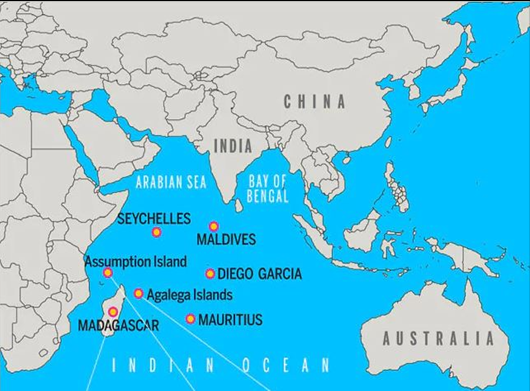
- Seychelles: It is an archipelagic state of 155 islands in the western Indian Ocean, located northeast of Madagascar and off the east coast of Africa.
- Situated on the Mascarene Plateau, it is Africa’s smallest country, with Victoria on Mahé Island as its capital.
- Owing to its location along key maritime trade routes, Seychelles holds strategic importance for India in maritime security, and is an important partner in India’s SAGAR (Security and Growth for All in the Region) vision.
| Read more: India–Seychelles |
Rapid Fire
India Opts Out of IEA-led Oil Release from SPRs
India has decided against participating in the International Energy Agency's (IEA) proposed coordinated release of strategic petroleum reserves (SPRs) aimed at stabilizing global oil markets, which have been roiled by the escalating Middle East conflict.
- Background: Crude prices surged past USD 119 per barrel, triggered by supply cuts from major producers and fears of shipping disruptions stemming from the U.S.-Israeli war on Iran.
- Rationale: Citing an "India first" policy, the government asserts that ensuring the country's energy security is more critical than intervening in the market. India's strategic reserves are intended exclusively as a buffer against actual domestic supply disruptions, not as a tool for manipulating or calming global price volatility.
- IEA Membership Status: India is not a full member of the IEA but an associate member, meaning it has no binding obligation to comply with the agency's calls for coordinated stock releases.
- Previous Participation: This marks a departure from 2021, when India did participate in a US-led initiative by releasing about 5 million barrels from its SPRs to help stabilize global energy markets.
Strategic Petroleum Reserves
- About: SPRs are emergency crude oil stockpiles maintained by governments to mitigate petroleum supply disruptions. IEA members are required to hold oil stock levels equivalent to no less than 90 days of net imports.
- India's SPRs are managed by the Indian Strategic Petroleum Reserves Limited (ISPRL) under the Ministry of Petroleum and Natural Gas.
- Current SPR Capacity: India, the world's 3rd-largest oil importer and consumer, currently holds strategic reserves of approximately 5.33 million tonnes, which are about 80% full.
- India's operational SPRs are located at 3 underground rock cavern sites at Visakhapatnam (1.33 MMT), Mangaluru (1.5 MMT), and Padur (2.5 MMT) providing approximately 9.5 days of crude oil coverage.
- The government has approved SPR expansion, adding 2.5 MMT at Padur (Karnataka) and a 4 MMT facility at Chandikhole (Odisha). Future sites like Bikaner (salt cavern), Mangaluru, Rajkot, or Bina (Madhya Pradesh) are under planning.
- Total Energy Buffer: The SPRs supplement the commercial inventories held by oil companies. Currently, the combined crude oil and petroleum product reserves (including stocks at refineries, ports, and floating storage) provide a total buffer of approximately 74 days for India.
| Read More: IEA Full Membership for India |
Rapid Fire
NHAI Releases 1st National Highways Green Cover Index 2025–26
The National Highways Authority of India (NHAI) has released a first-of-its-kind Annual Report on the National Highways Green Cover Index (NH-GCI) 2025–26, prepared with ISRO's National Remote Sensing Centre (NRSC).
Green Cover Index
- About: GCI represents the percentage of land within each 1 km segment covered by green canopy. High-resolution satellite sensors measure chlorophyll content to objectively assess vegetation on the left and right sides of the highways.
- Technology & Data Used: It employs space-based technologies to provide a scientific, quantitative assessment of green cover within the right-of-way along National Highways. It utilizes 5-meter resolution multispectral data from ISRO’s Resourcesat-2/2A (LISS-IV) satellite. To enhance accuracy, these are cross-verified with even finer-resolution Cartosat-2S imagery.
- Results are published on NRSC’s open-source Bhuvan web GIS portal, providing interactive maps and standardized reports.
- Coverage & Scope: Currently, the project monitors approximately 30,000 km of National Highways across 24 states, specifically those under the Operation & Maintenance (O&M) phase.
- Policy Linkage: The project is a direct implementation of India’s Green Highways Policy, 2015, which mandates NHAI not only to plant trees but also to ensure their survival.
- Future Scope & Enhancements: Planned upgrades include the use of machine learning for auto-classification, change-detection alerts for vegetation loss, and integration with carbon sequestration models to support sustainable infrastructure planning.
| Read More: Green National Highways Corridor Project |