


Place In News
Conflict Zones in the US - Israel - Iran War
- 06 Mar 2026
- 22 min read
For Prelims: Gulf Cooperation Council, Persian Gulf, Hezbollah, Houthis, Gulf of Oman, Strait of Hormuz, Mediterranean Sea, Golan Heights
For Mains: Geopolitics of West Asia and the evolving balance of power, Proxy warfare and non-state actors in international conflicts, Strategic importance of maritime chokepoints
Why in News?
The United States and Israel carried out coordinated strikes on Iran, prompting Iranian retaliatory attacks on economic targets across the Gulf Cooperation Council (GCC) states.
- Rising tensions in the Persian Gulf have led India’s Ministry of Ports, Shipping and Waterways to enhance monitoring to protect Indian ships and seafarers, while Hezbollah has intensified clashes with Israel from Lebanon.
Summary
- The escalating conflict between the United States, Israel, and Iran has evolved into a multi-front crisis involving regional actors and proxy groups like Hezbollah and the Houthis, expanding tensions across West Asia.
- Strategic maritime chokepoints such as the Strait of Hormuz, Red Sea, and Persian Gulf have become critical flashpoints, threatening global energy supply, shipping routes, and regional stability.
Who are the Key Actors Associated with the US-Israel-Iran Conflict?
State Actors
- United States & Israel: Seeking to definitively dismantle Iran's nuclear capabilities and proxy networks to restructure the regional balance of power.
- The US also expressed a goal of encouraging the Iranian people to topple the regime.
- Iran: Fighting for regime survival while utilizing its regional network to project power and deter further strikes.
- Iran aims to raise the cost of war for the US and its allies by spreading the conflict across the region.
- The strategy seeks to create fear of a wider regional war and push international actors to pressure Washington to stop military operations.
- GCC Nations: UAE, Saudi Arabia, Qatar, Bahrain, Kuwait, and Oman share the Persian Gulf with Iran and are caught in the middle of the conflict.
- Many of these countries host major US military bases, including Al Udeid Air Base (Qatar), Naval Support Activity Bahrain – headquarters of the US Fifth Fleet (Bahrain), Al Dhafra Air Base (UAE), and Duqm Port facilities (Oman).
- Iran has targeted their economic and civilian infrastructure, such as airports and oil facilities, along with US embassies and military installations, to pressure the global economy and force international intervention against the US–Israel campaign.
Non-State Actors (The "Axis of Resistance")
- Hezbollah (Lebanon): Hezbollah is firmly aligned with Iran and engaging Israel in a brutal two-front war (fighting Iran on one front, and Iran's proxy, Hezbollah, on the northern border).
- Houthis (Yemen): In solidarity with Iran and the broader "Axis of Resistance." Houthis use their geographical position to attack commercial ships in the Red Sea and the Gulf of Aden. This disrupts global trade and puts international economic pressure on the United States and Israel
- Popular Mobilization Forces (PMF - Iraq): Launching solidarity strikes against US bases and Israeli interests from Iraqi and Syrian territories.
- Kurdish Militias: Some Kurdish groups are supported by the US and Israel as potential allies against the Iranian regime.
- The Kurds are the world’s largest stateless ethnic group, with an estimated population of 25–35 million.
- They are spread across Turkey, Iraq, Syria, Iran, and parts of Armenia, mainly in mountainous regions, and remain a minority in each of these countries.
- The US has historically supported Kurdish groups, especially in Iraq and Syria, due to their effectiveness as military allies.
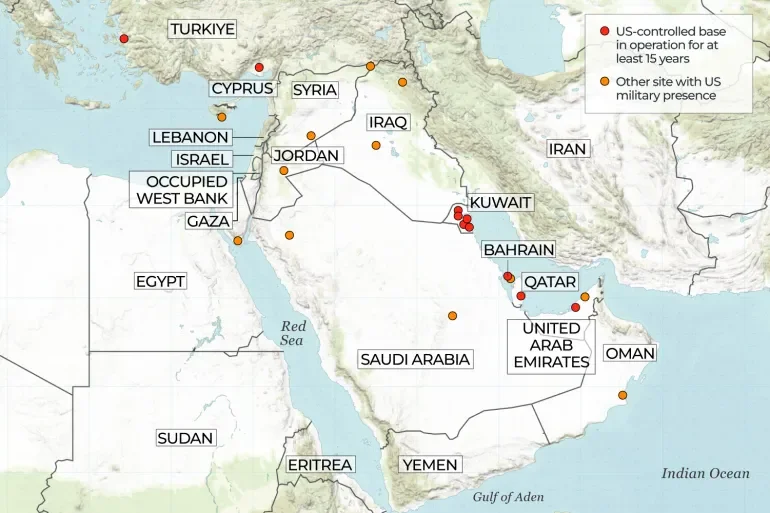
What are the Places in News (PIN) Associated with the US-Israel-Iran Conflict?
Critical Waterways and Maritime Chokepoints
- The Strait of Hormuz: It is a narrow chokepoint (55–95 km wide) and strategically crucial maritime passage between Iran to the north and Oman and the UAE to the south.
- The Strait of Hormuz links the oil-rich Persian Gulf (West) with the Gulf of Oman and the Arabian Sea (East). It acts as the only sea passage from the Persian Gulf to the open ocean.
| Click here to Read: Iran Temporarily Closes the Strait of Hormuz |
- The Persian Gulf: The Persian Gulf is a marginal sea of the Indian Ocean located in West Asia.
- It is an extension of the Gulf of Oman and connects to the Indian Ocean through the Strait of Hormuz.
- The gulf lies between the Arabian Peninsula to the southwest and Iran to the northeast.
- It is bordered by Iran, Oman, United Arab Emirates, Qatar, Saudi Arabia, Bahrain, Kuwait, and Iraq.
- To the northwest, it connects with the Shatt al-Arab delta, where the Euphrates River and Tigris River empty into the gulf.
- The Persian Gulf has a coastline of about 5,117 km, with Iran having the longest stretch.
- The region holds some of the world’s largest crude oil reserves, including the Al-Safaniya Oil Field, the world’s largest offshore oil field.
- Gulf of Oman: Also known as the Gulf of Makran, it is a western extension of the Arabian Sea and forms the main maritime gateway to the Persian Gulf from the Indian Ocean.
- It connects the Arabian Sea to the Strait of Hormuz, which leads into the Persian Gulf.
- The gulf is bordered by Iran and Pakistan to the north, Oman to the south, and the United Arab Emirates to the west.
- Important ports along its coast include Sohar, Al Khaburah, Muscat, and Sur in Oman, and Jask and Chabahar in Iran.
- The Red Sea: The Red Sea is a seawater inlet between Africa and Asia. It is bordered by Egypt, Saudi Arabia, Yemen, Sudan, Eritrea, and Djibouti.
- The sea connects to the Indian Ocean in the south through the Bab el-Mandeb Strait and the Gulf of Aden.
- In the north, it splits around the Sinai Peninsula into the Gulf of Aqaba and the Gulf of Suez, the latter leading to the Suez Canal.
- Geologically, the Red Sea occupies part of the Great Rift Valley (Afro-Arabian Rift system).
- Mediterranean Sea: The Mediterranean Sea is an intercontinental sea bordered by Europe to the north, Asia to the east, and Africa to the south.
- It connects to the Atlantic Ocean through the Strait of Gibraltar, to the Black Sea through the Dardanelles Strait, Sea of Marmara, and Bosporus Strait, and to the Red Sea via the Suez Canal.
- About 22 countries and one territory (Gibraltar) border the sea, including countries such as Turkey, Syria, Lebanon, Israel, and Cyprus.
- Indian Ocean: The broader oceanic region where India is strengthening its naval posture to secure its Sea Lines of Communication and maritime trade routes.
- A US submarine torpedoed and sank the Iranian frigate IRIS Dena about 40 nautical miles off Sri Lanka's southern coast near Galle in the Indian Ocean, bringing the US-Israel-Iran Conflict closer to the Indian Ocean Region (IOR)
The Iranian Plateau
- Tehran and Karaj: The Iranian capital and its adjacent suburb, targeted for their strategic leadership compounds and military command centers of the Islamic Revolutionary Guard Corps.
- Isfahan and Natanz: Located in central Iran. Isfahan houses major airbases and missile production facilities, while Natanz is the heavily fortified, underground center of Iran's uranium enrichment program.
- Bandar Imam Khomeini and Abadan: Located in the oil-rich Khuzestan province near the Persian Gulf, these cities host crucial petrochemical complexes and refineries that drive Iran's export economy.
- Shahroud Space Center: Situated in Semnan Province, this facility is central to the production and testing of ballistic missiles.
The Levant
- Lebanon:
- Beirut: The capital of Lebanon, with its southern suburbs serving as the primary stronghold and command center for Hezbollah.
- The Litani River: Located between the Mount Lebanon and Anti-Lebanon mountain ranges. It flows southwards before taking a sharp turn west to empty into the Mediterranean Sea north of the city of Tyre.
- The river serves as a critical geographical boundary. Following the 2006 Lebanon War, United Nations Security Council Resolution 1701 mandated that the area between the Blue Line (the border with Israel) and the Litani River must be free of any armed personnel other than the Lebanese Armed Forces and the United Nations Interim Force in Lebanon.
- Israel:
- Haifa: It is a major deep-water port city and industrial center, frequently targeted due to its strategic naval base and proximity to the Lebanese border.
- Tel Aviv: Located on the central Israeli coastal plain. It is the technological and financial capital, serving as the primary economic engine of the state.
- Ashkelon: Located on the coastal plain just north of the Gaza Strip. Due to its proximity to southern conflict zones, it is highly fortified but frequently falls within the range of short-range projectiles.
- Dimona: Iran threatens to hit the Dimona nuclear site if Israel and the US try to topple the regime.
- Geographical Alignment: Haifa, Tel Aviv, and Ashkelon are major coastal cities situated on the Levantine Basin of the Mediterranean Sea.
- The Golan Heights (Syria):
- Geographical Location: A strategic, rocky basaltic plateau situated in southwestern Syria.
- Crucial Boundaries: The Golan Heights is bounded by Mount Hermon to the north (separating it from Lebanon), the Yarmouk River to the south (separating it from Jordan), the Jordan River and Sea of Galilee to the west, and the seasonal Wadi al-Ruqqad to the east.
- Topographical Advantage: The plateau provides a commanding view over the Jordan Rift Valley and northern Israel to the west, and the Syrian capital of Damascus to the east.
- Historical Context: The Golan Heights were captured by Israel from Syria during the Six-Day War (1967).
- Syria attempted to recapture it during the Yom Kippur War (1973) but failed. In 1974, both countries signed the Israel–Syria Disengagement Agreement, which created a ceasefire and established the United Nations Disengagement Observer Force (UNDOF) to monitor the buffer zone.
- Israel formally annexed the territory in 1981, a move not recognised internationally, though the United States recognised Israeli sovereignty in 2019.
- The area remains divided by a UN-monitored demilitarised zone (Area of Separation) between Israeli and Syrian forces, while Syria continues to demand the return of the territory.
- Jordan: It has intercepted Iranian ballistic missiles and drones targeting its territory.
- Geographically positioned directly between Israel and Iran/Iraq, Jordan's primary objective is to protect its territorial integrity and prevent its airspace from becoming a theatre of war.
- Cyprus: Several strikes, believed to be from either Iran or its Lebanese proxy, Hezbollah, hit the island of Cyprus, a Eurasian island country located in the northeast Mediterranean Sea at the crossroads of Europe, Asia, and Africa.
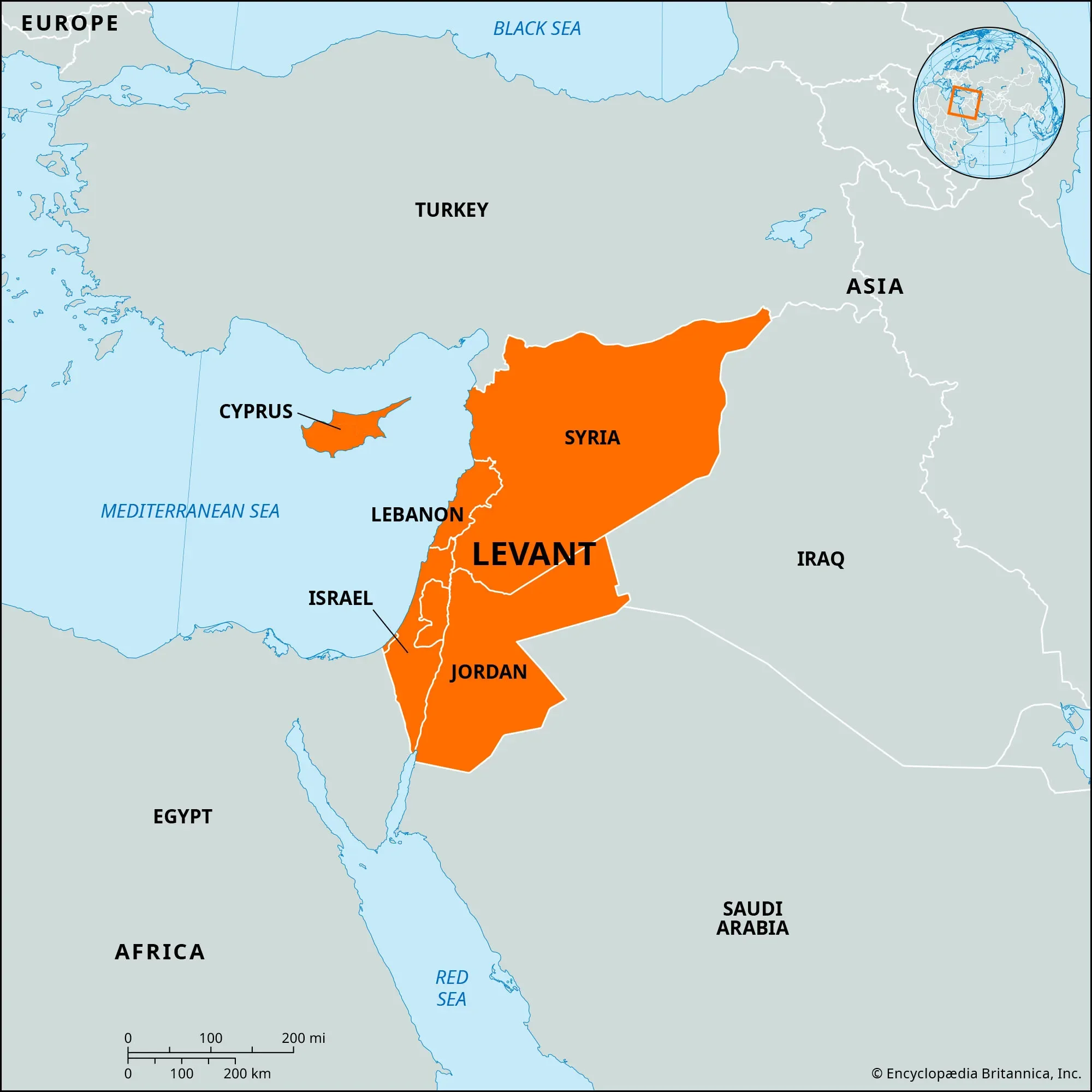
The Arabian Peninsula and Allied Bases
- Dubai and Abu Dhabi (United Arab Emirates): Global aviation and economic hubs whose infrastructures were targeted by Iranian retaliatory strikes to disrupt global transit and trade.
- Manama (Bahrain): The capital city hosting the Fifth Fleet of the United States Navy, making it a critical node for Western naval power projection in the region.
- Erbil (Iraq): The capital of the Kurdistan Region in northern Iraq. Erbil hosts a US military base at Erbil International Airport, which is frequently targeted by Iranian ballistic missiles due to the presence of Western military and intelligence personnel.
- Akrotiri and Dhekelia (Cyprus): Two Sovereign Base Areas controlled by the United Kingdom in the Eastern Mediterranean Sea, utilized for launching reconnaissance flights and intercepting regional projectiles.
- Turkey: North Atlantic Treaty Organization (NATO) air defence systems intercepted an Iranian ballistic missile heading toward Turkish airspace. Debris fell in Hatay province, near the US air base at Incirlik in southern Turkey.
|
Drishti Mains Question: The US–Israel–Iran conflict has transformed West Asia into a multi-front geopolitical theatre.” Examine the role of state and non-state actors in shaping this conflict. |
Frequently Asked Questions (FAQs)
1. Why is the Strait of Hormuz strategically important?
It connects thePersian Gulf to the Gulf of Oman and handles nearly 20% of global oil trade, making it one of the world’s most critical energy chokepoints.
2. What is the “Axis of Resistance”?
It refers to an informal coalition led byIran, including groups such as Hezbollah, the Houthis, and the Popular Mobilization Forces, opposing U.S. and Israeli influence in West Asia.
3. Why is the Golan Heights strategically significant?
TheGolan Heights provides a commanding military vantage point over northern Israel and southern Syria, making it crucial for regional security and surveillance.
4. How does the conflict affect global trade routes?
Attacks near theRed Sea and Gulf of Aden threaten shipping lanes that connect Europe and Asia, potentially disrupting global energy and commodity supply chains.
5. Why is the Persian Gulf vital for the global economy?
ThePersian Gulf holds some of the world’s largest crude oil reserves and is central to global energy exports and maritime trade.
UPSC Civil Services Examination, Previous Year Question (PYQ)
Prelims
Q1. Consider the following pairs: (2018)
|
|
Towns sometimes mentioned in news |
Country |
|
1. |
Aleppo |
Syria |
|
2. |
Kirkuk |
Yemen |
|
3. |
Mosul |
Palestine |
|
4. |
Mazar-i-sharif |
Afghanistan |
Which of the pairs given above are correctly matched?
(a) 1 and 2
(b) 1 and 4
(c) 2 and 3
(d) 3 and 4
Ans: (b)
Q2. Which one of the following countries of South-West Asia does not open out to the Mediterranean Sea? (2015)
(a) Syria
(b) Jordan
(c) Lebanon
(d) Israel
Ans: (b)
Q3. The area known as ‘Golan Heights’ sometimes appears in the news in the context of the events related to (2015)
(a) Central Asia
(b) Middle East
(c) South-East Asia
(d) Central Africa
Ans: (b)
Q4. Yom Kippur War was fought between which sides/ countries? (2008)
(a) Turkey and Greece
(b) Serbs and Croats
(c) Israel, and Arab countries led by Egypt and Syria
(d) Iran and Iraq
Ans: (c)
Mains
Q. “India’s relations with Israel have, of late, acquired a depth and diversity, which cannot be rolled back.” Discuss. (2018)



