


Rapid Fire
Iran Temporarily Closes the Strait of Hormuz
- 20 Feb 2026
- 2 min read
Iran recently announced a rare, temporary closure of parts of the Strait of Hormuz to conduct live-fire naval drills codenamed "Smart Control of the Strait of Hormuz."
- This move coincides with the second round of indirect nuclear negotiations between Iran and the United States in Geneva
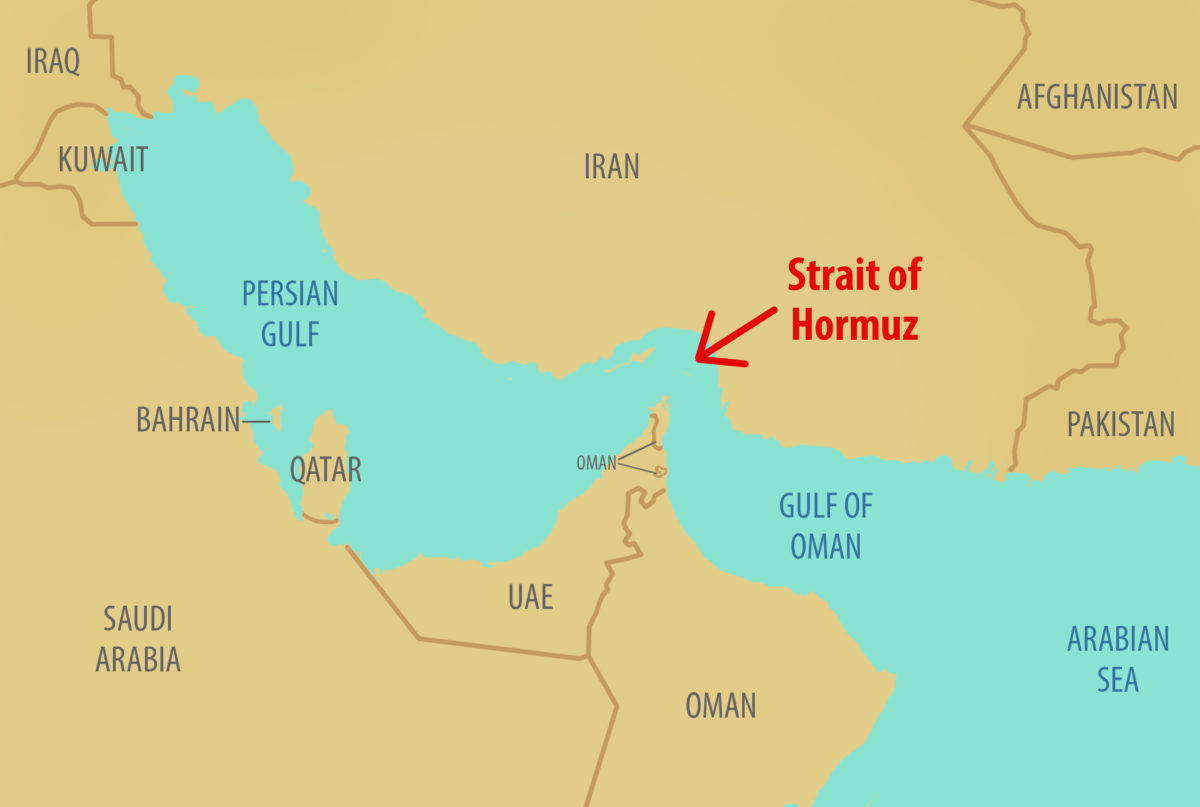
- Geographical Location: The Strait of Hormuz is a narrow chokepoint (55–95 km wide) and strategically crucial maritime passage between Iran to the north and Oman and the UAE to the south.
- It links the oil-rich Persian Gulf (West) with the Gulf of Oman and the Arabian Sea (East). It acts as the only sea passage from the Persian Gulf to the open ocean.
- Global Energy Security: It is a vital artery for international trade, with approximately 20% of the world's oil and gas supplies transiting through its narrow shipping lanes.
- Major exporters such as Saudi Arabia, Iran, Iraq, Kuwait, UAE, and Qatar depend on this route, with over 80% of the oil headed toward Asian markets, especially India, China, Japan, and South Korea.
- Impact on India: The economic stakes for India are immense, as nearly 50% of India’s crude oil and around 60% of its natural gas imports pass directly through this specific strait.
- Alternative Routes: While major producers like Saudi Arabia and the UAE have developed bypass pipelines, these alternative routes can only accommodate a fraction of the normal Hormuz transit volume.
- Historical Precedents: Iran has historically used the strait as leverage, threatening closure during the 1980s Iran-Iraq "Tanker War" and in response to the 2012 sanctions on Iran, though a full closure has never been fully executed.
| Read more: Strait of Hormuz |



