
Governance
WHO's GLASS 2025 Report on AMR
For Prelims: World Health Organization (WHO), Antibiotics, Fixed Dose Combinations (FDCs), Genomic Sequencing, Schedule H1.
For Mains: Key Insights from WHO’s GLASS 2025 Report: Antimicrobial Resistance, Implications, Actions Taken, and Future Measures to Combat AMR.
Why in News?
The World Health Organization (WHO) released its Global Antibiotic Resistance Surveillance Report (GLASS) 2025, highlighting that India has one of the highest antimicrobial resistance (AMR) rates globally, with 1 in 3 bacterial infections resistant to common antibiotics.
What are the Key Findings of the GLASS 2025 Report?
- Rising AMR Threat: Between 2018 and 2023, AMR increased in 40% of monitored pathogen-antibiotic combinations, notably against critical “Watch” antibiotics like carbapenems and fluoroquinolones.
- Geographically Uneven AMR: AMR was highest in Southeast Asia and the Eastern Mediterranean, followed by Africa, while Europe and the Western Pacific show lower rates.
- AMR Threat in India: In 2023, India, with one of the highest AMR rates, had 1 in 3 bacterial infections resistant to common antibiotics, with ICU infections by E. coli, K. pneumoniae, and S. aureus highly resistant.
What is Antimicrobial Resistance (AMR)?
- About: AMR is a phenomenon where bacteria, viruses, fungi, and parasites evolve over time and no longer respond to medicines (like antibiotics, antivirals, and antifungals) designed to kill them.
- AMR as a Health Threats:
- Pandemic-Level Risk: AMR makes infections harder to treat, increasing the difficulty of managing common illnesses and making medical procedures, such as surgeries, significantly riskier.
- According to the World Bank, by 2050, unchecked AMR could cause economic damage comparable to the 2008 financial crisis.
- Untreatable Infections: Common infections (like pneumonia, tuberculosis, and sepsis) could become fatal.
- Bacterial AMR was directly responsible for 1.27 million deaths (in 2019) and contributed to nearly five million deaths worldwide.
- End of Modern Medicine: Routine procedures (like surgery, chemotherapy, and organ transplants) become high-risk due to untreatable infections.
- Pandemic-Level Risk: AMR makes infections harder to treat, increasing the difficulty of managing common illnesses and making medical procedures, such as surgeries, significantly riskier.

What are Driving Factors Behind the Rise of Antimicrobial Resistance in India?
- Excessive Antibiotic Usage: Widespread antibiotics misuse in India—including over-the-counter sales, self-medication, and incomplete treatments—fuels AMR, with 59% of 2022 use from WHO’s “Watch” category for serious infections.
- Poor Healthcare System: Limited diagnostics, weak regulatory enforcement and unevenness across states, along with overcrowded hospitals and poor hygiene, fuel empirical antibiotic use and spread resistant pathogens.
- Stagnation in Antibiotic Development: Nafithromycin (2024) is the first new antibiotic in its class in over 30 years, as pharmaceutical companies prioritized profitable chronic disease treatments, limiting options against resistant pathogens.
- Pervasive Non-Human Applications: India is the world’s 4th-largest consumer of animal antimicrobials, with use in animal feed projected to rise 82% by 2030.
- Indiscriminate use in agriculture and aquaculture spreads resistant genes into the food chain worsening AMR.
- Environmental Contamination: Environmental contamination from pharma waste and untreated hospital effluents, combined with poor sewage and waste management, creates hotspots that promote the development and spread of AMR.
Initiatives Taken to Tackle AMR
India
- Drugs and Cosmetics Rules, 1945: It combats AMR by ensuring antibiotic quality via Schedule M (Good Manufacturing Practices) and promoting rational use through prescription-only rules under Schedules H and H1.
- ICMR's AMR Surveillance and Research Network: It tracks drug-resistant infections in 30 tertiary hospitals.
- National Action Plan on AMR 2017: It promotes a One Health approach involving multiple stakeholder ministries.
- National Programme on AMR containment 2012: AMR Surveillance Network strengthened through labs in State Medical Colleges.
- Antibiotic Stewardship Program (AMSP): It seeks to curb antibiotic misuse in hospitals/ICUs and has resulted in the ban of 40 inappropriate Fixed Dose Combinations (FDCs).
Global
- WHO Global Action Plan on AMR (2015): It is a strategic blueprint to combat AMR. It focuses on five objectives: raising awareness, strengthening surveillance and research, reducing infections, optimizing antimicrobial use, and ensuring sustainable investment in new medicines, diagnostics, and vaccines.
- World Antimicrobial Awareness Week (WAAW, 18 – 24 November): Held since 2015, WAAW is a global campaign to raise AMR awareness and promote best practices among the public, health workers, and policymakers.
- Global Antimicrobial Resistance and Use Surveillance System (GLASS): Launched in 2015, WHO's GLASS collects AMR data from humans, antimicrobial use, the food chain, and the environment to guide strategies.
What Measures can India Take to Curb the Rise of AMR?
- Mandate Hospital Stewardship: India can curb AMR by implementing AMSPs, auditing prescriptions, training healthcare staff, adopting digital prescribing tools, and encouraging rapid diagnostics.
- Scale up Indian Council of Medical Research’s AMR Surveillance Network, use genomic sequencing, and align with GLASS for standardized data on AMR.
- Curb Over-the-Counter Sales: Enforce Schedule H1 (restricts sale of certain antibiotics without prescription), track antibiotic sales digitally, inspect pharmacies, and run public awareness campaigns on self-medication risks.
- Strict implementations of Drugs and Cosmetics Rules, 1945: Ban antibiotics as growth promoters, set up agricultural antibiotic surveillance, and promote alternatives like probiotics.
- Control Pharmaceutical Pollution: Mandate advanced wastewater treatment, promote green pharmacy certification, set industry best practices, and fund effluent treatment research.
Conclusion
India's AMR crisis spans humans, animals, and environment; tackling it requires stewardship, regulation, environmental controls, surveillance, public awareness, and alignment with GLASS and One Health.
|
Drishti Mains Question: Q. "Antimicrobial Resistance (AMR) is not just a health issue but also an environmental and agricultural one." Elucidate with special reference to India. What robust regulatory measures are needed across these sectors? |
Frequently Asked Questions (FAQs)
1. What is the current AMR situation in India according to GLASS 2025?
India has one of the highest AMR rates globally, with one in three bacterial infections resistant to common antibiotics.
2. Which antibiotics are showing rising resistance in India?
Critical "Watch" antibiotics such as carbapenems and fluoroquinolones are increasingly ineffective against Gram-negative pathogens like E. coli, K. pneumoniae, and Acinetobacter spp.
3. What strategies has India implemented to tackle AMR?
National AMR action plans, hospital antibiotic stewardship programs, ICMR surveillance, and bans on inappropriate Fixed Dose Combinations (FDCs).
UPSC Civil Services Examination, Previous Year Questions (PYQ)
Prelims
Q. Which of the following are the reasons for the occurrence of multi-drug resistance in microbial pathogens in India? (2019)
- Genetic predisposition of some people
- Taking incorrect doses of antibiotics to cure diseases
- Using antibiotics in livestock farming
- Multiple chronic diseases in some people
Select the correct answer using the code given below.
(a) 1 and 2
(b) 2 and 3 only
(c) 1, 3 and 4
(d) 2, 3 and 4
Ans: (b)
Mains
Q. Can overuse and free availability of antibiotics without Doctor’s prescription, be contributors to the emergence of drug-resistant diseasesin India? What are the available mechanisms for monitoring and control? Critically discuss the various issues involved. (2014)
Governance
Efficient Water Management in Agriculture
For Prelims: National Water Awards, Jal Sanchay Jan Bhagidari (JSJB) Awards, Jal Sanchay Jan Bhagidari initiative, Artificial Intelligence, Internet of Things
For Mains: Groundwater depletion, salinity, and irrigation inefficiencies in India, Whole-of-Government and Whole-of-Society approach in water management
Why in News?
At the 6th National Water Awards, President Droupadi Murmu urged urgent innovation in agricultural water use, reminding the country that water is a sacred and finite national resource.
What are the National Water Awards?
- About: The National Water Awards launched in 2018, under the Department of Water Resources, River Development and Ganga Rejuvenation, Ministry of Jal Shakti.
- The awards were conceived as a platform to honour individuals, organisations, and states that demonstrate innovation, leadership, and dedication in the field of water conservation.
- Purpose: To support the national vision of “Jal Samridh Bharat” - a water-secure and water-enriched India.
- They promote water-use efficiency, recycling and reuse, and broader public awareness.
- The awards aim to strengthen people’s participation, build capacity and support the long-term sustainability of groundwater resources.
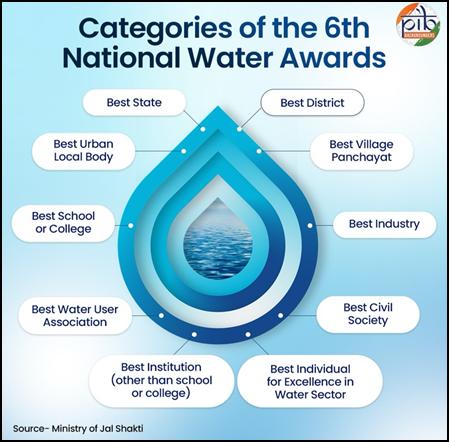
- 6th National Water Awards: The 6th National Water Awards 2024 selected 46 winners, including joint awardees, across 10 categories.
- Maharashtra topped the Best State category, followed by Gujarat and Haryana.
What is the Need for Efficient Water Use in Agriculture?
- Mismatch Between Irrigation and Cropping Cycles: Large irrigation projects often take years to complete and miss peak sowing periods, reducing their usefulness.
- Canal repairs and desilting often finish after the monsoon, reducing their usefulness for the kharif season, and ageing canal networks lose up to 40% of water due to seepage, leakage, theft and poor maintenance.
- Policies promoting paddy and sugarcane have increased pressure on stressed aquifers, while some states providing free electricity for agriculture has encouraged excessive borewell pumping, worsening groundwater depletion.
- The lack of integration of traditional water harvesting structures weakens groundwater recharge and increases dependence on pumping.
- Minimal Use of Real-Time Data and Technology: Most irrigation decisions are made without using weather forecasts, soil moisture data or crop water requirement models.
- Only a few states, such as Andhra Pradesh and Karnataka, have begun applying remote sensing or crop analytics.
- Limited Adoption of Micro-Irrigation: Drip and sprinkler systems cover only about 12% of India’s irrigated area.
- Small farmers struggle with high installation costs, inconsistent electricity supply and limited technical support, slowing the shift toward efficient water use.
- Waterlogging and Soil Salinity: Poor drainage planning has placed nearly 13 million hectares of irrigated land at risk of waterlogging.
- These conditions sharply reduce crop yields and damage soil health.
- Groundwater Extraction and Contamination: India extracts about 25% of the world’s groundwater. Since groundwater supports 62% of irrigation and a major share of rural and urban water needs, overexploited blocks with declining recharge demand urgent innovation.
- Excessive use of fertilisers and pesticides has led to nitrate contamination in 56% of districts. In coastal belts, over-extraction has caused salinity intrusion, reducing agricultural productivity and harming ecosystems.
- Climate Change and Erratic Monsoons: Since the monsoon provides nearly 60% of groundwater recharge, unpredictable rainfall patterns directly affect irrigation security.
- In 2023, a 5.6% rainfall shortfall across more than 200 districts pushed states like Tamil Nadu to over-extract deep aquifers.
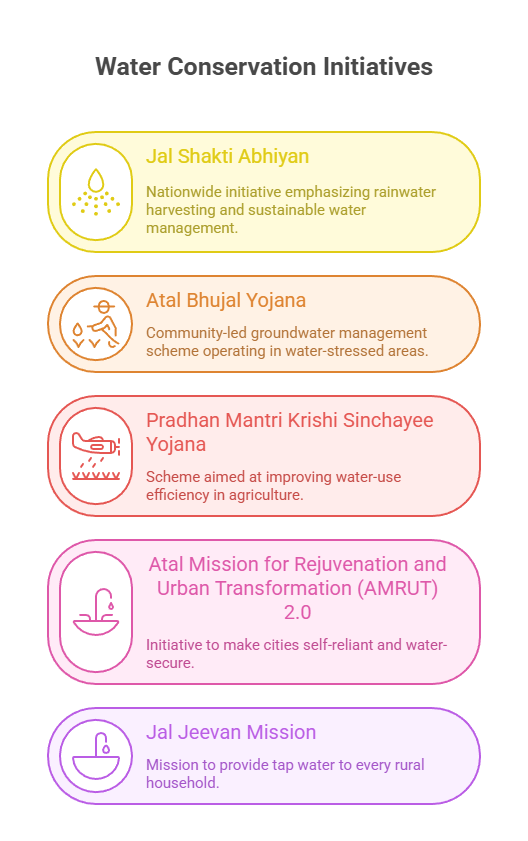
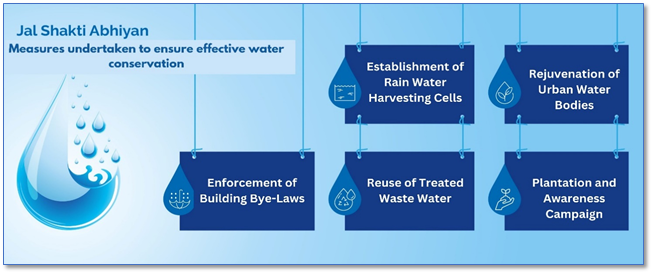
What Innovative Measures Can Support India’s Long-Term Water Security?
- AI-Driven Piped Irrigation Systems: Building on Microsoft’s Project FarmVibes, integrating piped irrigation with Artificial Intelligence, Internet of Things (IoT) sensors and satellite data enables precise, need-based water delivery to crops.
- This reduces transmission losses, prevents over-pumping and ensures equitable distribution, especially to tail-end farmers directly addressing India’s water loss and chronic groundwater stress.
- Digital Twin Models for Irrigation Command Areas: Creating virtual, real-time replicas of irrigation networks helps track canal releases, soil moisture, crop stress and groundwater levels.
- These models support dynamic water allocation and minimise mismatch between irrigation scheduling and crop cycles.
- Village-Level Water Budgeting: Preparing annual water budgets for villages and aligning cropping patterns with actual water availability reduces over-extraction and prevents cultivation of high-water crops in stressed regions.
- This approach strengthens local accountability and directly addresses aquifer depletion.
- Aquifer Recharge Using Modern and Traditional Systems: Combining recharge shafts, percolation tanks and treated wastewater with restored traditional structures like baolis and johads can rebuild depleted aquifers.
- This hybrid recharge strategy is essential for states that have crossed safe extraction limits.
- Smart Micro-Irrigation: Solar-powered drip and sprinkler systems linked to automated valves allow farmers to irrigate based on soil moisture and weather forecasts.
- This ensures major water savings, lowers energy use and reduces dependence on erratic electricity supplies.
Conclusion
India’s water future depends on how wisely and efficiently every drop is used. By combining technology, community leadership and sustainable farming practices, the country can rebuild its fragile water systems. With timely innovation and collective effort, long-term water security can shift from a looming challenge to an achievable reality.
|
Drishti Mains Question: Q. Examine the need for innovation in agricultural water use in the context of India’s groundwater depletion. |
Frequently Asked Questions (FAQs)
1. What is the purpose of the National Water Awards?
They recognise innovation and leadership in water conservation, supporting the vision of Jal Samridh Bharat and encouraging efficient water use, recharge and community participation.
2. What isJal Sanchay Jan Bhagidari initiative?
It promotes large-scale community-led groundwater recharge through the 3Cs model—Community, CSR and Cost—resulting in 35 lakh recharge structures, far exceeding targets.
3. Why does India need innovation in agricultural water use?
Because traditional irrigation causes 40% water loss, groundwater is over-extracted, micro-irrigation adoption is low and climate change is making monsoons unpredictable.
4. What targets were set under the JSJB initiative?
Districts were tasked with 10,000 recharge structures (3,000 in NE/Hilly areas), Municipal Corporations with 10,000, and Urban Local Bodies with at least 2,000 structures.
UPSC Civil Services Examination, Previous Year Questions (PYQs)
Prelims
Q1. With reference to ‘Water Credit’, consider the following statements: (2021)
- It puts microfinance tools to work in the water and sanitation sector.
- It is a global initiative launched under the aegis of the World Health Organization and the World Bank.
- It aims to enable the poor people to meet their water needs without depending on subsidies.
Which of the statements given above are correct?
(a) 1 and 2 only
(b) 2 and 3 only
(c) 1 and 3 only
(d) 1, 2 and 3
Ans: (c)
Q2. What are the benefits of implementing the ‘Integrated Watershed Development Programme’? (2014)
- Prevention of soil runoff
- Linking the country’s perennial rivers with seasonal rivers
- Rainwater harvesting and recharge of groundwater table
- Regeneration of natural vegetation
Select the correct answer using the code given below:
(a) 1 and 2 only
(b) 2, 3 and 4 only
(c) 1, 3 and 4 only
(d) 1, 2, 3 and 4
Ans: (c)
Mains
Q.1 What are the salient features of the Jal Shakti Abhiyan launched by the Government of India for water conservation and water security? (2020)
Q.2 Suggest measures to improve water storage and irrigation system to make its judicious use under the depleting scenario. (2020)
Facts for UPSC Mains
Towards Long-Term Clean-Air Strategy
Why in News?
The Supreme Court India told the Centre that enforcing a perennial Graded Response Action Plan (GRAP) across the year is not practical for the National Capital Region (NCR) air pollution and stressed the need for a long-term pollution strategy.
- At the same time, China’s offer to sahare its urban pollution control experience has renewed the discussion on lessons India could adopt from international best practices.
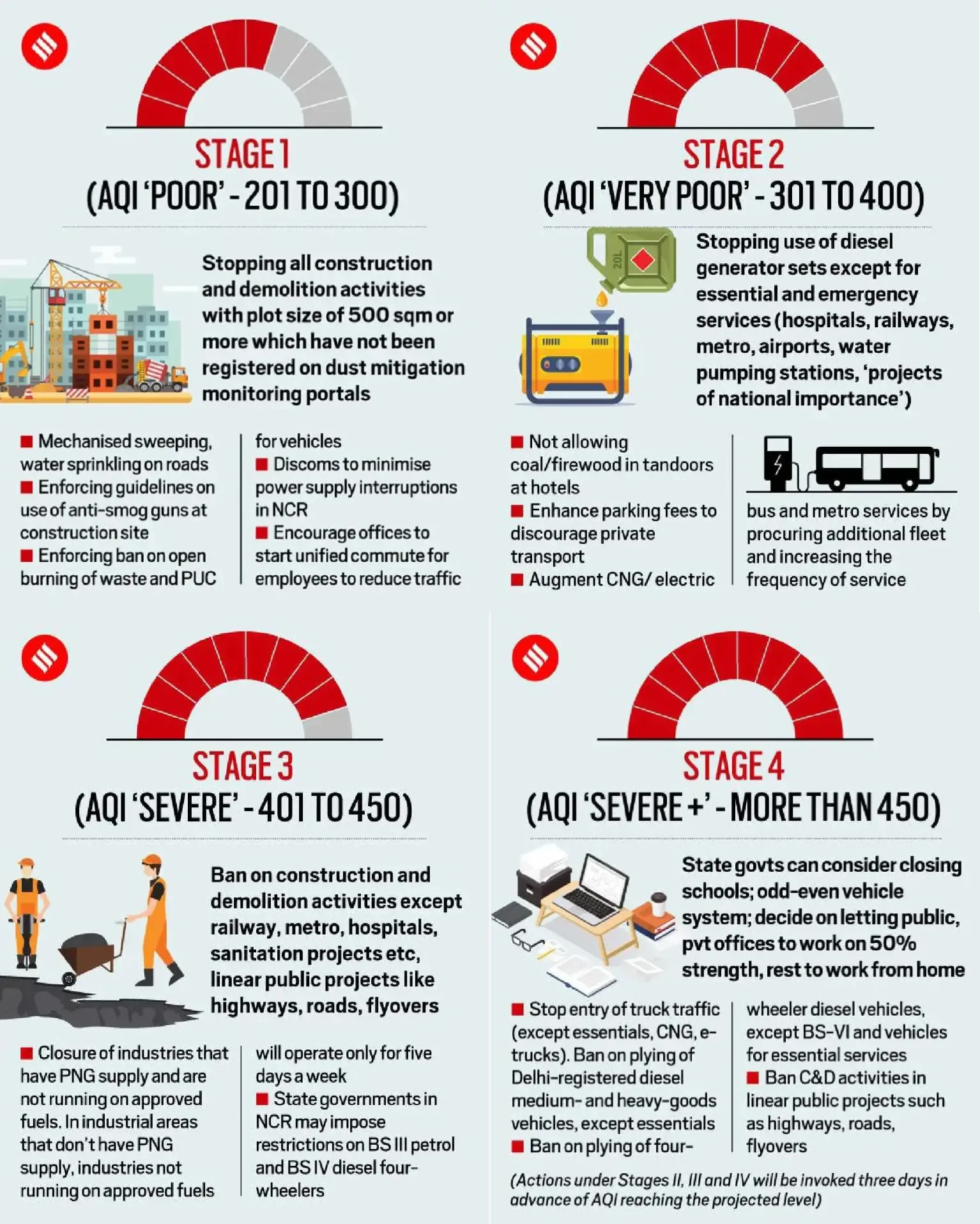
How Effective is GRAP in Tackling Delhi’s Air Pollution Crisis?
Short-Term Effectiveness
- GRAP offers a structured, graded system of interventions when Air Quality Index (AQI) breaches specific thresholds. This helps authorities react quickly when pollution spikes.
- Restrictions on construction, traffic, truck entry, and industrial activity temporarily lower particulate emissions during severe pollution episodes.
- By reducing physical classes, outdoor work, and vehicle movement during hazardous AQI levels, GRAP offers temporary relief to vulnerable groups.
Long-Term Limitations
- GRAP is reactive and episodic; it only activates after pollution crosses set limits, not before.
- It does not comprehensively prevent long-term sources like stubble burning, vehicular growth, or construction dust.
- Frequent bans on construction, restrictions on transport, and shutdowns disproportionately affect daily-wage earners, migrant labourers and small businesses, making perennial enforcement impractical.
- Pollution arriving from Punjab-Haryana stubble burning, dust storms, and neighbouring industrial belts cannot be solved by Delhi-centric restrictions.
- Once GRAP restrictions are lifted, pollution levels tend to rebound quickly because systemic reforms in transport, waste, agriculture, and industry remain incomplete.
Supreme Court’s Stance on Enforcing GRAP
- Rejection of Year-round GRAP: SC noted that a permanent GRAP would impose harsh restrictions that harm daily wagers, migrant workers, and construction labourers.
- It reiterated that short-term, reactive measures do not address the long-term structural causes of air pollution.
- SC Directions: The court directed the government to bring all key stakeholders (the Centre, States, farmers, and urban bodies) together to frame a long-term pollution strategy.
- It urged authorities to avoid knee-jerk actions that fail to address the structural causes of pollution and instead focus on gradual, sustainable measures that improve air quality without harming livelihoods.
| Click here to Read: Main Causes of Air Pollution in Delhi During Winters |
How did China Deal with its ‘Airpocalypse’?
- Airpocalypse in China: Rapid industrialisation with economic liberalisation in 1978 caused a sharp rise in emissions. By the 2000s, major cities were covered in thick smog, with PM2.5 emerging as the key pollutant.
- Public health worries, global scrutiny during the 2008 Beijing Olympics, and growing citizen pressure pushed the government to act, leading to major reforms that helped almost 80% of China see improved air quality since 2013.
- Experts say India today resembles China’s situation from the late 2000s.
- Steps Taken by China to Tackle Air Pollution:
- Strong Political Focus: Air quality was highlighted as a key concern in China’s 11th Five-Year Plan (2006–10).
- Cadre Evaluation System: Promotions of governors and mayors were tied to meeting pollution targets, creating strong accountability.
- Shutting Outdated Factories: Old and highly polluting units such as power plants, smelters, and paper mills were closed.
- Industrial Investment: China pushed for large-scale investment in pollution control equipment across industries.
- Push for Electric Mobility: Shenzhen electrified most of the buses by 2017, setting the pace for other major cities to expand electric mobility.
- Alongside this, China tightened vehicle emission norms, introduced strict controls on coal boilers, and shifted to cleaner residential heating systems, all of which helped cut urban pollution.
How is India’s Approach in Tackling Air Pollution Different from China’s?
- Trigger-based vs Continuous Action: India activates GRAP measures only after pollution spikes, while China works through steady, year-round enforcement.
- Regional vs Nationwide Coverage: India’s GRAP is NCR-focused, whereas China implements reforms across the entire country.
- Biomass Dependence vs Cleaner Fuels: Household biomass burning remains a major pollution source in India, unlike China, which had already reduced such emissions before major reforms.
- Federal vs Centralised Governance: India’s federal system creates overlapping authorities and slower coordination, with multiple agencies ( Central Pollution Control Board, National Green Tribunal, Commission for Air Quality Management) sometimes delaying or duplicating action, whereas China’s centralised model enables faster, top-down enforcement.
- Growth Trade-offs vs Strong Political Push: Pollution control in India is often seen as competing with economic growth goals, whereas China supported its air-cleaning efforts with strong political will and heavy financial investment.
What Long-term Clean Air Strategies can India Realistically Learn from China?
- Continuous action: Move beyond seasonal, trigger-based responses like GRAP and adopt year-round pollution management.
- Strengthen Accountability: Link air-quality targets to the performance of local and state authorities, similar to China’s cadre evaluation pressure.
- Tighten Industrial Emissions: Enforce stricter norms, modernise outdated units, and push industries to adopt cleaner technologies.
- Prioritise cleaner mobility in big cities through electric buses, better metro networks, and disincentives for private vehicles.
- Improve Household Energy Access: Reduce biomass burning in rural areas by making clean cooking fuels and electricity more affordable and reliable.
- Strong Monitoring Systems: Use better satellite tracking, real-time sensors, and strict reporting rules to prevent undercounting of emissions.
Conclusion
Delhi’s pollution crisis needs long-term, steady action rather than seasonal curbs like GRAP. India must adapt consistent enforcement, cleaner mobility, and strong accountability to its own needs while protecting livelihoods and ensuring a coordinated, year-round effort.
|
Drishti Mains Question: Q. Discuss the measures required to scale up clean mobility in Indian cities and the likely socio-economic impacts. |
Frequently Asked Questions (FAQs)
1. What is GRAP and why is it criticised?
GRAP (Graded Response Action Plan) is a trigger-based set of measures for the NCR activated at high AQI levels; it is criticised for being seasonal and reactive rather than part of a continuous, structural air quality strategy.
2. Why did the Supreme Court reject year-round GRAP?
The Court said a year-round GRAP would impose harsh, prolonged restrictions harming migrant labour, daily wagers and construction workers, and urged a multi-year plan that safeguards livelihoods while reducing pollution.
3. What concrete lessons does China offer for India?
Key lessons include continuous enforcement, strong accountability (linking official performance to air targets), large investments in pollution control, and rapid deployment of electric buses and cleaner heating systems.
UPSC Civil Services Examination Previous Year Question (PYQ)
Prelims
Q. In the cities of our country, which among the following atmospheric gases are normally considered in calculating the value of the Air Quality Index? (2016)
- Carbon dioxide
- Carbon monoxide
- Nitrogen dioxide
- Sulfur dioxide
- Methane
Select the correct answer using the code given below:
(a) 1, 2 and 3 only
(b) 2, 3 and 4 only
(c) 1, 4 and 5 only
(d) 1, 2, 3, 4 and 5
Ans: (b)
Q. Artificial way of causing rainfall to reduce air pollution makes use of
A. silver iodide and potassium iodide
B. silver nitrate and potassium iodide
C. silver iodide and potassium nitrate
D. silver nitrate and potassium chloride
Ans: A
Mains:
Q. Mumbai, Delhi and Kolkata are the three mega cities of the country, but the air pollution is a much more serious problem in Delhi as compared to the other two. Why is this so? (2015)
Q. Describe the key points of the revised Global Air Quality Guidelines (AQGs) recently released by the World Health Organisation (WHO). How are these different from its last update in 2005? What changes in India’s National Clean Air Programme are required to achieve revised standards? (2021)
Facts for UPSC Mains
UNESCO’s Neurotechnology Ethics Framework
Why in News?
UNESCO issued the first global normative framework on the ethics of neurotechnology, aiming to balance innovation with human rights by protecting the brain and neural data from misuse.
The move comes as neurotech rapidly expands, offering major medical benefits but also raising concerns about privacy, autonomy, and manipulation.
What is Neurotechnology?
- Definition: Neurotechnology refers to devices and procedures that access, assess, and act on neural systems, especially the human brain.
- It works by recording brain signals or stimulating specific brain regions to improve function, restore abilities, or enable brain–machine communication.
- Neurotechnology is used in medicine, assistive devices, research, wellness tech, and emerging commercial applications.
- Techniques Used in Neurotechnology:
- Neuroimaging: It involves tools such as EEG (Electroencephalography), and MRI (Magnetic Resonance Imaging), and other techniques that allow scientists and doctors to visualize brain activity in real-time, aiding in the diagnosis of conditions like tumors, strokes, or epilepsy.
- Neurostimulation: It uses electrical or magnetic methods such as DBS (Deep Brain Stimulation) and TMS (Transcranial Magnetic Stimulation) to activate specific brain regions, helping treat conditions like Parkinson’s disease by delivering targeted electrical impulses.
- Neuromodulation: It alters nerve activity by delivering targeted electrical, electromagnetic, or chemical stimulation to the nervous system, helping treat neurological and psychiatric disorders by correcting abnormal neural circuits.
- Neurofeedback: Training the brain by giving real-time feedback on its electrical activity.
- Applications of Neurotechnology:
- Medical and Clinical Applications
- Treatment of Movement Disorders:
- Deep Brain Stimulation (DBS) used to treat Parkinson’s disease, essential tremor and dystonia by delivering targeted electrical impulses.
- Stroke rehabilitation uses Transcranial Magnetic Stimulation (TMS) to promote neuroplasticity and support motor recovery.
- Mental and Neurological Health:
- Vagus Nerve Stimulation (VNS) used for Treatment-Resistant Depression (TRD).
- Responsive Neurostimulation (RNS) detects abnormal brain activity and prevents epileptic seizures.
- Spinal Cord Stimulation (SCS) blocks pain signals in chronic pain management.
- Sensory Restoration (Neuroprosthetics):
- Retinal Implants (Bionic Eyes) provide partial vision to patients with diseases like retinitis pigmentosa.
- Diagnosis and Monitoring (Neuroimaging):
- Functional Magnetic Resonance Imaging (fMRI), Positron Emission Tomography (PET), are used to detect tumors, strokes and brain injuries.
- Electroencephalography (EEG) and Magnetoencephalography (MEG) map brain activity and help diagnose epilepsy, sleep disorders and Alzheimer’s disease.
- Treatment of Movement Disorders:
- Assistive and Restorative Applications
- Brain–Computer Interface (BCI) systems enable mind-controlled prosthetics and exoskeletons for individuals with paralysis or limb loss. BCI-operated wheelchairs allow navigation through brain signals.
- Non-Medical, Commercial and Enhancement Applications (Developing Stage)
- Cognitive Enhancement & Wellness: Neurofeedback headsets provide real-time EEG-based feedback to improve focus or reduce stress.
- Consumer transcranial direct current stimulation (tDCS) are marketed for cognitive enhancement.
- Gaming and Entertainment: EEG headsets enable brain-controlled gaming, allowing actions in virtual reality through focus and mental commands.
- Neuromarketing: Uses EEG and fMRI to study subconscious consumer responses to advertisements, packaging and products.
- Military and Defence: Research on BCI systems aims to enhance soldier performance, speed up decision-making and enable drone or vehicle control using neural signals.
- Cognitive Enhancement & Wellness: Neurofeedback headsets provide real-time EEG-based feedback to improve focus or reduce stress.
- Medical and Clinical Applications
What are Key Risks Associated with Neurotechnology?
- Privacy Risks: Brain data can reveal a person’s thoughts, feelings, intentions, and mental patterns, making it extremely sensitive.
- Many users, especially children, may not fully understand or consent to the technology; it also threatens autonomy, cognitive freedom, and mental integrity.
- In some countries, such as China, BCI tools have been used in workplaces to track workers’ emotions, attention and fatigue, raising concerns about autonomy and potential pressure to comply.
- Manipulation Risks: Neurotech could be used to influence people’s decisions, behaviour, political choices, or buying habits.
- Emerging threats like brainjacking (where malicious actors hijack neural interfaces) further heighten concerns around control and manipulation.
- Children’s Vulnerability: Kids’ brains are still developing, so interference through neurotech can affect lifelong learning, personality, and emotional growth.
- Weak Regulation: Existing laws do not adequately protect “neurorights,” such as mental privacy, cognitive liberty, and mental integrity.
- Some progress has begun globally, Chile became the first country to protect mental integrity in its Constitution, and California passed a law in 2024 safeguarding citizens’ brain data.
- In India, there are currently no specific laws that explicitly address the protection of neuro rights in the context of advancing neurotechnology.
- There is very little research on how neurotechnology affects children, infants, or people with disabilities over long periods.
- Data Security Threats: Hackers, companies, or even governments could access or misuse neural data for surveillance or control.
What Steps are Needed to Promote the Ethical, Safe, and Responsible use of Neurotechnology?
As per UNESCO Recommendations on Neurotechnology Usage:
- Protect Human Rights and Mental Privacy: UNESCO recommends strict safeguards to protect human dignity, autonomy, freedom of thought, and mental privacy, ensuring all neural data is treated as highly sensitive and protected from misuse.
- Adopt Key Ethical Principles: The framework calls for beneficence, proportionality, non-maleficence, inclusivity, non-discrimination, accountability, transparency, trustworthiness, epistemic justice, and protection of future generations in all neurotechnology use.
- Ban Manipulative Use of Neural Data: UNESCO explicitly prohibits using neural or brain-related data for manipulative, deceptive, political, commercial, or medical purposes, including profiling or influencing behaviour.
- Strengthen Protections for Vulnerable Groups: It calls for special safeguards for children, older adults, and cognitively vulnerable populations, ensuring stronger consent standards and protection from exploitation.
- Define Neurotechnology and Neurodata Clearly: Countries are advised to adopt clear definitions of neurotechnology, neurodata, and related tools to support consistent regulation and ethical oversight.
- Implement Responsible Research and Innovation (RRI): UNESCO urges nations to embed a responsible research approach that anticipates risks, weighs benefits, and aligns neurotechnology development with ethical and societal values.
- The framework promotes open science by encouraging the free sharing of research data, methods, and tools, while balancing innovation with ethical safeguards.
Conclusion
Neurotechnology offers powerful medical and scientific breakthroughs, but its rapid growth demands strong ethical safeguards. UNESCO’s new framework provides a global foundation to protect mental privacy, prevent misuse, and guide responsible innovation. For India and the world, adopting these standards will be crucial to ensuring that neurotech advances human welfare without compromising human rights.
|
Drishti Mains Question: Q. Protecting mental privacy is the next frontier of fundamental rights. Analyse this statement in the context of neurorights. |
Frequently Asked Questions (FAQs)
1. What is neurotechnology?
Neurotechnology refers to tools and procedures that access, assess, or influence the brain and nervous system, including neuroimaging, neurostimulation, neuromodulation, and brain–computer interfaces.
2. What are Brain–Computer Interfaces (BCIs)?
BCIs are devices that record or interpret brain signals to enable communication or control; they can be invasive (implanted) or non-invasive (external headsets).
3. What are the key techniques used in neurotechnology?
The main techniques are neuroimaging, neurostimulation, neuromodulation, and neurofeedback.
4. What medical benefits does neurotechnology offer?
It enables diagnosis and treatment of conditions like paralysis, epilepsy, stroke, Parkinson’s disease, depression, and speech or movement loss through neural restoration.
5. What is UNESCO’s neurotechnology framework?
UNESCO’s framework is the first global ethical standard for neurotechnology that seeks to protect mental privacy, autonomy and neural data while promoting Responsible Research & Innovation (RRI).
UPSC Civil Services Examination, Previous Year Question (PYQ)
Prelims:
Q. With the present state of development, Artificial Intelligence can effectively do which of the following? (2020)
- Bring down electricity consumption in industrial units
- Create meaningful short stories and songs
- Disease diagnosis
- Text-to-Speech Conversion
- Wireless transmission of electrical energy
Select the correct answer using the code given below:
(a) 1, 2, 3 and 5 only
(b) 1, 3 and 4 only
(c) 2, 4 and 5 only
(d) 1, 2, 3, 4 and 5
Ans: (b)
Mains:
Q. What are the areas of prohibitive labour that can be sustainably managed by robots? Discuss the initiatives that can propel the research in premier research institutes for substantive and gainful innovation. (2015)
Facts for UPSC Mains
What Pakistan’s 27th Constitutional Amendment Means for India
The Pakistani President has signed the 27th Amendment to the Constitution, marking a historic move that undermines democracy and formally establishes military supremacy over the state.
- It signifies a more aggressive adversary for India, raising the risks of proxy warfare and nuclear escalation, demanding enhanced vigilance and strategic preparedness.
What are the Key Provisions of Pakistan's 27th Constitutional Amendment?
- Establishment of Chief of Defence Forces: It establishes a Chief of Defence Forces, a position permanently held by the Army Chief, granting him command over the Navy and Air Force.
- Legal Immunity for Five-Star Officers: It grants complete legal immunity to 5-star officers (Field Marshals), a protection that is more extensive than that available to the President or Prime Minister..
- Federal Constitutional Court: Federal Constitutional Court replaces the Supreme Court, taking over constitutional jurisdiction and limiting judicial checks on the military.
- Military Heads Foreign Policy: The Army now directs Pakistan’s diplomacy, meeting foreign leaders independently of civilian leadership.
What can be the Implications of Pakistan’s 27th Constitutional Amendment for India?
- Terrorism with Impunity: With increased military control, Pakistan’s terror groups like Jaish-e-Mohammed and Lashkar-e-Taiba may gain greater operational freedom, carrying out bolder attacks against India under state protection.
- The presence of Pakistani Army officers at terrorist funerals killed during Operation Sindoor raised concerns about the military’s involvement with terror groups.
- Risk of Military Escalation: The risk of another Kargil-like conflict rises, as a unified military command, without civilian oversight, may take risks, assuming India’s response will be limited due to nuclear threat concerns.
- Increased Nuclear Risk: Centralizing nuclear authority with a military commander instead of a civilian could make decision-making more opaque and potentially riskier. A regime hostile to India may showcase nukes and lower their use threshold to deter retaliation.
- Hardened Positions: Kashmir is the central pillar of the Pakistani military's ideology. Any possibility of a political solution or back-channel deal is now extinguished. The official state position will be permanently and irrevocably hardline.
- Weakened Diplomatic Engagement: With the military directing foreign policy, traditional diplomatic back-channels and Track-II dialogues, which often rely on civilian intermediaries, would become less effective or irrelevant. The room for negotiation and de-escalation would shrink dramatically.
What Should be India’s Response to Deal with Such Scenario?
- Intelligence Overhaul: Prioritise HUMINT (human intelligence) and TECHINT (technical intelligence) to monitor any key changes into Pakistan military decision-making.
- Strengthen satellite monitoring, and signal intelligence (SIGINT) to track its military activities and communications to prevent any Pakistani misadventure.
- Preemptive Disruption: India should refine its border management protocols to address cross-border terrorism, militant incursions, and refugee influxes through smart fencing, drones, and AI-based surveillance.
- It should also strengthen quick-response teams and improve coordination with local authorities for faster, more effective security operations.
- Rapid and Punitive Strike Capabilities: Showcase the capability for swift, high‑impact conventional strikes that stay below the nuclear threshold but cause significant damage. Fast‑track unified commands to ensure a quicker, coordinated response to Pakistan’s CDF structure.
- Nuclear Clarity: India should clearly spell out its nuclear red lines, stating that any tactical nuclear weapon (TNW) use against Indian forces will trigger a massive strategic retaliatory strike. This exposes Pakistan’s TNW strategy as a bluff and makes escalation unavoidable.
- Diplomatic Offensive: India must strengthen its narrative-building efforts, as geostrategists like Brahma Chellaney highlight that the country’s "sluggish response time" in shaping global discourse has cost it valuable diplomatic capital.
- During Operation Sindoor, for instance, India’s delayed rebuttal of US claims about brokering a ceasefire allowed that narrative to gain unnecessary traction.
Conclusion
Pakistan’s 27th Amendment entrenches military control and hardline policies, escalating nuclear and proxy warfare risks and formally making Pakistan a garrison state by law, not just by practice. For India, this necessitates sharper strategic vigilance, upgraded intelligence, sustained diplomatic pressure, and calibrated deterrence to protect national security.
|
Drishti Mains Question: Q. Discuss the strategic and diplomatic measures India should adopt to counter the threats posed by Pakistan’s military-dominated governance. |
Frequently Asked Questions (FAQs)
1. What is the 27th Amendment in Pakistan?
It is a constitutional change that formalizes military supremacy, centralizing power under the Army Chief and limiting civilian and judicial oversight.
2. How does the Amendment impact India’s security?
It increases risks of proxy terrorism, nuclear escalation, and conventional military confrontations, requiring India to strengthen strategic deterrence and intelligence capabilities.
3. Why does this amendment effectively end the possibility of a political solution on Kashmir?
The Pakistani military's ideology is fundamentally centered on an adversarial stance over Kashmir; formal state control by the army permanently hardens this position, extinguishing avenues for diplomatic compromise.
UPSC Civil Services Examination, Previous Year Question (PYQ)
Prelims
Q1. With reference to the Indus river system, of the following four rivers, three of them pour into one of them which joins the Indus directly. Among the following, which one is such a river that joins the Indus directly? (2021)
(a) Chenab
(b) Jhelum
(c) Ravi
(d) Sutlej
Ans: (d)
Mains
Q. "Increasing cross border terrorist attacks in India and growing interference in the internal affairs of several member states by Pakistan are not conducive for the future of SAARC (South Asian Association for Regional Cooperation)." Explain with suitable examples. (2016)
Q. Terrorist activities and mutual distrust have clouded India – Pakistan relations. To what extent the use of soft power like sports and cultural exchanges could help generate goodwill between the two countries? Discuss with suitable examples. (2015)
Important Facts For Prelims
Auroras, Solar Flares, CMEs & Solar Storms
Why in News?
Recent Solar storms and coronal mass ejections (CMEs) during the heightened Solar Cycle produced colourful lights in the Northern Hemisphere, visible far from the Arctic region.
What are Solar Cycle, Solar Flares, Coronal Mass Ejections (CMEs) and Solar Storms?
- Solar Cycle: The solar cycle is an approximately 11-year cycle of the Sun’s magnetic field, during which its magnetic activity rises and falls. The Sun undergoes a complete magnetic polarity flip every cycle, with its north and south poles switching places.
- This cycle influences solar surface activity, including sunspots (small, dark, and cooler areas on the sun surface), solar flares, and CMEs.
- The cycle is monitored by counting sunspots, starting with a solar minimum when activity is lowest and reaching a solar maximum when solar activity is at its peak.
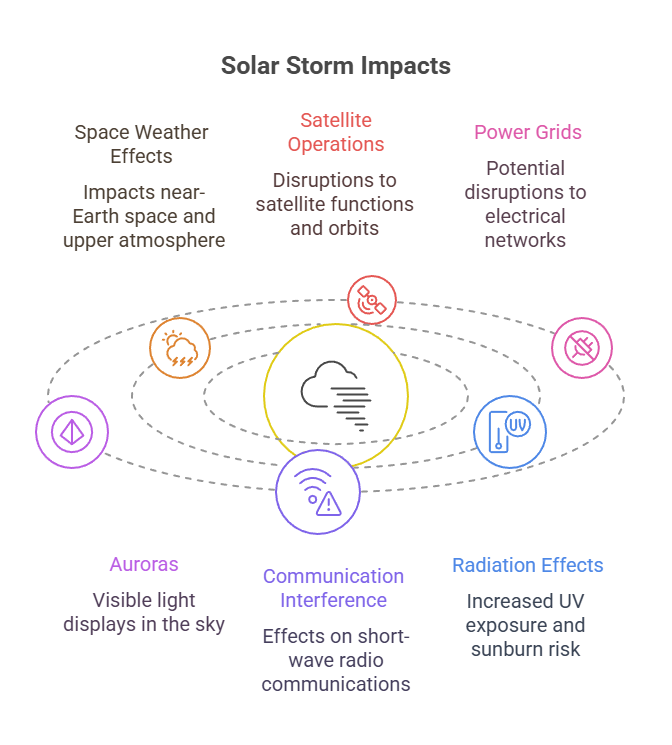
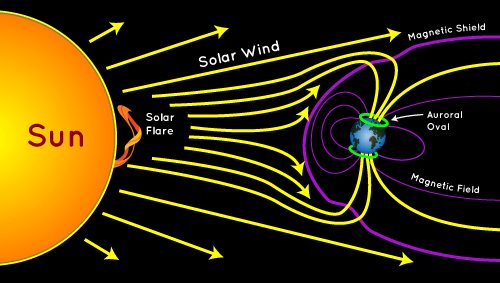
- Solar Flares: The magnetic field lines around sunspots often become tangled, cross, and realign, triggering powerful bursts of energy called solar flares. These flares release intense radiation into space, and strong flares can disrupt radio communications on Earth as well as pose risks to satellites and astronauts.
- Coronal Mass Ejections (CMEs): Solar flares are often accompanied by CMEs, which are massive expulsions of plasma and magnetic field from the Sun’s outermost layer - corona. CMEs are propelled into space at high speeds when the Sun’s magnetic field lines rapidly reorganize.
- Solar Storms: Solar storms (geomagnetic storms) occur when a large-scale magnetic eruption, often accompanied by a CME and solar flare, accelerates charged particles in the Sun’s atmosphere to high speeds.
- When a CME reaches Earth, it interacts with the magnetosphere, compressing and agitating it, and allowing energetic solar wind particles to enter the atmosphere near the poles.
- The Earth’s magnetosphere, generated by its magnetic fields, normally shields moons from these solar particles.
What are Auroras?
- About: An aurora is a captivating natural light display seen in the night sky, featuring shifting colours like blue, red, yellow, green, and orange. The green-yellow auroras are the most common, caused by ions colliding with oxygen atoms at lower altitudes.
- Formation of Auroras: Auroras occur when charged particles from the Sun, carried by the solar wind, reach Earth.
- Earth’s magnetic field directs these particles toward the poles, where they collide with gases like oxygen and nitrogen in the upper atmosphere.
- These collisions cause the gases to become excited and release light, which forms the colorful displays we see as auroras.
- The specific colors depend on the type of gas and the altitude of the collisions.
- Geographical Spread: Auroras are typically observed near the Arctic and Antarctic Circles (around 66.5° north and south). It is of two types:
- Aurora Borealis: The northern lights, called aurora borealis, occur near the North Pole and are typically visible in Norway, Sweden, Finland, Canada, and Alaska.
- Aurora Australis: The southern lights, called aurora australis, occur near the South Pole and are visible in Antarctica, southern Australia, New Zealand, and Chile.
- Prediction: The Kp-index (Planetary K-index) is a global 0–9 scale measuring disturbances in Earth’s magnetic field from the solar wind, indicating geomagnetic storm strength.
Frequently Asked Questions (FAQs)
1. What is a Solar Cycle?
A solar cycle is an 11-year cycle of the Sun’s magnetic activity, marked by fluctuating sunspots, solar flares, and CMEs, with magnetic poles swapping every cycle.
2. What are Coronal Mass Ejections (CMEs)?
CMEs are massive bursts of charged particles from the Sun, often accompanying solar flares, and can trigger geomagnetic storms on Earth.
3. How do Auroras form?
Auroras form when solar wind ions collide with oxygen and nitrogen in the ionosphere, producing colourful lights near the geomagnetic poles.
4. What are the impacts of Solar Storms on Earth?
Solar storms can affect power grids, satellites, radio communications, and air traffic, while also producing spectacular auroras visible far from the poles.
UPSC Civil Services Examination, Previous Year Question (PYQ)
Prelims
Q. If a major solar storm (solar flare) reaches the Earth, which of the following are the possible effects on the Earth? (2022)
- GPS and navigation systems could fail.
- Tsunamis could occur at equatorial regions.
- Power grids could be damaged.
- Intense auroras could occur over much of the Earth.
- Forest fires could take place over much of the planet.
- Orbits of the satellites could be disturbed.
- Shortwave radio communication of the aircraft flying over polar regions could be interrupted.
Select the correct answer using the code given below:
(a) 1, 2, 4 and 5 only
(b) 2, 3, 5, 6 and 7 only
(c) 1, 3, 4, 6 and 7 only
(d) 1, 2, 3, 4, 5, 6 and 7
Ans: (c)
Q. Electrically charged particles from space travelling at speeds of several hundred km/sec can severely harm living beings if they reach the surface of the Earth. What prevents them from reaching the surface of the Earth? (2012)
(a) The Earth's magnetic field diverts them towards its poles
(b) Ozone layer around the Earth reflects them back to outer space.
(c) Moisture in the upper layers of atmosphere prevents them from reaching the surface of the Earth
(d) None of the statements (a), (b) and (c) given above is correct
Ans: (a)
Mains
Q. What are aurora australis and aurora borealis? How are these triggered? (2024)
Rapid Fire
Birth Anniversary of Rani Lakshmibai
The Prime Minister of India has paid tributes to Rani Lakshmibai on her birth anniversary.
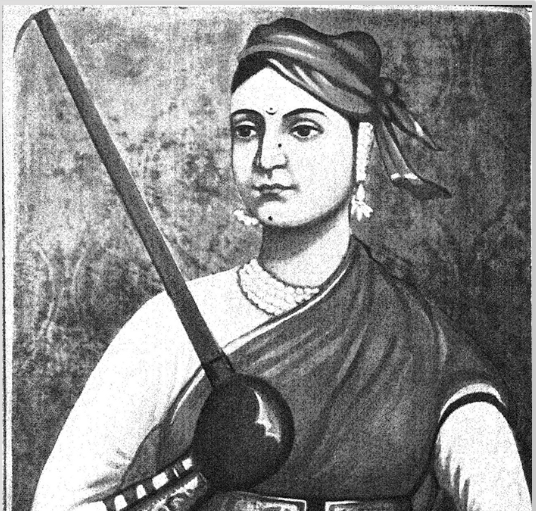
- Rani Lakshmibai: Also known as Manikarnika, she was the queen of the Maratha-ruled state of Jhansi and a leading figure of the Revolt of 1857.
- She is remembered as a symbol of bravery and resistance against British rule.
- Early Life: Born on 19th November 1828 in Varanasi as Manikarnika, she grew up learning horse riding, shooting and fencing.
- Her childhood companions included Nana Sahib and Tatya Tope, who later became key leaders in the 1857 uprising.
- Manikarnika as Rani of Jhansi: At 14, Manikarnika married Maharaja Gangadhar Rao and became Rani Lakshmibai.
- After losing her infant son, she and the Maharaja adopted Damodar Rao from the royal family to secure the succession.
- Role in the Struggle for Independence: After the Maharaja’s death in 1853, the British rejected Damodar Rao’s claim using the Doctrine of Lapse, which allowed annexation if a ruler died without a natural male heir.
- Rani Lakshmibai resisted fiercely, leading her troops in the 1857 revolt. She died in battle on 17th June 1858.
- Legacy: The Indian National Army, founded by Subhas Chandra Bose, established a women's regiment named after the Queen of Jhansi to honor the contributions of women in the freedom struggle.
| Read more: Rani Lakshmibai |
Rapid Fire
108th Birth Anniversary of Indira Gandhi
India paid tributes to former Prime Minister late Indira Gandhi at Shakti Sthal, her memorial site in New Delhi on the occasion of her 108th birth anniversary.
- Born on 19th November 1917 in Allahabad to Jawaharlal Nehru and Kamala Nehru, Indira Gandhi became India’s first and only woman Prime Minister, serving from 1966–1977 and again from 1980 -1984.
- Role in the Freedom Struggle: In her childhood, she founded the 'Bal Charkha Sangh' and in 1930, the 'Vanar Sena' of children to help the Congress party during the Non-Cooperation Movement.
-
She was imprisoned during the Quit India Movement in 1942.
-
-
-
Bank Nationalisation (1969): Indira Gandhi nationalised 14 major banks to expand credit access, support rural development and align banking with social welfare goals.
-
Green Revolution: During Fourth Five-Year Plan (1969–1974), she promoted High Yielding Variety seeds, fertiliser and irrigation subsidies aimed at boosting foodgrain production and helping India achieve food self-sufficiency.
-
1971 Bangladesh Liberation War: Led India’s decisive intervention supporting Mukti Bahini, resulting in the creation of Bangladesh and showcasing India’s geopolitical strength.
-
Abolition of Privy Purses (1971): Ended princely entitlements through the 26th Constitutional Amendment, advancing equality and removing feudal privileges.
-
Strengthening of India’s Nuclear Programme: Oversaw the development of India’s nuclear capability and scientific institutions, including the 1974 Pokhran-I test ("Smiling Buddha").
- Social Welfare Measures: Launched schemes under the “Garibi Hatao” campaign to target poverty alleviation and expand welfare access.
-
- National Emergency (1975–1977): Indira Gandhi’s tenure saw the imposition of National Emergency citing “internal disturbances,” during which civil liberties were suspended and the press was censored.
-
Publications: The Years of Challenge (1966–69), The Years of Endeavour (1969–72), India (1975) and Inde (1979).
-
Recognition: She was awarded the Bharat Ratna in 1972, along with honours such as the Mexican Academy Award for the Liberation of Bangladesh (1972), the FAO’s Second Annual Medal (1973).
-
She also received the Mother’s Award (US) and the Diploma of Honour from the Argentine Society for Animal Protection (1971), reflecting her international stature.
-

| Read more: Indira Gandhi Peace Prize |



