Agriculture
Climate-Resilient Agriculture in India
For Prelims: BioE3 Policy, Agroforestry, National Innovations in Climate Resilient Agriculture , National Mission for Sustainable Agriculture
For Mains: Climate-Resilient Agriculture, Climate-Resilient Agriculture as an adaptation strategy, Role of biotechnology and digital tools in agricultural resilience
Why in News?
There is renewed focus on Climate-Resilient Agriculture (CRA) as a strategic necessity for ensuring India’s food security, safeguarding farmer livelihoods, and achieving long-term sustainability.
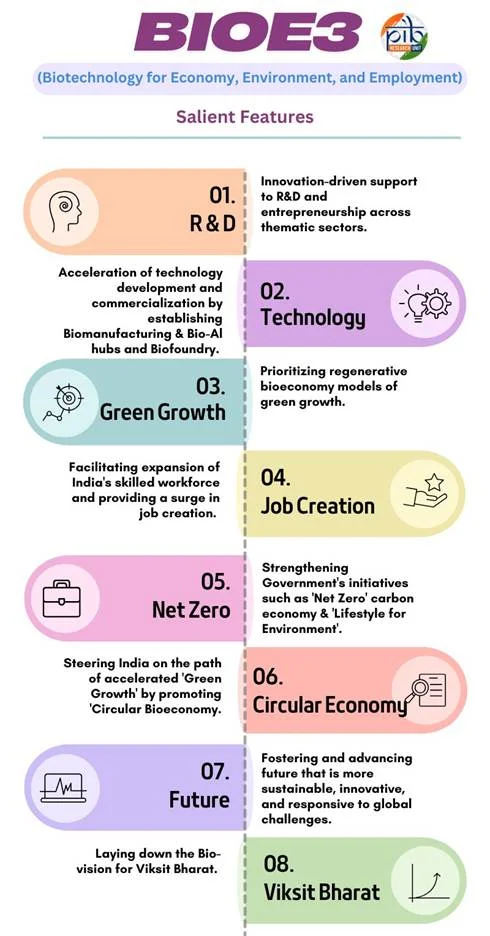
- Recent policy signals, including the BioE3 Policy (Biotechnology for Economy, Environment, and Employment) Policy, underscore the need for a coherent national CRA roadmap to scale climate-resilient agricultural solutions across the country.
Summary
- Climate-Resilient Agriculture (CRA) is essential for India to safeguard food security, farmer livelihoods, and environmental sustainability amid rising climate risks, especially given the country’s heavy dependence on rainfed agriculture and projected crop yield losses.
- While India has a strong CRA foundation through initiatives like NICRA, NMSA, digital agriculture missions, and the BioE3 framework, scaling requires a coherent national roadmap, global cooperation, digital inclusion, and strengthened soil–water management.
What is Climate-Resilient Agriculture?
- About: Climate-Resilient Agriculture (CRA) is an approach to farming that strengthens the ability of crops, soils, and farming systems to withstand climate variability and extreme events while sustaining productivity and environmental health.
- Objective: To ensure food security, stabilise farm incomes, reduce dependence on chemical inputs, and build long-term resilience of agriculture against climate change.
- Key Strategies of Climate-Resilient Agriculture:
- Climate-Adapted Crops: Planting varieties specifically bred to survive high temperatures, high salinity (salt), or prolonged droughts (e.g., "Scuba Rice" that can survive underwater for weeks), to reduce climate-induced crop losses.
- Water Stewardship: Adoption of drip irrigation, rainwater harvesting, and precision irrigation to optimise water use during dry periods.
- Soil Health Management: Practices like no-till farming, cover cropping, and organic inputs to prevent erosion, enhance moisture retention, and increase soil carbon.
- Agroforestry Systems: Integration of trees with crops and livestock to provide shade, wind protection, and improved microclimate.
- Crop Diversification: Moving away from monocropping to multiple crops, spreading climate risk and stabilising farm income.
- Early Warning and Digital Tools: Use of weather forecasts, AI-based advisories, and climate alerts to support timely sowing, harvesting, and risk management.
Why does India Need to Switch Towards Climate-Resilient Agriculture?
- Vulnerability of Agriculture: Indian agriculture is increasingly exposed to erratic monsoons, droughts, floods, heat stress, and declining soil and water health, making conventional farming practices less reliable under changing climate conditions.
- Dependence on Rainfed Farming: Nearly 51% of India’s net sown area is rainfed and produces about 40% of the country’s food, leaving a large share of agricultural output highly vulnerable to climate variability, demanding resilient farming systems.
- Threat to Food Security: Climate projections indicate that without adaptation measures, rainfed rice yields in India may decline by 47% (2080), while irrigated rice could fall by 5% (2080).
- Wheat yields are projected to drop by 40% (2080), and kharif maize by 23% (2080). Overall, climate change lowers crop productivity and nutritional quality, posing serious food security risks.
- India’s growing population places sustained pressure on agriculture to deliver higher, stable, and reliable productivity, even as climate stress intensifies.
- Limits of Conventional Farming: Input-intensive and chemical-heavy farming methods are increasingly unsustainable, as rising input costs and environmental degradation reduce their ability to cope with climate stress.
- Economic, Strategic and Environmental Imperatives: Climate-resilient agriculture can reduce India’s dependence on food imports, protect farmer livelihoods, and strengthen the country’s strategic autonomy in the food sector.
- By promoting efficient use of water, soil, and nutrients, climate-resilient agriculture supports productivity while reducing environmental damage and agricultural emissions.
What are the Key Government Initiatives to Promote Climate-Resilient Agriculture?
- National Innovations in Climate Resilient Agriculture: India acknowledged climate risks to agriculture early, with the launch of National Innovations in Climate Resilient Agriculture (NICRA) by Indian Council of Agricultural Research (ICAR) in 2011 to build resilience against climate variability.
- Under NICRA, location-specific climate-resilient practices such as zero-till wheat, direct-seeded rice, and climate-tolerant varieties have been demonstrated in over 448 climate-resilient villages.
- National Mission for Sustainable Agriculture (NMSA): The NMSA promotes climate adaptation through integrated farming, soil health management, water-use efficiency, and resource conservation, especially in rainfed areas.
- Paramparagat Krishi Vikash Yojana (PKVY) and Mission Organic Value Chain Development for North Eastern Region (MOVCDNER): Promote organic farming by supporting the use of biofertilizers,, biopesticides, and microbial soil enhancers, thereby reducing dependence on chemical inputs, improving soil health, and strengthening sustainable agricultural practices,
- Digital Agriculture: India’s digital agriculture ecosystem is expanding rapidly through initiatives like the Digital Agriculture Mission, AgriStack, NAMO Drone Didi and Kisan Drones, Kisan Suvidha App, and Soil Health Card.
- Alongside private projects such as Project FarmVibes, enabling data-driven farming decisions, though adoption remains uneven due to the digital divide.
- Biotechnology and Research: India has robust CRA research capacity supported by ICAR, the Department of Biotechnology (DBT), and the Indian Agricultural Research Institute (IARI), with increasing focus on climate-tolerant and genome-edited crops.
- BioE3: The BioE3 framework positions CRA as a priority area, signalling intent to scale biotechnology-led solutions through a national roadmap.
What are the Key Challenges in Scaling Climate-Resilient Agriculture in India?
- Low Adoption among Small and Marginal Farmers: Small and marginal farmers constitute ~86% of India’s farm holdings, yet many lack awareness, credit access, and affordability to adopt CRA technologies, limiting large-scale uptake.
- Quality and Trust Deficit in Bio-inputs: Despite rapid growth, quality inconsistencies in biofertilizers and biopesticides persist, undermining farmer trust.
- Slow Rollout of Climate-Resilient and Genome-Edited Seeds: Although climate-tolerant varieties exist (around 109 field and horticultural crop varieties developed by ICAR), their coverage on ground remains limited.
- For example, stress-tolerant crop varieties still account for only a small share of total seed adoption, while genome-edited crops are at an early regulatory stage.
- Digital Divide Limiting Precision Agriculture: Although 95.15% of villages have access to 3G/4G mobile connectivity, India faces a major digital literacy gap, with only 38% of households digitally literate, which constrains the effective use of AI-based advisories, digital platforms, and precision farming tools critical for CRA.
- Soil and Water Stress: Nearly 30% of India’s land is degraded, and over 60% of districts face groundwater stress, reducing the effectiveness of CRA interventions unless resource restoration accompanies technology adoption.
- Fragmented Policy and Institutional Coordination: CRA efforts are spread across agriculture, biotechnology, climate, and digital missions, leading to overlaps and gaps that slow scaling in the absence of a unified national CRA roadmap.
What Measures can Further Promote Climate-Resilient Agriculture in India?
- National CRA Roadmap: Develop a coherent national CRA roadmap under the BioE3 framework, aligning biotechnology, climate adaptation, and agricultural policy to deliver resilience at scale.
- It ensures policy coherence across ministries and states, enables scaling of proven technologies beyond pilot projects, balances productivity, sustainability, and farmer welfare, and positions Indian agriculture to withstand accelerating climate volatility while meeting future food demand.
- Global Cooperation and Best Practices: Partner with the Food and Agriculture Organization (FAO) for climate-smart technologies, crop breeding, and knowledge transfer (e.g., FAO’s Climate-Smart Agriculture programme).
- Adapt successful CRA models from the US, EU, and China to Indian conditions.
- The US advances CRA through the USDA Climate-Smart Agriculture and Forestry initiative with large-scale investments, the EU embeds CRA in the Green Deal and Farm to Fork Strategy to cut chemical use, China focuses on climate-tolerant crops, water-saving irrigation, and digital agriculture.
- Scale Digital and Precision Agriculture: Expand access to AI-based advisories, precision irrigation, and climate risk alerts while addressing the digital divide through digital literacy through Bhashini.
- Improve Soil and Water Management: Promote soil health restoration, micro-irrigation, water-saving technologies, and watershed development to address land degradation and groundwater stress.
Conclusion
CRA is essential for safeguarding India’s food security, farmer livelihoods, and ecological sustainability in the face of accelerating climate risks. A coherent national CRA roadmap aligned with SDG 2 (Zero Hunger), SDG 12 (Responsible Consumption and Production), and SDG 13 (Climate Action) can enable resilient, productive, and sustainable agriculture at scale.
|
Drishti Mains Question: Q. “Climate-Resilient Agriculture is central to India’s food security and climate adaptation strategy.” Discuss |
Frequently Asked Questions (FAQs)
- What is Climate-Resilient Agriculture (CRA)?
CRA is an approach that enhances the ability of crops and farming systems to withstand climate variability while sustaining productivity and environmental health. - Why is CRA crucial for India?
With 51% rainfed farmland and rising climate risks, CRA is vital to protect food security, stabilise farm incomes, and reduce vulnerability to extreme weather. - What are the key initiatives supporting CRA in India?
Major initiatives include NICRA, the National Mission for Sustainable Agriculture, the Digital Agriculture Mission, and policy support under the BioE3 framework.
UPSC Civil Services Examination, Previous Year Question (PYQ)
Prelims:
Q. In the context of India’s preparation for Climate -Smart Agriculture, consider the following statements:(2021)
- The ‘Climate-Smart Village’ approach in India is a part of a project led by the Climate Change, Agriculture and Food Security (CCAFS), an international research programme.
- The project of CCAFS is carried out under Consultative Group on International Agricultural Research (CGIAR) headquartered in France.
- The International Crops Research Institute for the Semi-Arid Tropics (ICRISAT) in India is one of the CGIAR’s research centres.
Which of the statements given above are correct?
(a) 1 and 2 only
(b) 2 and 3 only
(c) 1 and 3 only
(d) 1, 2 and 3
Ans: (d)
Q. With reference to the ‘Global Alliance for ClimateSmart Agriculture (GACSA)’, which of the following statements is/are correct? (2018)
- GACSA is an outcome of the Climate Summit held in Paris in 2015.
- Membership of GACSA does not create any binding obligations.
- India was instrumental in the creation of GACSA.
Select the correct answer using the code given below:
(a) 1 and 3 only
(b) 2 only
(c) 2 and 3 only
(d) 1, 2 and 3
Ans: (b)
Mains:
Q. How far is the Integrated Farming System (IFS) helpful in sustaining agricultural production? (2019)


Important Facts For Prelims
Amazonian Stingless Bees- World’s First Insects with Legal Rights
Why in News?
The Satipo Municipality (Peru) has adopted the Declaration of Rights for Native Stingless Bees (Tribe Meliponini) through a municipal ordinance, granting legal rights to Amazonian stingless bees, to preserve Peru’s biocultural heritage.
- This establishes the first legal recognition of insect rights globally, strengthening biocultural conservation and nature-rights governance models.
What are Amazonian Stingless Bees?
- About: They are native stingless pollinators of the Amazon rainforest, traditionally protected and cultivated by Indigenous communities.
- They are among the oldest bee species on Earth, responsible for pollinating over 80% of Amazonian flora.
- They are not completely devoid of a stinger; rather they possess a vestigial stinger that is too small to be used for defense. Hence, they defend their hives by biting or secreting irritating resins.

- Habitat: They are native to tropical and subtropical regions (Found globally in warmer climates), with the highest diversity in the Amazon Rainforest.
- Behavior: Highly social (eusocial) insects living in perennial colonies, often nesting in hollow tree trunks.
- Cultural Value: Stingless bees are an essential part of the culture of Indigenous Asháninka and Kukama-Kukamiria peoples.
- Key Ecological & Economic Importance:
- Biodiversity Support: They help sustain rainforest biodiversity and ecosystem stability and pollinate key global crops like coffee, cocoa, avocados and blueberries.
- Meliponiculture: The traditional practice of breeding and rearing stingless bees for honey and medicinal use is known as ‘meliponiculture’, widely followed by Indigenous communities in tropical regions.
- Medicinal Uses: Their honey is used as traditional Indigenous medicine, popularly known as the “miracle liquid,” and has proven anti-inflammatory, antibacterial and antiviral properties, including use in treating eye ailments such as cataracts.
- It has higher moisture content, is slightly acidic, non-gooey, and has a sweet–sour taste, making it distinctly different from commercially sold honey.
- Threats: They face growing threats from deforestation, illegal logging, agriculture expansion, cattle grazing, wildfires and rising temperatures, leading to habitat loss and forced migration to higher elevations.
What is the Declaration of Rights for Native Stingless Bees?
- It is a landmark Rights of Nature–based legal framework integrated into local law by Satipo Municipality, setting a global precedent for insect conservation.
- Rights Recognised include:
- Right to exist and flourish
- Right to maintain healthy populations
- Right to a pollution-free habitat
- Right to ecologically stable climatic conditions
- Right to regenerate natural cycles
- Right to legal representation in cases of harm or threat
- Since stingless bees cannot speak in court, human ‘guardians’, such as Indigenous leaders or experts, can represent them and sue polluters on their behalf.
Indian Parallel (Recognition of Nature as a Rights Holder in India)
- Animal Welfare Board of India vs. A. Nagaraja (2014): In this judgment, the Supreme Court interpreted the word 'life' under Article 21 expansively to include the protection of animal life. The Court recognized that animals have a right to live with intrinsic worth, dignity, and freedom from unnecessary pain and suffering, thereby laying the constitutional foundation for animal welfare in India.
- Mohd. Salim vs State of Uttarakhand (2017): The Uttarakhand High Court granted legal personhood to the rivers Ganga and Yamuna, declaring them as living entities with legal rights and duties, inspired by New Zealand’s Whanganui River case; however, this decision was later stayed by the Supreme Court, putting the legal personhood status on hold.
Frequently Asked Questions (FAQs)
- What are Amazonian stingless bees?
They are ancient, stingless pollinators native to the Amazon rainforest, forming one of the oldest bee groups on Earth and playing a crucial role in maintaining tropical forest ecosystems. - Why are stingless bees ecologically important?
They pollinate over 80% of Amazonian flora, supporting rainforest regeneration and key crops such as coffee, cocoa, avocados and blueberries. - What are the main threats to stingless bees?
They face deforestation, illegal logging, agriculture expansion, wildfires, rising temperatures and pesticide exposure, leading to habitat loss and population decline. - Why is this move globally significant?
It sets a global precedent under the Rights of Nature framework, extending legal recognition and protection to insects for the first time.
UPSC Civil Services Examination, Previous Year Questions (PYQs)
Prelims
Q. Which of the following organisms perform a waggle dance for others of their kin to indicate the direction and the distance to a source of their food? (2023)
(a) Butterflies
(b) Dragonflies
(c) Honey Bees
(d) Wasps
Q. Consider the following: (2024)
- Butterflies
- Fish
- Frogs
How many of the above have poisonous species among them?
(a) Only one
(b) Only two
(c) All three
(d) None


Important Facts For Prelims
BEE Standards and Labelling Programme
Why in News?
The Bureau of Energy Efficiency (BEE) has tightened India’s energy efficiency regime by making star labelling mandatory for a wider range of appliances, thereby expanding compulsory energy performance disclosure under the Standards and Labelling (S&L) Programme.
What is the BEE’s Standards and Labelling (S&L) Programme?
- Background: Launched in 2006 under the Energy Conservation Act, 2001 by the Ministry of Power, Government of India, and implemented by the BEE.
- Objective: S&L Programme enables informed consumer choice, reduces electricity consumption and energy bills, and encourages manufacturers to adopt energy-efficient technologies.
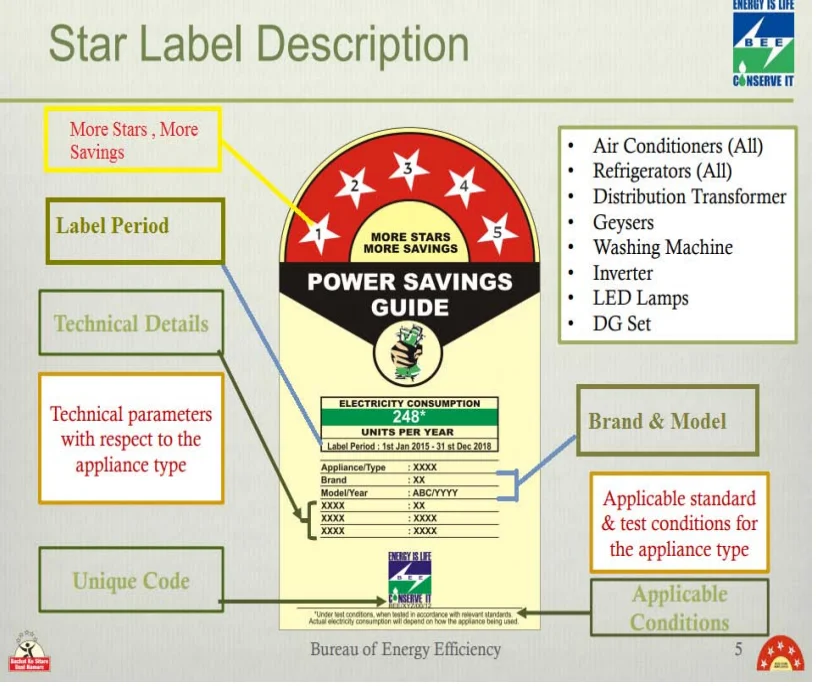
- Star Labelling System: A key feature of the programme is the star labelling system, which rates appliances on a scale of one to five stars based on their energy efficiency.
- Five stars indicating the most energy-efficient product within a given category, making efficiency comparison simple and visual for consumers.
- Under the programme, appliances are tested against prescribed Indian Standards and assigned star ratings based on their energy consumption and performance parameters, with labels displaying essential information such as star rating, annual energy use, product category, and brand.
- Coverage: The programme covers a wide range of household appliances and industrial equipment, with some products brought under mandatory star labelling and others under voluntary labelling, depending on government notifications and market readiness.
- Labels under the S&L Programme:
- Comparative Label: Shows 1–5 star ratings to compare energy efficiency among models of the same product category. It helps consumers easily identify the most energy-efficient appliance.
- Endorsement Label: Certifies products that meet minimum energy performance standards notified by BEE. It assures compliance with efficiency norms rather than comparison.
- Dynamic Nature: To keep pace with technological advancements, BEE periodically revises star rating criteria, ensuring that efficiency benchmarks remain relevant and that manufacturers continuously improve product efficiency.
- Significance: It plays a crucial role in curbing national electricity demand, lowering consumer power bills, and cutting carbon emissions. Notably, Standards and Labelling (S&L) programmes have already reduced around 60 million tonnes of CO₂ annually, while also strengthening India’s long-term energy security.
India’s Energy Efficiency Initiatives
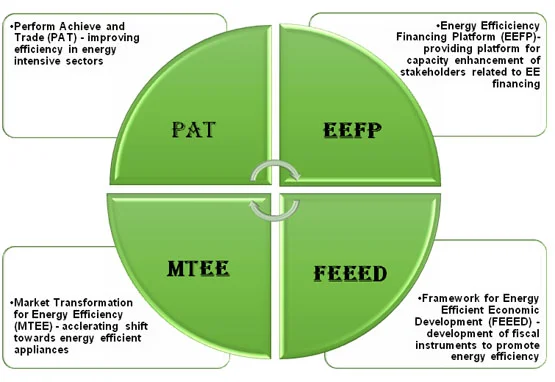
- National Mission for Enhanced Energy Efficiency (NMEEE): It is one of the eight national missions under the National Action Plan on Climate Change (NAPCC). NMEEE consist of four initiatives to enhance energy efficiency in energy intensive industries which are as follows:
- Perform, Achieve and Trade (PAT) Scheme: Improves efficiency in energy-intensive industries through mandatory targets and tradable Energy Saving Certificates (ESCerts).
- Energy Efficiency Financing Platform (EEFP): Facilitates access to finance for energy efficiency projects by connecting project developers with financial institutions.
- Market Transformation for Energy Efficiency (MTEE): Encourages uptake of super-efficient technologies through policy and financial interventions.
- Framework for Energy Efficient Economic Development (FEEED): It provides partial credit guarantees to cover default risk on energy efficiency loans, with guarantees for up to 5 years and 40–75% of the loan amount or Rs 15 crore per project.
- Energy Conservation Building Code (ECBC), 2017: Sets minimum energy performance standards for commercial buildings to curb energy use.
- Unnat Jyoti by Affordable LEDs for All (UJALA): Accelerates adoption of LED lighting and efficient fans to reduce household bills and peak power demand.
- Bachat Lamp Yojna (BLY): The programme was developed for replacement of inefficient bulbs with Compact Fluorescent Lamps (CFLs).
- Street Lighting National Programme: Its objectives include reducing energy consumption, lowering operational costs for municipalities, and fostering a market transformation towards energy-efficient appliances.
- BEE State Energy Efficiency Index: It assesses and compares the energy efficiency performance of Indian States and Union Territories, enabling data-driven monitoring, healthy inter-state competition, and identification of best practices and policy gaps across key sectors.
- States are classified into Front Runners (>60%), Achievers (50-60%), Contenders (30-50%), and Aspirants (<30%), reflecting their relative progress.
Bureau of Energy Efficiency (BEE)
- The BEE under the Ministry of Power, was established in 2002 under the Energy Conservation Act, 2001
- BEE’s vision is to drive accelerated and sustained adoption of energy efficiency across sectors, contributing to India’s sustainable development.
- The BEE performs key regulatory functions that include developing minimum energy performance standards and star labelling for appliances, formulating Energy Conservation Building Codes, and prescribing energy consumption norms for designated consumers.
- It also certifies and accredits Energy Managers and Energy Auditors, defines the manner and periodicity of mandatory energy audits for tracking energy use and implementation of audit recommendations.
Frequently Asked Questions (FAQs)
- What is the Standards and Labelling (S&L) Programme?
It is an energy efficiency programme launched in 2006 under the Energy Conservation Act, 2001 to rate appliances on a 1–5 star scale based on energy performance. - Who implements the S&L Programme in India?
The programme is implemented by the Bureau of Energy Efficiency under the Ministry of Power. - Why is expansion of mandatory star labelling significant?
It improves transparency, reduces electricity demand, lowers consumer bills, and has already cut about 60 million tonnes of CO₂ annually. - What is the National Mission for Enhanced Energy Efficiency (NMEEE)?
NMEEE is a mission under NAPCC focusing on industrial and market-based energy efficiency through PAT, MTEE, EEFP, and FEEED. - What is the purpose of the State Energy Efficiency Index (SEEI)?
It assesses and compares energy efficiency performance of States and UTs, encouraging data-driven governance and healthy competition.
UPSC Civil Services Examination, Previous Year Question:
Prelims
Q. With reference to street lighting, how do sodium lamps differ from LED lamps? ( 2021)
- Sodium lamps produce light at 360 degrees but it is not so in the case of LED lamps.
- As street lights, sodium lamps have a longer lifespan than LED lamps.
- The spectrum of visible light from sodium lamps is almost monochromatic, while LED lamps offer significant colour advantages in street lighting.
Select the correct answer using the code given below.
(a) 3 only
(b) 2 only
(c) 1 and 3 only
(d) 1, 2 and 3
Ans: (c)
Q. On which of the following can you find the Bureau of Energy Efficiency Star Label? (2016)
- Ceiling fans
- Electric geysers
- Tubular fluorescent lamps
Select the correct answer using the code given below:
(a) 1 and 2 only
(b) 3 only
(c) 2 and 3 only
(d) 1, 2 and 3
Ans: (d)


Rapid Fire
Bulgaria 21st Member of the Eurozone
Bulgaria officially adopted the euro, becoming the 21st member of the Eurozone, nearly 20 years after joining the European Union, a move with major economic, political, and geopolitical implications.
- Bulgaria gave up the lev, in circulation since the late 19th century, marking a full transition to the euro.
- Rationale: Euro adoption aims to boost trade, improve market transparency, and attract investment in Bulgaria (EU’s poorest member state).
- It will deepen Bulgaria’s integration with the European Union, reinforcing its Western alignment and reducing Russian economic influence.
- Eurozone: The Maastricht Treaty (1992) (also known as the Treaty on European Union) laid the foundation for the European Union by paving the way for a common Economic and Monetary Union, the adoption of the euro as a single legal tender, the creation of a unified central banking system through the European Central Bank (ECB), and the establishment of a common economic region (Eurozone).
- The Eurozone comprises European Union Member States that have adopted the euro as their common currency.
- The eurozone was established with the official launch of the euro on 1st January 1999, in 11 countries. With Croatia joining in 2023 and Bulgaria’s adoption, the euro is now used by over 350 million people across Europe.
European Union, Eurozone, and Schengen Area
|
Aspect |
European Union |
Eurozone |
Schengen Area |
|
About |
A political and economic union of European countries. |
A monetary union of EU countries using the euro. |
A European visa free travel zone, with no internal border checks. |
|
Purpose |
Economic integration, common policies, political cooperation. |
Common currency and unified monetary policy. |
Free movement of people across borders. |
|
Establishment Treaty/Agreement |
Maastricht Treaty (1992) |
Maastricht Treaty(1992) |
Schengen Agreement (1985) |
|
Number of countries (as of January 2026) |
27 countries. |
21 countries. EU countries Sweden, Poland, the Czech Republic, Hungary, Romania, and Denmark have not yet adopted the euro. |
29 countries: 25 EU Member States (except Ireland, Cyprus) and 4 non-EU countries (Iceland, Norway, Switzerland and Liechtenstein). |
|
Note: Countries like Andorra, Monaco, Vatican City, and San Marino use the euro through agreements with the EU, while Kosovo and Montenegro use it unilaterally, none of these are regarded as eurozone members. |
|||
Bulgaria
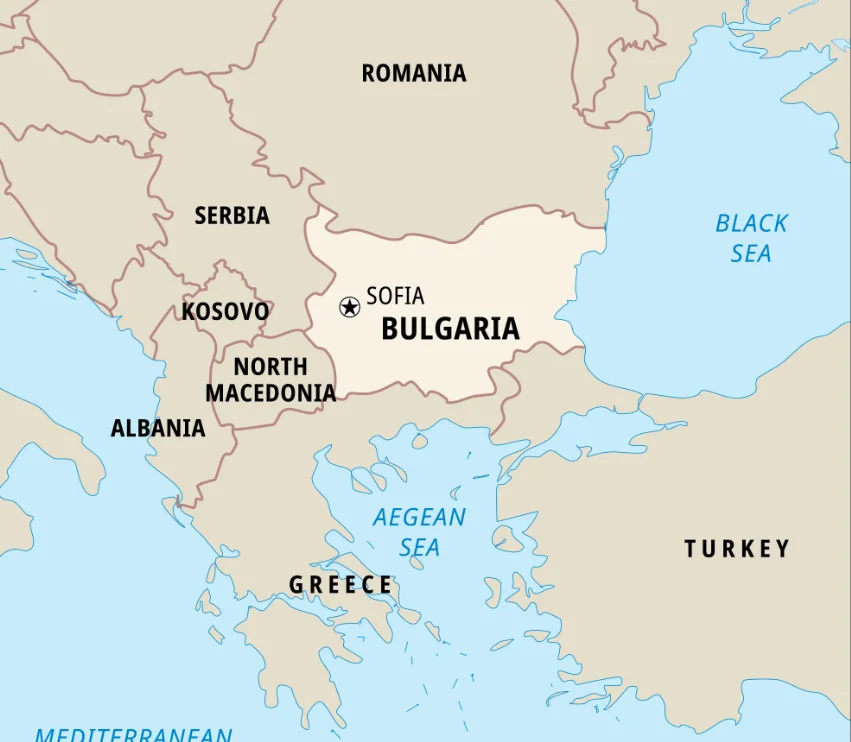
- Bulgaria is located in southeastern Europe on the Balkan Peninsula. It shares land borders with Romania (north), Serbia and North Macedonia (west), Greece and Türkiye (south), and has a coastline along the Black Sea (east).
- Bulgaria is a member of North Atlantic Treaty Organization (NATO) and the European Union, with the EU as its main trading partner, and Sofia serving as its political and economic capital.
| Read more: Romania and Bulgaria Join Schengen Zone |


Rapid Fire
Government Notifies Market Access Guidelines under EPM
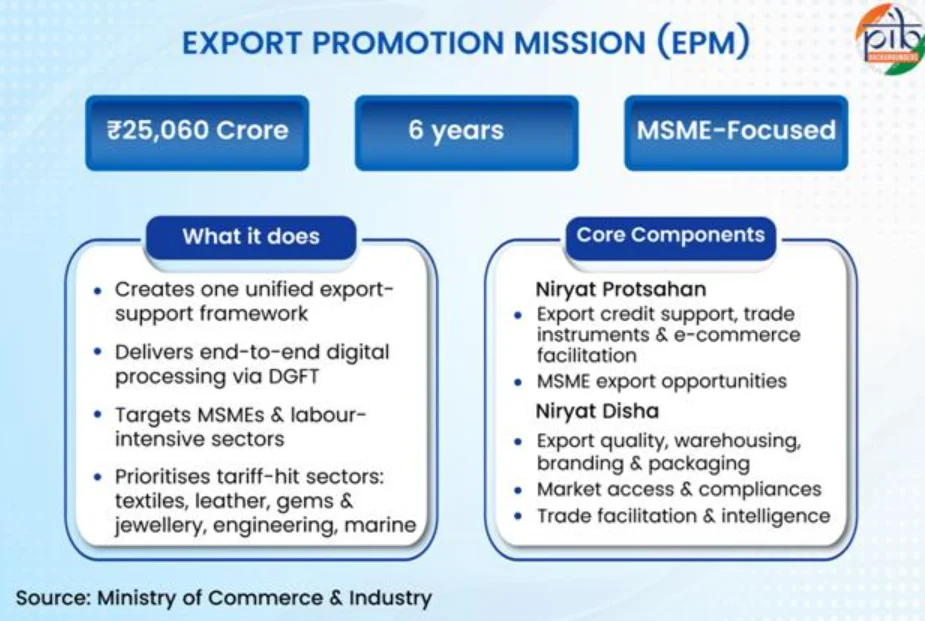
The Ministry of Commerce & Industry has notified the first set of market access guidelines under the Export Promotion Mission (EPM) to enhance global market reach for Indian exporters.
- Financial Assistance: Exporters, especially MSMEs, receive funding for trade fairs, Buyer-Seller Meets (BSMs), Mega Reverse Buyer-Seller Meets (RBSMs), and trade delegations.
- Caps on Assistance: Financial assistance will be provided for up to two delegates per firm, with a minimum delegation of 50 participants, of which at least 35% must be MSMEs.
- Firms eligible for up to 3 BSMs, MSMEs up to 4 BSMs per financial year.
Export Promotion Mission (EPM)
- About: It is a single, digitally enabled umbrella framework aimed at strengthening India’s export ecosystem and enhancing the global competitiveness of MSMEs and labour-intensive sectors.
- Integrated Approach: The EPM merges fragmented schemes into a unified framework through two core sub-schemes:
- Niryat Protsahan: Provides financial support, including affordable trade finance, interest subvention, collateral aid, and credit enhancement for MSMEs.
- Niryat Disha: Focuses on non-financial enablers like quality compliance, branding, logistics support, trade fair participation, and district-level capacity building.
- Governance & Implementation: It is anchored in a coordinated institutional framework involving the Department of Commerce, Ministry of MSME, Ministry of Finance, DGFT, Export Promotion Councils, and state governments. The Directorate General of Foreign Trade (DGFT) serves as the implementing agency.
| Read More: Boosting Exports From MSMEs |


Rapid Fire
National Investigation Agency (NIA)
In 2025, the National Investigation Agency recorded a landmark counter-terror performance with an over 92% conviction rate, reflecting a significantly strengthened internal security enforcement framework.
National Investigation Agency (NIA)
- Status & Mandate: The NIA is India’s federal counter-terror agency responsible for investigating and prosecuting terrorism, insurgency and national security crimes of pan-India impact.
-
Legal Powers: Established in 2009 under the NIA Act, 2008 and strengthened by the NIA (Amendment) Act, 2019, it can take over cases from States, investigate across State boundaries without prior consent, and exercise extra-territorial jurisdiction.
- Core Functions: The NIA collects, analyses and disseminates counter-terror intelligence, coordinates with domestic and international law-enforcement agencies, and conducts capacity-building programmes to strengthen national security enforcement.
- Taking Up a Probe: Under Section 6 of the NIA Act, 2008, cases can be referred by States or taken up suo motu by the Centre, including for offences committed outside India, with Central Government sanction required for prosecution under Unlawful Activities (Prevention) Act, 1967 and other scheduled offences.
- Specialised Focus & Trial: The NIA has dedicated mechanisms for Left Wing Extremism (LWE) terror-financing investigations, can probe connected offences during investigation, and presents cases before designated NIA Special Courts for trial.
| Read more: National Investigation Agency |


Rapid Fire
Haryana Village Common Lands (Regulation) Act, 1961
The Haryana Legislative Assembly has amended the Haryana Village Common Lands (Regulation) Act, 1961 to enable unauthorised occupants to purchase certain categories of ‘Shamilat deh’ land from gram panchayats and convert it into private ownership, shifting village commons governance from social protection to ownership through payment.
The Haryana Village Common Lands (Regulation) Act,1961
- Objective: It aims to reduce long-pending litigation, clear revenue court backlogs, resolve village land disputes and generate revenue for gram panchayats.
- Impact: It converts long-standing informal possession into formal ownership, improving land records, planning and service delivery.
- The amendment moves village commons from a rights-based protective framework towards a market-based ownership model, prioritising administrative efficiency over social justice.
- Challenges: Landless and Dalit households risk shrinking access to village commons, weakening a critical social safety net for grazing, fuel and subsistence.
- It may legitimise long-standing illegal occupation, converting de facto possession into de jure ownership rather than correcting unequal land control.
- Those with money, paperwork capacity and political networks are more likely to gain ownership, stabilising elite capture of commons.
Shamilat Deh
- It refers to common land of the entire village community, historically used for grazing, water bodies, paths and other shared purposes.
- In Madhya Pradesh and Tamil Nadu, village commons known respectively as charnoi (grazing) lands and Panchami lands are distributed among Dalit households to protect their access to common resources.
| Read more: Centre's Assistance to States for Land Reforms |