


Important Facts For Prelims
Amazonian Stingless Bees- World’s First Insects with Legal Rights
- 02 Jan 2026
- 6 min read
Why in News?
The Satipo Municipality (Peru) has adopted the Declaration of Rights for Native Stingless Bees (Tribe Meliponini) through a municipal ordinance, granting legal rights to Amazonian stingless bees, to preserve Peru’s biocultural heritage.
- This establishes the first legal recognition of insect rights globally, strengthening biocultural conservation and nature-rights governance models.
What are Amazonian Stingless Bees?
- About: They are native stingless pollinators of the Amazon rainforest, traditionally protected and cultivated by Indigenous communities.
- They are among the oldest bee species on Earth, responsible for pollinating over 80% of Amazonian flora.
- They are not completely devoid of a stinger; rather they possess a vestigial stinger that is too small to be used for defense. Hence, they defend their hives by biting or secreting irritating resins.
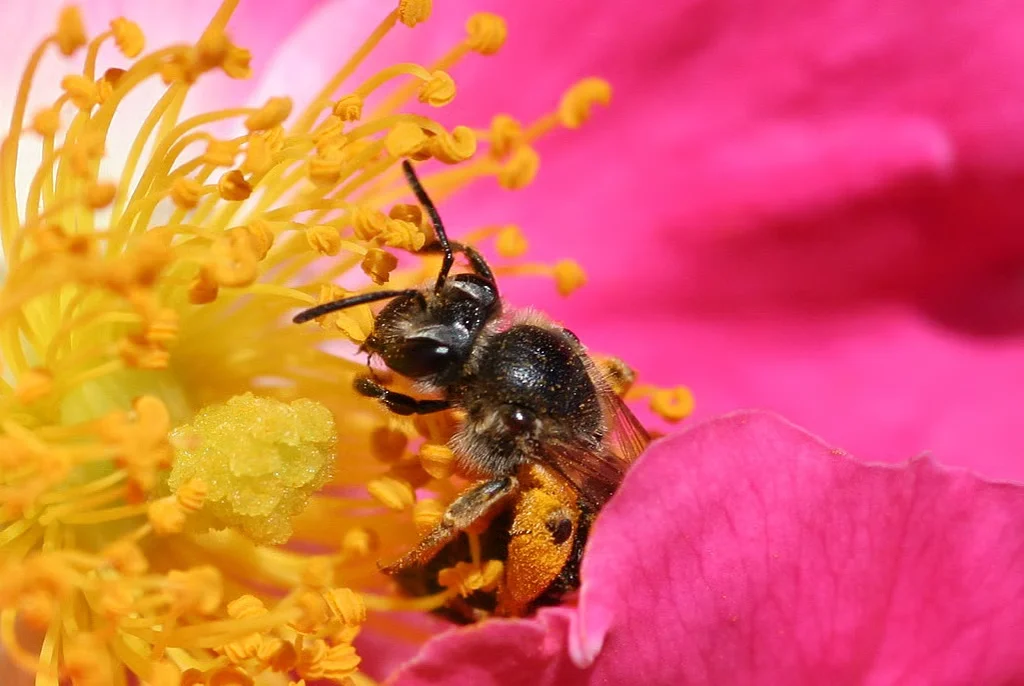
- Habitat: They are native to tropical and subtropical regions (Found globally in warmer climates), with the highest diversity in the Amazon Rainforest.
- Behavior: Highly social (eusocial) insects living in perennial colonies, often nesting in hollow tree trunks.
- Cultural Value: Stingless bees are an essential part of the culture of Indigenous Asháninka and Kukama-Kukamiria peoples.
- Key Ecological & Economic Importance:
- Biodiversity Support: They help sustain rainforest biodiversity and ecosystem stability and pollinate key global crops like coffee, cocoa, avocados and blueberries.
- Meliponiculture: The traditional practice of breeding and rearing stingless bees for honey and medicinal use is known as ‘meliponiculture’, widely followed by Indigenous communities in tropical regions.
- Medicinal Uses: Their honey is used as traditional Indigenous medicine, popularly known as the “miracle liquid,” and has proven anti-inflammatory, antibacterial and antiviral properties, including use in treating eye ailments such as cataracts.
- It has higher moisture content, is slightly acidic, non-gooey, and has a sweet–sour taste, making it distinctly different from commercially sold honey.
- Threats: They face growing threats from deforestation, illegal logging, agriculture expansion, cattle grazing, wildfires and rising temperatures, leading to habitat loss and forced migration to higher elevations.
What is the Declaration of Rights for Native Stingless Bees?
- It is a landmark Rights of Nature–based legal framework integrated into local law by Satipo Municipality, setting a global precedent for insect conservation.
- Rights Recognised include:
- Right to exist and flourish
- Right to maintain healthy populations
- Right to a pollution-free habitat
- Right to ecologically stable climatic conditions
- Right to regenerate natural cycles
- Right to legal representation in cases of harm or threat
- Since stingless bees cannot speak in court, human ‘guardians’, such as Indigenous leaders or experts, can represent them and sue polluters on their behalf.
Indian Parallel (Recognition of Nature as a Rights Holder in India)
- Animal Welfare Board of India vs. A. Nagaraja (2014): In this judgment, the Supreme Court interpreted the word 'life' under Article 21 expansively to include the protection of animal life. The Court recognized that animals have a right to live with intrinsic worth, dignity, and freedom from unnecessary pain and suffering, thereby laying the constitutional foundation for animal welfare in India.
- Mohd. Salim vs State of Uttarakhand (2017): The Uttarakhand High Court granted legal personhood to the rivers Ganga and Yamuna, declaring them as living entities with legal rights and duties, inspired by New Zealand’s Whanganui River case; however, this decision was later stayed by the Supreme Court, putting the legal personhood status on hold.
Frequently Asked Questions (FAQs)
- What are Amazonian stingless bees?
They are ancient, stingless pollinators native to the Amazon rainforest, forming one of the oldest bee groups on Earth and playing a crucial role in maintaining tropical forest ecosystems. - Why are stingless bees ecologically important?
They pollinate over 80% of Amazonian flora, supporting rainforest regeneration and key crops such as coffee, cocoa, avocados and blueberries. - What are the main threats to stingless bees?
They face deforestation, illegal logging, agriculture expansion, wildfires, rising temperatures and pesticide exposure, leading to habitat loss and population decline. - Why is this move globally significant?
It sets a global precedent under the Rights of Nature framework, extending legal recognition and protection to insects for the first time.
UPSC Civil Services Examination, Previous Year Questions (PYQs)
Prelims
Q. Which of the following organisms perform a waggle dance for others of their kin to indicate the direction and the distance to a source of their food? (2023)
(a) Butterflies
(b) Dragonflies
(c) Honey Bees
(d) Wasps
Q. Consider the following: (2024)
- Butterflies
- Fish
- Frogs
How many of the above have poisonous species among them?
(a) Only one
(b) Only two
(c) All three
(d) None



