Indian Economy
Geoeconomic Fallout of the US-Israel-Iran Conflict on India
For Prelims: Liquefied Natural Gas, Strait of Hormuz, Strategic Petroleum Reserves, Current Account Deficit, Compressed Natural Gas, National Green Hydrogen Mission
For Mains: Impact of West Asian geopolitics on India’s strategic and economic interests, Energy security and strategic petroleum reserves, Impact of global conflicts on India’s macroeconomic stability
Why in News?
The US–Israel conflict with Iran has disrupted global supply chains and exposed India’s vulnerabilities in energy, trade, and inflation, threatening its “Goldilocks” balance of high growth and low inflation. It also creates a foreign policy dilemma for India’s strategic autonomy, as it maintains ties with the US, Israel, and Iran.
Summary
- The US–Israel–Iran conflict threatens India’s energy security, fertilizer supply, and trade, as heavy dependence on Gulf oil, LNG, and fertilizer inputs through the Strait of Hormuz exposes the economy to imported inflation, rupee pressure, and supply chain disruptions.
- India must strengthen energy diversification, strategic petroleum reserves, renewable transition, domestic gas production, and alternative fertilizer use, while improving trade resilience and maritime routes to reduce geopolitical risks.
What are the Implications of US-Israel conflict with Iran on India?
- Energy Security Under Severe Threat: India imports over 85% of its crude oil and a significant portion of its Liquefied Natural Gas (LNG), with the lion's share originating from Saudi Arabia, Iraq, the UAE, and Qatar.
- The disruption of the Strait of Hormuz has paralyzed the outward flow of oil, and LNG from these Gulf nations.
- The crisis exposes India’s critically low shock-absorption capacity. While China has aggressively stockpiled 110–140 days of import cover, India’s Strategic Petroleum Reserves (SPR) hold a mere 5.33 million metric tonnes, providing only a few days of consumption cover.
- Surging crude prices (up by 15%) drive "imported inflation" and widen the Current Account Deficit which can derail India's expected 7%+ economic growth.
- India’s LPG Vulnerability: India is the second-largest LPG consumer in the world, largely due to the expansion of clean cooking access under the Pradhan Mantri Ujjwala Yojana.
- Around 60% of India’s LPG demand is met through imports, as domestic production remains limited.
- Major imports come from UAE, Qatar, Saudi Arabia and Kuwait, and most LPG shipments pass through the Strait of Hormuz, making supply highly vulnerable to regional conflict or blockade.
- India’s underground LPG storage is about 1.4 lakh tonnes, enough for less than two days of consumption, while daily demand is around 80,000 tonnes, with over 85% used by households.
- After invoking the Essential Commodities Act, 1955, the government directed refineries to maximize LPG production by diverting propane and butane streams, increasing domestic output by about 25%, with the supply prioritized for household consumption and gas supplies being restricted for commercial users.
- As a result, commercial users like hotels and restaurants in major cities face shortages, higher prices, and waiting periods of up to 25 days for new LPG bookings.
- Essential Commodities Act, 1955: India consumes around 195 Million Metric Standard Cubic Meters per Day (MMSCMD) of natural gas, with nearly half imported, making supply vulnerable to disruptions in Hormuz.
- India has invoked the Essential Commodities Act, 1955 to prioritise natural gas supply after disruptions in LNG shipments.
- Under the new allocation plan, domestic Piped Natural Gas (PNG), Compressed Natural Gas (CNG) and LPG production will receive 100% supply, fertilizer plants 70%, and industries 80%, while refineries may receive about 65% of previous consumption.
- Fertilizer Threat: India lacks mineable reserves for complex fertilizers. It relies heavily on Oman, Saudi Arabia, and Qatar for merchant ammonia; Oman, the UAE, Qatar, Kuwait, and Saudi Arabia for sulphur; and Jordan for phosphoric acid and rock phosphate (crucial for Diammonium Phosphate (DAP)).
- Furthermore, domestic urea plants rely on LNG imported from Qatar and the UAE.
- Currently, India has a comfortable stockpile (e.g., 5.5 million tonnes of urea as of late February 2026) as the Rabi season concludes and the Kharif season is still months away (June to October).
- If the blockade outlasts this buffer window, the government will be forced to strictly divert natural gas away from industrial/power sectors to prioritize domestic fertilizer production and city gas distribution, which is crucial to sustain agricultural output and national food security.
- Food and Farm Exports: According to the Global Trade Research Initiative (GTRI), nearly USD 11.8 billion worth of Indian food and farm exports to the west Asia are at risk.
- Countries like Saudi Arabia, Iraq, the UAE, and Iran are the primary buyers of Indian Basmati rice. Currently, over 3,000 shipping containers are stranded at domestic ports (like Kandla and Mundra) or stuck in transit.
- India exported about USD 11.8 billion worth of agricultural and food products to West Asia in 2025, accounting for over one-fifth (around 21–22%) of India’s total agri exports.
- Major export items include cereals, fruits, vegetables, spices, dairy products, and processed food.
- Export disruptions could impact farmers and food processors across states such as Punjab, Haryana, Uttar Pradesh, Andhra Pradesh, Telangana, and Maharashtra.
- Exporters are facing pressure from rising marine fuel oil prices, higher freight costs, and mounting demurrage charges, and are urging the government to declare Force Majeure to avoid penalties for shipment delays caused by the crisis.
- Core Industrial Sectors:
- Construction & Cement: India sources 68.5% of its imported limestone and 62.1% of its imported gypsum from nations like Bahrain, Kuwait, Oman, Qatar, Saudi Arabia, and the UAE.
- Supply shocks here will directly inflate domestic cement prices and stall infrastructure projects.
- Steel Production: A significant portion of India's steel industry utilizes the Direct Reduced Iron (DRI) route, which runs on natural gas.
- Disruptions in LNG shipments from Qatar and the UAE will curtail domestic steel output.
- Manufacturing & Gems: India imports over 50% of its copper wire (vital for power transmission) from the Gulf region.
- Additionally, India's diamond processing hub in Surat faces raw material shortages, as over 40% of its rough diamonds are imported from the UAE and Israel.
- Construction & Cement: India sources 68.5% of its imported limestone and 62.1% of its imported gypsum from nations like Bahrain, Kuwait, Oman, Qatar, Saudi Arabia, and the UAE.
- Rupee Depreciation: The Indian Rupee has weakened to record lows, prompting the Reserve Bank of India to intervene by deploying USD 15–20 billion from its USD 730 billion foreign exchange reserves to stabilize the currency.
- Safety of Indian Nationals in West Asia: India has a large diaspora of about 1 crore people in GCC countries sending over USD 51 billion annually in remittances, whose safety remains a priority for India.
- Indian nationals were affected by attacks on merchant ships. Stranded tourists and transit passengers were assisted to return via flights from Muscat, Riyadh, and Jeddah.

What Measures can India take to Mitigate the Impacts of the West Asia Conflict?
- Accelerated Diversification: While India has diversified its crude basket by importing from Russia, it must further expand long-term contracts with suppliers in Latin America (Brazil, Guyana), West Africa, and the United States to reduce over-reliance on the Strait of Hormuz.
- Expand Strategic Petroleum Reserves (SPR): India can increase Strategic Petroleum Reserves to meet the global benchmark of 90 days of oil imports, as current combined reserves cover roughly 70–75 days.
- Larger underground storage facilities would provide a buffer during geopolitical disruptions or supply blockages.
- Fast-tracking the Green Transition: Aggressively scaling up the National Green Hydrogen Mission and expanding domestic renewable capacity will structurally reduce the baseline demand for imported fossil fuels.
- Since India has already achieved key renewable capacity milestones, the focus should shift to removing regulatory, grid, and storage bottlenecks and ensuring full utilisation of existing renewable energy resources
- Expand Domestic Gas Production: Accelerate exploration under policies like Hydrocarbon Exploration and Licensing Policy (HELP) to increase domestic natural gas output.
- Scaling Alternative Fertilizers: To drastically cut dependence on imported ammonia and LNG from the Gulf, the government must aggressively promote the domestic production and nationwide adoption of Nano Urea and Nano DAP.
- The PM Programme for Restoration, Awareness, Nourishment and Amelioration of Mother Earth (PM PRANAM) must be utilized to financially incentivize states to reduce their overall consumption of imported chemical fertilizers and shift towards bio-fertilizers and organic farming.
- Invoking Force Majeure: The Ministry of Commerce must officially recognize the conflict and subsequent port congestions as a Force Majeure event.
- This legal protection will shield Indian exporters from severe financial penalties and contract cancellations by foreign buyers.
- Create an ECGC 'War-Risk' Insurance Pool: The skyrocketing marine insurance premiums for the Red Sea and Strait of Hormuz are bankrupting MSME exporters. The Export Credit Guarantee Corporation (ECGC) must immediately establish a sovereign-backed "War-Risk Insurance Pool" to subsidize these premiums and keep Indian exports competitive.
- Pivot to the Eastern Maritime Corridor (EMC): To bypass the volatile Middle Eastern chokepoints entirely, India must aggressively operationalize the Chennai-Vladivostok Eastern Maritime Corridor.
- This route can safely secure Russian crude oil, coal, and fertilizers via the relatively stable Indo-Pacific and South China Sea waters.
Conclusion
India’s transition from a vulnerable importer to a resilient economic power requires shifting from 'just-in-time' supply chains to 'just-in-case' strategic buffers, leveraging maritime independence, captive overseas assets, and rupee-denominated trade architectures.
|
Drishti Mains Question: "The escalating geopolitical tensions in West Asia expose India's structural vulnerabilities across both energy and agricultural supply chains." Discuss. |
Frequently Asked Questions (FAQs)
1. Why is the Strait of Hormuz important for India’s energy security?
Nearly 60–65% of India’s crude oil and LNG imports from Gulf countries pass through the Strait of Hormuz, making it a critical energy supply chokepoint.
2. What is the significance of the Essential Commodities Act, 1955 in the current crisis?
The Act allows the government to regulate production, supply and distribution of essential commodities like natural gas to ensure priority allocation during shortages.
3. Why is India vulnerable in fertilizer supply during the West Asia conflict?
India heavily depends on Gulf countries for ammonia, sulphur, LNG and phosphoric acid used in fertilizer production.
4. What is the Eastern Maritime Corridor (EMC)?
The Chennai–Vladivostok Eastern Maritime Corridor is a proposed shipping route aimed at strengthening trade with Russia and reducing dependence on Middle East chokepoints.
5. How can Nano Urea and Nano DAP reduce India’s fertilizer import dependence?
These advanced fertilizers improve nutrient efficiency, reduce chemical fertilizer consumption and lower dependence on imported ammonia and LNG.
UPSC Civil Services Examination, Previous Year Question (PYQ)
Prelims
Q. Which one of the following countries of South-West Asia does not open out to the Mediterranean Sea? (2015)
(a) Syria
(b) Jordan
(c) Lebanon
(d) Israel
Ans: (b)
Q. The term “two-state solution” is sometimes mentioned in the news in the context of the affairs of (2018)
(a) China
(b) Israel
(c) Iraq
(d) Yemen
Ans: (b)
Q. What is the importance of developing Chabahar Port by India? (2017)
(a) India’s trade with African countries will enormously increase.
(b) India’s relations with oil-producing Arab countries will be strengthened.
(c) India will not depend on Pakistan for access to Afghanistan and Central Asia.
(d) Pakistan will facilitate and protect the installation of a gas pipeline between Iraq and India.
Ans: (c)
Mains
Q. “India’s relations with Israel have, of late, acquired a depth and diversity, which cannot be rolled back.” Discuss.(2018)

Economy
AI Impact Study on the Labour Market
For Prelims: Artificial Intelligence (AI), Large Language Models (LLMs), ChatGPT, Generative AI Chatbots, MSME, Intellectual Property, Social Security Code 2020.
For Mains: Key findings of the Anthropic labour market study on AI impact, Threats posed by AI to employment, Measures needed to make employment resilient against the growing impact of AI.
Why in News?
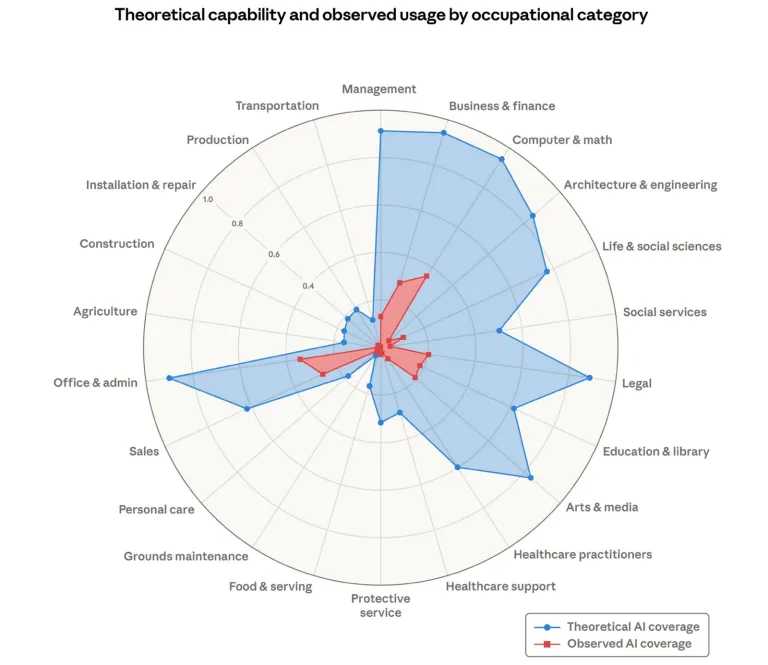
A recent labour market study by Anthropic highlights the growing influence of Artificial Intelligence (AI) on employment patterns, showing that while Large Language Models (LLMs) can theoretically perform many professional tasks, their current real-world use is still limited.
- The study pioneered a new measure called "observed exposure", which moves beyond theoretical AI capability to assess what AI is demonstrably already doing in professional settings.
Summary
- The Anthropic labour market study reveals that Artificial Intelligence is increasingly influencing employment, particularly in knowledge-intensive sectors.
- While AI’s theoretical capability is high, actual workplace usage remains limited but is growing rapidly.
- The findings highlight the need for reskilling, AI literacy, and policy measures to safeguard employment in the AI era.
What are the Key Findings of the Anthropic Labour Market Study on AI Impact?
- Gap Between Theoretical Capability and Actual Usage: Large Language Models like Claude could theoretically do 94% of the work for computer and math professionals. However, in practice, current versions of Claude are only used for about 33% of those tasks.
- Identification of High-Exposure and Insulated Sectors:
- Most Exposed Jobs: Computer programmers, customer service representatives, and financial analysts are considered "most exposed," with AI theoretically able to cover most tasks in fields like business, finance, computer science, engineering, law, and office administration.
- Insulated Sectors: Construction, agriculture, protective services, and personal care have limited theoretical AI use, making jobs in these areas more protected from immediate AI disruption.
- Sharp Decline in Entry-Level Hiring: Since the launch of ChatGPT in late 2022, entry into high-exposure occupations among workers aged 22 to 25 has fallen by 14%. Companies are reducing graduate programmes, entry-level analyst cohorts, and junior developer pipelines, effectively "closing the front door" for new hires even without widespread layoffs.
- Demographic Disparities in AI Exposure: Workers in the most AI-exposed professions exhibit distinct demographic characteristics:
- Gender: 54.4% of the most exposed group is female.
- Education: Workers with graduate degrees are nearly 4 times more likely to be in the most exposed quartile than the unexposed group.
- Race: White workers constitute 65.1% of the high-exposure group; Asian workers are nearly twice as likely to be in the most exposed group.
- Age: Average age of highly exposed workers is slightly higher (42.9 years) than those in unexposed roles.
- India-Specific Implications: The Indian IT services sector faces severe risks, with the Nifty IT index and stocks of majors like TCS, Wipro, and Infosys declining over 20% in the past year.
- Anthropic's workplace automation tools directly challenge the Indian IT business model by automating services like data processing, contract analysis, compliance monitoring, and customer support.
- India faces structural challenges, including a lack of mathematical and scientific skills and low R&D spending compared to the US and China.
How Artificial Intelligence Poses a Threat to Employment?
- Automation of Routine and Repetitive Tasks: AI-powered systems—including robots, optical character recognition, and process automation software—execute standardised operations with greater speed, accuracy, and consistency than humans. This eliminates workers in assembly lines, data entry, and basic processing roles where tasks lack complex judgement. E.g., Ola Electric laid off 1,000 employees after streamlining operations with AI tools.
- Substituting Humans in Customer Service: Generative AI chatbots and virtual agents handle high volumes of queries, complaints, and transactions autonomously, reducing or eliminating requirements for human call-centre staff. E.g., Startups like LimeChat enable clients to slash by 80% the number of workers needed to handle 10,000 monthly queries.
- Reduction in Demand for Entry-Level Technical Skills: AI coding assistants (like GitHub Copilot) and automated testing tools produce, debug, and maintain software code far more rapidly than junior developers, diminishing entry-level and mid-tier programming. This creates an "hourglass effect" in the job market, i.e., high demand for senior specialists but shrinking mid-level and entry-level positions. E.g., the IT sector experienced over 50,000 job cuts in 2024, predominantly affecting entry-level programmers.
- Devaluation of Creative Work: Creative freelancers (graphic designers, content writers) who earn by creating logos or blog posts now face clients using AI tools (DALL-E, Midjourney) to generate options at negligible cost. Human role reduces to editing AI output rather than creating original work.
Steps Taken by the Government to make India’s Labour Force AI Ready
What Measures are Needed to Make Employment Resilient against the Growing Impact of AI?
- Revolutionize Education: Embed AI Literacy at the foundational level in schools by introducing concepts of data, algorithms, and ethics, integrated with math and social studies.
- Create a National Re-skilling Pipeline: Fund a "Future Skills" Tax Credit providing businesses with tax benefits for up-skilling employees in AI-adjacent fields such as prompt engineering, data annotation, and robotics maintenance.
- Adopt "Cobotics" in the Workplace: Replace full automation with collaborative robotics where AI assists human workers—for instance, providing call centre agents with AI tools for emotional tone analysis and real-time solution suggestions.
- Protect the Apprenticeship Economy: Create sandbox environments in the IT sector where junior employees use AI to enhance productivity but are evaluated on innovation and value addition, countering the "deskilling threat."
- Ensure Cyber-Resilience for MSMEs: Provide subsidised "AI Firewall as a Service" to MSME clusters (e.g., pharma in Hyderabad, textiles in Surat) to prevent intellectual property theft that leads to job losses.
- Implement Portable Social Security: Effectively enforce the Social Security Code 2020 to ensure gig workers' contributions follow them across platforms, guaranteeing pension and health insurance even as AI devalues per-task wages.
Conclusion
The Anthropic labour market study highlights how Artificial Intelligence and Large Language Models (LLMs) are reshaping employment patterns, particularly affecting knowledge-based and entry-level roles. While AI adoption remains partial, its rapid expansion demands urgent investments in skills, education reform, and AI-human collaboration models to ensure employment resilience and inclusive economic growth.
|
Drishti Mins Question: Discuss the various mechanisms through which Artificial Intelligence poses a threat to employment. Illustrate your answer with relevant India-specific examples. |
Frequently Asked Questions (FAQs)
1. Which sectors are most exposed to AI disruption?
Computer programming, finance, business management, legal services, engineering, and office administration show the highest exposure due to their task-based and knowledge-intensive nature.
2. Why are entry-level jobs particularly vulnerable to AI?
AI coding tools, chatbots, and automation systems can perform routine technical tasks, reducing the need for junior developers, analysts, and graduate trainees.
3. Why are some sectors relatively insulated from AI disruption?
Jobs in construction, agriculture, protective services, and personal care involve physical work, situational judgement, and human interaction, limiting AI substitution.
4. How does AI create an "hourglass effect" in the job market?
AI creates an "hourglass effect" by generating high demand for senior specialists (top) while shrinking mid-level and entry-level positions (narrowing neck), threatening traditional career progression.
UPSC Civil Services Examination Previous Year Question (PYQ)
Prelims
Q. With the present state of development, Artificial Intelligence can effectively do which of the following? (2020)
- Bring down electricity consumption in industrial units
- Create meaningful short stories and songs
- Disease diagnosis
- Text-to-Speech Conversion
- Wireless transmission of electrical energy
Select the correct answer using the code given below:
(a) 1, 2, 3 and 5 only
(b) 1, 3 and 4 only
(c) 2, 4 and 5 only
(d) 1, 2, 3, 4 and 5
Ans: (b)
Mains
Q. Introduce the concept of Artificial Intelligence (AI). How does AI help clinical diagnosis? Do you perceive any threat to privacy of the individual in the use of AI in healthcare? (2023)
Q. How globalization has led to the reduction of employment in the formal sector of the Indian economy? Is increased informalization detrimental to the development of the country? (2016)

Important Facts For Prelims
Visakhapatnam Selected for High-Energy Proton Accelerator
Why in News?
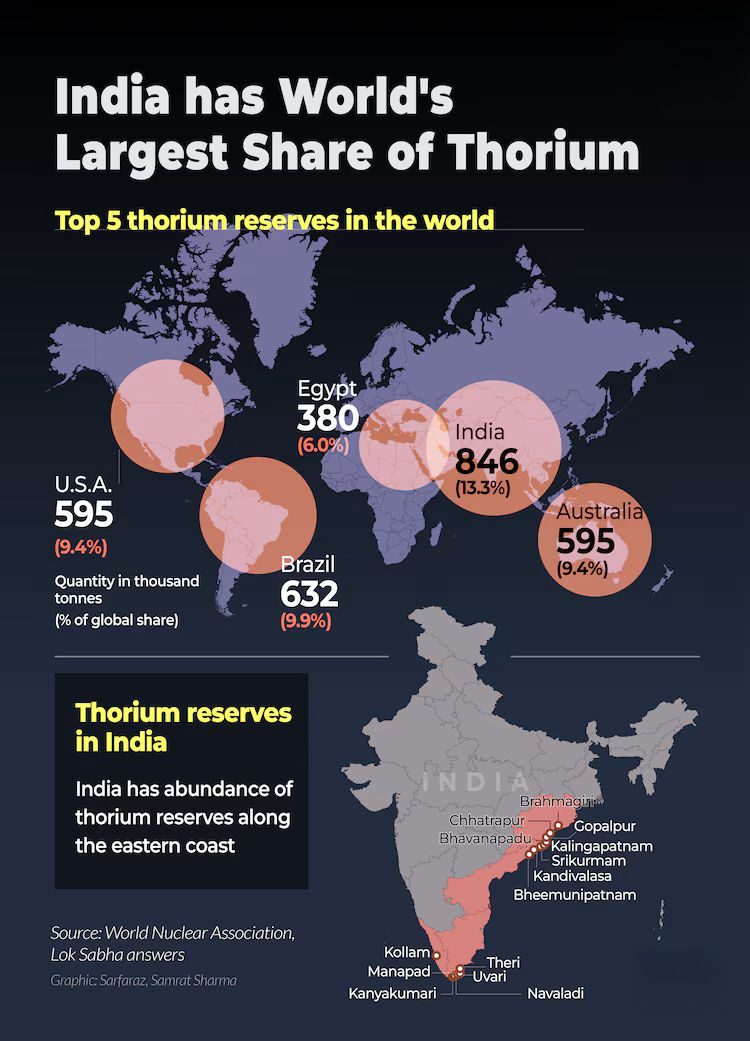
Visakhapatnam has been selected to host a high-energy proton accelerator system to support India’s three-stage nuclear power programme and harness its thorium reserves through Accelerator-Driven Systems (ADS).
- The location was chosen due to its strong technological ecosystem and proximity to the sea, which ensures adequate cooling water for high-energy systems.
- The project is being developed by the Raja Ramanna Centre for Advanced Technology (RRCAT) in Indore, Madhya Pradesh.
What is the High-energy Proton Accelerator System?
- High-energy Proton Accelerator System: A high-energy proton accelerator uses electromagnetic fields to accelerate protons (from ionized hydrogen) to extremely high speeds, creating a powerful proton beam.
- The beam is directed at a heavy metal target such as lead or bismuth, triggering a spallation reaction.
- In this reaction, the collision breaks the heavy nucleus and releases a large number of neutrons.
- These neutrons trigger nuclear fission, enabling the system to generate energy.
- Accelerator-Driven System (ADS): In an ADS, neutrons produced from the spallation process are supplied to a specially designed sub-critical nuclear reactor core, which cannot sustain a chain reaction on its own.
- The reactor depends on an external neutron supply from the proton accelerator to maintain the fission process.
- This design provides high inherent safety because if the accelerator stops due to a power failure or malfunction, the neutron supply immediately ends, and the nuclear reaction automatically shuts down, preventing a reactor meltdown.
- Need of ADS for India:
- Harnessing Thorium: India possesses about 25% of the world's Thorium reserves. However, naturally occurring Thorium (Th-232) is "fertile," not "fissile".
- This means it cannot split and sustain a nuclear chain reaction on its own. It must first capture a neutron to transmute into Uranium-233 (U-233), which is highly fissile.
- The abundant, high-energy neutrons provided by the ADS are used to bombard Thorium, converting it into Uranium-233, an excellent fissile fuel that can then generate vast amounts of electricity.
- Nuclear Waste Management (Transmutation): Traditional nuclear reactors produce highly radioactive, long-lived nuclear waste (like Minor Actinides) that remain toxic for thousands of years.
- The high-energy neutrons in an ADS can "burn" or transmute this toxic waste into shorter-lived or stable isotopes, drastically reducing the burden of nuclear waste disposal.
- Harnessing Thorium: India possesses about 25% of the world's Thorium reserves. However, naturally occurring Thorium (Th-232) is "fertile," not "fissile".
What is India's 3-Stage Nuclear Power Programme?
- Click here to Read: India's 3-Stage Nuclear Power Programme
Raja Ramanna Centre for Advanced Technology (RRCAT)
- RRCAT in Indore is a unit of the Department of Atomic Energy and is India’s premier institute for research and development in lasers, particle accelerators, and related technologies.
- Established in 1984, it developed India’s synchrotron radiation sources Indus-1 and Indus-2, which serve as national research facilities.
- RRCAT conducts advanced research in accelerators, laser systems, and synchrotron radiation technologies.
- RRCAT's research translates into societal benefits, such as using linear accelerators for electron-beam sterilization of medical devices exported globally.
- The AIC-RRCAT Pi-Hub (an incubation center) is currently driving indigenous tech development, collaborating with startups to create economical metal 3D printing for space and defense, fibre-based optical sensors, and cryogenic cooling systems for Magnetic resonance imaging (MRI) machines.
Frequently Asked Questions (FAQs)
1. What is a High-Energy Proton Accelerator?
Ahigh-energy proton accelerator uses electromagnetic fields to accelerate protons to extremely high speeds, producing a proton beam used to generate neutrons through spallation reactions.
2. What is an Accelerator-Driven System (ADS)?
AnADS is a nuclear reactor system that uses an external proton accelerator to supply neutrons to a sub-critical reactor core, improving reactor safety and efficiency.
3. Why is thorium important for India’s nuclear programme?
India holdsabout 25% of the world’s thorium reserves, which can be converted into Uranium-233, a fissile fuel for generating nuclear energy.
4. How does ADS improve nuclear safety?
Since thereactor is sub-critical, the fission reaction stops automatically if the accelerator shuts down, preventing a reactor meltdown.
5. What is the role of RRCAT in India’s nuclear research?
TheRaja Ramanna Centre for Advanced Technology develops particle accelerators, laser systems, and synchrotron radiation facilities like Indus-1 and Indus-2 for advanced scientific research.
UPSC Civil Services Examination, Previous Year Questions (PYQs)
Prelims
Q. With reference to India, consider the following statements:
- Monazite is a source of rare earths.
- Monazite contains thorium.
- Monazite occurs naturally in the entire Indian coastal sands in India.
- In India, Government bodies only can process or export monazite.”
Which of the statements given above are correct?
A. 1, 2 and 3 only
B. 1, 2 and 4 only
C. 3 and 4 only
D. 1, 2, 3 and 4
Ans: B
Q. In India, why are some nuclear reactors kept under “IAEA safeguards” while others are not? (2020)
(a) Some use uranium and others use thorium
(b) Some use imported uranium and others use domestic supplies
(c) Some are operated by foreign enterprises and others are operated by domestic enterprises
(d) Some are State-owned and others are privately owned
Ans: (b)

Rapid Fire
Dandi March
The Vice President paid homage to Mahatma Gandhi and all the freedom fighters who participated in the Dandi March (1930), noting that the march's spirit of self-reliance guides India's journey towards an Atmanirbhar and Viksit Bharat.
Dandi March
- About: The Dandi March (1930) was an important event in India’s freedom struggle. It was led by Mahatma Gandhi to oppose the British salt tax through a peaceful act of civil disobedience, challenging British economic control over India.
- Mahatma Gandhi deliberately chose salt because it was a daily necessity, making the injustice universally relatable.
- Timeline and Key Events: The march started on 12th March 1930 and concluded on 6th April 1930, covering 240 miles from the Sabarmati Ashram to Dandi village (present-day Gujarat). Mahatma Gandhi was accompanied by 78 initial followers, a number that swelled into a mass movement along the route.
- The protest targeted the British salt monopoly and the salt tax, enforced by laws like the 1882 Salt Act. This tax forced all Indians, especially the poor, to buy expensive, taxed salt (often imported) instead of using the readily available coastal salt.
- On 6th April 1930, Mahatma Gandhi broke the salt laws by picking up a handful of natural salt from the seashore at Dandi. This single act served as a signal for millions of Indians to begin their own acts of civil disobedience across the country.
- E.g., C. Rajagopalachari broke salt law in the coastal town of Vedaranyam in the Tanjore coast (Madras Presidency). In the Malabar region (present-day Kerala), K. Kelappan (Kerala Gandhi) organized salt marches from Calicut to Payyanur.
- Repression: The British responded with mass arrests, including Gandhi's arrest on 5th May 1930, and violent crackdowns on peaceful protesters, most notably at the Dharasana Salt Works.
- In Gujarat, after Mahatma Gandhi’s arrest, Sarojini Naidu led a nonviolent raid on the Dharasana Salt Works on 21st May 1930, where American journalist Webb Miller reported a brutal police lathi-charge on peaceful protesters.
- Long-Term Significance: It garnered significant international attention, exposing the moral bankruptcy of British rule and inspiring future global leaders of nonviolent movements, such as Martin Luther King Jr.

| Read More: Dandi March 1930 |

Rapid Fire
Black Rain over Tehran
Residents of Tehran experienced a phenomenon known as “black rain” after Israeli strikes on Iranian oil facilities caused large fires, sparking severe environmental and public health concerns.
Black Rain
- About: Black rain is rainfall contaminated with soot, ash, oil particles, and industrial chemicals released into the atmosphere by large fires or industrial accidents. As raindrops fall, they collect these pollutants, making the rain appear dark and oily.
- It can occur after oil facility fires, refinery explosions, wildfires, volcanic eruptions, or nuclear fallout.
- Formation of Black Rain: Explosions at oil storage and refining facilities ignited massive fires, releasing toxic hydrocarbons, sulfur oxides, and nitrogen compounds along with smoke and particulate matter into the atmosphere.
- Rainfall passing through this polluted air absorbed the contaminants and fell as black precipitation (black rain) over Tehran.
- Immediate Health Risks: The World Health Organisation (WHO) confirmed that the black rain poses a "real danger," primarily to respiratory health. Health risks include headaches, skin and eye irritation, difficulty breathing, and potential chemical burns upon contact.
- Long-term exposure to compounds like benzene, found in petroleum mixtures, is known to increase cancer risk.
- Environmental Impact: Beyond the immediate crisis, there is a risk of "forever chemicals" (Per- and Polyfluoroalkyl substances) from firefighting foam contaminating groundwater and soil. Furthermore, acid rain could accelerate the corrosion of buildings, and toxic compounds may enter the food chain through contaminated vegetation.
- Historical Precedent: The most infamous example of black rain occurred after the nuclear attack on Hiroshima, where radioactive materials mixed with precipitation, spreading contamination far beyond the blast zone.
| Read More: Conflict Zones in the US - Israel - Iran War, Forever Chemicals, Acid Rain. |

Rapid Fire
Garo Hills Autonomous District Council
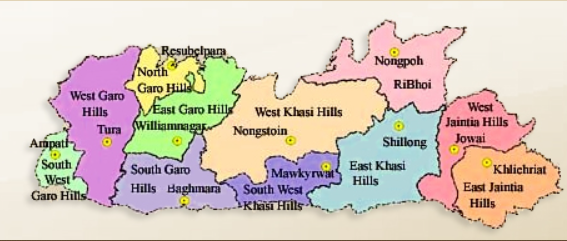
The elections to the Garo Hills Autonomous District Council (GHADC) in Meghalaya have been postponed following unrest linked to a February 2026 GHADC notification mandating that all candidates must possess a Scheduled Tribe (ST) certificate to contest elections.
- Opposition from Non-Tribal Communities: Non-tribal residents of the plains belt, largely Muslim communities, opposed the rule as unconstitutional and exclusionary, arguing it restricts democratic participation and political rights in five Muslim-dominated GHADC constituencies, and contend that only Parliament can amend provisions under the Sixth Schedule.
- ADCs in Meghalaya: In Meghalaya, there are three ADCs, viz., Garo Hills ADC, Khasi Hills ADC and Jaintia Hills ADC.
- Each ADC has 30 members, 29 of whom are elected by the people, and one member each is nominated and holds office at the pleasure of the Governor.
- Coordination: The District Council Affairs Department of the State Government acts as the coordinating department between the District Councils and other Government Departments of the State Government.
Autonomous District Councils
- Administrative Structure: Sixth Schedule areas ( tribal areas in the four northeastern states of Assam, Meghalaya, Tripura, and Mizoram) are organised into Autonomous Districts and Autonomous Regions, each governed by District Councils and Regional Councils. The Governor can create, alter, or reorganise these units.
- Composition and Tenure: An Autonomous District Council (ADC) can have up to 30 members (26 elected and 4 nominated by the Governor) with a five-year tenure for elected members. The Bodoland Territorial Council is an exception with 46 members.
- Legislative Powers: Councils can make laws on land, forests (excluding reserved forests), inheritance, marriage, social customs, and regulation of moneylending and trade by non-tribals, subject to the Governor’s assent.
- Applicability of Laws: Central and State laws do not automatically apply to Sixth Schedule areas. Their applicability depends on Governor’s notification or Presidential notification, depending on the state.
| Read more: Governor’s Rule in Chakma Autonomous District Council |

Rapid Fire
PM SETU Scheme
The Ministry of Skill Development and Entrepreneurship has constituted a National Steering Committee (NSC) as the apex body to guide the Pradhan Mantri Skilling and Employability through Upgraded ITIs (PM SETU) Scheme, which aims to strengthen skill development by upgrading Industrial Training Institutes (ITIs) and improving employability outcomes.
- About: PM-SETU is a vocational education and training upgradation scheme approved by the Union Cabinet in 2025 with a budget of Rs 60,000 crore to align skill training with modern industry needs.
- The scheme marks a shift from government-driven training to industry-led skilling, where companies play a key role in designing curricula, training methods, and infrastructure.
- Hub-and-Spoke ITI Upgradation: Under the hub-and-spoke model, 200 “Hub” ITIs will act as central institutes with advanced infrastructure, and each Hub will mentor and support about four nearby “Spoke” ITIs by sharing modern equipment, digital learning resources, and specialized training facilities.
- The scheme will also strengthen five National Skill Training Institutes (NSTIs) located in Bhubaneswar, Chennai, Hyderabad, Kanpur, and Ludhiana, turning them into global Centres of Excellence.
- Special Purpose Vehicle (SPV) Governance: Each upgraded ITI will be managed by an industry-government partnership through an SPV, where industry partners hold 51% ownership and the government 49%.
- Industry partners can receive up to 83% government funding for infrastructure and training improvements.
- Industry Participation: The Ministry of Skill Development and Entrepreneurship has invited Anchor Industry Partners (AIPs) through an Expression of Interest (EOI) to collaborate in upgrading training institutes.
- Modern Training Ecosystem: SPVs can propose curriculum redesign, improved training delivery models, infrastructure upgrades, and industry exposure for trainees.
- The Directorate General of Training has introduced 31 new-age courses under the Craftsmen Training Scheme (CTS) to address emerging sector demands.
- Training will target sectors like advanced manufacturing, electronics, mobility, and logistics.
- The Directorate General of Training has introduced 31 new-age courses under the Craftsmen Training Scheme (CTS) to address emerging sector demands.
| Read more: National Scheme for Upgradation of ITIs |