Indian Polity
Debate on Prime Minister’s Tenure in India
For Prelims: Prime Minister, Lok Sabha, Tenth Schedule, No-confidence Motion, President
For Mains: Constitutional provisions related to executive accountability, Role and impact of the Anti-Defection Law (Tenth Schedule)
Why in News?
The issue of the prolonged tenure of elected Prime Ministers in India has revived the debate on introducing term limits for the office.
Summary
- The debate on limiting the Prime Minister’s tenure has re-emerged due to concerns over prolonged incumbency and concentration of power.
- The Constitution does not fix any term limit, relying on parliamentary accountability, which has been weakened by the anti-defection law.
- Reforms such as anti-defection law changes, and stronger parliamentary oversight mechanisms are needed to restore democratic checks and accountability.
What Does the Constitution Say About the Prime Minister’s Tenure?
- Prime Minister’s Tenure: The Constitution of India does not prescribe any fixed term limit for the Prime Minister.
- The Prime Minister continues in office as long as they enjoy the confidence of the Lok Sabha and are able to secure electoral support. There is no restriction on the number of terms, allowing an individual to serve multiple consecutive tenures.
- Rationale of the Constituent Assembly: The Constituent Assembly's position was articulated by Dr. B.R. Ambedkar in his November 1948 speech introducing the Draft Constitution.
- Ambedkar distinguished between "daily assessment" of executive responsibility (through no-confidence motions, questions, and adjournment motions) and "periodic assessment" through elections.
- He argued that daily parliamentary accountability was a far more effective check than fixed-term limits.
- The model followed Westminster practice, where no Prime Minister is bound by a term limit but can be removed by the legislature or even their own party's caucus.
- The underlying premise was that parliamentary confidence acts as a rolling, continuous check on executive power.
- Limitations:
- Anti-defection Law: The Fifty-Second Constitutional Amendment (1985) introduced the Tenth Schedule (the anti-defection law). Under this law, any legislator who votes against the party whip, including on a confidence motion, faces disqualification from the House.
- The Supreme Court upheld its constitutionality in Kihoto Hollohan vs. Zachillhu (1992), framing it as a protection for the electoral mandate.
- However, this effectively neutralised the no-confidence motion as a check on executive power whenever the ruling party holds a working majority.
- Indian parties also lack institutionalised mechanisms for internal leadership challenges, unlike British Conservative MPs, who can remove their own leader.
- The mechanism Ambedkar relied upon to substitute for term limits has been doubly disabled by the anti-defection law and by the absence of intra-party democracy.
- The Rajya Sabha Loophole: The Constitution allows the PM to be a member of either House.
- Furthermore, an amendment to the Representation of the People Act in 2003 removed the domicile requirement for Rajya Sabha members, a move upheld by the Supreme Court in Kuldip Nayar v. Union of India (2006).
- This allows a leader to bypass direct popular elections in their home state, be nominated from a safe state via the Rajya Sabha, and still hold the highest executive office, potentially distancing them from direct electoral accountability.
- Anti-defection Law: The Fifty-Second Constitutional Amendment (1985) introduced the Tenth Schedule (the anti-defection law). Under this law, any legislator who votes against the party whip, including on a confidence motion, faces disqualification from the House.
What are the Arguments Regarding Imposing Term Limits on the Office of the Prime Minister?
Arguments For Term Limits
- The "Presidential" Precedent: Under Article 57 of the Indian Constitution, a person who holds or has held office as President is eligible for re-election to that office, with no specific limit on the number of terms.
- However, in many democracies (like the US) and through convention in India, the President is limited to two terms (no President has served more than two terms).
- Proponents argue it is illogical to strictly limit the tenure of a ceremonial head of state while allowing the office that wields the actual executive power to remain unlimited.
- Global Precedents: Internationally, Nelson Mandela serves as a striking contrast; he stepped down after a single five-year term, choosing not to cling to power.
- In Mexico, the President is strictly limited to a single six-year term. These examples demonstrate that enforcing term limits is both possible and healthy for democracies.
- Prevents the Concentration of Power: Long periods in power can concentrate decision-making in the Prime Minister’s Office (PMO), often weakening cabinet discussions and collective responsibility.
- As the saying goes, power concentrated in one leader breeds a cult; power distributed among institutions sustains democracy.
- Over time, long-term leaders can influence independent institutions, weakening checks and balances. They may also gain strong control over state machinery, finances, and media, making competition unfair. Term limits help maintain a level playing field and protect democracy.
- Encourages Fresh Leadership: Term limits prevent political stagnation. They force political parties to continuously groom new leaders, ensuring a steady pipeline of fresh talent and modern ideas, rather than allowing a party to become overly dependent on a single "cult of personality."
- Compensates for Weakened Parliamentary Checks: In theory, a parliament can remove a PM anytime. In practice (especially in India due to the Anti-Defection Law, which disqualifies MPs who vote against their party), legislators are locked into loyalty.
- If the parliament can no longer effectively challenge the executive, term limits act as a necessary fail-safe.
- Encourages Accountability and Performance: Knowing their tenure is limited, leaders may focus more on delivering tangible results and building a legacy within a fixed timeframe, rather than constantly prioritizing political survival and the next election.
Arguments Against Term Limits
- Restricts Voter Choice: Prevents people from re-electing a leader even if they are satisfied with their performance.
- Effective and experienced leaders may be forced to step down despite good governance.
- Not Suited to Parliamentary System: The Prime Minister stays in power only as long as they have majority support in Parliament, making fixed limits less relevant.
- Disrupts Long-term Policies: Important reforms in areas like the economy and infrastructure need continuity, which term limits may interrupt.
- Creates Lame-duck Phase: In the final term, a leader’s authority may weaken as attention shifts to their successor.
- Risk of Proxy Leadership: Term-limited leaders may continue to exercise influence indirectly by installing loyal, weak successors, undermining the very purpose of the term limit.
- Shifts Power to Unelected Actors: With weaker or rapidly rotating leadership, real policy influence may shift to bureaucrats, advisors, or party elites who are not directly accountable to voters.
- Difficult to Implement Constitutionally: Introducing term limits would require massive, complex constitutional amendments, opening up broader debates and potentially causing unintended institutional consequences.
What Reforms are Needed to Strengthen Accountability in the Office of the Prime Minister?
- Amending the Anti-Defection Law: The most natural reform to restore the Constituent Assembly's original vision would be to exempt votes on "No-Confidence Motions" from the Tenth Schedule.
- MPs should be allowed a "free vote" based on their conscience and constituency interests as recommended by the Dinesh Goswami Committee (1990), this would restore the legislature's ability to hold the executive accountable without risking government collapse.
- Introducing Formal Term Limits: A more ambitious reform would be a constitutional amendment limiting consecutive terms for Prime Ministers and Chief Ministers (e.g., allowing a return only after a "cooling-off" period).
- This reform is equally pressing at the state level, where several Chief Ministers have also held unchecked power for extended, multi-decade tenures.
- Institutionalizing a 'Shadow Cabinet': Taking inspiration from the Westminster model, India should formalize a Shadow Cabinet.
- This legally recognizes opposition leaders who "shadow" specific ministries, ensuring they have the resources and mandate to continuously question and present policy alternatives to the PM's cabinet and ensure accountability.
- Mandatory PM Attendance in Parliament: Institutionalize regular, compulsory appearances by the Prime Minister, such as a dedicated “Prime Minister’s Question Time” (similar to the UK), ensuring direct, unscripted accountability.
- Introducing a Retirement Criterion: Establish a mandatory retirement age (e.g., 70-75 years) for holding executive political office to organically ensure generational shifts in leadership and prevent lifetime incumbency.
Conclusion
India’s constitutional design relied on continuous parliamentary accountability instead of fixed term limits. However, changes like the anti-defection law have weakened this mechanism. The debate is no longer just about one leader’s tenure, but about whether India’s democratic system still retains the self-correcting safeguards envisioned by its framers.
|
Drishti Mains Question: Discuss how the Anti-Defection Law has altered the balance between legislature and executive in India. |
Frequently Asked Questions (FAQs)
1. What does the Constitution say about the Prime Minister’s tenure?
The Constitution of India provides no fixed term limit; the PM remains in office as long as they enjoy Lok Sabha confidence.
2. What is the Tenth Schedule (Anti-Defection Law)?
Introduced by the 52nd Constitutional Amendment (1985), it disqualifies legislators who vote against the party whip.
3. What was the rationale of B. R. Ambedkar on term limits?
He emphasized daily parliamentary accountability over fixed term limits, considering it a stronger check on executive power.
4. Why is the Anti-Defection Law criticised in this context?
It restricts MPs from voting freely, weakening no-confidence motions and reducing legislative oversight.
5. What is a Shadow Cabinet?
A system where opposition leaders track and critique government ministries, enhancing accountability and policy debate.
UPSC Civil Services Examination, Previous Year Questions (PYQs)
Prelims:
Q. Consider the following statements: (2022)
- The Constitution of India classifies the ministers into four ranks viz. Cabinet Minister, Minister of State with Independent Charge, Minister of State and Deputy Minister.
- The total number of ministers in the Union Government, including the Prime Minister, shall not exceed 15 percent of the total number of members in the Lok Sabha.
Which of the statements given above is/are correct?
(a) 1 only
(b) 2 only
(c) Both 1 and 2
(d) Neither 1 nor 2
Ans: B
Q. Consider the following statements: (2019)
- The 44th Amendment to the Constitution of India introduced an Article placing the election of the Prime Minister beyond judicial review.
- The Supreme Court of India struck down the 99th Amendment to the Constitution of India as being violative of the independence of judiciary.
Which of the statements given above is/are correct?
(a) 1 only
(b) 2 only
(c) Both 1 and 2
(d) Neither 1 nor 2
Ans: B
Q. Which one of the following Schedules of the Constitution of India contains provisions regarding anti-defection? (2014)
(a) Second Schedule
(b) Fifth Schedule
(c) Eighth Schedule
(d) Tenth Schedule
Ans: (d)
Mains
Q. To what extent, in your view, the Parliament is able to ensure accountability of the executive in India? (2021)
Q. The role of individual MPs (Members of Parliament) has diminished over the years and as a result healthy constructive debates on policy issues are not usually witnessed. How far can this be attributed to the anti-defection law which was legislated but with a different intention? (2013)


Important Facts For Prelims
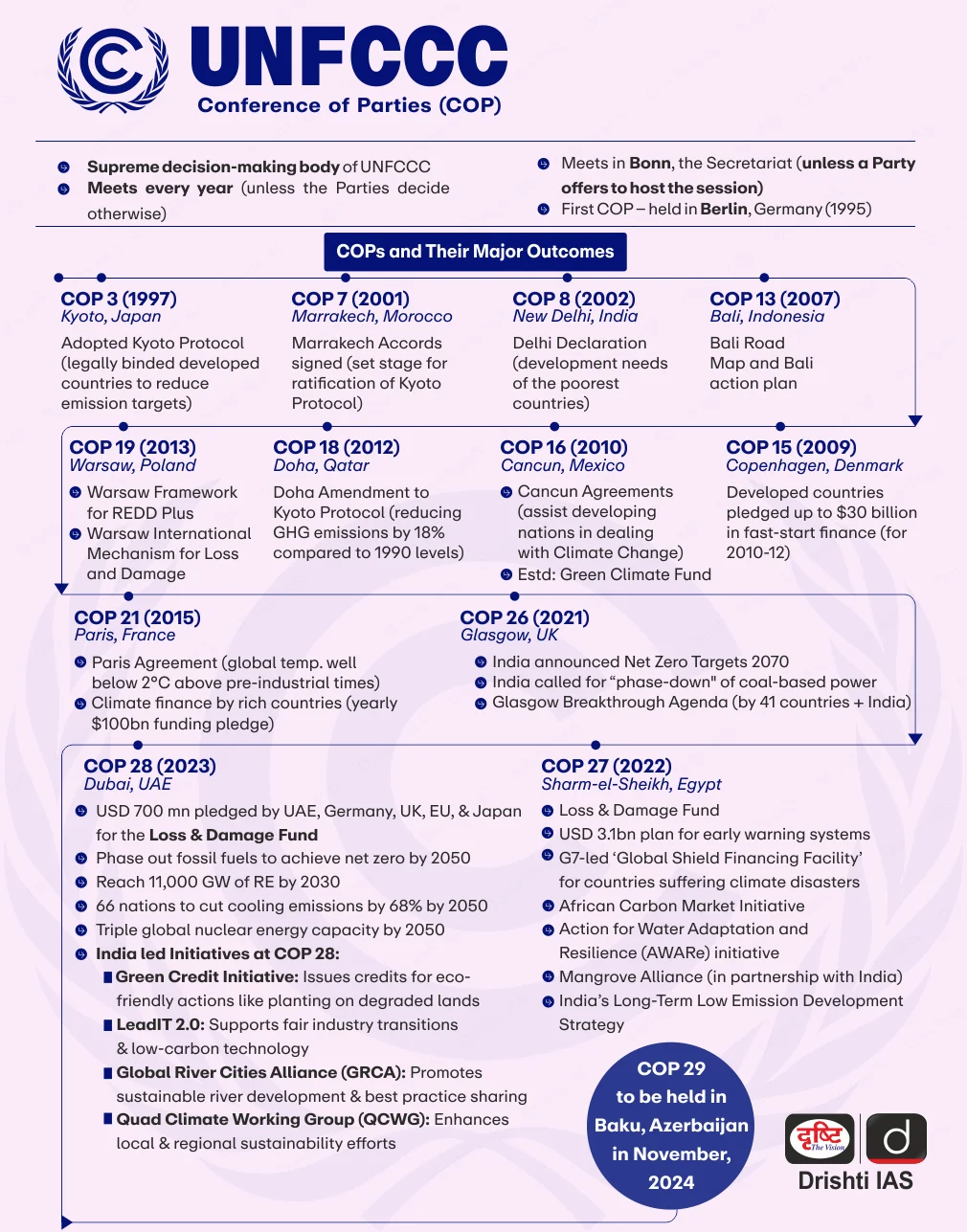
India Withdraws COP33 UNFCCC Host Bid
Why in News?
India has withdrawn its candidacy to host the 33rd Conference of Parties (COP33) to the United Nations Framework Convention on Climate Change (UNFCCC) in 2028, citing a "review of its commitments for 2028."
- Analysts suggest India withdraw to avoid logistical burdens of other "big-ticket" events (like a potential 2030 Commonwealth Games) or pressure for higher climate goals, a move experts believe could undermine its leadership of the Global South in securing climate finance.
- Following the confirmed hosts of Australia and Turkey (COP31, 2026), and Ethiopia (COP32, 2027), India’s withdrawal leaves South Korea as the only contender to fill the vacancy for COP33 in 2028.
What is the United Nations Framework Convention on Climate Change (UNFCCC)?
- About: The UNFCCC is the primary international treaty aimed at preventing "dangerous human interference with the climate system."
- It serves as the primary international treaty for coordinating a global response to stabilize greenhouse gas (GHG) concentrations and prevent dangerous human interference with the climate system.
- Establishment and Objective: Adopted in 1992 at the Rio Earth Summit and entering into force in 1994, its core objective is to ensure food security and allow sustainable economic development while ecosystems adapt to climate change.
- Principles:
- CBDR-RC: A central pillar of the UNFCCC is the principle of "Common But Differentiated Responsibilities and Respective Capabilities (CBDR-RC)."
- This acknowledges that while all nations must act, developed countries have a greater historical responsibility and more resources to lead the fight.
- Sustainable Development: It mandates that climate action should be taken in a way that allows ecosystems to adapt naturally, ensures food security, and enables economic development to proceed sustainably.
- CBDR-RC: A central pillar of the UNFCCC is the principle of "Common But Differentiated Responsibilities and Respective Capabilities (CBDR-RC)."
- Operating Mechanism:
- COP (Conference of the Parties): It is the supreme decision-making body that meets annually to review progress.
- The Secretariat: Based in Bonn, Germany, it supports the global response to the threat of climate change by organizing negotiations and analyzing data.
- Transparency & Reporting: Member nations must regularly submit "National Communications" and "Biennial Transparency Reports" detailing their greenhouse gas (GHG) emissions and climate policies.
- Financial Mechanism: The UNFCCC manages several funds to help developing countries transition to clean energy and adapt to climate impacts. As of 2026, these are the primary pillars:
- Green Climate Fund (GCF): It is the world’s largest dedicated climate fund that has recently hit a milestone of USD 20 billion in total financing for over 350 projects worldwide.
- Global Environment Facility (GEF): Acts as a catalyst for environmental projects, often providing the "seed money" for large-scale energy transitions.
- Fund for Responding to Loss and Damage (FRLD): It aims to help vulnerable nations recover from immediate climate disasters (like floods or rising sea levels).
- Adaptation Fund: Specifically targets projects that help communities build resilience, such as sea walls or drought-resistant farming.
- Major Legal Instruments: It provided the foundation for the Kyoto Protocol (1997) and the landmark Paris Agreement (2015), which aims to limit global warming to well below 2°C (preferably 1.5°C).
- Hosting Rotation: The hosting of COP rotates among the UN’s 5 regional groups — African States, Asia-Pacific States, Eastern European States, Latin American and Caribbean States and Western European and other States. India is part of the Asia Pacific group. India has hosted a UNFCCC COP only once — in 2002 (COP 8) — when it was a relatively low-key affair.
- The Global Stocktake (GST): The UNFCCC operates on a 5-year "ambition cycle." The Global Stocktake is like a periodic "medical check-up" for the planet.
- The 1st GST was concluded in 2023, and the 2nd GST is scheduled for 2028.
Note: In March 2026, India announced its updated Nationally Determined Contributions (NDCs), committing by 2035 to source 60% of its installed electricity capacity from non-fossil sources, reduce emissions intensity of GDP by 47%, and increase its carbon sink by 3.5-4 billion tonnes of CO₂ equivalent.
Frequently Asked Questions (FAQs)
1. Which countries are hosting COP31 (2026) and COP32 (2027)?
COP31 (2026) will be co-hosted by Australia and Turkey, and COP32 (2027) will be hosted by Ethiopia.
2. What is the Global Stocktake (GST) under the UNFCCC?
The GST is a 5-year “ambition cycle” acting as a periodic assessment of global climate action. The first GST concluded in 2023, and the second GST is scheduled for 2028.
3. What is the significance of the CBDR-RC principle in climate negotiations?
CBDR-RC acknowledges that while all states are responsible for climate action, developed nations bear a greater historical responsibility and must provide financial and technological support to developing countries.
UPSC Civil Services Examination, Previous Year Questions
Q. With reference to the Agreement at the UNFCCC Meeting in Paris in 2015, which of the following statements is/are correct? (2016)
- The Agreement was signed by all the member countries of the UN, and it will go into effect in 2017.
- The Agreement aims to limit the greenhouse gas emissions so that the rise in average global temperature by the end of this century does not exceed 2ºC or even 1.5ºC above pre-industrial levels.
- Developed countries acknowledged their historical responsibility in global warming and committed to donate $ 1000 billion a year from 2020 to help developing countries to cope with climate change.
Select the correct answer using the code given below:
(a) 1 and 3 only
(b) 2 only
(c) 2 and 3 only
(d) 1, 2 and 3
Ans: (b)


Rapid Fire
Himalayan Griffon Vultures Death
25 Himalayan Griffon vultures died in the Dudhwa Tiger Reserve due to suspected secondary poisoning after scavenging on stray dog carcasses that had consumed pesticide-laced rice.
- Dudhwa Tiger Reserve in Uttar Pradesh’s Lakhimpur Kheri and Bahraich districts lies in the Terai belt along the Indo-Nepal border. It comprises Dudhwa National Park, Kishanpur Wildlife Sanctuary, and Katarniaghat Wildlife Sanctuary, and is drained by the Mohana and Suheli rivers.
Himalayan Griffon Vulture
- About: The Himalayan Griffon vulture (Gyps himalayensis) is an Old World vulture and ranks 2nd only to the cinereous vulture in size among Old World vultures.
- Old World vultures are a group of scavenging birds found in Europe, Asia, and Africa. While they share many physical similarities with New World vultures (found in the Americas), they are biologically distinct and belong to the family Accipitridae—the same family that includes eagles, hawks, and harriers.
- Key Physical Characteristics: They have a pale, khakhi-colored body with dark flight feathers. Their heads are covered in white down, and they sport a distinct "ruff" of long, pale brown feathers around the neck.
- They have an impressive wingspan, typically ranging from 2.5 to 3 meters (8 to 10 feet). An adult can weigh between 8 and 12 kg.
- Habitat and Range: They are usually found at altitudes between 1,200 and 5,500 meters. Their range extends across India, Nepal, Bhutan, China (Tibetan Plateau), and parts of Central Asia (e.g., Kazakhstan and Uzbekistan).
- They are colonial nesters, typically building their nests on inaccessible, steep rock cliffs.
- Diet and Behaviour: Like all vultures, the Himalayan Griffon is a carrion eater. They feed almost exclusively on the carcasses of dead animals.
- They are social birds, often seen in large groups gathering around a single carcass.
- Threats: Primary threats include poisoning from diclofenac and other veterinary drugs used in livestock, which remain in carcasses and prove fatal to vultures. Additional pressures involve habitat disturbance and changes in food availability
- Conservation Status: The Himalayan Griffon is listed as Near Threatened by the IUCN.
- It is listed under Schedule I of the Wildlife Protection Act, 1972, providing it the highest level of legal protection in the country.
- It is listed under Appendix II of CITES, which regulates international trade of the species.

| Read More: Vultures at Risk in Protected Areas |


Rapid Fire
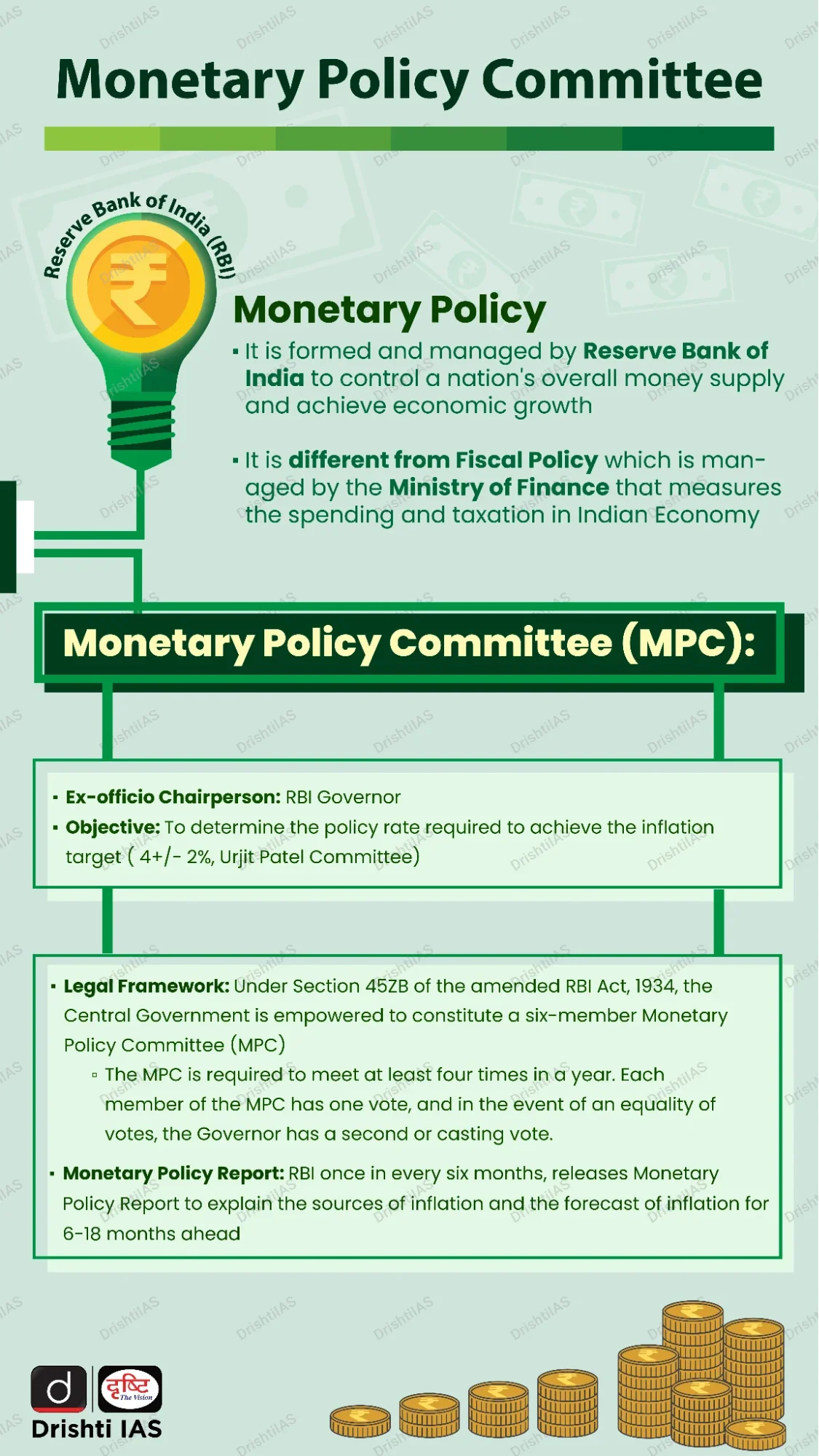
RBI MPC Maintains Repo Rate Unchanged
The Monetary Policy Committee (MPC) of the Reserve Bank of India (RBI) has kept the repo rate unchanged at 5.25%, reflecting a cautious approach amid global uncertainties and domestic inflation risks.
- Policy Rates (Status Quo): The policy repo rate under the Liquidity Adjustment Facility (LAF) remains unchanged at 5.25%.
- Consequently, the Standing Deposit Facility (SDF) rate remains at 5%, and both the Marginal Standing Facility (MSF) rate and the Bank Rate remain at 5.50%.
- Policy Stance: The MPC has continued with a neutral stance, adopting a wait-and-watch strategy in a volatile global environment.
- Revised GDP Growth: Real GDP growth for 2025-26 is estimated at 7.6% (based on the Second Advance Estimates of the new GDP series with base year 2022-23).
- However, the growth forecast for 2026-27 has been cut to 6.9% due to global financial volatility and supply shocks.
- Inflation Outlook: The inflation projection has been hiked, with CPI inflation for 2026-27 projected at 4.6% (using the new CPI series: base year 2024=100). Food inflation and persistently elevated energy prices remain critical concerns.
- Macroeconomic Risks: The primary downside risks to the Indian economy include the prolonged 2026 West Asia conflict, supply-chain disruptions in the Strait of Hormuz, resulting spikes in global energy/freight costs, and potential El Niño conditions threatening the southwest monsoon and agriculture.
- Domestic Resilience: Growth continues to be driven by robust private consumption, fixed investment demand, a buoyant services sector, and healthy balance sheets of financial institutions.
- Government initiatives targeting domestic manufacturing (Union Budget 2026-27) are expected to further support the ensuing growth trajectory.
|
Read more: |


Rapid Fire
Exercise Cyclone-IV
The Indian Army will participate in the 4th edition of the India-Egypt Joint Special Forces Exercise Cyclone-IV, marking a significant milestone in the bilateral strategic partnership between the two nations.
- About: Exercise Cyclone is a bilateral military exercise conducted between the Special Forces of India and Egypt. It was started in 2023 and alternates between the two countries.
- Location and Contingent Profile: The exercise is being conducted at Anshas, Egypt, from 9th to 17th April 2026.
- The Indian side is represented by the elite Special Forces units, training alongside their counterparts from the Egyptian Special Forces.
- Focus: It focuses on enhancing joint planning and interoperability in special operations through best-practice exchanges. Troops will rehearse advanced special operational tactics, techniques, and procedures (TTPs), fostering mutual professional expertise and military camaraderie.
- Objectives:
- Counter-Terrorism Operations: Neutralising threats in urban and semi-urban environments.
- Special Operations: Practising high-stakes tasks like sniped-based operations, tactical combat casualty care, and reconnaissance.
- Desert Warfare: Given the geography of both northern India and Egypt, the exercise focuses on survival and combat in arid, desert terrain.
- Strategic Context: This cooperation aligns with the India-Egypt Strategic Partnership signed in January 2023, emphasizing deeper collaboration in counter-terrorism and regional security.
- Other Military Exercises between India and Egypt: Exercise Desert Warrior (Air Force exercise between India and Egypt), Exercise Bright Star.
| Read More: Exercise CYCLONE |


Rapid Fire
1500-Year-Old Stepped Reservoir on Elephanta Island
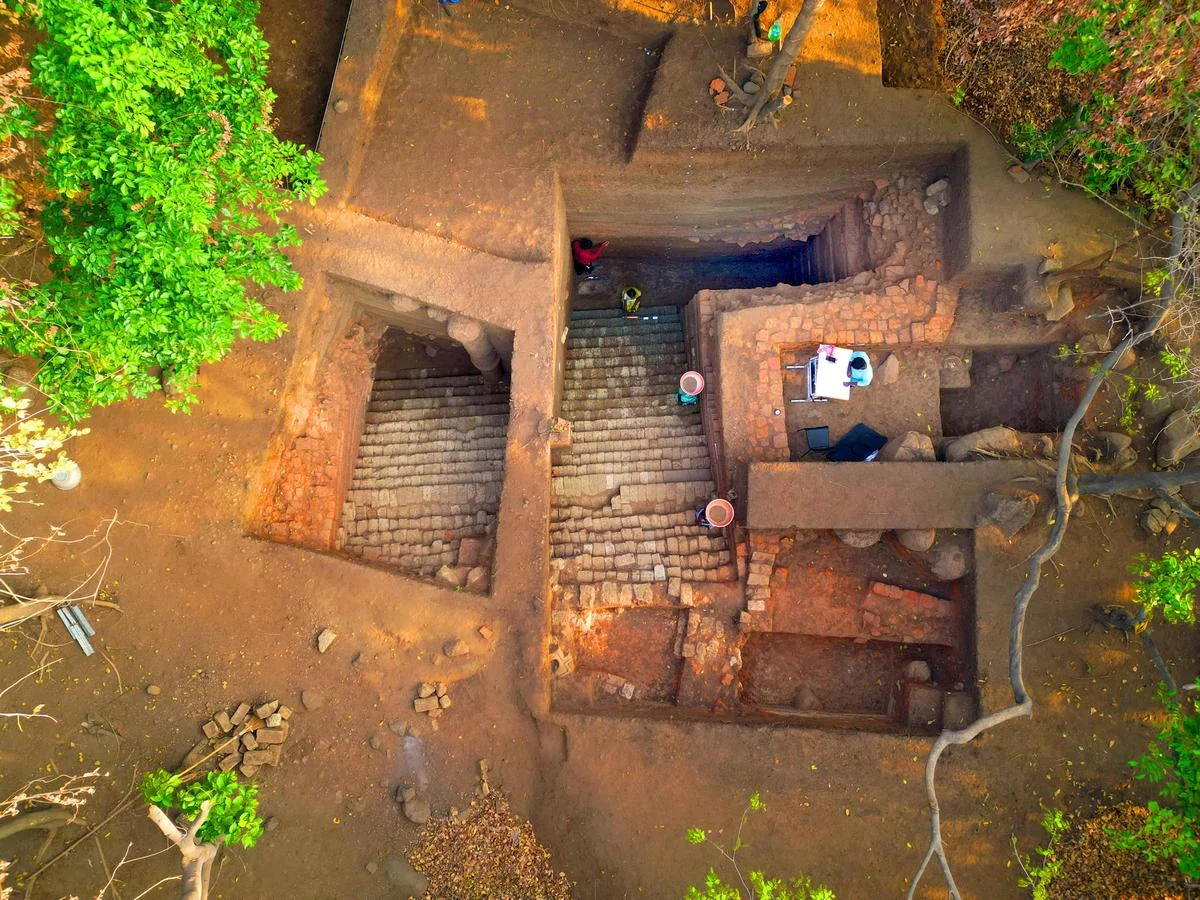
The Archaeological Survey of India (ASI) has unearthed a sophisticated 1,500-year-old stepped reservoir on Elephanta Island off the Mumbai coast, shedding new light on the region's advanced ancient water management systems and robust maritime trade links.
- Discovery of a Stepped Reservoir: The structure is T-shaped and features 20 precisely aligned stone steps made from blocks transported from the mainland, reflecting advanced engineering designed to efficiently store monsoon runoff on the island’s rocky terrain.
- Numismatic (Coin) Findings: Around 60 coins (copper, lead, silver) were found, including coins of Krishnaraja, confirming political and chronological context.
- Several copper coins belong to ruler Krishnaraja of the Kalachuri dynasty (6th century CE), identifiable by a seated bull motif on the obverse and a temple symbol with the legend Sri Krishnaraja on the reverse.
- Evidence of Global Maritime Trade: Discovery of ~3,000 amphorae sherds (Mediterranean origin) and torpedo jars (West Asia, including Mesopotamia) confirms the island's active long-distance maritime trade with Rome and West Asia during the Early Historic period and 2nd century CE.
- Industrial and Cultural Artefacts: Excavations revealed a brick structure (possibly a dyeing vat), indicating textile-related economic activity.
- Other significant recoveries include terracotta figurines, glass and stone bangles, carnelian and quartz beads, reflecting cultural and craft activities.
- Historical Geography: Historically, Elephanta Island functioned as a major trading hub comprising three distinct port localities: Morabandar, Rajbandar, and Shethbandar.
- Existing Heritage Context: These new discoveries add a rich layer to Elephanta Island, which is already globally renowned for the Elephanta Caves, featuring massive 5th-century CE rock-cut caves and sculptures dedicated to Lord Shiva.
| Read more: World Heritage Day 2025, World Heritage Sites in India |


Rapid Fire
India Achieves Record Wind Energy Growth
India’s wind energy sector reached a new milestone in FY 2025–26 with a record addition of 6.05 GW, reflecting a significant 46% increase over FY 2024–25 and indicating strong growth momentum.
- Total Capacity: With this addition, India’s cumulative installed wind power capacity has crossed 56 GW, making it one of the leading global wind energy markets.
- The top three wind energy producers globally are China, the United States, and Germany, with India ranked 4th in the world.
- Key Contributing States: States such as Gujarat, Karnataka, and Maharashtra have been the major contributors, supported by the expansion of wind-solar hybrid projects and Green Energy Open Access.
- Policy Support: The government has supported the sector through measures such as concessional customs duty, waiver of Inter-State Transmission System charges till June 2028, competitive bidding mechanisms, and the Wind Renewable Consumption Obligation framework.
- The sector has also benefited from improved project execution, pipeline maturity, and institutional support from the National Institute of Wind Energy.
- Future Potential: India’s wind energy programme began in the early 1990s and has built a robust ecosystem, while only about 4.5% of its ~1,164 gigawatt potential has been utilised.
- Significance: The expansion of wind energy is crucial for achieving the target of around 107 gigawatt by 2030 and contributes significantly to India’s goal of 500 gigawatt non-fossil fuel-based energy capacity.
| Read more: India's Wind Energy Potential |