
Biodiversity & Environment
Right to a Clean and Healthy Environment
For Prelims: Commission for Air Quality Management (CAQM), Graded Response Action Plan (GRAP), Right to a Clean and Healthy Environment, DPSPs, Fundamental Duties, Air Pollution, Monsoon, Biodiversity Hotspots, Western Ghats, Soil Organic Carbo, E-waste, Articles 48A and 51A(g), Article 14 (Right to Equality), Polluter Pays Principle, UNFCCC.
For Mains: Different environmental crises in India and various Supreme Court judgments on environmental rights, Key environmental conservation initiatives taken in India and further steps needed to strengthen its conservation in India.
Why in News?
The persistent environmental crisis has reignited debates about constitutional provisions for environmental protection and the need for explicit recognition of the right to a clean and healthy environment.
- The Commission for Air Quality Management (CAQM) has recently amended the Graded Response Action Plan (GRAP), making it mandatory to close schools under Phases 3 and 4, alongside phased office timings.
Summary
- India faces multi-dimensional environmental crises affecting health, ecology, and economic sustainability.
- Judicial interpretation has expanded environmental rights under Article 21, supported by DPSPs and Fundamental Duties.
- The urgent need is explicit constitutional recognition, stronger institutions, and integrated, technology-driven environmental governance.
What are the Persistent Environmental Crises in India?
- Severe Air Pollution: India’s severe air pollution, particularly in northern cities such as Delhi, consistently exceeds particulate matter limits and contributed to 2.1 million of the 8.1 million global air-pollution-related deaths in 2021. As per the World Air Quality Report 2024, 13 of the 20 most polluted cities worldwide are in India.
- Health impacts range from respiratory infections, lung diseases, and asthma to cardiac and gastrointestinal issues.
- Water Scarcity: Despite initiatives like the Jal Jeevan Mission (JJM), water scarcity is escalating, with per capita availability declining from 1,816 cubic meters in 2001 to 1,545 cubic meters in 2011 and projected to fall to 1,219 cubic meters by 2050.
- Central Ground Water Board assessments show elevated nitrate, fluoride, and arsenic levels in West Bengal, Bihar, and Uttar Pradesh.
- This crisis is worsened by groundwater depletion in major cities, Himalayan glacial retreat, river pollution, and erratic monsoons, causing repeated floods and droughts.
- Biodiversity and Habitat Loss: Deforestation driven by infrastructure, agriculture, and mining leads to habitat fragmentation, soil erosion, and reduced carbon sequestration. India's biodiversity hotspots, like the Western Ghats, face severe threats, with IPCC projections warning of up to 33% biodiversity loss by 2050 due to climate change.
- Land Degradation and Soil Health Decline: Despite India being a party to the United Nations Convention to Combat Desertification (UNCCD), soil erosion, salinization, and fertility loss are rampant due to over-farming and chemical fertilizer overuse.
- Some 83.69 million ha (mha) underwent desertification in 2018-19. This was greater than the 81.48 mha in 2003-2005 and 82.64 mha in 2011-13.
- Soil Organic Carbon in intensively farmed areas is falling to 0.3% from historical levels of around 1%.
- Waste Management Crisis: India generates approximately 62 million tonnes of waste annually, including 7.9 MT of hazardous waste, 5.6 MT of plastic, 1.5 MT of e-waste, and 0.17 MT of biomedical waste. Despite a reported 95% collection rate, much of this waste is burned or poorly handled, resulting in landfill overflows and toxic leachate contaminating soil and water.
Graded Response Action Plan (GRAP)
- About: The GRAP is a pre-emptive and emergency framework created to control and reduce air pollution in Delhi-NCR.
- GRAP has been prepared in compliance with the Supreme Court’s (SC) order dated 2nd December, 2016, in the MC Mehta vs. Union of India case 1986, to address air quality issues in the National Capital Region of Delhi.
- It was notified in 2017, and is implemented by the Commission for Air Quality Management (CAQM) in coordination with the Ministry of Environment, Forest and Climate Change (MoEFCC) and the concerned state governments.
- Stages of GRAP: It categorises pollution response measures into four stages, depending on the AQI levels.
- Stage I – Poor (AQI 201–300): Basic pollution control measures like road dust management and enforcing vehicle PUC (Pollution Under Control) norms.
- Stage II – Very Poor (AQI 301–400): Stricter actions such as limiting diesel generator use and controlling operations in pollution hotspots.
- Stage III – Severe (AQI 401–450): Imposes restrictions on specific vehicles, construction activities, and allows for remote schooling measures.
- Stage IV – Severe+ (AQI > 450): Enforces bans on entry of heavy vehicles, closure of schools, and shutdown of non-essential industries.
Commission for Air Quality Management (CAQM)
- About: The CAQM is a statutory body established under the Commission for Air Quality Management in NCR and Adjoining Areas Act, 2021 to coordinate and implement air pollution control measures in the NCR and adjoining states—Punjab, Haryana, Rajasthan, and Uttar Pradesh.
- Leadership and Eligibility: The Commission is headed by a full-time Chairperson with either at least 15 years of experience in environmental protection and pollution control or 25 years of administrative experience.
- Accountability and Role: The CAQM is directly accountable to Parliament and functions as the apex authority for air quality management in the NCR region.
How has Environmental Jurisprudence Evolved in India?
- Maneka Gandhi v. Union of India (1978): The SC gave its opinion that a clean environment shall be included in the meaning of life under Article 21.
- Rural Litigation and Entitlement Kendra v. State of UP (1985): The SC recognized, for the first time, the right to live in a healthy environment as part of Article 21 of the Constitution.
- M.C. Mehta v. Union of India (1986): The SC held that the right to live in a pollution-free environment is part of the fundamental right to life under Article 21 of the Constitution.
- Subhash Kumar v. State of Bihar (1991): The SC combined Articles 48A and 51A(g) with Article 21, ruling that the state must protect and improve the environment so that every citizen can enjoy pollution-free air and water, essential for a meaningful life.
- Article 48A: Obligation of the State to protect and improve the environment and safeguard forests and wildlife.
- Article 51A(g): Obligation of Citizens to protect and improve the natural environment, including forests, lakes, rivers, wildlife, and to have compassion for living creatures.
- M.C. Mehta versus Kamal Nath (1996): The SC defined the public trust doctrine as a social contract where the state acts as a trustee of natural resources owned by the people, and must manage them only for public benefit, not for private gain.
- M.K. Ranjitsinh v. Union of India (2024): Recognised right against adverse effects of climate change under Article 21 (Right to Life) and Article 14 (Right to Equality).
- Vellore Citizens’ Welfare Forum versus Union of India (1996): The SC explained the precautionary principle and the polluter pays principle.
- The precautionary principle requires the state to take preventive action against serious environmental threats, promoting sustainable development over a choice between development and ecology.
- The polluter pays principle makes polluters financially responsible for managing their pollution, such as a factory safely disposing of toxic by-products.
Key Environmental Conservation Initiatives Taken in India
- Air & Water Quality Management: National Clean Air Programme (NCAP), Graded Response Action Plan (GRAP), Namami Gange Programme, Jal Jeevan Mission.
- Biodiversity & Wildlife Conservation: Wildlife (Protection) Act, 1972 (National Parks, Wildlife Sanctuaries, Conservation Reserves, and Community Reserves), Project Tiger (1973), Project Elephant (1992), Biological Diversity Act, 2002.
- Waste Management & Circular Economy: Plastic Waste Management Rules, 2016, E-Waste Management Rules, 2022, Swachh Bharat Mission, Waste to Wealth Mission.
- Climate Change & International Commitments: Paris Agreement Commitments, International Solar Alliance (ISA), LiFE (Lifestyle for Environment).
- Monitoring & Technology Initiatives: Environmental Impact Assessment (EIA), National Green Tribunal (NGT), ISRO’s Environmental Information System (ENVIS).
- National Missions & Programs: National Green Hydrogen Mission, National Action Plan on Climate Change (NAPCC), National Afforestation Programme (NAP), Green India Mission (GIM).
What are the Challenges in Solving the Persistent Environmental Crises in India?
- Governance & Implementation Gaps: Strong environmental laws in India, like the Environment (Protection) Act, 1986, suffer from chronic weak enforcement, with industries often operating without a valid Consent to Operate and facing minimal punitive action.
- Developmental Pressures: Large infrastructure projects, such as highways in forested areas, often proceed with expedited clearances despite fragmenting wildlife corridors. Similarly, poverty drives unsustainable resource use like illegal sand mining, which persists as critical income despite causing severe ecological damage.
- Ecological & Technical Complexities: Trans-boundary crises like Indo-Gangetic air pollution require complex multi-state coordination. Meanwhile, rising extreme weather events such as Cyclone Biparjoy worsen coastal erosion, overwhelming local adaptation.
- Political & Behavioral Hurdles: Short-term development through populist subsidies discourage conservation and encourage resource over-extraction. Furthermore, low public acceptance of sustainable practices, like waste segregation, cripples urban waste management.
What Further Steps are Necessary to Strengthen Environmental Conservation in India?
- Strengthen Legal & Constitutional Framework: Amend the Constitution to make the Right to a Clean and Healthy Environment a standalone Fundamental Right, imposing a non-derogable duty on the state. Legally codify the Precautionary Principle, Polluter Pays Principle, Public Trust Doctrine, and Intergenerational Equity for nationwide enforcement.
- Enhance Implementation & Governance: Establish a National Environmental Authority for cross-ministry coordination (Environment, Agriculture, Transport, Urban, Energy) to integrate efforts. Mandate real-time pollution data disclosure and use AI and satellite imagery (like ISRO's ENVIS) to automatically monitor deforestation, dumping, and river pollution.
- Systemic Shifts & Behavioural Change: Implement environmental outcome-based budgeting, tying funds to ecological targets like air quality and forest cover. Enforce climate-centric urban planning with mandatory green belts and net-zero building codes.
- Economic and Financial Mechanism: Implement a carbon tax on high-emission sectors while redirecting fossil fuel subsidies to renewables and scaling up sovereign green bonds. Mandate that 50% of CSR spending goes to environmental projects, tracked via a public CSR-Environment dashboard, and foster CSR-NGO partnerships for effective implementation.
- International Cooperation: Pursue favorable technology transfer agreements for clean technology, renewable energy, and pollution control equipment from developed nations. Actively secure the USD 300 billion annual climate finance commitment from developed countries under the UNFCCC.
Conclusion
Recurring environmental crises and sustained judicial activism highlight a serious implementation gap in India’s conservation framework. Establishing a constitutional right to a clean environment, alongside integrated governance, data-driven enforcement, and financial realignment, is essential to shift from reactive responses to systemic ecological sustainability.
|
Drishti Mains Question: Q. Critically examine the role of the Supreme Court in expanding the scope of Article 21 to include environmental protection |
Frequently Asked Questions (FAQs)
1. How has Article 21 been linked to environmental protection?
The Supreme Court has interpreted Article 21 to include the right to pollution-free air, water, and a healthy environment.
2. What does the Polluter Pays Principle imply?
It requires polluters to bear the cost of pollution control and environmental damage remediation.
3. Has climate change been recognised as a constitutional issue?
Yes, in M.K. Ranjitsinh v. Union of India (2024), climate change impacts were recognised under Articles 21 and 14.
UPSC Civil Services Examination, Previous Year Questions (PYQs)
Prelims
Q1. Which of the following can be threats to the biodiversity of a geographical area? (2012)
- Global warming
- Fragmentation of habitat
- Invasion of alien species
- Promotion of vegetarianism
Select the correct answer using the codes given below:
(a) 1, 2 and 3 only
(b) 2 and 3 only
(c) 1 and 4 only
(d) 1, 2, 3 and 4
Ans: (a)
Q. Which of the following are the reasons/factors for exposure to benzene pollution? (2020)
- Automobile exhaust
- Tobacco smoke
- Wood burning
- Using varnished wooden furniture
- Using products made of polyurethane
Select the correct answer using the code given below:
(a) 1, 2 and 3 only
(b) 2 and 4 only
(c) 1, 3 and 4 only
(d) 1, 2, 3, 4 and 5
Ans: (a)
Mains
Q. Examine the factors responsible for depleting groundwater in India. What are the steps taken by the government to mitigate such depletion of groundwater? (2025)
Q. Industrial pollution of river water is a significant environmental issue in India. Discuss the various mitigation measures to deal with this problem and also the government’s initiative in this regard. (2024)
Q. Describe the key points of the revised Global Air Quality Guidelines (AQGs) recently released by the World Health Organisation (WHO). How are these different from its last update in 2005? What changes in India’s National Clean Air Programme are required to achieve revised standards? (2021)
Q. What are the key features of the National Clean Air Programme (NCAP) initiated by the government of India? (2020)
Important Facts For Prelims
Dulhasti Stage-II Project
Why in News?
The Ministry of Environment, Forest and Climate Change (MoEF&CC)’s Expert Appraisal Committee (EAC) has recommended an environmental clearance for the Dulhasti Stage-II hydropower project.
Summary
- The EAC has recommended clearing the 260 MW Dulhasti Stage-II hydropower project on the Chenab River.
- Strategically, it utilizes existing infrastructure and advances India’s energy security under the suspended Indus Waters Treaty
What is Dulhasti Stage-II Run-of-the-river Hydropower Project?
- Location & Capacity: It is a 260 MW (2x130 MW) underground powerhouse project on the Chenab River in the Kishtwar District of Jammu & Kashmir.
- Design & Function: It is a run-of-the-river (ROR) project. Dulhasti-II will use the existing infrastructure of Stage-I and draw Marusudar River water (a tributary of the Chenab) via the Pakal Dul Hydroelectric Project into the Dulhasti reservoir. The 390 MW Dulhasti-I, a run-of-the-river project, was commissioned in 2007.
- The Pakal Dul Hydroelectric Project is a 1,000 MW ROR hydroelectric project under construction on the Marusudar River. It features a 167-meter-tall concrete-face rockfill dam, the tallest in the Indus River system in India.
- A ROR uses the natural flow and elevation drop of a river to produce electricity without creating a large reservoir for water storage.
- Strategic Significance: The project gained momentum after the suspension of the Indus Water Treaty (IWT), 1960, following the Pahalgam terror attack.
- It will add to the cascade of hydropower projects on the Chenab River, which already includes operational plants (Dulhasti-I (390-MW, Kishtwar), Baglihar (890-MW, Ramban), Salal (Reasi)) and several under-construction projects (Ratle (850MW), Kiru (624 MW), Kwar (540 MW)).
What is the Expert Appraisal Committee (EAC) of MoEF&CC?
- About: The Expert Appraisal Committee (EAC) is a multi-disciplinary, sector-specific committee constituted by the Central Government under the Environment Impact Assessment (EIA) Notification, 2006.
- Primary Role: It is a recommendatory body responsible for the screening, scoping, and detailed appraisal of industrial and infrastructure projects requiring environmental clearance under the EIA law.
- Sectoral Structure: There are nine EACs at the central level, each dedicated to appraising specific project categories, such as River valley and hydro-electric projects (RVHEP), Thermal & coal mining, Nuclear, strategic & defence projects etc.
- Composition & Tenure: Each EAC comprises up to 15 subject matter experts selected based on prescribed qualifications. Committees are reconstituted every three years (with a possible one-year extension).
- Decision-Making: The EAC operates on consensus and collective responsibility. Its final recommendation is submitted to the Ministry of Environment, Forest and Climate Change (MoEFCC), which takes the final decision on granting or denying environmental clearance.
Indus Waters Treaty
- About: The Indus Waters Treaty (IWT) is a bilateral water-sharing pact between India and Pakistan, brokered by the World Bank and signed in 1960.
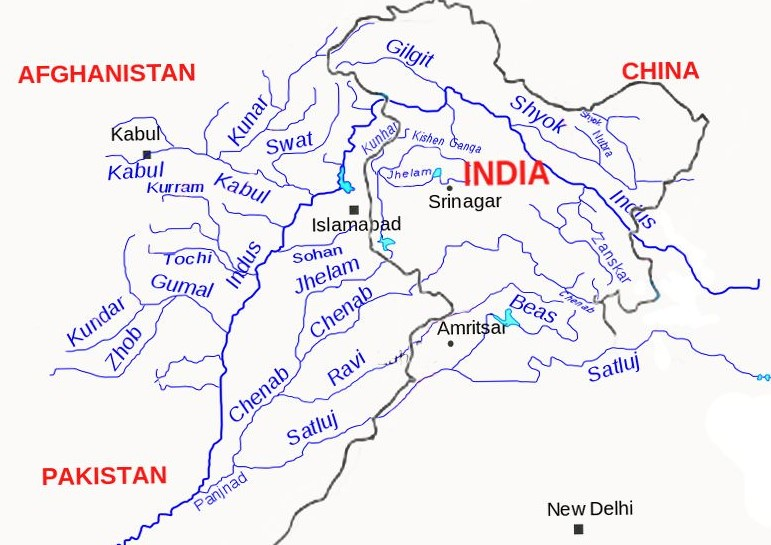
- It governs the distribution and utilization of the waters of the Indus River and its five major tributaries—the Sutlej, Beas, Ravi, Jhelum, and Chenab.
- Water Allocation: The treaty assigns India full control over the three eastern rivers (Ravi, Beas, and Sutlej). Pakistan is allocated the three western rivers (Indus, Jhelum,and Chenab).
- India is permitted limited use of the western rivers for specified domestic, non-consumptive, agricultural, and hydroelectric purposes, subject to defined conditions.
- Overall, Pakistan receives about 80% of the water from the Indus River system, while India receives around 20%.
- Permanent Indus Commission (PIC): The treaty establishes a Permanent Indus Commission (PIC), comprising commissioners from both nations. The PIC is required to meet at least once annually to oversee the treaty’s implementation and address routine issues.
- Dispute Resolution Process (Article IX):
- First Level: Disputes or questions regarding interpretation or implementation are to be resolved through discussions within the PIC.
- Second Level: If unresolved by the PIC, either Commissioner may request the World Bank to appoint a Neutral Expert.
- Third Level: If the issue is deemed a "dispute" or falls outside the Neutral Expert's mandate, either party may seek the establishment of a Court of Arbitration by the World Bank.
Chenab
- About: Chenab is a transboundary river in the Indus system, spanning India and Pakistan.
- It originates in the upper Himalayas of Himachal Pradesh (Baralacha Pass in Lahaul) as the Chandrabhaga, formed by the confluence of the Chandra and Bhaga rivers.
- Key Tributaries: Major tributaries are the Marusudar (largest), Miyar Nalla, Bhut Nalla, Kalnai, Ans, Tawi, and Neeru rivers.
- Course & Flow: The river flows northwest through Jammu & Kashmir’s districts of Kishtwar, Doda, Ramban, and Reasi, carving deep gorges, before entering Pakistan’s Punjab plains, where it joins the Sutlej to form the Panjnad, which then merges with the Indus.
Frequently Asked Questions (FAQs)
1. What is the Expert Appraisal Committee (EAC)?
The EAC is a sector-specific recommendatory body that appraises projects for environmental clearance under the EIA Notification, 2006, based on expert consensus.
2. What type of project is Dulhasti Stage-II?
It is a 260 MW run-of-the-river hydropower project on the Chenab River in Jammu and Kashmir.
3. How does the Indus Waters Treaty (1960) allocate river waters between India and Pakistan?
The IWT allocates the three Eastern Rivers (Ravi, Beas, Sutlej) to India and the three Western Rivers (Indus, Jhelum, Chenab) to Pakistan.
UPSC Civil Services Examination, Previous Year Question (PYQ)
Q. With reference to the Indus river system, of the following four rivers, three of them pour into one of them which joins the Indus directly. Among the following, which one is such a river that joins the Indus direct? (2021)
(a) Chenab
(b) Jhelum
(c) Ravi
(d) Sutlej
Ans: (d)
Q. Consider the following pairs (2019)
|
Glacier |
River |
|
1. Bandarpunch |
Yamuna |
|
2. Bara Shigri |
Chenab |
|
3. Milam |
Mandakini |
|
4. Siachen |
Nubra |
|
5. Zemu |
Manas |
Which of the pairs given above are correctly matched?
(a) 1, 2 and 4
(b) 1, 3 and 4
(c) 2 and 5
(d) 3 and 5
Ans: (a)
Important Facts For Prelims
Holy City Status and Sikh Heritage
Why in News?
Punjab has officially declared Amritsar, Anandpur Sahib, and Talwandi Sabo as holy cities due to their deep Sikh heritage, as each hosts one of the faith’s five Takhts.
- This designation aims to develop these cities as key religious and cultural centers by enforcing a ban on the sale of liquor, tobacco, cigarettes, and meat within city limits to preserve their sanctity.
Summary
- Punjab has declared Amritsar, Anandpur Sahib, and Talwandi Sabo as holy cities due to their deep Sikh heritage, as each hosts one of the faith’s five Takhts.
- Sikhism, founded by Guru Nanak Dev Ji, emphasizes monotheism, equality, and ethics, with institutions like Gurdwaras, Takhts, the SGPC, and the Khalsa Panth central to its practice and governance.
What is Sikhism?
- Core Tenets and Origins: Founded by Guru Nanak Dev Ji in the 15th century in Punjab, Sikhism is a monotheistic religion that evolved through ten Gurus and was influenced by Bhakti and Sufi traditions.
- It emphasizes devotion to one God, ethical living (Seva), and equality.
- Sikhs form the Khalsa, established by Guru Gobind Singh in 1699, who adhere to a code of conduct and wear the Five Ks (Kesh, Kangha, Kara, Kachera, Kirpan).
- Sacred Texts and Key Institutions: The primary scripture is the Guru Granth Sahib (written in Gurmukhi), considered the eternal Guru. The Dasam Granth is a supplementary text.
- The Gurdwara is the Sikh place of worship and community service, open to all.
- The Shiromani Gurdwara Parbandhak Committee (SGPC) is the apex elected body managing major Gurdwaras.
- The Khalsa Panth is the collective body of the Sikh community.
- Five Takhts (Seats of Authority): The 5 Takhts guide Sikh religious and temporal affairs.
- Akal Takht (Amritsar, Punjab): The supreme seat, established by Guru Hargobind Singh in 1606, symbolizing the union of temporal (Miri) and spiritual (Piri) authority.
- Takht Sri Keshgarh Sahib (Anandpur Sahib, Punjab): Site where Guru Gobind Singh founded the Khalsa.
- Takht Sri Patna Sahib (Patna, Bihar): Birthplace of Guru Gobind Singh.
- Takht Sachkhand Hazur Sahib (Nanded, Maharashtra): Where Guru Gobind Singh was cremated.
- Takht Sri Damdama Sahib (Talwandi Sabo, Punjab): Where Guru Gobind Singh finalized the Guru Granth Sahib.
- Historical Reform Movement: The Gurdwara Reform (Akali) Movement (1920) sought to free Sikh shrines from corrupt mahants.
- It led to the formation of the SGPC (1920) and the Sikh Gurdwaras Act, 1925, granting Sikhs legal control over their Gurdwaras.
| Ten Gurus of Sikh Religion | |
| Guru Nanak Dev (1469-1539) |
|
| Guru Angad (1504-1552) |
|
| Guru Amar Das (1479-1574) |
|
| Guru Ram Das (1534-1581) |
|
| Guru Arjun Dev (1563-1606) |
|
| Guru Hargobind (1594-1644) |
|
| Guru HarRai (1630-1661) |
|
| Guru Har Krishan (1656-1664) |
|
| Guru Teg Bahadur (1621-1675) |
|
| Guru Gobind Singh (1666-1708) |
|
Frequently Asked Questions (FAQs)
1. What is the significance of the five Takhts in Sikhism?
The five Takhts are seats of temporal and spiritual authority. The Akal Takht in Amritsar is the supreme seat, symbolizing Miri-Piri (temporal-spiritual unity), while the others are linked to key events in Guru Gobind Singh's life.
2. Who founded Sikhism and when?
Guru Nanak Dev Ji founded Sikhism in the 15th century in Punjab, emphasizing monotheism, equality, and ethical living.
3. What are the Five Ks in Sikhism?
Kesh, Kangha, Kara, Kachera, and Kirpan — worn by Khalsa Sikhs as symbols of faith, discipline, and identity.
UPSC Civil Services Examination, Previous Year Questions (PYQs)
Q. Consider the following Bhakti Saints: (2013)
- Dadu Dayal
- Guru Nanak
- Tyagaraja
Who among the above was/were preaching when the Lodi dynasty fell and Babur took over?
(a) 1 and 3
(b) 2 only
(c) 2 and 3
(d) 1 and 2
Ans: (b)
Rapid Fire
PRAGATI Platform
At the 5th Chief Secretaries’ Conference, the Prime Minister urged States to replicate the Centre’s PRAGATI system to strengthen technology-driven governance, improve project monitoring and accelerate reform implementation.
- PRAGATI: It is an innovative, Information and Communication Technologies (ICT)-enabled platform initiated in 2015 to ensure timely implementation of government projects, and redress public grievances.
- It facilitates Centre-State coordination, fostering the “Team India” approach and resolves inter-state disputes efficiently, bypassing red tapeism.
- Features: It has a three-tier system (Prime Minister's Office (PMO), Union Government Secretaries, and Chief Secretaries of the States) for direct communication. Prime Minister-led oversight ensures timely decisions and swift resolution of bottlenecks.
-
It combines video conferencing, geo-spatial mapping, drone feeds, and centralized data systems.
-
It is integrated with the Centralised Public Grievance Redressal and Monitoring System, PM Gati Shakti, PARIVESH, and Project Monitoring Group portal, enabling real-time monitoring and predictive tracking.
-
-
Significance: By integrating technology, fostering collaboration, and ensuring accountability, PRAGATI has played a pivotal role in overcoming bureaucratic hurdles and driving national development.
| Read more: PRAGATI |
Rapid Fire
Rashtriya Vigyan Puraskar
The President of India presented the 2nd edition of the Rashtriya Vigyan Puraskar, India's highest national science awards, honoring 24 scientists for their contributions across diverse scientific disciplines.
- The Vigyan Ratna was awarded posthumously to Prof. Jayant Vishnu Narlikar, a renowned Indian astrophysicist.
- He is globally known for co-developing the Hoyle–Narlikar Theory of Gravity, an alternative to Einstein’s General Theory of Relativity. The theory supports the Steady State Model of the Universe, offering a non–Big Bang cosmological perspective.
Rashtriya Vigyan Puraskar
- About: It is India's national-level science award, instituted by the Ministry of Science and Technology. Modeled on the Padma Awards, it honors excellence, innovation, and high-impact contributions in science and technology.
- Coverage: The awards cover 13 key scientific domains, including Space Science, Atomic Energy, Engineering, and Medicine.
- Categories: The Rashtriya Vigyan Puraskar is conferred under four categories:
- Vigyan Ratna (VR): Highest science award of India, given for lifetime achievements and exceptional contributions.
- Vigyan Shri (VS): Awarded for distinguished and sustained contributions in a specific field.
- Vigyan Yuva–Shanti Swarup Bhatnagar (VY–SSB): For scientists below 45 years, recognizing young scientific talent.
- Vigyan Team (VT): Conferred for exceptional collaborative research and teamwork.
- Significance: It strengthens India’s scientific ecosystem by promoting innovation and excellence. The award also recognizes collaborative research, reflecting modern scientific practices.
| Read More: Boosting R&D for India's Growth |
Rapid Fire
Rare Earth Permanent Magnet Manufacturing Scheme
India has approved a ₹7,280 crore Scheme to Promote Manufacturing of Sintered Rare Earth Permanent Magnets (REPM) to build a 6,000 Metric Tonnes Per Annum(MTPA) integrated domestic REPM ecosystem covering the full value chain from rare-earth oxides to finished magnets.
- Implementation: The scheme will be implemented over 7 years (2-year gestation + 5-year incentives), support up to five beneficiaries (1,200 MTPA each), and provide ₹6,450 crore sales-linked incentives and ₹750 crore capital subsidy.
- Resource Availability: India currently depends heavily on imports, with China supplying 60–90% of permanent magnets (2022–25), while REPM demand is expected to double by 2030.
- India has a strong resource base of 13.15 million tonnes of monazite containing 7.23 million tonnes of rare-earth oxides across multiple states.
- About REPM: Rare Earth Permanent Magnets (REPMs) are high-strength permanent magnets made using rare-earth elements such as neodymium and samarium.
- REPMs provide very high magnetic strength in compact size, making them essential for electric vehicle motors, wind turbines, electronics, aerospace and defence applications.
- Other Supporting initiatives:
-
National Critical Minerals Mission (NCMM), 2025: Secures long-term supply of critical minerals by strengthening the entire value chain from exploration to recycling.
-
Mines and Minerals (Development and Regulation) Act, 1957 (MMDR Act) – Amendment 2023: Enables private participation, auction of mineral concessions and new exploration licensing for critical minerals.
-
Global Mineral Security Initiatives: India strengthens overseas mineral access through Khanij Bidesh India Limited (KABIL) and participation in the Minerals Security Partnership (MSP), Indo-Pacific Economic Framework (IPEF) and Initiative on Critical and Emerging Technologies (iCET).
| Read more: Scheme to Promote Manufacturing of Sintered Rare Earth Permanent Magnets |
Rapid Fire
Narsapuram Crochet Lace
The traditional crochet lace craft of Narasapur in Andhra Pradesh exports crossed ₹150 crore in the current financial year, marking a strong revival of the craft after the Covid-19 setback.
Narsapuram Crochet Lace
- Origins: Beginning in 1844, Narsapuram crochet lace withstood hardships such as the Indian Famine of 1899 and the Great Depression of 1929, reflecting its enduring legacy.
- By the early twentieth century, more than 2,000 women in the Godavari region were engaged in lace-making, emphasizing its cultural and social significance.
- Technique: The craft involves converting fine cotton threads into elaborate lace structures using delicate crochet needles of varying sizes.
- Methodology: Artisans employ a single crochet hook to form loops and interlocking stitches that result in intricate lace designs.
- Products: The handmade crochet industry produces garments, home furnishings, and accessories such as doilies, pillow covers, bedspreads, table linens, purses, stoles, lampshades, and wall hangings.
- Market: Narsapuram crochet lace products are exported worldwide, including to the United Kingdom, the United States of America, and France.
- Recognition – The craft has received the One District One Product award and a Geographical Indication tag, with support from the International Lace Trade Centre and the Exports Promotion Council for Handicrafts(EPCH).
- EPCH is a statutory body under the Ministry of Textiles and promotes Indian handicrafts in international markets.

| Read More: India's Geographical Indication Landscape |



