
Indian Economy
Navigating the Coal Transition for Energy Security
For Prelims: Quality Council of India, Mines and Minerals (Development and Regulation) Act, 1957, Sedimentary Rock, GST, Coal Gasification, Coking Coal, Flue Gas Desulfurization (FGD), Battery Energy Storage Systems.
For Mains: Key Facts Regarding the Coal Sector and its Importance in Indian Economy, Major Challenges and Drawbacks Facing India's Coal Sector and Way Forward.
Why in News?
The government has allowed private entities, accredited by the Quality Council of India (QCI), to serve as Accredited Prospecting Agencies (APAs) and carry out prospecting work under the Mines and Minerals (Development and Regulation) Act, 1957.
- It will boost coal availability, strengthen energy security, and support India’s economic growth through a more transparent and efficient mineral exploration framework.
What Role does Coal Play in India's Energy Security?
- Bedrock of Energy Security: Coal remains essential to energy security—contributing 55% to India’s energy mix and fuelling over 74% of electricity generation.
- Unlike intermittent renewables, coal-fired power plants provide stable, and reliable power, essential for grid stability and meeting India’s continuous electricity demand.
- Crucial Driver of the Economy: The coal sector generates over Rs 70,000 crore annually for central and state governments through royalties, GST, and levies.
- As the largest commodity transported by Indian Railways (49% of freight earnings), coal revenue also subsidizes passenger fares, making it crucial for the transport ecosystem.
- Key Input for Core Industries: Coking coal is essential for steel production, forming about 42% of steel costs, while coal also fuels cement kilns, making it crucial for construction and infrastructure.
- Major Source of Employment: Coal India Ltd directly employs over 2.39 lakh people, with millions more working indirectly in contracting, transport, equipment manufacturing, and related services.
- Foundation of Sustainability: The government is promoting coal gasification through an Rs 8,500 crore incentive, converting coal into syngas for cleaner fuels, and methanol, reducing its carbon footprint.
- Revenue from coal supports renewable energy expansion, with NTPC planning 60 GW RE capacity by 2032, nearly 45% of its total generation.
What are the Key Facts Regarding the Coal Sector in India?
- About Coal: Coal is a combustible black or brownish-black sedimentary rock made mostly of carbon and is considered a fossil fuel because it formed from ancient plant remains.
- Over millions of years, layers of sediment buried this material, and the pressure and heat removed water and gases, increasing carbon content and gradually transforming peat into different grades of coal.
- Grades of Coal: Coal is classified according to its carbon content, heat value, and energy output, with the main types being:
- Anthracite: It contains 86%–97% carbon and generally has the highest heating value of all ranks of coal. Found primarily in Jammu and Kashmir.
- Bituminous: It contains 45%–86% carbon. Found predominantly in Jharkhand, West Bengal, Odisha, Chhattisgarh, and Madhya Pradesh.
- Subbituminous: It typically contains 35%–45% carbon, and it has a lower heating value than bituminous coal.
- Lignite (Brown Coal): It contains 25%–35% carbon. It has high moisture (30–55%), high volatile matter, and low ash content, making it inferior to higher-rank coals in heating value and stability.
- It is light, porous, and friable, and cannot be transported over long distances due to the risk of spontaneous combustion.
- Found in Tamil Nadu, Puducherry, Gujarat, Rajasthan and Jammu & Kashmir.
- Coal Reserves in India: India holds the 5th-largest coal reserves and is the 2nd-largest consumer globally.
- The top 3 states—Odisha, Jharkhand, and Chhattisgarh—together account for about 69% of the country’s total coal reserves.
- India’s Coal Production: Coal production reached 1,047 Million Tonnes (MT) in FY 2024-25, marking a 4.99% growth from 997 MT the previous year.
- Coal Imports: Coal imports fell by 8.4% to 183 MT in April–December 2024, saving USD 5.43 billion in foreign exchange.
What are the Major Challenges Facing India's Coal Sector?
- Environmental Damage: Coal-based Thermal Power Plants (TPPs) emit disproportionately more than the industrial sector, contributing 60% of PM, 45% of SO₂, 30% of NO₂, and 80% of mercury (Hg).
- All power plants in India use enough water to meet the needs of 251 million people, according to Greenpeace.
- Severe Public Health Consequences: In 2022, fossil fuel air pollution in India led to 1.72 million deaths and millions of cases of asthma, respiratory, and cardiovascular illnesses, according to The Lancet Countdown 2025.
- Import Dependence for High-Grade Coal: India depends on imports for high-grade coking and thermal coal, with 85% of coking coal imported, exposing the economy to price volatility and foreign exchange outflow.
- Stranded Asset Risk: With falling solar and wind costs, building new coal plants is becoming uneconomical, and existing plants risk becoming stranded assets.
- About two-thirds of India’s coal power is now more expensive than renewables, costing the country billions annually, according to Greenpeace.
- Long-Term Transition Challenge: The phase-out of coal poses a critical challenge to ensure a just transition for millions of workers and communities reliant on the sector, requiring reskilling and alternative employment.
How can India Navigate a Just Transition from Coal to a Renewable Energy Dominated Future?
- Phased Reduction of Coal Dependence: Phase out coal power gradually, retiring inefficient, high-polluting plants, and adopt cleaner technologies like Selective Catalytic Reduction (SCR) and Electrostatic Precipitators (ESPs) to reduce emissions during the transition.
- Advanced Pollution Control Technologies: Enforce and monitor Flue Gas Desulfurization (FGD) systems and other emission controls in all thermal plants; these scrub SO₂ from flue gas, reducing a major air pollutant that causes respiratory issues.
- Accelerating Renewable-Centric System: Rapidly expand solar and wind power, leveraging India’s natural advantages. India aims for 500 GW of non-fossil capacity by 2030 and has already surpassed 190 GW by mid-2025 across solar, wind, hydro, and nuclear.
- Build Robust Energy Storage: Invest in a green energy corridor to transmit renewable power and support Battery Energy Storage Systems (BESS) and pumped hydro for grid stability.
- The government’s Scheme for Viability Gap Funding (VGF) for development of BESS plans 4,000 MWh of BESS by 2030–31, funding up to 40% of capital costs.
- Leverage Coal for Grid Stability: Strategically reposition coal-based power plants to operate as flexible peaking power sources that can be ramped up quickly when renewable generation is low (e.g., at night or during monsoons), ensuring grid stability and a reliable 24/7 power supply.
Conclusion
India's coal sector remains vital for energy security and the economy, but it faces unsustainable environmental and economic costs. The future hinges on a dual strategy: responsibly managing coal as a transitional, flexible power source while aggressively scaling up renewables and storage for a sustainable, self-reliant energy future.
|
Drishti Mains Question: "Coal is the bedrock of India's energy security, but its long-term sustainability is questionable." Critically analyze this statement in the context of India's developmental and environmental goals. |
Frequently Asked Questions (FAQs)
Q. What is the significance of coal in India’s energy mix?
Coal contributes 55% to India’s energy mix and fuels over 74% of electricity generation, providing stable, reliable power essential for grid stability.
Q. Which Indian states hold the largest coal reserves?
Odisha, Jharkhand, and Chhattisgarh together account for 69% of India’s total coal reserves.
Q. How is the government promoting cleaner use of coal?
Through initiatives like a Rs 8,500 crore viability gap funding scheme for coal gasification, which converts coal to syngas for cleaner fuels and chemicals, reducing its direct carbon footprint.
UPSC Civil Services Examination, Previous Year Questions (PYQs)
Prelims
Q1. Consider the following statements: (2019)
- Coal sector was nationalized by the Government of India under Indira Gandhi.
- Now, coal blocks are allocated on lottery basis.
- Till recently, India imported coal to meet the shortages of domestic supply, but now India is self-sufficient in coal production.
Which of the statements given above is/are correct?
(a) 1 only
(b) 2 and 3 only
(c) 3 only
(d) 1, 2 and 3
Ans: (a)
Q2. Which of the following is/are the characteristic/characteristics of Indian coal? (2013)
- High ash content
- Low sulphur content
- Low ash fusion temperature
Select the correct answer using the codes given below:
(a) 1 and 2 only
(b) 2 only
(c) 1 and 3 only
(d) 1, 2 and 3
Ans: (a)
Mains
Q. Despite India being one of the countries of Gondwanaland, its mining industry contributes much less to its Gross Domestic Product (GDP) in percentage. Discuss. (2021)
Q. “In spite of adverse environmental impact, coal mining is still inevitable for development”. Discuss. (2017)
Social Issues
Towards Prohibition of Polygamy
For Prelims: Polygamy in India, Hindu Marriage Act, 1955, NFHS, Indian Penal Code, 1860, Muslim Personal Law Application Act of 1937, Anti-Polygamy Bill
For Mains: Polygamy in India among religious groups.
Why in News?
The Chief Minister of Assam introduced the Assam Prohibition of Polygamy Bill, 2025 in the Assam Legislative Assembly, aiming to criminalize polygamy across the state, with severe punishments for those violating the law.
Key Provisions of Assam’s Anti-Polygamy Bill 2025
- Criminalization of Polygamy: The Bill makes polygamy a criminal offence, prescribing imprisonment of up to 7 years and a fine for anyone entering into, or concealing, a second marriage while the first marriage remains valid.
- Exemptions and Jurisdiction: The law excludes the Sixth Schedule areas of Assam, where customary laws permit polygamy.
- Scheduled Tribes under Article 342 of the Constitution are not covered by this law.
- The law applies to Assam residents and extends its jurisdiction to those involved in polygamous marriages outside the state or who benefit from Assam’s welfare schemes.
- Accountability of Key Actors: Village heads, qazis (Muslim clerics), parents, and legal guardians of individuals entering into polygamous marriages will be held accountable.
- Compensation for Affected Women: A compensation mechanism will be established for women who are adversely affected by polygamous marriages.
- Impact on Convicts: Individuals convicted under this law will be ineligible for government jobs, benefits, and government schemes. Election eligibility will be barred for such individuals.
- Grandfather Clause: Polygamous marriages contracted before the law’s enactment will not be impacted as long as they comply with existing personal or customary laws and have valid proof.
What is Polygamy?
- About: It refers to the practice of having more than one spouse simultaneously. In this context, polygamy involves a marriage where one person may have multiple partners at the same time.
- Traditionally, polygamy has been practiced in various cultures, with polygyny (a man having multiple wives) being more common in many societies.
- In India, polygamy was widely practiced in the past, especially among men, but the Hindu Marriage Act of 1955 formally prohibited it.
- The Special Marriage Act (SMA), 1954, permits inter-religious marriages, but also explicitly bans polygamy. Many Muslim women have used this Act to prevent or challenge polygamous practices.
- Traditionally, polygamy has been practiced in various cultures, with polygyny (a man having multiple wives) being more common in many societies.
- Types of Polygamy:
|
Type of Marriage |
Description |
|
Polygyny |
A form of polygamy where a man has multiple wives. Historically more common, with ancient rulers and emperors (e.g., in the Indus Valley) practicing this form. |
|
Polyandry |
A practice where a woman has more than one husband. It is relatively rare and typically occurs in specific cultural contexts like in certain tribal or cultural communities. |
|
Bigamy |
Occurs when an individual, already married to one person, enters into a second marriage while the first marriage remains legally valid. The person is called a bigamist. Considered a criminal offense in many countries, including India. |
What is the Status of Polygamy in India?
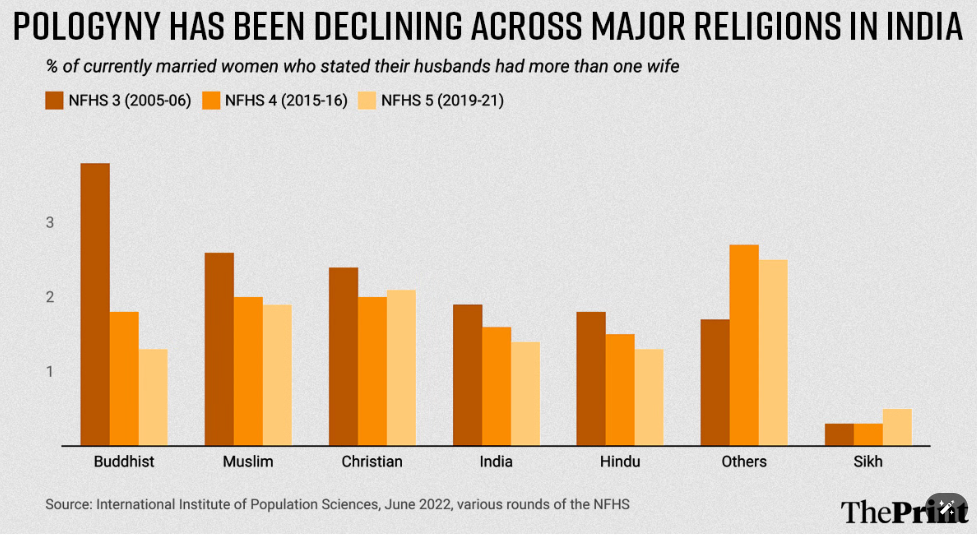
- Polygamy in India: The National Family Health Survey(NFHS-5) (2019-2021) reveals that in Assam, 1.8% of Hindu women and 3.6% of Muslim women experience polygamy, with an overall prevalence rate of 2.4%.
- Notably, Meghalaya reports the highest polygamy rate in India at 6.1%.
- Nationally, polygamy rates are 2.1% among Christians, 1.9% among Muslims, 1.3% among Hindus and Buddhists, 0.5% among Sikhs, and 2.5% among other religions or castes.
- Notably, Meghalaya reports the highest polygamy rate in India at 6.1%.
- Prevalence Among Communities:
- Polygamy in Hindus: The Hindu Marriage Act, 1955 abolished and criminalized polygamy, mandating monogamous marriages under Section 11, which declares polygamous marriages void.
- Polygamy in Parsis: The Parsi Marriage and Divorce Act, 1936 outlawed bigamy, making it illegal for Parsis to remarry during the lifetime of their spouse without legal divorce or invalidation of the previous marriage.
- Polygamy in Muslims: Polygamy is not prohibited in Muslim law (Muslim Personal Law Application Act (Shariat) of 1937) however, if polygamy is found to violate fundamental rights under the Constitution, it could be challenged and overturned.

Judicial Pronouncement on Polygamy
- Parayankandiyal v. K. Devi & Others (1996): The Supreme Court (SC) concluded that monogamous relationships were the standard and ideology of Hindu society, which scorned and condemned a second marriage.
- Polygamy was not allowed to become a part of Hindu culture due to the influence of religion.
- State of Bombay v. Narasu Appa Mali (1951): The Bombay High Court ruled that the Bombay (Prevention of Hindu Bigamy Marriage) Act, 1946 was not discriminatory.
- The SC ruled that a state legislature has the authority to enact measures for public welfare and reforms, even if it violates the Hindu religion or custom.
- Javed & Others v. State of Haryana & Others (2003): The Supreme Court ruled that freedom of religion under Article 25 is subject to considerations of social harmony, dignity, and well-being.
- While Muslim law permits marrying up to four women, it is not mandatory, and choosing not to marry four women does not violate religious practice.
What are the Implications of Polygamy in India?
- Personal Laws and Fundamental Rights: India’s legal system faces inconsistencies, as personal laws allow polygamy for some communities (e.g., Muslims) while others (e.g., Hindus, Christians) enforce monogamy, raising questions about constitutional equality.
- Conflict with Gender Justice: Polygamy often conflicts with Article 21 (Right to Life and Personal Liberty), especially regarding a woman’s dignity, autonomy, and mental well-being.
- The Supreme Court in several judgments (e.g., Shayara Bano v. Union of India, 2017) emphasized the need to uphold gender rights in personal laws.
- Social and Legal Complications: Polygamy is outlawed for Hindus under the Hindu Marriage Act, 1955, but is permitted under Muslim personal law (with conditions).
- This differential treatment fuels debates on uniformity in personal laws and religious equality under Article 14 (Right to Equality) and Article 15 (Non-discrimination).
- Changing Norms: With rising awareness about gender equality, polygamy is becoming socially unacceptable, with many advocating for its legal restriction as it conflicts with modern values of individual rights and justice.
What are the Measures Needed to Address Implications of Polygamy?
- Gradual Reform: Personal laws should be amended to ensure alignment with constitutional values like equality and dignity. This gradual reform will ensure a balance between respecting religious practices and protecting women’s rights, ultimately working toward gender justice.
- Uniform Civil Code (UCC): Introducing a UCC, with broad consultations, can replace discriminatory personal laws, ensuring equal rights for all citizens. It would help standardize marriage laws, reducing legal disparities and conflicts, but should be implemented gradually and with cultural sensitivity.
- Legal Enforcement: Polygamous practices should be closely monitored and penalized under the law. Strengthening victim‑relief frameworks and providing social support will protect women from exploitation, ensuring they receive justice and compensation when affected by polygamy.
- Public Awareness: Legal reforms should be accompanied by public awareness campaigns to promote gender equality and constitutional values. NGOs, educational institutions, and community leaders can play a key role in changing attitudes toward polygamy and encouraging societal acceptance of gender justice.
- Judicial Oversight: Courts should use precedents to challenge discriminatory practices in polygamous marriages, ensuring they align with constitutional rights. Public interest litigations can further help safeguard women and children by addressing unconstitutional customs and personal laws.
Conclusion
Addressing polygamy in India necessitates a sophisticated reconciliation between preserving religious freedoms and upholding the constitutional tenets of equality and justice. A multifaceted approach—comprising incremental legal reforms, a thoughtful implementation of a Uniform Civil Code, and robust judicial intervention—can dismantle the systemic inequalities inherent in polygamous practices.
|
Drishti Mains Question: Polygamy in India raises complex issues related to religious freedom, gender equality, and constitutional rights. Comment. |
Frequently Asked Questions (FAQs)
Q. Is polygamy legal in India?
Polygamy is legal for Muslims under personal laws but prohibited for Hindus, Sikhs, and Christians by the Hindu Marriage Act, 1955.
Q. Can polygamous marriages be challenged in court?
Yes, polygamous marriages can be challenged if they violate constitutional rights, particularly regarding equality and dignity.
Q. How does polygamy impact women's rights in India?
Polygamy often results in gender inequality, emotional abuse, and limited access to resources for women.
Q. What is the government's stance on a Uniform Civil Code (UCC) in relation to polygamy?
The government has debated the UCC to replace personal laws, ensuring uniform rights but facing concerns over religious freedom.
UPSC Civil Services Examination, Previous Year Questions (PYQs)
Prelims
Q. Which Article of the Constitution of India safeguards one’s right to marry the person of one’s choice? (2019)
(a) Article 19
(b) Article 21
(c) Article 25
(d) Article 29
Ans: (b)
Exp:
- The right to marry is a component of the right to life under Article 21 of the Constitution of India which states that “No person shall be deprived of his life and personal liberty except according to the procedure established by law”.
- In Lata Singh v. State of Uttar Pradesh 2006, the Supreme Court viewed the right to marry as a component of the right to life under Article 21 of Indian Constitution.
- Therefore, option (b) is the correct answer.
Mains
Q. Customs and traditions suppress reason leading to obscurantism. Do you agree?(2020)
Governance
23rd Law Commission and One Nation One Election
For Prelims: 23rd Law Commission , Joint Parliamentary Committee, Model Code of Conduct, One Nation One Election, Basic Structure of the Indian Constitution
For Mains: Basic Structure Doctrine and judicial review, Electoral Reforms in India.
Why in News?
The 23rd Law Commission has shared its initial views with the Joint Parliamentary Committee examining the Constitution (129th Amendment) Bill, 2024, and the Union Territories Laws (Amendment) Bill, 2024, both aimed at enabling One Nation One Election.
- The Commission has said that the proposals do not violate the Constitution’s basic structure and that the Model Code of Conduct (MCC) does not need statutory backing.
What are the Key Highlights of 23rd Law Commission?
- 23rd Law Commission of India: Law reform in India has been ongoing since independence, with the first Law Commission set up in 1955.
- The Union government has constituted the 23rd Law Commission for a three-year term from September 1, 2024, to August 31, 2027, with Justice (Retd.) Dinesh Maheshwari as Chairperson.
- The Commission includes a full-time chairperson, four full-time members, the Secretaries of Legal Affairs and Legislative Departments as ex-officio members, and up to five part-time members.
- Its mandate covers reviewing and repealing obsolete laws, simplifying legal language and procedures, and aligning legislation with current economic needs.
- The Commission also advises the government on legal issues, and studies the impact of globalisation on vulnerable groups.
- 23rd Law Commission’s Views Regarding One Nation One Election Bills: The Commission stated that the One Nation One Election Bills do not violate the Constitution’s basic structure, noting that federalism and the voter’s rights remain fully protected.
- It clarified that synchronising elections alters only the frequency and timing of polls and does not in any way dilute the democratic right to vote.
- It is the Commission's view that the Bills do not require ratification by states, as they do not propose amendments to subjects under Article 368(2), clauses (a) to (e), which mandate state ratification.
- Simultaneous elections are viewed positively as they would lead to saving of time and money.
- Model Code of Conduct (MCC): The Law Commission advised against giving statutory status to the MCC, arguing that codifying it would slow down decision-making during elections.
- It stressed that the current flexible, consensus-based MCC works better, as it allows the Election Commission to act quickly when needed.
What is the Basic Structure Doctrine of the Indian Constitution?
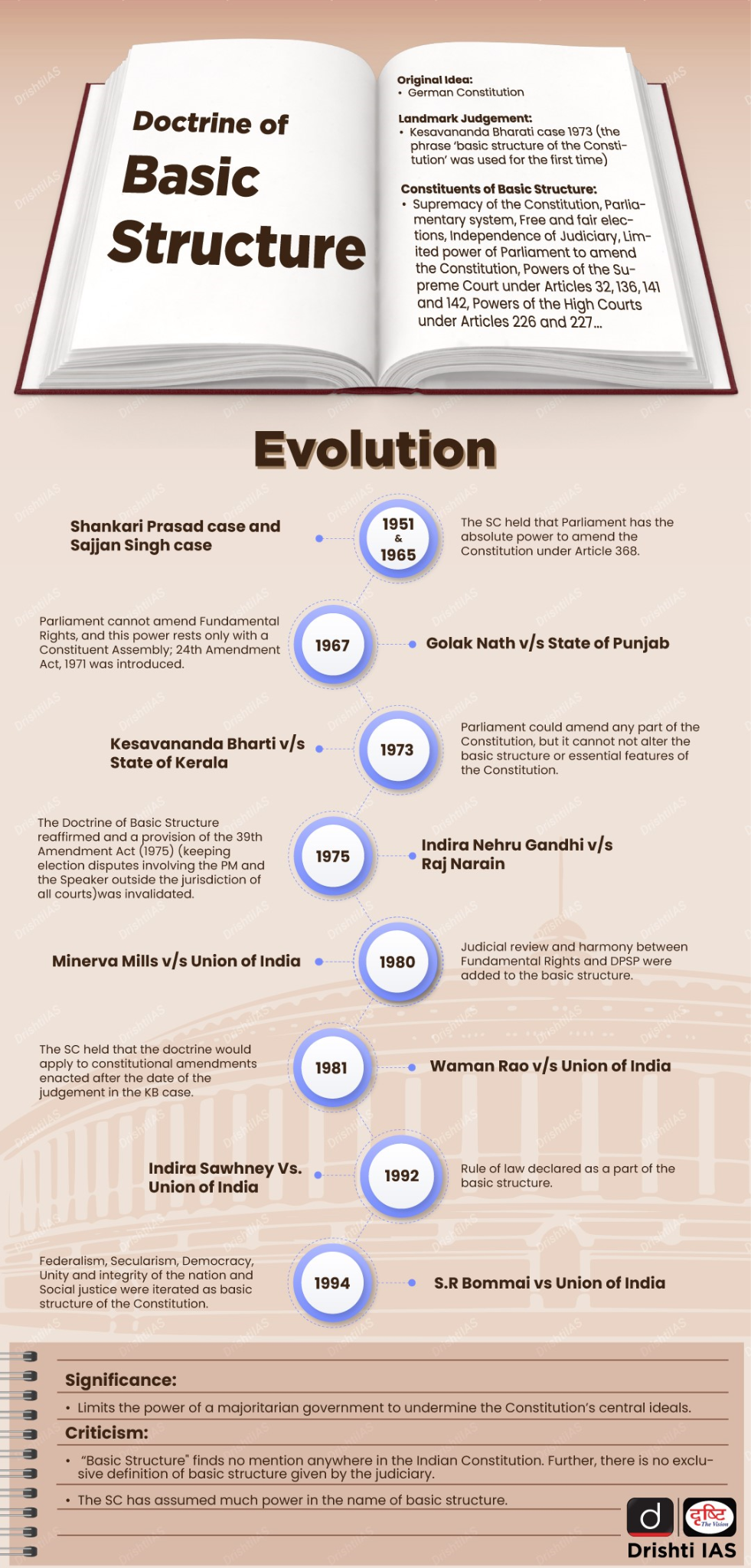
- About: Basic structure doctrine of the Indian Constitution, is a judicial review principle established by the Supreme Court of India in the landmark case of Kesavananda Bharati v. State of Kerala in 1973.
- It protects core constitutional values such as constitutional supremacy, the rule of law, separation of powers, and federalism. It also holds that Parliament, even under Article 368, cannot amend or destroy these essential features of the Constitution.
- Its origins trace back to the post-war German Constitution, 1949, which protected essential principles after the Nazi era.
- Elements of Basic structure doctrine: The Supreme Court has made it clear that the list of basic features is not exhaustive, the Court identifies them case by case.
- It includes several core elements such as the supremacy of the Constitution, a sovereign, democratic, and republican form of government, secularism, federalism, the rule of law, and the separation of powers.
- It also comprises judicial review, independence of the judiciary, free and fair elections, the parliamentary system of government, and the unity and integrity of the nation.
- Other essential features include the primacy of Fundamental Rights, harmony between Fundamental Rights and the Directive Principles of State Policy (DPSPs), and the powers of the Supreme Court under Articles 32, 136, 141, and 142, as well as those of the High Courts under Articles 226 and 227.
- Significance of the Basic Structure Doctrine:
- Safeguards Constitutional Identity: Prevents Parliament from altering or destroying the core features of the Constitution, ensuring continuity and stability.
- Checks Majoritarian Power: Places substantive limits on the amending power under Article 368, acting as a restraint on temporary political majorities.
- Protects Fundamental Rights: Ensures that essential rights like equality, liberty, and rule of law cannot be diluted through amendments.
- Strengthens Judicial Review: Empowers courts to invalidate amendments that damage constitutional essentials, reinforcing accountability.
- Ensures Free and Fair Elections: Prevents amendments that could distort democratic processes or weaken electoral integrity.
- Keeps Constitution a ‘Living Document’: Allows progressive changes while preventing destruction of the Constitution’s foundational philosophy.
What is One Nation, One Election?
- About: Simultaneous elections, or “One Nation, One Election”, refer to holding Lok Sabha, State Assembly, and local body elections at the same time.
- A high-level committee headed by former President Ram Nath Kovind has recommended enabling One Nation, One Election through two constitutional amendment bills the Constitution (129th Amendment) Bill, 2024, and the Union Territories Laws (Amendment) Bill, 2024.
- Historical Context: India experienced synchronized elections from 1951 to 1967, during which elections for the Lok Sabha and most State Assemblies were held simultaneously.
- However, this practice eroded due to political factors and premature dissolutions of assemblies. The election cycles diverged further due to political instability and defections in the 1960s.
- Rationale for Simultaneous Elections:
- Promotes consistent governance by reducing the continuous election cycle that distracts governments and leaders from development and welfare work.
- Prevents policy paralysis, as the Model Code of Conduct would be imposed less frequently, allowing uninterrupted implementation of schemes and decisions.
- Reduces diversion of administrative resources, since simultaneous polls limit the repeated deployment of personnel for election duties.
- Preserves the relevance of regional parties by ensuring that state-level issues receive focused attention without being overshadowed by national campaigns.
- Improves focus on governance, as fewer elections mean fewer political disruptions, less aggressive campaigning, and more attention to public needs.
- Cuts financial burden, lowering repeated expenditure on manpower, security, logistics, and equipment required for separate election cycles.
Conclusion
Simultaneous elections aim to streamline India’s electoral cycle, strengthen governance, and reduce administrative and financial burdens. With the 23rd Law Commission affirming their constitutional validity, the debate now centres on practical feasibility and political consensus.
Frequently Asked Questions (FAQs)
Q. Which committee recommended constitutional amendments to enable One Nation, One Election?
The High-Level Committee chaired by former President Ram Nath Kovind recommended the changes.
Q. What is the 23rd Law Commission’s view on the constitutionality of the One Nation, One Election Bills?
The 23rd Law Commission held that the Bills do not violate the Constitution’s basic structure.
Q. Does synchronising elections require state ratification under Article 368?
No. The Commission stated that the Bills do not amend provisions requiring state ratification under Article 368(2)(a)–(e).
Q. What is the Law Commission’s stance on giving statutory status to the MCC?
It advised against codifying the MCC, stating it would slow down administrative decision-making during elections.
Q. Which Supreme Court case established the Basic Structure Doctrine?
Kesavananda Bharati v. State of Kerala (1973).
UPSC Civil Services Examination, Previous Year Questions (PYQs)
Prelims
Q. Consider the following statements: (2017)
- The Election Commission of India is a five-member body.
- The Union Ministry of Home Affairs decides the election schedule for the conduct of both general elections and bye-elections.
- Election Commission resolves the disputes relating to splits/mergers of recognised political parties.
Which of the statements given above is/are correct?
(a) 1 and 2 only
(b) 2 only
(c) 2 and 3 only
(d) 3 only
Ans: (d)
Q. With reference to the Constitution of India, consider the following statements: (2019)
- No High Court shall have the jurisdiction to declare any central law to be constitutionally invalid.
- An amendment to the Constitution of India cannot be called into question by the Supreme Court of India.
Which of the statements given above is/are correct?
(a) 1 only
(b) 2 only
(c) Both 1 and 2
(d) Neither 1 nor 2
Ans: (d)
Mains
Q. Discuss the role of the Election Commission of India in the light of the evolution of the Model Code of Conduct. (2022)
Q. “Parliament’s power to amend the Constitution is limited power and it cannot be enlarged into absolute power.” In light of this statement explain whether Parliament under Article 368 of the Constitution can destroy the Basic Structure of the Constitution by expanding its amending power? (2019)
Important Facts For Prelims
UN Secretary-General
Why in News?
The United Nations has officially launched the selection process to choose the next Secretary-General (SG), who will take office in January 2027 once Antonio Guterres completes his second term on 31st December 2026.
What are the Key Facts About the UN Secretary-General?
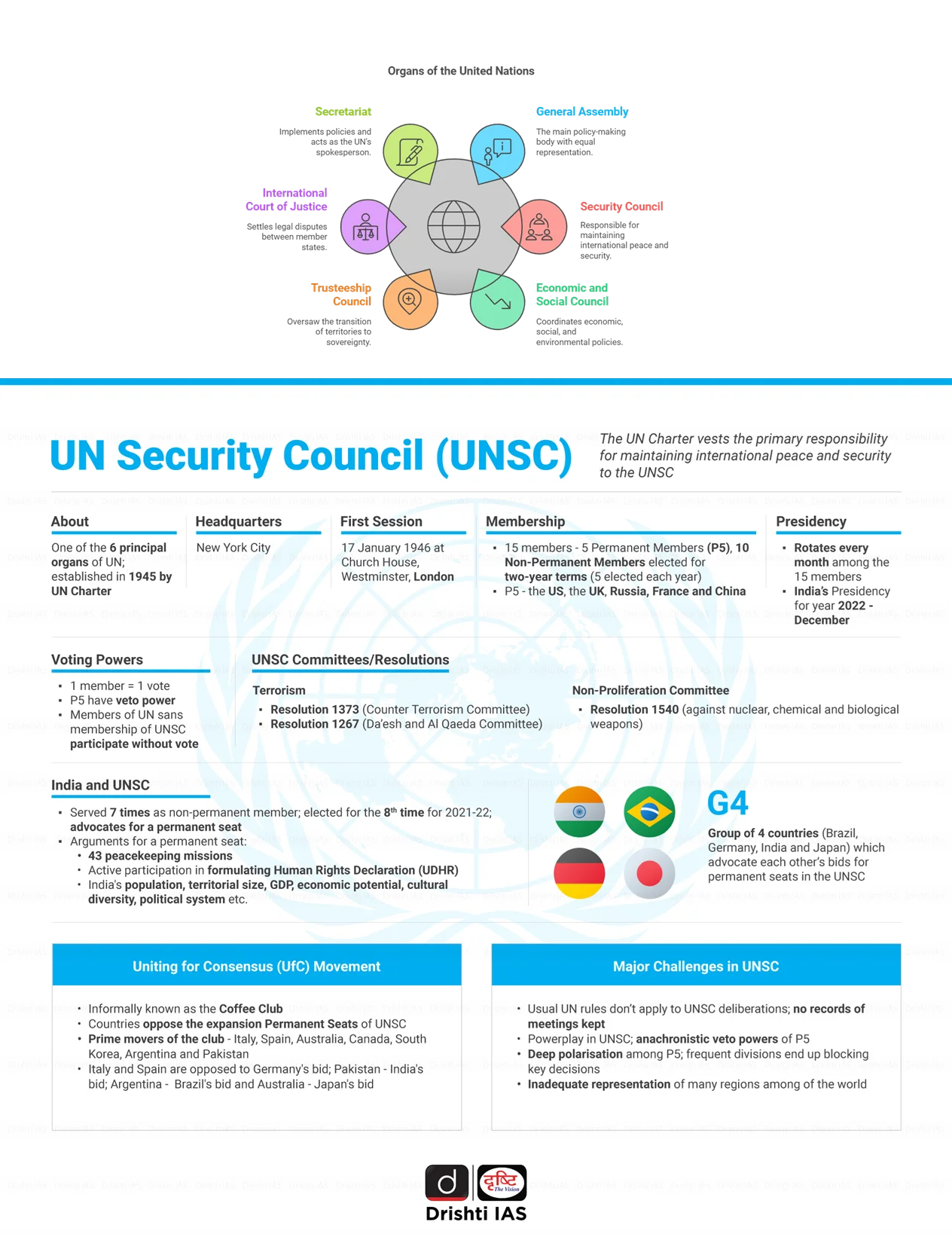
- About: The Secretary-General (SG) is the chief administrative officer of the United Nations under Article 97 of the UN Charter.
- SG is equal parts diplomat and advocate, civil servant and CEO, a symbol of UN ideals and a spokesperson for the world’s peoples, especially the poor and vulnerable.
- Traditionally, the post rotates among regions, though this is not legally binding.
- All UN Secretaries-General so far have been men, prompting calls for a woman SG.
- Selection and Appointment of SG:
- Initiation: sg selection process begins with a joint invitation from the Presidents of the UNGA and UNSC for Member States to submit nominations.
- Each nominee submits a vision statement, curriculum vitae and campaign financing disclosures.
- Security Council Screening: Conducts informal consultations and secret straw polls marking candidates as “encourage”, “discourage” or “no opinion”.
- Ballots from the five permanent members (US, UK, Russia, China, France) are colour-coded to indicate potential vetoes.
- Threshold for Recommendation: Candidate requires at least nine votes and no veto to move forward.
- UNSC Resolution: Council adopts a formal resolution recommending one candidate to the General Assembly.
- General Assembly Appointment: UNGA approves the recommendation by simple majority or by acclamation.
- Term: Five-year tenure, generally renewable once.
- Initiation: sg selection process begins with a joint invitation from the Presidents of the UNGA and UNSC for Member States to submit nominations.
- Role of SG:
- Administrative and Executive Duties: Acts as the chief administrative officer of the UN under Article 97 of the Charter.
- Heads the UN Secretariat, overseeing staff, budgets and operations across global missions and programmes.
- Chairs the UN System Chief Executives Board (CEB) for system-wide coordination.
- Performs functions assigned by the Security Council, General Assembly, ECOSOC, and other UN bodies.
- SG can bring to the Security Council’s attention any matter that may threaten international peace and security (Article 99).
- SG holds a mandate that combines administrative responsibilities with considerable political discretion.
- Diplomatic and Mediation Role: The SG uses their “good offices” to prevent or ease conflicts through quiet diplomacy, public appeals and mediation.
- They travel widely to meet governments and communities, staying closely connected to global concerns.
- Symbolic and Advocacy Role: The Secretary-General serves as the UN’s moral voice, promoting peace, justice and multilateral cooperation.
- The role requires balancing Member States’ concerns while upholding the principles and values of the UN Charter.
- Administrative and Executive Duties: Acts as the chief administrative officer of the UN under Article 97 of the Charter.
Frequently Asked Questions (FAQs)
Q. What is the legal basis for appointing the UN Secretary-General?
Appointment is done by the UN General Assembly on the recommendation of the Security Council as provided by Article 97 of the UN Charter.
Q. How are candidates for Secretary-General nominated?
Member States submit nominations after a joint invitation from the Presidents of the UNGA and UNSC; nominees normally provide a vision statement, CV and campaign financing disclosures.
Q. What majority is required for a Security Council recommendation?
A candidate typically needs at least nine affirmative votes in the member Council and must face no veto from any permanent member to be recommended.
UPSC Civil Services Examination, Previous Year Questions (PYQs)
Prelims
Q. With reference to the “United Nations Credentials Committee”, consider the following statements: (2022)
- It is a committee set up by the UN Security Council and works under its supervision.
- It traditionally meets in March, June and September every year
- It assesses the credentials of all UN members before submitting a report to the General Assembly for approval.
Which of the statements given above is/are correct? (2022)
(a) 3 only
(b) 1 and 3
(c) 2 and 3
(d) 1 and 2
Ans: (a)
Q. With reference to the United Nations, consider the following statements: (2009)
- The Economic and Social Council (ECOSOC) of the UN consists of 24 member States.
- It is elected by a 2/3rd majority of the General Assembly for a 3-year term.
Which of the statements given above is/are correct?
(a) 1 only
(b) 2 only
(c) Both 1 and 2
(d) Neither 1 nor 2
Ans: (b)
Rapid Fire
Taragiri
The Indian Navy received Taragiri (Yard 12653), the fourth Nilgiri-class (Project 17A) frigate and the third P17A ship built by Mazagon Dock Shipbuilders Ltd (MDL).
- Taragiri: The ship carries forward the legacy of the former INS Taragiri, a Leander-class frigate that served for 33 years (1980–2013).
- It was designed by the Warship Design Bureau (WDB) and built using the Integrated Construction approach for timely delivery.
- Earlier INS Nilgiri, INS Udaygiri and Himgiri were received by the Indian Navy under Project 17A.
- Project 17A: It is India’s programme to build seven Nilgiri-class stealth frigates as an upgraded successor to the Shivalik class.
- Of the seven frigates, four (Nilgiri, Udaygiri, Taragiri, Mahendragiri) are being built by MDL, and three (Himgiri, Dunagiri, Vindhyagiri) by GRSE.
- The ships are built using the integrated construction method, which reduces build time through pre-outfitting at block stages.
- About 75% of the Nilgiri-class systems are indigenously sourced. Built for blue-water missions, the frigates can tackle a wide range of threats and excel in anti-surface, anti-air, and anti-submarine warfare, making them highly versatile frontline assets.
- P17A ships use Combined Diesel or Gas (CODOG) propulsion plants, combining diesel engines and gas turbines, each driving a Controllable Pitch Propeller (CPP).
- They also feature a modern Integrated Platform Management System (IPMS) for efficient control and monitoring of onboard systems.
- The ships carry Long Range Surface to Air Missiles (LRSAM), BrahMos missiles, Barak-8, lightweight Anti-Submarine Torpedo, Indigenous Rocket Launcher (IRL).
- They carry advanced sensors such as multi-mission radar, the Shakti Electronic Warfare Suite, airborne early-warning radar, surface-surveillance radar, and Humsa-NG sonar.
| Read more: Project 17A Frigate Himgiri |
Rapid Fire
Durand Line
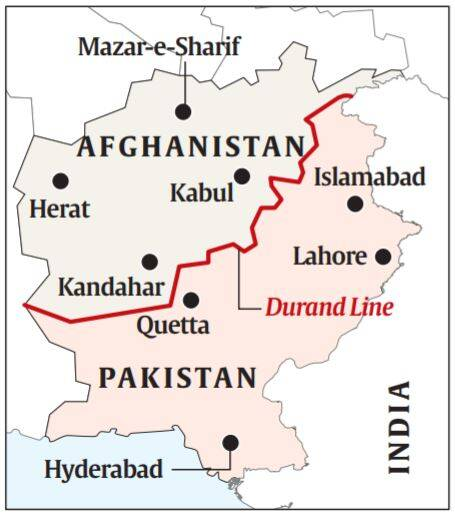
Conflict has resurfaced along the Pakistan–Afghanistan border, with the Taliban accusing Pakistan of conducting air strikes near the Durand Line.
- Historical Origin: The Durand Line was drawn between British India and Afghanistan by Sir Henry Mortimer Durand, then Foreign Secretary, and Emir Abdur Rahman Khan of Afghanistan.
- It runs 2,600 km from the Iran border in the west to the China border in the east, cutting across the Karakoram range and the Registan desert.
- Anglo-Afghan Wars: Afghanistan became strategically vital during the 1800s as Russia and the British Empire vied for influence in Central Asia.
- The British invaded Afghanistan in 1839, but were pushed back during the First Anglo-Afghan War.
- They invaded again in 1878, won the Second Anglo-Afghan War, and secured the Treaty of Gandamak (1879), which gave them control over Afghanistan’s foreign policy.
- In 1893, Sir Henry Mortimer Durand and Emir Abdur Rahman Khan agreed to create the Durand Line.
- It split Pashtun tribal areas, placed Balochistan under British India, and established the Wakhan Corridor as a buffer between Russia and Britain.
- The Third Anglo-Afghan War (1919) ended with the Treaty of Rawalpindi, which restored Afghanistan’s control over its foreign affairs and reaffirmed the Durand Line.
- The British invaded Afghanistan in 1839, but were pushed back during the First Anglo-Afghan War.
- Post-1947 Inheritance: Pakistan inherited the border after Partition, but Afghanistan refused to recognise it, calling it a colonial creation.
- Pashtunistan Issue: Pashtun groups on both sides demanded a separate Pashtunistan, deepening bilateral tensions.
- Taliban Position: All Afghan governments, including the Taliban, reject the Durand Line’s legitimacy and press claims over Pashtun regions.
| Read more: Durand Line: Afghanistan and Pakistan |
Rapid Fire
Italy Recognises Femicide as a Crime
The Italian Parliament has passed a landmark law that criminalizes femicide, making life imprisonment mandatory for the gender-motivated killing of women.
- About Femicide: Femicide is defined as the killing of women and girls because of their gender, and the UN categorizes it as killings by intimate partners, family members, or other perpetrators.
- Legal Rationale for Recognition: Viewing gender as a motive for crime highlights discrimination and systemic bias. Recognising femicide separately raises awareness, guides targeted policies, and exposes patriarchal violence.
- Law Against Femicide: Italy joins a small group of countries—such as Mexico, Cyprus, Morocco, North Macedonia, Türkiye, Gabon, and Chile—that have enacted dedicated femicide laws.
- India does not recognize femicide as a distinct legal category. However, India has several laws to protect females or gender based killings such as:
- International Day for the Elimination of Violence Against Women: It is observed on 25th November to raise awareness against violence against women and girls (VAWG). It was designated by the United Nations General Assembly in 1999.
| Read More: Protection of Women from Domestic Violence |
Rapid Fire
MH60R Helicopter
India has signed Letters of Offer and Acceptance (LOAs) worth Rs 7,995 crore with the US for five-year sustainment support of the Indian Navy’s MH-60R multi-role helicopters.
- The Sustainment package includes spares, product support, training, technical assistance, repair and replenishment, and setting up intermediate-level repair and maintenance facilities in India.
- India signed a deal in 2020 to procure 24 MH-60R Seahawk helicopters from the US.
- The Indian Navy commissioned its first MH-60R squadron in 2024, at INS Garuda in Kochi.
- MH 60R Seahawk (a maritime variant of the Blackhawk helicopter) is an advanced, all-weather, multi-role platform with anti-submarine warfare (ASW) capability, crucial for India’s maritime security.
- The helicopter comes equipped with a range of sensors, including a multi-mode radar, electronic support measures system, electro-optical/infrared camera, datalinks, aircraft survivability systems, dipping sonar, and sonobuoys.
| Read more: MH-60R Multi-Mission Helicopters |



