Governance
Good Governance Day
For Prelims: Good Governance Day, Good Governance Index, National Centre for Good Governance, Mission Karmayogi
For Mains: Concept and principles of good governance, Challenges to good governance in India,Citizen participation: Jan Andolan vs Jan Bhagidari
Why in News?
Good Governance Day, observed on 25th December, commemorates the birth anniversary of Atal Bihari Vajpayee and underscores his ideals of accountability, transparency, and inclusive governance.
Summary
- Good Governance Day reflects Atal Bihari Vajpayee vision of accountable, transparent, and inclusive governance, which continues to guide India’s institutional and administrative reforms.
- While India has made progress through digital governance, performance indices, and citizen-centric delivery, persistent challenges such as corruption, judicial delays, weak decentralisation, and trust deficits underline the need for deeper citizen participation, ethical leadership, and empowered local governance.
What is Good Governance?
- About: According to UNESCAP, governance is the process of decision-making and the manner in which decisions are implemented (or not implemented), while good governance refers to the effective, fair, and accountable exercise of power to manage economic, political, and social resources in the public interest for development.
- It involves not just the government, but also legislature, judiciary, civil society, private sector, media, and other formal and informal actors.
Governance + Transparency + Accountability + Rule of Law → Good Governance
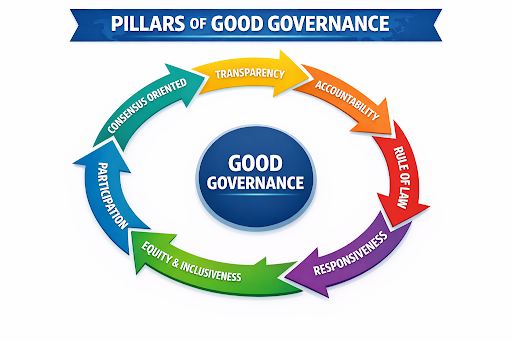
- Core Characteristics of Good Governance: According to global institutions like the UN and World Bank, good governance is characterised by:
- Participation: Active involvement of citizens, including women and marginalised groups
- Rule of Law: Fair, impartial laws enforced by an independent judiciary
- Transparency: Free and accessible flow of information
- Responsiveness: Timely and effective service delivery
- Consensus-Oriented: Mediation of diverse interests for collective welfare
- Equity and Inclusiveness: Equal opportunities for all sections of society
- Effectiveness and Efficiency: Optimal use of resources for desired outcomes
- Accountability: Answerability of government, private sector, and civil society
- Significance: Good governance minimises corruption, protects human rights, and ensures transparent and accountable administration, thereby building public trust in institutions.
- It also promotes equitable access to opportunities, especially for the poor and vulnerable, and accelerates inclusive and sustainable economic and social development by reducing regional and social disparities.
- It also reinforces ethical governance values such as integrity, probity, compassion, fairness, and responsibility, which are core to ethical public administration.
How is India Promoting Good Governance?
- Digital and e-Governance Initiatives: Platforms like UMANG, DigiLocker, GeM, and e-Office enable paperless, transparent, and time-bound service delivery while reducing discretion and corruption.
- Transparency and Accountability Frameworks: The Right to Information Act 2005, Citizen Charters, grievance redressal portals, and social audits strengthen public oversight and administrative accountability.
- Performance Measurement and Monitoring: Tools such as the Good Governance Index (GGI) benchmark governance outcomes across States, encouraging competitive federalism and evidence-based reforms.
- Department of Administrative Reforms & Public Grievances (DARPG) and National Centre for Good Governance (NCGG) lead governance reforms, and strengthen institutional grievance redressal systems.
- Administrative Capacity Building: Mission Karmayogi and the iGoT platform focus on continuous skill upgradation of civil servants for a professional and future-ready bureaucracy.
- Rural Development: DAY-NRLM has mobilised over 10.29 crore rural households into SHGs, enabling access to finance and sustained livelihood support, while the Lakhpati Didi initiative signals a shift from subsistence to diversified, income-secure livelihoods.
- Investments in housing (PMAY-G) and connectivity (PMGSY) have reduced isolation and expanded access to markets and services, while skill development (DDU-GKY) and social security (NSAP) provide a safety net for youth and vulnerable groups.
- Digitalisation links rural producers to markets and improves Panchayat transparency through eGramSwaraj and BharatNet.
- Independent Constitutional Bodies: Institutions like Comptroller and Auditor-General of India (CAG), Election Commission of India, UPSC, and Finance Commission ensure financial accountability, free elections, merit-based recruitment, and fiscal federalism.
- Citizen-Centric Service Delivery: National e-Governance Plan, Direct Benefit Transfer (DBT), single-window clearances, and mobile-based platforms improve last-mile delivery and reduce leakages.
- MyGov Platform encourages citizen participation in policymaking and feedback.
- The adoption of Sevottam Model set service standards and institutionalized time-bound, accountable public service delivery.
- Judicial and Legal Reforms: Expansion of e-Courts and fast-track courts to improve access to justice and reduce pendency.
- Decentralisation and Local Governance: By strengthening Gram Panchayats, Self-Help Groups, and community-based institutions, governance is brought closer to citizens, enabling participatory planning and more responsive outcomes.
Good Governance Index (GGI)
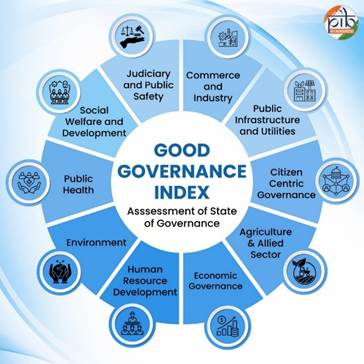
- About: The DARPG introduced the GGI on 25th December 2019, to evaluate governance performance across states and union territories and encourage improvements.
- Coverage: GGI 2020–21 assesses governance across 10 sectors and 58 indicators.
- Categories Under the GGI: To ensure fair comparison, jurisdictions are grouped into four categories (Group A States, Group B States, North-East and Hill States, and Union Territories).
- Top Performers in the GGI 2020–21:
- Group A States: Gujarat, Maharashtra, Goa
- Group B States: Madhya Pradesh, Rajasthan, Chhattisgarh.
- North-East & Hill States: Himachal Pradesh, Mizoram
- Union Territories: Delhi.
- Top Performers in the GGI 2020–21:
What are the Major Challenges to Good Governance In India?
- Economic and Social Insecurity: High unemployment (5.2% in October, 2025) and inequality reduce citizen participation and weaken trust in public institutions.
- According to the World Bank, India’s Gini Index stands at 25.5, making it the fourth most equal country in the world.
- Ineffective Policymaking: Top-down policy design often ignores local realities, leading to poor implementation and uneven outcomes.
- Criminalization & Nexus: The Association for Democratic Reforms (ADR) data shows that around 45% of MLAs across states have declared criminal cases against them.
- The growing number of legislators with pending criminal cases creates conflicts of interest, while the politician–bureaucracy–business nexus distorts policy priorities, weakens institutions, and erodes democratic governance.
- Institutional Corruption: Corruption and weak institutional capacity reduce governance efficiency.
- Nearly 20% of India’s GDP is spent on public procurement, which the Central Vigilance Commission (CVC) identifies as a sector highly vulnerable to corruption.
- India ranked 96 out of 180 countries in the Corruption Perceptions Index (CPI) for 2024, eroding public trust.
- Judicial Delays: Over 4 crore pending court cases undermine the rule of law and timely justice delivery.
- Poor Accountability Mechanisms: Weak monitoring and grievance redressal affect the effectiveness of schemes such as MGNREGA and Public Distribution System.
- The CAG flagged serious irregularities in Pradhan Mantri Kaushal Vikas Yojana (PMKVY) implementation, including fake bank details, duplicate photos, non-functional training centres, and unpaid dues for over 34 lakh candidates.
- Together, these lapses point to weak oversight and corruption, undermining accountability, outcomes, and value for public money.
- Political Resistance To Reforms: Reluctance to decentralise power and strengthen local governance slows systemic reforms.
- Trust Deficit: Delays in welfare delivery and lack of transparency reduce citizens’ confidence in governance systems.
- Populism vs Structural Reform: Political parties often prioritise a freebie (revadi) culture to win elections, diverting scarce public resources away from long-term investments in infrastructure, health, and education.
What Measures are Needed to Strengthen Good Governance In India?
- Deepen Citizen Participation: Move from Jan Andolan (people’s movement) to Jan Bhagidari (active people’s participation) and strengthen Jan Chetna (public Awareness) by institutionalising social audits across all major Schemes.
- This can be done through regular public consultations, open feedback platforms, and deeper participatory governance at the grassroots level.
- Focus on the Marginalised: Realise Sarvodaya through Antyodaya by first uplifting the most vulnerable.
- Prioritising women, SC/STs, minorities, the elderly, farmers, and aspirational districts ensures that inclusive social and economic justice becomes the foundation for welfare of all.
- Empower Local Governments: Promote democratic decentralisation by empowering Panchayats and Urban Local Bodies with adequate funds, functions, and functionaries (3Fs).
- Simplify Governance Processes: Re-engineer procedures through single-windows like Kerala’s FRIENDS (Fast Reliable Instant Efficient Network for Disbursement of Services), time-bound service delivery laws, and robust feedback mechanisms to reduce citizen interface costs and curb corruption.
- Strengthening the Sevottam Model and expanding e-governance can further improve efficiency, transparency, and quality of public service delivery.
Minimum Government + Maximum Governance → Citizen Empowerment → Good Governance
- Promote Ethical Governance: Enforce zero tolerance for corruption, uphold integrity norms, protect whistleblowers, and strengthen vigilance institutions to rebuild public trust.
- Implement the 2nd Administrative Reforms Commission’s focus on "Ethics in Governance"—moving from a "Culture of Secrecy" to a "Culture of Service."
- Judicial Capacity Enhancement: Under e-Courts Phase III, scale up AI-based case management and automated scheduling.
- Virtual courts for petty offences can help reduce the backlog of pending cases and allow judges to focus on complex matters.
- Gati Shakti for Bureaucracy: Apply the "Gati Shakti" (Integrated Planning) approach to administrative workflows to break inter-ministerial silos and improve coordination, efficiency, and policy outcomes.
- Move from Rule based to Role based (from Babu culture to seva culture) approach (Mission Karmayogi).
- Introduce 360-degree appraisals (as suggested by the 2nd ARC) and lateral entry at mid-to-senior levels to bring in specialized domain expertise.
.png)
Key Facts About Atal Bihari Vajpayee
- Early Life: Atal Bihari Vajpayee was born on 25th December 25, 1924, in Gwalior, Madhya Pradesh.
- Participated in the Quit India Movement (1942) during his student days.
- Journalism and Political Journey: Atal Bihari Vajpayee began his public life as a journalist before joining the Bharatiya Jana Sangh in 1951, the predecessor of the Bharatiya Janata Party (BJP), and went on to play a foundational role in shaping BJP and National Democratic Alliance (NDA) politics.
- He is a veteran parliamentarian, he served as Prime Minister three times (13 days (1996), 11 months (1998–99), and a full term (1999–2004)) and held key roles including External Affairs Minister and Leader of the Opposition.
- Awards and Honours: He was conferred Padma Vibhushan (1992) and Bharat Ratna (2015) for his lifelong service to the nation. In 1994, he was named India's 'Best Parliamentarian.'
Role in Nation-Building
- Transformational Governance: He delivered landmark reforms in telecom (New Telecom Policy, 1999), power sector (Electricity Act, 2003), fiscal discipline (FRBM Act, 2003).
- Connectivity-led Development: He viewed connectivity as a growth enabler, launching the National Highways Development Project (NHDP) and Pradhan Mantri Gram Sadak Yojana (PMGSY) to integrate markets, villages, and cities.
- Human Capital and Social Upliftment: Initiatives like Sarva Shiksha Abhiyan expanded primary education.
- Science, Technology, and Strategic Autonomy: Vajpayee asserted India’s global standing through Pokhran-II (1998), and announced Chandrayaan-I, laying foundations for India’s space and nuclear ambitions.
- Foreign policy and global voice: He elevated India’s diplomacy with balanced assertiveness, advocated India’s UN Security Council aspirations, and projected India’s civilisational ethos—famously addressing the UN General Assembly in Hindi.
Conclusion
Good governance is the backbone of inclusive development and democratic legitimacy. India’s governance reforms, and digital initiatives show progress, but sustained citizen participation, institutional strengthening, and ethical leadership remain crucial to achieving equitable and accountable governance.
|
Drishti Mains Question: Good governance is as much about institutions as it is about citizen participation. Examine this statement in the Indian context. |
Frequently Asked Questions (FAQs)
1. What is meant by good governance according to UNESCAP?
It refers to the effective, accountable, transparent, and inclusive exercise of power in managing public resources for development.
2. Why is Good Governance Day observed on 25th December?
It marks the birth anniversary of Atal Bihari Vajpayee and promotes citizen-centric, accountable governance.
3. What is the Good Governance Index (GGI)?
Introduced by DARPG in 2019, it assesses governance performance of States and UTs across multiple sectors and indicators.
UPSC Civil Services Examination Previous Year Question (PYQ)
Mains
Q. E-governance is not only about utilization of the power of new technology, but also much about the critical importance of the ‘use value’ of information. Explain. (2018)
Q. The Citizens’ Charter is an ideal instrument of organizational transparency and accountability, but it has its own limitations. Identify the limitations and suggest measures for greater effectiveness of the Citizens’ Charter. (2018)


Biodiversity & Environment
Human–Wildlife Conflict
For Prelims: Elephants, Elephant Corridor, International Union for Conservation of Nature (IUCN), Zoonotic Diseases, Tigers, Leopards, Fundamental Duty, Wildlife Protection Act, 1972, National Parks, Biological Diversity Act, 2002, Project Elephant, Project Tiger, Tiger Reserve, National Wildlife Action Plan, NDMA.
For Mains: Status, causes and consequences of human-animal conflict. Key initiatives for minimising human-animal conflict and further steps required to effectively mitigate human-animal conflict.
Why in News?
A tragic train–elephant collision in Assam has brought the issue of human-wildlife conflict (HWC) into sharp focus, with the incident occurring outside a designated elephant corridor, raising concerns over gaps in wildlife movement mapping and preventive infrastructure.
Summary
- Human-animal conflict escalates due to habitat loss and climate change, causing fatalities and economic harm.
- Resolving it requires proactive, integrated strategies that involve securing wildlife corridors, deploying early-warning systems, fostering community-led coexistence, and strengthening legal-policy frameworks to shift from reactive compensation to sustainable landscape management.
What is Human-Animal Conflict?
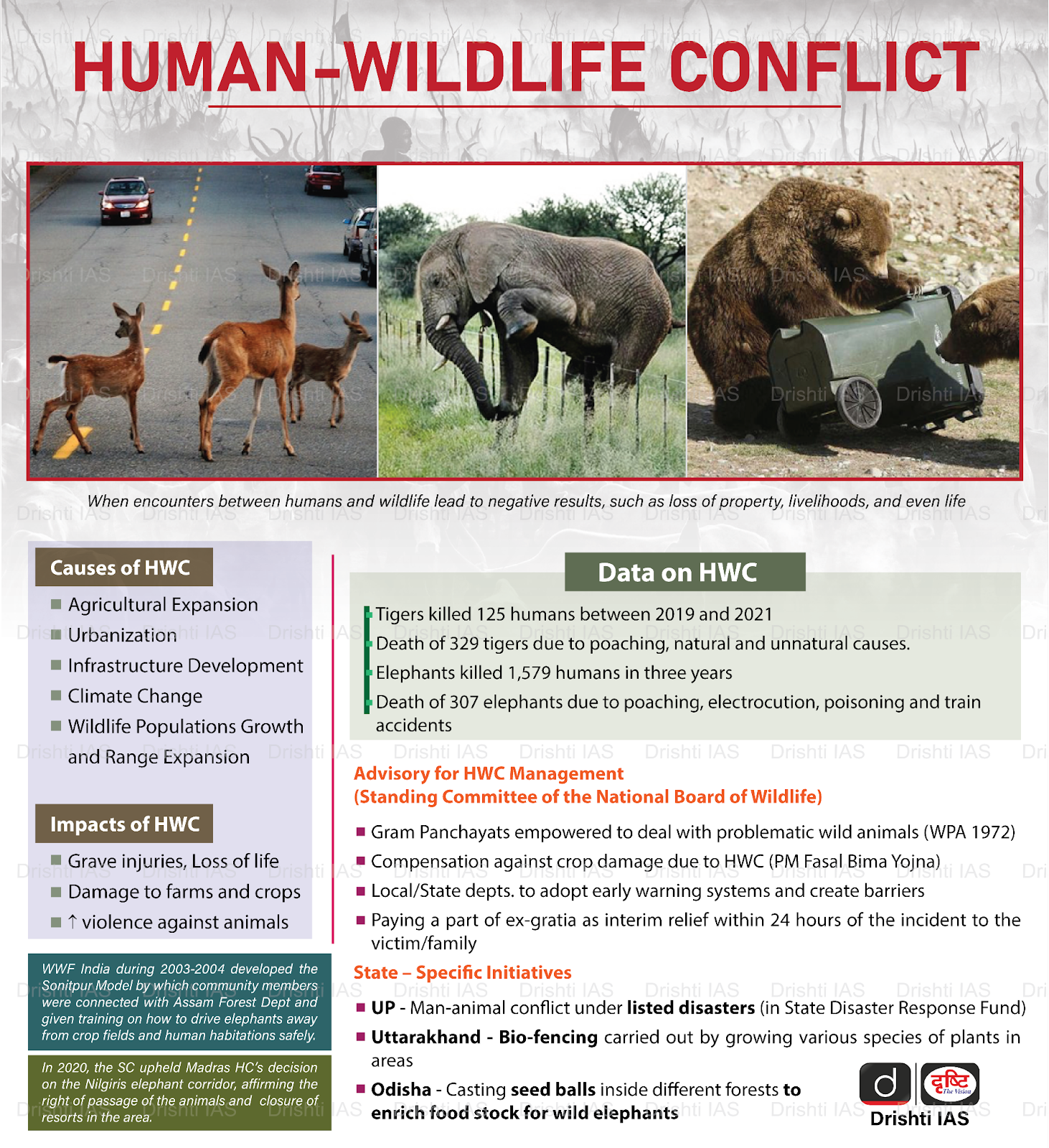
- About: HWC is defined as any interaction between humans and wildlife that results in negative impacts on human social, economic, or cultural life, on the conservation of wildlife populations, or on the environment. It's not just about physical attacks; it's a complex competition for space and resources.
- The International Union for Conservation of Nature (IUCN) identifies it as a major threat to the survival of many species and to human livelihoods.
- HWC in India: Between 2019 and 2024, elephant attacks caused more than 2,700 human deaths in India, while tigers killed 349 people.
- Simultaneously, hundreds of elephants have died from electrocution, train collisions, and poisoning, with projections indicating India will become a global hotspot for human-wildlife conflict by 2070.
What Factors Contribute to the Rise in Human-Wildlife Conflicts?
- Habitat Loss & Fragmentation: The conversion of natural habitats into farms, roads, and settlements directly destroys and fragments wildlife living spaces. As human populations expand into these territories and migration corridors, it forces more frequent encounters at the shared edges of forests and reserves.
- Linear infrastructure like highways, railways, and canals cuts through habitats, fragmenting landscapes, blocking ancient migratory routes, and increasing mortality from vehicle collisions and electrocution.
- E.g., Recent killing of 8 elephants in Assam due to train collision.
- Also in Karnataka’s Kodagu, expanding coffee and ginger farms have disrupted elephant migration, causing intense crop-raiding and property damage.
- Linear infrastructure like highways, railways, and canals cuts through habitats, fragmenting landscapes, blocking ancient migratory routes, and increasing mortality from vehicle collisions and electrocution.
- Adaptation to Human-Dominated Landscapes: Intelligent and adaptable species such as monkeys, elephants, and leopards can become habituated to human presence, learning to associate settlements and farms with reliable sources of food, thereby losing their natural fear.
- Dense sugarcane fields offer ideal cover for carnivores, as seen in Maharashtra where leopards have adapted to living entirely within them, preying on livestock and leading to frequent human conflict.
- These leopards, known as Sugar babies, have become so habituated to human areas that they do not return to forests even after relocation.
- Climate Change and Water Stress: Shifting weather patterns, including prolonged droughts and erratic monsoons, dry up natural forest waterholes, pushing animals toward village ponds and irrigation tanks.
- Disruption of tree fruiting seasons force bears and monkeys to seek food elsewhere.
- E.g., in Jammu & Kashmir, Himalayan brown bears are increasingly descending to lower altitudes due to altered food availability in their natural range.
- Population Recovery Outpacing Habitat Capacity: In some regions, effective protection laws and conservation programs have successfully increased populations of key species like tigers, elephants, and leopards, leading to higher animal densities at the boundaries of finite protected areas.
What are the Key Initiatives Taken by the Government to Minimize Human-Animal Conflict?
- Constitutional Mandate: Article 51A(g) establishes a Fundamental Duty of every citizen to protect and improve the natural environment, including wildlife. This forms the ethical and constitutional bedrock for all other measures.
- Judicial Recognition: In Animal Welfare Board of India vs. A. Nagaraja & Ors. (2014) and State of Gujarat v. Mirzapur Moti Kureshi Kassab Jamat (2005), the Supreme Court (SC) recognized that animals deserve rights similar to humans and emphasized their welfare by granting them legal status.
- Legislative Framework: Wildlife Protection Act, 1972 (WPA) is the primary legal framework establishing national parks and wildlife sanctuaries for their conservation.
- The 2006 amendment to WPA 1972 acknowledges wildlife corridors to aid animal movement and reduce HWC.
- Biological Diversity Act, 2002 aims for holistic conservation of ecosystem, species, and genetic diversity and complements existing wildlife laws.
- A private member’s bill called the Wildlife Corridors Bill, 2019 was also introduced in Lok Sabha in 2019 to tackle the issue of HWC.
- Policy & Planning Instruments: The National Wildlife Action Plan (NWAP) (2017-31) focuses on conserving endangered species and habitats, and promoting research and education for coexistence.
- NDMA guidelines recognize human-wildlife conflict as a disaster risk, advising integration of mitigation measures like early warning systems and habitat management into development projects.
- Technological Interventions: The Gajraj System is an Indian Railways AI surveillance tool that uses fiber-optic sensors to detect elephants on tracks and prevent collisions.
- TrailGuard AI is a compact, real-time camera system that uses AI to identify humans, poachers, and vehicles in protected areas, enabling rapid response.
- Species-Specific Conservation: Project Tiger (1973) establishes Tiger Reserves with core and buffer zones to address habitat loss.
- The Tigers Outside Tiger Reserves (TOTR) Project aims to reduce human-tiger conflict using advanced technology (AI, GPS, cameras), as around 30% of India’s tigers roam outside notified reserves.
- Project Elephant (1992) protects elephant habitats and corridors, securing migratory routes to prevent crop raiding and accidents.
Elephant Corridors
- About: Elephant corridors are narrow strips of natural habitat, typically forested or vegetated land, that connect larger fragmented wildlife areas, enabling safe passage for elephants between protected habitats or seasonal ranges.
- Overall Status: As per the Elephant Corridors of India report, 2023, India has identified 150 elephant corridors across 15 elephant range states. West Bengal has the highest number of elephant corridors (26) accounting for over 17% of all elephant corridors in India.
- Regional Spread: The East-central region has the highest share of corridors (35%, 52 corridors), followed by the North-east (32%), Southern (21%), and Northern (12%) regions.
- Corridor Type: Majority (84%) are intra-state corridors, while 13% are interstate and 6 are transnational corridors with Nepal.
What Steps are Further Required to Effectively Mitigate Human-Animal Conflict?
- Landscape-Level Planning: Adopt an ecosystem-based approach that goes beyond isolated protected areas to manage entire landscapes, ensuring connectivity between forests through scientifically mapped wildlife corridors.
- Integrate wildlife considerations into land-use planning, infrastructure development, and zoning regulations to prevent habitat fragmentation.
- Promote inter-state and inter-agency coordination, as animal movements often transcend administrative boundaries.
- On-Ground Prevention & Deterrence: Deploy context-specific physical barriers like solar-powered fences, trenches, and stone walls, alongside using watchtowers, and mobile apps to track animal movements.
- Economic & Livelihood Support: Revamp compensation schemes to be timely, transparent, and reflect the true market value of lost crops or livestock, using direct bank transfers to build tolerance among people.
- Promote conflict-resistant livelihoods like beekeeping, non-palatable horticulture, and ecotourism services.
- Legal, Institutional & Policy Reforms: Strengthen inter-agency coordination by establishing permanent district/state-level task forces with representatives from forest, revenue, agriculture, police, and local governments for coordinated action and rapid response.
- Mandate Human–Wildlife Conflict Impact Assessments for all development projects and allocate dedicated budgets for mitigation measures such as fencing and wildlife crossings.
- Community Engagement: Promote participatory management by involving local communities through village-level committees, alongside targeted awareness campaigns on safe practices, non-confrontational behavior, and the importance of wildlife protection.
Conclusion
The tragic Assam elephant death underscores that mitigating human-animal conflict requires a paradigm shift from reactive measures to proactive, integrated landscape management. This hinges on legally securing corridors, deploying science-based deterrence, and fostering community-led coexistence within a robust legal-policy framework.
|
Drishti Mains Question: Q. Human-wildlife conflict is not merely a conservation issue, but a significant socio-economic and humanitarian challenge. Analyse and suggest a multi-pronged strategy for sustainable coexistence. |
Frequently Asked Questions (FAQs)
1. What is Human–Animal Conflict (HWC)?
HWC refers to interactions between humans and wildlife that result in loss of life, livelihood, property, or ecological damage, driven by competition for space and resources.
2. How do railways and highways contribute to HWC?
Linear infrastructure cuts across wildlife habitats and corridors, causing animal mortality, disrupted migration, and increased human–wildlife encounters.
3. What legal measures exist to address Human–Animal Conflict?
The Wildlife Protection Act, 1972, its 2006 amendment on corridors, Biological Diversity Act, 2002, and Supreme Court rulings on animal rights form the legal framework.
UPSC Civil Services Examination Previous Year Question (PYQ)
Prelims
Q. Consider the following statements in respect of Trade Related Analysis of Fauna and Flora in Commerce (TRAFFIC): (2017)
- TRAFFIC is a bureau under the United Nations Environment Programme (UNEP).
- The mission of TRAFFIC is to ensure that trade in wild plants and animals is not a threat to the conservation of nature.
Which of the above statements is/are correct?
(a) 1 only
(b) 2 only
(c) Both 1 and 2
(d) Neither 1 nor 2
Ans: (b)
Mains
Q. Rehabilitation of human settlements is one of the important environmental impacts which always attracts controversy while planning major projects. Discuss the measures suggested for mitigation of this impact while proposing major developmental projects. (2016)


Important Facts For Prelims
Sponges Mitigate Heavy Metal Pollution
A recent study by Indian scientists has identified freshwater sponges in the Sundarban delta as natural tools for detecting and mitigating heavy metal pollution, highlighting their dual potential as bioindicators and agents of bioremediation.
Summary
- Freshwater sponges in the Sundarbans show exceptional ability to bioaccumulate heavy metals, making them reliable bioindicators.
- Their dual role in pollution detection and bioremediation offers a sustainable, ecosystem-based approach to managing toxic metal contamination.
What are Sponges?
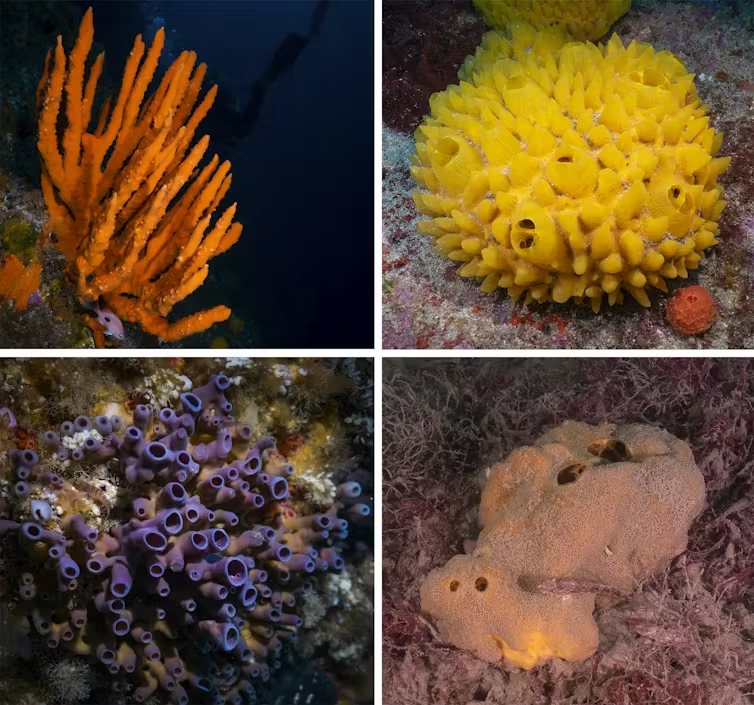
- About: Sponges are simple, aquatic animals belonging to the phylum Porifera. They are among the oldest and most primitive multicellular organisms on Earth, with a fossil record dating back over 600 million years.
- Key Characteristics of Sponges:
- No True Tissues or Organs: They lack complex body systems like nerves, muscles, or digestive tracts.
- Filter-Feeding Mechanism: They draw in water through numerous pores (ostia) on their body surface. Specialized cells called choanocytes (collar cells) trap and ingest bacteria, plankton, and organic particles from the water, which is then expelled through larger openings called oscula.
- Skeleton: They possess a simple skeleton made of mineral spicules (e.g., silica, calcium carbonate) and/or a fibrous protein called spongin.
- Habitat: Mostly marine, but some species live in freshwater (like those studied in the Sundarbans).
- Symbiotic Relationships: They host diverse microbial communities (bacteria, archaea) that play crucial roles in nutrition, chemical defense, and, as recent research shows, bioremediation.
- Role in Mitigating Heavy Metal Pollution: Sponges show strong bioaccumulation of toxic metals such as arsenic, lead, and cadmium, concentrating them far more than the surrounding water. They remove these heavy metals through adsorption where metal ions attach to the sponge's surface or are trapped in its porous structure.
What are Heavy Metals?
- About: Heavy metals are a group of elements that have high atomic weights and densities, typically greater than 5 g/cm³. Common examples of heavy metals are Lead (Pb), Arsenic (As), Cadmium (Cd) etc.
- Characteristics:
- Toxicity: They are harmful even in small amounts and can accumulate in living organisms, leading to poisoning or other health issues.
- Persistence: Many heavy metals do not break down easily and can persist in the environment for a long time.
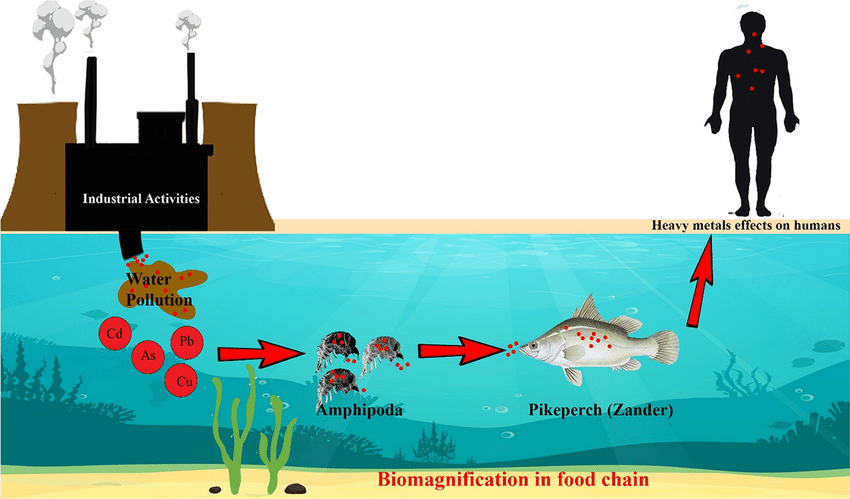
- Bioaccumulation: Heavy metals can accumulate in the food chain, as plants and animals absorb them, and higher organisms can accumulate the metals in their tissues.
- Major Sources:
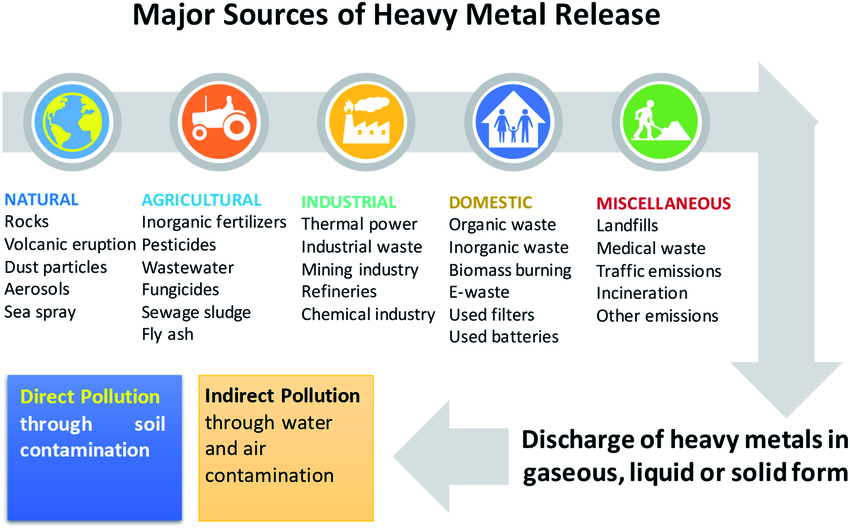
- Regional Heavy Metal Contamination in India:
|
State/Region |
Key Contaminants |
Affected Areas |
Reported Health Effects |
|
West Bengal & Bihar |
Arsenic, Cadmium |
Nadia District, Kolkata |
Arsenicosis (skin lesions), chronic lung disease, peripheral neuropathy, respiratory deficits. |
|
Punjab |
Selenium, Uranium, Barium |
Hoshiarpur, Nawansahar, Malwa, Ludhiana |
Hair loss, nail changes, "garlicky" breath, organ dysfunction (liver/kidney), DNA damage, increased breast cancer risk. |
|
Uttar Pradesh |
Hexavalent Chromium (Cr VI), Arsenic, Lead |
Kanpur, Balai |
Gastrointestinal distress, skin abnormalities, eye complaints. |
|
Madhya Pradesh |
Mercury, Industrial Pollutants |
Singrauli, Ratlam, Malanjkhand |
Tremors, abdominal pain, respiratory issues, gum problems. |
|
Odisha |
Iron, Industrial Heavy Metals |
Keonjhar, Talcher, Ganjam |
Acute respiratory infections, water-borne diseases. |
|
Delhi & NCR |
Lead, Aluminium |
Yamuna River Basin |
High blood lead levels (mothers/children), weakness, anxiety, high blood pressure, neurotoxicity. |
|
Karnataka |
Silver, Cadmium |
Bengaluru |
Renal (kidney) dysfunction, heavy metal accumulation in hair. |
Bioaccumulation
- Bioaccumulation is the gradual buildup of persistent toxic substances, such as heavy metals, within a single organism when intake from the environment, water, air, or food exceeds its ability to metabolize or excrete them.
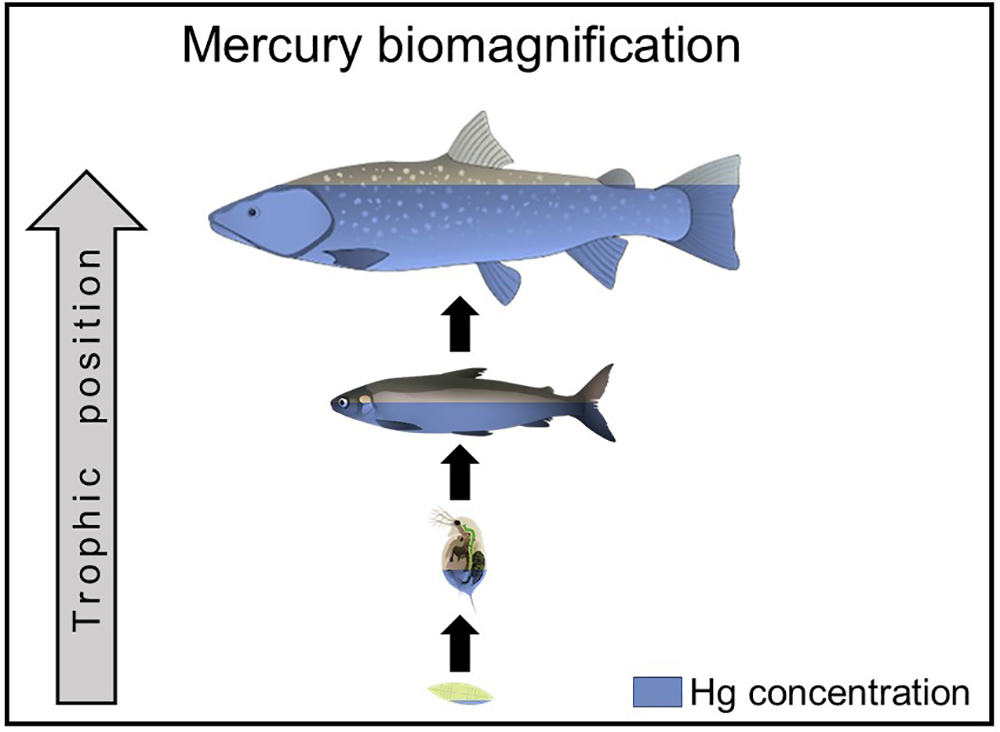
- Unlike biomagnification—which occurs across a food chain—bioaccumulation occurs at the individual level and drives biomagnification.
- A prime example is methylmercury in aquatic systems. Inorganic mercury from industrial pollution converts to methylmercury in aquatic environments, which bioaccumulates in fish and shellfish.
- Predatory fish (e.g., tuna, swordfish) exhibit high levels, posing risks to human consumers through neurological damage.
Frequently Asked Questions (FAQs)
1. What makes freshwater sponges effective bioindicators of heavy metal pollution?
Their filter-feeding habit and high bioaccumulation capacity allow detection of metals like arsenic, lead, and cadmium at low environmental concentrations.
2. How is bioaccumulation different from biomagnification?
Bioaccumulation occurs within a single organism, while biomagnification increases toxin concentration across trophic levels.
3. Name two classic diseases caused by heavy metal poisoning and their causative agents.
Minamata Disease caused by Mercury, and Itai-Itai Disease caused by Cadmium.
UPSC Civil Services Examination Previous Year Question (PYQ)
Q. In the context of solving pollution problems, what is/are the advantage/advantages of bioremediation techniques? (2017)
- It is a technique for cleaning up pollution by enhancing the same biodegradation process that occurs in nature.
- Any contaminant with heavy metals such as cadmium and lead can be readily and completely treated by bioremediation using microorganisms.
- Genetic engineering can be used to create microorganisms specifically designed for bioremediation.
Select the correct answer using the code given below:
(a) 1 only
(b) 2 and 3 only
(c) 1 and 3 only
(d) 1, 2 and 3
Ans: (c)


Rapid Fire
Birth Anniversary of Pandit Madan Mohan Malaviya
The birth anniversary of Bharat Ratna Mahamana Pandit Madan Mohan Malaviya is observed on 25th December.
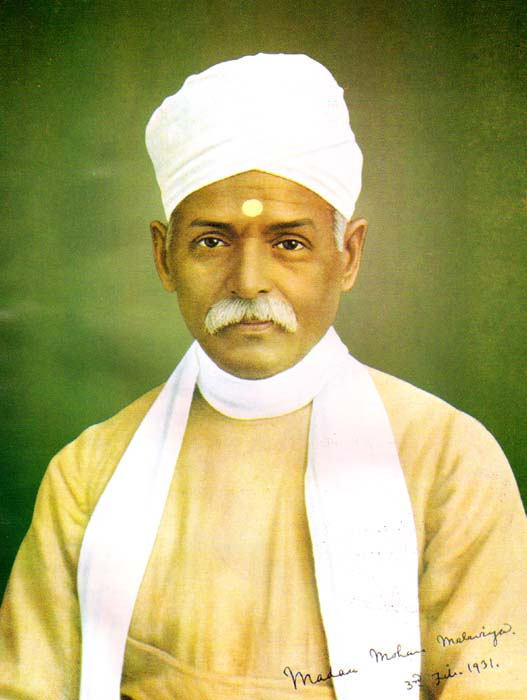
Pandit Madan Mohan Malaviya
- About: Born on 25th December 1861 in Prayagraj, Uttar Pradesh, he played a pivotal role in shaping modern India, blending educational reform, the freedom struggle, journalism, and social service.
- Mahatma Gandhi called Malaviyaji Devata Purush, Rabindranath Tagore titled him Mahamana (however some sources have attributed it to Mahatma Gandhi), and Dr. S. Radhakrishnan described him as a Karmayogi.
- Key Contributions:
- Role in India’s Freedom Struggle: He was a key participant in Gandhiji’s Salt Satyagraha and the Civil Disobedience Movement of 1930, and served as President of the Indian National Congress four times (1909, 1918, 1932, 1933).
- Functioned as a member of the Imperial Legislative Council for 11 years (1909–20) and successfully introduced the Devanagari script in British-Indian courts.
- Popularized the term Satyameva Jayate (from Mundaka Upanishad), which later became India's national motto.
- Helped establish the Hindu Mahasabha in 1915.
- Returned to the legal profession specifically to defend those accused in the Chauri Chaura incident (1922).
- Educational Pioneer: Founded the Banaras Hindu University (BHU) in 1916. He was also a key figure in establishing scouting for Indian youth.
- Social Reform: Played a pivotal role in ending the indenture system, liberating many Indians from bonded labour.
- Environmental Activism: Established the Ganga Mahasabha in 1905 to prevent British damming of the Ganga at Bhimgoda in Haridwar.
- Journalism: Founded multiple publications including Hindi weekly Abhyudaya (1907), Hindi monthly Maryada (1910), and English daily Leader (1909); served as Chairman of Hindustan Times Board.
- Role in India’s Freedom Struggle: He was a key participant in Gandhiji’s Salt Satyagraha and the Civil Disobedience Movement of 1930, and served as President of the Indian National Congress four times (1909, 1918, 1932, 1933).
- Recognition: Awarded Bharat Ratna in 2014; honored with Mahamana Express train service (Varanasi–New Delhi) in 2016.
| Read More: Madan Mohan Malaviya Jayanti |


Rapid Fire
Rhino Dehorning as a Conservation Strategy
A recent study published in Science shows that rhino dehorning has led to a sharp decline in poaching in African reserves, offering crucial insights into evidence-based wildlife conservation amid a booming illegal wildlife trade.
- Rhino Horns: Rhino horns are made of keratin, not bone, and have no scientifically proven medicinal value, yet they are widely perceived as status symbols and used in traditional medicine in parts of Asia.
- This demand fuels a lucrative illegal market that generated USD 874 million–USD 1.13 billion between 2012 and 2022, with horn prices ranging from USD 3,382 to USD 22,257 per kilogram.
- Effectiveness of Rhino Dehorning: Dehorning rhinos led to a 78% reduction in poaching, using just 1.2% of the total anti-poaching budget. At the individual level, dehorned rhinos faced a 95% lower poaching risk.
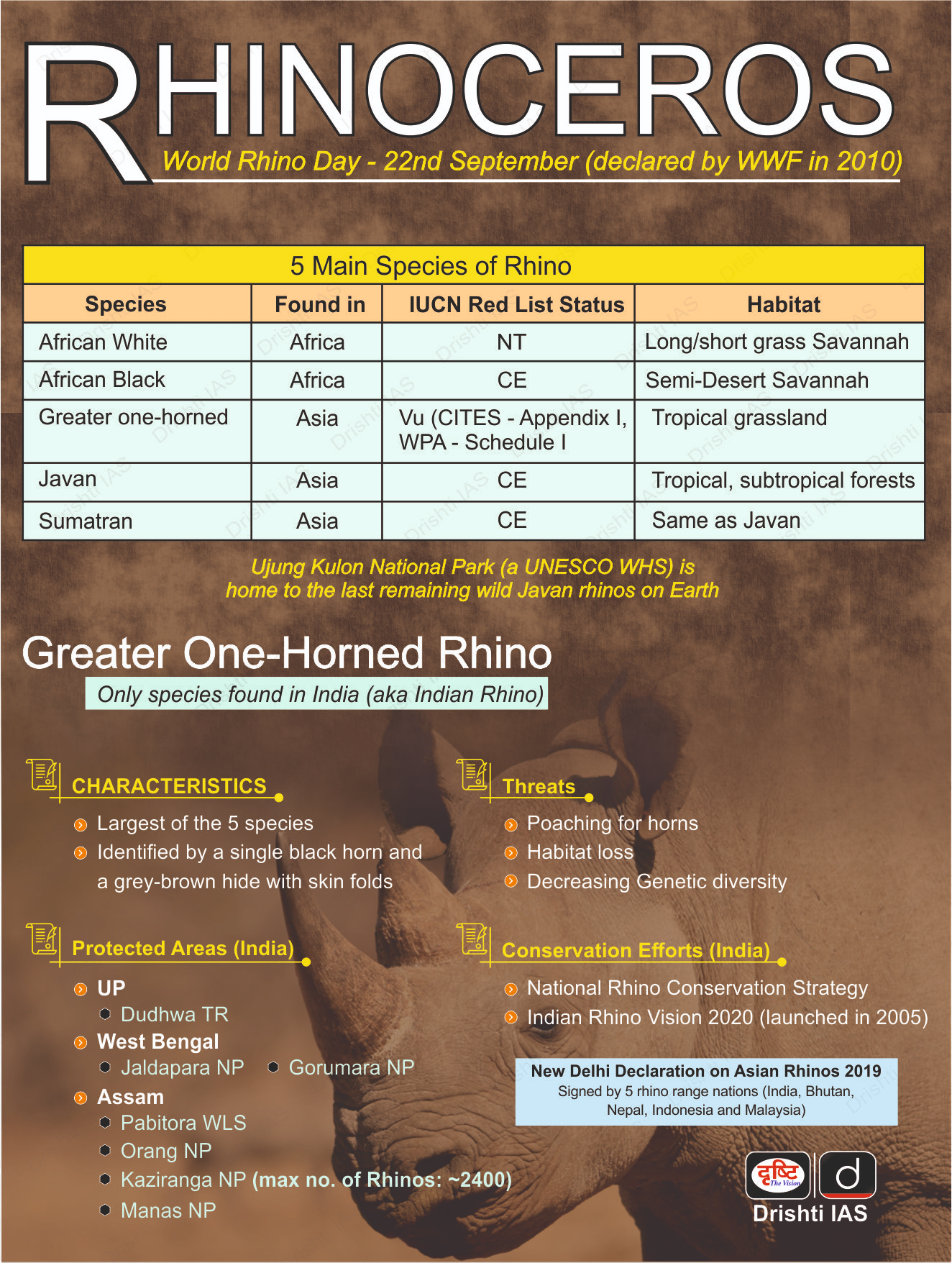
- India’s Model of Rhino Conservation: Kaziranga National Park in Assam, known as the “Rhino Capital of the World” for hosting the largest population of the one-horned rhinoceros, has lost only 1–2 rhinos in the last three years.
- This success stems from Indian Rhino Vision 2005, along with smart patrolling, community participation, and effective human–wildlife conflict mitigation, leading experts to argue that India does not require dehorning due to its strong conservation governance.
- Rhino DNA Index System (RhODIS): It is a DNA-based forensic database developed from rhino DNA (horns, dung) to track illegal trade, link seized horns to poached animals, and strengthen wildlife crime investigation and prosecution.
- RhODIS was originally developed in South Africa and later adapted and implemented in India.
| Read more: State of the Rhino 2023 |


Rapid Fire
DHRUV64 Microprocessor
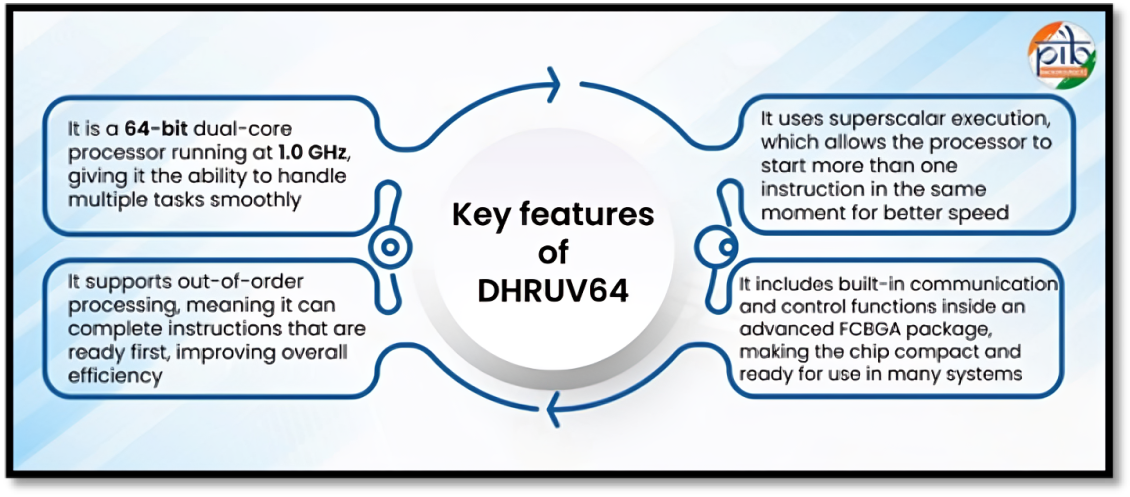
On 15th December, the Ministry of Electronics and Information Technology (MeitY) announced the launch of DHRUV64, a fully indigenous 64-bit microprocessor developed by C-DAC under the Microprocessor Development Programme (MDP), aimed at strengthening India’s sovereign semiconductor ecosystem.
DHRUV64
- About:
- DHRUV64: It is part of India’s ecosystem of processors, including SHAKTI from IIT-Madras, AJIT from IIT-Bombay, VIKRAM from the ISRO-Semiconductor Lab, and THEJAS64 from C-DAC (2025).
- It is a general-purpose, 64-bit, dual-core microprocessor
- Clock Speed: ~1 GHz
- Developer: Centre for Development of Advanced Computing (C-DAC)
- Architecture: Based on RISC-V
- Programme: Digital India RISC-V (DIR-V)
- Designed for embedded systems as well as operating-system-level workloads
- DHRUV64: It is part of India’s ecosystem of processors, including SHAKTI from IIT-Madras, AJIT from IIT-Bombay, VIKRAM from the ISRO-Semiconductor Lab, and THEJAS64 from C-DAC (2025).
THEJAS32 was the first India-designed chip DIR-V chip to be fabricated (in Malaysia) and THEJAS64 was the second, manufactured at SCL Mohali. DHRUV64 is the third on this list.
- Applications
- Telecom base stations
- Industrial automation and controllers
- Automotive electronics
- Routers and networking equipment
- Strategic and government systems
- Digital India RISC-V (DIR-V) Programme:
- Digital India RISC-V (DIR-V) Programme aims to develop a portfolio of indigenous RISC-V–based microprocessors to reduce India’s dependence on foreign processor technologies.
- It targets strategic and commercial sectors such as industry, defence, space, and consumer electronics, supporting technological sovereignty.
- RISC‑V:
- RISC-V is an open-source instruction set architecture (ISA) that allows anyone to design and customize processors without paying licensing fees.
- Unlike ARM or x86 (Intel/AMD), companies don't pay a "tax" to use the blueprint.
- It supports modular and scalable processor designs, making it suitable for applications ranging from embedded systems to high-performance computing.
- RISC-V is an open-source instruction set architecture (ISA) that allows anyone to design and customize processors without paying licensing fees.
| Read More: Swadeshi Microprocessor Challenge, India’s Semiconductor Ambitions |


Rapid Fire
India Pledges USD 450 Million to Aid Sri Lanka
India announced a USD 450 million reconstruction package to support Sri Lanka’s recovery after Cyclone Ditwah, reinforcing India’s role as a first responder and trusted partner in the Indian Ocean region.
- Earlier, under Operation Sagar Bandhu, India delivered humanitarian aid, relief supplies, and medical assistance to Sri Lanka, including an Indian Army field hospital near Kandy that treated over 8,000 people, reaffirming India’s strong support.
- Sri Lanka’s Fragile Recovery: Sri Lanka was showing tentative fiscal stability under International Monetary Fund (IMF) support when the cyclone struck.
- The IMF-led programme, imposed after Sri Lanka’s 2022 debt default, introduced austerity measures such as tax hikes, subsidy cuts, and high interest rates to restore some macroeconomic stability; but it disproportionately hurt the poor.
- The IMF recently approved about USD 206 million in emergency financial assistance under its Rapid Financing Instrument (RFI).
- The RFI provides prompt financial assistance to any IMF member country facing an urgent balance of payments need.
- The World Bank estimates USD 4.1 billion in losses (~4% of Sri Lanka’s GDP) from direct physical damage. The recovery is seen as more challenging than the 2004 tsunami.
- Strategic Significance for India: The reconstruction package builds on India’s USD 4 billion assistance in 2022 (lines of credit, currency swaps, petroleum support) to Sri Lanka.
- India has consistently acted as a first responder in the Indian Ocean region, especially for Sri Lanka, extending support during the MV XPress Pearl ship-fire disaster in 2021 and providing assistance during Cyclone Roanu (2016).
- This strengthens Neighbourhood First and SAGAR approaches, enhancing India’s regional leadership amid climate shocks.
| Read more: Strengthening India- Sri Lanka Ties |