International Relations
India and New Zealand FTA
For Prelims: Free-trade Agreement (FTA), Foreign Direct Investment (FDI), Geographical Indication (GI), European Union, Five Eyes, ASEAN, MSMEs, Trade Deficit, Technical Barriers to Trade (TBT), Intellectual Property Rights (IPR), Anti-dumping, Carbon Credit, Friend Shoring.
For Mains: Key highlights of India and New Zealand (NZ) free-trade agreement (FTA) and its significance, Challenges posed to India from FTAs and way forward to fully utilise FTAs by India.
Why in News?
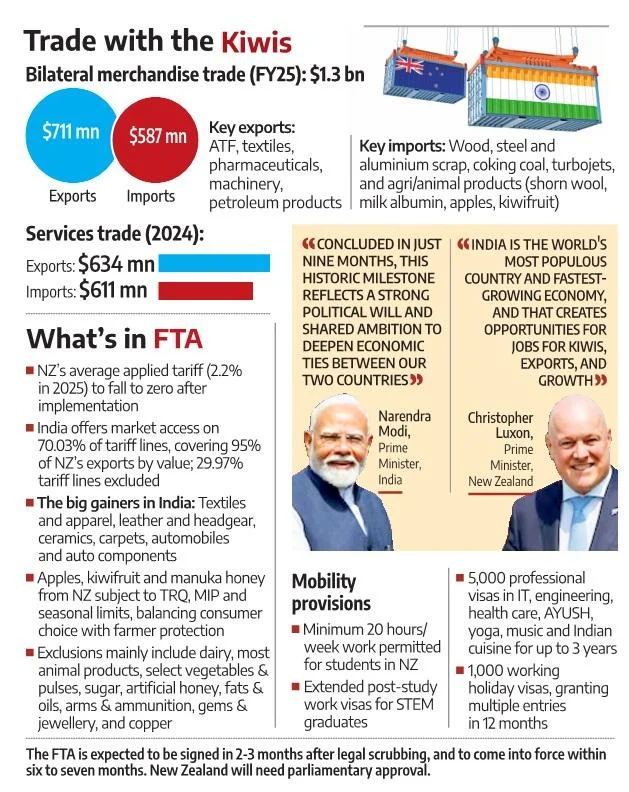
India and New Zealand (NZ) announced the conclusion of talks on a free-trade agreement (FTA), under which New Zealand will grant zero-duty access to 100% of Indian exports and commit USD 20 billion in foreign direct investment (FDI) over the next 15 years.
Summary
- The FTA provides zero-duty access for Indian exports, liberalizes 70% of NZ tariff lines, and safeguards sensitive sectors like dairy.
- It promotes USD 20 billion FDI, skill mobility, and services trade across 118 sectors, creating growth and employment opportunities.
- Strategically, the FTA strengthens India’s global trade diversification, regional influence, and long-term economic cooperation with developed economies.
What are the Key Highlights of the India-New Zealand Free Trade Agreement?
- Trade Liberalization: New Zealand’s commitments include granting zero-duty access on 100% of Indian exports and completely eliminating the current average tariff of 2.2%.
- India's Commitments: Liberalized duties across 70% of tariff lines (covering 95% of NZ exports by value). Immediate duty elimination on 30% of tariff lines for products including wood, wool, and sheep meat.
- Average tariff to drop from the current 16.2% to 13.18% initially, then 10.3% in 5 years and 9.06% by 10th year.
- Nearly 30% of tariff lines were excluded (dairy, certain animal products, vegetables, almonds, sugar) to protect India's dairy sector.
- India's Commitments: Liberalized duties across 70% of tariff lines (covering 95% of NZ exports by value). Immediate duty elimination on 30% of tariff lines for products including wood, wool, and sheep meat.
- Investment Commitment: New Zealand has committed to facilitating USD 20 billion in investment into India over 15 years backed by a rebalancing mechanism that allows India to suspend FTA benefits if the investment does not materialise within the stipulated period.
- Mobility Provisions: No numerical caps on Indian students in New Zealand. Guaranteed at least 20 hours of work per week during study. Extended post-study work visas (up to 3 years for STEM graduates, 4 years for PhD holders).
- A new Temporary Employment Entry visa pathway for up to 5,000 Indian professionals at any time (for up to 3 years). Covers AYUSH, yoga, Indian chefs, IT, engineering, healthcare, etc.
- 1,000 working holiday visas annually for young Indians.
- Ambitious services liberalisation: The agreement includes India’s most ambitious services offer, covering 118 services sectors, boosting services trade and professional mobility.
- Trade expansion target: The FTA aims to double bilateral trade from USD 2.4 billion to nearly USD 5 billion within 5 years, strengthening economic integration.
- Recognition of India’s IPR: New Zealand’s current Geographical Indication (GI) law permits registration only for India’s wines and spirits, but it has now committed to amending its law to enable registration of India’s wines, spirits, and other goods—on par with benefits granted to the European Union.
What is the Significance of the India and New Zealand FTA?
- Strategic Economic Rebalancing: The agreement represents India's 7th trade deal since 2021 and 3rd with a Five Eyes nation (after Australia and the UK), demonstrating New Delhi's strategic pivot toward diversifying trade relationships amid global realignment driven by protectionist policies.
- Beyond bilateral benefits, the FTA provides Indian companies a foothold across Pacific island economies, a strategically important region.
- Protection of Sensitive Sectors: India successfully fully excluded its politically and economically critical dairy sector, along with other sensitive agricultural items (like onions, almonds), demonstrating a firm line in protecting vulnerable domestic industries.
- Export Competitiveness: Sectors like textiles, apparel, leather, carpets, and auto components gain immediate duty-free access to NZ, which previously faced tariffs up to 10%.
- Access to 118 services sectors provides Indian IT, engineering, healthcare, and education firms with new opportunities.
- Managed Liberalization with Safeguards: India’s tariffs will gradually decrease over 10 years, giving domestic industries time to adjust.
- For sensitive imports such as apples, kiwifruit, and wine, India employs Tariff-Rate Quotas (TRQs) and seasonal access instead of full liberalization, balancing market access with producer protection.
- Framework for Deeper Cooperation: The agreement is less a trade breakthrough than a framework for deeper cooperation. Its significance lies in creating infrastructure for integrated supply chains, expanded services trade, stronger education and skills partnerships, and leveraging diaspora connections rather than immediate trade volumes.
What are Free Trade Agreements (FTAs)?
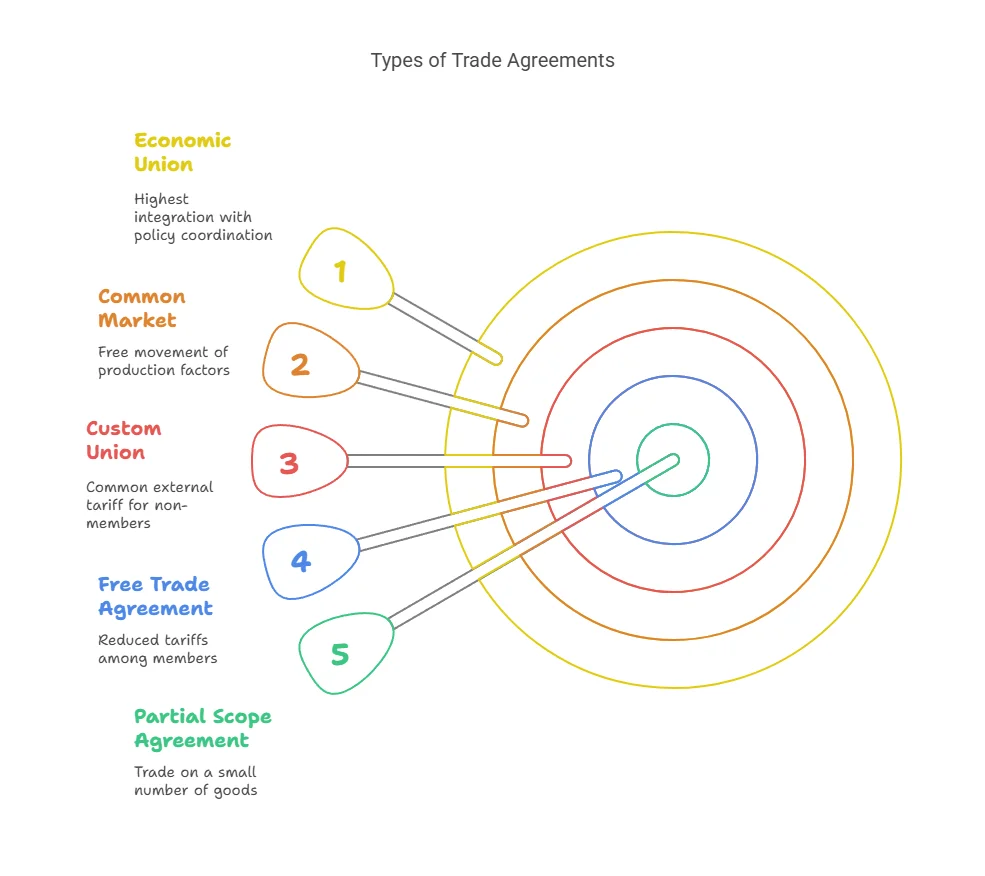
- About: An FTA is a pact between countries to remove or lower tariffs and barriers on nearly all goods traded between them.
- Unlike Preferential Trade Agreements, which only cut duties on a limited set of products, FTAs aim for comprehensive, near-total tariff elimination.
- Objectives:
- Tariff Reduction: Eliminates or lowers customs duties on the vast majority (90-95%) of goods.
- Streamlined Regulations: Reduce non-tariff barriers by harmonizing or easing restrictive rules.
- Market Access: Facilitates trade in services and promotes bilateral investment flows.
- Types of Trade Agreements:
What are the Key Challenges Associated with India's FTAs?
- Threat to Domestic Manufacturing: A key concern is that cheap imports from advanced partners (e.g., ASEAN, Australia) can harm India's MSMEs and key sectors like textiles, dairy, and agriculture.
- Critics highlight that FTAs have worsened India's trade deficits—from 2017-2022, imports from FTA partners grew 82% while exports rose only 31%.
- Limited Gains in Services and Mobility: Despite India's strong services sector, its FTAs often fail to secure meaningful market access.
- Key barriers—such as strict visa rules, licensing hurdles, and resistance to the movement of professionals—limit opportunities as partners prioritize protecting their domestic labor markets.
- Non-Tariff Barriers (NTBs) and Standards: Even after tariffs are eliminated, Indian exports often face technical barriers to trade (TBT), stringent standards, complex certification requirements, and opaque regulations in partner countries, negating the benefits of FTAs.
- Impact on Policy Sovereignty: New-generation FTAs include chapters on investment, intellectual property rights (IPR), government procurement, and environmental/labour standards.
- There is concern that these could limit India's policy space to enact public interest laws (e.g., affordable medicines, local procurement preferences, environmental regulations).

What Key Strategies can Improve the Effectiveness of India's FTAs?
- Strategic Negotiation & Design: Prioritize reciprocal market access for India’s strengths in services and digital trade, linking any goods concessions to these gains.
- Shield sensitive sectors—dairy, agriculture, and MSMEs—with strong safeguards such as tariff-rate quotas, seasonal tariffs, and rigorous anti-dumping measures.
- Strengthening Domestic Competitiveness: Boost competitiveness by investing in logistics, ports, and digital infrastructure to lower trade costs. Scale and upgrade manufacturing through PLI schemes and targeted policies, enabling industries to capitalize on FTA benefits.
- Leveraging New-Age Trade Elements: Secure cross-border data flows (with safeguards) to promote tech exports. Negotiate green technology partnerships, sustainable sourcing, and carbon credit market access.
- Following the India-NZ model, link FTAs to binding investments in manufacturing, green energy, and infrastructure to create jobs and build domestic capacity.
- Strategic Geoeconomic Alignment: Target FTAs with major consumer markets (EU, Canada) and key value-chain partners (Argentina, Chile for critical minerals) to diversify trade reliance.
- Foster resilient friend-shoring by integrating with trusted partners in critical sectors like electronics, pharma, and minerals.
- Address Non-Tariff Barriers (NTBs): Include enforceable chapters on technical standards, sanitary measures, and mutual recognition agreements to prevent NTBs from negating tariff concessions.
Conclusion
The India–New Zealand FTA strengthens bilateral trade, investment, and services mobility while protecting sensitive sectors like dairy. It reflects India’s strategic pivot toward developed economies, fostering economic cooperation, skill mobility, and regional influence. The agreement balances trade liberalization with safeguards, providing a framework for long-term sustainable growth and integration.
|
Drishti Mains Question: The protection of domestic agriculture, especially the dairy sector, has been a cornerstone of India’s recent FTAs. Discuss the associated economic and political rationale. |
Frequently Asked Questions (FAQs)
1. What is the key investment feature of the India-New Zealand FTA?
It includes a USD 20 billion investment commitment from New Zealand, backed by a rebalancing mechanism allowing India to suspend benefits if commitments are not met.
2. Which Indian sectors are excluded from the FTA?
Sensitive sectors like dairy, onions, almonds, and certain animal products are excluded to protect domestic industries.
3. What is the expected impact on bilateral trade?
The FTA aims to double bilateral trade from USD 2.4 billion to USD 5 billion within five years, boosting economic integration.
UPSC Civil Services Examination, Previous Year Questions (PYQs)
Prelims
Q. Consider the following countries: (2018)
- Australia
- Canada
- China
- India
- Japan
- USA
Which of the above are among the ‘free-trade partners’ of ASEAN?
(a) 1, 2, 4 and 5
(b) 3, 4, 5 and 6
(c) 1, 3, 4 and 5
(d) 2, 3, 4 and 6
Ans: (c)
Q. The term ‘Regional Comprehensive Economic Partnership’ often appears in the news in the context of the affairs of a group of countries known as(2016)
(a)G20
(b) ASEAN
(c) SCO
(d) SAARC
Ans: (b)
Mains
Q. How would the recent phenomena of protectionism and currency manipulations in world trade affect macroeconomic stability of India? (2018)
Q. Evaluate the economic and strategic dimensions of India’s Look East Policy in the context of the post Cold War international scenario. (2016)


Governance
Strengthening State PSCs
For Prelims: Vice-President, State Public Service Commissions (SPSCs), Constitutional Body, Union Public Service Commission (UPSC), Government of India Act, 1919, Governor, Supreme Court, Parliament, President, CAG.
For Mains: Key provisions regarding the SPSCs, associated challenges and way forward to strengthen SPSCs.
Why in News?
The Vice-President emphasized the crucial role of State Public Service Commissions (SPSCs) in building a capable and ethical civil service amid growing scrutiny over delays and integrity issues in recruitment.
- He underscored the need for urgent reforms to align recruitment with national goals and restore candidate trust.
Summary
- SPSCs are constitutional bodies ensuring merit-based recruitment to state services.
- They face challenges like exam leaks, political influence, delays, and outdated systems.
- Strengthening requires binding recommendations, digital modernization, transparency, capacity building, and independent appointments to restore public trust.
What is a State Public Service Commission (SPSC)?
- About: The SPSC is a constitutional body established under Articles 315–323 (Part XIV) to ensure merit-based, impartial, and independent recruitment to state civil services.
- Like the Union Public Service Commission (UPSC) at the Centre, each state has its own SPSC, serving as the constitutional watchdog of the merit system to ensure transparent and merit-based recruitment to state civil services.
- Historical Context: The Government of India Act, 1919, provided for the creation of a Central Public Service Commission, which was established in 1926 to recruit civil servants.
- The Government of India Act, 1935 further provided for the establishment of a Federal PSC, as well as Provincial PSCs and Joint PSCs for two or more provinces.
- Composition: Consists of a Chairman and members appointed by the Governor.
- Strength: The Constitution doesn't specify the number of members. It is left to the Governor's discretion.
- Tenure: Members serve for 6 years or until they reach 62 years of age, whichever is earlier (UPSC members serve until 65 years).
- Qualification Requirements: Half the members must have at least 10 years of service under the Government of India or a state government; no other qualifications are prescribed.
- Service Conditions: Determined by the Governor, who also sets the terms of employment. The Governor can appoint a member as acting chairman when the position falls vacant or the chairman is unable to perform duties.
- Removal: Members can be removed only by the President, not the Governor. Grounds include insolvency, paid employment, infirmity, or misbehaviour. The President can remove them on the same grounds and in the same manner as he can remove a Chairman or a Member of the UPSC.
- In cases of misbehaviour, the Supreme Court (SC) inquiry is mandatory, and its advice is binding. The governor can suspend the member during inquiry.
- Members can resign anytime by submitting their resignation to the Governor.
- Safeguards for Independence:
- Service Condition Protection: Once appointed, conditions of service cannot be altered to their disadvantage.
- Financial Independence: Salaries, allowances, and pensions are charged to the Consolidated Fund of the state—not subject to legislative vote.
- Post-Retirement Restrictions: Chairman can only be appointed to UPSC or another SPSC chairmanship—no other government employment.
- Members can become UPSC members or SPSC chairmen—no other government employment.
- No Reappointment: Members are not eligible for a second term after completing their first tenure.
- Functions of an SPSC:
- Conduct of Examination: Organizes competitive examinations for appointments to state services.
- Advisory Role on Recruitment: It advises on methods of recruitment for civil services and posts, promotions, inter-service transfers, and assesses candidate suitability for deputations.
- Disciplinary Consultation: It advises on disciplinary actions, including censure, withholding increments or promotions, recovery of financial losses, removal or dismissal among others.
- Annual Reporting: Submits performance reports to the Governor, who presents them to the state legislature with explanations for any rejected advice.
- Extended Jurisdiction: State legislature can expand SPSC's role to cover local authorities, corporate bodies, or public institutions.
- Joint State Public Service Commission: The Constitution allows creation of a Joint State Public Service Commission (JSPSC) for two or more states. Punjab and Haryana shared a JSPSC briefly after Haryana's creation in 1966.
- Unlike UPSC and SPSC (constitutional bodies), JSPSC is a statutory body created by Parliament upon request from concerned state legislatures.
- Service Conditions: Number of members and service conditions determined by the President.
- Reporting: JSPSC submits annual reports to each concerned state governor, who presents them to respective state legislatures.
- Alternative Arrangement: UPSC can serve a state's needs upon the state governor's request with Presidential approval.
What are the Constitutional Limitations of SPSC's Authority?
- Matters Outside Jurisdiction: It includes reservations for backward classes and the consideration of Scheduled Caste and Scheduled Tribe claims in appointments.
- Governor's Regulatory Power: The Governor can exclude specific posts, services, and matters from SPSC consultation through regulations (must be presented to legislature for 14 days, subject to amendment or repeal by the state legislature).
- Advisory Nature: SPSC recommendations are not binding—state governments can accept or reject the advice.
- Court Rulings: The Supreme Court in the State of U.P. v. Manbodhan Lal Srivastava (1957) held that failure to consult SPSC doesn't invalidate government decisions. Provision is directory, not mandatory.

What are the Major Challenges Facing State Public Service Commissions?
- Question Paper Leaks: Frequent question paper leaks in State PSC exams (e.g., Bihar, Rajasthan, Madhya Pradesh, Uttar Pradesh) have eroded public trust. The National Crime Records Bureau (NCRB) reported about 2,000 examination malpractices (including paper leaks and impersonation) in 2018 alone.
- Over 70 nationwide cases in 7 years have impacted more than 1.7 crore students, including the 2024 arrest of a former Rajasthan PSC member for the 2021 sub-inspector exam leak.
- Delays in Recruitment Processes: Court cases over reservations, syllabus, and eligibility frequently stall recruitment through SPSCs, leaving thousands of selections unresolved for years.
- Corruption and Bribery Issues: SPSCs have faced crises of credibility due to examination scandals, corruption, and bribery, most notably the systematic Vyapam Scam (2013) in Madhya Pradesh. Unverified rumors spreading on social media, coupled with a lack of timely official clarification from SPSCs, further erode public trust, often resulting in protests and exam boycotts.
- Issues of Autonomy and Political Influence: Although constitutionally protected, the appointment process by the Governor raises concerns about potential political influence in appointment of members. This creates concerns about the independence of the body and favoritism.
- Outdated Systems and Infrastructure: Many SPSCs lack the institutional capacity, manpower, and logistics needed to securely manage large-scale examinations. The Comptroller and Auditor General of India (CAG) has pointed to poor planning, manpower shortages, and inadequate exam security as key vulnerabilities.
- Weak Accountability and Transparency Mechanisms: Most SPSCs operate without robust external audits or parliamentary oversight. Weak RTI compliance, delayed disclosures of marks and records, and transparency gaps flagged by groups like the Association for Democratic Reforms (ADR) foster public suspicion, even in fair processes.
What Steps are Needed to Strengthen SPSCs?
- Time-Bound Recruitment: State service rules should be amended to enforce maximum timelines for all recruitment stages, while mandating each SPSC to publish and follow an annual exam calendar for predictability. It is believed that such legal frameworks can complete recruitment cycles faster.
- Institutional & Operational Overhaul: Create a State Examination Security Authority (SESA) modeled after the National Testing Agency to exclusively handle paper setting, encryption, logistics, and leak investigations.
- Enhancing Independence & Accountability: Institute a collegium—including the Chief Justice of the State High Court, the UPSC Chairman, and the State Chief Secretary—to appoint the SPSC Chairman and Members, thereby insulating the appointment process from direct political control. Subject SPSCs to regular CAG performance audits vital for accountability.
- Capacity Building & Transparency: Mandate comprehensive training for SPSC members and staff in modern recruitment technology and ethics. Additionally, create a real-time public dashboard for every recruitment cycle to display stage-wise progress and final selections, ensuring complete transparency.
Conclusion
SPSCs, as constitutional watchdogs of merit, face severe challenges like leaks, delays, and political influence, eroding their credibility. Strengthening them requires making their advice binding, ensuring operational independence, and adopting technology-driven transparency to restore their role in building a capable state civil service.
|
Drishti Mains Question: Examine the constitutional role and functions of State Public Service Commissions in India. |
Frequently Asked Questions (FAQs)
1. What is a State Public Service Commission (SPSC)?
A constitutional body under Articles 315–323 ensuring merit-based, impartial, and independent recruitment to state civil services.
2. How are members of a SPSC appointed and removed?
Appointed by the Governor, removable only by the President on grounds like misbehaviour, insolvency, or infirmity, with Supreme Court inquiry mandatory for misbehaviour.
3. Are the recommendations of a SPSC legally binding on the State Government?
No. SPSC recommendations are advisory in nature, and as held in the State of U.P. v. Manbodhan Lal Srivastava (1957), non-consultation does not invalidate government action.
UPSC Civil Services Examination, Previous Year Questions (PYQs)
Prelims
Q. According to the Constitution of India, it is the duty of the President of India to cause to be laid before the Parliament which of the following? (2012)
- The Recommendations of the Union Finance Commission
- The Report of the Public Accounts Committee
- The Report of the Comptroller and Auditor General
- The Report of the National Commission for Scheduled Castes
Select the correct answer using the codes given below:
(a) 1 only
(b) 2 and 4 only
(c) 1, 3 and 4 only
(d) 1, 2, 3 and 4
Ans: (c)
Mains
Q. Identifyten essential values that are needed to be an effective public servant. Describe the ways and means to prevent non-ethical behavior in the public servants. (2021)
Q. “Institutional quality is a crucial driver of economic performance”.In thiscontext suggest reforms in the Civil Service for strengthening democracy. (2020)


Governance
National Consumer Day and Consumer Commissions in India
For Prelims: Consumer commissions, E-Daakhil portal, Quasi-judicial bodies, Central Consumer Protection Authority
For Mains: Effectiveness of quasi-judicial bodies in India, Consumer Protection Act, 2019, Consumer rights as part of inclusive governance
Why in News?
National Consumer Day, observed on 24th December, highlights the importance of consumer rights and protection in India. It also draws attention to growing delays in consumer commissions, where rising case backlogs and structural gaps are undermining timely justice.
Summary
- Despite strong legal backing under the Consumer Protection Act, 2019, consumer commissions face severe delays due to rising case backlogs, manpower shortages, frequent adjournments, and weak infrastructure, undermining the goal of speedy consumer justice highlighted on National Consumer Day.
- Strengthening commissions requires fast-track appointments, strict case-flow management, full digital integration through e-Jagriti, mandatory mediation, and performance-based monitoring to ensure efficient, technology-driven, and timely consumer grievance redressal.
Note: National Consumer Day marks the President’s assent to the Consumer Protection Act, 1986, which laid down key consumer rights such as the right to be informed, protected, heard, and seek redressal.
- The day aims to promote consumer awareness and responsible practices.
- The 2025 theme, “Efficient and Speedy Disposal through Digital Justice,” highlights the push for technology-driven and timely consumer grievance redressal.
What are Consumer Commissions?
- About: Consumer Commissions are quasi-judicial bodies established under the Consumer Protection Act of 1986 (now Consumer Protection Act (CPA), 2019) to resolve disputes between consumers and sellers or service providers.
- They aim to provide speedy, affordable, and effective justice and protect consumers from unfair trade practices, defective goods, and deficient services.
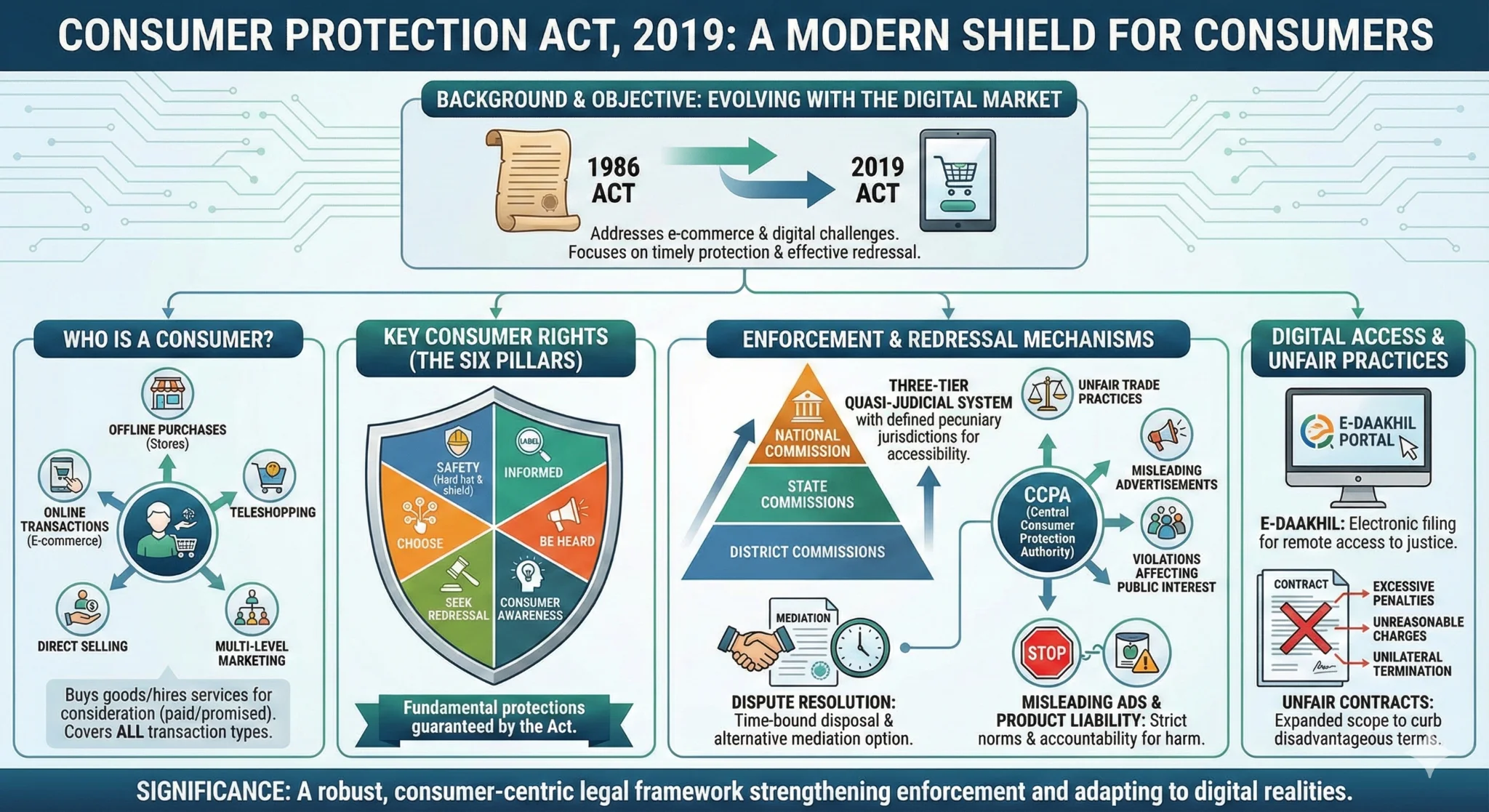
- Types of Consumer Commissions in India: The CPA, 2019 promulgates a three-tier quasi-judicial mechanism for redressal of consumer disputes namely district commissions, state commissions and national commission, each with defined pecuniary jurisdiction.
- The District and State Consumer Commissions are set up by State Governments with Central approval, while the National Commission is established by the Central Government.
- These bodies offer an alternative dispute-resolution mechanism and do not replace civil courts.
|
Consumer Commission |
Pecuniary Jurisdiction |
Composition |
Appellate Authority |
|
District Consumer Disputes Redressal Commission |
Up to Rs 50 lakh. |
President (District Judge or equivalent) and Members. |
Appeals lie to the State Commission. |
|
State Consumer Disputes Redressal Commission |
Above Rs 50 lakh and up to Rs 2 crore. |
President (Either a sitting Judge or a retired Judge of a High Court) and Members. |
Appeals lie to the National Commission. |
|
National Consumer Disputes Redressal Commission (NCDRC) |
Above Rs 2 crore. |
President (sitting or a retired Judge of the Supreme Court or a sitting or a retired Chief Justice of a High Court) and Members. |
Appeals lie to the Supreme Court. |
- Judicial Pronouncements:
- Indian Medical Association vs. V.P. Shantha (1995): The Supreme Court held that the services that are being provided by medical practitioners will fall within the ambit of the Consumer Protection Act, 1986.
- Ambrish Kumar Shukla vs. Ferrous Infrastructure (2016): Clarified pecuniary jurisdiction, considering the total claim value (product cost and compensation) for determining the court level.
- Ganeshkumar Rajeshwarrao Selukar & Others vs. Mahendra Bhaskar Limaye & Others: The Supreme Court (SC) of India urged the Centre to set up permanent adjudicatory bodies for consumer disputes, emphasizing that consumer rights are constitutionally protected and need a stable framework due to gaps in implementing the CPA, 1986.
Consumer Protection Act, 2019
- The CPA, 2019, enacted in 2020, replaced the Consumer Protection Act, 1986 to strengthen consumer rights and grievance redressal in a modern marketplace.
- It promotes fair trade practices, informed consumer choice, and speedy dispute resolution.
- The law guarantees several key rights, including the right to be informed about the quality, quantity, potency, purity, and standards of goods or services, thereby safeguarding consumers against unfair trade practices.
- Central Consumer Protection Authority (CCPA) established in 2020 under the CPA, 2019, protects consumer interests at a collective level.
- CCPA enforces consumer rights, prevents unfair trade practices, regulates misleading advertisements, and takes action against manufacturers, endorsers, and publishers.
What are the Causes of Delay in Consumer Commissions in India?
- Rising Case Backlog: As of January 2024, 5.43 lakh cases were pending across district, State, and national consumer commissions.
- In 2024, 1.73 lakh new cases were filed, while only 1.58 lakh were disposed of, adding nearly 14,900 cases to the backlog.
- Severe Manpower Shortages: A large number of posts of Presidents and Members remain vacant in State and district consumer commissions, significantly reducing functional bench strength and slowing case disposal.
- Frequent Adjournments: The Consumer Protection Act (CPA), 2019 mandates disposal of cases within 3–5 months and discourages adjournments unless sufficient cause is shown and reasons are recorded in writing.
- However, cases are frequently adjourned due to time constraints, non-appearance of parties, and incomplete records, leading to routine delays despite clear legal provisions.
- Weak Enforcement of Orders: Poor enforcement of final orders often forces consumers into execution proceedings, while non-compliance by companies leads to re-litigation, increasing case pendency.
- CAG and Department of Consumer Affairs reports have flagged low recovery rates of compensation awards as a key concern.
- Inadequate Infrastructure and Logistics: Limited courtrooms, insufficient support staff, and weak digital case management through E-Daakhil portal slow hearings and case tracking.
- Lack of Specialised Expertise: Cases involving insurance claims, medical negligence, or financial products require expert opinions and technical reports, extending timelines.
- Members often lack subject-specific training, leading to repeated clarifications and dependence on external experts.
- Strategic Delays by Opposite Parties: Well-resourced companies sometimes seek repeated adjournments to exhaust individual consumers financially and mentally.
India’s Consumer Protection Initiatives
- Consumer Welfare Fund: Supports consumer protection and awareness initiatives by providing financial assistance to States and UTs to create a Consumer Welfare Corpus Fund, funded in a 75:25 ratio (90:10 for Special Category States/UTs).
- Programme activities are financed through interest from the corpus, and Rs 38.68 crore was released in 2024–25.
- e-Jagriti: Launched in 2025, is a unified digital platform for consumer grievance redressal that integrates e-Daakhil, NCDRC CMS, and CONFONET into a single system.
- It enables online complaint filing, fee payment, virtual hearings, and case tracking.
- With multilingual support, chatbots, voice-to-text features, and secure payment gateways like Bharat Kosh and PayGov, the platform ensures accessibility, inclusivity, faster case disposal, and safe transactions, including for NRIs, senior citizens, and persons with disabilities.
- National Consumer Helpline 2.0: It is an AI-enabled, multilingual grievance redressal platform that allows consumers to register complaints, seek pre-litigation remedies, and access consumer rights information,
- NCH now resolves over 12 lakh complaints annually, many within 21 days, reflecting growing consumer trust and faster digital redressal.
- Consumer Awareness: The Department of Consumer Affairs has deployed AI-based digital tools on the Airawat Supercomputer to detect deceptive online practices such as dark patterns.
- The Jago Grahak Jago App alerts users to unsafe e-commerce platforms, while the Jagriti App and Dashboard enable real-time reporting and monitoring of suspicious websites by the CCPA.
- To counter manipulation, the CCPA has issued guidelines against dark patterns like drip pricing, disguised ads, and false urgency, strengthening transparency and consumer protection in digital markets.
- Bureau of Indian Standards (BIS): India’s national standards body under the BIS Act, 2016, formulates standards, certifies products, and ensures quality and safety in the market.
- With over 22,300 Indian Standards in force, 94% aligned with ISO and IEC norms.
- BIS Quality Control Orders, support consumer safety, export competitiveness, and import substitution.
- The BIS Care App enables consumers to verify jewellery hallmarking, and lodge complaints, promoting transparency and fair trade.
- National Test House (NTH): Established in 1912 under the Department of Consumer Affairs, provides testing, calibration, and quality certification for engineering materials and products.
- In 2024–25, sample testing rose by over 60%, highlighting its growing role in quality assurance.
- Legal Metrology (Packaged Commodities) Amendment Rules, 2025: These rules along with the Legal Metrology (Government Approved Test Centre) Amendment Rules, 2025 simplified labelling rules, expanded approved test centres, and strengthened disclosure norms such as country-of-origin filters for imported e-commerce goods.
- Overall, they improve pricing transparency, regulatory clarity, and consumer protection while reducing compliance burdens on businesses.
What Measures can Strengthen the Effective Functioning of Consumer Commissions in India?
- Fast-track Appointments: Fill vacancies through time-bound selection processes and consider creating a dedicated consumer judiciary cadre to ensure continuity and expertise.
- Mandatory Case-flow Management: Introduce case-age benchmarks (6 months, 1 year, 2 years) with compulsory priority listing of long-pending matters, similar to High Court case-flow rules.
- Full integration Digital Adjudication: Expand e-Jagriti beyond filing to include automated listing, document scrutiny, and compliance tracking, reducing registry-level delays and repeated adjournments.
- Mandatory Referral to Mediation: Operationalise consumer mediation cells at district level and mandate referral at the admission stage for low-value and service-related disputes to reduce caseload.
- Outcome-based Performance Monitoring: Publish quarterly disposal and pendency reports for each commission to introduce transparency and administrative accountability.
Conclusion
Consumer Commissions play a crucial role in protecting consumer interests and ensuring accountability in the marketplace. However, delays, manpower shortages, and enforcement challenges must be addressed to restore their promise of speedy and effective justice.
|
Drishti Mains Question: Consumer commissions were envisaged as instruments of social justice. Critically assess whether they are fulfilling this mandate today. |
Frequently Asked Questions (FAQs)
1. Why is National Consumer Day observed in India?
It marks the enactment of the Consumer Protection Act, 1986, and aims to promote consumer rights, awareness, and fair market practices.
2. What is the purpose of Consumer Commissions in India?
Consumer Commissions provide speedy, affordable redressal against unfair trade practices, defective goods, and deficient services under the Consumer Protection Act, 2019.
3. What is the current structure of Consumer Commissions?
India follows a three-tier system comprising District, State, and National Consumer Disputes Redressal Commissions based on pecuniary jurisdiction.
4. Why are Consumer Commissions facing delays despite statutory timelines?
Rising case pendency, vacancies in commissions, frequent adjournments, and procedural inefficiencies undermine the 3–5 month disposal mandate.
5. What is the role of the E-Daakhil portal?
E-Daakhil enables online filing, e-notices, document access, and virtual hearings, reducing physical travel and procedural delays.
UPSC Civil Services Examination Previous Year Question
Prelims
Q.1 With reference to ‘consumers’ rights/privileges under the provisions of law in India, which of the following statements is/are correct ? (2012)
- Consumers are empowered to take samples for food testing.
- When a consumer files a complaint in any consumer forum, no fee is required to be paid.
- In case of death of consumer, his/her legal heir can file a complaint in the consumer forum on his/ her behalf.
Select the correct answer using the codes given below:
(a) 1 only
(b) 2 and 3 only
(c) 1 and 3 only
(d) 1, 2 and 3
Ans: c
Mains
Q. What is quasi judicial body? Explain with the help of concrete examples. (2016)
Q. How far do you agree with the view that tribunals curtail the jurisdiction of ordinary courts? In view of the above, discuss the constitutional validity and competency of the tribunals in India.(2018)


Important Facts For Prelims
Southern Ocean Carbon Anomaly
Why in News?
A study published in Nature Climate Change reveals a striking Southern Ocean carbon anomaly, showing that the Southern Ocean has continued to absorb more carbon dioxide since the early 2000s, contrary to earlier climate model predictions that its carbon-sink capacity would weaken.
Summary
- A Nature Climate Change study shows the Southern Ocean continues to absorb CO₂, defying model predictions, due to surface stratification that traps carbon-rich deep waters below the surface.
- As a major global carbon and heat sink, weakening stratification could release trapped carbon, risking a shift from carbon sink to carbon source.
What is the Southern Ocean Carbon Anomaly?
- Contradiction to Model Projections: Climate models had long predicted that rising greenhouse gas concentrations, coupled with a thinning ozone layer, would intensify the westerly winds over the Southern Ocean and shift them poleward.
- This change in atmospheric circulation was expected to enhance oceanic upwelling (bringing deep, carbon-rich waters closer to the surface).
- The intensified meridional overturning circulation would thereby expose these carbon-laden waters to the atmosphere, potentially weakening the Southern Ocean’s function as a carbon sink.
- However, long-term observations since the early 2000s show that the Southern Ocean has continued to absorb more carbon dioxide, as rising Carbon-rich circumpolar deep waters remain trapped 100–200 metres below the surface, preventing atmospheric release.
- This change in atmospheric circulation was expected to enhance oceanic upwelling (bringing deep, carbon-rich waters closer to the surface).
- Role of Stratification: Increased rainfall, melting Antarctic ice, and sea-ice transport have added fresh water to the ocean surface. Fresh water is lighter than salty water, so it forms a stable upper layer.
- This layered structure, known as stratification, acts like a lid that prevents vertical mixing between surface waters and deeper carbon-rich waters, trapping the carbon below, preventing CO₂ from escaping into the atmosphere and allowing the Southern Ocean to continue functioning as a carbon sink.
- Significance: The study cautions that this situation may be temporary. If surface stratification weakens in the future, the trapped carbon could be released rapidly into the atmosphere, accelerating climate change.
- Since the early 2010s, thinning surface stratification and rising salinity in parts of the Southern Ocean have made it easier for winds to mix deep, carbon-rich waters upward, risking a shift from a carbon sink to a carbon source.
What are the Key Facts About the Southern Ocean?
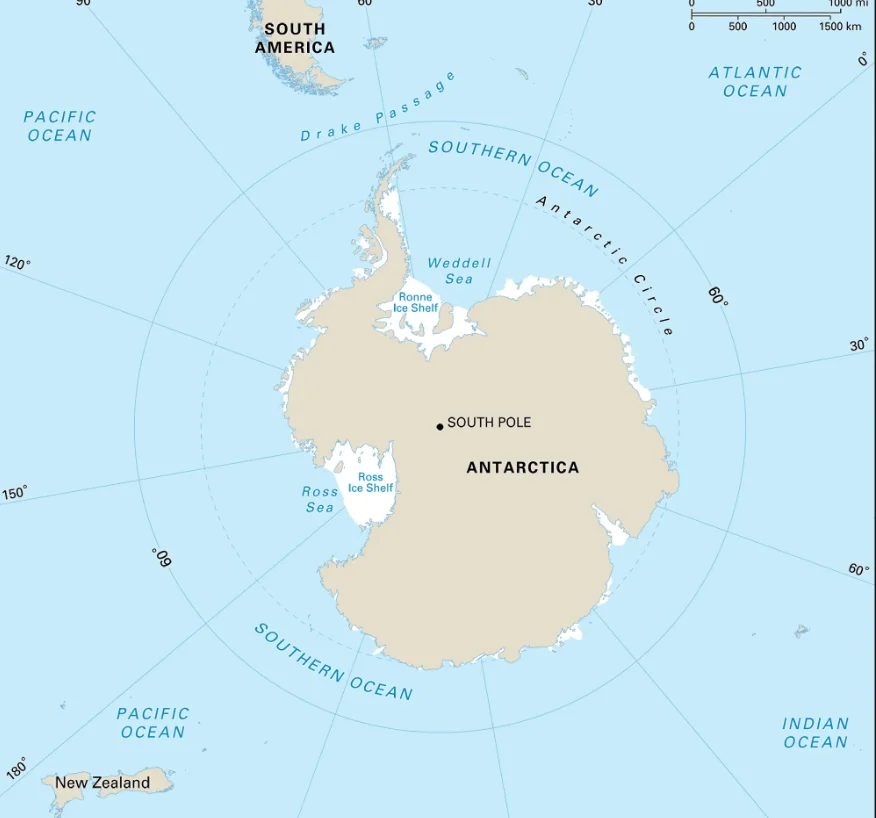
- Geographical Extent: The Southern Ocean (or Antarctic Ocean) is defined as the waters encircling Antarctica, generally extending from the Antarctic coast north to 60° South latitude, a boundary established by the International Hydrographic Organization (IHO) in 2000 and marked by the Antarctic Circumpolar Current (ACC), connecting parts of the Atlantic, Pacific, and Indian Oceans.
- It's unique for being defined by a current, not land, and plays a vital role in global climate.
- Key Geographic Features
- Narrowest chokepoint: Drake Passage (~1,000 km wide) between South America and the Antarctic Peninsula.
- The Southern Ocean includes Weddell Sea, Ross Sea, Amundsen Sea, Bellingshausen Sea, and parts of the Scotia Sea
- No continental landmass interrupts its flow.
- Size and Coverage: By area, it is the fourth largest ocean after the Pacific, Atlantic, and Indian, and larger than the Arctic Ocean.
- It covers approximately 25–30% of the global ocean area and accounts for about 5.4% of Earth's total ocean volume.
- Carbon Sink Role: The southern ocean absorbs nearly 40% of all anthropogenic CO₂ taken up by the world's oceans. It plays a critical buffer role against global warming.
- It is responsible for absorbing around 75% of the excess heat generated by greenhouse gas emissions.
- Ocean Circulation: The Southern Ocean’s circulation is dominated by the Antarctic Circumpolar Current (the world’s strongest current), which flows eastward around Antarctica and links the Atlantic, Indian, and Pacific oceans.
- Cold, dense Antarctic waters sink and flow northward along the ocean floor, while warmer surface waters from the Atlantic, Indian, and Pacific oceans move southward to replace them, meeting at the Antarctic Convergence.
- This zone supports high phytoplankton productivity dominated by diatoms, with Antarctic krill forming the core of the food web that sustains fish, seabirds, seals, and whales.
- The ocean is central to the global meridional overturning circulation (MOC), often referred to as the "conveyor belt" of the oceans.
- Cold, dense Antarctic waters sink and flow northward along the ocean floor, while warmer surface waters from the Atlantic, Indian, and Pacific oceans move southward to replace them, meeting at the Antarctic Convergence.
Frequently Asked Questions (FAQs)
1. What is the Southern Ocean carbon anomaly?
It refers to the continued increase in carbon dioxide absorption by the Southern Ocean since the early 2000s, contrary to climate model predictions of weakening uptake.
2. What role does stratification play in the Southern Ocean carbon sink?
Freshwater input from rainfall and ice melt creates a lighter surface layer that prevents vertical mixing, trapping carbon-rich waters 100–200 m below the surface.
3. Why is the Antarctic Circumpolar Current important?
It is the world’s strongest ocean current, linking the Atlantic, Indian, and Pacific oceans and driving global heat, nutrients, and carbon transport.
UPSC Civil Services Examination, Previous Year Questions (PYQs)
Prelims
Q. Tides occur in the oceans and seas due to which among the following (2015)
- Gravitational force of the Sun
- Gravitational force of the Moon
- Centrifugal force of the Earth
Select the correct answer using the codes given below.
(a) 1 only
(b) 2 and 3 only
(c) 1 and 3 only
(d) 1, 2 and 3
Ans: D
Q: Consider the following factors: (2012)
- Rotation of the Earth
- Air pressure and wind
- Density of ocean water
- Revolution of the earth
Which of the above factors influences the ocean currents?
(a) 1 and 2 only
(b) 1, 2 and 3 only
(c) 1 and 4 only
(d) 2, 3, and 4 only
Ans: B
Mains
Q. Account for variations in oceanic salinity and discuss its multidimensional effects. (2017)


Rapid Fire
UN High Commissioner for Refugees
The United Nations General Assembly has appointed former Iraqi President Barham Salih as the UN High Commissioner for Refugees (UNHCR) by consensus, his five-year term begins on 1st January 2026 succeeding Filippo Grandi of Italy.
- Salih is the first UNHCR chief from the Middle East since the late 1970s, a significant development in UN leadership representation.
- UNHCR: It was established in 1950 by the UN General Assembly with an initial three-year mandate, its role was strengthened by the 1951 UN Refugee Convention, and it later became a permanent institution due to continuing global displacement.
- Organisational Structure: UNHCR is headquartered in Geneva and operates through an Executive Committee and a Secretariat led by the High Commissioner, who is elected by the UN General Assembly, with regional and field offices worldwide.
- UNHCR is funded entirely through voluntary contributions from governments, private donors, and organisations.
- Mandate: UNHCR is mandated to protect and support refugees, internally displaced persons (IDPs), and stateless persons across the world.
- It works to secure durable solutions through voluntary repatriation, local integration, or resettlement in third countries.
- UNHCR safeguards refugee protection, especially the principle of non-refoulement and provides humanitarian assistance such as shelter, food, health, and education and leads global efforts for statelessness reduction.
- Recognition: UNHCR won the Nobel Peace Prize in 1954 and 1981 for protecting refugees worldwide.
- Nansen Refugee Award: The UNHCR Nansen Refugee Award, established in 1954, honours individuals and organisations showing exceptional commitment to refugees and stateless persons.
- It commemorates Fridtjof Nansen, the first High Commissioner for Refugees under the League of Nations. The first awardee was Eleanor Roosevelt in 1954.
| Read more: Refugee, Deportation and Related Issues in India |


Rapid Fire
Denotified Tribes to be Enumerated in Census 2027
The Ministry of Social Justice and Empowerment has recommended the inclusion of Denotified Tribes (DNTs) in the upcoming Census 2027, marking their 1st official enumeration in independent India and the first since the colonial-era 1911 census.
- The last enumeration was in the 1911 Census under the colonial category of criminal tribes. Since then, no official Census has recorded their population.
- About Denotified Tribes: Denotified Tribes were communities branded as "criminal tribes" under the repressive Criminal Tribes Act, 1871, which was repealed in 1949.
- They were labelled as criminal tribes because they were believed to be “addicted to the systematic commission of non-bailable offences.”
- Classification Issues: Many of these communities are not classified as Scheduled Tribes (STs), Scheduled Castes (SCs), or Other Backward Classes (OBCs), leaving them outside the ambit of reservation benefits and targeted welfare schemes.
- Findings of Government Committees: The Renke Commission (2008) estimated the population of denotified tribes at around 10–12 crore.
- The Idate Commission (2014) identified over 1,200 communities as denotified, nomadic, and semi-nomadic tribes.
- Nomadic tribes maintain a mobile lifestyle, moving periodically without permanent settlements to sustain livelihoods via pastoralism, trade, or services. e.g., Banjara, Rabari.
- Semi-nomadic tribes combine seasonal migration with partial settlement, often practicing transhumance (maintaining a base while migrating livestock seasonally), e.g., Gaddi, Maldharis.
- The Idate Commission (2014) identified over 1,200 communities as denotified, nomadic, and semi-nomadic tribes.
- Other Related Committees to DNTs:
- Ayyangar Committee (1949): Criminal Tribes Act, 1871 was repealed based on the recommendation of this committee.
- Lokur Committee (1965): It recommended treating denotified and nomadic communities as a distinct group for tailored development schemes.
| Read More: Challenges and Developments Related with Denotified Tribes |


Rapid Fire
National Mathematics Day
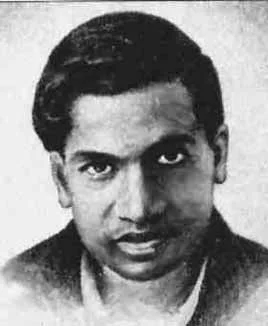
National Mathematics Day is observed on 22nd December to commemorate the birth anniversary of Srinivasa Ramanujan, one of India’s greatest mathematicians, often described as the man who seemingly knew infinity.
- The Day was instituted in 2011, with 2012 declared as the National Mathematics Year, to promote India’s mathematical heritage.
- Srinivasa Ramanujan (1887–1920) was born in Erode, Tamil Nadu, and displayed an extraordinary intuitive grasp of mathematics from a very young age.
- Began producing original mathematical results as a teenager, recording them in what later became known as Ramanujan’s Frayed Notebooks.
- He became one of the youngest Fellows of the Royal Society (UK) and, in 1918, the second Indian to be elected to the Royal Society, as well as the first Indian Fellow of Trinity College, Cambridge.
Contributions of Srinivasa Ramanujan
- Ramanujan Number (1729): The collaboration between Ramanujan and G. H. Hardy led to the famous Hardy–Ramanujan number (1729), the smallest number expressible as the sum of two cubes in two different ways.
- 1³ + 12³ = 9³ + 10³ = 1729. The number reflects Ramanujan’s interest in “near misses” to Fermat’s Last Theorem (1637), which states that no two cubes can add up to another cube.
- Infinite Series for π: Developed remarkable infinite series for π (pi), which form the basis of modern high-precision π computation algorithms.
- Circle Method: Co-developed the Circle Method with G. H. Hardy, a major breakthrough later used in solving problems like Waring’s conjecture.
- Mock Theta Functions: Introduced mock theta functions in modular forms, whose significance was understood decades later and is now crucial in modern physics, including black hole microstate counting, where they help count quantum states of certain black holes.
- Ramanujan Theta Function: Formulated the Ramanujan theta function, extending Jacobi theta functions, now used in string theory and theoretical physics.
- Other Contributions: He contributed to hypergeometric series, elliptic integrals, divergent series, and functional equations of the Riemann zeta function.
- Made seminal contributions to number theory, mathematical analysis, infinite series, and continued fractions.
- Legacy: The SASTRA Ramanujan Prize, established in 2005, is awarded to mathematicians aged 32 or younger, commemorating Srinivasa Ramanujan’s age at his passing.
- Dr. Alexander Smith of US won the 2025 SASTRA Ramanujan Prize for his work on congruent number problems, inspired by Srinivasa Ramanujan.
| Read more: Srinivasa Ramanujan |