Rapid Fire
India’s First Indigenous Hydrogen Fuel Cell Vessel
The Union Minister for Ports, Shipping and Waterways flagged off India’s first indigenous hydrogen fuel-cell vessel in Varanasi, marking a significant milestone in the nation’s drive toward clean and sustainable inland water transport.
- Technical & Design Features: Entirely developed and built in India by Cochin Shipyard Ltd (CSL) in collaboration with the Inland Waterways Authority of India (IWAI).
- Strategic Frameworks: The launch is in line with India's long-term strategic plans, including the Maritime India Vision 2030 (MIV 2030) and Maritime Amrit Kaal Vision 2047 (MAKV 2047).
- It focuses on sustainable transport, smart infrastructure, and the use of alternative fuels in inland waterways.
- Significance:
- First of its Kind vessel launch places Varanasi at the forefront of India’s green waterways initiative.
- This vessel represents a major push toward net‑zero inland waterways, supporting India’s decarbonisation goals and clean energy transition.
- This green transport system will improve the travel experience for pilgrims visiting the spiritual capital of India and contribute to cleaner, more efficient mobility.
| Read More: India's first Indigenous Hydrogen Fuel Cell Ferry |
Indian Heritage & Culture
Year End Review-2025: Ministry of Culture
For Prelims: Piprahwa relics , Kashi Tamil Sangamam , Kamba Ramayana, Maratha Military Landscapes, Janjatiya Gaurav Varsh, Gyan Bharatam
For Mains: Heritage preservation efforts, Indian Heritage & Culture, Government Policies & Interventions
Why in News?
The Ministry of Culture released its Year-End Review for 2025, showcasing a landmark year filled with major cultural festivals, heritage preservation efforts, and large-scale public participation.
Summary
- India marked key heritage gains in 2025, including the return of the Piprahwa Buddha relics and UNESCO status for the Maratha Military Landscapes.
- The year saw major cultural showcases and knowledge initiatives like Kashi Tamil Sangamam 3.0, revival of Kambh Ramayana, Kalagram at Mahakumbh, and the Gyan Bharatam programme.
What Were the Key Heritage Preservation Measures Undertaken by India in 2025?
- Repatriation of Lord Buddha’s Relics: The sacred Piprahwa relics (1898) were stopped from being auctioned abroad and returned to India after 127 years through coordinated legal and diplomatic intervention.
- Kashi Tamil Sangamam 3.0: It is a cultural initiative that celebrates the deep-rooted historical and cultural ties between Tamil Nadu and Kashi, strengthening their ancient civilizational bond.
- Kashi Tamil Sangamam aligns with the Ek Bharat Shreshtha Bharat initiative. The first two editions of the Kashi Tamil Sangamam were held in 2022 and 2023.
- Revival of Kambh Ramayana Tradition: The Kamba Ramayana, also known as Ramavataram, is a prominent 12th-century CE Tamil epic composed by the poet Kambar.
- It is a reimagining of Valmiki’s Sanskrit Ramayana, adapted to reflect the socio-cultural and religious values of the Chola period.
- Kalagram at Mahakumbh 2025: Kalagram is a cultural village established by the Ministry of Culture for the Mahakumbh 2025 in Prayagraj.
- It is designed to showcase India's rich spiritual and diverse heritage through a blend of crafts, cuisines, and cultural performances.
- UNESCO Recognition for Maratha Military Landscapes: India secured the inscription of the Maratha Military Landscapes as its 44th UNESCO World Heritage Site, raising India’s global rank to 6th in number of World Heritage properties.
- Project Mausam: The Archaeological Survey of India (ASI) hosted a national workshop in New Delhi to strengthen research on maritime cultural routes and safeguard ocean-linked cultural landscapes in the Indian Ocean region.
- Project Gaja-Lok: It is a transnational initiative launched by INTACH (Indian National Trust for Art & Cultural Heritage), documenting the cultural symbolism of Asian elephants through exhibitions and roundtable discussions, linking ecology with cultural heritage.
- Gyan Bharatam: A national initiative to preserve, digitise, and disseminate India’s manuscript heritage, was launched at the first Gyan Bharatam International Conference in New Delhi.
- The conference concluded with the Delhi Declaration, reaffirming India’s commitment to revitalising its manuscript tradition under the vision of Vikshit Bharat 2047.
- Tribal Business Conclave 2025: The conclave showcased tribal arts, literature, and entrepreneurship, aligning with Janjatiya Gaurav Varsh.
- Special Campaign 5.0: The Special Campaign 5.0 (officially, the Special Campaign for Disposal of Pending Matters 5.0 or SCDPM 5.0) is an initiative focused on reducing pendency and institutionalizing cleanliness (Swachhata).
- The campaign reached full cleanliness targets across 599 cultural sites, and implemented a major push for scientific e-waste disposal.
- Samvidhan Hatya Diwas: Observed on 25th June 2025 to mark 50 years since the declaration of Emergency, highlighting the importance of constitutional values, civil liberties, and democratic safeguards.
- Sewa Parv 2025: Showcased large-scale public participation through nationwide art workshops and cleanliness drives at heritage sites, linking community service with cultural expression and civic awareness.
Conclusion
The year 2025 marked a powerful resurgence of cultural pride, heritage conservation, and civilizational confidence. Through festivals, global partnerships, heritage repatriation, and knowledge preservation, the Ministry of Culture strengthened India’s cultural footprint at home and abroad while inspiring public participation on an unprecedented scale.
|
Drishti Mains Question: Heritage conservation must reconcile conservation ethics and mass participation. Discuss. |
Frequently Asked Questions (FAQs)
Q. Which property became India’s 44th UNESCO World Heritage Site in 2025?
Maratha Military Landscapes were inscribed as India’s 44th UNESCO World Heritage Site, enhancing India’s global rank for World Heritage properties and highlighting landscape-based military heritage.
Q. What is Gyan Bharatam and why is it important?
Gyan Bharatam is a national programme for manuscript preservation, digitisation and dissemination; its web portal and institutional MoUs establish a coordinated digital infrastructure to safeguard India’s manuscript knowledge legacy.
Q. How did the Ministry link heritage to livelihoods in 2025?
Through initiatives like Kalagram, Sewa Parv and the Tribal Business Conclave, the Ministry promoted artisanship, created market linkages and organised capacity-building forums to translate heritage into sustainable livelihoods.
Indian Economy
Reviving MGNREGA For Effective Rural Employment
For Prelims: Mahatma Gandhi National Rural Employment Guarantee Scheme (MGNREGS), Aadhaar Payment Bridge System (APBS), Gram Panchayats, Forest Rights Act (FRA), 2006, JanMGNREGA App, Blockchain
For Mains: Key provisions regarding Mahatma Gandhi National Rural Employment Guarantee Scheme (MGNREGS), associated challenges and way forward to strengthen it.
Why in News?
The Central government has agreed to resume Mahatma Gandhi National Rural Employment Guarantee Scheme (MGNREGS) works in West Bengal, subject to stringent conditions to ensure transparency and prevent corruption.
- In March 2022, the Centre invoked Section 27 of the MGNREGA Act, 2005 to withhold funds due to corruption, mismanagement, and bogus beneficiaries in West Bengal.
Summary
- MGNREGA work resumed in West Bengal after a three-year suspension, with strict central oversight to address corruption.
- The scheme still struggles nationally with wage delays, poor asset quality, weak social audits, and digital exclusion.
- To function effectively, MGNREGA requires timely funding, genuine decentralization to Panchayats, strict accountability, and inclusive technology.
What is Mahatma Gandhi National Rural Employment Guarantee Scheme (MGNREGS)?
- About: It is a Centrally Sponsored Scheme designed to provide guaranteed rural employment as a form of social security in India.
- It was launched in 2005 and is implemented under the Ministry of Rural Development, which serves as the nodal ministry.
- Statutory Employment Guarantee: It guarantees 100 days of wage employment per rural household, with 50 additional days in drought- or disaster-affected areas.
- If work is not provided within 15 days of application, households receive unemployment benefits—25% of the minimum wage for the first 30 days and 50% thereafter.
- Administrative Framework: At least 50% of scheme works must be executed by Gram Panchayats. DMs serve as District Programme Coordinators, ensuring comprehensive implementation.
- The Centre funds 100% of unskilled wages and 75% of material costs, while States cover the remaining 25%.
- Central Oversight: Section 27 of the MGNREGA Act, 2005 grants the Central Government the authority to ensure the Act is implemented properly.
- Under it, upon receiving a credible complaint of fund misuse, the Central Government can order an investigation, and, if necessary, suspend fund releases for the related scheme.
- Remuneration Systems: Wages are deposited directly into workers’ bank/Aadhaar-linked accounts to ensure transparency.
- Workers receive 0.05% daily compensation on delayed payments starting from the 16th day after muster roll closure.
- Financial support is provided in cases of on-site fatalities or permanent disabilities.
- Equity Measures: Mandates one-third female participation to ensure equitable work opportunities. In forest areas, tribal families without private assets (excluding Forest Rights Act (FRA), 2006 land rights) qualify for enhanced employment provisions.
- Digital Infrastructure:
- GeoMGNREGA Platform: For geographic tagging of created assets across all Gram Panchayats.
- JanMGNREGA Mobile Application: Facilitate attendance recording, payment tracking, asset mapping, feedback submission, complaint resolution.
- NREGASoft Information System: Record all activities under the MGNREGA.

What are the Key Challenges Facing the MGNREGA Scheme?
- Delays in Wage Payments: Frequent wage delays arise from ABPS glitches, bank mismatches, and bureaucratic hurdles. The mandated 0.05% daily delay compensation is rarely paid.
- E.g., In 2021, the Centre owed Rs 7,500 crore to West Bengal, out of which labour wages alone amounted to Rs 2,744 crore.
- Substantial variations in wage rates across states (ranging from Rs 220 to Rs 350+) create migration pressures.
- Corruption and Leakage: Fake job cards and ghost workers divert funds through fictitious beneficiaries, while material theft occurs via the diversion or over-invoicing of project supplies.
- E.g., Centre invoked Section 27 of MGNREGA Act, 2005 due to widespread irregularities in implementation (fake job cards, misappropriation, improper work allocation etc).
- Ineffective Social Audits: Social audits are often ritualistic with limited participation and inadequate auditor training, while workers fear retaliation, which discourage genuine participation and suppress findings.
- Poor Quality of Assets: Poor workmanship causes many built assets to deteriorate rapidly, and the absence of dedicated maintenance accelerates their degradation.
- The focus on short-term, and labor-intensive earthwork results in infrastructure with limited long-term utility.
- Digital Divide: Digital initiatives like the JanMGNREGA app can exclude those without digital literacy or smartphone access. Mandatory Aadhaar seeding further marginalizes workers lacking reliable biometric authentication documents e.g., forest-dwelling tribal communities.
What Steps are Needed to Strengthen MGNREGA Scheme?
- Capacity Building Programs: Empower gram panchayats with real financial and administrative authority for autonomous project management.
- Support them with dedicated block level technical cells staffed by engineers and specialists to ensure quality design and oversight.
- Adequate and Timely Funding: Frame budgets on realistic employment demand rather than past allocations, and create district-level contingency funds (10–15%) for emergencies. Mandate timely state release of 25% material costs with penalties for delays to ensure project flow.
- E.g., In WB, the labour budget will be allotted quarterly, based on performance and compliance. Usually, it is approved for the full year.
- Technology-Enabled Transparency: Mandate 100% geo-tagging with photo uploads at all project stages and video documentation for high-value works.
- Implement machine learning to analyze payment patterns, attendance records, and work measurements to flag anomalies, and pilot blockchain for immutable, direct worker payments.
- E.g., the Center directed 100% electronic KYC (e-KYC) for all workers, 100% Aadhaar seeding and mandatory wage payments via the Aadhaar Payment Bridge System (APBS) in WB.
- Fair and Adequate Wages: Offer higher wage rates for certified barefoot technicians (local individuals trained to provide basic technical support for MGNREGA works) and skilled tasks. Enforce a strict 15-day payment deadline with automatic penalties for delays.
Conclusion
The resumption of MGNREGA in West Bengal underscores a critical push for transparency and accountability amid corruption allegations. This case highlights the scheme's potential as a social safety net and the ongoing tension between central oversight and decentralized implementation for effective governance.
|
Drishti Mains Question: Q. Persistent issues of wage delay and asset quality plague MGNREGA. Suggest institutional and technological reforms to address these core implementation challenges. |
Frequently Asked Questions (FAQs)
Q. What is the significance of Section 27 of the MGNREGA Act, 2005?
It grants the Central Government oversight powers to issue directives, order investigations, and stop fund release to states in cases of malpractice, ensuring national scheme integrity.
Q. What digital initiatives support MGNREGA implementation?
Key platforms are GeoMGNREGA (asset geo-tagging), Janmanrega app (attendance, payments, grievance redressal), and NREGASoft (central MIS for all activities).
Q. How does MGNREGA aim to ensure gender equity?
The scheme mandates that at least one-third of beneficiaries must be women, promoting female workforce participation and equitable access to wage employment.
UPSC Civil Services Examination, Previous Year Question (PYQ)
Prelims
Q. Among the following who are eligible to benefit from the “Mahatma Gandhi National Rural Employment Guarantee Act”? (2011)
(a) Adult members of only the scheduled caste and scheduled tribe households
(b) Adult members of below poverty line (BPL) households
(c) Adult members of households of all backward communities
(d) Adult members of any household
Ans: (d)
Mains
Q. “An essential condition to eradicate poverty is to liberate the poor from the process of deprivation.” Substantiate this statement with suitable examples. (2016)
Q. “Poverty alleviation programs in India remain mere showpieces until and unless they are backed up by political will.” Discuss with reference to the performance of the major poverty alleviation programmes in India. (2015)


Important Facts For Prelims
Deepavali Inscribed on UNESCO ICH List
Why in News?
At the 20th session of the UNESCO Intergovernmental Committee for Safeguarding of the Intangible Cultural Heritage (ICH) held at New Delhi’s Red Fort, Deepavali, the festival of lights was officially added to UNESCO’s Representative List of the Intangible Cultural Heritage (ICH) of Humanity.
Summary
- The UNESCO ICH List, created under the 2003 Convention, safeguards living cultural traditions; India nominated Deepavali for the 2024–25 cycle.
- Deepavali’s inscription recognises its cultural, social and economic significance, linking it to SDGs through support for livelihoods, well-being, gender participation and community resilience.
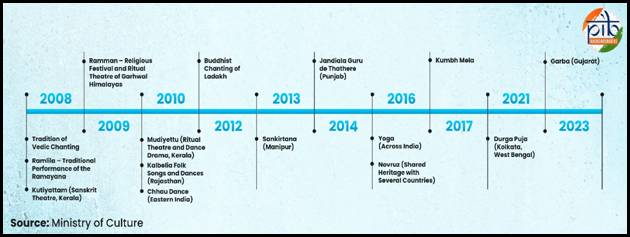
- India now has multiple ICH elements on the UNESCO list, including Garba, Durga Puja, Kumbh Mela, Yoga, Nowruz, Sankirtana, Buddhist chanting, Chhau, Kalbelia, Mudiyettu, Ramman, Kutiyattam, Ramlila and Vedic chanting.
What is the UNESCO Intangible Cultural Heritage List?
- About: The list was created under the 2003 UNESCO Convention for the Safeguarding of Intangible Cultural Heritage.
- It aims to protect living cultural traditions threatened by globalisation, promote awareness, respect and cultural diversity, and support community-led safeguarding of rituals, festivals, oral traditions and traditional craftsmanship.
- Intangible Cultural Heritage: UNESCO defines intangible heritage as living traditions inherited across generations, including oral traditions, performing arts, rituals, festive events, social practices, knowledge of nature and the universe, and traditional craftsmanship that communities continue to recreate and safeguard.
- Nominations: To add an element to UNESCO’s ICH Representative List, states must submit a nomination file, with one nomination allowed every two years.
- India nominated the Deepavali festival for the 2024–25 cycle.
- Deepavali: Celebrated on Kartik Amavasya (October–November), Deepavali symbolises light over darkness, hope over despair and renewal and prosperity.
- Significance of Deepavali’s Inclusion: UNESCO’s inscription acknowledges Deepavali as a living heritage that strengthens social bonds, supports traditional craftsmanship, reinforces values of generosity and well-being.
- Deepavali contributes meaningfully to several Sustainable Development Goals, including:
- SDG 1 (No Poverty): Supports seasonal and traditional livelihoods.
- SDG 3 (Good Health & Well-being): Promotes social bonding and hygiene practices.
- SDG 5 (Gender Equality): Engages women artisans and craft traditions.
- SDG 11 (sustainable communities): Encourages cultural continuity and community resilience.
- Deepavali contributes meaningfully to several Sustainable Development Goals, including:
India’s UNESCO Intangible Cultural Heritage list includes
- Garba of Gujarat (2023)
- Durga Puja in Kolkata (2021)
- Kumbh Mela (2017)
- Yoga (2016)
- Nowruz (2016)
- Traditional brass and copper utensil-making by the Thatheras of Jandiala Guru, Punjab (2014)
- Sankirtana of Manipur (2013)
- Buddhist chanting of Ladakh (2012)
- Chhau dance, Kalbelia dance of Rajasthan, and Mudiyettu of Kerala (2010)
- Ramman festival of Garhwal Himalayas, India (2009)
- Kutiyattam Sanskrit theatre, Ramlila, and Tradition of Vedic chanting (2008).
20th session of the UNESCO Intergovernmental Committee for Safeguarding of the ICH
- About: It is the first time India is hosting the ICH Committee session, organised by the Ministry of Culture and the Sangeet Natak Akademi.
- The event marks a key moment in India’s cultural diplomacy, coinciding with the 20th anniversary of India’s ratification of the 2003 UNESCO Convention.
- Key Objectives of the 20th Session: Examine and evaluate new nominations submitted by States Parties for inscription on UNESCO’s ICH Lists.
- Review the status of already-inscribed elements through periodic reports.
- Strengthen international cooperation, capacity building, and exchange of best practices among Member States.
- Significance for India: The session allows India to showcase its national ICH safeguarding model, which integrates documentation, community participation, and institutional support.
- It enhances global visibility for India’s diverse intangible heritage while strengthening the country’s soft power and cultural leadership.
Frequently Asked Questions (FAQs)
Q. What is UNESCO’s Intangible Cultural Heritage (ICH) Representative List?
The ICH Representative List, created under the 2003 UNESCO Convention, identifies living traditions—rituals, performing arts, crafts—whose safeguarding promotes cultural diversity, intercultural dialogue and community-led preservation.
Q. How are elements nominated for the ICH Representative List?
States submit a nomination file (one nomination every two years) demonstrating community consent, safeguarding plans, and cultural significance; nominations are evaluated by the Intergovernmental Committee.
Q. Why is Deepavali’s inscription significant for development policy?
Deepavali’s inclusion recognises its role in sustaining seasonal livelihoods, supporting artisans and cultural tourism, and contributing to SDGs such as No Poverty (SDG 1), Good Health (SDG 3), Gender Equality (SDG 5) and Sustainable Cities (SDG 11).
UPSC Civil Services Examination, Previous Year Questions (PYQs)
Prelims
Q. Recently, which one of the following was included in the UNESCO’s World Heritage list? (2009)
(a) Dilwara Temple
(b) Kalka-Shimla Railway
(c) Bhiterkanika Mangrove Area
(d) Visakhapatnam to Araku valley railway line
Ans: B
Q2.With reference to Manipuri Sankirtana, consider the following statements: (2017)
- It is a song and dance performance
- Cymbals are the only musical instruments used in the performance
- It is performed to narrate the life and deeds of Lord Krishna
Which of the statements given above is/are correct?
(a) 1, 2 and 3
(b) 1 and 3 only
(c) 2 and 3 only
(d) 1 only
Ans: B
Rapid Fire
Nathula Pass
A MP from Sikkim has urged the Centre to immediately resume border trade through the Nathula Pass, highlighting severe livelihood impacts due to its suspension since 2020.
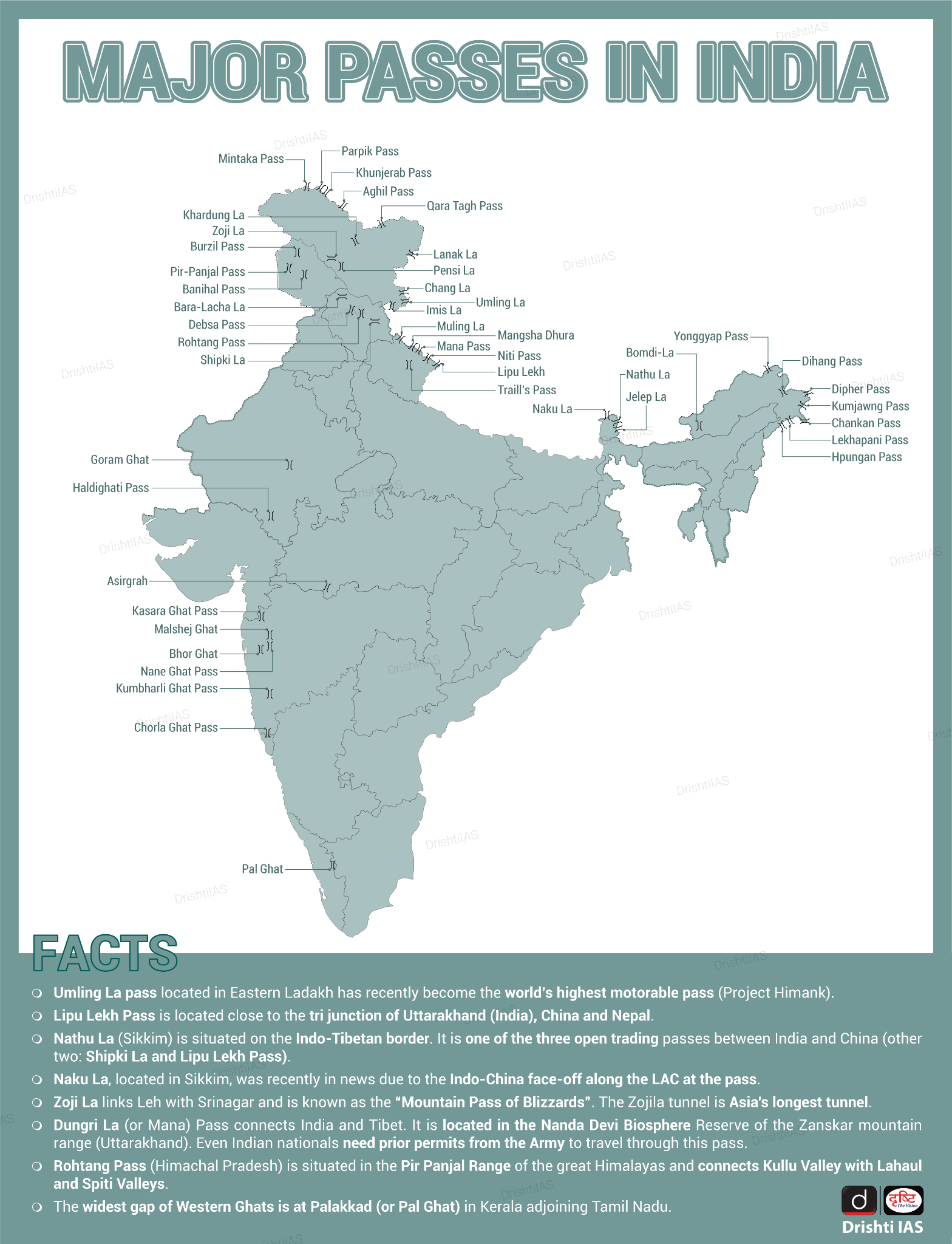
- Nathu La: It is a high-altitude Himalayan pass in East Sikkim on the India–China border, standing at 4,302 metres.
- It is one of the highest motorable roads and an important strategic and border trade point between the two countries.
- It is one of the two ancient passes connecting Sikkim and Tibet, the other being Jelep La.
- Historical Link: It is part of an ancient Silk Road offshoot, historically facilitating trans-Himalayan trade.
- Cultural Link: The Mansarovar route via Nathu La is fully motorable, requiring no trekking except 35–40 km for Mount Kailash parikrama.
- Trade Post Status: Closed after the 1962 Sino-Indian War, Nathu La was reopened in 2006 following bilateral agreements.
- However, trade was disrupted again in 2020 during the Covid-19 pandemic and has not resumed since.
- The other passes located in the state of Sikkim are Jelep La Pass, Donkia Pass, Chiwabhanjang Pass.
| Read more: Nathu La, Sikkim |


Place In News
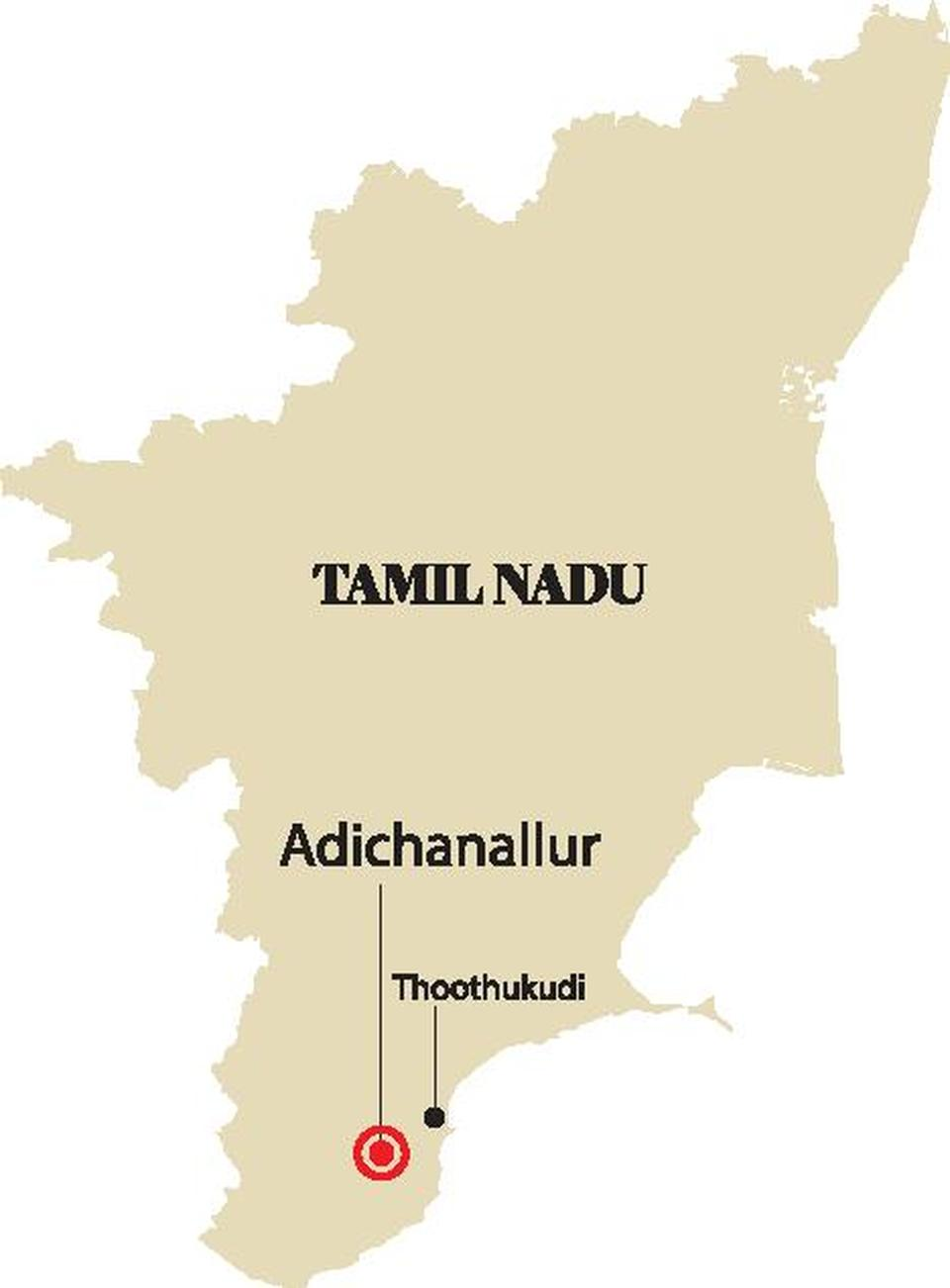
Adichanallur
The Madras High Court has firmly barred any sand mining in or around Adichanallur, one of India’s most significant Iron-Age archaeological sites.
- Adichanallur is one of India’s largest and most important Iron Age–Megalithic urn burial sites, situated on the banks of the Thamirabarani river in Thoothukudi district, Tamil Nadu.
- Material Culture: First identified in 1876 by F. Jagor and later excavated by the Archaeological Survey of India (ASI), the site has yielded extensive burials containing pottery, iron tools, bronze vessels, gold ornaments/diadems, beads, and human skeletal remains.
- Cultural Significance: The site closely matches descriptions in Sangam literature of urn burials (tali), grave goods, and Iron Age funerary customs, providing strong archaeological evidence of early Tamil cultural traditions.
- Urn Burial System: This system involves placing the dead inside large urns (funerary pots) and burying them in carefully cut pits, often accompanied by grave goods.
| Read more: Iron Age and and Urbanization |
Rapid Fire
UMEED Portal
The Ministry of Minority Affairs launched the Unified Waqf Management, Empowerment, Efficiency and Development (UMEED) Portal on 6th June 2025 to upload authenticated data of existing Waqf properties.
- A six-month window to upload authenticated data of existing Waqf properties was provided, and has now concluded on 6th December 2025.
- UMEED Portal: It is a centralized digital platform designed for the registration and regulation of Waqf properties across India.
- Features of UMEED Portal:
- Properties will include precise measurements and geolocation data during registration.
- Unregistered properties after the deadline will be flagged as disputed and sent to the Waqf Tribunal.
- Legal awareness tools to clarify beneficiaries' rights under the amended law.
- Properties registered in women's names cannot be designated as Waqf, but women, children, and EWS will still remain eligible beneficiaries.
- WAMSI (Old System): The previous Waqf property digitisation system, known for errors, duplicate entries, and inconsistent data, was formally disabled on 8th May 2025.
- Waqf: Waqf is a permanent charitable endowment under Islamic law, where property is donated for religious or public welfare purposes.
- It cannot be sold, inherited, or transferred.
| Read More: UMEED Portal |