Biodiversity & Environment
Global Environment Outlook 2025
For Prelims: United Nations Environment Programme (UNEP), Global Environment Outlook, Biodiversity, Greenhouse Gas (GHG), Unemployment, Malnutrition, Critical Mineral, Global Environment Outlook.
For Mains: Key Findings of the Global Environment Outlook 2025, Current state of global environmental degradation and its consequences, Five key areas requiring transformation to prevent environmental degradation and way forward.
Why in News?
The United Nations Environment Programme (UNEP) has released the 7th edition of Global Environment Outlook 2025 (GEO-7) during the 7th session of the UNEP in Nairobi.
What are the Key Highlights of Global Environment Outlook Report 2025?
- Rising Greenhouse Gas: Greenhouse gas (GHG) emissions have increased by 1.5% annually since 1990, reaching record highs (1.55°C) in 2024 and intensifying climate impacts.
- Biodiversity Loss: One million species out of an estimated eight million are threatened with extinction. 20–40% of the global land area is degraded, affecting over 3 billion people.
- Economic Costs: Climate-related extreme weather events cost approximately USD 143 billion annually over the last two decades; air pollution induced health damages alone cost USD8.1 trillion in 2019 (6.1% of global GDP).
- 9 million deaths occur annually from pollution-related causes.
- The report states that strategic investments in climate stability, biodiversity, and pollution reduction could yield USD 20 trillion annually by 2070, whereas inaction risks devastating both economies and ecosystems.
- Plastic Crisis: 8,000 million tonnes of plastic waste pollute the planet, with toxic chemical exposure causing USD1.5 trillion in annual health-related economic losses.
United Nations Environment Programme (UNEP)
- About UNEP: The UNEP, founded on 5th June, 1972, is the foremost global environmental authority. It defines the international environmental agenda, advances sustainable development across the UN, and acts as a leading voice for planetary protection.
- Notable Publications: Emission Gap Report, Adaptation Gap Report, Global Environment Outlook, Frontiers, Invest into Healthy Planet.
- Signature Initiatives: Beat Pollution, UN75, World Environment Day, Wild for Life.
- Head Office: Nairobi, Kenya.
What can be the Various Impacts of Environmental Degradation?
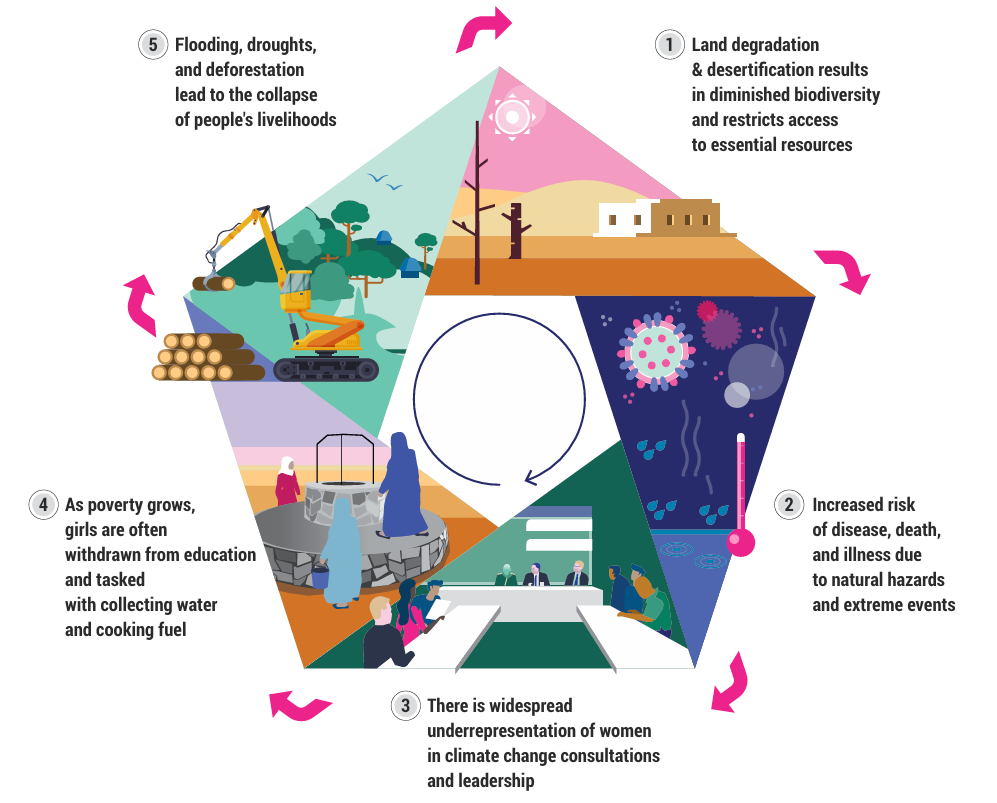
- Crossing Dangerous Tipping Points: Likely to exceed 1.5°C by the early 2030s and 2.0°C by the 2040s, causing irreversible ecosystem collapse and mass displacement.
- Global Economies Collapse: Annual global GDP could fall 4% by 2050 and 20% by 2100, leading to mass unemployment, poverty, and systemic instability.
- Loss of Fertile Land: Equivalent to a Colombia or Ethiopia of fertile land lost each year, threatening agriculture and water availability, destroying livelihoods, fueling conflict, and eroding biodiversity.
- Nutritional Decline: Per-person food availability could drop 3.4% by 2050, intensifying hunger, malnutrition, famine, and social unrest.
- Financial Drain: Already trillions annually, these costs will grow, diverting vital resources and trapping societies in perpetual crisis.
What Transformative Actions are Recommended by GEO-7 to Prevent Environmental Collapse?
- Economy and Finance: Transition to comprehensive wealth metrics and price externalities to reflect the true value of GDP. Reform policies to incentivize decarbonization, sustainable agriculture, and ecosystem restoration.
- Achieving net-zero by 2050 and funding biodiversity needs approximately USD 8 trillion in annual investment until 2050—a fraction of the cost of inaction.
- Global benefits could reach USD 20 trillion per year by 2070, booming thereafter to a potential USD 100 trillion per year.
- Materials and Waste: Implement transparent, traceable circular design, shift investments to circular and regenerative models, and reshape consumption through circular mindsets.
- Energy: Decarbonize the energy supply, improve energy efficiency across sectors, ensure sustainable critical mineral value chains, and address global energy access and energy poverty.
- 9 million premature deaths could be avoided by 2050 via measures like cutting air pollution. By 2050.
- Food Systems: Promote healthy, sustainable diets, increase agricultural circularity and efficiency, and sharply cut food loss and waste.
- Almost 200 million people could be lifted out of undernourishment. Over 100 million people could escape extreme poverty.
- Environment: Accelerate ecosystem conservation and restoration, enhance climate adaptation via Nature-based Solutions, and enforce strong climate mitigation strategies.
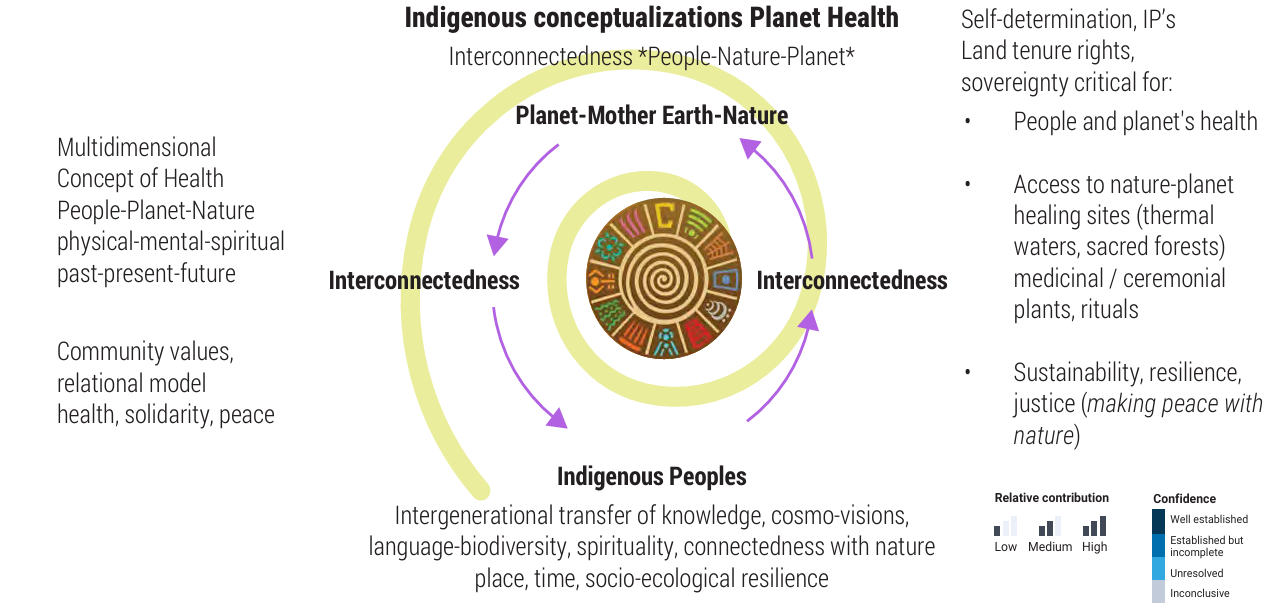
- Collaboration: Requires co-development of solutions by governments, private sector, civil society, academia, and Indigenous Peoples, whose knowledge is crucial.
- Integrated Action: Policies across the five key areas must be implemented in parallel, not in isolation, to ensure a just transition for all.
What Should be India's Strategic Priorities to Prevent Environmental Degradation?
- Green GDP Framework: Develop and implement an "Inclusive Wealth Index" or "Green GDP" that accounts for the depreciation of natural capital (forests, soil, water, air quality) alongside economic growth.
- Transition to Circular Economy: Launch a National Circular Economy Mission with sector-specific (construction, plastic, electronics, textiles) roadmaps. Mandate recycled content in packaging, and create strong markets for secondary raw materials.
- Subsidy Reforms: Gradually phase out petrol, diesel, and coal subsidies, redirecting them to renewable energy, electric mobility, organic farming, and sustainable public transport.
- Scale Up Nature-Based Solutions (NbS): Mainstream Nature-Based Solutions into public infrastructure budgets. Treat mangrove restoration as coastal defense, wetland rejuvenation as water security, and urban green spaces as public health infrastructure.
Conclusion
GEO-7 presents humanity with a defining choice: embrace systemic transformation across the economy, energy, food, materials, and environment to unlock USD 20 trillion annually by 2070, or face catastrophic GDP losses, ecosystem collapse, and mass displacement. Whole-of-government approaches, Indigenous knowledge integration, and USD 8 trillion annual investment until 2050 are critical to securing planetary and human well-being.
|
Drishti Mains Question: Critically analyse the current state of global environmental degradation as highlighted in the GEO-7 report. |
Frequently Asked Questions (FAQs)
Q. What is the GEO-7 report?
GEO-7 is the 7th Global Environment Outlook by UNEP, assessing planetary environmental health and economic transformation pathways.
Q. What are the projected economic benefits of environmental transformation by 2070?
Transformation pathways could deliver USD 20 trillion annually by 2070, expanding to USD 100 trillion thereafter, while avoiding 9 million premature deaths and lifting 200 million from undernourishment by 2050.
Q. What are the five key systems requiring transformation as per the report?
The five key areas are: Economy and Finance, Materials and Waste, Energy, Food Systems, and the Environment, all of which require parallel and integrated policy actions.
Summary
- The UN's GEO-7 report states that investing in climate, nature, and pollution control can yield up to USD 100 trillion annually in long-term economic benefits, while inaction risks cutting global GDP by 20% and causing irreversible damage.
- Current degradation is severe, with record emissions, 1 million species at risk, 9 million pollution-related deaths yearly, and trillions in annual economic costs.
- Averting crises requires sweeping, parallel transformations across five key systems: Economy, Materials/Energy use, Food production, and Environmental management.
- Success hinges on massive collaborative investment (~USD 8 trillion/year), integrating Indigenous knowledge, and moving 'Beyond GDP' to value natural and human capital.
UPSC Civil Services Examination Previous Year Question
Prelims
Q. The ‘Common Carbon Metric’, supported by UNEP, has been developed for
(a) assessing the carbon footprint of building operations around the world
(b) enabling commercial fanning entities around the world to enter carbon emission trading
(c) enabling governments to assess the overall carbon footprint caused by their countries
(d) assessing the overall carbon foot-print caused by the use of fossil fuels by the world in a unit time
Ans: (a)
Mains
Q. Discuss global warming and mention its effects on the global climate. Explain the control measures to bring down the level of greenhouse gases which cause global warming, in the light of the Kyoto Protocol, 1997. (2022)


Indian Economy
Export Promotion Mission
For Prelims: Micro, Small and Medium Enterprises, Directorate General of Foreign Trade, Niryat Protsahan & Niryat Disha,
For Mains: Growth & Development, Transforming India’s Export Landscape, Districts as Export Hubs, Inclusive export growth.
Why in News?
The Government of India has approved the Export Promotion Mission (EPM), aiming to boost exports—especially from Micro, Small and Medium Enterprises (MSMEs) labour-intensive sectors and low-export-intensity regions.
What is the Export Promotion Mission (EPM)?
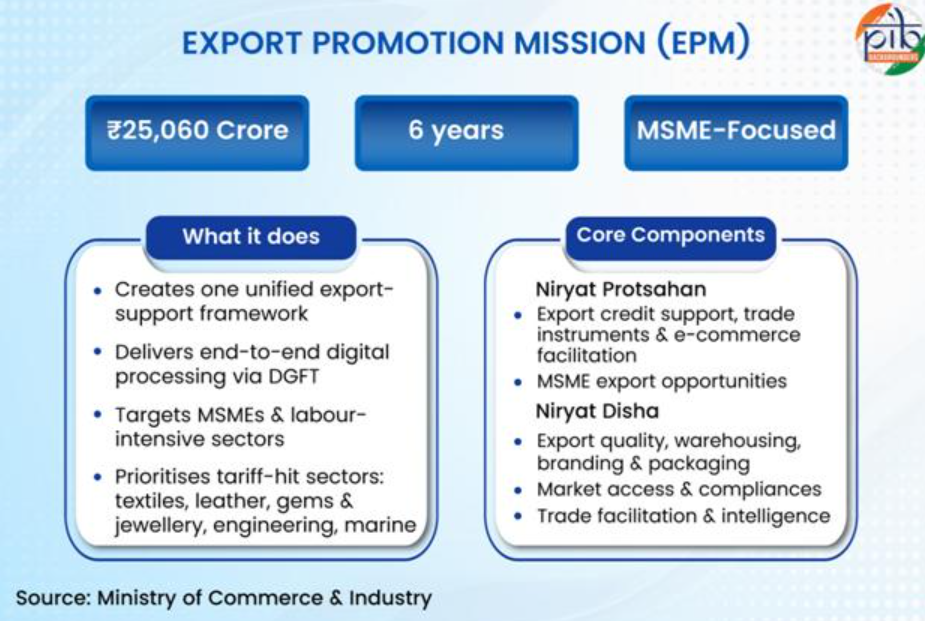
- About: The EPM, announced in Union Budget 2025–26, merges fragmented export-support schemes into a single, digitally enabled framework.
- With a Rs 25,060 crore outlay for FY 2025–26 to FY 2030–31, it aims to strengthen India’s export ecosystem and boost competitiveness for MSMEs and labour-intensive sectors.
- Structure and Governance: EPM is anchored in a coordinated institutional framework involving the Department of Commerce, MSME Ministry, Finance Ministry, Export Promotion Councils, Commodity Boards, financial institutions, industry bodies and state governments.
- The Directorate General of Foreign Trade (DGFT) serves as the implementing agency.
- Integrated Sub-Schemes: EPM operates through two integrated sub-schemes Niryat Protsahan & Niryat Disha, that together address finance and non-financial enablers.
- Niryat Protsahan: Provides financial support such as affordable trade finance, interest subvention, factoring, exporter credit cards, collateral aid and credit enhancement for MSMEs.
- Niryat Disha: Provides non-financial support such as quality and compliance help, branding, trade fairs, logistics and transport support, and district-level capacity-building.
- Digital Implementation and Monitoring: EPM uses a DGFT-run digital platform for paperless, integrated processing and faster, transparent delivery.
- Its outcome-based digital design ensures coordinated implementation and quick response to global trade changes.
- Sectoral and Regional Focus: EPM prioritises tariff-hit sectors such as textiles, leather, gems & jewellery, engineering goods and marine products, while supporting MSMEs, first-time exporters and labour-intensive value chains.
- Under Niryat Disha, targeted support to interior and low-export districts, to expand India’s export base and ensure more inclusive participation in global markets.
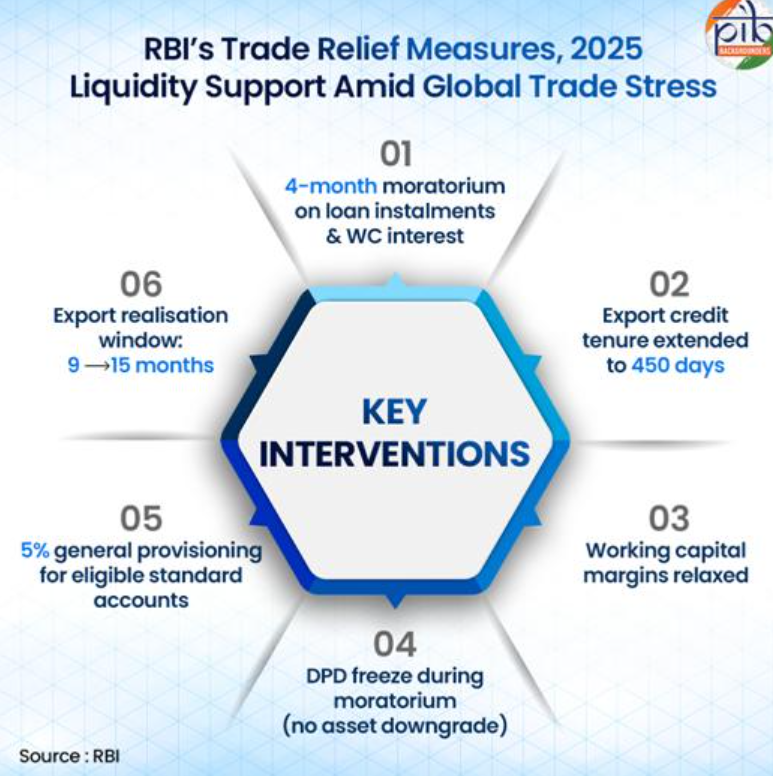
- Regulatory and Central Bank Support: Reserve Bank of India (RBI) Trade Relief Measures 2025 complement EPM by easing liquidity stress and supporting export-oriented businesses.
- Expected Outcomes: Include better trade finance for MSMEs, stronger certification and quality compliance, enhanced branding and global visibility, and increased exports from non-traditional districts.
- These outcomes support export-led growth, align with Atmanirbhar Bharat, and advance the vision of Viksit Bharat @ 2047 by making India a more competitive global trade partner.
What is the Status of India’s Export Industry?
- Export Growth: India’s exports reached a historic USD 778.21 billion in 2023–24, marking a sharp 67% rise from 2013–14.
- The rise in exports reflects expansion of manufacturing, digital capabilities, and greater market diversification, not short-term fluctuations.
- Major Export Markets: Top destinations (2023–24) include US, UAE, Netherlands, China, Singapore, UK, Saudi Arabia, Bangladesh, Germany, Italy.
- These 10 countries account for 51% of total merchandise exports.
- Export reach has expanded across North America, EU, ASEAN, West Asia, North-East Asia, showing diversified geographic spread.
- Evolution of India’s Export Composition: India’s export structure is undergoing a clear upgrade, shifting from low-value goods like textiles and basic agriculture to high-value manufacturing such as electronics and engineering goods.
- The services sector now contributes nearly 44% of total exports, reinforcing India’s global competitiveness.
- New sunrise sectors including medical devices, renewable-energy components, and advanced electronics are further strengthening India’s export diversification and value addition.
What are India’s Major Initiatives to Promote Exports?
|
Initiative |
Purpose / Key Features |
|
Integrates infrastructure planning; improves multimodal logistics and reduces transit time and cost. |
|
|
Aims to reduce logistics cost; promotes multimodal connectivity and digital logistics platforms. |
|
|
Provides 100% government guarantee to exporters, including MSMEs to boost liquidity and enhance India’s global competitiveness. |
|
|
Refunds embedded taxes/duties not covered under GST to improve export competitiveness. |
|
|
Rebates state and central taxes for textile and apparel exports. |
|
|
Boosts manufacturing scale and exports in sectors like electronics, pharma, textiles, drones etc. |
|
|
Funds export-related infrastructure—testing labs, ICDs, cold storage, border haats. |
|
|
Tariff reductions and market access through pacts with UAE, Australia, EFTA etc. |
|
|
Promotes district-specific products with branding, capacity-building, logistics support. |
|
|
Enhances quality, reduces waste, and aligns MSMEs with global production standards. |
Conclusion
The EPM creates a unified, technology-driven framework to strengthen India’s export ecosystem. Together with RBI measures and credit guarantees, it enhances India’s resilience and position in global trade.
|
Drishti Mains Question: Critically examine the design of the Export Promotion Mission (EPM) as a unified, digital framework for export facilitation. |
Frequently Asked Questions (FAQs)
Q. What is the Export Promotion Mission (EPM)?
EPM is a six-year, digitally enabled mission (outlay ₹25,060 crore for FY2025–26 to FY2030–31) that consolidates export support through Niryat Protsahan and Niryat Disha to boost MSME and labour-intensive exports.
Q. What are Niryat Protsahan and Niryat Disha?
Niryat Protsahan provides affordable trade finance (interest subvention, factoring, collateral support); Niryat Disha offers quality/compliance aid, branding, trade-fair support, warehousing and district-level logistics facilitation.
Q. How does the Credit Guarantee Scheme for Exporters (CGSE) support exporters?
CGSE expands export credit by up to Rs 20,000 crore with 100% government guarantee (via NCGTC), enabling collateral-free loans and additional working capital for eligible exporters, especially MSMEs.
Summary
- India launched the Export Promotion Mission (EPM) to unify export-support schemes and strengthen MSME and labour-intensive exports through digital, outcome-based delivery.
- EPM operates via Niryat Protsahan (financial support) and Niryat Disha (non-financial support), backed by DGFT’s digital platform and coordinated institutional governance.
- India’s exports reached USD 778.21 bn in 2023–24, driven by high-value manufacturing (electronics, engineering, pharma) and a strong services sector contributing ~44% of total exports.
- Complementary initiatives—CGSE, PM GatiShakti, National Logistics Policy, PLI schemes, FTAs and district-level export hubs—are enhancing logistics, credit access, compliance, and market diversification to sustain export-led growth toward Viksit Bharat @ 2047.
UPSC Civil Services Examination, Previous Year Questions (PYQs)
Q1. Increase in absolute and per capita real GNP do not connote a higher level of economic development, if (2018)
(a) Industrial output fails to keep pace with agricultural output.
(b) Agricultural output fails to keep pace with industrial output.
(c) Poverty and unemployment increase.
(d) Imports grow faster than exports.
Ans: (c)
Q2. The SEZ Act, 2005 which came into effect in February 2006 has certain objectives. In this context, consider the following: (2010)
- Development of infrastructure facilities.
- Promotion of investment from foreign sources.
- Promotion of exports of services only.
Which of the above are the objectives of this Act?
(a) 1 and 2 only
(b) 3 only
(c) 2 and 3 only
(d) 1, 2 and 3
Ans: (a)
Q3. A “closed economy” is an economy in which (2011)
(a) the money supply is fully controlled
(b) deficit financing takes place
(c) only exports take place
(d) neither exports or imports take place
Ans: (d)
Indian Economy
National Mission on Edible Oils (NMEO)
For Prelims: Edible Oil, NMEO-Oil Palm, NMEO-Oilseeds, Yellow Revolution, WTO, Cooperatives, FPOs, Intercropping.
For Mains: Status of Oilseeds production, consumption and imports in India. Key features of NMEO-Oil Palm (2021) and NMEO-Oilseeds (2024) to achieve self-sufficiency in oilseed production.
Why in News?
The Government of India has launched the National Mission on Edible Oils (NMEO) through two key initiatives namely NMEO-Oil Palm (2021) and NMEO-Oilseeds (2024), to reduce heavy dependence on edible oil imports—which met 56% of domestic edible oil demand in 2023-24.
What is the National Mission on Edible Oils – Oil Palm (NMEO-OP)?
- About: NMEO-OP, approved in 2021 as a Centrally Sponsored Scheme, aims to boost domestic edible oil availability by expanding cultivation area and increasing Crude Palm Oil (CPO) production, backed by a financial outlay of Rs 11,040 crore.
- Key Features:
- Price Assurance: First-time introduction of Viability Price (VP) to protect farmers from international CPO price fluctuations.
- Increased Subsidies: Substantially hikes assistance for planting material (from Rs. 12,000/ha to Rs. 29,000/ha) and maintenance.
- Rejuvenation Support: Special assistance of Rs. 250 per plant for old garden rejuvenation.
- Focus Regions: Special emphasis on the North-Eastern states and traditional growing states like Andhra Pradesh and Telangana.
- Key Targets:
- Area Expansion: Bring 6.5 lakh hectares under oil palm plantations by 2025-26.
- Production Targets: 11.20 lakh tonnes CPO by 2025-26 and 28 lakh tonnes CPO by 2029-30.
- Consumption Awareness: Maintain a consumption level of 19 kg per person per annum till 2025-26.
- Progress: Till November 2025, 2.50 lakh hectares covered under NMEO-OP, bringing total oil palm coverage to 6.20 lakh hectares. CPO production increased from 1.91 lakh tonnes (2014-15) to 3.80 lakh tonnes (2024-25).
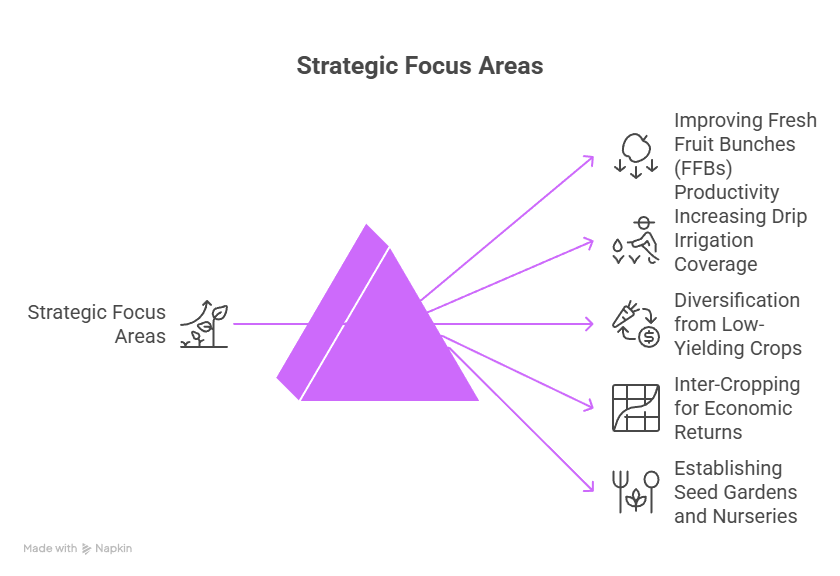
- Strategic Focus Areas:
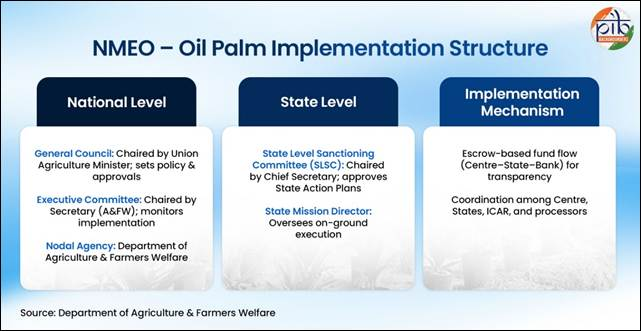
- Implementation Structure:
What is the National Mission on Edible Oils – Oilseeds (NMEO-OS)?
- About: Approved in 2024 for the period 2024-25 to 2030-31, the NMEO-OS aims to achieve self-sufficiency in edible oils.
- It focuses on boosting the production of 9 primary oilseed crops (including mustard, groundnut, and soybean) and enhancing the extraction of oils from secondary sources like cottonseed, coconut, rice bran, and Tree-Borne Oilseeds.
- Key Objectives: Bridge yield gaps by rapidly disseminating innovative technologies and seeds via cooperatives, FPOs, and private partners.
- Expand oilseed area using fallow lands and intercropping, supported by demonstrations and robust seed systems.
- Strengthen market access for farmers and boost secondary oil sources to enhance returns and production.
- Key Targets:
- Increase oilseed area coverage from 29 million ha (2022-23) to 33 million ha (2030-31) and raise primary production from 39 million tonnes to 69.7 million tonnes over the same period.
- Add 40 lakh hectares of cultivation by 2030-31 using rice/potato fallow lands, intercropping, and crop diversification.
- Together, NMEO-OP and NMEO-OS aim to produce 25.45 million tonnes of edible oil by 2030-31, meeting about 72% of domestic demand.
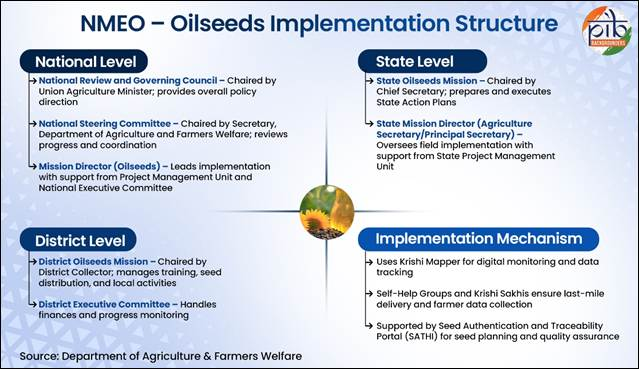
- Implementation: Self-Help Groups, particularly Krishi Sakhis, serve as key Community Agriculture Service Providers (CASP), delivering last-mile support to farmers.
- They collect and update data on the Krishi Mapper platform, enabling real-time tracking and effective grassroots implementation of the mission.
Oilseeds
- About: Oilseeds are crops grown primarily for the edible or industrial oil contained in their seeds.
- They are one of the most important groups of commercial crops in India and globally. In India, oilseeds hold the 2nd-highest acreage and production value after food grains.
- Major Oilseeds Grown in India: 9 major oilseeds—groundnut, soybean, rapeseed-mustard, sunflower, sesame, safflower, niger, castor, and linseed—cover 14.3% of gross cropped area and provide 12–13% of dietary energy.
- Besides the 9 major oilseeds, oil is also extracted from cottonseed, rice bran, coconut (copra), and Tree-Borne Oilseeds (TBOs) such as neem, jatropha, karanja, mahua, and simarouba.
- Importance of Oilseeds: Oilseeds are important for India as
- Nutritional Security: Major source of dietary fats, energy, and fat-soluble vitamins (A, D, E, K), improving calorie intake and addressing hidden hunger.
- Farmers' Welfare: Important cash crop sustaining rural incomes and employment for millions of farmers.
- Export Potential: Contribute about 8% of agricultural exports, with oil meals, oilseeds, and minor oils valued at Rs 29,587 crore in 2023-24.
- Production: India accounts for 5-6% of global oilseed production, yet its domestic edible oil output of 12.18 million tonnes (2023-24) meets only 44% of its demand, creating significant import reliance.
- Major Producing States: Production is concentrated in a few states like Rajasthan, Madhya Pradesh, Gujarat, and Maharashtra that together contribute over 77% of India’s total oilseed output.
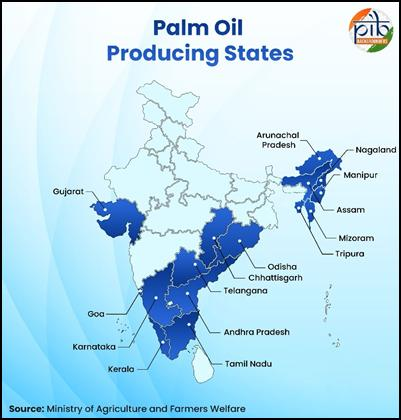
- Regional Specialization: Rajasthan leads in mustard, Madhya Pradesh in soybean, and Andhra Pradesh–Telangana dominate oil palm (98%).
- Oil palm cultivation is expanding in Arunachal Pradesh, Assam, Manipur, Tripura, and Nagaland.
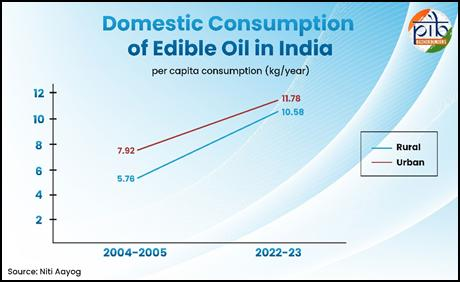
- Consumption: Consumption has grown significantly, with rural annual intake rising 83.68% and urban intake rising 48.74% from 2004-05 to 2022-23.
- Reasons for Import Dependence:
- WTO Impact: India initially achieved edible oil self-sufficiency during the 1990s Yellow Revolution, which aimed to boost oilseeds production.
- However, this was reversed after import duty reductions and price support cuts under WTO agreements.
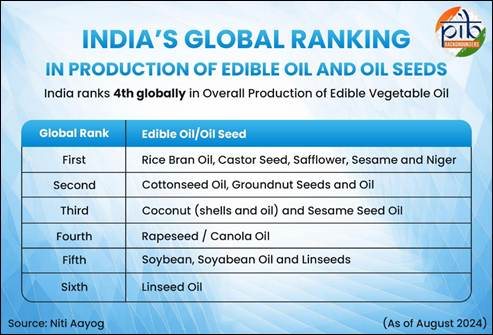
- Climatic Vulnerability: Despite being the world’s 4th-largest edible oil player (after the USA, China, and Brazil), India’s sector remains constrained by its reliance on rainfed agriculture—76% of oilseed cultivation—making yields climate-vulnerable and hindering its ability to meet rising demand.
- WTO Impact: India initially achieved edible oil self-sufficiency during the 1990s Yellow Revolution, which aimed to boost oilseeds production.
Conclusion
The National Mission on Edible Oils addresses India's critical import dependence through targeted interventions in oil palm expansion and oilseed productivity enhancement. By aiming for 72% self-sufficiency by 2030-31, the mission strengthens rural economies, conserves foreign exchange, and advances Atmanirbhar Bharat while ensuring nutritional security for millions through enhanced domestic production capacity.
|
Drishti Mains Question: Q. Analyze the challenges faced by India's oilseed sector despite being the world's fourth-largest edible oil player. How does the National Mission on Edible Oils address these structural constraints? |
Frequently Asked Questions (FAQs)
Q. What is the National Mission on Edible Oils (NMEO)?
NMEO comprises NMEO-Oil Palm (2021) and NMEO-Oilseeds (2024) targeting 72% self-sufficiency by 2030-31.
Q. Which states dominate India's oilseed and oil palm production?
Rajasthan, Madhya Pradesh, Gujarat, Maharashtra contribute 77.68% of oilseeds; Andhra Pradesh-Telangana produce 98% of oil palm with Northeast states expanding.
Q. What role do Krishi Sakhis play in NMEO implementation?
Krishi Sakhis provide last-mile support, collect data on Krishi Mapper, and facilitate market linkages for grassroots implementation.
Summary
- India faces a critical edible oil security challenge, with imports meeting 56% of domestic demand (15.66 MMT in 2023-24), creating economic vulnerability.
- The government's response is the two-pronged National Mission on Edible Oils (NMEO), comprising NMEO-Oil Palm (for area expansion) and NMEO-Oilseeds (for productivity enhancement).
- Key strategies include price assurance (Viability Price) for palm farmers, a cluster-based approach for oilseeds, leveraging fallow lands, and using community resources (Krishi Sakhis) for last-mile delivery.
- The mission aims to produce 25.45 MMT of edible oil domestically by 2030-31, meeting 72% of demand and significantly reducing import dependence to strengthen food security and farmer welfare.
UPSC Civil Services Examination, Previous Year Question (PYQ)
Prelims
Q. Consider the following statements: (2020)
- In the case of all cereals, pulses and oil-seeds, the procurement at Minimum Support Price (MSP) is unlimited in any State/UT of India.
- In the case of cereals and pulses, the MSP is fixed in any State/UT at a level to which the market price will never rise.
Which of the statements given above is/are correct?
(a) 1 only
(b) 2 only
(c) Both 1 and 2
(d) Neither 1 nor 2
Ans: (d)
Q. Consider the following statements: (2018)
- The quantity of imported edible oils is more than the domestic production of edible oils in the last five years.
- The Government does not impose any customs duty on all the imported edible oils as a special case.
Which of the statements given above is/are correct?
(a) 1 only
(b) 2 only
(c) Both 1 and 2
(d) Neither 1 nor 2
Ans: (a)
Q. Other than Jatraopha curcas, why is Pongamia Pinnata also considered a good option for the production of bio-diesel in India? (2010)
- Pongamia pinnata grows naturally in most of the arid regions of India.
- The seeds of Pongamia pinnata are rich in lipid content of which nearly half is oleic acid.
Which of the statements given above is/are correct?
(a) 1 only
(b) 2 only
(c) Both 1 and 2
(d) Neither 1 nor 2
Ans: (c)
Mains
Q. What are the present challenges before crop diversification? How do emerging technologies provide an opportunity for crop diversification?


Important Facts For Prelims
DHRUVA Framework
Why in News?
The Department of Posts has prepared a draft of proposed amendments to the Post Office Act, 2023 to provide the necessary legislative backing for the Digital Hub for Reference and Unique Virtual Address (DHRUVA) framework.
- The amendments aim to support DHRUVA’s ecosystem reforms and enable its nationwide rollout.
What is the DHRUVA Framework?
- DHRUVA: It is proposed as a Digital Public Infrastructure (DPI), similar to Aadhaar and Unified Payments Interface (UPI).
- It will allow logistics companies, e-commerce firms, and gig platforms to receive a user’s digital address “label” instead of a full physical address.
- Once the user authorises this label, the platform can access both the descriptive address and the geo-coded DIGIPIN (Digital Postal Index Number).
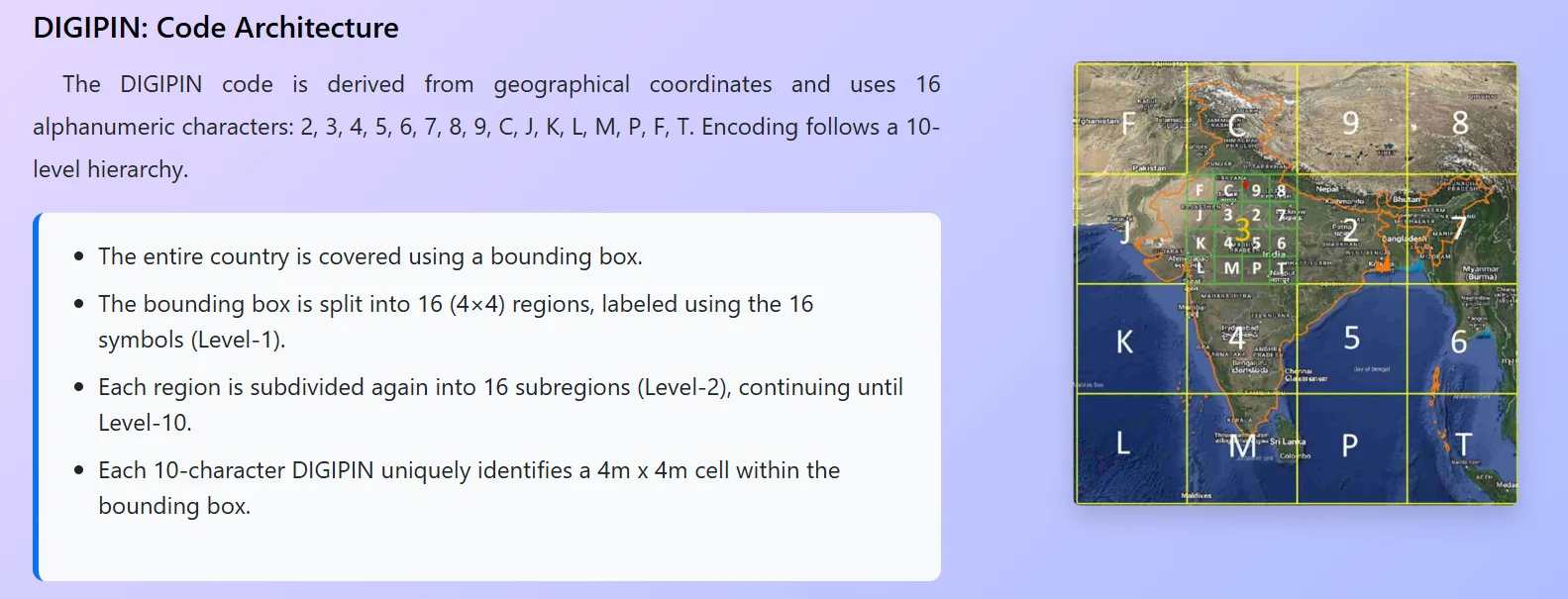
- DIGPIN is an open-source, in-house location pin system developed by India Post, assigning a unique code to every 12 sq. metre block in the country.
- DIGIPIN uses a 10-digit alphanumeric code derived from latitude–longitude coordinates. It divides India into a grid using 16 unique characters (2 to 9, C, J, K, L, M, P, F, T), enabling a hierarchical and precise location encoding system.
- It is especially useful in rural areas where clear descriptive addresses may be unavailable, providing delivery personnel with precise geo-location as a fallback alongside the traditional PIN code.
- DHRUVA’s Ecosystem: DHRUVA proposes the creation of specialised institutions:
- Address Service Providers (ASPs): Generate the digital address labels.
- Address Validation Agencies (AVAs): Verify and authenticate addresses.
- Address Information Agents (AIAs): Allow users to manage consent and address-sharing settings.
- A Central Governance Entity: Similar to National Payments Corporation of India, to regulate standards and operations.
- Significance of DHRUVA:
- Enhances User Control and Privacy: Introduces consent-based address sharing, allowing users to decide who can access their address and for what duration.
- This reduces repeated disclosure of personal address information while ensuring secure and controlled data sharing.
- Boosts Efficiency for Digital and Delivery Platforms: A single, verified digital address token streamlines operations for platforms like Amazon, Uber, and India Post.
- It reduces delivery failures, returns, and misrouting, improving overall efficiency and reducing operational costs.
- Seamless Address Updates: When users relocate, DHRUVA allows address updates to be reflected across multiple platforms automatically.
- This ensures continuity in deliveries, communication, and service access without repeated manual updates.
- Enhances User Control and Privacy: Introduces consent-based address sharing, allowing users to decide who can access their address and for what duration.
Frequently Asked Questions (FAQs)
Q. What is DHRUVA?
DHRUVA (Digital Hub for Reference and Unique Virtual Address) is a proposed Digital Public Infrastructure that issues tokenised digital address labels linked to a user’s descriptive address and geo-coded DIGIPIN for standardised, consent-based address sharing.
Q. What is DIGIPIN and how does it work?
DIGIPIN is a 10-digit alphanumeric, open-source geocode developed by India Post that assigns a unique code to every 12 sq. metre block using a 16-character grid derived from latitude–longitude coordinates.
Q. How does DHRUVA protect user privacy?
DHRUVA proposes consent-based address sharing and tokenisation, enabling users to control who accesses their descriptive address and DIGIPIN and for what duration, thereby reducing repeated disclosure of personal address information.
Summary
- The Department of Posts has proposed DHRUVA, a Digital Public Infrastructure to standardise addresses through digital “labels” backed by amendments to the Post Office Act, 2023.
- DHRUVA links a user-authorised digital label with the descriptive address and the geo-coded DIGIPIN, a 10-digit alphanumeric code mapped to every 12 sq. metre block.
- The ecosystem will include Address Service Providers, Validation Agencies, Information Agents and a central governance body similar to NPCI.
- The framework enhances privacy, improves last-mile delivery, and enables seamless address updates across platforms while reducing operational inefficiencies.
UPSC Civil Services Examination, Previous Year Questions (PYQs)
Prelims
Q. Consider the following statements: (2018)
- Aadhaar card can be used as a proof of citizenship or domicile.
- Once issued, Aadhaar number cannot be deactivated or omitted by the Issuing Authority.
Which of the statements given above is/are correct?
(a) 1 only
(b) 2 only
(c) Both 1 and 2
(d) Neither 1 nor 2
Ans: (d)


Important Facts For Prelims
PM Surya Ghar: Muft Bijli Yojana
Why in News?
The Parliamentary Standing Committee highlighted the slow progress of the PM Surya Ghar: Muft Bijli Yojana, aimed at installing rooftop solar systems in one crore households by FY27.
- As per the committee, as of June 2025, 16 lakh rooftop solar units (16% of the target) were installed, though the government claims 24 lakh households (24% of the target) have benefited.
What is PM Surya Ghar: Muft Bijli Yojana?
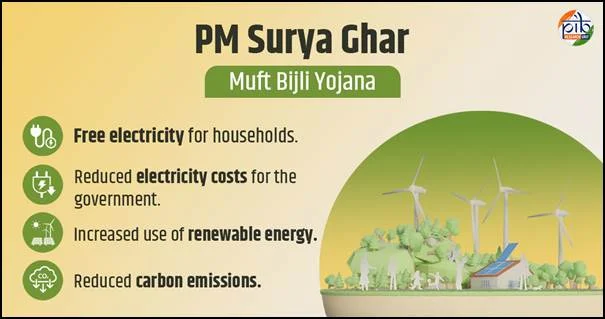
- About: Launched in February 2024 by the Ministry of New and Renewable Energy (MNRE), it is the world's largest domestic rooftop solar initiative, aiming to provide free electricity to households by installing rooftop solar panels.
- Implementation is done by the National Programme Implementation Agency (NPIA) at the national level and by State Implementation Agencies (SIA) at the state level.
- Objectives: The scheme offers up to 300 units of free electricity per month, targeting 1 crore households by March 2027. Installation milestones include 10 lakh by March 2025, 20 lakh by October 2025, and 40 lakh by March 2026.
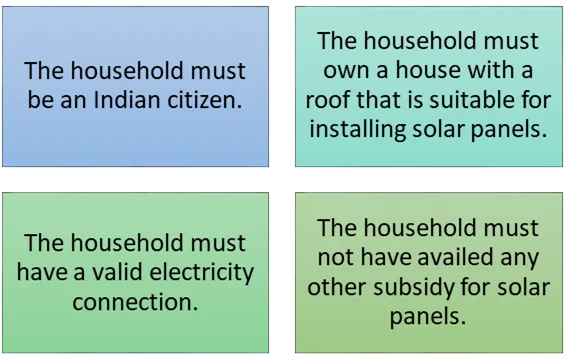
- Eligibility:
- Key Components:
- Central Financial Assistance (CFA): It offers financial support to residential consumers for installing rooftop solar panels via the National Portal.
- Model Solar Village: Establish one Model Solar Village per district to promote energy self-reliance. Villages with population >5,000 (or >2,000 in special category states) are eligible for participation.
- Subsidies & Financial Support: It provides a subsidy of up to 40% for rooftop solar panel installation and offers collateral-free, low-interest loans (~7%) for up to 3 kW residential rooftop solar (RTS) systems.
- Key Benefits: Adds 30 GW of solar capacity, creates around 17 lakh direct jobs, and reduces CO2 emissions by 720 million tonnes over 25 years.
- Expected annual savings of Rs 75,000 crore annually in electricity costs for the government.
- Households with a 3 kW rooftop system producing over 300 units per month can earn around Rs 18,000 per year by selling surplus electricity to DISCOMs.
- Role in Fulfilling India's COP26 Goals: It will speed up the adoption of sustainable energy in India and help in achieving its promises at UN Climate Change Conference in Glasgow (COP26) 2021, which are:
- Reach 500 GW of renewable energy capacity by 2030
- Meet 50% of its energy requirement through renewable sources by 2030
- Cut the total estimated carbon emissions by 1 billion tonnes till 2030
- Bring down the carbon intensity of the economy by under 45%
- Become a net zero carbon nation by 2070.
- Role of DISCOMs in Promoting PM Surya Ghar Scheme: As SIAs, electricity distribution companies (DISCOMs) help promote rooftop solar adoption by providing net meters and conducting inspections and installation commissioning.
Frequently Asked Questions (FAQs)
Q. What is PM Surya Ghar Muft Bijli Yojana?
Launched in February 2024, it is India’s largest domestic rooftop solar scheme providing free electricity to households via rooftop solar panels.
Q. What financial support does the scheme provide?
Up to 40% subsidy and collateral-free low-interest loans (~7%) for rooftop solar systems up to 3 kW.
Q. How does the scheme contribute to climate goals?
Adds 30 GW solar capacity, reduces CO2 emissions by 720 million tonnes, and supports India’s renewable energy targets and net-zero commitment by 2070.
Summary
- PM Surya Ghar Muft Bijli Yojana provides free rooftop solar electricity to households, targeting 1 crore installations by March 2027.
- The scheme includes subsidies, low-interest loans, and Model Solar Villages to promote energy self-reliance.
- It supports climate goals, reduces CO2 emissions, and adds 30 GW solar capacity, contributing to India’s renewable energy targets.
- Implementation depends on active state participation and DISCOM involvement, creating employment opportunities and financial benefits for households.
UPSC Civil Services Examination, Previous Year Question (PYQ)
Q. With reference to the Indian Renewable Energy Development Agency Limited (IREDA), which of the following statements is/are correct? (2015)
- It is a Public Limited Government Company.
- It is a Non-Banking Financial Company.
Select the correct answer using the code given below:
(a) 1 only
(b) 2 only
(c) Both 1 and 2
(d) Neither 1 nor 2
Ans: (c)


Place In News
Nahargarh Biological Park
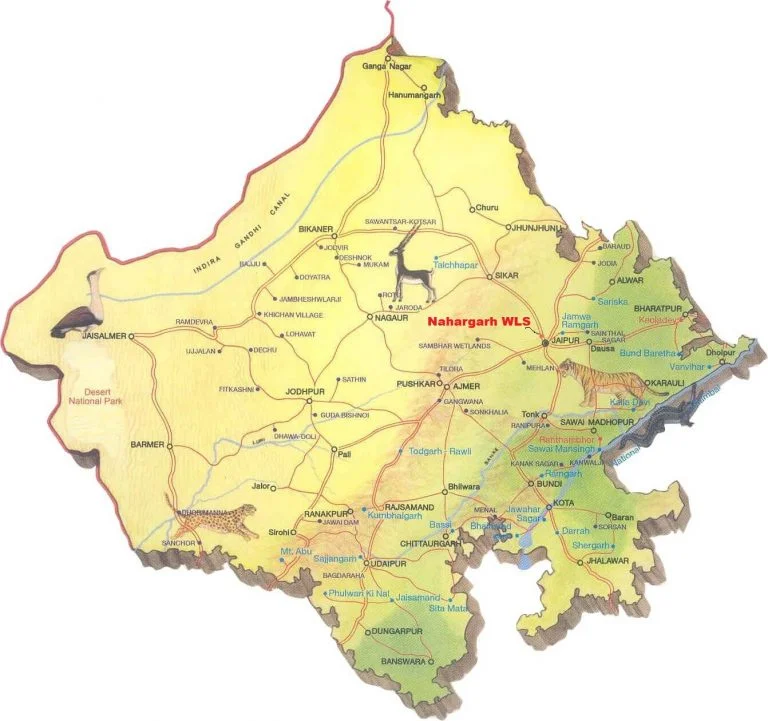
A bus caught fire during a lion safari at Nahargarh Biological Park (part of Nahargarh Wildlife Sanctuary) in Jaipur, Rajasthan, raising serious concerns over safety standards, vehicle maintenance, and environmental protection in ecotourism zones.
Nahargarh Biological Park
- Nahargarh Biological Park: Located roughly 12 km from Jaipur, it lies within the Nahargarh Wildlife Sanctuary (WLS) and is nestled in the Aravalli range.
- It hosts over 285 species of birds. Its most notable avian species is the white-naped tit, found exclusively in this region.
- Ram Sagar lake serves as a prominent location for ornithologists and bird enthusiasts.
Nahargarh Wildlife Sanctuary (WLS)
- Nahargarh WLS: It is located in the Aravalli range and is named after the 18th-century Nahargarh Fort built by Maharaja Sawai Jai Singh II.
- Nahargarh Biological Park, located within the Nahargarh WLS, is known for its lion safaris.
- Flora & Fauna:
- Flora: It features dry deciduous forests, scrublands, and grasslands.
- Fauna: It houses Asiatic lions, Royal Bengal tigers, crocodiles, sloth bears, Himalayan black bears, and wild boars.
Aravalli Range
- About: It is among the oldest mountain systems in the world, stretching over 800 km from Gujarat to Delhi through Rajasthan and Haryana.
- Its highest peak is Guru Shikhar on Mount Abu, and it gives rise to rivers like the Banas, Sahibi, and Luni.
- Significance: It is resource-rich and forms a natural barrier to the western desert.
| Read More: Mining in Aravalli Range |


Rapid Fire
Human Rights Day
Human Rights Day is observed every year on 10th December to commemorate the adoption of the Universal Declaration of Human Rights (UDHR) in 1948, reaffirming the global commitment to dignity, equality and freedom.
- Human Rights Day: The day was formally established in 1950 through UNGA Resolution, inviting all countries to celebrate it annually
- The 2025 theme is “Everyday Essentials”, focusing on access to basic services as a human right.
- India and Human Rights: In India, human rights protection is guided by the Constitution of India and the Protection of Human Rights Act, 1993, under which the National Human Rights Commission (NHRC) was established in 1993.
- The Protection of Human Rights Act, 1993 defines “Human Rights” as the rights relating to life, liberty, equality and dignity of the individual guaranteed by the Constitution or embodied in the International Covenants and enforceable by courts in India.
- NHRC: It is an independent statutory body, it acts as the guardian of human rights in India. It was set up in line with the Paris Principles (1991).
- Since inception, NHRC has registered over 23.8 lakh human rights complaints and has recommended over Rs 264 crore as relief.
- NHRC uses suo motu cognizance, investigations, camp sittings and policy advisories for protection of rights.

| Read more: 75 Years: Laws that Shaped India | The Protection of Human Rights Act, 1993 |


Place In News
Benin
Benin witnessed a failed military coup attempt by a group of soldiers (Military Committee for Refoundation (CMR)) who briefly claimed to remove President Patrice Talon from office.
- The coup attempt comes amid a wave of military takeovers in West Africa, including Niger, Burkina Faso, Mali, Guinea, and Guinea-Bissau, heightening regional instability
- Benin and its Borders: Benin is situated in West Africa, it shares borders with Togo (west), Nigeria (east), Burkina Faso (northwest), and Niger (north).
- Benin has a coastline along the Bight of Benin, part of the Gulf of Guinea in the Atlantic Ocean.
- Rivers: The Niger River forms part of Benin’s northern boundary.
- Mountains: Benin is dominated by the Atakora Mountains in the northwest, a continuation of the Togo Mountains.
- Political Structure: Benin is a Presidential Republic with a multi-party democratic system.

| Read more: Economic Community of West African States |