Governance
Curbing Hate Speech in India
For Prelims: Law Commission Report, Article 19(1)(a), Contempt of Court, BNS, Untouchability, Supreme Court (SC).
For Mains: About Hate Speech and Constitutional, Legal and Judicial stand on it. Steps Taken to Curb Hate Speech, and Further Steps Needed to Effectively Tackle Hate Speech.
Why in News?
Karnataka has become the first Indian state to introduce a dedicated legislation to curb hate speech and hate crimes — the Karnataka Hate Speech and Hate Crimes (Prevention) Bill, 2025.
- The Bill aims to plug a legislative gap in Indian criminal law where “hate speech” remains undefined, despite its frequent invocation in political and social discourse.
Key Provisions of Karnataka Hate Speech and Hate Crimes (Prevention) Bill, 2025
- Definition of hate speech: The Bill defines hate speech as any expression causing injury or disharmony against a person or group based on religion, race, caste, gender, sexual orientation, place of birth, or disability.
- Collective liability: The Bill introduces organisational accountability, where persons in positions of responsibility can be held guilty if hate speech is linked to their organisation.
- Internet regulation: The Bill empowers the state government to block or remove hateful content online, addressing the digital propagation of hate speech.
What is Hate Speech?
- About: According to the 267th Law Commission Report (2017), hate speech means words or actions meant to stir hatred against groups based on race, ethnicity, gender, religion, sexual orientation, etc.
- Thus, it includes spoken or written words, signs, or visuals intended to create fear, provoke violence, or incite hatred.
- Constitutional Framework: Article 19(1)(a) ensures free speech, while Article 19(2) permits reasonable limits to protect sovereignty, security, public order, morality, dignity, foreign relations, and to prevent defamation, contempt of court, or incitement of offences.
- Legal Framework:
- Bharatiya Nyaya Sanhita (BNS), 2023: Section 196 of BNS (formerly section 153A of Indian Penal Code (IPC), 1860) penalises promoting enmity between groups based on religion, race, language, etc.
- Section 299 (formerly IPC 295A) punishes deliberate acts intended to outrage religious feelings.
- Information Technology Act, 2000: Section 66A of this act was used for online hate speech, but was struck down in the Shreya Singhal Case, 2015 for vagueness.
- Representation of People’s Act (RPA),1951: Section 8 of the RPA, 1951 bars those convicted of promoting group enmity or acts harmful to harmony based on religion, race, birthplace, residence, or language.
- Scheduled Castes and Scheduled Tribes (Prevention of Atrocities) Act, 1989: It punishes anyone who intentionally insults or humiliates a member of a Scheduled Caste or Scheduled Tribe.
- Protection of Civil Rights Act, 1955: It punishes inciting or encouraging untouchability through words, signs, visible representations, or other means.
- Bharatiya Nyaya Sanhita (BNS), 2023: Section 196 of BNS (formerly section 153A of Indian Penal Code (IPC), 1860) penalises promoting enmity between groups based on religion, race, language, etc.
What are the Key Judgements Related to Hate Speech in India?
- Shaheen Abdulla v. Union of India and Ors, 2022: The Supreme Court (SC) observed a rising climate of hate and directed police to take suo motu action without waiting for formal complaints.
- Tehseen S. Poonawalla v Union of India, 2018: The SC issued guidelines under Sections 153 and 295A of IPC to tackle hate speech-fueled mob violence, including a district nodal officer to prevent lynching and cow vigilantism.
- Pravasi Bhalai Sangathan v. Union of India, 2014: The SC asked the Law Commission to consider defining hate speech and recommend ways to empower the Election Commission to curb it.
- Shreya Singhal v. Union of India, 2015: The SC struck down Section 66A of the IT Act, 2000. It agreed that the law was too vague and violated free speech, as terms like "annoyance" and "insult" did not qualify as reasonable restrictions under Article 19(2).
How has India Attempted to Curb Hate Speech?
- Law Commission: 267th Law Commission Report (2017) recommended adding Sections 153C and 505A to the IPC to criminalise incitement to hatred and provoking violence.
- Legal Initiative: In 2022, the Hate Speech and Hate Crimes (Prevention) Bill, 2022 (Private Member Bill) was introduced in the Rajya Sabha to define hate speech as any expression that incites, promotes, or spreads discrimination, hatred, or violence, but it was not passed.
- Committees:
- Viswanathan Committee 2015: It proposed adding Sections 153C(b) and 505A to the IPC to punish incitement to offences based on religion, race, caste, community, sex, gender identity, sexual orientation, birthplace, residence, language, disability, or tribe, with up to two years imprisonment and a Rs 5,000 fine.
- Bezbaruah Committee 2014: It proposed amending Section 153C IPC (promoting acts against human dignity) with up to five years imprisonment and fine, and Section 509A IPC (insulting a particular race) with up to 3 years imprisonment or fine.
What Measures Should be Taken to Effectively Curb Hate Speech in India?
- Legal Enforcement: Create a precise legal definition for hate speech that specifically targets expression inciting violence or discrimination. Enforce tiered penalties, from fines to imprisonment for severe cases. Implement Viswanathan and Bezbaruah Committee recommendations by adding specific sections in the BNS, 2023.
- Social & Educational Approaches: Integrate media literacy and critical thinking into school programs and public campaigns to build public resilience against hate speech. Amplify credible community voices to actively challenge and dismantle harmful stereotypes.
- Institutional Mechanisms: Establish independent oversight bodies to monitor hate speech trends with privacy safeguards, and create secure, confidential reporting systems with whistleblower protection.
- International Cooperation: Develop international agreements to address transnational hate speech with cultural sensitivity, and create global forums for sharing effective counter-strategies.
Conclusion
The Karnataka Bill represents a significant attempt to codify and strictly penalize hate speech, addressing a critical legislative gap. Its success will hinge on a precise, constitutional definition, robust enforcement mechanisms, and a balanced approach that safeguards both social harmony and the fundamental right to freedom of expression.
|
Drishti Mains Question: Q. Hate speech is not merely a legal issue but a socio-cultural one. Evaluate the role of educational, social, and technological measures as complementary tools to legal frameworks in creating a resilient society against hate speech. |
Frequently Asked Questions (FAQs)
Q. What is the constitutional basis for restricting hate speech in India?
Article 19(2) of the Constitution permits reasonable restrictions on the freedom of speech (Article 19(1)(a)) in the interests of public order, sovereignty, security, and to prevent incitement to offences, among other grounds.
Q. Why was Section 66A of the IT Act, 2000 struck down by the Supreme Court?
It was struck down in the Shreya Singhal case (2015) for being unconstitutionally vague and overbroad, violating the freedom of speech under Article 19(1)(a).
Q. What was a key recommendation of the 267th Law Commission Report (2017) on hate speech?
It recommended inserting new sections 153C and 505A into the IPC to specifically criminalise incitement to hatred and provocation of violence.
Summary
- India currently lacks a codified law against hate speech, relying on scattered provisions with low conviction rates.
- The proposed Karnataka Hate Speech and Hate Crimes Bill, 2025, aims to fill this gap by defining hate speech, prescribing strict punishments of 2–10 years, and introducing collective liability for organizations.
- This aligns with past recommendations, like the 2017 Law Commission report, and follows Supreme Court concerns over rising hate speech.
- The bill seeks to balance free speech with social harmony through specific, enforceable measures.
UPSC Civil Services Examination, Previous Year Question (PYQ)
Prelims
Q1. ‘Right to Privacy’ is protected under which Article of the Constitution of India? (2021)
(a) Article 15
(b) Article 19
(c) Article 21
(d) Article 29
Ans: (c)
Q2. Right to Privacy is protected as an intrinsic part of Right to Life and Personal Liberty. Which of the following in the Constitution of India correctly and appropriately imply the above statement? (2018)
(a) Article 14 and the provisions under the 42nd Amendment to the Constitution.
(b) Article 17 and the Directive Principles of State Policy in Part IV.
(c) Article 21 and the freedoms guaranteed in Part III.
(d) Article 24 and the provisions under the 44th Amendment to the Constitution.
Ans: (c)
Mains
Q. What do you understand by the concept “freedom of speech and expression”? Does it cover hate speech also? Why do the films in India stand on a slightly different plane from other forms of expression? Discuss. (2014)

Facts for UPSC Mains
Impeachment and In-House Inquiry for Judges
Why in News?
INDIA bloc Members of Parliament (MPs) intend to submit an impeachment motion in Parliament against Justice G.R. Swaminathan of the Madurai Bench of the Madras High Court.
- The move follows his order directing the Subramaniya Swamy Temple authorities to ensure the lighting of a lamp at the deepathoon (pillar) near a dargah during the Karthigai Deepam festival.
What is the Impeachment Process for Judges in India?
- Judicial Impeachment: Though the term “impeachment” is not explicitly used in the Constitution, it refers to the formal process of removing a Supreme Court or High Court judge for proved misbehaviour or incapacity, aimed at ensuring judicial accountability without political interference.
- Constitutional & Legal Basis: Articles 124(4) of the Constitution of India, along with the Judges (Inquiry) Act, 1968, provide the framework for removing judges of the Supreme Court. Article 218 extends these provisions to High Court judges.
- Judges can only be removed for Proved misbehaviour (serious ethical or professional misconduct) and incapacity (Inability to discharge duties due to physical or mental reasons).
- Impeachment Process:
- Initiating the Motion: An impeachment motion can be introduced in either the Lok Sabha or the Rajya Sabha.
- It must have the support of at least 100 Members of Parliament (MPs) in the Lok Sabha or 50 MPs in the Rajya Sabha.
- The motion can proceed only if accepted by the Speaker or the Chairman.
- Inquiry Committee: A three-member committee is set up under the Judges (Inquiry) Act, 1968. It includes a Supreme Court judge (or the Chief Justice of India), the Chief Justice of a High Court, and an eminent jurist.
- The committee acts like a fact-finding body and holds a quasi-judicial inquiry into the charges.
- Committee Report and Parliamentary Debate: The inquiry committee submits its report to the House that initiated the motion.
- If the judge is found guilty, the motion is debated and must be passed in both Houses by a special majority (two-thirds present and voting, plus absolute majority of total membership).
- After Parliament’s approval, the President issues the final removal order.
- Initiating the Motion: An impeachment motion can be introduced in either the Lok Sabha or the Rajya Sabha.
- Key Drawbacks: If the judge resigns mid-process, proceedings usually end.
- No judge has been successfully impeached in India so far.
- A very high voting threshold makes removal extremely rare.
In-house Inquiry Procedure
- Origin and Purpose: The Supreme Court introduced an in-house inquiry procedure in 1999.
- This was prompted by the C. Ravichandran Iyer v. Justice A.M. Bhattacharjee case (1995), which exposed the absence of a mechanism to deal with judicial misconduct falling below the impeachment (Article 124 and 218 of the Constitution) threshold.
- In-house Inquiry Procedure aimed to address judicial misconduct below the impeachment threshold, it bridges the gap between minor misconduct and “proved misbehaviour”.
- Screening of Complaints:Complaints are examined by the Chief Justice of the concerned High Court, or Chief Justice of India (CJI) directly.
- Frivolous complaints are rejected at an early stage. Serious complaints require a response from the judge.
- Constitution of Inquiry Committee: If further inquiry is needed, the CJI forms a three-member committee (different compositions for HC Judges, HC Chief Justices, or SC Judges).
- High Court Judge: (3-member committee comprising 2 Chief Justices of other High Courts and 1 High Court judge).
- High Court Chief Justice: (3-member committee comprising 1 Supreme Court judge and 2 High Court Chief Justices).
- Supreme Court Judge: (3-member committee comprising 3 Supreme Court judges)
- Chief Justice of India (CJI): (No specific in-house procedure defined).
- The committee conducts the inquiry while ensuring natural justice, allowing the judge to respond.
- Outcomes:
- Misconduct is Proved: The judge may be advised to resign or take voluntary retirement.
- Upon refusal, the judge may be relieved of judicial duties, and if necessary, the CJI may recommend impeachment.
- Misconduct is Minor: The judge is cautioned and the report is placed on record.
- Misconduct is Proved: The judge may be advised to resign or take voluntary retirement.
|
Drishti Mains Question: Examine the constitutional procedure for the removal of judges in India and discuss why no judge has been successfully impeached so far. |
Frequently Asked Questions (FAQs)
Q. What constitutional provisions govern removal of superior court judges?
Removal is governed by Article 124(4) (Supreme Court) and Article 218 (extension to High Courts), read with the Judges (Inquiry) Act, 1968; grounds are proved misbehaviour or incapacity.
Q. What parliamentary support is needed to initiate an impeachment motion?
A motion requires signatures of 100 Lok Sabha MPs or 50 Rajya Sabha MPs, and if proved, must be passed by a special majority in both Houses (absolute majority + two-thirds of members present and voting).
Q. What is the in-house procedure and why was it introduced?
Adopted in 1999 (post-1995 Ravichandran Iyer case), the in-house procedure lets the judiciary investigate lesser misconduct through peer committees, bridging the gap between minor lapses and impeachable offences.
Summary
- The Thirupparankundram Deepathoon order of Justice G.R. Swaminathan allowing the Karthigai Deepam near a dargah triggered a major political controversy.
- The INDIA bloc initiated steps for impeachment, bringing the rarely used constitutional removal process of judges into focus.
- Judicial impeachment is governed by Articles 124(4) and 218 and the Judges (Inquiry) Act, 1968, requiring a special majority in both Houses of Parliament.
- The case has also highlighted the Supreme Court’s in-house inquiry procedure (1999), which deals with misconduct below the impeachment threshold.
UPSC Civil Services Examination, Previous Year Question (PYQ)
Prelims
Q. With reference to the Indian judiciary, consider the following statements:(2021)
- Any retired judge of the Supreme Court of India can be called back to sit and act as a Supreme Court judge by the Chief Justice of India with the prior permission of the President of India.
- A High Court in India has the power to review its own judgement as the Supreme Court does.
Which of the statements given above is/are correct?
(a) 1 only
(b) 2 only
(c) Both 1 and 2
(d) Neither I nor 2
Ans: (c)
Mains
Q. Critically examine the Supreme Court’s judgement on ‘National Judicial Appointments Commission Act, 2014’ with reference to appointment of judges of higher judiciary in India. (2017)


Facts for UPSC Mains
Addressing Systemic Failure in Implementation of SC/ST (PoA) Act, 1989
Why in News?
A series of reports from Tamil Nadu has exposed serious delays, systemic failures, and persistent caste-based pressures in cases filed under the Scheduled Castes and Scheduled Tribes (Prevention of Atrocities (PoA) Act, 1989.
- The Act is being rendered toothless, leaving victims in a perpetual state of fear and injustice, undermining social justice.
What is the Scheduled Castes and Scheduled Tribes (PoA) Act, 1989?
- About: It is a comprehensive Indian law enacted to prevent, punish, and redress crimes and discrimination specifically targeted against members of the Scheduled Castes (SC) and Scheduled Tribes (ST).
- Key Provisions:
- Define Atrocities: The Act defines various atrocities, including forced consumption, sexual exploitation, land grabbing, bonded labour, public humiliation, and electoral intimidation.
- It prescribes punishments of 6 months to 5 years imprisonment with a fine, and enhanced penalties (up to life imprisonment or death) for severe crimes.
- Speedy Justice: Mandates Special Courts in each district for speedy trials and the appointment of Special Public Prosecutors to handle cases effectively.
- Proactive and Preventive Measures: Allows authorities to extern (remove) individuals likely to commit an atrocity and empowers magistrates and police to declare areas prone to atrocities and take preventive action for SC/ST safety.
- Stringent Procedural Safeguards: It bars anticipatory bail, presumes abetment if financial aid is given to the accused, and allows the Special Court to attach or forfeit property used in the offence.
- Accountability of Public Servants: Section 4 punishes public servants (non-SC/ST) who wilfully neglect duties under the Act with imprisonment of at least one year, extending up to the punishment for the offence committed.
- Define Atrocities: The Act defines various atrocities, including forced consumption, sexual exploitation, land grabbing, bonded labour, public humiliation, and electoral intimidation.
- Victim & Witness Focus: The Act requires Union and State Governments to ensure implementation, providing victim legal aid, witness expenses, and economic rehabilitation.
- Parliamentary Oversight: Every year, the Union Government must submit a report to Parliament on the measures taken by itself and the State Governments to implement the Act effectively.
What are the Systemic Failures in Effective Implementation of the SC/ST (PoA) Act, 1989?
- Procedural Neglect: Mandatory provisions are routinely flouted. FIRs are not registered immediately, and chargesheets are rarely filed within the stipulated 60 days.
- Misplaced Priorities: Authorities frequently bypass the mandated legal procedure by opting for informal peace meetings and extra-legal settlements, a practice that not only lacks legal sanction but also reveals a systemic and ingrained caste bias.
- Weak Rehabilitation: While monetary relief is sometimes provided, the comprehensive socio-economic rehabilitation mandated by law—including land, employment, and educational support—is delayed or never delivered.
- Lack of Accountability: Section 4 of the Act, which punishes public servants for wilful neglect of duties, has hardly ever been invoked, creating a culture of impunity among officials.
- Intimidation with Impunity: Accused often remain free, asserting dominance over the same locality, creating an environment of fear that pressures victims and witnesses to turn hostile or withdraw complaints.
How has the Ineffective Implementation of the SC/ST (PoA) Act, 1989 Undermined Social Justice?
- Erosion of Deterrence: Low conviction rates, combined with the premature release of convicted perpetrators—such as in the Melavalavu massacre (1997, 6 SC men killed) where 16 convicts were freed for good conduct—embolden offenders and weaken deterrence.
- Reinforcement of Caste Terror: Atrocities like the Melavalavu massacre (1997) and the Sennagarampatti double murder case (1992) aimed to terrorize entire communities into silence and submission. Delayed justice serves this goal by perpetuating fear and impunity.
- Psychological Warfare: The process itself becomes a punishment, with victims fighting not just for justice but against constant threats and bureaucratic indifference, breaking their will to pursue legal recourse.
- Undermining of Constitutional Mandates: The failure of the Act to provide protection renders the constitutional abolition of untouchability (Article 17) and the promise of social justice hollow and ineffective.
- Breakdown of Social Harmony: Unresolved crimes and biased responses intensify inter-caste tensions, damaging community relationships and social cohesion.
What Steps can be Taken to Ensure the Effective Implementation of the SC/ST (PoA) Act, 1989?
- Robust Monitoring Mechanism: A high-level special committee must actively monitor cases from FIR to rehabilitation, replacing the defunct state and district-level committees.
- Ensure Swift Trials: The government must establish fully functional Exclusive Special Courts with dedicated judges and prosecutors, eliminating vacancies and additional charges that cause delays.
- Enforce Accountability: Strictly implement Section 4 to penalize investigating officers, prosecutors, or magistrates who neglect their duties under the Act.
- Provide Immediate Protection: Instil confidence in victims and witnesses through credible and visible protection measures.
- Grassroots Social Reformation: Cultivating social consciousness and fraternity through education like Manual for Social Democracy is essential for long-term change to complement legal measures.
Conclusion
Despite stringent provisions, the SC/ST (PoA) Act is weakened by apathy, delays, and poor accountability; effective justice needs strict enforcement, robust monitoring, victim protection, and a societal effort to eliminate entrenched caste bias.
|
Drishti Mains Question: Q. The Scheduled Castes and Scheduled Tribes (Prevention of Atrocities) Act, 1989 is often called a "toothless law." Critically analyze the systemic and implementation challenges that render this powerful legislation ineffective on the ground. |
Frequently Asked Questions (FAQs)
Q. What is the objective of the SC/ST (PoA) Act, 1989?
To prevent atrocities against Scheduled Castes and Scheduled Tribes and provide legal, socio-economic, and psychological support to victims.
Q. What does Section 4 of the SC/ST (PoA) Act stipulate?
Section 4 holds public servants accountable, prescribing imprisonment for those who wilfully neglect duties mandated under the Act, though it is rarely invoked.
Q. Name one key procedural safeguard under the SC/ST (PoA) Act aimed at ensuring a speedy trial.
The Act mandates the filing of a chargesheet within 60 days of registering an FIR to prevent investigative delays.
Summary
- The SC/ST (PoA) Act has strong provisions—strict punishments, no anticipatory bail, and speedy trials—but suffers from procedural neglect and lack of accountability.
- Implementation is hindered by caste bias, witness intimidation, and failure to provide comprehensive socio-economic rehabilitation.
- Ineffectiveness results in low conviction rates, emboldened perpetrators, caste terror, and psychological harm to victims.
- Effective justice requires Section 4 enforcement, robust monitoring, functional Special Courts, victim protection, and grassroots social education to eliminate caste prejudice.
UPSC Civil Services Examination Previous Year Question (PYQ)
Mains
Q. What are the two major legal initiatives by the State since Independence addressing discrimination against Scheduled Tribes (STs)? (2017)
Important Facts For Prelims
In-vitro Fertilization (IVF) Technology
Why in News?
A Indian Council of Medical Research–National Institute for Research in Reproductive and Child Health (ICMR-NIRRCH) report shows that infertile couples in India face a heavy financial burden, with a single In-vitro Fertilization (IVF) cycle costing over Rs 1 lakh even in public hospitals.
What is In-vitro Fertilization (IVF)?
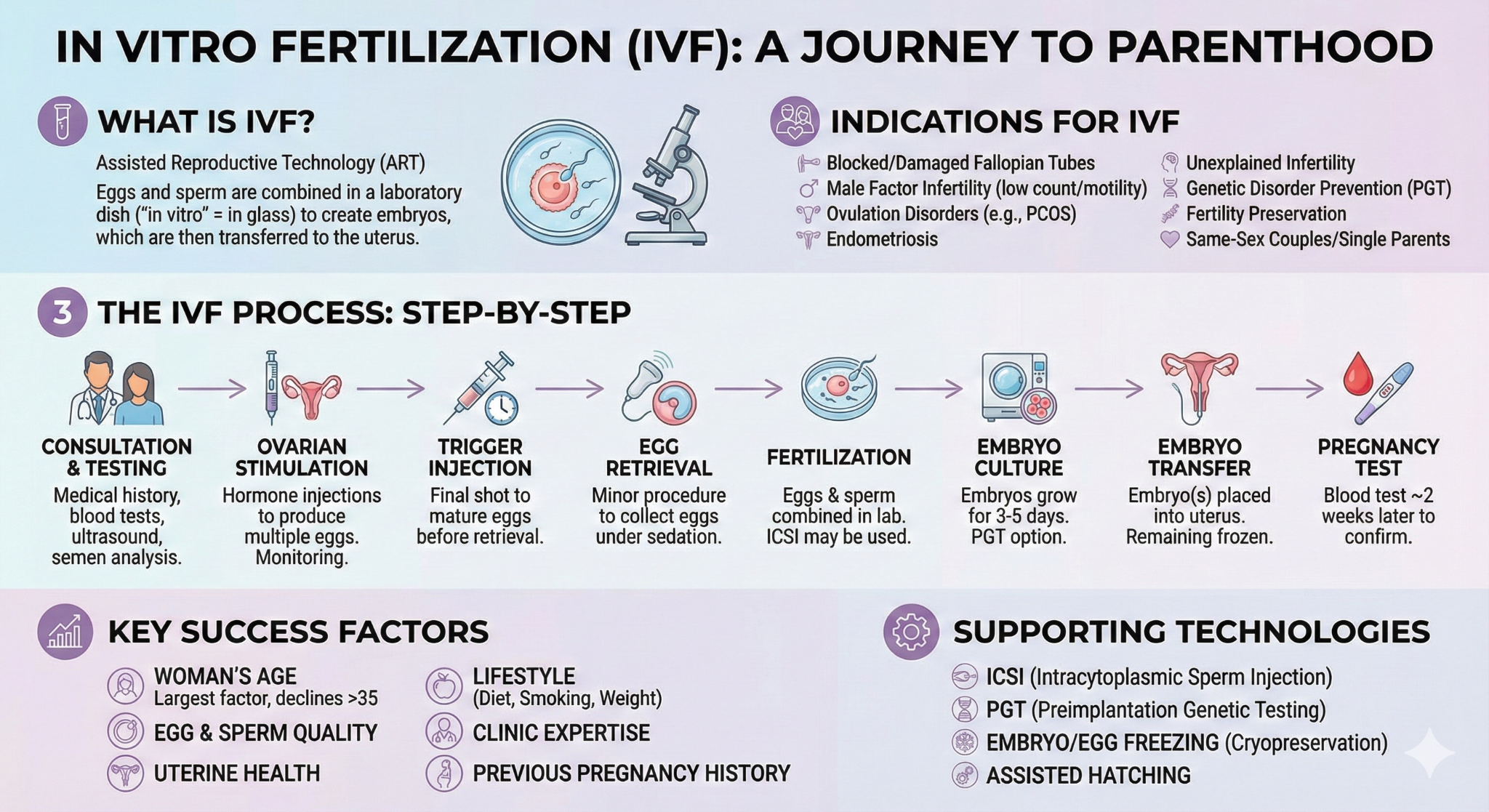
- About: In-Vitro Fertilization (IVF) is one of the most widely used Assisted Reproductive Technologies (ART) for treating infertility.
- In IVF, a woman’s eggs are fertilized by sperm outside the body in a laboratory, and the resulting embryo is then transferred into the uterus to achieve pregnancy.
- IVF is commonly used when natural conception is not possible due to blocked fallopian tubes, low sperm count, ovulation disorders, endometriosis, age-related infertility, or unexplained infertility.
- Importance of IVF: Rising infertility in India due to stress, lifestyle changes, late marriage, Polycystic Ovary Syndrome (PCOS), and obesity has increased the demand for IVF, which helps in repeated miscarriages and fertility preservation for cancer patients.
- With one in six couples affected and fertility rates falling, experts stress the need to make fertility care accessible to protect India’s demographic balance.
- Cost of IVF: According to the ICMR-NIRRCH, a single IVF cycle costs over Rs 1 lakh in both public and private hospitals.
- The public health system spends Rs 6,822 to Rs 11,075 per patient annually, and globally, one ART cycle costs 166% of an average Indian’s yearly income.
- Regulation in India: India’s ART services are regulated under the Assisted Reproductive Technology (Regulation) Act, 2021 and its Rules, which govern egg and sperm donation, cryopreservation, registration of ART clinics, and standards for different types of clinics.
- Under the Central Government Health Scheme (CGHS), a one-time reimbursement of Rs 65,000 or actual cost (whichever is lower) is provided for three fresh IVF cycles, subject to eligibility conditions.
Assisted Reproductive Technology (Regulation) Act, 2021
- About: The ART (Regulation) Act, 2021 was enacted to regulate ART clinics and ART banks in India and ensure ethical, safe, and transparent fertility treatment.
- The Act provides a legal framework to supervise the rapidly growing use of technologies like IVF, while protecting the rights of women, children, and donors.
- The Act mandates compulsory registration of all ART clinics and banks through a National Registry, which acts as a central database.
- Eligibility for Commissioning Parties: ART services are available to single women and infertile married couples, where the woman is 21–50 years and the man is 21–55 years. Foreigners are also allowed to access ART services.
- Eligibility for Donors: Semen donors (21–55 years); Egg donors (23–35 years).
- A woman can donate eggs only once, with a maximum of 7 eggs retrieved.
- A donor’s gametes cannot be supplied by a bank to more than one commissioning party.
- Consent and Screening: Written informed consent is mandatory, and genetic disease screening is compulsory. Sex-selective services are strictly prohibited.
- Insurance for Egg Donor: Commissioning parties must provide insurance coverage to protect the donor against medical loss, injury, or death.
- Children born through ART are legally recognised as the biological children of the commissioning parents, while donors have no parental rights.
Frequently Asked Questions (FAQs)
Q. What is the main finding of the ICMR–NIRRCH study on IVF?
It found that a single IVF cycle costs over ₹1 lakh even in public hospitals, causing high out-of-pocket burden.
Q. Which law regulates IVF and ART services in India?
The Assisted Reproductive Technology (Regulation) Act, 2021 and its Rules regulate ART practices in India.
Q. Which government scheme currently provides limited IVF reimbursement?
CGHS provides one-time reimbursement up to ₹65,000 for three fresh IVF cycles, subject to eligibility.
Q. Why is inclusion of IVF under PM-JAY being demanded?
To reduce financial burden, improve access, and address declining fertility and rising infertility.
Summary
- An ICMR–NIRRCH study reveals that a single IVF cycle in India costs over Rs 1 lakh, even in public hospitals, creating a heavy financial burden.
- Female factors, especially PCOS, are the leading cause of infertility, while male factors contribute significantly.
- Infertility severely affects quality of life due to pain, anxiety, and depression.
- The report recommends including IVF under PM-JAY, expanding public ART services, and regulating treatment costs.
UPSC Civil Services Examination Previous Year Question (PYQ)
Prelims
Q. In the context of recent advances in human reproductive technology, “Pronuclear Transfer” is used for (2020)
(a) fertilization of egg in vitro by the donor sperm
(b) genetic modification of sperm producing cells
(c) development of stem cells into functional embryos
(d) prevention of mitochondrial diseases in offspring
Ans: (d)
Q. Consider the following statements: (2020)
- Genetic changes can be introduced in the cells that produce eggs or sperms of a prospective parent.
- A person’s genome can be edited before birth at the early embryonic stage.
- Human induced pluripotent stem cells can be injected into the embryo of a pig.
Which of the statements given above is/are correct?
(a) 1 only
(b) 2 and 3 only
(c) 2 only
(d) 1, 2 and 3
Ans: (d)


Rapid Fire
Crypto Transactions Surge in India
Cryptocurrency transactions in India crossed Rs 51,180 crore in 2024–25, marking a 41% rise from the previous year. This is based on Rs 511 crore collected as 1% Tax Deducted at Source (TDS), as reported by the Finance Ministry in the Rajya Sabha.
- The Finance Act, 2022 introduced a 1% TDS on all transfers of Virtual Digital Assets (VDAs) under the Income Tax Act, 1961, and this provision has been retained in the Income Tax Act, 2025.
- Cryptocurrency: It is a type of digital currency that enables direct, peer-to-peer online payments without the need for a central authority.
- It functions as a digital medium of exchange built on a public digital ledger known as blockchain, where transactions are verified using cryptographic techniques.
- The first decentralised cryptocurrency was Bitcoin, introduced in 2009.
- Cryptocurrency Trading:
- Mining: New coins are generated when miners solve complex mathematical problems and add blocks to the blockchain.
- Buying & storing: Purchased via exchanges and stored in hot (online) or cold (offline) wallets.
- Payments: Enables fast, low-cost cross-border transactions.
- Investing: Highly volatile asset class with derivatives like futures and options.
- Conversion: Easily converted to fiat currency, but subject to taxation.
| Read more: Cryptocurrency and Blockchain |

Rapid Fire
Preah Vihear Temple
Thailand launched airstrikes on Cambodian military targets after two Thai soldiers were killed near the border, reigniting the long-standing conflict centred on the historic Preah Vihear Temple.
- Preah Vihear: It is a Hindu shrine dedicated to Lord Shiva, located in Cambodia, along the Thailand-Cambodia border in the Dangrek Mountains.
- The temple was built in the 11th century by the Khmer kings Suryavarman I and II, and it is a UNESCO World Heritage Site as well as a major religious and cultural symbol for both Thailand and Cambodia.
- Preah Vihear Border Dispute: In 1907, France (then colonial power in Cambodia) drew the colonial-era map placing the Preah Vihear Temple in Cambodia.
- Although the 1904 Franco-Siamese Treaty placed the area in Thailand.
- The International Court of Justice (ICJ) ruled in 1962 that Preah Vihear belongs to Cambodia.
- Tensions escalated again in 2008 after Cambodia sought UNESCO World Heritage status for the temple.
- In 2013, the ICJ reaffirmed Cambodia’s claim and proposed a demilitarised zone, which was never implemented.
- Thailand currently rejects the jurisdiction of the ICJ, keeping the dispute unresolved.
| Read more: The Preah Vihear and Prasat Ta Muen Thom |


Rapid Fire
Shyok Tunnel
India’s Defence Minister inaugurated 125 Border Roads Organisation (BRO) infrastructure projects, including the strategically crucial Shyok Tunnel in eastern Ladakh.
Shyok Tunnel
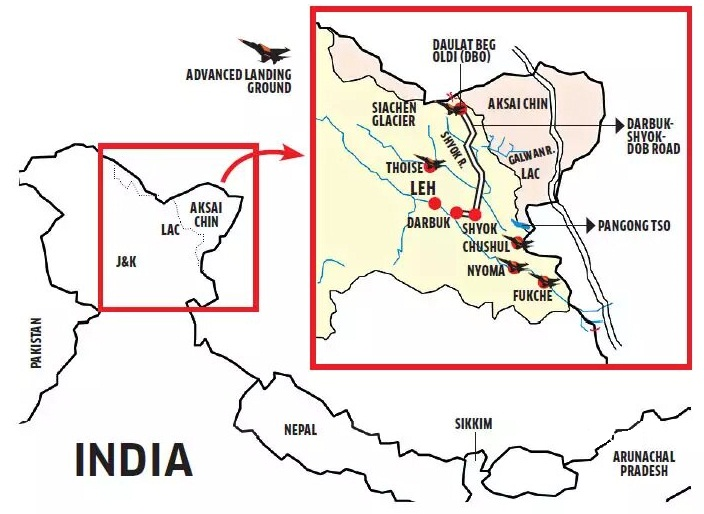
- Feature & Location: It is a cut-and-cover tunnel (920 metres long, at an altitude of over 12,000 feet), situated on the Darbuk-Shyok-Daulat Beg Oldie (DS-DBO) Road in eastern Ladakh, near the Line of Actual Control (LAC) with China.
- The DS-DBO road provides the only surface link to the Daulat Beg Oldie (DBO), India's northernmost military outpost near the LAC, critical for surveillance and securing paths to the Siachen Glacier.
- Purpose: It provides all-weather connectivity to forward areas, bypassing a stretch prone to heavy snowfall, avalanches, and landslides.
- Strategic & Military Significance: Drastically reduces winter disruptions, guaranteeing a stable supply chain for troops deployed in the eastern Ladakh sector.
- Its importance has surged significantly following the 2020 Galwan Valley clashes and the subsequent military standoff with China.
| Read More: Darbuk-Shyok-Daulat Beg Oldie Road |

Rapid Fire
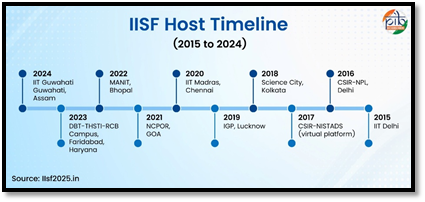
India International Science Festival (IISF), 2025
The 11th edition of the India International Science Festival (IISF) 2025 commenced in Panchkula, Haryana.
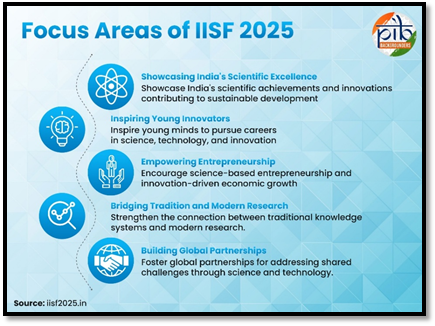
- Theme of 2025 IISF: “Vigyan Se Samruddhi: for Aatmanirbhar Bharat”
- Organised By: Ministry of Earth Sciences (MoES), in coordination with Indian Institute of Tropical Meteorology (IITM), Pune.
IISF
- About: Launched in 2015, it has grown into one of India’s leading platforms for scientific collaboration, innovation, outreach, and public engagement.
- Over the years, it has steadily expanded in scale and influence through diverse programmes, broader participation, and several landmark initiatives in each edition.
- Aim: To highlight India’s growing position as a global science and technology leader, strengthen India’s science culture, expand public engagement, and support national goals in research, innovation and talent development.
| Read More: Empowering States Through Science |