
Place In News
Conflict Zones in the US - Israel - Iran War
For Prelims: Gulf Cooperation Council, Persian Gulf, Hezbollah, Houthis, Gulf of Oman, Strait of Hormuz, Mediterranean Sea, Golan Heights
For Mains: Geopolitics of West Asia and the evolving balance of power, Proxy warfare and non-state actors in international conflicts, Strategic importance of maritime chokepoints
Why in News?
The United States and Israel carried out coordinated strikes on Iran, prompting Iranian retaliatory attacks on economic targets across the Gulf Cooperation Council (GCC) states.
- Rising tensions in the Persian Gulf have led India’s Ministry of Ports, Shipping and Waterways to enhance monitoring to protect Indian ships and seafarers, while Hezbollah has intensified clashes with Israel from Lebanon.
Summary
- The escalating conflict between the United States, Israel, and Iran has evolved into a multi-front crisis involving regional actors and proxy groups like Hezbollah and the Houthis, expanding tensions across West Asia.
- Strategic maritime chokepoints such as the Strait of Hormuz, Red Sea, and Persian Gulf have become critical flashpoints, threatening global energy supply, shipping routes, and regional stability.
Who are the Key Actors Associated with the US-Israel-Iran Conflict?
State Actors
- United States & Israel: Seeking to definitively dismantle Iran's nuclear capabilities and proxy networks to restructure the regional balance of power.
- The US also expressed a goal of encouraging the Iranian people to topple the regime.
- Iran: Fighting for regime survival while utilizing its regional network to project power and deter further strikes.
- Iran aims to raise the cost of war for the US and its allies by spreading the conflict across the region.
- The strategy seeks to create fear of a wider regional war and push international actors to pressure Washington to stop military operations.
- GCC Nations: UAE, Saudi Arabia, Qatar, Bahrain, Kuwait, and Oman share the Persian Gulf with Iran and are caught in the middle of the conflict.
- Many of these countries host major US military bases, including Al Udeid Air Base (Qatar), Naval Support Activity Bahrain – headquarters of the US Fifth Fleet (Bahrain), Al Dhafra Air Base (UAE), and Duqm Port facilities (Oman).
- Iran has targeted their economic and civilian infrastructure, such as airports and oil facilities, along with US embassies and military installations, to pressure the global economy and force international intervention against the US–Israel campaign.
Non-State Actors (The "Axis of Resistance")
- Hezbollah (Lebanon): Hezbollah is firmly aligned with Iran and engaging Israel in a brutal two-front war (fighting Iran on one front, and Iran's proxy, Hezbollah, on the northern border).
- Houthis (Yemen): In solidarity with Iran and the broader "Axis of Resistance." Houthis use their geographical position to attack commercial ships in the Red Sea and the Gulf of Aden. This disrupts global trade and puts international economic pressure on the United States and Israel
- Popular Mobilization Forces (PMF - Iraq): Launching solidarity strikes against US bases and Israeli interests from Iraqi and Syrian territories.
- Kurdish Militias: Some Kurdish groups are supported by the US and Israel as potential allies against the Iranian regime.
- The Kurds are the world’s largest stateless ethnic group, with an estimated population of 25–35 million.
- They are spread across Turkey, Iraq, Syria, Iran, and parts of Armenia, mainly in mountainous regions, and remain a minority in each of these countries.
- The US has historically supported Kurdish groups, especially in Iraq and Syria, due to their effectiveness as military allies.
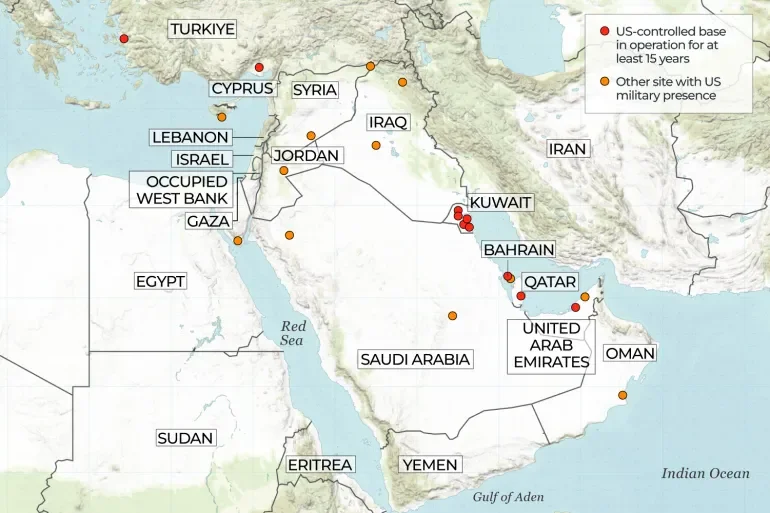
What are the Places in News (PIN) Associated with the US-Israel-Iran Conflict?
Critical Waterways and Maritime Chokepoints
- The Strait of Hormuz: It is a narrow chokepoint (55–95 km wide) and strategically crucial maritime passage between Iran to the north and Oman and the UAE to the south.
- The Strait of Hormuz links the oil-rich Persian Gulf (West) with the Gulf of Oman and the Arabian Sea (East). It acts as the only sea passage from the Persian Gulf to the open ocean.
| Click here to Read: Iran Temporarily Closes the Strait of Hormuz |
- The Persian Gulf: The Persian Gulf is a marginal sea of the Indian Ocean located in West Asia.
- It is an extension of the Gulf of Oman and connects to the Indian Ocean through the Strait of Hormuz.
- The gulf lies between the Arabian Peninsula to the southwest and Iran to the northeast.
- It is bordered by Iran, Oman, United Arab Emirates, Qatar, Saudi Arabia, Bahrain, Kuwait, and Iraq.
- To the northwest, it connects with the Shatt al-Arab delta, where the Euphrates River and Tigris River empty into the gulf.
- The Persian Gulf has a coastline of about 5,117 km, with Iran having the longest stretch.
- The region holds some of the world’s largest crude oil reserves, including the Al-Safaniya Oil Field, the world’s largest offshore oil field.
- Gulf of Oman: Also known as the Gulf of Makran, it is a western extension of the Arabian Sea and forms the main maritime gateway to the Persian Gulf from the Indian Ocean.
- It connects the Arabian Sea to the Strait of Hormuz, which leads into the Persian Gulf.
- The gulf is bordered by Iran and Pakistan to the north, Oman to the south, and the United Arab Emirates to the west.
- Important ports along its coast include Sohar, Al Khaburah, Muscat, and Sur in Oman, and Jask and Chabahar in Iran.
- The Red Sea: The Red Sea is a seawater inlet between Africa and Asia. It is bordered by Egypt, Saudi Arabia, Yemen, Sudan, Eritrea, and Djibouti.
- The sea connects to the Indian Ocean in the south through the Bab el-Mandeb Strait and the Gulf of Aden.
- In the north, it splits around the Sinai Peninsula into the Gulf of Aqaba and the Gulf of Suez, the latter leading to the Suez Canal.
- Geologically, the Red Sea occupies part of the Great Rift Valley (Afro-Arabian Rift system).
- Mediterranean Sea: The Mediterranean Sea is an intercontinental sea bordered by Europe to the north, Asia to the east, and Africa to the south.
- It connects to the Atlantic Ocean through the Strait of Gibraltar, to the Black Sea through the Dardanelles Strait, Sea of Marmara, and Bosporus Strait, and to the Red Sea via the Suez Canal.
- About 22 countries and one territory (Gibraltar) border the sea, including countries such as Turkey, Syria, Lebanon, Israel, and Cyprus.
- Indian Ocean: The broader oceanic region where India is strengthening its naval posture to secure its Sea Lines of Communication and maritime trade routes.
- A US submarine torpedoed and sank the Iranian frigate IRIS Dena about 40 nautical miles off Sri Lanka's southern coast near Galle in the Indian Ocean, bringing the US-Israel-Iran Conflict closer to the Indian Ocean Region (IOR)
The Iranian Plateau
- Tehran and Karaj: The Iranian capital and its adjacent suburb, targeted for their strategic leadership compounds and military command centers of the Islamic Revolutionary Guard Corps.
- Isfahan and Natanz: Located in central Iran. Isfahan houses major airbases and missile production facilities, while Natanz is the heavily fortified, underground center of Iran's uranium enrichment program.
- Bandar Imam Khomeini and Abadan: Located in the oil-rich Khuzestan province near the Persian Gulf, these cities host crucial petrochemical complexes and refineries that drive Iran's export economy.
- Shahroud Space Center: Situated in Semnan Province, this facility is central to the production and testing of ballistic missiles.
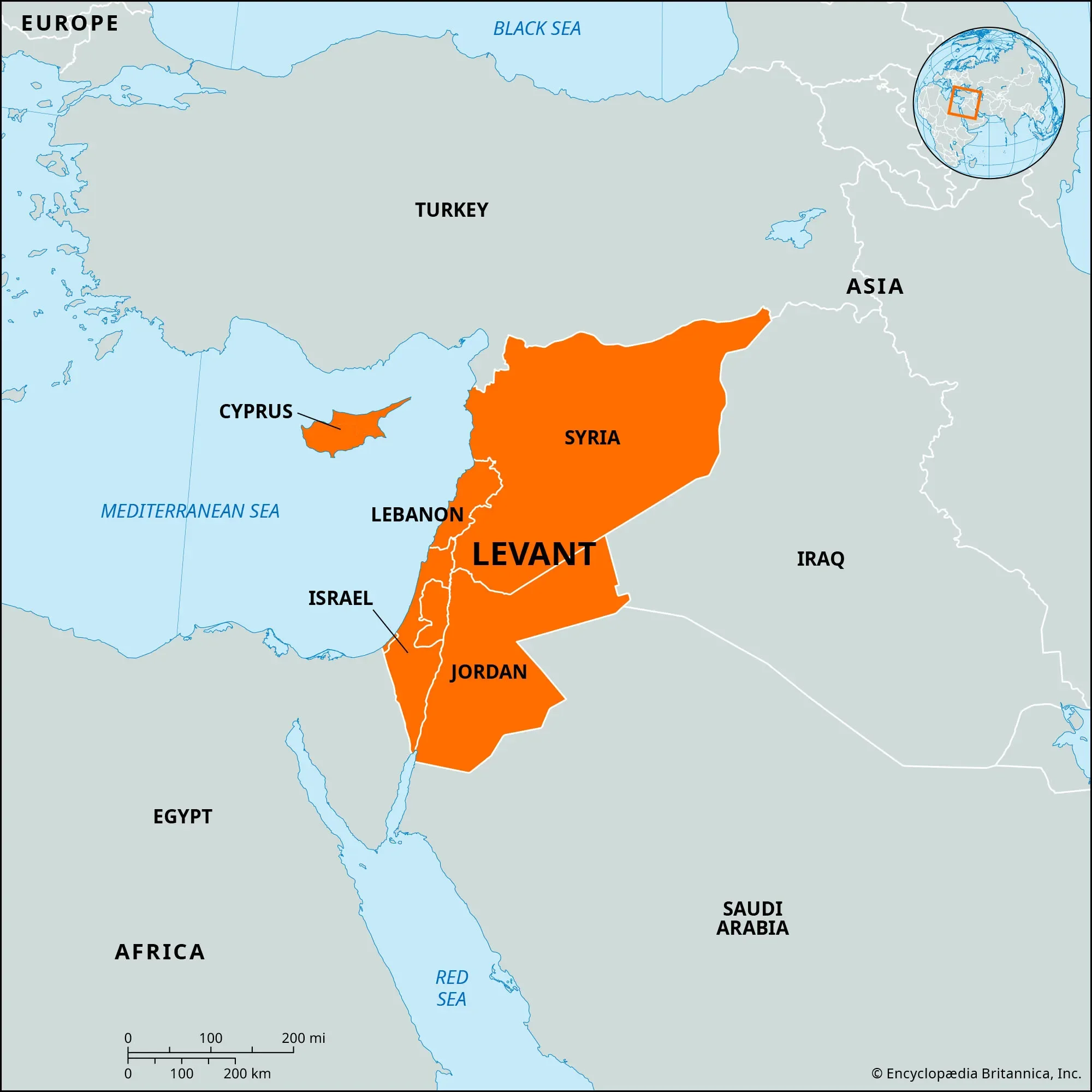
The Levant
- Lebanon:
- Beirut: The capital of Lebanon, with its southern suburbs serving as the primary stronghold and command center for Hezbollah.
- The Litani River: Located between the Mount Lebanon and Anti-Lebanon mountain ranges. It flows southwards before taking a sharp turn west to empty into the Mediterranean Sea north of the city of Tyre.
- The river serves as a critical geographical boundary. Following the 2006 Lebanon War, United Nations Security Council Resolution 1701 mandated that the area between the Blue Line (the border with Israel) and the Litani River must be free of any armed personnel other than the Lebanese Armed Forces and the United Nations Interim Force in Lebanon.
- Israel:
- Haifa: It is a major deep-water port city and industrial center, frequently targeted due to its strategic naval base and proximity to the Lebanese border.
- Tel Aviv: Located on the central Israeli coastal plain. It is the technological and financial capital, serving as the primary economic engine of the state.
- Ashkelon: Located on the coastal plain just north of the Gaza Strip. Due to its proximity to southern conflict zones, it is highly fortified but frequently falls within the range of short-range projectiles.
- Dimona: Iran threatens to hit the Dimona nuclear site if Israel and the US try to topple the regime.
- Geographical Alignment: Haifa, Tel Aviv, and Ashkelon are major coastal cities situated on the Levantine Basin of the Mediterranean Sea.
- The Golan Heights (Syria):
- Geographical Location: A strategic, rocky basaltic plateau situated in southwestern Syria.
- Crucial Boundaries: The Golan Heights is bounded by Mount Hermon to the north (separating it from Lebanon), the Yarmouk River to the south (separating it from Jordan), the Jordan River and Sea of Galilee to the west, and the seasonal Wadi al-Ruqqad to the east.
- Topographical Advantage: The plateau provides a commanding view over the Jordan Rift Valley and northern Israel to the west, and the Syrian capital of Damascus to the east.
- Historical Context: The Golan Heights were captured by Israel from Syria during the Six-Day War (1967).
- Syria attempted to recapture it during the Yom Kippur War (1973) but failed. In 1974, both countries signed the Israel–Syria Disengagement Agreement, which created a ceasefire and established the United Nations Disengagement Observer Force (UNDOF) to monitor the buffer zone.
- Israel formally annexed the territory in 1981, a move not recognised internationally, though the United States recognised Israeli sovereignty in 2019.
- The area remains divided by a UN-monitored demilitarised zone (Area of Separation) between Israeli and Syrian forces, while Syria continues to demand the return of the territory.
- Jordan: It has intercepted Iranian ballistic missiles and drones targeting its territory.
- Geographically positioned directly between Israel and Iran/Iraq, Jordan's primary objective is to protect its territorial integrity and prevent its airspace from becoming a theatre of war.
- Cyprus: Several strikes, believed to be from either Iran or its Lebanese proxy, Hezbollah, hit the island of Cyprus, a Eurasian island country located in the northeast Mediterranean Sea at the crossroads of Europe, Asia, and Africa.
The Arabian Peninsula and Allied Bases
- Dubai and Abu Dhabi (United Arab Emirates): Global aviation and economic hubs whose infrastructures were targeted by Iranian retaliatory strikes to disrupt global transit and trade.
- Manama (Bahrain): The capital city hosting the Fifth Fleet of the United States Navy, making it a critical node for Western naval power projection in the region.
- Erbil (Iraq): The capital of the Kurdistan Region in northern Iraq. Erbil hosts a US military base at Erbil International Airport, which is frequently targeted by Iranian ballistic missiles due to the presence of Western military and intelligence personnel.
- Akrotiri and Dhekelia (Cyprus): Two Sovereign Base Areas controlled by the United Kingdom in the Eastern Mediterranean Sea, utilized for launching reconnaissance flights and intercepting regional projectiles.
- Turkey: North Atlantic Treaty Organization (NATO) air defence systems intercepted an Iranian ballistic missile heading toward Turkish airspace. Debris fell in Hatay province, near the US air base at Incirlik in southern Turkey.
|
Drishti Mains Question: The US–Israel–Iran conflict has transformed West Asia into a multi-front geopolitical theatre.” Examine the role of state and non-state actors in shaping this conflict. |
Frequently Asked Questions (FAQs)
1. Why is the Strait of Hormuz strategically important?
It connects thePersian Gulf to the Gulf of Oman and handles nearly 20% of global oil trade, making it one of the world’s most critical energy chokepoints.
2. What is the “Axis of Resistance”?
It refers to an informal coalition led byIran, including groups such as Hezbollah, the Houthis, and the Popular Mobilization Forces, opposing U.S. and Israeli influence in West Asia.
3. Why is the Golan Heights strategically significant?
TheGolan Heights provides a commanding military vantage point over northern Israel and southern Syria, making it crucial for regional security and surveillance.
4. How does the conflict affect global trade routes?
Attacks near theRed Sea and Gulf of Aden threaten shipping lanes that connect Europe and Asia, potentially disrupting global energy and commodity supply chains.
5. Why is the Persian Gulf vital for the global economy?
ThePersian Gulf holds some of the world’s largest crude oil reserves and is central to global energy exports and maritime trade.
UPSC Civil Services Examination, Previous Year Question (PYQ)
Prelims
Q1. Consider the following pairs: (2018)
|
|
Towns sometimes mentioned in news |
Country |
|
1. |
Aleppo |
Syria |
|
2. |
Kirkuk |
Yemen |
|
3. |
Mosul |
Palestine |
|
4. |
Mazar-i-sharif |
Afghanistan |
Which of the pairs given above are correctly matched?
(a) 1 and 2
(b) 1 and 4
(c) 2 and 3
(d) 3 and 4
Ans: (b)
Q2. Which one of the following countries of South-West Asia does not open out to the Mediterranean Sea? (2015)
(a) Syria
(b) Jordan
(c) Lebanon
(d) Israel
Ans: (b)
Q3. The area known as ‘Golan Heights’ sometimes appears in the news in the context of the events related to (2015)
(a) Central Asia
(b) Middle East
(c) South-East Asia
(d) Central Africa
Ans: (b)
Q4. Yom Kippur War was fought between which sides/ countries? (2008)
(a) Turkey and Greece
(b) Serbs and Croats
(c) Israel, and Arab countries led by Egypt and Syria
(d) Iran and Iraq
Ans: (c)
Mains
Q. “India’s relations with Israel have, of late, acquired a depth and diversity, which cannot be rolled back.” Discuss. (2018)
Facts for UPSC Mains
Durand Line Dispute
Why in News?
The historically disputed Durand Line has recently witnessed frequent clashes between Afghan Taliban forces and Pakistani troops over border fencing, the presence of Tehrik-i-Taliban Pakistan (TTP), and deportation of Afghan refugees.
- The tensions have escalated into direct military confrontation, including a cross-border retaliatory operation by Pakistan called “Ghazab Lil Haq.”
What is the Durand Line?
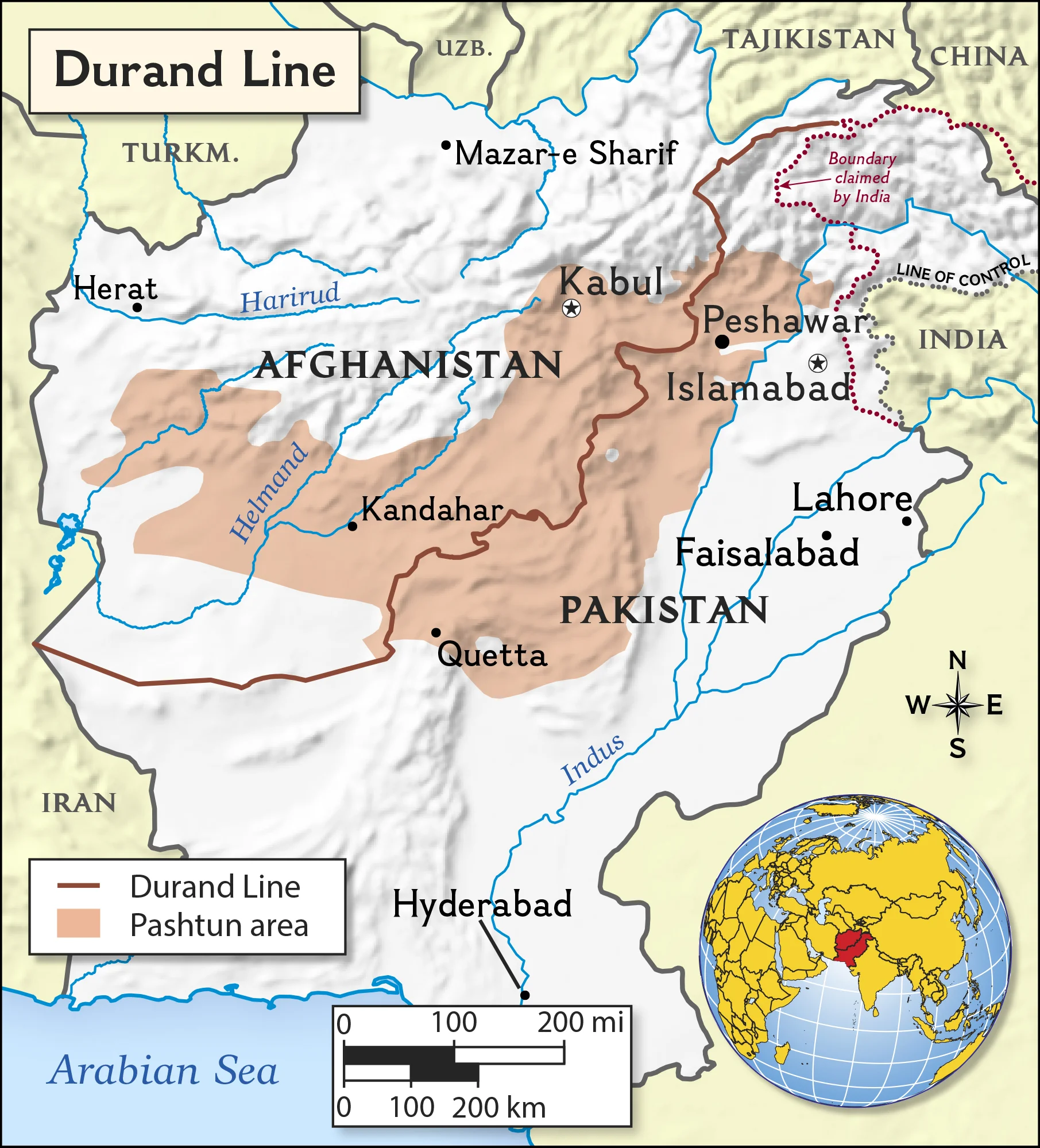
- Background: The Durand Line is a 2,640-kilometer (1,640-mile) porous border separating Pakistan and Afghanistan.
- Stretching from the Karakoram Range near China in the northeast down to the Registan Desert near Iran in the southwest, the boundary passes through vital geographic and strategic features, including the Khyber Pass and the Spīn Ghar (White Mountains).
- Origin: It was established in 1893 through an agreement between Sir Mortimer Durand, a British colonial administrator, and Abdur Rahman Khan, the then Emir of Afghanistan.
- Purpose: It was originally designed to demarcate the spheres of influence between British India and the Afghan Emirate, serving as a buffer zone against the Russian Empire during the "Great Game."
- Anglo-Afghan Wars: Afghanistan became strategically vital during the 1800s as Russia and the British Empire vied for influence in Central Asia.
- The British invaded Afghanistan in 1839, but were pushed back during the First Anglo-Afghan War.
- They invaded again in 1878, won the Second Anglo-Afghan War, and secured the Treaty of Gandamak (1879), which gave them control over Afghanistan’s foreign policy.
- In 1893, Sir Henry Mortimer Durand and Emir Abdur Rahman Khan agreed to create the Durand Line.
- It split the Pashtun tribal areas, placed Balochistan under British India, and established the Wakhan Corridor as a buffer between Russia and Britain.
- The Third Anglo-Afghan War (1919) ended with the Treaty of Rawalpindi, which restored Afghanistan’s control over its foreign affairs and reaffirmed the Durand Line.
- The British invaded Afghanistan in 1839, but were pushed back during the First Anglo-Afghan War.
- Post-1947 Inheritance: After the partition of India in 1947, Pakistan inherited this border.
- However, Afghanistan has historically refused to recognize it as an international boundary.
What are the Core Reasons for the Disputes Around Durand Line?
- Non-Recognition and the Pashtun Issue: The line arbitrarily divides the ethnic Pashtun and Baloch tribes, separating families, lands, and traditional migratory routes.
- Afghanistan has historically harbored irredentist claims, often advocating for a unified "Pashtunistan."
- Unilateral Border Fencing by Pakistan: To curb cross-border terrorism, smuggling, and unregulated movement, Pakistan initiated a massive project to fence the Durand Line in 2017.
- The Afghan Taliban view this fencing as a hostile act that formalizes an illegitimate border and physically divides the Pashtun community. Afghan forces have frequently uprooted fences, leading to deadly skirmishes.
- The TTP Factor (Tehrik-i-Taliban Pakistan): Pakistan accuses the Afghan Taliban of providing safe havens to the TTP, an umbrella militant organization carrying out deadly attacks inside Pakistan.
- The ideological synergy between the Afghan Taliban and the TTP means Kabul has been reluctant to take decisive military action against the group, frustrating Islamabad.
- Trade and Transit Chokepoints: Pakistan frequently closes key border crossings like Torkham and Chaman-Spin Boldak as a pressure tactic.
- Since Afghanistan is a landlocked country heavily reliant on Pakistani ports for international trade, this causes immense economic pain and further sours bilateral relations.
What are the Implications of the Durand Line Dispute for India?
- Collapse of Pakistan’s Strategic Depth Doctrine: Rising Pakistan–Afghanistan tensions and cross-border clashes weaken Pakistan’s long-standing strategy of using the Afghan Taliban as a buffer against India, reinforcing India’s claim that supporting militant proxies backfires.
- Two-Front Challenge for Pakistan: Increased militarization along the Durand Line forces Pakistan to divert military and intelligence resources to its western border, potentially reducing pressure on India’s western front.
- Greater Diplomatic Space for India: Strained Pakistan–Taliban relations open opportunities for India to expand diplomatic outreach, humanitarian aid, and engagement with Afghanistan.
- Rise of Transnational Terrorism: Border instability could strengthen groups like Islamic State Khorasan Province (ISKP) and TTP, increasing risks of regional terrorism and radicalization.
Conclusion
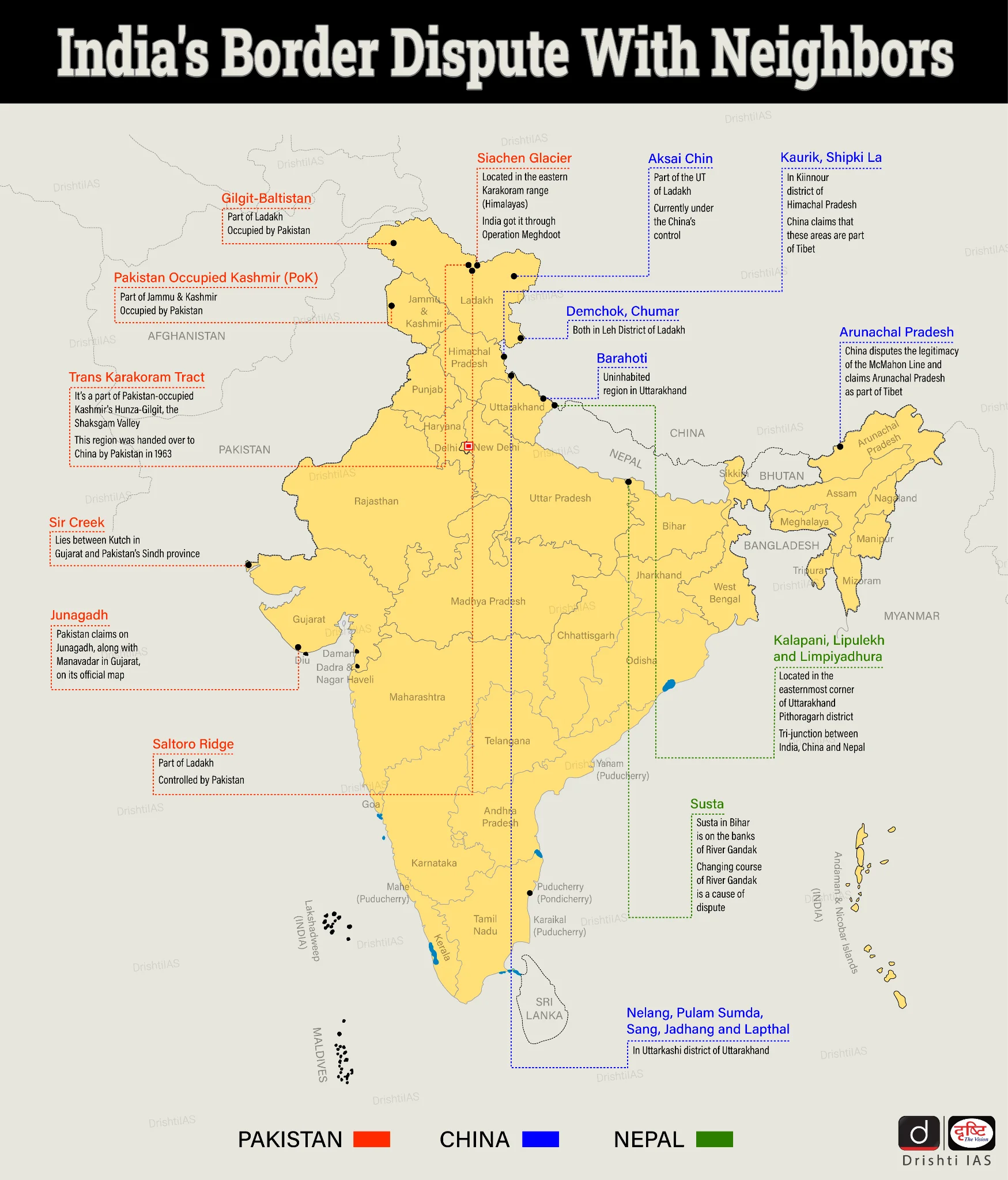
The Durand Line dispute is reshaping South Asian geopolitics. While it may reduce Pakistan’s strategic leverage against India, regional instability and militant expansion remain major risks, requiring India to protect its borders and safeguard connectivity projects in Central Asia.
|
Drishti Mains Question: The Durand Line remains one of the most contested colonial borders in South Asia. Examine the historical roots and contemporary implications of this dispute. |
Frequently Asked Questions (FAQs)
1. What is the Durand Line?
The Durand Line is a 2,640 km border between Pakistan and Afghanistan, established in 1893 by Sir Mortimer Durand and Afghan Emir Abdur Rahman Khan to demarcate British India and Afghanistan.
1. Why does Afghanistan not recognize the Durand Line?
Afghanistan argues that the line arbitrarily divided Pashtun and Baloch tribal communities, leading to long-standing demands for Pashtunistan.
2. What role does Tehrik-i-Taliban Pakistan (TTP) play in the dispute?
TTP militants operate from Afghan territory and carry out attacks in Pakistan, causing Islamabad to accuse the Afghan Taliban of providing safe havens.
3. Why did Pakistan begin fencing the Durand Line?
Pakistan started border fencing in 2017 to curb terrorism, smuggling, and illegal crossings, but the Afghan Taliban oppose it, calling the border illegitimate.
UPSC Civil Services Examination, Previous Year Questions (PYQs)
Prelims
Q. Consider the following countries:(2022)
- Azerbaijan
- Kyrgyzstan
- Tajikistan
- Turkmenistan
- Uzbekistan
Which of the above have borders with Afghanistan?
(a) 1, 2 and 5 only
(b) 1, 2, 3 and 4 only
(c) 3, 4 and 5 only
(d) 1, 2, 3, 4 and 5
Ans: (c)
Important Facts For Prelims
Governor and Lieutenant Governor Appointment in India
Why in News?
The President of India President Droupadi Murmu recently announced a major reshuffle of Governors and Lieutenant Governors across several states and union territories.
- Former Tamil Nadu Governor R.N. Ravi has been appointed as the new Governor of West Bengal. The Kerala Governor Rajendra Vishwanath Arlekar was given the additional charge of Tamil Nadu.
- Taranjit Singh Sandhu, has been appointed as the new Lieutenant Governor (LG) of Delhi.
What is the Appointment Process of the Governor?
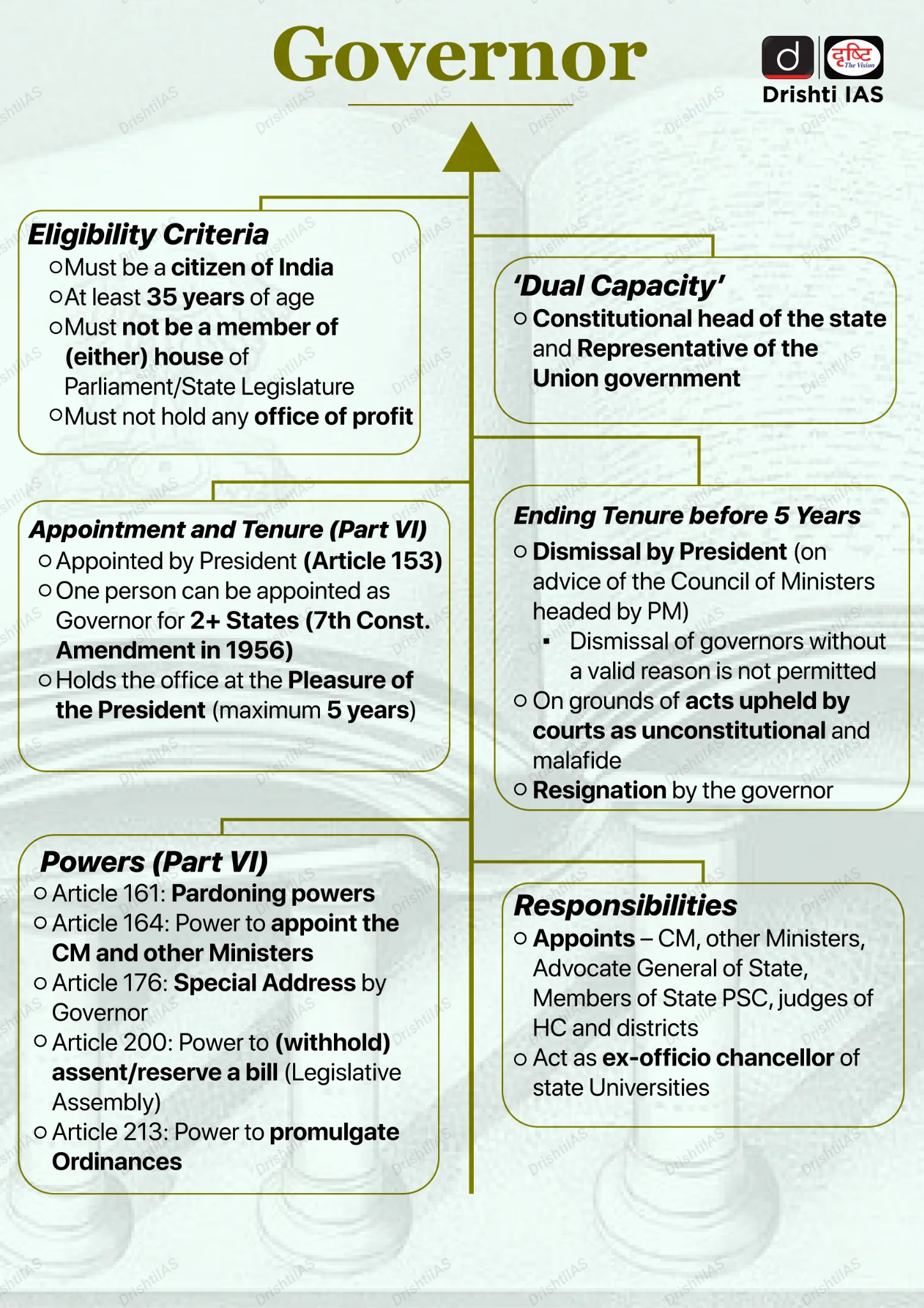
- Article 153 (Governors of States): It mandates that there must be a Governor for every state.
- The 7th Constitutional Amendment Act of 1956 facilitated the appointment of a single Governor for multiple states simultaneously.
- Article 154 (Executive Power of State): The executive power of the state is officially vested in the Governor.
- Article 155 (Appointment of Governor): The Governor is appointed directly by the President of India.
- The appointment is formalized by a warrant under the hand and seal of the President, establishing the Governor as a nominee of the Union Government.
- Article 156 (Term of Office): The Governor holds office during the pleasure of the President of India.
- The Constitution does not specify any grounds for the removal of a Governor. They can be removed or transferred by the President at any time.
- Subject to the pleasure of the President, the standard term of office is five years from the date of assuming charge. A Governor will continue to hold office even after the five years expire, until a successor formally takes over.
- The Governor can resign at any time by writing a resignation letter addressed directly to the President.
- The Constitution does not specify any grounds for the removal of a Governor. They can be removed or transferred by the President at any time.
- Article 157 (Qualifications for Appointment): The individual must be a citizen of India and must have completed thirty-five years of age.
- Article 158 (Conditions of Office): The Governor cannot be a member of either House of Parliament (Council of States or House of the People) or a House of the State Legislature (Legislative Assembly or Legislative Council).
- If a sitting member is appointed, they are legally deemed to have vacated their seat on the day they assume the office of Governor.
- The Governor is strictly prohibited from holding any other office of profit.
- The Governor is entitled to an official residence without payment of rent, along with emoluments, allowances, and privileges determined by the Parliament of India.
- If the same person serves as the Governor of two or more states, the financial emoluments are shared among the respective states in a proportion determined by an order from the President.
- Furthermore, these emoluments and allowances cannot be reduced during the Governor's term of office.
- Article 159 (Oath or Affirmation): Before entering office, the Governor must take an oath or affirmation to faithfully execute the office; to preserve, protect, and defend the Constitution and the law; and to devote themselves to the service and well-being of the people of the state.
- This oath is administered by the Chief Justice of the concerned High Court, or in their absence, the senior-most judge of that particular court.
- Established Conventions:
- Outsider Rule: The Governor is usually appointed from outside the state to ensure neutrality and avoid involvement in local politics.
- Consultation with Chief Minister: The President is expected to consult the State’s Chief Minister before appointment to ensure smooth functioning of the constitutional system, though this practice is often not followed.
What is the Appointment Process of the LG?
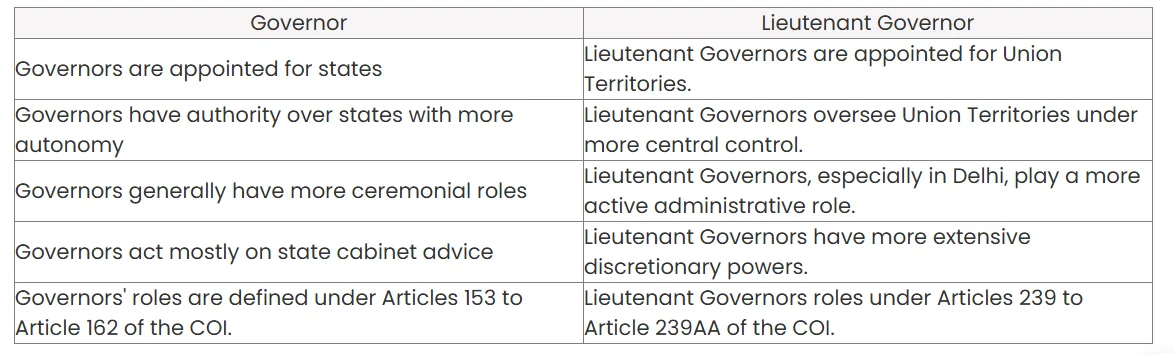
- Article 239: Unlike Governors (who are covered under Part VI of the Constitution), the administration of Union Territories is dealt with under Part VIII (Articles 239 to 241).
- Article 239 of the Constitution states that every Union Territory shall be administered by the President of India acting through an "Administrator" appointed by him, with such designation as the President may specify.
- Designation: The President specifies the designation of this administrator.
- In five UTs ((National Capital Territory (NCT) of Delhi, Puducherry, Jammu and Kashmir, Ladakh, and Andaman and Nicobar Islands), they are designated as Lieutenant Governors (LGs).
- In Chandigarh, Lakshadweep, and Dadra & Nagar Haveli and Daman & Diu, they are simply called "Administrators".
- Article 239AA: Specifically dictates that the Administrator of the NCT of Delhi shall be designated as the Lieutenant Governor.
- Appointment Process: The Lieutenant Governor is directly appointed by the President of India by a warrant under their hand and seal.
- Since the President exercises their powers on the aid and advice of the Union Council of Ministers (Article 74), the LG is effectively chosen and recommended by the Central Government.
- Term of Office and Removal: Like a state Governor, the LG holds office during the "pleasure of the President."
- The Constitution does not specify grounds for the removal of an LG. The Central Government can advise the President to transfer, remove, or demand the resignation of an LG at any time.
Why are Governors Appointed Rather Than Elected in India?
- Prevent Conflict: During the drafting of the Constitution, the Constituent Assembly opted for an appointed Governor (the Canadian model) rather than an elected one (the American model).
- An elected Governor might clash with the elected Chief Minister, leading to a parallel power centre and constitutional deadlocks.
- Nominal Head: Since the state follows a parliamentary system where the Chief Minister is the real executive, spending money and energy on a statewide election for a nominal head was deemed unnecessary.
- National Unity: An appointed Governor serves as a vital link between the Centre and the State, helping to ensure national stability and integration.
- Preserving the Neutrality of the Office: An elected Governor would necessarily have to run on a political party ticket or rely on party machinery to win a statewide election.
- This would compromise their ability to act as a neutral umpire, especially during critical times like hung assemblies or the imposition of President's Rule.
Key Recommendations Regarding Appointment of the Governor
- Sarkaria Commission (1983): The appointee should be an eminent person from outside the State. They must not have been in active politics in the recent past.
- It should be constitutionally mandated to consult the Chief Minister of the state, the Vice-President of India, and the Speaker of the Lok Sabha before making the appointment.
- Recommended that Governors must not be removed before completion of their five-year tenure, except in rare and compelling circumstances.
- Punchhi Commission (2007): Recommended deleting the "pleasure of the President" doctrine.
- Recommended that a Governor should only be removed through a resolution passed by the state legislature (similar to the impeachment process of the President).
- Venkatachaliah Commission (2002): Recommended that Governors should normally complete their five-year term, and if removed earlier, the Central Government should consult the concerned Chief Minister.
Frequently Asked Questions (FAQs)
1. Which constitutional articles deal with the appointment and role of the Governor?
Articles153 to 159 of the Constitution of India outline the appointment, powers, qualifications, and oath of the Governor.
2. Who appoints the Governor of a state in India?
UnderArticle 155, the President of India appoints the Governor through a warrant under their hand and seal.
3. What is the tenure of a Governor in India?
According toArticle 156, the Governor normally serves a five-year term but holds office at the pleasure of the President.
4. What is the “Outsider Rule” in the appointment of Governors?
It is a convention that the Governor should beappointed from outside the concerned state to maintain political neutrality.
5. What reforms have been suggested regarding the removal of Governors?
ThePunchhi Commission (2007) recommended removing the “pleasure of the President” doctrine and suggested removal through a state legislature resolution.
UPSC Civil Services Examination, Previous Year Question (PYQ)
Prelims:
Q. Consider the following statements: (2018)
- No criminal proceedings shall be instituted against the Governor of a State in any court during his term of office.
- The emoluments and allowances of the Governor of a State shall not be diminished during his term of office.
Which of the statements given above is/are correct?
(a) 1 only
(b) 2 only
(c) Both 1 and 2
(d) Neither 1 nor 2
Ans: (c)
Q. Which of the following are the discretionary powers given to the Governor of a State? (2014)
- Sending a report to the President of India for imposing the President’s rule
- Appointing the Ministers
- Reserving certain bills passed by the State Legislature for consideration of the President of India
- Making the rules to conduct the business of the State Government
Select the correct answer using the code given below:
(a) 1 and 2 only
(b) 1 and 3 only
(c) 2, 3 and 4 only
(d) 1, 2, 3 and 4
Ans: (b)
Q. Which one of the following statements is correct? (2013)
(a) In India, the same person cannot be appointed as Governor for two or more States at the same time
(b) The Judges of the High Court of the States in India are appointed by the Governor of the State just as the Judges of the Supreme Court are appointed by the President
(c) No procedure has been laid down in the Constitution of India for the removal of a Governor from his/her post
(d) In the case of a Union Territory having a legislative setup, the Chief Minister is appointed by the Lt. Governor on the basis of majority support
Ans: (c)
Important Facts For Prelims
Self-Defence, IHL and UNCLOS in US–Israel–Iran Conflict
Why in News?
The recent US and Israeli strikes on Iran, including the bombing of a girls' school (Minab, Iran), justified as a "pre-emptive" response to an imminent threat, challenge the legality of using force under the UN Charter, specifically Article 51 and the doctrine of self-defence.
- Furthermore, the torpedoing of the Iranian warship IRIS Dena outside Iran’s nautical boundary (off the coast of Sri Lanka) raises significant questions regarding the freedom of navigation under the UNCLOS (United Nations Convention on the Law of the Sea).
What is the International Law on the Use of Force?
Doctrine of Self-defence
- Core Prohibition on Use of Force: The foundation of international peace is Article 2(4) of the UN Charter, which prohibits member states from threatening or using force against the 'territorial integrity' or 'political independence' of another state.
- Exceptions to the Rule: Under the UN Charter, the use of force is only lawful in two scenarios, i.e.,
- When authorised by the UN Security Council, or
- In the exercise of the right of self-defence under Article 51.
- Exceptions to the Rule: Under the UN Charter, the use of force is only lawful in two scenarios, i.e.,
- Strict Interpretation of Article 51: The right of self-defence under Article 51 is triggered only in response to an "actual armed attack." Since Iran had not recently attacked either state, the strikes do not meet this strict criterion.
- Doctrine of Anticipatory Self-Defence: The argument of the US and Israel rests on the controversial theory of "anticipatory" self-defence. However, many geopolitical scholars argue that international law does not recognise a right to use force in self-defence against an attack that has not yet occurred.
- Even under the anticipatory self-defence theory, the use of force would be lawful only if three conditions were met, i.e., (1) Iran had decided to attack; (2) it possessed the capability to do so; and (3) this was the "last window of opportunity" to prevent that future attack.
- Moreover, US-Iran nuclear negotiations, mediated by Oman, were actively underway in Geneva, yet the US and Israel launched joint military strikes on Iran.
International Humanitarian Law (IHL)
- Core Principles of IHL: Unlike the UN Charter, which addresses the legality of starting a war (jus ad bellum), International Humanitarian Law (IHL) governs how wars are fought (jus in bello), ensuring humane conduct regardless of how the conflict began.
- The conduct of hostilities is regulated by four core principles, i.e., ‘distinction’, ‘proportionality’, ‘military necessity’, and ‘precaution’.
- Principle of Distinction: This principle requires a clear separation between ‘combatants’ and ‘military targets’ from ‘civilians’ and ‘civilian objects’ (schools, hospitals, places of worship). If there is any doubt about a target's nature, it must be presumed to be civilian.
- Civilian objects, including schools, may lose their protected status if they are used for military purposes (e.g., as a base or command post). However, there is no evidence that the Minab school (Iran, targeted by Israeli-US airstrike) was used militarily.
- Legal Protections for Children: The Convention on the Rights of the Child, 1989 (Article 38(4)) requires states to protect children affected by armed conflict.
- Furthermore, the Rome Statute, 1998 defines the intentional targeting of civilians and educational buildings as a war crime.
- Doctrine of Collateral Damage: If the school was hit incidentally during an attack on a nearby military facility, the legality depends on the principles of proportionality and precaution.
- Incidental harm to civilians is lawful only if the expected harm is not excessive in relation to the "concrete and direct military advantage" anticipated from the attack.
What is UNCLOS and its Role in Naval Warfare?
UNCLOS and Naval Warfare:
- While UNCLOS (United Nations Convention on the Law of the Sea) is the primary framework for maritime governance, it focuses on peacetime activities. However, It does not contain explicit provisions regulating the conduct of belligerent parties during armed conflict. The US is not a signatory to UNCLOS.
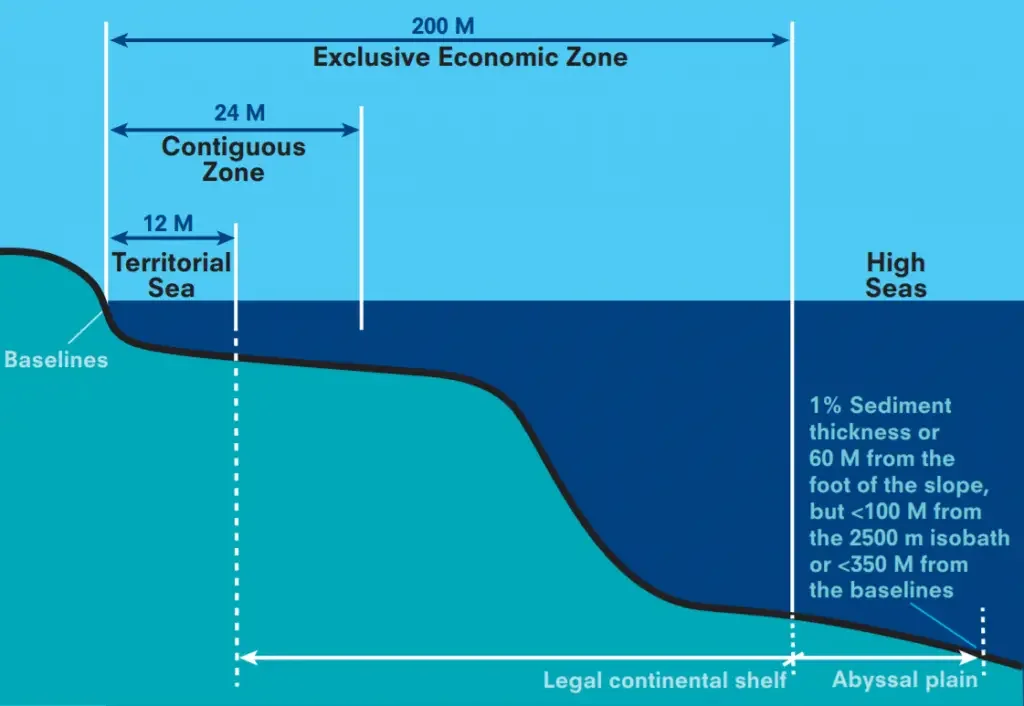
- UNCLOS (1982) (Often called the Constitution of the Oceans) is an international treaty that establishes a comprehensive legal framework governing maritime activities.
- It defines zones like territorial seas (Up to 12 nautical miles), exclusive economic zones (EEZs) (Up to 200 nautical miles), and high seas (beyond 200 nautical miles), while promoting peaceful use, resource management, navigation rights, and marine environmental protection.
- UNCLOS (1982) (Often called the Constitution of the Oceans) is an international treaty that establishes a comprehensive legal framework governing maritime activities.
Law of Naval Warfare
- During armed conflicts, the law of naval warfare operates in parallel with UNCLOS. Under this framework, a warship of a belligerent navy (like the IRIS Dena) is considered a legitimate military target, regardless of its peaceful mission at the time.
- Others contend that the use of force against a foreign warship on the high seas is "presumptively unlawful" unless clearly justified as self-defence under Article 51 or as part of an ongoing armed conflict.
- The IRIS Dena was sanctioned by the US in 2023 for alleged UAV supplies to Russia. However, sanctions primarily restrict business activities and do not, by themselves, legalise a military attack. The ship was on a peaceful passage after an international exercise (Exercise MILAN 2026).
| Read More: US Torpedo Sinks Iranian Warship in Indian Ocean |
Frequently Asked Questions (FAQs)
1. What does Article 2(4) of the UN Charter prohibit?
It prohibits threat or use of force against the territorial integrity or political independence of any state, forming the core principle of modern international peace and security.
2. What is the scope of Article 51 of the UN Charter?
Article 51 permits the use of force in self-defence only in response to an actual armed attack, until the UN Security Council takes necessary measures.
3. What are the core principles of International Humanitarian Law (IHL)?
The key principles are distinction, proportionality, military necessity, and precaution, aimed at protecting civilians and limiting suffering during armed conflicts.
UPSC Civil Services Examination, Previous Year Question (PYQ)
Q. The term “two-state solution” is sometimes mentioned in the news in the context of the affairs of (2018)
(a) China
(b) Israel
(c) Iraq
(d) Yemen
Ans: (b)
Q. What is the importance of developing Chabahar Port by India? (2017)
(a) India’s trade with African countries will enormously increase.
(b) India’s relations with oil-producing Arab countries will be strengthened.
(c) India will not depend on Pakistan for access to Afghanistan and Central Asia.
(d) Pakistan will facilitate and protect the installation of a gas pipeline between Iraq and India.
Ans: (c)
Q. Which one of the following countries of South-West Asia does not open out to the Mediterranean Sea? (2015)
(a) Syria
(b) Jordan
(c) Lebanon
(d) Israel
Ans: (b)
Rapid Fire
Lok Sabha Committee of Privileges
Lok Sabha Speaker has officially reconstituted the Committee of Privileges, a crucial parliamentary panel responsible for safeguarding the rights and immunities of the House and its members.
- Parliamentary Privileges: It refers to the special rights, immunities, and powers enjoyed by Parliament as an institution and by Members of Parliament (MPs) individually.
- These privileges ensure that legislators can perform their constitutional duties freely, effectively, and without external interference.
- Article 105 of the Constitution of India provides privileges to Parliament and its members, while Article 194 of the Constitution of India provides similar privileges to state legislatures.
- Breach of Privilege: A breach of privilege occurs when any act violates the rights, privileges, or immunities of Parliament or its members.
- Committee of Privileges: It is a Standing Committee of Parliament that examines cases involving breach of parliamentary privilege.
- Composition:
- Lok Sabha Committee: 15 members nominated by the Speaker of the Lok Sabha.
- Rajya Sabha Committee: 10 members nominated by the Chairman of the Rajya Sabha.
- Functions: Examines cases related to breach of privileges of the House and its members. Investigate the matter by calling witnesses and examining documents.
- Determines whether a breach of privilege or contempt of the House has occurred.
- The Committee of Privileges submits its report to the House, which may accept, reject, or modify its recommendations.
- However, most privilege notices are usually rejected, with punitive action taken only in a few cases.
- Defection Matters: Under the Tenth Schedule of the Constitution of India and the Members of Lok Sabha (Disqualification on Ground of Defection) Rules, 1985, the Speaker may refer petitions related to disqualification of MPs on grounds of defection to the committee for preliminary inquiry before taking a final decision.
- Composition:
- Significance: The Committee of Privileges protects the independence and dignity of Parliament and ensures accountability for actions that obstruct parliamentary functioning.
- It helps maintain discipline and integrity in legislative proceedings.
| Read more: Parliamentary Privileges in India |
Rapid Fire
Kappatagudda Wildlife Sanctuary
The Karnataka High Court directed the State government to formally include an arbitrarily omitted 55 sq. km reserve forest area into the Kappatagudda Wildlife Sanctuary located in Gadag district, Karnataka, restoring it to its originally approved size.
- The court prioritized ecological conservation by dismissing petitions from stone-crushing units operating within the sanctuary's Eco-Sensitive Zone (ESZ).
- Wildlife Sanctuary: A Wildlife Sanctuary is an area within a reserved forest or territorial waters declared under the Wildlife (Protection) Act, 1972 to protect and conserve wildlife and their habitats due to their ecological, faunal, floral, or geomorphological importance.
Kappatagudda Wildlife Sanctuary
- Unique Conservation Goal: It holds the rare distinction of being the only Wildlife Sanctuary in the state declared specifically for the conservation of wild flora, safeguarding a vast endemic gene pool of medicinal herbs and grasses.
- Ecosystem and Landscape: Often referred to as the “Western Ghats of North Karnataka” due to its rich biodiversity and ecological importance.
- Kappatagudda Wildlife Sanctuary is a classic example of a dryland ecosystem, predominantly featuring scrub jungles and grasslands, alongside patches of dry deciduous and riverine forests in its depressions and valleys.
- Hydrological Significance: It acts as a crucial watershed, serving as the major catchment area for the River Tungabhadra.
- Faunal Diversity: Despite its dry terrain, it hosts a rich variety of wildlife including Leopards, Indian Wolves, Striped Hyenas, Blackbucks, and Four-Horned Antelopes, bridging the gap between lesser and greater carnivores.
- Ecological Threats: The habitat is highly fragmented and faces severe anthropogenic pressures such as habitat encroachment, overgrazing, illegal firewood collection, and poaching.
| Read more: Western Ghats Eco-Sensitive Area |
Rapid Fire
Thirumangai Alvar Idol Returned to India
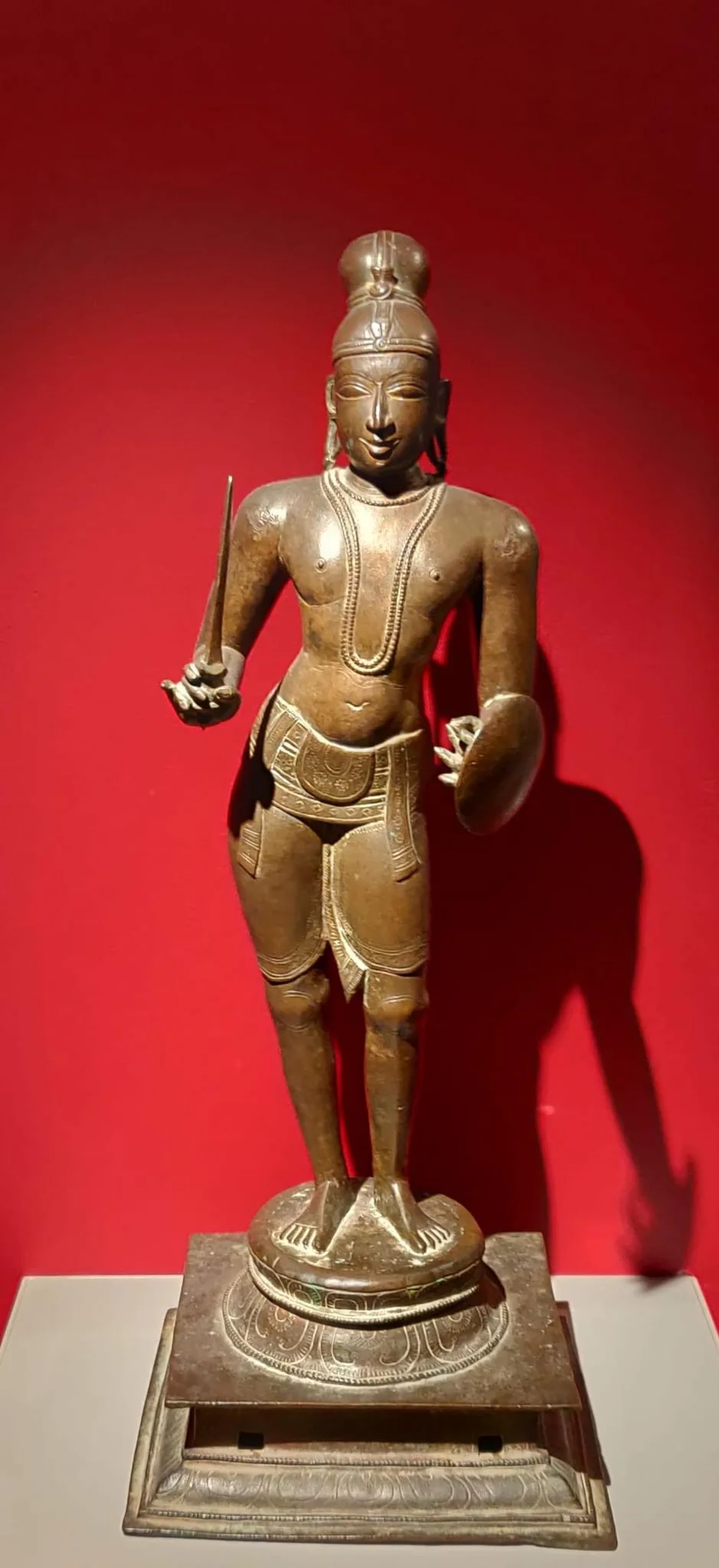
The Ashmolean Museum, Oxford returned a 16th-century bronze statue of Saint Thirumangai Alvar to the Government of India after research established that it originated from the Soundararaja Perumal temple in Tamil Nadu.
- The identification was made by the India Pride Project, a cultural advocacy group, by matching the Ashmolean bronze with the 1957 French Institute of Pondicherry archival photographs.
Thirumangai Alvar
- About: Thirumangai Alvar was the 12th and last of the Alvar saints. The Alvars were Tamil poet-saints who devoted their lives to Lord Vishnu in the Vaishnava tradition during the 8th century CE.
- Early Life as a Warrior: Originally named Kaliyan, he was born into the Kallar community (a warrior caste) and served as a military commander and chieftain (earning the title Thirumangai Mannan) under the Chola empire. He was a skilled archer.
- Prolific Literary Contribution: He is renowned as "Narkavi Perumal" (excellent poet) and authored over 1,000 verses, including major works like Periya Thirumozhi, Thirunedunthandakam, and Thirukkuruthandakam, which are part of the sacred Nalayira Divya Prabandham.
- Temple Legacy: He contributed to the enrichment of the Srirangam temple and is said to have visited all 108 Divya Desams (sacred Vishnu temples).
- He has built one of the walls of Srirangam Sri Renganathaswamy Temple (Tiruchirapalli, Tamil Nadu) and composed poems on Lord Sri Ranganathan.
- Spiritual Significance: He is considered an incarnation of Vishnu's Sharanga bow, and his life story highlights the theme of transformation from worldly materialism to ultimate devotion through bhakti.
| Read More: Preservation of Cultural Heritage |
Rapid Fire
National Science Day 2026
India observed National Science Day on 28th February, commemorating CV Raman's discovery of the Raman Effect (1928), with the 2026 theme "Women in Science: Catalyzing Viksit Bharat".
- The Government of India designated 28th February as National Science Day in 1986, with the inaugural celebration taking place in 1987.
CV Raman
- About: Sir Chandrasekhara Venkata Raman (CV Raman) is one of India's greatest physicists, and is best remembered for discovering the Raman Effect for which he received the 1930 Nobel Prize in Physics. His work proved the quantum nature of light.
- Nobel Prize Significance: The 1930 Nobel Prize in Physics made Raman the first Asian and the first non-White person to win a Nobel Prize in any scientific field.
- Other Honors and Recognition: He was knighted in 1929, elected Fellow of the Royal Society (FRS) in 1924, received India's highest civilian award, Bharat Ratna (1954), and the Lenin Peace Prize (1957).
- Institutional Contributions: He founded three enduring scientific institutions: the Raman Research Institute (1948) in Bangaluru, the Indian Journal of Physics (1926), and the Indian Academy of Sciences (1934), creating lasting infrastructure for Indian scientific research.
Raman Effect
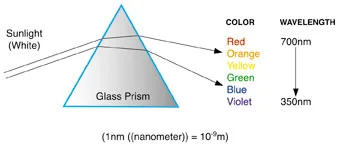
- Discovered with collaborator KS Krishnan, this phenomenon occurs when light passing through a transparent material undergoes a change in wavelength due to interaction with molecular vibrations.
- The Raman effect provides a non-destructive method to analyze molecular structure and forms the basis of Raman spectroscopy.
- Raman spectroscopy is widely used today in chemistry, biology, materials science, forensics, and medicine, enabling applications such as detecting drugs in sealed evidence bags, safe nuclear waste analysis, and non-destructive material identification.
| Read More: Poor Performance of India in Science Nobel Prizes |
Rapid Fire
Foundation Day of Bureau of Energy Efficiency
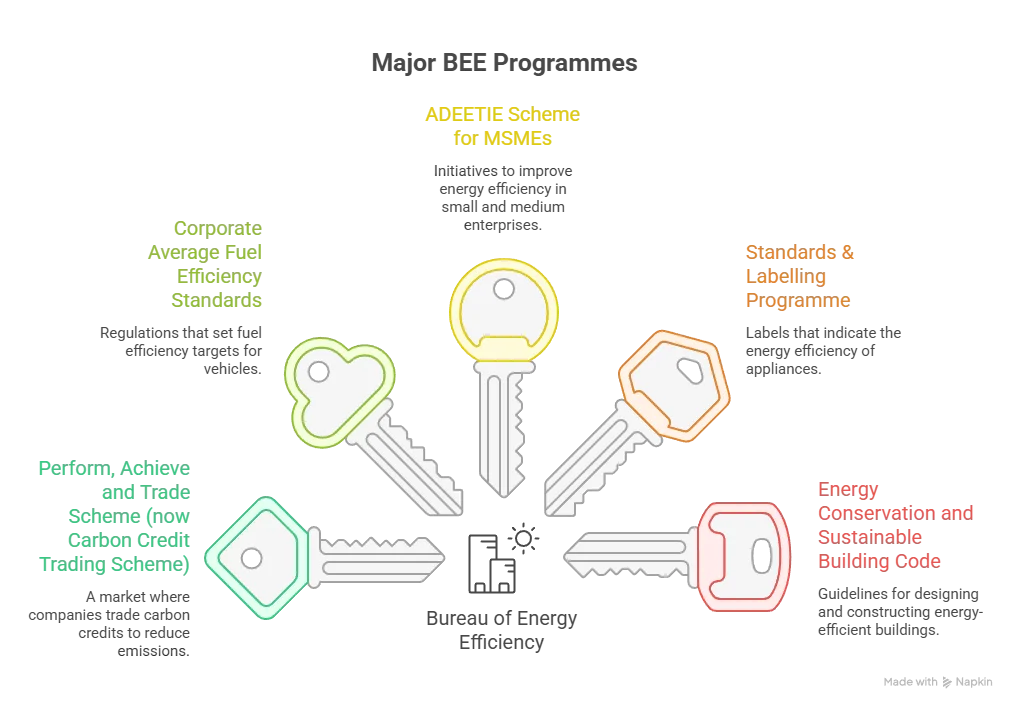
The Bureau of Energy Efficiency (BEE) celebrated its 25th Foundation Day on 1st March, 2026, with the launch of new digital initiatives and reaffirmed energy efficiency as the country's "First Fuel" and a key instrument for balancing energy security, affordability, and sustainability.
- Renewable Consumption Obligation (RCO) Portal, BEE Star Label Mobile App, and BEE@25 Logo were launched to enhance monitoring, empower consumers, and symbolize BEE's commitment to energy efficiency as a national priority.
- The Renewable Consumption Obligation (RCO) is a mandatory policy mechanism under the Energy Conservation (Amendment) Act, 2022, requiring designated consumers to source a minimum specified percentage of their electricity from eligible non-fossil sources (primarily renewables like solar, wind, hydro, biomass, etc).
Bureau of Energy Efficiency
- About: BEE is a statutory body under the Ministry of Power, established on 1st March, 2002 under the Energy Conservation Act, 2001.
- Objective: Its primary objective is to reduce energy intensity (energy used per unit of economic output) through coordinated efforts involving industry, buildings, transport, agriculture, and appliances sectors.
- Emission Reduction Impact: India has achieved 36% reduction in emissions intensity of GDP from 2005 levels and reached 52% non-fossil fuel installed capacity — well ahead of its 2030 climate targets.
- Institutional Coordination: BEE works through State Designated Agencies (SDAs) to implement energy efficiency programmes at the state level, ensuring federal coordination and localized implementation of national energy conservation policies.
| Read More: Energy Efficiency in Construction Sector |



