International Relations
India–US Trade Deal 2026
For Prelims: US-India COMPACT, Data Localisation, US-India iCET, Generalised System of Preferences, Foreign Direct Investment
For Mains: Strategic Significance of India–US Trade Relations, Tariff Rationalisation and Export Competitiveness, Strategic Autonomy vs Transactional Diplomacy
Why in News?
The US has slashed the effective tariff on Indian goods to 18%, down from a staggering peak of 50% (which included punitive duties). The deal marks a strategic de-escalation of trade tensions and reaffirms India’s role as a primary US ally and a critical counterweight to China in the Indo-Pacific.
What are the Key Highlights of the India- US Trade Deal?
- Tariff Reduction: The US has reduced the reciprocal tariff on Indian imports from 25% to 18%.
- Crucially, the additional 25% punitive tariff (which was imposed in August 2025 due to India’s purchase of Russian oil) has been effectively removed, bringing the total effective tariff down from roughly 50% to 18%.
- India’s Commitments:
- Energy Shift: In a major diplomatic concession, India has agreed to halt/significantly reduce the purchase of Russian crude oil.
- India will pivot its energy procurement to the US and potentially Venezuela.
- Market Access: India is expected to reduce its tariffs and non-tariff barriers on US goods to "zero".
- The US expects a surge in agricultural exports (tree nuts, cotton, and soybean oil) to India’s massive consumer market.
- "Buy American" Policy: India has committed to a stronger "Buy American" stance for government and large-scale industrial procurements.
- India could buy as much as USD 500 billion worth of US energy, coal, technology, agricultural and other products.
- Energy Shift: In a major diplomatic concession, India has agreed to halt/significantly reduce the purchase of Russian crude oil.
Background of India - US Tariff Evolution
The road to the 18% tariff was marked by aggressive "transactional diplomacy":
- The "Tariff King" Narrative: US historically criticized India's high import duties. In mid-2025, the US imposed a 25% reciprocal tariff, matching India’s average rates.
- The Russian Oil Friction: Following India’s continued purchase of Russian crude during the Ukraine conflict, the US added a 25% punitive "extra duty" in August 2025, pushing the total tariff to 50%.
- Operation Sindoor & Regional Leverage: The US reportedly used tariff pressure as a strategic tool for regional stability following India’s Operation Sindoor (May 2025) against terrorist targets in Pakistan, later claiming that trade leverage helped push a ceasefire.
- India’s Pre-Deal Moves: To thaw relations, India had already slashed duties in its Union Budget on items like heavy motorcycles and bourbon whisky, and passed the SHANTI Act, 2025 to open up the nuclear power sector.
India-US Trade Relations
- In FY25, the bilateral trade between India and the US stood at a record USD 132 billion as against USD 119.71 billion in FY24. In FY25, India had a trade surplus of USD 40.82 billion with the US.
- In FY25, India’s imports from the US mainly comprised mineral fuels and oils, precious and semi-precious stones and metals, nuclear reactors and machinery, and electrical equipment.
- India’s exports to the US were led by electrical machinery, precious and semi-precious stones and metals, pharmaceutical products, machinery and mechanical appliances, mineral fuels, and iron and steel articles.
- US is the 3rd largest investor in India with cumulative Foreign Direct Investment (FDI) inflows of USD 70.65 billion from 2000- 2025.
- The US-India COMPACT (Catalyzing Opportunities for Military Partnership, Accelerated Commerce & Technology) was launched in 2025. Under this framework, the 'Mission 500' initiative was introduced to increase bilateral trade to USD 500 billion by 2030, supported by negotiations for a Bilateral Trade Agreement (BTA).
What is the Significance of India - US Tariff Rationalization?
For India
- Boost to Indian Exports: The reduction to 18% restores competitiveness for Indian exporters. Sectors like textiles and apparel (which operate on thin margins) and pharmaceuticals are expected to see an immediate revival in orders.
- Competitive Edge: At 18%, India now faces a more favorable rate than regional competitors like Vietnam (20%), Bangladesh (20%), and China (30-35%).
- Economic Stability: The deal removes the uncertainty of a trade war, likely stabilizing the Rupee and encouraging FDI back into Indian manufacturing.
For US
- Nuclear & Tech Exports: The deal paves the way for US companies to enter India’s nuclear power sector (enabled by the SHANTI Act, 2025) and defense manufacturing.
- This deepens the "US-India Initiative on Critical and Emerging Technology (iCET)."
- Data Center Dominance: As presented in Union Budget 2026-27, Tax holidays for foreign companies setting up data centers in India directly benefit US tech giants like Google, Microsoft, and Amazon, cementing their dominance in India's digital infrastructure.
- Energy Exports: In FY25, India's crude oil import dependence rose to 88.2% compared with 87.4% and 85.5% during FY24 and FY23.
- With India pivoting away from Russia, the US energy sector (oil, LNG, coal) gains a massive, long-term customer. This directly benefits US shale oil producers and LNG exporters.
What are the Challenges of the India-US Trade Deal 2026?
- The "Strategic Autonomy" Dilemma: The deal's success is contingent on India halting or significantly reducing Russian oil imports. This risks straining the "Special and Privileged Strategic Partnership" with Moscow, which remains India’s largest defense supplier.
- This also underscores the challenge to India’s de-hyphenated foreign policy, which seeks to maintain independent, multi-aligned relationships rather than aligning exclusively with any single power bloc.
- Transactional Diplomacy: The "Reciprocal" nature of the deal (matching tariffs to 18%) suggests that the US now views India through a purely transactional lens.
- This could set a precedent where every strategic concession requires a massive economic or political "payback."
- China Retaliation: As India cements its role as a "China Counter," Beijing has already warned of consequences.
- Given India’s import dependency on China (especially for Rare Earths and API pharmaceuticals), any retaliatory trade barriers from China could cripple Indian manufacturing.
- Regional Parity: India remains disadvantaged as competitors such as Bangladesh and Vietnam enjoy a special GSP (Generalised System of Preferences) concession of about 5%, withdrawn from India in 2019, raising doubts over true regional parity.
- Economic Risks: US has claimed India committed to reducing tariffs to "zero". Opening India’s dairy and poultry sectors to highly subsidized US agri-products could trigger widespread rural distress and farmer protests, which have historically been protected.
- Russian oil was purchased at a discount, providing a cushion against global inflation. Shifting to US or Venezuelan oil might increase India’s import bill, potentially impacting the Current Account Deficit (CAD).
- Regulatory and Technical Barriers: Even with lower tariffs, US "Sanitary and Phytosanitary" (SPS) standards often act as invisible walls for Indian food and pharma exports. The deal does not yet fully address these technical hurdles.
- This deal might eventually require India to align its Intellectual Property laws with US interests, potentially raising healthcare costs.
- Digital Trade: Issues regarding Data Localisation and the India’s DPDP Act (2023) remain sticking points. The US tech giants seek "free flow of data," which may conflict with India's national security and privacy frameworks.
How to Leverage the 'Indo-US Trade Pivot' for Viksit Bharat?
- Balancing Strategic Autonomy with Energy Transition: Recognise the cost of alignment in shifting crude sourcing from Russia to the US.
- Accelerate the National Green Hydrogen Mission and expand nuclear energy, especially Small Modular Reactors (SMRs). Leverage trade deals for technology transfer to ensure energy security without fiscal slippage.
- Diversify Export Markets: India should fast-track free trade agreements with Gulf nations and East Asian blocs to help Indian businesses diversify export markets and reduce dependence on US buyers.
- Protecting Domestic Interests: India needs to calibrate the "zero tariff" commitment carefully to ensure that small-scale farmers and MSMEs are not overwhelmed by cheap US imports.
- Finalize the BTA to ease trade tensions, improve supply chain integration in semiconductors and pharmaceuticals, and harmonize regulatory standards with US norms to attract investments.
- Leveraging "Friendshoring": Use the 18% tariff window to move from Assembly in India to Deep Manufacturing. India should use this renewed proximity to the US to attract supply chains moving out of China, pitching the 18% tariff as a stable environment for "Make in India" for the world.
- Protecting Agri-Livelihoods while Liberalising Trade: Avoid blanket zero-tariff commitments; adopt product-specific safeguards. Promote value-added agri-exports (processed, organic products) over raw commodities.
- Prevent rural displacement and ensure favourable terms of trade for farmers.
- Promoting Innovation-Led Exports: Leverage the iCET framework for collaboration in AI and space technologies.
- Align IPR standards for high-tech sectors while retaining public-interest waivers in pharma. Position India as a global R&D and innovation hub supporting knowledge-driven exports.
Conclusion
The 18% tariff is a "Strategic Window." India’s success will depend on its ability to use this period of American favor to build a self-reliant manufacturing base (Atmanirbhar Bharat) that can eventually compete globally—even if the geopolitical winds shift again.
|
Drishti Mains Question: Assess the opportunities and risks for India arising from the recent India–US trade deal. |
Frequently Asked Questions (FAQs)
1. What is the new effective US tariff rate on Indian goods under the 2026 trade deal?
The effective tariff has been reduced to 18%, down from nearly 50%, which earlier included a 25% reciprocal tariff and a 25% punitive duty.
2. Why was a 25% punitive tariff imposed on India in August 2025?
The US imposed the additional duty due to India’s continued purchase of Russian crude oil during the Ukraine conflict.
3. Which Indian export sectors benefit the most from the 18% tariff reduction?
Textiles and apparel, gems and jewellery, pharmaceuticals, and engineering goods, which operate on thin margins, gain immediate competitiveness.
4. How does the 18% tariff compare with India’s regional competitors?
India now faces a lower tariff than Vietnam and Bangladesh (20%) and significantly lower than China (30–35%), though some competitors still enjoy GSP benefits.
5. What energy-related commitment has India reportedly made under the deal?
India is expected to significantly reduce or halt Russian crude imports and pivot energy purchases toward the US and potentially Venezuela.
UPSC Civil Services Examination, Previous Year Questions (PYQs)
Mains
Q. ‘What introduces friction into the ties between India and the United States is that Washington is still unable to find for India a position in its global strategy, which would satisfy India’s National self-esteem and ambitions’. Explain with suitable examples. (2019)


Facts for UPSC Mains
Charting India’s Developmental Path: Economic Survey 2025–26
Why in News?
The Economic Survey 2025–26 outlines India’s medium- to long-term economic strategy amid global fragmentation, supply-chain realignments, technological disruption, and climate stress. It introduces a new policy vocabulary focused on strategic sobriety, institutional quality, and long-term capability building, aligned with the goal of Viksit Bharat @2047.
How Does the Economic Survey 2025–26 Chart India’s Developmental Path Amid Global Uncertainty?
Macroeconomic Strategy
- Strategic Sobriety: The Survey advises a policy stance of "strategic sobriety rather than defensive pessimism" to handle global volatility.
- Strategic Resilience vs. Strategic Indispensability: Moving beyond just absorbing shocks (resilience) to becoming a "source of reliability, capability, and value for others" (indispensability).
- Running a Marathon and Sprint: A metaphor used to describe India's need to prioritise long-term growth (marathon) while managing short-term shocks (sprint) simultaneously.
- Buffer and Redundancy: Emphasising the creation of resource buffers and supply chain redundancy as strategic assets in a fragmented world.
- Institutional Quality: Defined as a key component of national power alongside productive force and strategic concentration.
- Fiscal Credibility: Achieved through a deliberate shift toward capital formation and human capital rather than just deficit reduction.
State Capacity and Governance
- From 'Ruler's Raj' to 'Citizen's Raj': A shift in governance philosophy where the state moves from a controller to an enabler, empowering citizens.
- The Entrepreneurial State: Moving the state from "compliance to capability" and from "low-value policing toward coordination, facilitation, and problem-solving".
- Regulatory Capacity: Framing deregulation not as the withdrawal of the state, but as "institutional reorientation" to reduce friction.
- Contextual Compliance: A concept explaining that civic behaviour is context-dependent; good outcomes emerge when design, incentives, and norms align (e.g., orderly conduct in Metro rail vs. disorderly conduct elsewhere).
- Trust-based Compliance: Replacing inspection-based control with trust-based systems to enhance the ease of doing business.
- Delayed Gratification: The need for the mature mind (and nation) to choose Śreya (enduring good) over Preya (fleeting comfort) to build long-term national strength.
Industry, Manufacturing, and Trade
- Strategic Indigenisation: A tiered framework to reduce external vulnerability while integrating into global value chains.
- Servicification of Manufacturing: The increasing integration of services into the manufacturing value chain, enhancing value addition.
- Friendshoring & Nearshoring: Global trends of re-routing supply chains to politically aligned or geographically closer nations.
- Product Complexity Index (PCI): A measure of the sophistication of productive know-how; India aims to shift from low/mid-complexity to high-complexity goods.
- Investment Development Path (IDP): The trajectory where a country transitions from being a net recipient to a net source of foreign direct investment.
- Orange Economy: Referring to the creative economy (media, entertainment, arts) as an emerging lever for growth.
- Intelligent Indigenisation: A nuanced approach to import substitution. Instead of a blanket ban on imports, it advocates for a "Tiered Framework"—focusing indigenisation efforts only where strategic vulnerability is high or economic feasibility is clear.
- Institutional Stress Test: Use this to describe manufacturing exports. The Survey argues that competing in global markets acts as a "stress test" for the state, exposing weaknesses in logistics, regulation, and infrastructure that sheltered sectors (like services) might hide.
- National Input Cost Reduction Strategy: A proposed strategy to treat input costs (energy, logistics, raw materials) like infrastructure. Lowering these costs is essential for competitiveness.
- China Plus One -> Strategic Diversification: Instead of just "China Plus One," use terms like "Geostrategic Globalisation" or "Friendshoring" to describe supply chain realignments.
- Dead Capital: Used in the context of urban land. Restrictive land-use regulations turn land into "dead capital" that cannot be used productively.
Technology and Artificial Intelligence
- Bottom-up AI Strategy: Unlike the West’s "frontier model" approach, India requires a bottom-up strategy focusing on distributed innovation and application-specific AI.
- AI-OS Initiative: A proposal for the sovereign to be a shareholder in AI infrastructure (like UPI/Aadhaar), treating AI as a "public good".
- Frugal AI: Developing AI solutions that are resource-efficient and adapted to local constraints.
- Data Stewardship: Balancing the openness of data flows with the need to retain economic value from domestic data within India.
- Digital Public Infrastructure (DPI): Leveraging digital platforms (like e-Shram, Udyam) to formalise the workforce and enhance productivity.
- Sovereign AI / Compute Capacity: Emphasizes the need for domestic capacity in Artificial Intelligence infrastructure.
- Physical-Digital Fusion: Integrating physical infrastructure (roads, ports) with digital layers (ULIP, GatiShakti) to improve logistics efficiency.
Agriculture and Rural Development
- Nutrient Imbalance: Referring to the distorted N:P:K ratio (currently 10.9:4.1:1 against the ideal 4:2:1) due to excessive nitrogen use, requiring a re-orientation toward soil health.
- Climate-Resilient Agriculture: Promoting crop diversification and "Per Drop More Crop " to handle water scarcity and weather shocks.
- Lab to Land: Bridging the gap between agricultural research and practical application to improve productivity.
- Social Capital: Converting community trust and networks (like SHGs) into sustainable livelihood outcomes.
- Rights-based Entitlement: The shift in rural employment schemes (like the Viksit Bharat–G RAM G Act, 2025) to reinforce legal entitlements to work.
Urbanisation and Infrastructure
- Agglomeration Economies: The benefits of clustering (reduced interaction costs, knowledge spillovers) that underpin the logic of urbanisation.
- Polycentric Growth: Developing multiple centres of activity (like new townships around RRTS stations) to relieve pressure on core cities.
- Transit-Oriented Development (TOD): Integrated planning of land use and transport to create high-density, mixed-use zones around transit hubs.
- Endowment Effect: The concept that citizens feel responsibility for assets they feel they "own"; lacking in public spaces due to poor service delivery.
- Financialization of Infrastructure: Using instruments like InvITs and REITs to monetise assets and finance new projects.
- 8-80 Philosophy: A principle for urban design—streets should be safe and accessible for everyone from an 8-year-old to an 80-year-old.
Environment and Climate Change
- Greenium: The yield advantage (lower interest cost) of green bonds over comparable conventional bonds.
- Mission LiFE: Lifestyle for Environment; emphasising behavioural changes and citizen participation in climate action.
- Adaptation-led Development: Shifting focus from just mitigation (emissions reduction) to adaptation (resilience against risks like heatwaves and floods).
- Dispatchable Power: The need to maintain reliable power sources (like thermal/nuclear) to back up intermittent renewables.
- Circular Economy: Moving from "take-make-dispose" to recycling and resource recovery (e.g., waste-to-energy).
Social Sector (Health & Education)
- Double Burden: Facing both communicable diseases and the rising burden of non-communicable diseases (NCDs) like obesity.
- Demographic Dividend: The economic potential of a large working-age population, which depends on skilling and health.
- Pink Tax: The extra cost women pay for safer mobility or specific products, acting as a barrier to labour force participation.
- Ultra-Processed Foods (UPF): A key driver of the obesity epidemic requiring regulatory and behavioural interventions.
- Foundational Literacy and Numeracy (FLN): The primary focus of educational reforms to ensure future employability.
- Bridging the Power Gap: India has a "Power Gap" (the difference between its resources and its influence). Bridging this requires converting economic size into strategic influence.
- Delayed Gratification: A cultural/behavioral attribute necessary for nation-building. The Survey argues that looking for shortcuts (in sports, infrastructure, or policy) undermines long-term capability.
- Psychological Safety in Governance: Creating an environment where bureaucrats are not punished for honest errors, encouraging decision-making under uncertainty.
Finance and Banking
- Financialisation: The growing dominance of financial markets and instruments in the economy, which India has largely avoided to its benefit.
- Crowding Out: The risk of government borrowing or spending reducing the availability of resources for the private sector.
- Evergreening: Strategies to keep bad loans from turning non-performing, which regulatory reforms aim to prevent.
- Credible Consolidation: Describes the government's fiscal path—reducing deficits while maintaining high capital expenditure (Capex).
- QE Infinity Trap: A concept warning that prolonged monetary easing (Quantitative Easing) by developed nations creates dependency, distorts asset prices, and traps economies in low growth.
- Refining the Regulatory Touch: A keyword for the financial sector, advocating for regulation that balances stability with innovation.
- NUDGE (Non-intrusive Usage of Data to Guide and Enable): A data-driven, behaviorally informed approach designed to boost voluntary tax compliance.
Conclusion
The Economic Survey 2025–26 marks a shift from a survivalist to a possibility-oriented vision, embracing strategic sobriety to build strategic indispensability. Through physical–digital fusion, frugal AI, and a transition from Ruler’s Raj to Citizen’s Raj, it positions India on the path to Viksit Bharat by 2047.
|
Drishti Mains Question: The Economic Survey 2025–26 advocates a shift from strategic resilience to strategic indispensability. Examine the implications of this shift for India’s global economic positioning. |
Frequently Asked Questions (FAQs)
1. What is meant by Strategic Sobriety in the Economic Survey 2025–26?
It refers to a calm, realistic policy approach that acknowledges global uncertainty without overreacting to external shocks.
2. How does the Survey define Strategic Indispensability?
It is India’s transition from merely absorbing shocks to becoming a reliable source of global capability, value, and stability.
3. What is Intelligent Indigenisation?
A selective, tiered import substitution strategy focusing on strategic vulnerability while remaining integrated with global value chains.
4. What is the AI-OS initiative proposed in the Survey?
It envisages AI infrastructure as a public good, similar to UPI and Aadhaar, supported by sovereign compute capacity.
5. Why does the Survey warn against the QE Infinity Trap?
Prolonged monetary easing can distort asset prices, create dependency, and lock economies into low-growth trajectories.
UPSC Civil Services Examination, Previous Year Questions (PYQs)
Mains
Q. Do you agree that the Indian economy has recently experienced a V- shapes recovery? Give reasons in support of your answer.(2021)
Q. Among several factors for India’s potential growth, savings rate is the most effective one. Do you agree? What are the other factors available for growth potential?(2017)
Q. “Industrial growth rate has lagged behind in the overall growth of Gross-Domestic-Product(GDP) in the post-reform period” Give reasons. How far are the recent changes in Industrial Policy capable of increasing the industrial growth rate?(2017)

Indian Economy
Consumer Confidence in India
For Prelims: Rationalised GST, Disinflation, Retail Inflation, CPI, Consumer Confidence Survey (CCS), Deflation, Inflation, K-shaped Pattern, Minimum Support Price (MSP), MSMEs, Capital Expenditure (Capex).
For Mains: Factors supporting consumer confidence in India and associated challenges. Steps needed to maintain a sustainable consumer confidence in India.
Why in News?
Following major policy reforms—lower income tax rates and a rationalised GST—consumption, the bedrock of economic growth, appears resilient, though underlying stresses continue to persist beneath the surface of renewed consumer confidence.
Summary
- Policy-led disinflation and tax reforms have temporarily strengthened consumer confidence.
- Household debt, weak income growth, and inequality threaten demand sustainability.
- Inclusive growth, wage expansion, and financial resilience are essential for durable consumption-led growth.
What Factors have Supported Consumer Confidence in the Recent Past?
- Surge in Durable Goods: GST rate cuts helped push headline retail inflation to a record low of 0.25% in October 2025, making goods and services cheaper. As a result, during the Dussehra-Diwali festival window in 2025, demand for consumer durable loans was about 1.5 times higher than the previous year, signalling renewed consumer confidence.
- Rising Rural Wages: After averaging zero for 3 years, real rural wage growth (adjusted for inflation) rose to 4.1% in Q1 (April-June) of 2025-26. This rebound was primarily driven by a sharp fall in rural CPI inflation to 2.4% (April-June 2025), down from 5.5% a year ago. Nominal wage growth was 6.5%—the highest since mid-2023.
- Urban Wage Growth: A proxy for urban wages—the growth in staff costs of listed companies—showed real growth of 5.7% in July-September 2025, the highest in over 2 years. Again, this was aided by low urban inflation (2.1%).
- Existing Support in the Pipeline: The 125 basis points of RBI rate cuts in 2025 are still transmitting through the economy, which will continue to support demand.
RBI’s Consumer Confidence Survey (CCS)
- About: The Consumer Confidence Survey (CCS) is a bi-monthly survey (every alternate month) conducted by the RBI to measure consumer sentiments regarding the prevailing and expected economic conditions.
- Coverage: Historically and in its primary form, the CCS has been an urban-focused survey, conducted among households in major metropolitan and urban centres (typically 13–19 cities such as Mumbai, Delhi, Bengaluru, Chennai, Kolkata, Hyderabad, and others).
- The RBI has introduced a separate Rural Consumer Confidence Survey (RCCS) to complement the urban survey.
- The RCCS specifically targets rural and semi-urban households across 31 states/ UTs, providing a more inclusive national picture of household sentiments.
- Main Parameters:
- General economic situation
- Employment scenario
- Overall price situation / inflation
- Own household income
- Current and planned spending
- Significance & Usage: Helps the RBI and policymakers understand household sentiment, which has important implications for monetary policy stance, aggregate demand, retail sales and consumer durables outlook
What Concerns are Associated with Consumer Confidence in India?
- Deteriorating Household Balance Sheets: Household financial liabilities rose from 3.9% of GDP in 2019-20 to 6.2% in 2023-24, before a slight decline to 4.7% in 2024-25. Net financial assets had hit a multi-decade low of 4.9% of GDP in 2022-23. Between FY09 and FY23, real personal bank debt rose 2.9 times while industrial wages rose only 1.9 times.
- This has strained household balance sheets, leading to higher debt servicing costs and reduced capacity for consumption, particularly in urban areas.
- Unsustainable Income Growth: The recent rebound in real rural wages is largely due to a sharp fall in inflation, not a strong rise in nominal incomes. If food prices remain in deflation, farmers' incomes could suffer, undermining demand. Nominal urban wage growth has been stuck at the same level since mid-2023.
- This limits disposable income and constrains spending on both essentials and discretionary items.
- Income and Consumption Inequality: India's economic recovery exhibits K-shaped pattern, where affluent households drive premium and discretionary spending, while lower- and middle-income groups face stagnation or declining purchasing power. It narrows the broad consumer base and limits overall demand expansion.
- A K-shaped pattern is an uneven economic recovery where some sectors or income groups grow rapidly while others continue to decline, worsening inequality.
- Broader Structural Issues: Declining household savings rates, reduced spending shares on education (potentially impacting future employability), and reliance on debt-financed consumption raise sustainability concerns. Additionally, shifts toward ultra-processed foods and health-related expenditures reflect changing patterns with potential negative implications for well-being.
What Steps are Needed to Maintain a Sustainable Consumer Confidence in India?
- Secure & Boost Household Incomes: Shift policy to labor-intensive exports, ensure real wage growth via productivity-linked hikes, and strengthen farming beyond Minimum Support Price (MSP) with supply chain investment to boost job quality and incomes.
- Rebuild Household Financial Buffers: Incentivize financial savings for positive real returns, enforce RBI's macroprudential norms on unsecured loans and financial literacy, and expand social security coverage (health, pensions) to reduce precautionary saving.
- Ensure Price Stability & Predictability: Maintain a benign inflation regime with proactive food price management and ensure transparent, stable tax policy (GST, direct taxes) for long-term household planning.
- Foster Broad-Based, Inclusive Growth: Bridge the rural-urban divide with targeted infrastructure and support MSMEs via credit and global value chain integration to counter a K-shaped recovery.
- Strategic & Credible Fiscal Policy: Balance capital expenditure (capex) with human capital investment, commit to fiscal prudence to build buffers for counter-cyclical measures, and catalyze private investment with policy certainty.
Conclusion
While recent policy stimulus and low inflation have buoyed short-term consumption, India’s consumer confidence faces long-term stress from eroding household savings, rising debt, and uneven income growth. Sustainable confidence hinges on structural reforms that boost secure incomes, rebuild financial buffers, and ensure broad-based, inclusive economic expansion.
|
Drishti Mains Question: The resilience of India's consumption story is often questioned due to deteriorating household balance sheets. Suggest measures to ensure sustainable consumer confidence in the Indian economy. |
Frequently Asked Questions (FAQs)
1. What recent policies have supported consumer confidence in India?
Lower income tax rates, GST rationalisation, and RBI rate cuts reduced inflation and borrowing costs, boosting short-term consumption.
2. Why is recent rural wage growth considered fragile?
It is driven mainly by low inflation, not strong nominal income growth, making it vulnerable to future price rises.
3. What does a K-shaped recovery mean for consumption?
It indicates uneven recovery, where affluent households spend more while lower-income groups face stagnant demand.
UPSC Civil Services Examination, Previous Year Questions (PYQ)
Mains
Q. Among several factors for India’s potential growth, the savings rate is the most effective one. Do you agree? What are the other factors available for growth potential? (2017)


Place In News
Gujarat Reclaims 'Tiger State' Status
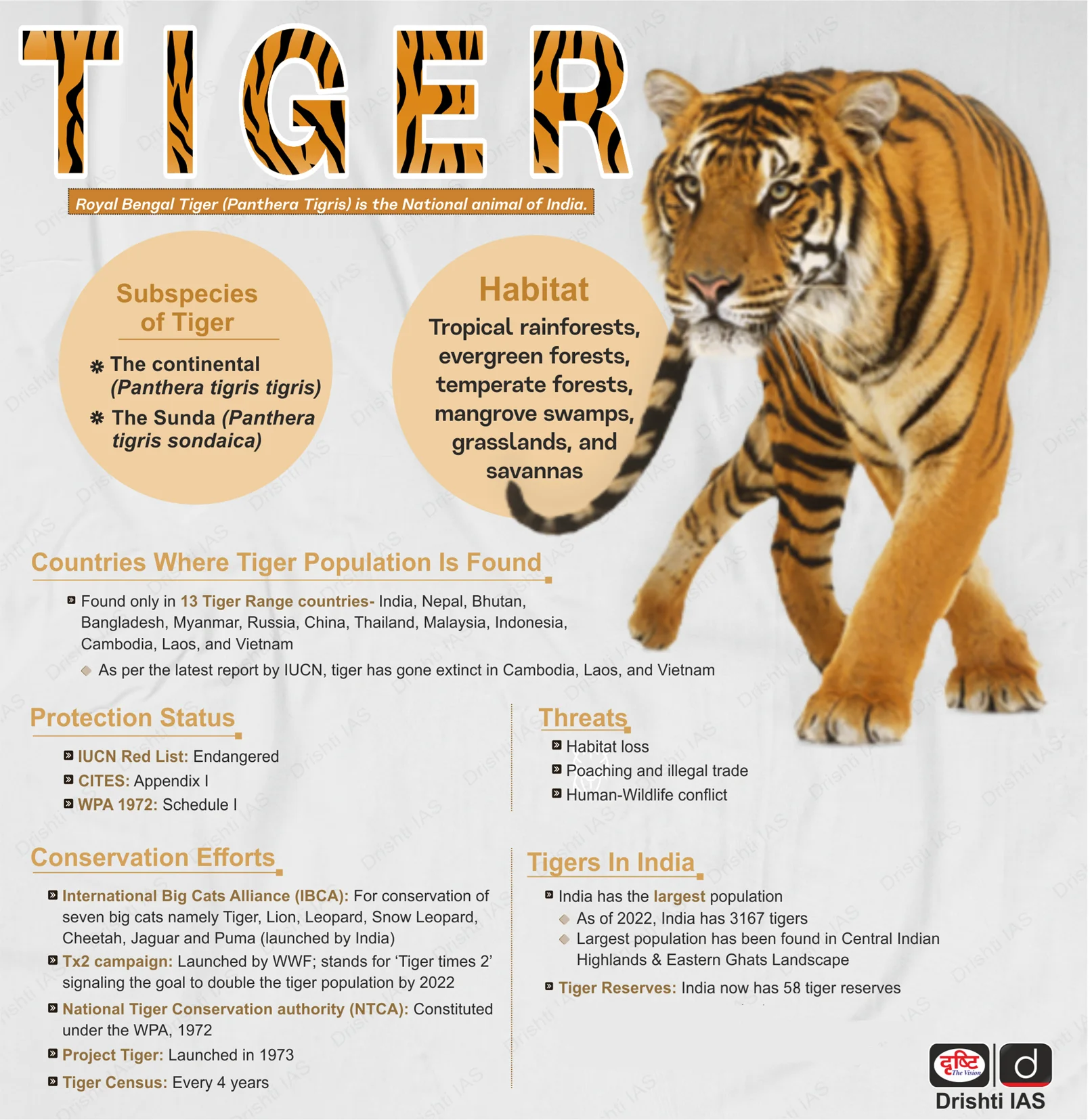
Gujarat is set to regain its tag as a tiger-bearing state following the sustained presence of a Royal Bengal Tiger in the Jambughoda and Ratanmahal forest ranges, marking a significant milestone in India's wildlife conservation history.
- Unique Biodiversity Status: With the confirmation of the tiger's presence, Gujarat claims the distinction of being the only state in India to host three major big cats: Asiatic Lions, Royal Bengal Tigers, and Leopards.
- Migration Corridor: The tiger migrated approximately 60 km from Katthiwada Wildlife Sanctuary in Madhya Pradesh to the Kanjeta range and Jambughoda Wildlife Sanctuary in Gujarat.
- The 90-km corridor connecting Kanjeta, and Jambughoda is identified as a thriving forest patch with natural caves and water sources, suitable for tiger conservation.
- The state forest department is coordinating with the National Tiger Conservation Authority (NTCA) to introduce a female mate, aiming to establish a stable tiger population in the region.
- Prey Base Augmentation: To sustain the tiger and prevent human-animal conflict, a Herbivore Breeding Centre has been established near Kada dam to breed spotted deer (chital) and sambar to release into the wild.
- Jambughoda Wildlife Sanctuary: It is a biodiversity hub characterised by dry southern tropical, dry deciduous, and secondary forests interspersed with grasslands and medicinal herbs.
- The landscape is dominated by thickets of Teak, Mahua, and Bamboo, providing dense cover for a rich variety of fauna.
- The sanctuary supports a significant population of Leopards, alongside Sloth Bears, Chausinghas (four-horned antelope), Nilgais, and Hyenas, making it a critical ecological corridor in the region.
- Ratanmahal Wildlife Sanctuary: Located in Gujarat along the border with Madhya Pradesh, the Ratanmahal Wildlife Sanctuary (est. 1982) is a critical habitat renowned for hosting the state's highest population of Sloth Bears.
- The sanctuary features dry teak and mixed deciduous forests interspersed with Bamboo, Mahua, and Jamun trees, which provide essential forage for the bears.
- Beyond its rich fauna, which includes a significant density of Leopards, the area holds strategic ecological importance as the catchment for the River Panam, sustaining water conservation efforts for the Dahod and Panchmahal districts.
| Read more: Tiger Returns to Gujarat After Three Decades |

Rapid Fire
India-Arab Foreign Ministers' Meeting
Amidst preparations for India's Prime Ministerial visit to Israel, India hosted the India-Arab Foreign Ministers' meeting and held a key security dialogue with Saudi Arabia, showcasing a nuanced diplomatic balancing act in West Asia.
Key Developments in West Asia Diplomacy
- Security Engagement with Saudi Arabia: The 3rd India-Saudi Arabia Security Working Group meeting was held in Riyadh (Saudi Arabia) and agreed to enhance cooperation against terror financing, cyber-terrorism, and the crime-terror nexus.
- It is a bilateral security dialogue mechanism established under their Strategic Partnership Council (SPC) instituted in 2019. It operates under the Political, Consular and Security Cooperation Committee of the SPC.
- Balancing Act with the Arab World: This meeting was followed by the 2nd India-Arab Foreign Ministers' meeting in Delhi, attended by Palestine's Foreign Minister among others.
- India expressed support for international efforts to restore peace in Gaza, referring to the Sharm-el-Sheikh Peace Summit (2025) and UN Security Council Resolution 2803, which backed a transitional administration and an International Stabilisation Force for Gaza.
- However, India has not yet responded to the US invitation to join the Board of Peace for Gaza tasked with overseeing the maintenance of a ceasefire between Israel and Hamas, and reconstruction of Gaza.
- India highlighted broader instability in West Asia, including Libya, Sudan, Syria, Lebanon, and Yemen, and flagged concerns over maritime security and its UN peacekeeping role in Lebanon.
- Diplomatic Outreach to Iran: Concurrently, India’s Deputy National Security Advisor visited Tehran for meetings with Iranian security officials, amid regional tensions over a potential US-Israel strike on Iran.
| Read More: Strengthening India-West Asia Ties |


Rapid Fire
Expert Panel for Transgender Healthcare
The Ministry of Social Justice and Empowerment has formed a multidisciplinary panel of medical experts to provide technical and policy guidance on healthcare issues specific to transgender persons.
- The government has acknowledged that transgender persons have distinct healthcare needs due to hormonal, physiological, and psychological differences.
- This move aligns public health policy with constitutional values of dignity, equality, and non-discrimination under Articles 14, 15, 19, and 21.
- The step follows a Supreme Court directive in the Jane Kaushik vs Union of India case, 2025, where an advisory committee was set up after allegations of workplace discrimination against a transwoman.
- India’s transgender population stands at around 4.88 lakh as per the 2011 Census, with the largest populations in Uttar Pradesh, Andhra Pradesh, and Maharashtra.
Timeline of Reforms for Transgender Persons
- Election Commission's Directive (2009): Registration forms were updated to include an "others" option, allowing transsexual individuals to avoid male or female identification.
- Supreme Court Ruling (2014): In National Legal Services Authority vs. Union of India case, 2014, the Supreme Court recognized transgender people as the "Third Gender," emphasizing it as a human rights issue.
- Legislative Efforts: Transgender Persons (Protection of Rights) Act, 2019 was enacted to protect transgender rights.
| Read more: The Transgender Persons (Protection of Rights) Act, 2019 |

Rapid Fire
Raising Day of ICG
The Prime Minister greeted all ranks of the Indian Coast Guard (ICG) on their Raising Day, lauding them as a steadfast shield of India’s shores for their role in maritime security, disaster response, and marine ecosystem protection.
- Formation & History: The ICG was established on 1st February 1977 to ensure safety and law enforcement in Indian waters. Its formation was based on the recommendations of the Nag Committee (1970) and the Rustamji Committee (1974–75).
- It was formally inaugurated as an independent armed force of the Union Government under the Coast Guard Act, 1978, with the motto “Vayam Rakshamah” (We Protect).
- Strategic Necessity: The force was created to counter sea-borne smuggling, protect offshore assets like Mumbai High, and police India’s Exclusive Economic Zone (EEZ) in compliance with the United Nations Convention on the Laws of the Sea (UNCLOS).
- Organizational Structure: It is headed by the Director General Indian Coast Guard (DGCG) exercising his command from headquarters in New Delhi.
- India’s maritime zones are divided into Eastern and Western Seaboards, covering five Coast Guard Regions (North-West, West, East, North-East, and Andaman & Nicobar) with headquarters at Gandhinagar, Mumbai, Chennai, Kolkata, and Port Blair. Each region is commanded by an Inspector General.
- Mandate: The ICG safeguards offshore resources, enforces maritime laws, assists mariners in distress, and protects the marine environment. It also collects scientific data and supports the Navy during war.
| Read more: Raising Day of ICG |


Rapid Fire
Minimum Import Price on Penicillin G
Recently, the Union government has imposed a minimum import price (MIP) on key pharmaceutical inputs, Penicillin G and its salts, 6-APA, and amoxicillin to regulate imports.
- The move aims to curb low-cost imports, especially from China, which threaten the sustainability of domestic Active Pharmaceutical Ingredients (APIs) producers.
- China currently supplies around 70% of raw materials used by India’s pharmaceutical industry, valued at $10–12 billion, highlighting India’s import dependence.
- The MIP will remain in force for one year, but exemptions apply to 100% export-oriented units (EOUs), Special Economic Zone units, and imports under advance authorisation, provided inputs are not sold in the domestic tariff area.
- MIP is a government-mandated temporary floor price below which specific goods cannot be imported, aimed at protecting domestic industries from cheap, predatory or dumped imports.
- The measure builds on earlier steps such as the Production Linked Incentive (PLI) scheme and the November MIP on sulphadiazine, balancing domestic manufacturing support with affordability by restricting only imports for local consumption without affecting exports.
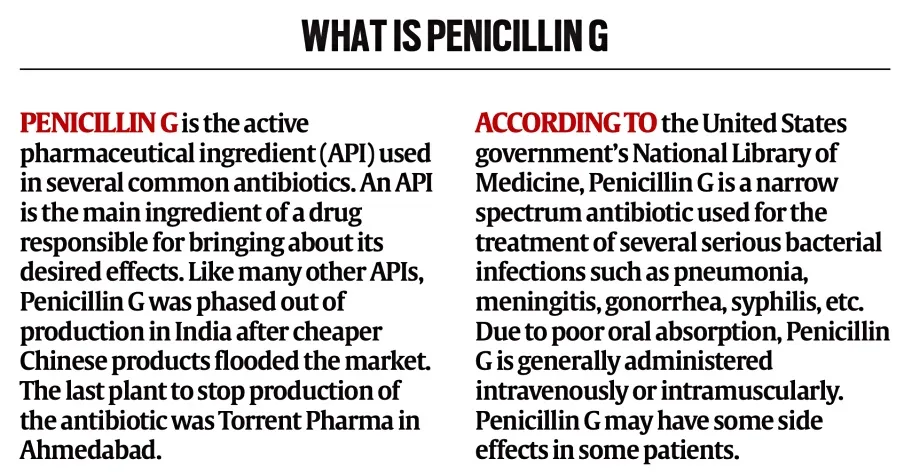
Penicillin G
- Benzylpenicillin (Penicillin G) is a narrow-spectrum antibiotic used to treat infections caused by sensitive bacteria.
- Due to poor oral absorption, it is given intravenously or intramuscularly, and in some cases is also used for preventive (prophylactic) treatment against susceptible organisms.
| Read more: Penicillin G and PLI Scheme |

Rapid Fire
Bharat Parv 2026
Bharat Parv 2026, a six-day national cultural and tourism festival, was organised by the Ministry of Tourism from 26th–31st January 2026 at the Red Fort, New Delhi, as part of the Republic Day celebrations.
- Organised annually since 2016, the festival serves as a major platform to showcase India’s cultural, artistic, culinary and spiritual heritage, reflecting the country’s unity in diversity.
- Bharat Parv 2026 commemorated 150 years of “Vande Mataram”, composed by Bankim Chandra Chatterjee, while actively promoting the national initiatives like “Ek Bharat, Shreshtha Bharat” and “Dekho Apna Desh.”
- A key attraction was the display of 41 Republic Day tableaux from States, Union Territories and Central Ministries, allowing visitors to view the narratives of culture, development and innovation up close.
- The festival featured 48 folk and classical cultural performances by State troupes and cultural institutions, along with 22 performances by Armed Forces and paramilitary bands, adding a strong patriotic dimension.
- A pan-India food court with over 60 stalls showcased regional cuisines, millet-based dishes and tribal food traditions, emphasising culinary heritage, sustainability and local practices.
| Read more: Republic Day 2026 |