
International Relations
Revitalizing India–Bangladesh Relations
For Prelims: Parliamentary Standing Committee, Lalmonirhat Airfield, Ganga Water Treaty 1996, Padma (Ganges), Jamuna (Brahmaputra), Meghna, Sundarbans, Mangrove Forest, St. Martin’s Island, Akhaura-Agartala Rail Link, India-Bangladesh Friendship Pipeline.
For Mains: Key aspects of India–Bangladesh relations, Recent changes in Bangladesh and its impact on India. Steps needed to revitalize bilateral relations and address current challenges.
Why in News?
A report by the Parliamentary Standing Committee on External Affairs, titled ‘Future of India-Bangladesh Relationship’, has highlighted that developments in Bangladesh represent the most significant strategic challenge to India since the 1971 Liberation War.
Summary
- Bangladesh’s political shift poses India’s biggest regional challenge since 1971, testing deep-rooted bilateral cooperation in trade, connectivity, energy, and defense.
- To revitalize ties, India must recalibrate by engaging all stakeholders, transparently managing sensitive issues, and offering competitive partnerships to secure strategic influence.
What are the Recent Developments in Bangladesh that Present Strategic Challenges to India?
- Fundamental Political Realignment: The August 2024 fall of the pro-India Awami League government led by Sheikh Hasina ended a long period of political stability in Bangladesh.
- Meanwhile, Bangladesh has seen the rise of new forces like the National Citizen Party (NCP), launched by student activists instrumental in the anti-Awami League protests and the return of Jamaat-e-Islami, a conservative Islamist political party, widely perceived as holding anti-India views.
- Intensifying External Influence: Bangladesh’s deepening strategic engagement with China (e.g., China to upgrade the Lalmonirhat airfield in Bangladesh near India’s chicken’s neck), along with a resurgence of Pakistani outreach (e.g., Pakistan Navy frigate PNS Saif visited Bangladesh), risks diluting India’s traditional influence.
- Anti-India Protests and Communal Violence: The killing of Bangladeshi youth leader Sharif Osman Hadi sparked violent unrest, during which India’s Assistant High Commission in Chattogram was vandalised, showing how Bangladesh’s internal turmoil can affect diplomatic relations.
- India’s Humanitarian Response: India’s humanitarian decision to shelter the ousted Prime Minister Sheikh Hasina has become a bilateral irritant, with Bangladesh’s interim government accusing her of fomenting trouble from Indian soil and demanding her extradition, while India maintains it offers no political platform.
- Critical Bilateral Issues in Limbo: The crucial Ganga Water Treaty 1996 is due for renewal in December 2026, but formal discussions with Bangladesh are yet to begin, risking a strategic vacuum and potential disputes.
- Shifting Societal Sentiments: A new generation, less tied to the 1971 liberation history, is fueling a nationalism that is often skeptical of India. This confluence of resurgent Islamist groups and assertive youth nationalism creates internal volatility with direct spillover implications for India's security.
- E.g., Hasnat Abdullah, leader of Bangladesh’s NCP, warned about separating India’s 7 Northeastern states from the mainland and offered shelter to Indian separatist groups.
What are the Implications of these Developments in Bangladesh on India?
- Geopolitical & Security: Fall of pro-India Sheikh Hasina removes strategic certainty and security cooperation, while China's upgrade of Lalmonirhat airfield near the Siliguri Corridor and Pakistani outreach intensify the two-front war concern.
- Internal Security: Instability increases the risk of illegal migration and infiltration, while communal violence and the rise of radical groups contribute to potential communal polarization and the spread of radicalization across borders.
- Diplomatic: Sheltering Hasina creates an extradition dilemma and accusations of interference, as anti-India protests erode goodwill and complicate critical negotiations like the Ganga Water Treaty.
- Economic: Political instability and anti-India sentiment threaten connectivity projects, undermining India's Neighbourhood First and Act East policies.
- Narrative: India is losing the perception battle, widely seen as an imperialist power that propped up an authoritarian regime.
Bangladesh
- About: Bangladesh is a country located in South Asia, sharing extensive land borders with India to the west, north, and northeast, and a border with Myanmar to the southeast. It has a coastline along the Bay of Bengal.
- River Systems: The country is predominantly a vast, low-lying delta formed by the Padma (Ganges), Jamuna (Brahmaputra), and Meghna rivers.
- The fertile flood plains of the Padma, Jamuna, and Meghna rivers and their tributaries cover nearly 80% of the country's land.
- Biodiversity: The Sundarbans—the world's largest tidal mangrove forest—is a critical ecosystem and home to the endangered Bengal tiger.
- St. Martin’s Island is the nation's only coral-bearing island and is protected as a marine park, sheltering endangered turtles and unique coral species.
What has been the Status of India-Bangladesh Relations to Date?
- Political & Diplomatic Engagement: Bangladesh is a central pillar of India’s foreign policy, acting as the convergence point for the Neighbourhood First Policy, Act East Policy 2014, and Indo-Pacific policies.
- Both countries engage actively in regional groupings such as SAARC, BIMSTEC, BBIN, and the Indian Ocean Rim Association (IORA) to manage and reduce diplomatic tensions.
- Boundary and Maritime Settlements: The 2015 Land Boundary Agreement and maritime delimitation stand as landmark peaceful settlements that contribute significantly in maintaining stability and goodwill in bilateral relations.
- Multimodal Connectivity:
- Railways: Rehabilitation of 6 pre-1965 cross-border rail links; operation of 3 passenger trains (temporarily suspended); supply of railway wagons; crucial for connecting India’s Northeast.
- Roads: 5 operational bus routes connecting major cities.
- Inland Waterways: Protocol on Inland Waterways Trade and Transit (PIWTT) since 1972, including cruise services and new routes.
- Ports: Use of Chattogram and Mongla ports for Indian transit cargo to India's Northeast.
- Infrastructure: A network of Integrated Check Posts (ICPs) with more planned.
- Economic Cooperation: Bangladesh is India’s largest trade partner in South Asia. Bilateral trade was USD 14.01 billion in FY 2023-24.
- Introduction of a mechanism to settle bilateral trade in Indian Rupees to reduce dollar dependency.
- Power and Energy Cooperation: Bangladesh imports 1160 MW of electricity from India. The Maitree Super Thermal Power Plant (1320 MW) built with Indian assistance.
- The India-Bangladesh Friendship Pipeline for High-Speed Diesel; Indian PSUs involved in oil exploration and supply.
- Development Partnership: India has extended 3 Lines of Credits (LoCs) worth nearly USD 8 billion for infrastructure projects in roads, railways, ports, and a dedicated USD 500 million Defence LoC.
- Grant assistance for specific projects like the Akhaura-Agartala rail link and dredging.
- Training and Capacity Building: Over 7,000 Bangladeshi civil servants and 1,250 judicial officers trained in Indian institutions since 2014. Approximately 1,350 defence personnel trained in India.
How can India and Bangladesh Revitalize their Bilateral Relations?
- Institutional Crisis Management: Establish a formal India–Bangladesh political crisis response mechanism, involving a senior envoy and dedicated foreign ministry channel, to enable rapid fallout management, prevent escalation, and safeguard diplomatic assets.
- Additionally, create a High-Level Consular Coordination Cell to ensure secure visa operations and safe mobility of citizens in both countries.
- Engage Beyond Governments: Engage proactively with all political parties, civil society, youth groups, media, and intellectuals in Bangladesh to avoid the perception of favoring one faction. Intensify Track 1.5 and Track II dialogues to address crisis perceptions, counter misinformation, and build soft bridges.
- Maintain a transparent and consistent narrative on providing refuge to Sheikh Hasina, strictly framing it as a humanitarian and civilizational gesture, not political patronage.
- Transparent Water Diplomacy: Initiate technical and political discussions on the Ganga Water Treaty renewal well before the 2026 deadline. Adopt a basin-wide management approach on other shared rivers (Teesta, etc.), potentially involving joint hydrological models and data sharing to build trust.
- Nurturing the Spirit of 1971 for a New Generation: Promote people-centric cultural initiatives like joint commemorations, relief efforts, and humanitarian projects to showcase India’s cultural ties without political bias.
- Offer a Positive Alternative: Counter strategic competition not by demanding exclusivity, but by offering more attractive, transparent, and faster-implementing partnerships compared to other actors, particularly in infrastructure and development projects.
- Intensify Security Coordination: Implement real-time border security protocols between the BSF and Bangladesh border forces, with joint hotlines to prevent cross-border infiltrations and miscalculations amid record infiltration attempts along the Indo–Bangladesh border in 2025.
Conclusion
India-Bangladesh relations are at a critical juncture, shaped by political realignments, youth nationalism, and external influences. Revitalization requires proactive diplomacy, strengthened connectivity, transparent resource management, and engagement with civil society. By balancing humanitarian concerns with strategic interests, India can sustain influence, ensure regional stability, and foster mutually beneficial partnerships.
|
Drishti Mains Question: In light of recent political changes in Dhaka, discuss the challenges and opportunities for revitalizing India- Bangladesh bilateral relationship. |
Frequently Asked Questions (FAQs)
Q. What strategic shift in Bangladesh has posed challenges for India post-2024?
The fall of the pro-India Awami League government in August 2024 led to political instability, rise of Islamist forces, and increased external influence from China and Pakistan.
Q. Why is Bangladesh critical to India’s Neighbourhood First and Act East policies?
Bangladesh provides strategic connectivity to India’s Northeast, access to ports, energy cooperation, and acts as a gateway to Southeast Asia.
Q. What are the Sundarbans?
The Sundarbans is the world’s largest tidal mangrove forest, spanning southern West Bengal in India and Bangladesh. It is home to the Bengal tiger and is a UNESCO World Heritage Site.
UPSC Civil Services Examination, Previous Year Question (PYQ)
Q. Consider the following statements: (2020)
- The value of Indo-Sri Lanka trade has consistently increased in the last decade.
- “Textile and textile articles” constitute an important item of trade between India and Bangladesh.
- In the last five years, Nepal has been the largest trading partner of India in South Asia.
Which of the statements given above is/are correct?
(a) 1 and 2 only
(b) 2 only
(c) 3 only
(d) 1, 2 and 3
Ans: (b)
Q. With reference to river Teesta, consider the following statements: (2017)
- The source of river Teesta is the same as that of Brahmaputra but it flows through Sikkim.
- River Rangeet originates in Sikkim and it is a tributary of river Teesta.
- River Teesta flows into Bay of Bengal on the border of India and Bangladesh.
Which of the statements given above is/are correct?
(a) 1 and 3 only
(b) 2 only
(c) 2 and 3 only
(d) 1, 2 and 3
Ans: (b)
Mains
Q. Analyze internal security threats and transborder crimes along Myanmar, Bangladesh and Pakistan borders including Line of Control (LoC). Also discuss the role played by various security forces in this regard. (2018)
Biodiversity & Environment
Protection of Aravalli Hills
For Prelims: Aravalli Hills, Indian Council of Forestry Research and Education, Aravali Green Wall initiative
For Mains: Environmental governance and the role of the judiciary, Mining regulation vs ecological protection, Biodiversity conservation
Why in News?
In November 2025, the Supreme Court (SC) of India adopted a uniform definition of the Aravalli Hills as hills 100 meters or higher above local ground, sparking concerns that this could weaken legal protection for the range and make large parts of the Aravalli range vulnerable to mining and construction activities.
- The decision triggered public protests, political reactions, and the #SaveAravalli campaign.
Summary
- In 2025, the Supreme Court adopted a uniform definition of the Aravalli Hills, froze new mining leases, and mandated a sustainable mining plan.
- The government says the framework strengthens protection, bans mining in core areas, and focuses on curbing illegal mining.
- Critics fear the 100-metre rule may exclude large areas, risking groundwater, biodiversity, and desertification control, underscoring the need for landscape-level restoration.
What is the Supreme Court of India’s Ruling on the New Aravalli Definition?
- About: The Supreme Court accepted a uniform, scientific definition of the Aravalli Hills and Ranges proposed by a committee under the Ministry of Environment, Forest and Climate Change (MoEF&CC) to regulate mining and protect the ecosystem.
- The Supreme Court banned mining in core/inviolate areas such as protected areas, eco-sensitive zones, tiger reserves and wetlands, permitting exceptions only for atomic minerals (Part B of the First Schedule), critical and strategic minerals (Part D), and minerals listed in the Seventh Schedule of the MMDR Act, 1957.
- Aravalli Hills: Defined as any landform that rises 100 metres or more above the surrounding local terrain.
- Local relief is determined using the lowest contour line encircling the landform.
- Protection extends to the entire hill system, including supporting slopes and associated landforms, irrespective of height.
- Aravalli Ranges: Defined as clusters of two or more such hills located within 500 metres of each other. The entire intervening area between these hills, including slopes and smaller hillocks, is included as part of the range.
- The aim of this definition was to provide clarity and objectivity in regulating activities like mining across the Aravalli landscape.
- SC Directions: The Court also directed a temporary ban on issuing new mining leases in areas falling under this definition until a Management Plan for Sustainable Mining (MPSM) is prepared by the Indian Council of Forestry Research and Education (ICFRE).
- The plan must identify no-mining zones, strictly regulated mining areas, sensitive habitats and wildlife corridors, assess cumulative ecological impacts and carrying capacity, and prescribe restoration and rehabilitation measures.
- The Court noted that blanket bans often fuel illegal mining, so it adopted a calibrated approach: existing legal mining under strict regulation, a pause on new mining, and permanent protection of ecologically sensitive areas.
Government’s Stance on the Aravalli Issue
- The Centre clarified that the Supreme Court–approved framework does not dilute Aravalli protection or allow large-scale mining.
- No new mining leases will be granted until a Management Plan for Sustainable Mining is finalised.
- The government identifies illegal mining as the main threat and supports stronger monitoring and enforcement, including use of drones and surveillance technologies.
Earlier Interventions for Protection and Restoration of the Aravalli Range
- MoEF Restrictions (1990s): Environment Ministry imposed restrictions limiting mining to sanctioned projects in the Aravalli range.
- Weak enforcement by States led to large-scale non-compliance with mining regulations.
- Defining Aravalli Hills: Earlier, only Rajasthan had a formally notified definition for regulating mining in the Aravallis, based on the 2002 State Committee Report using Richard Murphy landform classification, identifying hills as landforms rising 100 metres above local relief and prohibiting mining on hills and their supporting slopes.
- Supreme Court Ban on Mining (2009): Blanket ban imposed on mining in Faridabad, Gurugram and Mewat districts of Haryana.
- In 2024, the Court prohibited granting of fresh mining leases and renewals across the Aravalli range and directed the Central Empowered Committee (CEC) to conduct a detailed examination.
- CEC Recommendations (2024): It recommended complete scientific mapping of the Aravalli range across all States.
- Suggested a macro-level Environmental Impact Assessment (EIA) of mining activities.
- Recommended that no new mining leases or renewals be allowed until mapping and impact assessments are completed.
- Aravalli Green Wall Initiative: Inspired by Africa’s Great Green Wall, the Aravali Green Wall initiative is a landscape-level ecological restoration programme led by the MoEF&CC to reverse land degradation, strengthen ecological resilience, and prevent desertification in the Aravalli range.
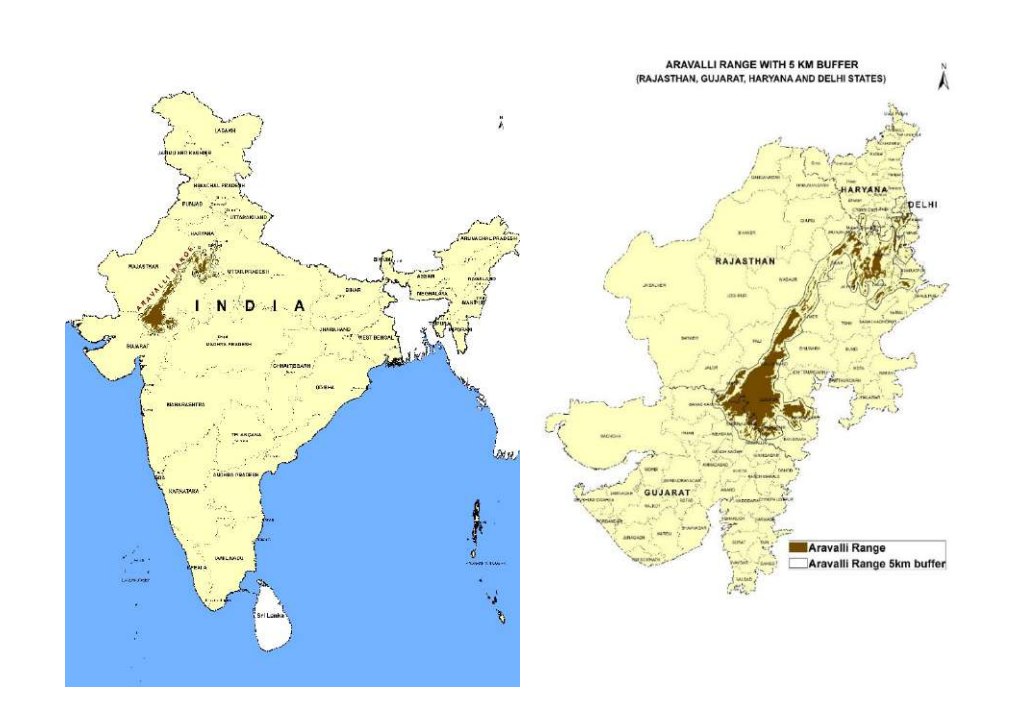
- The initiative proposes a 1,400 km long and 5 km wide green belt along the Aravalli range, covering Gujarat, Rajasthan, Haryana and Delhi, including the core Aravalli region and its surrounding buffer zones.
- The initiative aims to restore more than 1.1 million hectares of degraded land in the Aravalli hills by 2027 by plugging ecological gaps and reviving natural vegetation.
- The green wall is expected to reduce sand and dust storms, improve air quality, and mitigate micro-climatic stress, particularly in the Delhi-NCR region.
What are the Criticisms Regarding the New Definition of Aravalli Hills?
- Exclusion of Majority Landscape: An internal Forest Survey of India (FSI) assessment shows that the 100-metre threshold excludes over 90% of the Aravalli system from the new definition.
- This raises significant ecological, environmental, and governance concerns, especially for the Delhi-NCR region, as the Aravalli range acts as a natural dust and pollution sink, supporting air quality control, groundwater recharge, and climate regulation.
- Threat of Expanded Mining: Areas falling outside the definition may become vulnerable to mining, construction, and urban expansion, potentially reversing decades of conservation efforts.
- Ignoring Ecological Continuity: The Aravallis function as a continuous ecological system, but the definition is seen as peak-centric, overlooking the ecological role of foothills, valleys, and connecting ridges.
- Risk to Groundwater Recharge: Lower hills and slopes are crucial for rainwater percolation and aquifer recharge; their disturbance could lower water tables across Rajasthan, Haryana, Gujarat, and Delhi-NCR.
- Accelerated Desertification: Weakening the Aravalli barrier could allow the Thar Desert to advance eastward, intensifying dust storms, land degradation, and aridity, undermining India’s obligations under the UN Convention to Combat Desertification.
- Implementation and Enforcement Challenges: Without comprehensive mapping and strict oversight, the new definition may create regulatory loopholes, making illegal mining harder to curb.
What are the Key Facts About Aravalli Range?
- Geological Origin and Evolution: The Aravalli Range is one of the oldest mountain systems in the world and the oldest in India, dating back nearly 2,000 million years to the Precambrian era.
- It was formed during the Aravalli–Delhi orogeny due to tectonic plate collisions. The present-day Aravallis are highly eroded remnants of a much larger prehistoric mountain system, having been reduced over millions of years by weathering and erosion.
- Guru Shikhar Peak on Mount Abu is the highest peak in the Aravalli Range (1,722 m).
- It spans over 800km from Gujarat to Delhi (through Rajasthan and Haryana).
- Climatic and Ecological Importance: The Aravallis acts as a natural barrier against Thar Desert expansion into north-western India.
- Deforestation and degradation have created multiple gaps, allowing desert sand to drift toward fertile plains and worsening air pollution and dust storms.
- Contribution to Water Regime: Located in a semi-arid region receiving 500–700 mm of rainfall annually, the Aravalli range functions as a major watershed dividing drainage between the Bay of Bengal and the Arabian Sea systems.
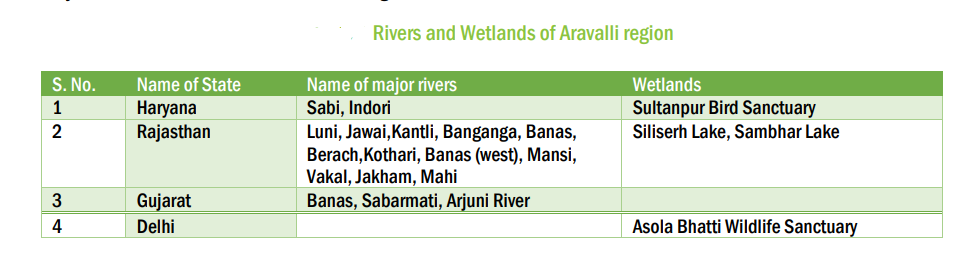
- Biodiversity and Wildlife Significance: The Aravalli landscape supports dry deciduous forests, grasslands, and wetlands with a unique mix of Saharan, Peninsular, and Oriental biodiversity.
- It houses 22 wildlife sanctuaries and three tiger reserves, and provides habitat for endangered species such as the tiger, leopard, Indian wolf, sloth bear, and Great Indian Bustard.
- Agriculture, Livelihoods, and Livestock: Agriculture in the Aravalli region is rainfed and subsistence-based, with bajra, maize, wheat, mustard, and pulses, while large livestock dependence and forest resources make ecosystem health vital for rural livelihoods.
- Economic and Mineral Importance: The Aravalli region is rich in minerals, with over 70 commercially valuable minerals including zinc, lead, silver, tungsten, marble, and granite.
- Mining has emerged as a major economic activity, particularly in Rajasthan, which accounts for around 80% of the range.
- Industrial Development and Urban Pressure: Due to its strategic location, the Aravalli belt hosts major industrial and urban clusters such as Gurugram, Faridabad, Jaipur, Alwar, and Ajmer.
- It supports industries ranging from IT and textiles to automobiles, chemicals, and steel.
- Cultural and Heritage Significance: The Aravalli range houses UNESCO World Heritage Sites like Chittorgarh and Kumbhalgarh forts.
- It is also home to major religious centres such as Pushkar, Ajmer Sharif, Mount Abu, and Ranakpur, making it sacred to Hindu, Islamic, and Jain traditions and reinforcing its civilisational value.
- Degradation and Environmental Decline: Over the decades, the Aravallis have experienced severe deforestation, mining, urbanisation, and grazing pressure.
- Several hills have completely disappeared, forest cover has declined sharply, and rainfall duration has reduced significantly.
- These changes have triggered soil erosion, aquifer damage, desert gap expansion, and worsening air pollution, especially affecting Delhi-NCR.
What Measures are Required to Strengthen Protection of the Aravalli Range?
- Scientific Identification and Mapping: Undertake comprehensive, standardised mapping of hills, ranges, slopes, valleys, recharge zones, and wildlife corridors using authoritative datasets.
- Apply graded and risk-based controls on mining activities, supported by clear criteria for prohibition, regulation, and monitoring
- Prevention of Illegal mining: Strengthen monitoring, surveillance, and enforcement mechanisms through institutional coordination and technology-based tools.
- Use drones, satellite imagery, CCTV, e-challans, and district task forces to curb illegal mining and sand mafias.
- Ecosystem restoration and management: Promote restoration of degraded forests, grasslands, and mined areas based on ecological suitability and long-term sustainability.
- Indigenous systems like taankas, jhalaras, talab-bandis strengthen watershed management in Aravalli villages.
- Wind Erosion & Sand Drift Control: Surface vegetation using species like Calligonum and Acacia stabilised sand dunes and reduced wind erosion.
- It helps control dust storms and desertification in Aravalli gap areas.
- Restoration and Global Commitments: The New Delhi Declaration (UNCCD CoP-14) highlights that desertification undermines livelihoods and development, stressing sustainable land management.
- Restoring the Aravalli ecosystem is vital to protect water regulation, biodiversity, climate resilience, and to meet India’s commitments under the Paris Agreement, Bonn Challenge, and Land Degradation Neutrality, while safeguarding local livelihoods.
Conclusion
The Aravalli Range is not merely a geological feature but a life-support system for north-western India. Its degradation threatens climate stability, and livelihoods. Conservation and restoration of the Aravallis are therefore ecological, economic, and civilisational imperatives, requiring landscape-level protection, and community-based restoration.
|
Drishti Mains Question: How can India balance mineral extraction with ecological security in fragile landscapes like the Aravallis? |
Frequently Asked Questions (FAQs)
Q. What did the Supreme Court of India decide on the Aravalli Hills in 2025?
The Court approved a uniform, scientific definition of Aravalli Hills and Ranges, imposed a freeze on new mining leases, and mandated preparation of a Management Plan for Sustainable Mining (MPSM).
Q. How are Aravalli Hills defined under the Supreme Court–approved framework?
Aravalli Hills are defined as landforms rising 100 metres or more above local relief, with protection extending to the entire hill system, including supporting slopes and enclosed landforms.
Q. What constitutes an Aravalli Range under the new definition?
Two or more Aravalli Hills located within 500 metres of each other are treated as a single range, and the entire intervening area is included for protection.
Q. What is the Aravalli Green Wall Initiative?
It is a MoEF&CC-led landscape restoration programme covering the Aravalli range and its buffer zones across Gujarat, Rajasthan, Haryana, and Delhi, aimed at combating desertification and land degradation.
UPSC Civil Services Examination, Previous Year’s Question (PYQs)
Mains
Q. What are the consequences of Illegal mining? Discuss the Ministry of Environment and Forests’ concept of GO AND NO GO zones for coal mining sector. (2013)
Q. “The most significant achievement of modern law in India is the constitutionalization of environmental problems by the Supreme Court.” Discuss this statement with the help of relevant case laws. (2022)


Social Issues
Supreme Court Guidelines on Child Trafficking
For Prelims: Supreme Court of India, Article 23, UNCTOC, National Commission for Protection of Child Rights
For Mains: Safeguards against human trafficking, Supreme Court’s role in evolving victim-centric criminal jurisprudence, Preventive and rehabilitative strategies for child protection
Why in News?
The Supreme Court of India, described child trafficking and commercial sexual exploitation as a “deeply disturbing reality” in the country.
- It laid down guidelines directing courts to treat trafficked children as injured witnesses and to assess their testimony sensitively, without rejecting it merely due to minor inconsistencies.
Summary
- The Supreme Court has recognised child trafficking and commercial sexual exploitation as grave violations of children’s dignity and fundamental rights, directing courts to treat trafficked children as injured witnesses and not discard their testimony due to minor inconsistencies.
- Effective response requires a prevention-first approach, combining strong legal enforcement with community vigilance, welfare convergence, transit monitoring, and rehabilitation mechanisms for rescued children.
What are the Supreme Court of India Guidelines Aimed at Addressing the Issue of Child Trafficking?
- Victim's Testimony as Credible Evidence: Courts must treat a trafficked child’s testimony as that of an injured witness, giving it due credence.
- Minor inconsistencies in the testimony should not discredit the victim’s account, and her sole testimony can be enough for conviction if credible.
- Given the layered nature of trafficking operations, courts should not expect victims to provide precise details. The complexity of the crime makes it difficult for victims to recount events clearly.
- Sensitivity to Vulnerabilities: Courts must consider the socio-economic and cultural vulnerabilities of victims, especially those from marginalized communities. Judicial appreciation should be marked by sensitivity and realism.
- SC also noted that child trafficking and sexual exploitation violate children’s dignity and bodily integrity and undermine their fundamental rights to life, dignity and safety.
- Minimising Secondary Victimisation: The court emphasized protecting victims from further trauma during legal proceedings, ensuring their dignity is upheld and avoiding additional distress.
- Avoiding Prejudicial Assumptions: Courts should refrain from making assumptions based on a victim’s behavior, such as a lack of immediate protest, which could undermine her credibility.
What is Child Trafficking?
- About: Child trafficking refers to the recruitment, transportation, transfer, harbouring, or receipt of a child through coercion, deception, abuse of power, or exploitation of vulnerability for the purpose of exploitation.
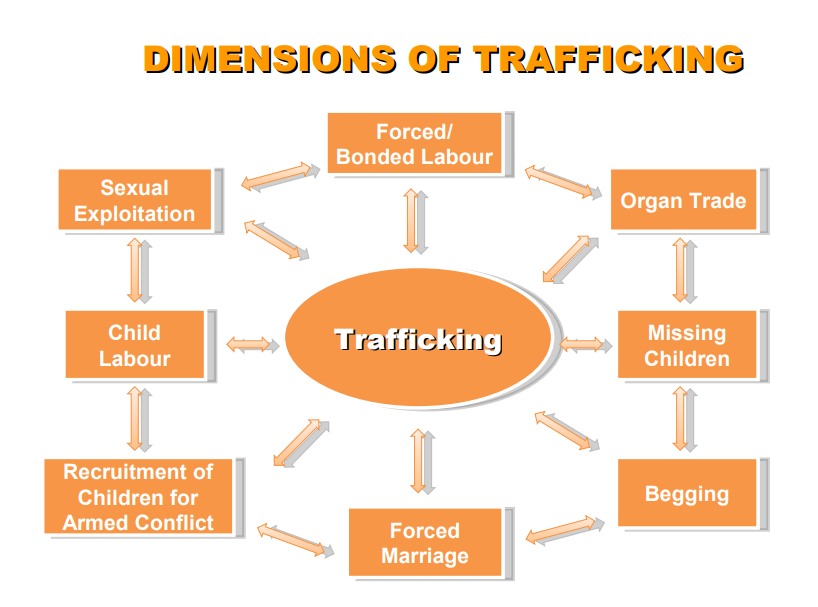
- Exploitation includes sexual exploitation, forced labour, slavery or servitude, and removal of organs, and constitutes a grave violation of child rights, human dignity, and bodily integrity.
- Regulation of Child Trafficking and Commercial Sexual Exploitation in India
- Constitutional Framework:
- Article 23 prohibits trafficking in human beings and forced labour, making it a fundamental rights violation.
- Legal Framework:
- Bharatiya Nyaya Sanhita (BNS), 2023: Sections 143 and 144 of BNS, 2023 provide for stringent punishment for human trafficking and sexual exploitation of trafficked children, including imprisonment up to life, with beggary recognised as a form of exploitation.
- Immoral Traffic (Prevention) Act, 1956 (ITPA): Core law against trafficking for commercial sexual exploitation; penalises brothel-keeping, procuring, and related offences.
- Protection of Children from Sexual offences (POCSO) Act, 2012: Special law to protect children from sexual abuse and exploitation; mandates child-friendly procedures.
- Criminal Law Amendment Act, 2013: Provide a comprehensive definition of trafficking, including sexual exploitation, slavery, servitude, forced labour, and organ removal; cover trafficking of children irrespective of consent.
- Juvenile Justice (Care and Protection of Children) Act, 2015: Mandates a safety net of institutional and non-institutional care and protection services for children in conflict with law and children in need of care and protection.
- Allied legislations addressing trafficking and exploitation include the Bonded Labour System (Abolition) Act, 1976, Child Labour (Prohibition and Regulation) Act, 1986, Prohibition of Child Marriage Act, 2006, and the Transplantation of Human Organs and Tissues Act, 1994, which collectively aim to prevent forced labour, child exploitation, early marriage, and illegal organ trade.
- SC Judgements and Guidelines:
- Vishal Jeet v. Union of India (1990): The SC held trafficking and child prostitution to be a serious socio-economic problem and stressed a preventive, humanistic approach.
- SC directed States set up advisory committees to eradicate child prostitution and Devadasi/Jogin practices.
- MC Mehta v. State of Tamil Nadu (1996): The SC prohibited the employment of children in hazardous industries. It ordered the creation of a Child Labour Rehabilitation Welfare Fund.
- Bachpan Bachao Andolan v. Union of India (2011): The SC imposed a total ban on the employment of children in Indian circuses and issued key directions to the Central and State governments to address the widespread exploitation and trafficking of children in circuses.
- Vishal Jeet v. Union of India (1990): The SC held trafficking and child prostitution to be a serious socio-economic problem and stressed a preventive, humanistic approach.
- International obligations: India has ratified the UN Convention on Transnational Organized Crime (UNCTOC) and its Trafficking Protocol.
- Constitutional Framework:
What Challenges Hinder Effective Prevention of Child Trafficking and Exploitation in India?
- Entrenched Socio-economic Distress: Poverty, unemployment, migration, disasters, and family breakdown continuously push children into vulnerability, creating a steady supply for traffickers.
- Demand for cheap labour, domestic servitude, begging, and commercial sex continues to sustain trafficking markets.
- The rise of quick-commerce delivery apps has created hidden demand for child labour in unregulated dark stores and sorting hubs, where children work long night shifts to meet rapid delivery targets.
- Invisible and Organised Trafficking Chains: Trafficking networks operate through layered and fragmented structures across source, transit, and destination areas, making detection and disruption extremely difficult.
- For instance, traffickers exploit the porous India–Nepal border and route children through multiple States, making it difficult for any single State police force to track the entire trafficking chain.
- Silence of Victims: Fear, stigma, trauma, and threats suppress reporting, allowing exploitation to remain hidden and unaccounted for.
- Insensitive questioning procedures retraumatise victims, discouraging cooperation with justice processes.
- Misuse of Technology: Social media and online platforms enable grooming, recruitment, and sexual exploitation, often beyond the reach of traditional policing.
- For instance, in the "Virtual Recruitment" model, traffickers use fake "talent hunt" profiles on Instagram to lure aspiring teenage influencers with promises of modeling contracts, eventually trafficking them into commercial sexual exploitation.
- Gaps in Data and Monitoring: Delays in updating National Crime Records Bureau (NCRB) data and fragmented databases on missing, rescued, and trafficked children limit effective early warning, tracking, and prevention efforts.
What Measures Can Effectively Curb Child Trafficking and Exploitation?
The National Commission for Protection of Child Rights emphasised that prevention is the most effective strategy against child trafficking and accordingly recommended targeted measures to curb the menace:
- Source-area Recommendations: Identify trafficking-prone villages and urban habitations and map children at risk and vulnerable families using defined indicators (school dropouts, poverty, migration, family distress).
- Ensure convergence of welfare schemes (ration, MGNREGA, education, health) so that economic distress does not push families towards traffickers.
- Strengthen Panchayat-level vigilance through Village Child Protection Committees (VCPCs), Anganwadi workers, and school authorities, and local police.
- Maintain village-level registers tracking the movement of children and outsiders, with regular updates on the TrackChild Portal and the GHAR – GO Home and Re-Unite portal, as traffickers often operate under the guise of education or employment offers.
- Transit-area Recommendations: Sensitise and train GRP (Government Railway Police) and RPF (Railway Protection Force), transport staff, porters, vendors, and police to identify suspicious movement of children and accompanying adults.
- Display helpline numbers (1098, 112) and child rights information in local languages at all transit points.
- Destination-area Recommendations: Conduct regular inspections of placement agencies, factories, brick kilns, hotels, massage parlours, domestic work sites, and entertainment establishments.
- Enforce zero tolerance for child labour, child marriage, and domestic servitude.
- Ensure availability of child care institutions, shelters, and rehabilitation facilities under the JJ Act, 2015, for rescued children.
Conclusion
Child trafficking is a serious violation of children’s dignity and fundamental rights. The Supreme Court’s guidelines strengthen justice by treating trafficked children as injured witnesses and rejecting stereotypes and minor inconsistencies.
|
Drishti Mains Question: Discuss child trafficking as a violation of fundamental rights with reference to constitutional and legal provisions. |
Frequently Asked Questions (FAQs)
Q. Which constitutional provision directly prohibits child trafficking?
Article 23 of the Constitution prohibits trafficking in human beings and forced labour, making it a fundamental rights violation.
Q. What are the key laws addressing child trafficking in India?
Bharatiya Nyaya Sanhita, 2023; ITPA, 1956; POCSO Act, 2012; Criminal Law Amendment Act, 2013, along with allied labour and child protection laws.
Q. Why is child trafficking difficult to detect and prevent?
It operates through organised, invisible networks across regions, compounded by poverty, migration, stigma, and underreporting by victims.
UPSC Civil Services Examination Previous Year Question (PYQ)
Q. India’s proximity to two of the world’s biggest illicit opium-growing states has enhanced her internal security concerns. Explain the linkages between drug trafficking and other illicit activities such as gunrunning, money laundering and human trafficking. What counter-measures should be taken to prevent the same? (2018)


Important Facts For Prelims
PMLA, 2002 and Enforcement Directorate
Why in News?
A Delhi special court has declined to take cognisance of the Directorate of Enforcement (ED) prosecution complaint in the alleged Rs 2,000-crore National Herald case, placing the spotlight on the Prevention of Money Laundering Act (PMLA), 2002.
Summary
- The National Herald case has brought renewed focus on the Prevention of Money Laundering Act, 2002 and the role of the Directorate of Enforcement in probing money laundering.
- The ED steps in only when proceeds of crime are laundered, with courts upholding its powers while insisting on legal safeguards for arrest and investigation.
What is the Prevention of Money Laundering Act (PMLA), 2002?
- About: The PMLA which came into force in 2005, is an act to prevent money-laundering and to provide for confiscation of property derived from, or involved in, money-laundering and for matters connected therewith or incidental thereto.
- Enforcement Agency: The act empowers the Directorate of Enforcement (ED) to investigate, attach, confiscate assets, and prosecute offenders.
- Scope: Applies to individuals, companies, financial institutions, and intermediaries involved directly or indirectly in money laundering.
- Key Provisions of PMLA:
- Offences and penalties: Defines money-laundering offences and prescribes rigorous imprisonment and fines.
- All the offences under PMLA are cognisable and non-bailable.
- Attachment and confiscation: Empowers authorities to attach and confiscate proceeds of crime through an Adjudicating Authority.
- Proceeds of crime: Covers any property derived or obtained, directly or indirectly, from criminal activity related to scheduled offences, and also includes equivalent property when such proceeds are held or taken outside the country.
- Reporting Obligations: Mandates banks and financial institutions to maintain records and report suspicious transactions to Financial Intelligence Unit-India (FIU-IND)
- Institutional framework: Provides for a Designated Authority and an Appellate Tribunal to ensure investigation oversight and appellate review.
- Offences and penalties: Defines money-laundering offences and prescribes rigorous imprisonment and fines.
- Judicial Pronouncements:
- Vijay Madanlal Choudhary v. Union of India (2022): The Supreme Court upheld the constitutional validity of the PMLA, including the ED’s powers of arrest, attachment, and investigation. It ruled that the accused has no right to receive a copy of the ECIR (Enforcement Case Information Report).
- Arvind Kejriwal v. Directorate of Enforcement (2024): The Supreme Court held that arrest under Section 19 of the PMLA must satisfy a high threshold of “reason to believe”, based on material that is legally admissible and not merely on suspicion.
What are the Key Facts About Directorate of Enforcement (ED)?
- About: The Directorate of Enforcement (ED) was established in 1956 with its headquarters in New Delhi. It is the key agency responsible for enforcing economic and financial laws in India, primarily the Foreign Exchange Management Act (FEMA), 1999, the Prevention of Money Laundering Act (PMLA), 2002 and the Fugitive Economic Offenders Act, 2018 (FEOA).
- Structure: Organisationally, the ED is headed by a Director (not below the rank of Additional Secretary, to the Government of India).
- It has a nationwide presence with 10 Zonal Offices and 11 Sub-Zonal Offices, ensuring coverage across major regions.
- The ED functions under the Department of Revenue for operational matters. Policy issues related to FEMA fall under the Department of Economic Affairs, while policy matters concerning PMLA are handled by the Department of Revenue.
- Functions of the Enforcement Directorate:
- Collects, analyses, and disseminates intelligence related to violations of FEMA and PMLA.
- Investigates offences such as hawala transactions, foreign exchange racketeering, and non-repatriation of export proceeds.
- Conducts search, seizure, arrest, attachment, and prosecution in money laundering cases under PMLA.
- Recommends cases for preventive detention under Sponsoring agency for preventive detention under Conservation of Foreign Exchange and Prevention of Smuggling Activities Act, 1974, (COFEPOSA) (1974).
- Facilitates mutual legal assistance with foreign countries for attachment, confiscation of proceeds of crime, and extradition-related matters.
- The ED is empowered to attach and confiscate properties of fugitive economic offenders and vest them with the Central Government.
- Achievements of ED: In FY 2024–25, the ED issued provisional attachment orders worth Rs 30,036 crore, reflecting a 44% increase in number and a 141% increase in value over 2023–24.
- As of 2025, the total value of assets under provisional attachment stood at Rs 15.46 lakh crore.
- Between 2014 and 2024, ED initiated around 5,000 new PMLA investigations, showcasing a significant increase in enforcement activities.
Note: Whenever any offence registered by a local police station generates proceeds of crime exceeding Rs 1 crore, the investigating officer forwards the details to the ED.
- Alternatively, if the offence comes to the notice of the central agency, the ED may call for the First Information Report (FIR) or chargesheet to examine whether money laundering is involved.
- The local police primarily investigate the predicate (original) offence such as theft, fraud, or cheating. If the illegal money is simply recovered and not used or transferred, the case remains limited to the original offence and the ED does not intervene.
- The ED steps in when there is suspicion of money laundering, that is, when the proceeds of crime are used, transferred, layered, or invested, for example, in purchasing properties or routing funds through others.
- The ED focuses on tracing the flow of illicit money and attaching the assets of the accused to recover the proceeds of crime.
Frequently Asked Questions (FAQs)
Q. What is the Prevention of Money Laundering Act (PMLA), 2002?
It is a law enacted to prevent money laundering and enable attachment and confiscation of proceeds of crime linked to scheduled offences.
Q. Which agency enforces the PMLA in India?
The Enforcement Directorate (ED) is the nodal agency empowered to investigate, attach assets, and prosecute offences under PMLA.
Q. What are “proceeds of crime” under PMLA?
Any property derived directly or indirectly from criminal activity related to scheduled offences, including equivalent property held abroad.
Q. Why is PMLA considered a stringent law?
Offences are cognisable and non-bailable, and the law allows provisional attachment and confiscation of property before conviction.
UPSC Civil Services Examination, Previous Year Questions (PYQs)
Q. Discuss how emerging technologies and globalisation contribute to money laundering. Elaborate measures to tackle the problem of money laundering both at national and international levels. (2021)


Rapid Fire
Bureau of Port Security
The Government of India has decided to set up a dedicated statutory body, the Bureau of Port Security (BoPS), to ensure comprehensive and risk-based security of ports and vessels across India.
- Bureau of Port Security (BoPS): It will be constituted as a statutory body under Section 13 of the Merchant Shipping Act, 2025.
- BoPS will function under the Ministry of Ports, Shipping and Waterways (MoPSW) and perform regulatory and oversight functions for the security of ships and port facilities.
- The BoPS shall be headed by the Director General (an IPS officer of Pay Level-15). During the one-year transition period, the Director General of Shipping (DGS/DGMA) shall function as the Director General, BoPS.
- The Bureau is modelled on the Bureau of Civil Aviation Security (BCAS), indicating sectoral best practices transfer.
- Under BoPS, a dedicated cyber security division will be established to protect port IT and digital infrastructure, highlighting the growing relevance of maritime cyber threats.
- Central Industrial Security Force (CISF): Earlier, to strengthen port security infrastructure, the CISF has been designated as a Recognised Security Organisation (RSO) for ports, with the responsibility of conducting security assessments and preparing port security plans.
- Under the new arrangement, the CISF is mandated to train and certify Private Security Agencies (PSAs) engaged in port security, with regulatory safeguards to ensure that only licensed agencies operate in the sector.
- Broader Significance: Experiences and best practices from BoPS-led maritime security are intended to be replicated in the aviation security domain, strengthening integrated internal security governance.
| Read more: One Nation–One Port Process (ONOP) |
Rapid Fire
Jallikattu
The Tamil Nadu government has issued a Standard Operating Procedure (SOP) for Jallikattu 2026 to ensure public safety, animal welfare, and strict legal compliance.
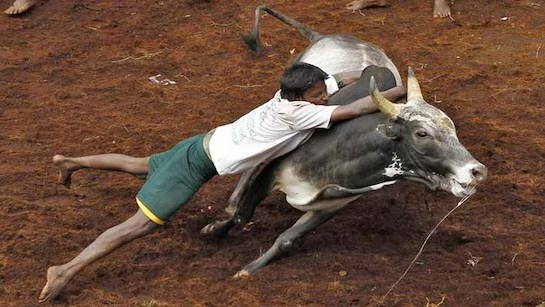
- About: Jallikattu, also known as eruthazhuvuthal, is a traditional bull-taming sport of Tamil Nadu, performed as part of the Pongal harvest festival, especially on Mattu Pongal.
- Etymology: Derived from “Jalli” (coins) and “Kattu” (tied), referring to coins tied to a bull’s horn as the prize.
- Cultural significance: It is a 2,000-year-old tradition linked to the Ayar community, celebrating nature, cattle worship, and rural agrarian life; historically, it was also used to select suitable bridegrooms.
- It was depicted in a 1500-year-old cave painting near Madurai and an Indus Valley seal preserved at the National Museum, New Delhi.
- Regions: Predominantly practiced in Madurai, Tiruchirappalli, Theni, Pudukkottai, and Dindigul districts of Tamil Nadu, known as the Jallikattu belt.
- Nature of the sport: A competitive and physically demanding event where participants attempt to tame a bull; failure results in the bull owner winning the prize.
- Uses indigenous breeds such as Pulikulam and Kangayam, valued for breeding and market strength.
- Controversy: Long contested due to concerns over animal cruelty and human safety, drawing scrutiny from courts and animal rights groups.
- Legal Status: In 2023, a five-judge Bench of the Supreme Court upheld amendments made by Tamil Nadu, Maharashtra, and Karnataka to the Prevention of Cruelty to Animals Act, 1960, permitting traditional bull-taming sports such as jallikattu and kambala.
| Read more: Supreme Court Upholds Laws Allowing Jallikattu |
Rapid Fire
Risk-Based Deposit Insurance Framework for Banks
The Reserve Bank of India (RBI) has approved a risk-based deposit insurance premium framework, shifting from the long-standing flat-rate system to a soundness-linked model, which will be effective from the next financial year (FY 2026-27).
- Policy Shift: Replaces the decades-old flat-rate premium system with a Risk-Based Premium (RBP) model, linking premiums to a bank’s financial soundness and risk profile.
- Existing Arrangement: Since 1962, the Deposit Insurance and Credit Guarantee Corporation has operated a flat-rate premium-based deposit insurance scheme, with banks currently charged 12 paise per Rs 100 of assessable deposits.
- Rationale: The existing flat-rate premium system charges all banks the same insurance rate, irrespective of their financial soundness, leading to safer banks subsidising riskier ones.
- A risk-based premium model aligns insurance costs with a bank’s risk profile, creating incentives for better governance, capital adequacy, and prudent risk management.
- Expected Impact: It strengthens financial stability by discouraging excessive risk-taking and improving market discipline without reducing depositor protection.
| Read more: DICGC Overcharging Commercial Banks |



