
International Relations
India-Oman Comprehensive Economic Partnership Agreement
For Prelims: Comprehensive Economic Partnership Agreement, Order of Oman, Tariff Rate Quotas, Gulf Cooperation Council (GCC), Al Najah, Eastern Bridge, Naseem Al Bahr
For Mains: India’s Free Trade Agreement strategy in the Gulf region, Significance of CEPA in India’s West Asia policy
Why in News?
India and Oman signed a Comprehensive Economic Partnership Agreement (CEPA), marking a major milestone in India’s trade diplomacy in the Gulf region.
- It is Oman’s first bilateral trade agreement since 2006 and India’s second CEPA in the GCC, after the UAE (2022).
- Additionally, the Prime Minister Narendra Modi was conferred with the Order of Oman by His Majesty Sultan Haitham bin Tarik (Sultan and Prime Minister of Oman) for his exceptional contribution to India–Oman relations.
- The award, instituted in 1970 by Sultan Qaboos bin Said, honours select global leaders for outstanding contributions to public life and bilateral ties.
Summary
- India–Oman CEPA strengthens India’s economic and strategic presence in the Gulf by providing near-universal duty-free access for Indian exports, ambitious services liberalisation, enhanced professional mobility, and new opportunities in investment, AYUSH, and MSME-led growth.
- While the agreement boosts trade facilitation and regional connectivity, key challenges remain in the form of a structural trade deficit, under-utilised services potential, and regional geopolitical risks, requiring focused diversification and deeper services engagement going forward.
What are the Key Features of the India–Oman Comprehensive Economic Partnership Agreement (CEPA)?
- Near-Universal Duty-Free Market Access: Oman has granted zero-duty access on 98.08% of its tariff lines, covering 99.38% of India’s exports by value.
- Immediate tariff elimination on nearly 98% of lines ensures quick and tangible benefits for Indian exporters, especially in the Gulf market.
- Boost to Labour-Intensive Sectors: Full tariff elimination for textiles, leather, footwear, gems & jewellery, engineering goods, plastics, furniture, agricultural products, pharmaceuticals, medical devices, and automobiles.
- Expected to generate employment and strengthen MSMEs, artisans, and women-led enterprises.
- Balanced Tariff Concessions by India: India has offered tariff liberalisation on 77.79% of its total tariff lines, covering 94.81% of imports from Oman.
- Sensitive sectors are protected through exclusion lists and Tariff Rate Quotas (TRQs), covering agriculture, bullion and jewellery, select labour-intensive goods, and base metal scrap , ensuring a balanced and calibrated trade framework.
- Ambitious Services Liberalisation: Oman commits to liberalisation across 127 services sub-sectors, including IT, business and professional services, R&D, education, health, and audio-visual services.
- These commitments are expected to unlock high-value opportunities and expand India’s services exports.
- Enhanced Mobility of Indian Professionals: For the first time, Oman has offered wide-ranging Mode 4 commitments, including an increase in the Intra-Corporate Transferees quota from 20% to 50% and extension of stay for Contractual Service Suppliers from 90 days to two years, with further extension possible, easing professional mobility.
- Under the General Agreement on Trade in Services (GATS), Mode 4 refers to the temporary movement of natural persons from one WTO member to another to supply services, including employees of service firms and self-employed professionals.
- 100% FDI in Services: The CEPA allows 100% Foreign Direct Investment by Indian companies in major services sectors in Oman through commercial presence, enabling Indian firms to expand operations and establish a long-term footprint in the Gulf region.
- Landmark Provision on Traditional Medicine: The agreement includes the world’s first comprehensive commitment on Traditional Medicine across all modes of supply, opening new avenues for India’s AYUSH and wellness sectors and promoting medical value travel.
- Trade Facilitation and Regulatory Cooperation: The CEPA addresses non-tariff barriers through fast-tracking of pharmaceutical approvals, acceptance of Good Manufacturing Practices (GMP) inspection documents, mutual recognition of Halal certification, acceptance of India’s National Programme for Organic Production (NOPO) organic certification, and enhanced cooperation in standards and conformity assessment.
Oman
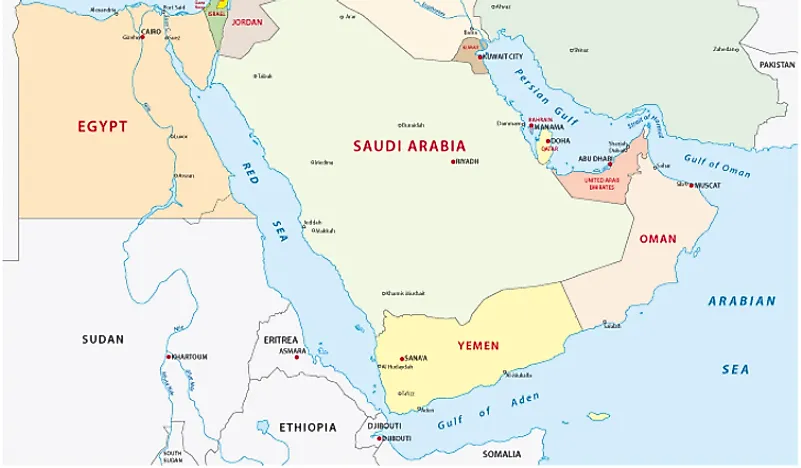
- Oman, with Muscat as its capital, is a member of the Gulf Cooperation Council (GCC) and the oldest independent state in the Arab world.
- It is bordered by Yemen to the southwest, the UAE to the northwest, and Saudi Arabia to the west, with maritime boundaries along the Arabian Sea to the south and east and the Gulf of Oman to the north.
- Geographically, Oman features the Rub al-Khali (Empty Quarter) desert, the Hajar and Dhofar mountain ranges, and is rich in natural resources such as petroleum, natural gas, copper, limestone, and asbestos.
Significance of India - Oman CEPA
- Oman acts as a gateway to the GCC, Eastern Europe, Central Asia, and Africa.
- The agreement strengthens India’s economic footprint in the West Asian region, complementing India’s broader FTA strategy.
- It enhances trade facilitation, supply chain resilience, and investment confidence, aligning with India’s vision of inclusive and sustainable growth.
How are India-Oman Relations?
- Strategic & Political Ties: India and Oman share warm, historic relations upgraded to a Strategic Partnership in 2008, with Oman being India’s oldest strategic partner in the Gulf and an important interlocutor at GCC, Arab League, and IORA.
- Defence & Maritime Cooperation: Oman is the first Gulf country to conduct tri-service exercises with India (Al Najah (Army), Eastern Bridge (Air Force), and Naseem Al Bahr (Navy)) reflecting strong cooperation in Indian Ocean maritime security.
- Economic & Trade Relations: Bilateral trade crossed USD 10.6 billion (FY 2024–25).
- In FY 2024–25, Oman was India’s 29th largest export market, 25th largest import source, and 28th largest overall trading partner, while India ranked as Oman’s 4th largest source of non-oil imports and 3rd largest market for non-oil exports.
- Trade Profile:
- India’s Exports: Petroleum products, aluminium oxide, rice, machinery, aircraft, electronics, plastics, steel
- India’s Imports: Crude oil, LNG, fertilisers, ammonia, chemicals, sulphur, iron ore
- People-to-People & Cultural Links: With a 6.7 lakh-strong Indian diaspora, centuries-old cultural links, and strong institutional support, people-to-people ties remain a key pillar of India–Oman relations.
What are the Challenges Constraining India-Oman Relations?
- Limited Utilisation of Services Potential: Although Oman imports USD 12.52 billion worth of services globally, India’s share is only 5.31%, indicating under-penetration of Indian IT, professional, education, and healthcare services despite India’s comparative advantage.
- Trade Imbalance: Bilateral trade remains energy- and mineral-dominated, leading to a structural trade deficit for India and limited diversification into high-value manufacturing and services.
- During FY25, India exported goods worth USD 4.1 billion to Oman and imported USD 6.6 billion, resulting in a trade deficit of about USD 2.5 billion.
- Regional Geopolitical Risks: Instability in West Asia and disruptions in maritime trade routes pose risks to energy security, trade continuity, and diaspora welfare.
- Omanisation and Labour Market Sensitivities: Oman’s policy emphasis on workforce nationalisation (Omanisation) creates periodic uncertainty for Indian professionals and skilled workers.
What Measures Can Strengthen and Deepen India–Oman Relations?
- Deepen Services Engagement: Actively leverage CEPA commitments to expand India’s footprint in IT, professional services, education, healthcare, and R&D, addressing the current under-utilisation of Oman’s large services import market.
- Diversify the Trade Basket: Move beyond energy-led trade by promoting manufacturing, engineering goods, pharmaceuticals, medical devices, and agri-value chains, helping reduce India’s structural trade deficit.
- Strengthen Investment & Industrial Partnerships: Encourage Indian firms to use Oman as a manufacturing and logistics hub for the Gulf and Africa, especially in green hydrogen, renewables, logistics, and advanced manufacturing.
- Forge a Strategic Maritime and Blue Economy Partnership: Leverage Oman’s geostrategic location at the confluence of the Persian Gulf and the Arabian Sea to safeguard India’s maritime security and energy sea lanes.
- Deepen cooperation in the Blue Economy through sustainable fisheries, deep-sea mining, marine research, and joint initiatives in desalination and coastal management to address shared climate risks.
Conclusion
The India–Oman CEPA represents a balanced, ambitious, and future-oriented trade agreement that strengthens India’s strategic presence in the Gulf region. The CEPA agreement aligns with India’s broader vision of inclusive growth, employment generation, and resilient global economic engagement.
|
Drishti Mains Question: How does the India–Oman CEPA reflect a shift in India’s trade diplomacy from tariff reduction to strategic economic partnerships? |
Frequently Asked Questions (FAQs)
1. What is the India–Oman CEPA?
It is a comprehensive trade agreement covering goods, services, investment, mobility, and regulatory cooperation between India and Oman.
2. What market access does India gain under the CEPA?
Oman grants zero-duty access on 98.08% of tariff lines, covering 99.38% of India’s exports by value.
3. How are India’s sensitive sectors protected under the agreement?
Through exclusion lists and Tariff Rate Quotas (TRQs) covering agriculture, bullion and jewellery, select labour-intensive goods, and base metal scrap.
UPSC Civil Services Examination Previous Year Question (PYQ)
Prelims:
Q. Which of the following is not a member of ‘Gulf Cooperation Council’? (2016)
(a) Iran
(b) Saudi Arabia
(c) Oman
(d) Kuwait
Ans: (a)
Mains:
Q. The question of India’s Energy Security constitutes the most important part of India’s economic progress. Analyse India’s energy policy cooperation with West Asian countries. (2017)
Important Facts For Prelims
Kakori Train Action
Union Home Minister paid tribute to Pandit Ram Prasad Bismil, Ashfaqulla Khan, and Roshan Singh on their Balidaan Diwas (19th December), honoring their sacrifice in the Kakori Train Action that shook the foundations of British rule.
Summary
- Founded in 1924 by Ram Prasad Bismil and others, the Hindustan Republican Association (HRA) sought Indian independence through armed revolution inspired by socialist ideas.
- The Kakori Train Action (1925) helped fund the freedom struggle but led to arrests and executions, after which the HRA was reorganized as the HSRA in 1928 inspiring revolutionaries like Bhagat Singh.
What is Kakori Train Action?
- About: The Kakori Train Action (9th August 1925) was a landmark revolutionary act carried out by members of the Hindustan Republican Association (HRA) to fund the freedom struggle and challenge British colonial authority, marking a shift towards armed resistance in India’s national movement.
- Historical Context: Took place after the Jallianwala Bagh Massacre (1919) and the withdrawal of the Non-Cooperation Movement (1922), which disillusioned many young nationalists.
- This disillusionment led to the formation of the HRA in 1924 to pursue revolutionary methods.
- Event and Execution: Revolutionaries, led by Ram Prasad Bismil and including Ashfaqullah Khan, Chandrashekhar Azad, and Rajendra Lahiri, halted the 8-down train travelling from Shahjahanpur to Lucknow near Kakori station, looted the official treasury, and deliberately avoided harming passengers.
- Other members involved were Sachindranath Bakshi, Mukundi Lal, Banwari Lal, and Manmathnath Gupta.
- British Crackdown & Trial: A massive crackdown led to the Kakori Conspiracy Case 1925. After an 18-month trial, four revolutionaries—Ram Prasad Bismil, Ashfaqullah Khan, and Thakur Roshan Singh—were hanged on 19th December 1927, while others received life imprisonment.
- Significance & Legacy: It highlighted a strategic shift to armed resistance, showcased extraordinary Hindu-Muslim unity (Bismil & Khan), and inspired the reorganization of the HRA into the Hindustan Socialist Republican Association (HSRA), influencing future revolutionaries like Bhagat Singh.
- The martyrs are celebrated as symbols of sacrifice and patriotism.
What was Hindustan Republican Association (HRA)?
- About: The HRA, founded in October 1924 in Kanpur, was a revolutionary organization that advocated for the violent overthrow of British rule (armed resistance).
- Formation: It was established by Ram Prasad Bismil, Jogesh Chandra Chatterjee, Sachindra Nath Sanyal, Shiv Verma, among others.
- Ideology & Objective: Its manifesto, The Revolutionary (1925) by Sachindra Nath Sanyal, outlined the goal of establishing a federal republic in India through an organized armed revolution, influenced by socialist ideas and international revolutionary movements.
- This period saw global ideological change, and the Russian Revolution (1917) strongly influenced Indian revolutionaries.
- Reorganization as HSRA (1928): Under Chandrashekhar Azad, HRA was renamed HSRA, adopting socialism as an official goal. Prominent members were Bhagat Singh, Sukhdev, Bhagwati Charan Vohra, Bejoy Kumar Sinha, Shiv Verma.
- Major Actions (HSRA): Assassination of JP Saunders (1928) to avenge Lala Lajpat Rai’s death.
- Central Legislative Assembly bombing (1929) by Bhagat Singh and Batukeshwar Dutt. Attempted Viceroy Irwin’s train bombing (1929).
Frequently Asked Questions (FAQs)
1. What was the Kakori Train Action?
The Kakori Train Action (1925) was a revolutionary robbery by the HRA to seize British treasury funds and fund the freedom struggle.
2. Who were the key leaders of the HRA during Kakori?
Key leaders included Ram Prasad Bismil, Ashfaqullah Khan, Chandrashekhar Azad, and Thakur Roshan Singh.
3. Which major actions were carried out by HSRA?
Major actions included the assassination of J.P. Saunders (1928), Central Legislative Assembly bombing (1929), and the Viceroy’s train bombing attempt (1929).
UPSC Civil Services Examination Previous Year Question (PYQ)
Q. With reference to 8th August, 1942 in Indian history, which one of the following statements is correct? (2021)
(a) The Quit India Resolution was adopted by the AICC.
(b) The Viceroy’s Executive Council was expanded to include more Indians.
(c) The Congress ministries resigned in seven provinces.
(d) Cripps proposed an Indian Union with full Dominion Status once the Second World War was over.
Ans: (a)
Q. With reference to Indian freedom struggle, consider the following events: (2017)
- Mutiny in Royal Indian Navy
- Quit India Movement launched
- Second Round Table Conference
What is the correct chronological sequence of the above events?
(a) 1 – 2– 3
(b) 2 – 1 – 3
(c) 3 – 2 – 1
(d) 3 – 1 – 2
Ans: (c)
Important Facts For Prelims
Bharat Stage Emission Norms
Why in News?
Amid worsening air quality, the Delhi government has tightened vehicular pollution controls by barring non-Bharat Stage (BS) VI private vehicles registered outside Delhi and vehicles without a valid Pollution Under Control Certificate (PUCC) from entering the Capital.
Summary
- Bharat Stage (BS) emission norms are India’s vehicular pollution standards aligned with Euro norms, prescribing progressively stricter limits on pollutants through cleaner fuels and advanced vehicle technologies.
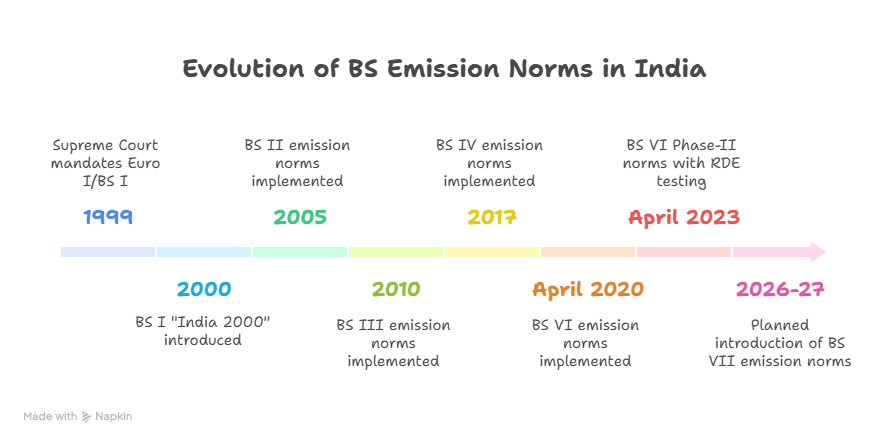
- India moved from BS I (2000) to BS VI (2020) skipping BS V, with BS VI Phase-II (2023) introducing Real Driving Emissions (RDE) testing; BS VII is proposed for 2026–27.
- Older vehicles pollute more due to lack of modern emission-control systems, engine ageing, and poor maintenance, resulting in higher real-world emissions.
What are Bharat Stage (BS) Emission Norms?
- About: Bharat Stage (BS) emission norms are India’s legally enforced standards that regulate the amount of air pollutants emitted by motor vehicles to control vehicular pollution.
- Framed by the Ministry of Environment, Forest and Climate Change (MoEFCC) and implemented by the Central Pollution Control Board (CPCB), they are aligned with European (Euro) emission standards.
- The norms set progressively stricter limits on carbon monoxide (CO), hydrocarbons (HC), nitrogen oxides (NOx), and particulate matter (PM), requiring cleaner fuels, improved engine design, and advanced exhaust-treatment technologies in vehicles.
- The Mashelkar Committee (2002) recommended a detailed roadmap for implementing Euro-equivalent emission norms (Bharat Stage norms) in a phased manner and gradually expanding nationwide.
- Evolution of BS Emission Norms: In 1999, Supreme Court of India mandated that all vehicles in India have to meet the Euro I or BS I (also known as India 2000 standard).
- India evolved from BS I (2000) to BS IV (2017), and in a major leap, skipped BS V to implement BS VI in April 2020, sharply tightening vehicular emission standards.
- BS VI Phase-II norms, implemented from April 2023, mandate Real Driving Emissions (RDE) testing to ensure vehicles comply with emission standards under actual on-road conditions.
- Each new stage tightens limits, forcing cleaner fuels and better engine and exhaust technologies.
- To align India’s automobile sector with global standards, the government is planning to introduce BS VII emission norms by 2026-27.
- Delhi has a mixed Bharat Stage (BS) vehicle fleet because it adopted stricter emission norms earlier than the rest of India in response to severe air pollution, implementing BS II in 2001, BS III in 2005, and BS IV in 2010.
- India evolved from BS I (2000) to BS IV (2017), and in a major leap, skipped BS V to implement BS VI in April 2020, sharply tightening vehicular emission standards.
- BS VI Norms: Under BS-VI emission norms, petrol vehicles must cut NOx emissions by 25%, while diesel vehicles are required to reduce HC+NOx by 43%, NOx by 68%, and particulate matter by 82%.
- In addition, sulphur content in fuel has been sharply lowered from 50 mg/kg under BS-IV to 10 mg/kg under BS-VI, enabling advanced emission-control technologies.
Why are Older Vehicles More Polluting?
- Lack of Advanced Emission Controls: Pre-BS IV vehicles lack modern exhaust after-treatment systems such as Diesel Particulate Filters (DPF) and Selective Catalytic Reduction (SCR).
- Inferior Exhaust Technology: BS-IV vehicles rely mainly on basic oxidation catalysts, which offer limited control over fine particulate matter and NOx emissions.
- Engine Ageing and Wear: Ageing engines suffer from poor fuel–air mixing, ignition deterioration, and component wear, leading to incomplete combustion.
- Higher Real-World Emissions: Studies show tailpipe emissions rise sharply with vehicle age, especially carbon monoxide and particulate matter.
- Maintenance Issues: High mileage and weak maintenance practices make older vehicles disproportionately more polluting than newer BS-VI vehicles.
Frequently Asked Questions (FAQs)
1. What are Bharat Stage (BS) emission norms?
They are India’s legally enforced vehicle emission standards regulating pollutants like CO, HC, NOx, and PM, framed by the Ministry of Environment, Forest and Climate Change and implemented by the Central Pollution Control Board.
2. How is BS VI stricter than BS IV?
BS VI mandates sharply lower NOx and particulate emissions, cleaner low-sulphur fuel, and testing closer to real-world driving conditions.
3. Why are older vehicles more polluting?
They lack modern exhaust-treatment systems, suffer from engine ageing and poor maintenance, and emit higher real-world pollutants than BS-VI vehicles.
Rapid Fire
Goa Liberation Day
Union Home Minister extended wishes on Goa Liberation Day (19th December) and paid tributes to prominent figures like Prabhakar Vaidya, Bala Raya Mapari, Nanaji Deshmukh Ji, and Jagannath Rao Joshi Ji, associated with the Goa liberation movement.
Goa Liberation Movement
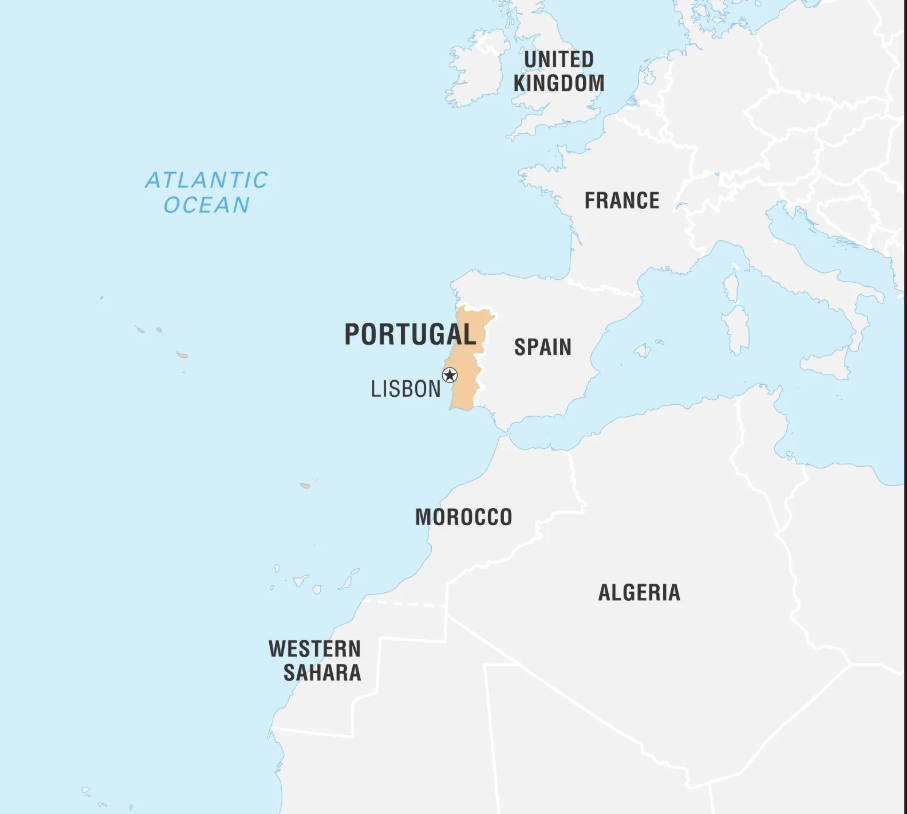
- Portuguese Rule (1510–1961): Goa became a Portuguese colony in 1510 after Afonso de Albuquerque defeated Yusuf Adil Shah of Bijapur, leading to 451 years of colonial rule.
- Early Nationalism: Anti-colonial sentiment in Goa rose in sync with India's independence movement, with key milestones like the founding of the Goa National Congress (1928) by Tristão de Bragança Cunha at the Calcutta session of the Indian National Congress (1928).
- Strategic Dichotomy: The liberation movement was divided between Satyagraha (non-violent resistance) and the advocacy for armed struggle by groups like the Azad Gomantak Dal (AGD), which delayed unified action.
- In 1946, socialist leader Ram Manohar Lohia led a historic Goa rally advocating for civil liberties, freedom, and integration with India.
- Goa Integration with India: After independence, India initially hesitated from forceful action due to a desire to project peace and Portugal's NATO membership.
- However, when all diplomatic efforts failed, India launched Operation Vijay ( 1961), annexing Goa, Daman, and Diu on 19th December 1961 and ending Portuguese rule.
- In 1974, India and Portugal signed a treaty recognizing India's sovereignty over Goa, Daman & Diu, Dadra & Nagar Haveli and re-established diplomatic relations.
- Goa Statehood: Following its annexation, Goa, Daman, and Diu became Union Territories. Goa gained full statehood on 30th May, 1987, becoming India's 25th state.
| Read More: Merger of French and Portuguese Territories |
Rapid Fire
Pamir-Karakoram Anomaly
Scientists are analysing deep ice cores from the Kon-Chukurbashi ice cap in Tajikistan to scientifically explain the Pamir–Karakoram anomaly—where glaciers have remained stable or grown despite global warming.
Pamir-Karakoram Anomaly
- About: The Pamir–Karakoram anomaly refers to the unusual stability or slight growth of glaciers in the Karakoram and parts of the Pamir mountain ranges since the late 1900s, while glaciers in the Himalayas, Alps, Andes, and Rocky Mountains have been shrinking due to global warming.
- Proposed Causes:
- Increased winter precipitation: Heavier snowfall replenishes glaciers, offsetting summer melt.
- High, steep topography: Mountains shade ice and provide high-altitude accumulation zones.
- Climate patterns: Moisture from Western Disturbances, not the Indian Monsoon, dominates.
- Summer cloud cover: Potentially reduces solar radiation and melting.
- Protective debris cover: Insulates lower glacier ice from melt.
- Geographic Scope: Mainly the Karakoram Range (especially in Gilgit-Baltistan, parts of Ladakh). It extends into the western Pamir Mountains (Tajikistan, Afghanistan).
- Recent Findings: Scientific investigations, utilizing satellite altimetry (e.g., ICESat-2), and gravity data (GRACE), have revealed that this anomaly has weakened though field-based ice-core evidence is still being analysed.
- Significance for India: Glaciers in the Karakoram feed the Indus River and its tributaries, and their relative stability helps maintain more reliable river flows into Ladakh and Jammu & Kashmir.
Karakoram Ranges
- About: The Karakoram Range lies at the centre of Asia, forming part of a complex mountain system that includes the Hindu Kush to the west, the Pamirs to the northwest, the Kunlun Mountains to the northeast, and the Himalayas to the southeast.
- Geographic Spread: The range extends across Afghanistan, China, India, Pakistan, and Tajikistan.
- Highest Peak: The highest peak is K2 (8,611 meters, also known as Mount Godwin-Austen), which is the 2nd-highest mountain on Earth after Mount Everest (8,849 meters).
| Read More: Gangotri Glacier Retreat Signals Climate Peril |
Rapid Fire
India-Russia RELOS Agreement
India and Russia are set to operationalise the Reciprocal Exchange of Logistics Support (RELOS) agreement, a defence logistics arrangement that strengthens military cooperation by enabling reciprocal access to bases and logistical support, including in the Arctic and Indo-Pacific.
- India–Russia RELOS: It will come into force after the formal exchange of instruments of ratification between both countries.
- The RELOS agreement governs the movement of troops, warships, and military aircraft between India and Russia, enables mutual use of airspace, and allows port calls by naval vessels of both countries.
- It covers key logistical support such as refuelling, repairs, maintenance, and supplies, and applies during joint military exercises, training, and humanitarian assistance and disaster relief (HADR) operations, with scope for extension to other scenarios by mutual consent.
- Strategic Significance for India: Provides access to Russian air and naval bases, ranging from Vladivostok (Pacific Ocean) to Murmansk (Arctic region).
- Strengthens India’s Indo-Pacific strategy by enabling long-range deployments using Russia’s network of over 40 military bases.
- Enhances operational reach and endurance of Indian Navy and Air Force, especially for Russian-origin platforms and improves logistical readiness for distant operations.
- Strategic Significance for Russia: Grants Russian forces access to Indian ports and airfields, strengthening presence in the Indian Ocean Region (IOR). Reinforces Russia’s role in a multipolar global order.
- RELOS Like Pacts with US: RELOS is similar to existing agreements, LEMOA (Logistics Exchange Memorandum of Agreement), COMCASA (Communications Compatibility and Security Agreement), and BECA (Basic Exchange and Cooperation Agreement) with the US. However, it has been tailored to the India-Russia dynamic.
| Read more: 23rd India–Russia Annual Summit |
Rapid Fire
Bharat Taxi
India is set to launch Bharat Taxi, the country’s first cooperative-run taxi service operated by Sahakar Taxi Cooperative Limited, in Delhi from 2027, offering a homegrown alternative to private cab aggregators like Uber and Rapido.
- Commission Model: Zero-commission model initially, with 100% ride payments going directly to drivers.
- A proposed ~20% cooperative fee, later to be redistributed to drivers as incentives, unlike profit extraction by private platforms.
- Collaboration: Bharat Taxi is a collaborative initiative of National e-Governance Division (NeGD), Digital India Corporation, Ministry of Electronics & Information Technology (MeitY), and Sahakar Taxi Cooperative Limited to build a national taxi platform integrated with DigiLocker, UMANG, and API Setu
- Pricing Policy: No surge pricing in normal conditions; dynamic pricing only in specific situations.
- Safety Features: The platform includes driver verification, integration with Delhi Police, along with real-time ride tracking, and 24×7 customer care.
| Read more: BHARAT TAXI |



