
Indian Polity
Right to Vote Different from Freedom of Voting
For Prelims: Right to vote, NOTA (None of the Above), Article 19, Universal adult franchise
For Mains: Nature of the Right to Vote, Freedom of Voting as Expression, Balancing Democratic Participation and Electoral Efficiency
Why in News?
The Union government recently told the Supreme Court (SC) of India that the right to vote is different from freedom of voting.
- This submission was made while responding to a petition challenging Section 53(2) of the Representation of the People Act (RPA 1951) and Rule 11 along with Forms 21 and 21B of the Conduct of Elections Rules 1961, which govern uncontested elections.
How is the Right to Vote Different from the Freedom of Voting?
- Nature:
- Right to Vote: It is a statutory right granted under the RPA, 1951 and is not a Fundamental Right.
- Freedom of Voting: It is considered part of Article 19(1)(a) (guarantees all citizens the right to freedom of speech and expression).
- It covers the voter’s ability to express preference, including choosing a candidate or selecting NOTA (None of the Above), but this expressive freedom exists only when an actual poll occurs.
- Issue of Uncontested Elections: Under Section 53(2) of the RPA, 1951, if the number of contesting candidates is equal to the number of seats to be filled, no poll is conducted. Instead, the Returning Officer declares the candidates elected uncontested using Form 21 (for general elections) or Form 21B (for by-elections).
- With no poll, voters cannot exercise freedom of voting or use NOTA. The petitioners argue that this denies voters the opportunity to express dissatisfaction through NOTA, thereby violating their Article 19(1)(a).
- The Union government said that NOTA is not a candidate under Section 79(b) of the RPA, 1951. Therefore, NOTA cannot be used to demand a poll in uncontested elections.
- Election Commission of India Stance: The ECI states that treating NOTA as a contesting candidate would require amending RPA 1951 and the 1961 Rules.
- The EC noted that uncontested elections are rare (only nine in 20 General Elections (1951–2024), and just one since 1991).
- ECI said that as democracy has evolved, more parties and candidates contest elections, making uncontested wins uncommon.
- Judicial Interpretation: In Civil Liberties (PUCL) versus Union (2003), SC held that the right to vote is not a fundamental right, but once a voter casts a ballot, it becomes an act of expression reflecting their opinion and preference.
What is Right to Vote?
- About: The right to vote allows eligible citizens to participate in choosing their representatives.
- In India, it is central to representative democracy and enables accountability and public participation.
- While guaranteed through universal adult franchise, its nature has largely been interpreted as statutory, not fundamental.
- Constitutional Basis: Article 326 of the Indian Constitution provides that every citizen of India, not less than 18 years of age is entitled to be registered as a voter for Elections to the House of the People and Legislative Assembly of every State on the basis of adult suffrage.
- The 61st Constitutional Amendment Act (1988) lowered the voting age from 21 to 18.
- Statutory Framework: Under the RPA, 1950, Section 16 bars non-citizens from being enrolled, while Section 19 requires voters to be 18 or above and ordinarily resident.
- The RPA, 1951, through Section 62, allows every enrolled person to vote unless disqualified, such as on grounds of imprisonment.
- Together, these laws define voter eligibility, making the right to vote statutory and subject to legal regulation.
- Judicial Interpretation of the Right to Vote:
|
Case |
Judicial Interpretation |
|
N.P. Ponnuswami (1952) |
SC held that the right to vote is statutory and subject to limitations imposed by it. |
|
Jyoti Basu (1982) |
SC reaffirmed that voting is not a fundamental nor a common law right but a simple statutory right. |
|
Kuldip Nayar (2006) |
SC held that the right to vote is statutory. |
|
Raj Bala (2015) |
SC supported the view that the right to vote is constitutional. |
What are Rights?
- Right: A right is a justified claim or privilege that individuals possess under the Constitution, statutory law, or judicial interpretation.
- It entitles them to certain freedoms or protections and can be enforced or upheld through legal institutions, including the courts.
- Types of Rights:
- Natural Rights: These are inherent and inalienable rights that exist prior to the State, such as the rights to life and liberty.
- They are not directly enforceable in courts, though they may be recognised through Fundamental Rights.
- Moral Rights: Rights based on ethical principles and what is considered morally right or wrong, rather than on legal statutes.
- Fundamental Rights: These are listed in Part III of the Constitution, protecting equality and liberty.
- The State cannot violate them, and they are directly enforceable in the Supreme Court under Article 32.
- Constitutional Rights: These are the rights that exist in the Constitution outside Part III, such as the right to property or free trade and no taxation without the authority of law.
- They are enforced through legislation and can be challenged before High Courts under Article 226.
- Statutory (Legal) Rights: These rights arise from ordinary laws, such as MGNREGA or the Forest Rights Act.
- They are enforced through legal procedures set out in the respective statutes.
- Natural Rights: These are inherent and inalienable rights that exist prior to the State, such as the rights to life and liberty.
Conclusion
The right to vote in India is rooted constitutionally in the principle of universal adult franchise under Article 326, but its actual implementation is regulated through statute. Courts have mostly upheld its statutory character, though evolving democratic norms and judicial reasoning continue to explore whether this right deserves stronger constitutional recognition.
|
Drishti Mains Question: Universal adult franchise under Article 326 is a constitutional mandate, yet the act of voting is statutory. Discuss the implications of this classification for electoral democracy. |
Frequently Asked Questions (FAQs)
1. What does Article 326 provide?
It mandates elections to the Lok Sabha and State Assemblies on the basis of universal adult franchise; the voting age was reduced to 18 years by the 61st Constitutional Amendment (1988).
2. What is the legal status of the right to vote in India?
The Supreme Court has held it is a statutory right, not a fundamental right (Ponnuswami 1952; Jyoti Basu 1982; Kuldip Nayar 2006; Anoop Baranwal 2023).
3. What does Section 53(2) of the RPA, 1951 provide?
If the number of candidates equals the number of seats, no poll is conducted, and the Returning Officer declares them elected using Form 21 (in general elections) or Form 21B (in by-elections).
UPSC Civil Services Examination, Previous Year Questions (PYQs)
Prelims
Q. Right to vote and to be elected in India is a (2017)
(a) Fundamental Right
(b) Natural Right
(c) Constitutional Right
(d) Legal Right
Ans: C
Mains
Q. To enhance the quality of democracy in India the Election Commission of India has proposed electoral reforms in 2016. What are the suggested reforms and how far are they significant to make democracy successful? (2017)
Social Justice
India's Top 1% Grew its Wealth by 62% Since 2000: G20 Report
For Prelims: G20, G7, Inequality, Malnutrition, Intellectual Property (IP), IPCC, Global Minimum Corporate Tax, IMF, Special Drawing Rights (SDRs), Food Security, Digital Divide.
For Mains: Findings of the G20 Report on Global Wealth Inequality, Key Drivers of inequality and its Socio-economic and Political Consequences. Measures Needed to Tackle Inequality.
Why in News?
The G20 Committee set up by the South African G20 Presidency, found that the world’s richest 1% accumulated 41% of global wealth between 2000 and 2023.
What are the Key Findings of the G20 Report on Global Inequality?
- Global Income Inequality: 83% of countries have high income inequality (Gini coefficient > 0.4). These countries account for 90% of the world’s population.
- Since 2000, global gaps have slightly narrowed due to growth in China and India, but major disparities persist—especially between rich regions and Sub-Saharan Africa—with a Gini coefficient of 0.61.
- Wealth Inequality: Between 2000 and 2024, global wealth inequality surged, with the richest 1% capturing 41% of new wealth, while the bottom 50% received just 1%.
- In India, the richest 1% grew their wealth share by 62% between 2000 and 2023.
- Global Food Insecurity: Globally, 1 in 4 people (2.3 billion) face moderate or severe food insecurity, with 335 million more regularly skipping meals since 2019.
Gini Index
- About Gini Index: The Gini index, developed in 1912 by Italian statistician Corrado Gini, measures income inequality within a population.
- It is derived from the Lorenz curve and quantifies the area between the curve and the line of perfect equality, ranging from 0 (perfect equality) to 1 (maximum inequality), with lower values indicating a more equitable society.
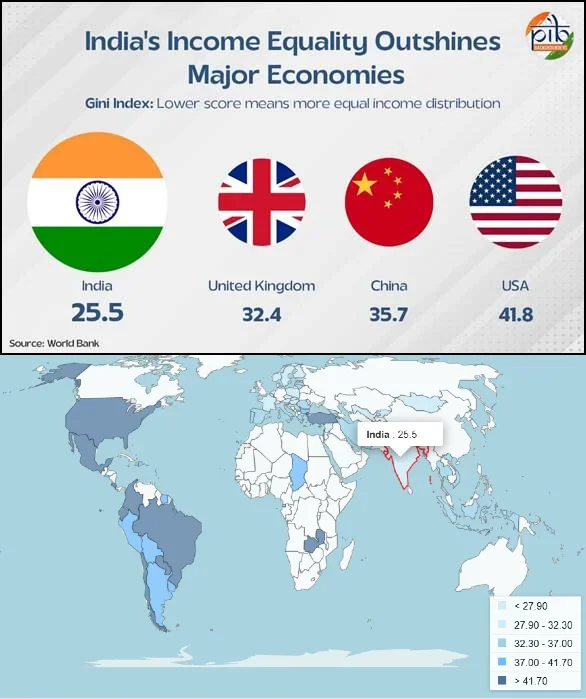
- India’s Gini Index Trends: India’s Gini coefficient declined from 28.8 in 2011 to 25.5 in 2022, placing it in the moderately low inequality category.
- India’s score of 25.5 positions it ahead of higher-inequality countries such as China (35.7) and the United States (41.8).
What are the Key Factors Driving Global Inequality?
- Economic Liberalisation: Financial deregulation (price volatility), labour market deregulation with weakened trade unions, and privatisation of public services disproportionately impact the poor, widening income and economic inequality.
- International Factors: Trade patterns and capital flows generate disproportionate income gains for corporate elites, while real wages for workers—especially the less skilled—remain suppressed; meanwhile, IP regimes and monopolies benefit developed countries and restrict access to essential health and technology.
- International tax rules and external shocks allow MNCs and elites to avoid fair taxation and expose developing countries to financial crises and global recessions.
- Structural Factors: Colonial legacies of extraction-based economies, unequal land ownership, and social discrimination, combined with industrial revolution-driven regional growth and intergenerational wealth transfer, have perpetuated economic inequality today.
- Unequal Distribution of Incomes: Unequal asset ownership and gaps in skills, education, and social capital boost income for some while leaving others behind.
- Social and Cultural Factors: Inheritance and marriage patterns, social discrimination (gender, caste, race), and weak public support perpetuate elite wealth and trap low-income populations in poverty.
What are the Various Implications of Inequality?
- Perpetuation of Poverty: High inequality creates poverty traps, limiting access to education, healthcare, and nutrition, and perpetuating intergenerational disadvantage. It also wastes human potential, reducing workforce productivity and innovation, and hindering overall economic growth.
- Economic Instability: Concentrated wealth drives speculation in financial assets and real estate over productive investments, while limited consumer demand from the majority slows economic growth.
- Health Crises: Out-of-pocket health spending has pushed 1.3 billion people into poverty, reducing productivity and earnings, while food insecurity affects 2.3 billion, causing hunger, malnutrition, and impaired cognitive and societal health.
- Erosion of Democracy: Extreme wealth concentration grants elites political influence and rule of law capture, making countries with high inequality seven times more likely to face democratic decline as trust in institutions erodes.
- Interconnected Vicious Cycle: These consequences form a vicious cycle: economic inequality fuels political inequality, leading to policies favoring the wealthy, which further increases economic inequality and weakens the middle class, causing political instability and slower economic growth.
What Recommendations Has the G20 Report Made to Tackle Inequality?
- Establish International Panel on Inequality (IPI),: The report recommends creating an IPI, modeled on the IPCC, to monitor global inequality, provide data to policymakers, and guide government interventions.
- Progressive Taxation: Implement progressive income, wealth, and inheritance taxes and increase social spending on healthcare, education, and social protection to make an equitable society and reduce wealth concentration.
- Social Protection Policies: Strengthen workers’ power via collective bargaining, trade union protection, and minimum wages, and curb corporate monopolies through antitrust enforcement for fair wages and competition.
- Reforming Global Trade and IP Rules: Allow Intellectual Property (IP) waivers and compulsory licenses for critical health and climate technologies and promote fair trade and investment agreements that help developing countries advance up the value chain.
- Reforming Global Financial Systems: Introduce a robust global minimum corporate tax and explore a minimum tax on ultra-wealthy individuals, while reforming International Financial Institutions (IFIs) by replacing austerity mandates with growth-focused policies, and recognizing capital controls for macroeconomic stability.
- Expand Capacities of Developing Countries: Offer debt relief to over-indebted developing countries, allocate IMF Special Drawing Rights (SDRs) based on need (not quota), and secure climate finance for adaptation and loss, while enhancing food security and bridging the digital divide.
Conclusion
The G20 report underscores that global inequality has reached emergency levels, with the richest 1% capturing disproportionate wealth. Inequality fuels poverty, health crises, economic instability, and democratic erosion. Tackling it requires progressive taxation, social protection, global coordination, and reform of trade, IP, and financial systems to achieve inclusive and sustainable growth.
|
Drishti Mains Question: Examine the impact of economic liberalization, structural factors, and international trade rules on inequality in developing countries. |
Frequently Asked Questions (FAQs)
1. What is the share of global wealth held by the richest 1%?
Between 2000–2024, the richest 1% captured 41% of all new wealth, while the bottom 50% received only 1%, highlighting extreme inequality.
2. What is the Gini Index and how does India compare globally?
The Gini Index measures income inequality (0 = perfect equality, 1 = maximum inequality). India’s Gini declined from 28.8 in 2011 to 25.5 in 2022, making it more equal than China (35.7) and the US (41.8).
3. What is the key proposal of the 2025 G20 report to combat global inequality?
The flagship proposal is the establishment of an International Panel on Inequality (IPI), modelled on the IPCC, to provide authoritative data and policy analysis on inequality trends.
UPSC Civil Services Examination, Previous Year Question (PYQ)
Mains
Q. COVID-19 pandemic accelerated class inequalities and poverty in India. Comment. (2020)


Governance
Securing Data Privacy in the Era of Generative AI
For Prelims: Generative AI (GenAI), Artificial Intelligence (AI), Large Language Models (LLMs), India AI Mission, Zoho.
For Mains: Key facts about Generative AI (GenAI), concerns linked to its adoption, measures by the Indian government to mitigate risks, and steps to build sovereign AI capabilities and reduce foreign platform dependence
Why in News?
The rapid adoption of generative AI (GenAI) in India has raised government concerns over data privacy, inference risks, and national security, especially with foreign AI in official tasks, prompting an evaluation of its use in sensitive governance.
- Inference Risk is the possibility that AI models may reveal sensitive information or deduce user roles, priorities, and strategic intent from prompts, even when the data is meant to be confidential.
What is Generative AI (GenAI)?
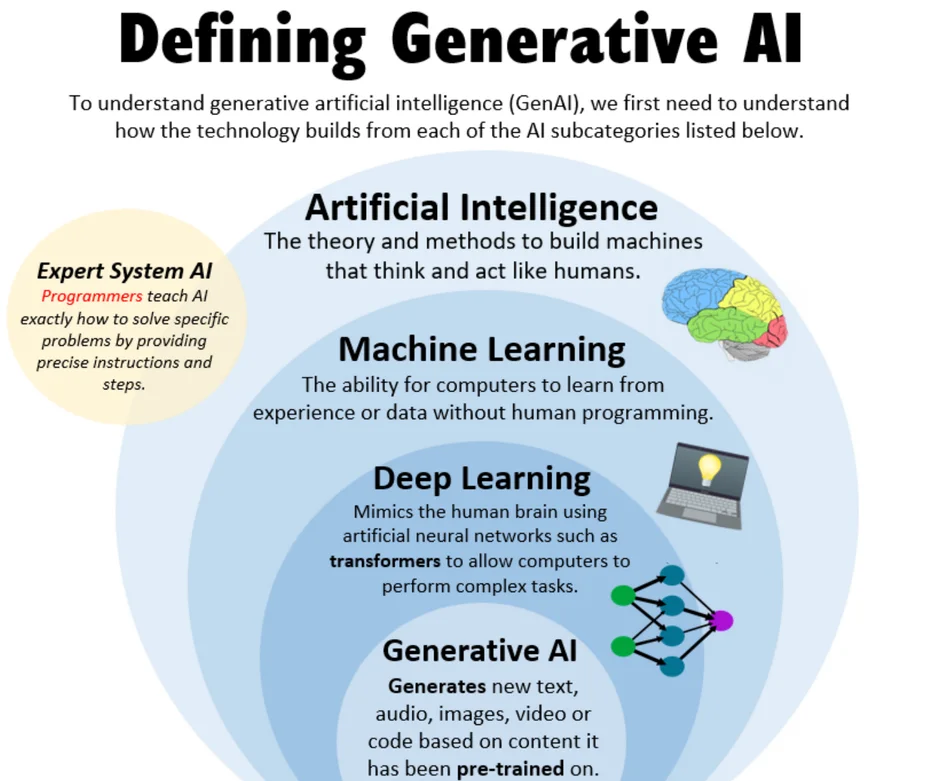
- About: Generative AI (GenAI) is a type of artificial intelligence (AI) that creates original content such as text, images, audio, or code based on the data it has been trained on.
- Unlike traditional AI, which primarily analyzes, classifies, or predicts from existing data, GenAI produces new, human-like outputs, demonstrating creative generation beyond mere data processing.
- Working: GenAI learns from large datasets (text, images, code, music) to identify patterns and relationships. Given a prompt, it generates new content based on these patterns.
- Modern GenAI mainly uses Transformer architecture, powering Large Language Models (LLMs) like ChatGPT, Gemini, and Claude, which excel at understanding context in sequential data.
- Key Examples: Common examples include ChatGPT and Gemini for text, DALL-E and Midjourney for images, GitHub Copilot for code, Suno and ElevenLabs for audio, and Runway Gen-2 for video.
What Key Concerns are Associated with the Adoption of Generative AI?
- Inference Risk: The core concern is that AI systems can infer sensitive strategic insights from user prompts and behavior, raising issues beyond basic data privacy. For instance, queries from senior bureaucrats and policy advisers can reveal national priorities, policy timelines, and system vulnerabilities.
- Data Privacy Concerns: There is limited visibility into how foreign AI platforms store, track, or repurpose Indian user data — especially when such tools are integrated with telecom subscriptions and linked to verified phone numbers.
- Mass Data Aggregation by Foreign Firms: Global AI firms could collect and analyze data from millions of Indian users to monitor societal trends and train advanced models, potentially putting emerging Indian AI initiatives at a disadvantage.
- Dependence on Foreign AI Ecosystems: The widespread use of foreign GenAI services increases dependency on external technologies, potentially undermining India’s efforts toward data localisation, technological self-reliance, and digital sovereignty.
- Policy Ambiguity: The absence of a uniform government policy on the official use of GenAI tools has led to fragmented approaches across departments — with some issuing bans and others experimenting without clear safeguards.
What Measures is the Indian Government Taking to Mitigate the Risks of Generative AI?
- Restrictions on AI Use in Government Work: The Indian government has started to restrict the use of foreign GenAI tools on official devices. E.g., the Ministry of Finance directed employees to avoid using ChatGPT and DeepSeek on office devices to protect confidential government data and documents.
- Internal Monitoring and Policy Discussions: Various ministries are debating GenAI use in official functions, focusing on data privacy, inference risks, and whether to restrict or air-gap (keeping them disconnected from foreign AI platforms) official systems until domestic alternatives are ready.
- Indigenous AI Development: The government is investing heavily in homegrown AI through the Rs 10,372-crore India AI Mission.
- It aims to develop at least 12 Indian LLMs and smaller domain-specific models, with startup Sarvam expected to launch an LLM by end-2026 targeting governance and public sector applications.
- Subcommittee for AI Governance Guidelines: A subcommittee under the Ministry of Electronics and Information Technology (MeitY), under the IndiaAI Mission, recommended creating an India-specific AI Risk Assessment Framework to address local challenges and harms.
- It also proposed a whole-of-government approach to ensure coordinated and consistent AI governance across all sectors.
- Push for Digital Sovereignty: The government urged the use of Indian-built digital platforms in sensitive areas like communication and governance, with senior officials shifting to Zoho Office Suite and Zoho Mail to enhance digital sovereignty and limit foreign data exposure.
- Strengthening Security Frameworks: The government is developing standards for secure AI deployment, covering data protection, ethical use, and model transparency, with the IndiaAI Mission framework guiding safe adoption in sensitive areas.
- AI usage discussions are aligned with national security and technological sovereignty, echoing past measures like the 2020 Chinese app ban and promotion of domestic platforms like Koo and UPI.
How can India Build Sovereign AI Capabilities and Mitigate Foreign Platform Risks?
- Strengthen Indigenous AI Capabilities: The top priority must be the fast-tracking of 12 indigenous LLMs for governance, alongside supporting domestic AI through grants, incubation, collaborations, and adoption incentives to reduce reliance on foreign platforms.
- AI Prompt Sanitization Gateways: All official AI prompts must go through a secure gateway that removes metadata, context, and identifiers, while every query is logged in a secure internal registry for audit and pattern analysis, ensuring sovereign AI governance.
- Creation a National Synthetic Data Fabric for AI Training: A key challenge for Indian AI is the lack of high-quality, culturally relevant datasets; the government can address this through a National Synthetic Data Generation Project using Indian LLMs to create diverse, privacy-preserving datasets for startups and researchers
- Incentivize 'Niche Domain LLMs': Rather than competing with giants like GPT-4, India should focus on specialized, domain-specific LLMs, such as Nyaya-Shastra trained on Indian law, to deliver high-impact, strategic utility.
- Foster Strategic Collaboration: Collaborate with friendly nations on secure AI, set global AI governance standards, and prioritize domestic innovation to ensure technology sovereignty while managing foreign AI risks.
- Enforce Data Localization: Mandate all AI platforms in India to store, process, and train data domestically with strict encryption and privacy, and establish a National AI Security Framework for data handling, inference protection, and model transparency, aligned with the Digital Personal Data Protection (DPDP) Act, 2023.
- Restrict AI Use in Sensitive Domains: Issue unified Standard Operating Procedures (SOPs) across ministries banning foreign GenAI tools for official tasks and implement secure, air-gapped AI systems to protect sensitive government data
Conclusion
India’s adoption of Generative AI presents immense opportunities for innovation, governance efficiency, and digital services, but also raises data privacy, inference, and national security concerns. Strengthening indigenous LLMs, fostering swadeshi digital tools, and implementing structured AI governance frameworks are crucial to ensure sovereign, secure, and strategic AI capabilities.
|
Drishti Mains Question: The proliferation of foreign Generative AI platforms presents a dual challenge of data privacy and strategic vulnerability. Analyze this statement in the Indian context and suggest a way forward. |
Frequently Asked Questions (FAQs)
1. What is Generative AI (GenAI)?
Generative AI creates original content such as text, images, audio, or code by learning patterns from large datasets and generating human-like outputs.
2. What is inference risk in AI?
Inference risk refers to the possibility that AI can deduce sensitive information, user roles, priorities, or strategic intent from prompts, even when data is confidential.
3. What measures is India taking to secure government use of AI?
India restricts foreign GenAI tools on official devices, develops indigenous LLMs, promotes Swadeshi digital tools, and creates AI governance frameworks to mitigate data and inference risks.
UPSC Civil Services Examination Previous Year Question (PYQ)
Prelims
Q. ‘Right to Privacy’ is protected under which Article of the Constitution of India? (2021)
(a) Article 15
(b) Article 19
(c) Article 21
(d) Article 29
Ans: (c)
Mains
Q. What are social networking sites and what security implications do these sites present? (2013)
Q. Data security has assumed significant importance in the digitized world due to rising cyber crimes.The Justice B.N. Srikrishna Committee Report addresses issues related to data security. What, in your view, are the strengths and weaknesses of the Report relating to protection of personal data in cyberspace? (2018)
Important Facts For Prelims
Demonetisation and Money Supply
Why in News?
Currency with the public (total currency in circulation (CIC) minus cash held by banks) has more than doubled since the 2016 demonetisation, rising from Rs 17.97 lakh crore (Nov 2016) to Rs 37.29 lakh crore (October 2025), according to RBI data.
- However, despite the increase in absolute terms, the currency-to-GDP ratio has fallen below pre-demonetisation levels, indicating stronger economic growth and rising digital payments adoption.
What was the 2016 Demonetisation?
- About: On 8th November, 2016, PM declared that Rs 500 and Rs 1,000 notes—constituting 86% of total currency—would cease to be legal tender from midnight to address black money, counter fake currency, boost digital payments, and formalise the economy.
- The Rs 2000 banknote was introduced in November 2016 after the withdrawal of Rs 500 and Rs 1000 notes. Rs 2000 banknote were withdrawn from circulation in May 2023 but remains legal tender (legally valid money that people are obligated to accept when settling financial transactions).
- Demonetisation is the process by which a country withdraws a currency unit’s status as legal tender — meaning the banknotes or coins are no longer officially accepted for transactions.
- Legal Backing: The notification declaring Rs 500 and Rs 1,000 notes invalid was issued under Section 26(2) of the RBI Act, 1934, which empowers the central government to declare that “any series of bank notes of any denomination shall cease to be legal tender” based on a recommendation from the RBI’s central board.
- Judicial Stand: In the Vivek Narayan Sharma v Union of India Case, 2023, the Supreme Court, in a 4:1 split verdict, upheld the Union's 2016 demonetisation, ruling that it was proportionate to its stated objectives and implemented in a reasonable manner.
- Impact:
- Economic Disruption: It caused major disruption e.g., demand fell, businesses struggled, GDP dipped by 1.5%, SMEs were hit hard, and the public faced long queues to exchange invalid notes.
- Deepening Digital Penetration: UPI has boosted digital transactions, reaching 185.9 billion in FY25. UPI transactions grew at a 49% CAGR between FY23–FY25, showing rapid adoption and deeper penetration in tier 2 and tier 3 cities.
- Low CIC to GDP Ratio: The CIC-to-GDP ratio has declined to 11.11% in 2025 from 12.1% in 2016, indicating that the economy—growing over 6% annually—has reduced its reliance on cash.
- However, India’s currency-to-GDP ratio (11.11%) is significantly higher than the US (7.96%), China (9.5%), Eurozone (8–10%), and Japan (9–11%) due to its large informal economy and cultural preference for cash.
- The currency-to-GDP ratio measures the value of physical cash in circulation compared to a country's total economic output.
- However, India’s currency-to-GDP ratio (11.11%) is significantly higher than the US (7.96%), China (9.5%), Eurozone (8–10%), and Japan (9–11%) due to its large informal economy and cultural preference for cash.
Measures of Money Supply in India
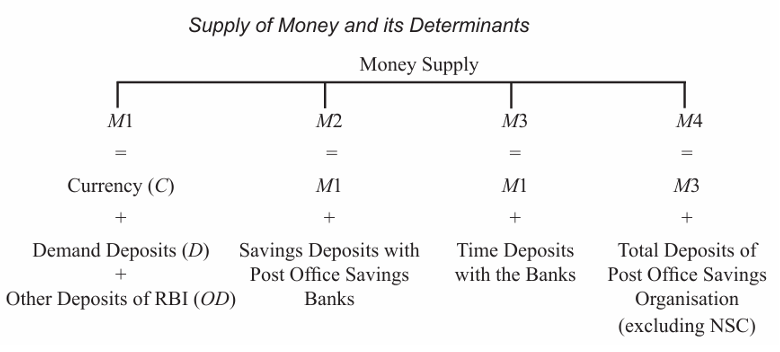
- In India, the money supply is measured using M1, M2, M3, and M4, a classification introduced by the RBI in April 1977. Since then, the RBI has regularly published data on the following four measures:
- M1 (narrow money) includes:
- Currency with the public (notes and coins, excluding banks’ cash)
- Demand deposits with the Banking Systems (excluding inter-bank deposits)
- Other deposits with the RBI (from foreign central banks, financial institutions, etc.)
- M2: The second measure of money supply is M2, which consists of M1 plus post office savings bank deposits.
- M3: M3 (broad money), the third measure of money supply, includes M1 plus time deposits with commercial and cooperative banks, excluding inter-bank time deposits.
- M4: M4, the 4th measure of money supply, includes M3 plus all post office deposits (both time and demand deposits) and is the broadest measure of money supply.
- M1 (narrow money) includes:
- Among the four measures of money supply released by the RBI, M3 holds special importance and is used while framing annual macroeconomic objectives. The Chakravarty Committee (1982-85), set up to review the working of the monetary system, also recommended using M3 for monetary targeting.
Frequently Asked Questions (FAQs)
1. What is “currency with the public”?
Currency with the public = Currency in Circulation (CIC) minus cash with banks; it represents notes and coins physically used for transactions.
2. What legal provision backed the 2016 demonetisation?
The 2016 note invalidation was notified under Section 26(2) of the RBI Act, 1934, which allows the central government to declare any series of banknotes as non-legal tender on RBI recommendation.
3. Why is India's currency-to-GDP ratio higher than that of the US and China?
India's elevated ratio (11.11%) is primarily due to its large informal economy and a strong cultural preference for holding physical cash, unlike the more formalized and digitalized economies of the US and China.
UPSC Civil Services Examination, Previous Year Question (PYQ)
Q. Which of the following measures would result in an increase in the money supply in the economy? (2012)
- Purchase of government securities from the public by the Central Bank
- Deposit of currency in commercial banks by the public
- Borrowing by the government from the Central Bank
- Sale of government securities to the public by the Central Bank
Select the correct answer using the codes given below:
(a) 1 only
(b) 2 and 4 only
(c) 1 and 3 only
(d) 2, 3 and 4
Ans: (c)
Q. Supply of money remaining the same when there is an increase in demand for money, there will be (2013)
(a) a fall in the level of prices
(b) an increase in the rate of interest
(c) a decrease in the rate of interest
(d) an increase in the level of income and employment
Ans: (b)
Q. A rise in general level of prices may be caused by (2013)
- an increase in the money supply
- a decrease in the aggregate level of output
- an increase in the effective demand
Select the correct answer using the codes given below:
(a) 1 only
(b) 1 and 2 only
(c) 2 and 3 only
(d) 1, 2 and 3
Ans: (d)


Important Facts For Prelims
Information Technology(IT) Amendment Rules, 2025
Why in News?
The Ministry of Electronics and Information Technology (MeitY) has issued the Information Technology (Intermediary Guidelines and Digital Media Ethics Code) Amendment Rules, 2025, updating the Information Technology (Intermediary Guidelines and Digital Media Ethics Code) Rules, 2021, particularly Rule 3(1)(d).
- These 2025 rules effective from 15th November 2025, aim to tighten procedural safeguards around the removal of unlawful online content.
- Rule 3(1)(d) of the IT Rules, 2021 requires internet intermediaries to remove or disable access to unlawful content upon receiving a government order or notification.
- This process operates alongside Section 79(3)(b) of the IT Act, 2000, which removes safe-harbour protection if intermediaries fail to take action after receiving “actual knowledge,” and Section 69A which empowers the Central Government to block public access to online information if necessary for national security, sovereignty, or public order.
What are the Key Features of IT Amendment Rules, 2025?
- Key Features of the Amendment Rules 2025: It introduces new safeguards under Rule 3(1)(d) of the IT Rules, 2021 to ensure transparency, accountability, and fairness in the process and more precise, actionable notices for content takedowns.
- Senior-Level Authorisation: Only senior officials can issue takedown directions (an officer of at least Joint Secretary rank (or equivalent/Director if JS is not appointed)), and for police, only a specially authorised Deputy Inspector General of Police (DIG)-level officer.
- Reasoned and Specific Intimation: Takedown orders must clearly mention the legal basis, the nature of the violation, and the exact link/identifier of the content.
- This replaces vague notices and aligns with Section 79(3)(b) of the IT Act.
- Monthly Review: All takedown directions will be reviewed every month by a Secretary-level officer to ensure they remain necessary, proportionate, and lawful.
Significance
- The amendment strikes a balance between the constitutional rights of citizens and the legitimate regulatory powers of the State, ensuring that enforcement actions are transparent and do not lead to arbitrary restrictions.
- They also provide clearer guidance to intermediaries through detailed and reasoned orders, helping them comply with the law.
- The reforms promote proportional action and uphold natural justice while reinforcing lawful restrictions under the IT Act, 2000.
Information Technology (Intermediary Guidelines and Digital Media Ethics Code) Rules, 2021
- About: The IT Rules, 2021 were notified by the Ministry of Electronics & Information Technology (MeitY) in 2021 and later amended in 2022 and 2023.
- These rules emerged from continuous engagement with the public and stakeholders to strengthen digital governance.
- Obligations on Intermediaries: The Rules place obligations on intermediaries to ensure they do not host, share, upload, or transmit prohibited content.
- This includes misinformation, patently false information, impersonation, and deepfakes.
- User Complaint Mechanism: Users can report unlawful content by submitting a complaint to the platform’s Grievance Officer.
- Once a complaint is received, the intermediary must act promptly within the timelines prescribed under the IT Rules, 2021.
- The Grievance Appellate Committee (GAC) deals with the appeals of users (Digital Nagriks) aggrieved by decisions of Grievance Officers.
- Advisories: MeitY also issues advisories under the IT Rules, 2021 to ensure platforms comply when using AI models, LLMs, generative AI tools, or related software.
Frequently Asked Questions (FAQs)
1. Who can issue takedown directions under the IT Rules, 2021?
An officer not below Joint Secretary rank (or equivalent/Director if JS is not appointed) and for police, only a specially authorised Deputy Inspector General of Police (DIG)-level officer.
2. What does Section 79(3)(b) of the IT Act provide?
It removes safe-harbour protection if an intermediary fails to act after receiving “actual knowledge” of unlawful content.
3. What is the role of the Grievance Appellate Committee (GAC)?
It hears appeals from users dissatisfied with decisions of intermediaries’ Grievance Officers under IT Rules, 2021.
UPSC Civil Services Examination, Previous Year Question
Q. In India, it is legally mandatory for which of the following to report on cyber security incidents?(2017)
- Service providers
- Data centres
- Body corporate
Select the correct answer using the code given below:
(a) 1 only
(b) 1 and 2 only
(c) 3 only
(d) 1, 2 and 3
Ans: D


Rapid Fire
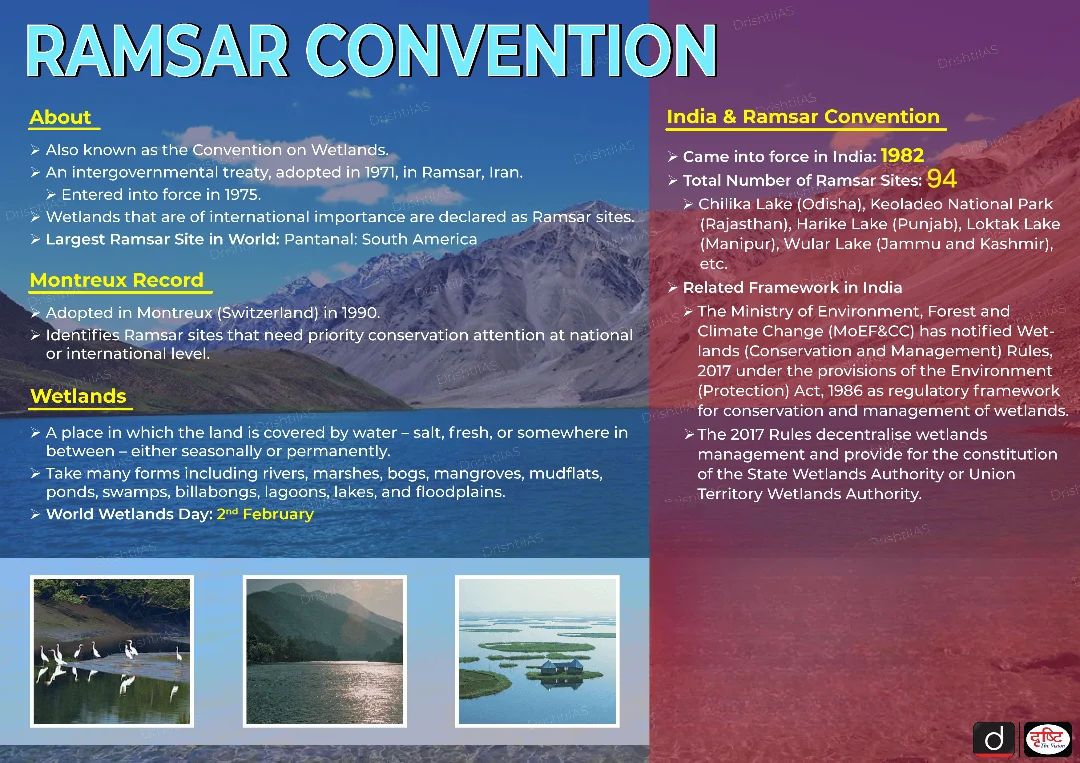
Bihar’s Gogabil Lake is India’s 94th Ramsar Site
Bihar now has six Ramsar sites, placing it third after Tamil Nadu and Uttar Pradesh. India has the highest number of Ramsar sites in Asia and ranks third globally after the UK (176) and Mexico (144), under the Ramsar Convention, 1971.
- Gogabil Lake: Gogabil Lake is an ox-bow wetland located in the Trans-Gangetic Plains of Katihar, Bihar. It is flanked by the Mahananda River to the northeast and the Ganga River to the south.
- Gogabil Lake is Bihar’s first Community Reserve. It is the 15th Protected Area (PA) in Bihar.
- It is used for irrigation water abstraction, extensive fishing, navigation, cattle wading, and recreation, supporting local livelihoods.
- Ecological Importance: Gogabil is a permanent waterbody that shrinks in summer but never dries, and it is an important wintering site along the Central Asian Flyway.
- Flora and Fauna: It hosts large congregations of waterbirds and shoreline birds. It supports bird species such as Red-crested Pochard, Common Pochard, Bar-headed Goose, Greylag Goose, Northern Pintail, and Ruddy Shelduck.
- Endangered and rare species recorded here include the Black-bellied Tern, Lesser Adjutant Stork, River Tern, Painted Stork, Ferruginous Duck, Darter, and Black-headed Ibis.
- Due to its high avian diversity and ecological richness, Gogabil is recognised as an Important Bird Area.
- Threats: Major threats include heavy use of fertilizers and pesticides in the catchment that flow into the wetland, along with exploitation of biological resources.
| Read more: Khichan and Menar as New Ramsar Sites |


Rapid Fire
Malabar Exercise 2025
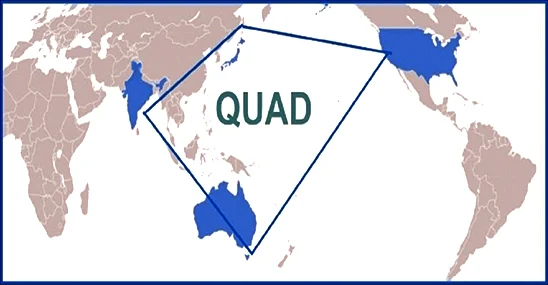
The annual Malabar exercise, involving India, the US, Australia, and Japan (Quad countries) has commenced in the Northern Pacific near Guam.
- Guam, a US territory in the Pacific, holds strategic relevance due to its proximity to East Asia and contested waters like the South China Sea.
- INS Sahyadri, an indigenously designed, stealth guided-missile frigate, represents India in this year's MALABAR exercise.
Malabar Exercise
- About: It started as an annual bilateral naval drill between India and the US in 1992. Japan joined in 2015, and Australia participated in Malabar 2020, making it a four-nation exercise under the Quad framework.
- It highlights the convergence of views among the participating countries on maritime issues and their shared commitment to an open, inclusive Indo-Pacific and a rules-based international order.
- Objectives: To improve interoperability, coordination, and communication, focusing on joint fleet operations, anti-submarine warfare, gunnery drills, and airborne maritime missions.
- Strategic Significance: It strengthens Quad military interoperability, coordinated maritime operations, and freedom of navigation.
- Quad: It is a strategic forum of the US, Japan, India, and Australia focused on regional security and economic cooperation in the Indo-Pacific.
- India’s participation in Quad strengthens its strategic maritime MAHASAGAR (Mutual and Holistic Advancement for Security and Growth Across Regions) vision.
| Read More: Quad Marks 20 Years of Cooperation |
Rapid Fire
National Urban Conclave 2025
The National Urban Conclave 2025 concluded in New Delhi, advancing the Viksit Bharat 2047 vision through the launch of major initiatives. It gathered key stakeholders to deliberate on the theme “Sustainable Urban Development and Governance.”
Major Initiatives Launched at National Urban Conclave 2025
- Dumpsite Remediation Accelerator Programme (DRAP): A year-long mission to accelerate dumpsite cleanup, reclaim urban land, and achieve “Lakshya Zero Dumpsites” by September 2026.
- DRAP will prioritize these high-impact locations, covering approximately 8.8 crore MT of legacy waste.
- To support this, the Centre provides Rs 550/tonne financial support for legacy waste remediation.
- Swachh Bharat Mission – Knowledge Management Unit (KMU): The unit is established by the Ministry of Housing and Urban Affairs (MoHUA) at the National Institute of Urban Affairs (NIUA).
- The KMU will support Swachh Bharat Mission–Urban through capacity building, knowledge creation, and institutional learning.
- Centre for Public Policy on Habitat and Housing: It will be set up at NIUA to support affordable urban housing through policy work, capacity building, data strengthening, and knowledge sharing.
- IIRS Sankalan App: It is a Geographical Information System (GIS) -based mobile application launched by the Indian Institute of Remote Sensing (IIRS) to make urban surveys faster and more efficient.
- Urban Invest Window (UiWIN): A Housing and Urban Development Corporation Limited (HUDCO)-led platform to attract private and multilateral financing (e.g., World Bank, ADB) and promote PPP projects, supporting sustainable urban infrastructure.
- Hill & Himalayan Cities Fund: A Rs 1,000 crore fund under Swachh Bharat Mission–Urban 2.0 has been announced to strengthen solid waste management in hill and Himalayan cities and address the unique environmental challenges faced by these fragile landscapes.
- It seeks to improve waste collection, processing, and disposal systems while promoting cleaner, sustainable urban development.
| Read more: Towards Sustainable Urbanization in India |





