Internal Security
Unlawful Activities (Prevention) Act 1967
For Prelims: Supreme Court of India, 16th Constitutional Amendment , National Investigation Agency, International Convention for the Suppression of the Financing of Terrorism
For Mains: Evolution of UAPA and its constitutional implications, Balance between national security and civil liberties
Why in News?
The Supreme Court of India denied bail in the 2020 Delhi riots case, relying on the wide definition of a “terrorist act” under Section 15 of the Unlawful Activities (Prevention) Act, 1967.
- The decision has renewed debate on how the anti-terror law has expanded far beyond conventional notions of terrorism.
Summary
- The UAPA has evolved from a limited post-Independence law into a wide-ranging anti-terror framework, with Section 15’s broad definition of terrorism and stringent bail norms extending the law far beyond conventional notions of terrorism.
- While the UAPA remains crucial for national security and global counterterror commitments, targeted reforms such as clearer definitions, fairer bail provisions, speedy trials, compensation for wrongful detention, and stronger oversight are essential to balance security with democratic values.
What is the Unlawful Activities (Prevention) Act (UAPA), 1967?
- About: The UAPA,1967 is India’s principal anti-terror and national security law to curb activities threatening sovereignty, unity, and integrity of India
- The UAPA traces its origins to the National Integration Council formed under Jawaharlal Nehru, aimed at tackling communalism, regionalism, and linguistic chauvinism.
- Its recommendations led to the 16th Constitutional Amendment (1963), which imposed reasonable restrictions on free speech, assembly, and association in the interest of national integrity, and the UAPA was enacted to enforce these constitutional changes.
- Enacted in 1967, the law initially targeted unlawful activities threatening India’s sovereignty and territorial integrity in the post-Independence period marked by secessionist and anti-national movements, and did not address terrorism in its original form.
- The UAPA traces its origins to the National Integration Council formed under Jawaharlal Nehru, aimed at tackling communalism, regionalism, and linguistic chauvinism.
- Evolution of UAPA:
- 2004 Amendment: Introduced terrorism into the UAPA by adding Chapter IV (Sections 15–23) on terrorist acts and punishments.
- It defined terrorism as violent acts intended to threaten India’s security or strike terror among people, and expanded the scope of “unlawful activity” to include acts causing disaffection against India.
- 2008 Amendment: After the 26/11 Mumbai terror attacks, Parliament widened Section 15 by adding the phrase “by any other means,” expanding terrorism to a broad range of acts.
- The amendment tightened bail norms by barring anticipatory bail, made regular bail extremely difficult, extended custody periods, and introduced a presumption of guilt in specified cases.
- 2012 Amendment: Expanded the definition of terrorism to include threats to economic security, covering financial, food, energy, livelihood, and environmental security.
- They also classified counterfeit currency offences as terrorist acts and extended liability to companies, trusts, and societies, with office-bearers presumed responsible unless proven otherwise.
- 2019 Amendment: It permitted the designation of individuals as terrorists, not just organisations, and enhanced the National Investigation Agency (NIA) powers, including property seizure without state consent.
- 2004 Amendment: Introduced terrorism into the UAPA by adding Chapter IV (Sections 15–23) on terrorist acts and punishments.
- Definition of Terrorism: Under Section 15 of the UAPA,1967 a “terrorist act” is defined as any act committed with the intent to threaten the unity, integrity, sovereignty, security, or economic security of India, or to strike terror among people in India or in any foreign country.
- The law covers acts committed using explosives, firearms, poisons, chemicals, hazardous substances, or “any other means”
- Under the UAPA, terrorist acts are punishable with imprisonment for a minimum term of five years, which may extend to life imprisonment, and where such acts result in death, the punishment may be death or life imprisonment, thereby covering serious and violent offences.
- The broad wording allows acts likely to cause fear or disruption to be prosecuted as terrorism.
What are the Arguments in Favor and Arguments Against UAPA?
Arguments in Favor:
- Protection of National Security: Provides the legal basis for preventive action against terrorism, insurgency, and activities threatening India’s sovereignty, integrity, and economic security, enabling the State to act before violence escalates.
- Preventive Detention as a Security Tool: Allows detention of suspects to pre-empt imminent threats, especially in cases involving riots, radicalisation, or organised extremist networks where waiting for attacks could cause mass harm.
- Alignment with International Conventions: Brings Indian law in line with global counterterror norms, including UN instruments such as the International Convention for the Suppression of Terrorist Bombings (1997), and International Convention for the Suppression of the Financing of Terrorism (1999), enabling international cooperation and compliance with UNSC resolutions.
- Deterrence Against Terror Activities: Stringent punishments and long sentences serve as a deterrent against participation in or support for terrorism, signalling zero tolerance for acts threatening national security.
- Disruption of Terror Financing: Criminalises terror funding, money laundering, and counterfeit currency operations, addressing the financial backbone of terrorism.
Arguments Against:
- Violation of Article 21 (Right to Life and Liberty): UAPA enables prolonged detention, denial of bail, and reversal of the presumption of innocence, making personal liberty the exception rather than the rule, contrary to constitutional safeguards.
- After the Supreme Court of India ruling in NIA v. Zahoor Ahmad Shah Watali (2020), courts are discouraged from examining evidence in detail while deciding bail, reducing judicial oversight.
- Arbitrary Designation of Individuals as Terrorists: The state can label individuals as “terrorists” without prior conviction, undermining the presumption of innocence and damaging the right to reputation and privacy.
- Overbroad definition of terrorism: Terms like “likely to threaten” or “likely to strike terror” allow punishment for potential or anticipated acts, violating the principle of legal certainty and proportionality.
- UN Special Rapporteurs (2020) flagged UAPA as incompatible with global human rights standards like the International Covenant on Civil and Political Rights (ICCPR) and Universal Declaration of Human Rights (UDHR), noting the absence of a clear, narrow definition of terrorism.
- Discretionary Police Powers: Searches, seizures, and arrests can be made based on the personal knowledge of police officers, with limited judicial oversight, increasing the risk of arbitrary state action.
- Criminalisation of Dissent and Free Speech: Peaceful protests, political speech, and questioning state policies risk being labelled as threats to national security, undermining Article 19, which protects free expression and association.
- Fear of arrest, long incarceration, and social stigma has a chilling effect on activism, journalism, and political participation, eroding the democratic ethos.
What Reforms are Needed to Strengthen the UAPA?
- Clarifying Vague Definitions: Terms such as terrorist act, unlawful activity, and conspiracy should be narrowly defined to prevent misuse.
- Reforming Stringent Bail Provisions: Stringent bail provisions under UAPA should be amended to reaffirm the presumption of innocence, a core principle flowing from Article 21 and settled criminal jurisprudence, with Article 20(3) reinforcing fair trial protections.
- Ensuring Speedy Trials: Prolonged trials undermine justice and drain public resources.
- A PUCL report (2022) noted that less than 3% of UAPA cases between 2015–2020 resulted in convictions, underscoring the need for fast-track courts and strict timelines.
- Introducing a Compensation Framework: Victims of wrongful arrest and prolonged detention must be compensated.
- In Rudul Sah v. State of Bihar (1983), the Supreme Court recognised compensation as a remedy for illegal detention, a principle that should be codified under UAPA.
- Strengthening Oversight and Transparency: Regular parliamentary review, public disclosure of UAPA data, and clear operational guidelines for agencies can ensure accountability and prevent arbitrary application.
Conclusion
The UAPA is vital for national security but its overbroad scope and harsh procedures threaten constitutional liberties. Without safeguards, it risks normalising detention and suppressing dissent. Targeted reforms are needed to balance security with democracy.
|
Drishti Mains Question: Suggest reforms to ensure that anti-terror laws remain effective without undermining democratic freedoms. |
Frequently Asked Questions (FAQs)
1. What is the primary objective of the UAPA?
To prevent activities threatening India’s sovereignty, integrity, unity, and national security.
2. Why is Section 15 of the UAPA controversial?
It defines terrorism in broad terms, including acts committed by “any other means,” enabling wide interpretation.
3. What constitutional concern is most associated with UAPA?
Violation of Article 21, due to prolonged detention, denial of bail, and dilution of the presumption of innocence.
4. What reforms are suggested to improve the UAPA?
Narrower definitions, fairer bail provisions, speedy trials, compensation for wrongful detention, and stronger oversight mechanisms.
UPSC Civil Services Examination, Previous Year Question (PYQ)
Mains
Q. Indian government has recently strengthened the anti-terrorism laws by amending the Unlawful Activities(Prevention) Act, (UAPA), 1967 and the NIA Act. Analyze the changes in the context of the prevailing security environment while discussing scope and reasons for opposing the UAPA by human rights organizations. (2019)

Social Issues
Transgender Welfare in India
For Prelims: Transgender, NHRC, Unemployment, Census, National Portal for Transgender Persons, Parliament, Transgender Persons (Protection of Rights) Act, 2019, Fundamental Rights, Right to Privacy, National Council for Transgender Persons (NCTP), Election Commission, SMILE Scheme, Ayushman Bharat.
For Mains: Steps taken to ensure transgender welfare in India, Major challenges faced by the transgender community in India and further measures required for transgender empowerment in India.
Why in News?
Recent reports highlight that trans men and gender-diverse persons assigned female at birth (AFAB) continue to face systemic discrimination, medical ignorance, and structural barriers in accessing even basic healthcare.
- This has brought renewed attention to the gaps in affirmative, ethical, and evidence-based transgender welfare in India.
Summary
- Transgender persons in India face systemic discrimination in healthcare, education, and the economy despite landmark laws like the Transgender Persons (Protection of Rights) Act, 2019.
- Progressive judicial rulings and welfare schemes exist, but implementation gaps and societal stigma remain major hurdles.
- Empowerment requires convergent action in legal enforcement, affirmative socio-economic policies, and nationwide sensitization.
What are the Major Challenges Faced by the Transgender Community in India?
- Healthcare Access and Medical Discrimination: Nearly 27% report being refused medical care due to their gender identity. Even basic treatment is often gatekept by judgmental attitudes, misgendering, and disrespect.
- Healthcare lacks training on trans men, leading to misgendering, denial of care, and reliance on untrained gynecologists due to binary gender views and invisibility.
- Barriers force unsafe self-medication (risking stroke/kidney disease) amid no pan India protocols or affirming specialists.
- Social Stigma, and Mental Health Crisis: Discrimination against transgender persons starts within the family and extends to all public spheres, causing profound isolation. This pervasive societal stigma and abuse contributes to alarming suicide rates, with 31% dying by suicide and 50% attempting it before age 20.
- Economic Exclusion: Stark economic exclusion persists, with 92% affected (NHRC, 2018) and a 48% unemployment rate (ILO, 2022), forcing many into informal work.
- Additionally, access to finance and inheritance is denied, as banking access remains poor and laws like the Hindu Succession Act, 1956 exclude non-binary heirs.
- Barriers in Education: A stark literacy gap exists, with the community's literacy rate at 56.1% (2011 Census) compared to the national 74%, due to harassment, non-inclusive infrastructure, and high dropout rates.
- This is compounded by near non-existent representation in universities and teaching staff, and the absence of a nationwide gender-sensitive educational framework, which perpetuates stigma.
- Ineffective Legal Implementation: The National Portal for Transgender Persons has issued only 277 certificates of identity since its launch in November 2020, with a low 16% application processing rate despite nationwide functionality. Furthermore, supportive initiatives like the Garima Greh shelter homes remain hindered by inadequate funding, poor awareness, and limited coverage.
- Political Under-Representation: Political representation for transgender persons remains minimal across Parliament, State Assemblies, and local governance, crippling their advocacy for inclusive policy. While voter turnout for the third gender rose to 25% in the 2024 Lok Sabha polls, elder care systems continue to largely exclude gender-diverse individuals.
Transgender
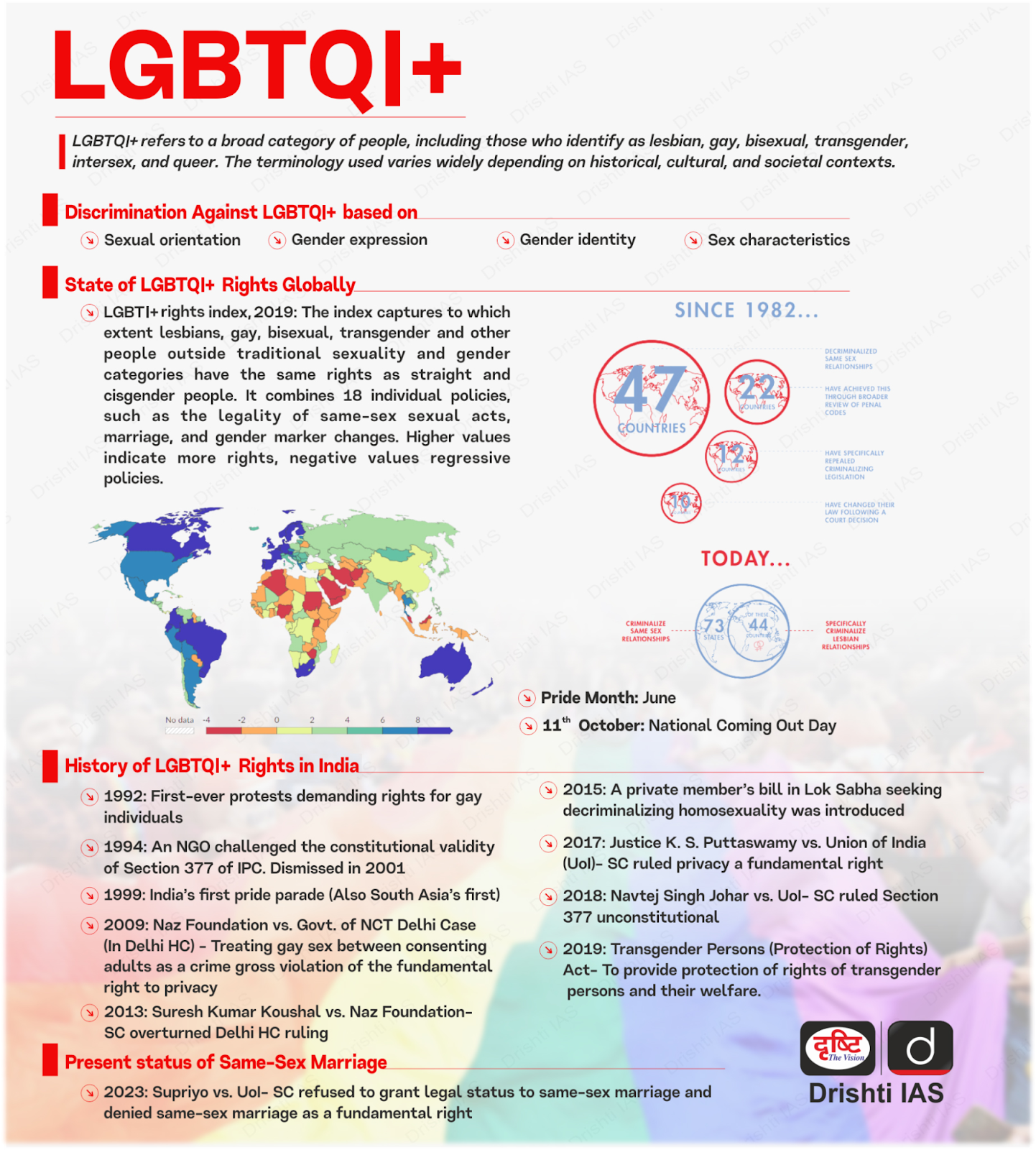
- About: A transgender person is an individual whose gender identity (internal sense of self) does not align with the sex assigned at birth.
- This is an umbrella term that includes people with diverse socio-cultural identities such as Hijra, Kinnar, Aravani, and Jogta, as well as those who identify as trans men, trans women, genderqueer, or non-binary.
- Demographics & Population: According to Census 2011, India has a transgender population of approximately 4.88 lakh.
- The top three states with the largest enumerated transgender populations are Uttar Pradesh, Andhra Pradesh, and Maharashtra.
- Legal Recognition: The Transgender Persons (Protection of Rights) Act, 2019 provides the formal legal definition and framework for the recognition of transgender identity in India. The Act acknowledges the right to self-perceived gender identity.
- Place within the LGBTQIA+ Community: Transgender persons are a core part of the LGBTQIA+ community, represented by the "T" in the acronym.
What Steps have been Taken to Ensure Transgender Welfare in India?
Judicial Interventions
- NALSA v. Union of India (2014): It legally recognized transgender persons as a third gender and affirmed their fundamental rights under Articles 14, 15, 16, 19, and 21.
- It upheld the right to self-identify one’s gender and classified transgender people as Socially and Educationally Backward Classes (SEBCs), making them eligible for reservations.
- The ruling also directed central and state governments to formulate welfare schemes and provide necessary public facilities for the community.
- Puttaswamy v. Union of India (2017): It declared the right to privacy a fundamental right, explicitly including the protection of sexual orientation and gender identity within the Constitution.
- Navtej Singh Johar v. Union of India (2018): It decriminalised consensual same-sex relations by striking down Section 377 of IPC (now BNS 2023), indirectly advancing the social acceptance and dignity of transgender and LGBTQ+ persons.
- Ms. X v. State of Karnataka (2024): The Karnataka High Court upheld the right of transgender persons to change one’s name and gender on birth certificates, reinforcing the implementation of the Transgender Persons Act, 2019 and its 2020 Rules.
Legislative Framework
- Transgender Persons (Protection of Rights) Act, 2019: It provides a legal framework prohibiting discrimination in education, employment, healthcare, housing, and public services.
- It allows for self-identification through a District Magistrate-issued Certificate of Identity without medical exams and mandates access to gender-affirming care, and HIV surveillance.
- The Act also establishes a statutory National Council for Transgender Persons (NCTP), constituted in 2020, for policy oversight and grievances.
- Transgender Persons (Protection of Rights) Rules, 2020: It lays down procedures for identity certification, provides for education, health, social security, housing, and welfare measures, and operationalises the Act's non-discrimination mandate.
Electoral Measures
- Election Commission Directive (2009): The Election Commission of India introduced an “Others” gender option in 2009 in voter registration forms, allowing transgender persons to identify without being forced into the male/female binary.
Welfare Schemes
- SMILE (Support for Marginalised Individuals for Livelihood and Enterprise) Scheme: Umbrella scheme for livelihood, education, health, and shelter support (under the sub-scheme Garima Greh).
- Ayushman Bharat TG Plus: Provides health insurance coverage of Rs 5 lakh per year per beneficiary for transgender persons.
- Transgender Pension Scheme: Allows transgender persons to be covered under the Indira Gandhi National Disability Pension Scheme.
- National Portal for Transgender Persons: Enables online applications for Transgender Identity Certificates and tracks their status.
Administrative Measures
- Recognition in Indian Prisons: The Ministry of Home Affairs issued guidelines in 2022 to ensure the privacy, safety, and dignity of transgender inmates in prisons across states.
State-Level Initiatives
- Kerala: Provides reservations for transgender students in universities and has established transgender-exclusive hostel facilities.
- Maharashtra: Has set up transgender welfare cells in colleges to address grievances and support students.
- Tamil Nadu: Pioneered free gender-affirming surgeries and established dedicated transgender health clinics.
What Further Measures are Required for Transgender Empowerment in India?
- Full Enforcement of Existing Laws: The 2019 Act requires full implementation through efficient grievance redressal cells, a centralized digital portal for certificates, and regular implementation audits.
- Essential steps include simplifying the self-identification process to end delays, mandatory gender-sensitivity training for key officials, and adopting robust state frameworks like Delhi Transgender Persons (Protection of Rights) Rules, 2025.
- Economic Inclusion & Livelihood Opportunities: Efforts must scale up successful state-level models, like Karnataka’s 1% job reservation and Tata Steel’s corporate diversity hiring, while expanding SMILE Scheme skilling and entrepreneurship programs.
- Accessible & Affirmative Healthcare: To ensure comprehensive care, gender-affirming treatments like surgery and hormones must be covered under insurance schemes such as Ayushman Bharat, following the model of states like Odisha and Karnataka.
- This requires establishing dedicated health centres, like AIIMS Delhi’s Centre of Excellence, and integrating specialized mental health services.
- Social Awareness & Cultural Change: Sustained public awareness campaigns like “I Am Also Human” and respectful media representation are essential to challenge stigma. This must be supported by amplifying cultural advocacy such as the Koovagam Festival (Tamil Nadu) and inclusive platforms like sports, exemplified by the Ya_All Sports Club's (Manipur) all-transgender football team.
Conclusion
Despite progressive laws and judicial mandates, transgender persons in India face systemic exclusion in healthcare, education, and the economy. True empowerment requires convergent action—rigorous legal implementation, affirmative socio-economic policies, and nationwide sensitization to translate constitutional promises into lived equality.
|
Drishti Mains Question: Despite progressive laws, transgender persons in India continue to face marginalisation. Analyse the reasons and suggest reforms. |
Frequently Asked Questions (FAQs)
1. Who is considered a transgender person under Indian law?
A transgender person is one whose gender identity differs from sex assigned at birth, as defined under the Transgender Persons (Protection of Rights) Act, 2019.
2. Which Supreme Court case recognised transgender persons as the third gender?
NALSA v. Union of India (2014) recognised transgender persons as the third gender and extended full constitutional rights.
3. Name two major welfare schemes for transgender persons in India.
The SMILE Scheme (including Garima Greh shelters) for livelihood and support, and Ayushman Bharat TG Plus, which provides health insurance coverage of ₹5 lakh per year per beneficiary.
UPSC Civil Services Examination, Previous Year Questions (PYQs)
Prelims
Q. In India, Legal Services Authorities provide free legal services to which of the following types of citizens? (2020)
- Person with an annual income of less than Rs. 1,00,000
- Transgender with an annual income of less than Rs. 2,00,000
- Member of Other Backward Classes (OBC) with an annual income of less than Rs. 3,00,000
- All Senior Citizens
Select the correct answer using the code given below:
(a) 1 and 2 only
(b) 3 and 4 only
(c) 2 and 3 only
(d) 1 and 4 only
Ans: (a)
Mains
Q. Women empowerment in India needs gender budgeting. What are the requirements and status of gender budgeting in the Indian context? (2016)


Important Facts For Prelims
Madhav Gadgil and the WGEEP
Why in News?
Eminent ecologist Madhav Gadgil has passed away after a brief illness. He is remembered as chairman of the Western Ghats Experts Ecology Panel (WGEEP), 2011, whose seminal, though rejected, report continues to be referenced during ecological disasters and landslides in the region.
What was Western Ghats Experts Ecology Panel (WGEEP)?
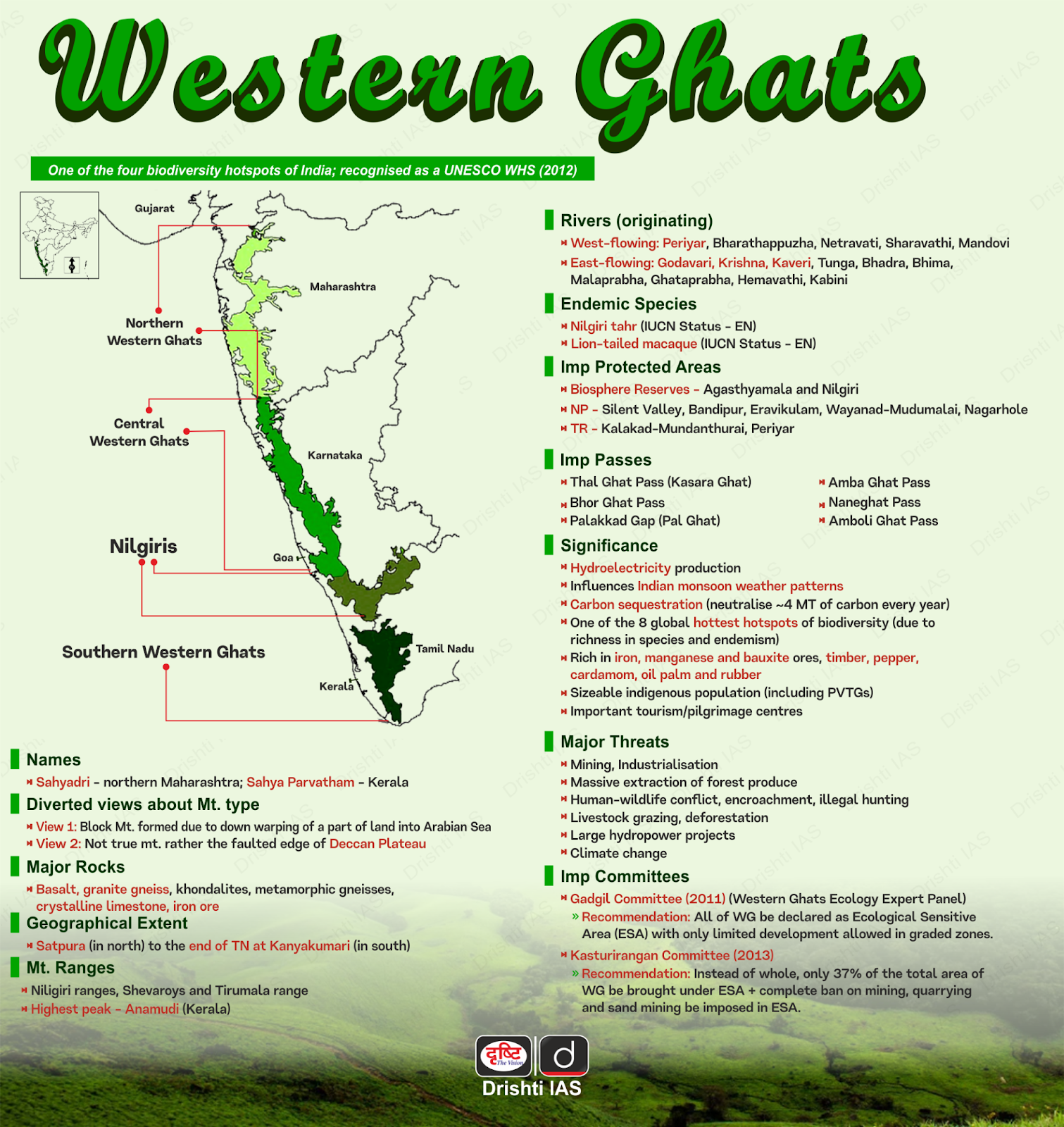
- About: WGEEP, commonly known as the Gadgil Commission, was an environmental research commission established by the Ministry of Environment, Forest and Climate Change (MoEFCC) in 2010 (report submitted in 2011).
- Mandate: It was chaired by Professor Madhav Gadgil to assess the ecological status of the Western Ghats (UNESCO World Heritage Site and global biodiversity hotspot), demarcate its Ecologically Sensitive Areas (ESAs), and recommend measures for conservation, rejuvenation, and sustainable development.
- Core Recommendations:
- Designation as ESA: Designated the entire Western Ghats (1,29,037 sq km) as an ESA and classified Western Ghats into 3 Ecologically Sensitive Zone (ESZ) based on sensitivity levels i.e., ESZ1 (highest sensitivity), ESZ2 (high sensitivity) and ESZ3 (moderate sensitivity).
- Key Sectoral Guidelines: Prohibition on genetically modified crops, new Special Economic Zones (SEZs), and new hill stations.
- No new mining licenses; phasing out of existing mines within five years in the most sensitive zones (ESZ 1 & 2).
- Restrictions on new major infrastructure like railway lines and large roads in ESZ 1 & 2, except where essential.
- Institutional Recommendation: Proposed the creation of a statutory Western Ghats Ecology Authority (WGEA) under the Environment Protection Act, 1986.
- This apex, multi-state body would regulate, manage, and plan activities across all 6 states (Gujarat, Goa, Maharashtra, Karnataka, Kerala, Tamil Nadu) in which Western Ghats lie.
- It would comprise domain experts, resource experts, and government representatives.
- Inclusive Development: The report made a case for inclusionary development by recommending that decisions be taken to all Gram Sabhas, aiming to replace exclusionary models of development and conservation.
- Controversy and Rejection: It faced strong political opposition, particularly from Kerala and Maharashtra, over perceived threats to economic activities like cash crops (e.g., in Idukki & Wayanad), mining, and hydro projects.
- Key objections included institutional conflict with the proposed WGEA and fears that stringent regulations would make agriculture and habitation impossible.
- Ultimately, the report was rejected by the then government at the centre.
- K Kasturirangan Panel: Following opposition to the Gadgil report, MoEFCC constituted a High-Level Working Group (HLWG) under space scientist K Kasturirangan to “examine the WGEEP report in a holistic and multidisciplinary fashion.”
- The HLWG report of 2013 proposed demarcating 56,825 sq km of the Western Ghats as ecologically sensitive, with restrictions on polluting industries, mining, new thermal power plants, and large townships. Unlike the Gadgil panel, it identified specific villages as ESAs.
Madhav Gadgil
- About: Madhav Gadgil was a pioneering Indian ecologist renowned as one of India's foremost voices on ecology and environmental protection. His father, Dhananjay Gadgil, was one of India’s foremost economists and the author of the classic The Industrial Evolution of India in Recent Times, first published in 1924.
- Institution Builder: He established the Centre for Ecological Sciences (CES) at the Indian Institute of Science (IISc), Bengaluru in 1982, which became a premier hub for ecological studies. His research contributed to the establishment of the Nilgiri Biosphere Reserve (1986) and contributed significantly to the Biological Diversity Act 2002, and Forest Rights Act, 2006.
- Western Ghats Ecology Expert Panel (WGEEP): His most prominent public role was as chairman of the WGEEP (Gadgil Committee) set up for protection of the Western Ghats.
- Literary Contribution: He co-authored works like "This Fissured Land: An Ecological History of India" and "Ecology and Equity" with historian Ramachandra Guha.
- Recognitions: He was the recipient of the prestigious Shanti Swarup Bhatnagar Award, Padma Shri and Padma Bhushan awards.
Frequently Asked Questions (FAQs)
1. What was the Western Ghats Experts Ecology Panel (WGEEP)?
The WGEEP, or Gadgil Commission, was established in 2010 under the MoEFCC, chaired by Madhav Gadgil, to assess the ecology of the Western Ghats and recommend measures for conservation and sustainable development.
2. What were the key recommendations of the Gadgil Panel?
Key recommendations included restrictions on mining, GM crops, SEZs, new hill stations, and major infrastructure in sensitive zones, along with the creation of a Western Ghats Ecology Authority (WGEA) for governance.
3. What is the Kasturirangan Panel, and how did it differ from WGEEP?
Constituted in 2013, the Kasturirangan Panel proposed a smaller ESA (56,825 sq km), identifying specific villages for regulation, with a focus on restrictions on industries, mining, and large townships, unlike the broader WGEEP approach.
UPSC Civil Services Examination Previous Year Question (PYQ)
Q. Consider the following statements: (2017)
- In India, the Himalayas are spread over five States only.
- Western Ghats are spread over five States only.
- Pulicat Lake is spread over two States only.
Which of the statements given above is/are correct?
(a) 1 and 2 only
(b) 3 only
(c) 2 and 3 only
(d) 1 and 3 only
Ans: (b)
Q. ‘Gadgil Committee Report’ and ‘Kasturirangan Committee Report’, sometimes seen in the news, are related to (2016)
(a) constitutional reforms
(b) Ganga Action Plan
(c) linking of rivers
(d) protection of Western Ghats
Ans: (d)
Q. In which one among the following categories of protected areas in India are local people not allowed to collect and use the biomass? (2012)
(a) Biosphere Reserves
(b) National Parks
(c) Wetlands declared under Ramsar Convention
(d) Wildlife Sanctuaries
Ans: (b)

Rapid Fire
Olive Ridley Turtles
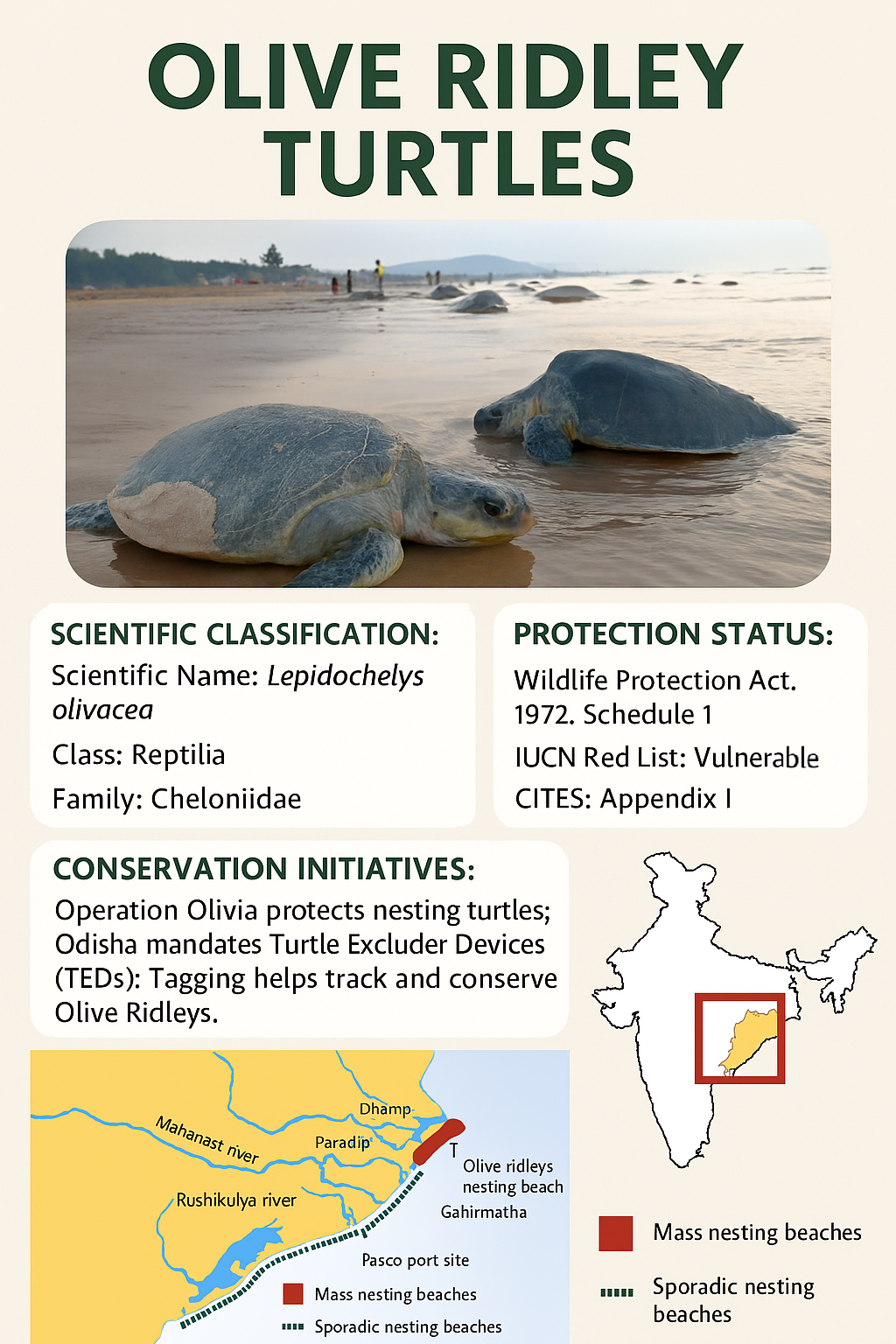
The ongoing olive ridley turtle (ORTs) nesting season is facing significant threats from human activities, highlighted by the recent discovery of carcasses linked to fishing nets and concerns over disruptive artificial lighting.
- About: Olive ridley turtles are the world's smallest sea turtle and have a heart-shaped, olive or grayish-green carapace.
- They are found in tropical regions of the Pacific, Indian, and Atlantic Oceans; inhabit both open ocean and coastal waters.
- Diet and Behavior: ORTs are omnivorous, feeding on jellyfish, snails, crabs, and algae. They undertake long-distance migrations from the Pacific to the Indian Ocean, reaching Indian coasts between November and December and remaining until April–May.
- The species is known for its synchronised mass nesting (arribada) on narrow sandy beaches near estuaries and bays, where each female lays about 100–140 eggs at a time.
- Key Indian sites are Gahirmatha (largest mass nesting), Rushikulya, and the Devi River mouth in Odisha, Visakhapatnam & Kakinada (Andhra Pradesh) and Andaman and Nicobar Islands.
- Legal Protections: All the 5 species of sea turtles occurring in India, including the ORTs, are legally protected under Schedule I of the Wildlife Protection Act, 1972 and Appendix I of the CITES Convention. ORTs are listed as Vulnerable on the IUCN Red List.
- Conservation Measures: Operation Olivia by the Indian Coast Guard enforces fishing bans. Turtle Excluder Devices (TEDs) are mandated in Odisha. Tagging programs help track migration.
- A two-year telemetry study (2025–2027) will use satellite and flipper tags on Olive Ridley turtles in Tamil Nadu to monitor their behaviour, nesting, and interactions with fisheries.
- Major Threats: Despite an international trade ban, olive ridley turtles face severe threats from illegal poaching and egg trade, with the most significant mortality caused by accidental bycatch in trawl and gill nets during the nesting season.
| Read More: Mass Nesting of Olive Ridley Turtles |


Rapid Fire
Winter Migratory Birds in Assam
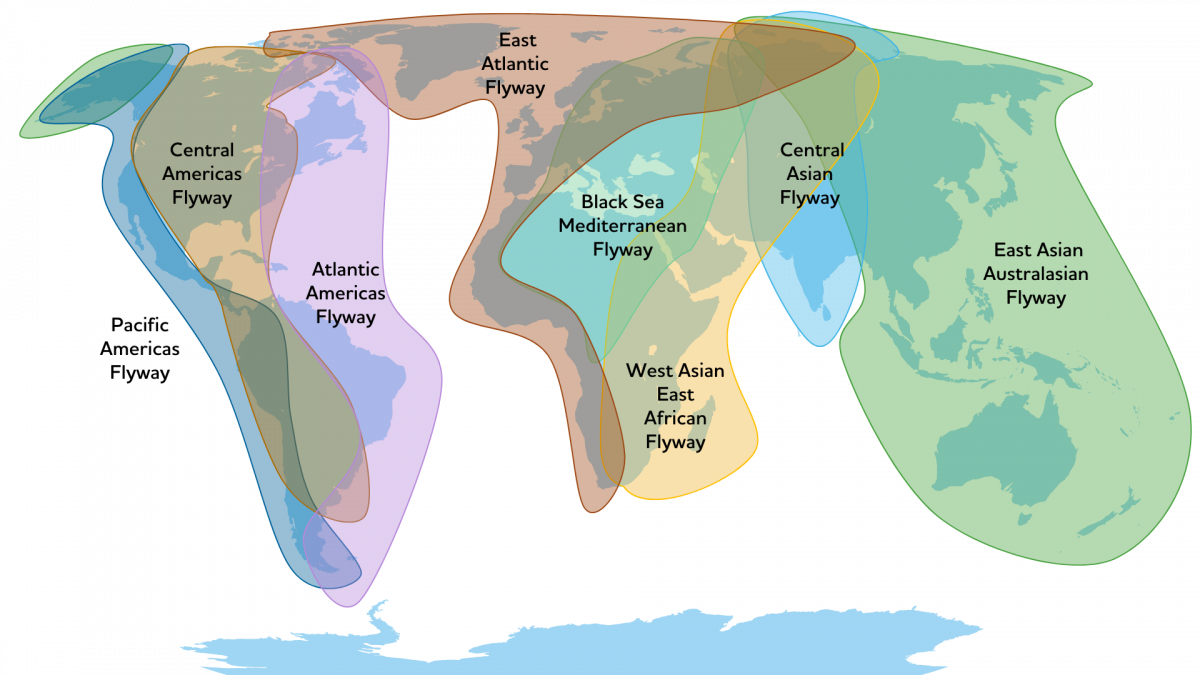
Each winter, Assam’s wetlands, riverbeds, floodplains, and natural & artificial reservoirs, become vital seasonal habitats for a diverse array of migratory birds arriving via the Central Asian Flyway to escape the harsh cold of Siberia, Tibet, and Europe.
- Central Asian Flyway: Assam lies along the Central Asian Flyway, a major migratory route connecting Arctic and temperate regions with South Asia, making the State an important wintering and stopover ground for long-distance migratory birds.
- Notable Migratory Species: Citrine Wagtail is the first avian visitor to arrive in Assam's wetlands, floodplains, and marshes.
- Bar-headed geese, White-fronted geese, Greylag geese.
- Northern pintails, Common pochards, Ferruginous pochards.
- Pied avocets, Falcated ducks, Great crested grebes.
- Glossy ibis, Eurasian wigeons, Purple herons.
- Important Wetlands & Birding Sites: Major migratory bird habitats include Deepor Beel (Ramsar Site), Maguri Motapung Beel, Pani Dihing Beel, Son Beel (largest wetland in Assam), Kaziranga National Park and Tiger Reserve (wetland lakes) and Pobitora Wildlife Sanctuary.
- National/International Conservation Framework: As a party to the Convention on Migratory Species (CMS), India has launched the National Action Plan for Conservation of Migratory Species along the Central Asian Flyway, aimed at protecting critical habitats and migratory corridors.
- India is also a temporary home to other key migratory species like Amur Falcons, Black-necked cranes, Marine turtles, and Humpback Whales.
| Read More: Migratory Birds and Chilika Lake |

Rapid Fire
FDI Trends in India
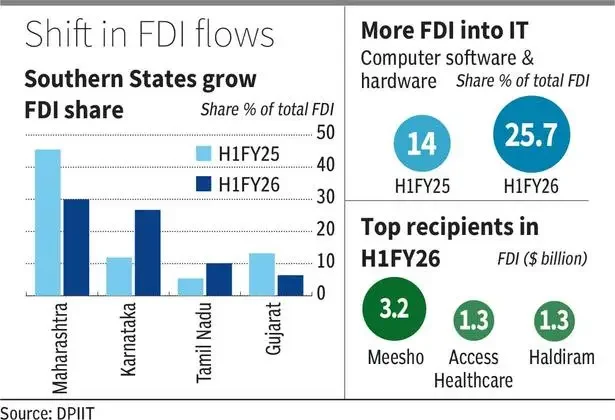
According to the Department for Promotion of Industry and Internal Trade (DPIIT), India witnessed a strong rise in foreign direct investment (FDI) during the first half (H1) of FY26 (April-September 2025), driven primarily by a doubling of inflows into the IT sector.
- FDI Inflows: FDI inflows rose to USD 35.2 billion in H1 FY26, marking an 18% increase over USD 29.8 billion in H1 FY25. From April 2000–September 2025, cumulative FDI inflows reached USD 1.12 trillion.
- Top Investing Nations: Singapore led with USD 12 billion in FDI, accounting for 34% of the total, followed by the US (USD 6.6 billion) and Mauritius (USD 3.5 billion).
- State-wise Inflows: Maharashtra remained the top FDI recipient with about 30% share. Karnataka (USD 9.4 bn) and Tamil Nadu (USD 3.6 bn) were the 2nd and 3rd largest recipients, while Gujarat’s share fell to 6.4%.
- Leading Sectors: The services sector and computer software & hardware each account for 16% of cumulative equity inflows, with significant contributions from trading (6%), telecommunications (5%), and automobiles (5%).
- Policy Enablers: Reforms such as raising the FDI cap in insurance to 100%, implementation of GST, and development of Special Economic Zones (SEZs) have bolstered India’s investment ecosystem.
| Read More: Foreign Direct Investment in India |
Rapid Fire
W Ursae Majoris and Stellar Evolution
A study by astronomers from the Aryabhatta Research Institute of Observational Sciences (ARIES) and the Physical Research Laboratory (PRL), both under the Department of Science & Technology (DST), has offered new insights into W Ursae Majoris–type contact binary stars.
- W Ursae Majoris (W UMa) Stars: These are short-period, dumbbell-shaped contact binaries in which two stars orbit each other while sharing a common outer atmosphere, making them natural laboratories for precise measurement of stellar masses, radii, and temperatures to test stellar evolution theories.
- Binary Star: It is a system of two stars gravitationally bound and orbiting a common centre of mass, known as the barycenter.
- The two stars can differ in mass, size, and brightness, with the larger termed the primary star and the smaller the secondary or companion star.
Life Cycle of a Star
- Birth: Stars form in molecular clouds (cold, massive clouds of gas and dust ranging from 1,000 to 10 million solar masses and spanning hundreds of light-years).
- Molecular clouds are cold, allowing gas to clump into high-density regions that grow through collisions and accretion. As gravity intensifies, these clumps collapse and heat up, forming a protostar.
- Groups of newly formed stars are called stellar clusters, and such regions are known as stellar nurseries.
- Molecular clouds are cold, allowing gas to clump into high-density regions that grow through collisions and accretion. As gravity intensifies, these clumps collapse and heat up, forming a protostar.
- Life: A protostar initially shines from heat released by gravitational collapse. After millions of years, extreme pressure and temperature in its core trigger nuclear fusion, converting hydrogen into helium and releasing energy that balances gravity.
- Stars stably undergoing this process are called main sequence stars, the longest phase of stellar life, during which luminosity, size, and temperature change slowly.
- A star’s mass controls its lifespan - low-mass stars live much longer, while massive stars burn fuel quickly and die young.
- Death: When a star’s core runs out of hydrogen, fusion pressure drops and the core begins to collapse, causing the star to expand and heat up.
-
In low-mass stars, helium fuses into carbon as the star becomes a giant, eventually shedding its outer layers to form a planetary nebula.
- After shedding its outer layers, a low-mass star leaves behind a dense white dwarf that cools slowly over billions of years.
- In high-mass stars, fusion continues to form heavier elements up to iron. Once iron forms, energy production stops and the star rapidly runs out of fuel.
- When a star’s iron core collapses and rebounds, it triggers a massive supernova explosion. The core remains as a neutron star or black hole, while ejected material enriches future molecular clouds, helping form new stars.
-
| Read more: Astronomers Uncover Hot Helium Stars |

Rapid Fire
Childhood Hypertension
Recently, health experts highlighted that the prevalence of elevated blood pressure among children and adolescents has nearly doubled globally between 2000 and 2020, signalling a growing paediatric public health concern.
- About: Childhood Hypertension refers to persistently elevated blood pressure in children and adolescents, diagnosed using age, sex and height-specific percentile charts rather than adult cut-offs.
- Paediatric vs Adult Hypertension: Unlike adults, where hypertension is largely primary in nature, elevated blood pressure in children is often secondary, commonly associated with disorders of the kidneys, adrenal glands, and blood vessels.
- Causes and Risk Factors: Rapid urbanisation has altered childhood lifestyles, leading to increased consumption of processed and high-salt foods, reduced physical activity, prolonged screen time, and higher exposure to environmental stressors such as noise, air pollution, and academic pressure.
- Rising childhood obesity, particularly rapid weight gain and central adiposity, remains the most significant modifiable risk factor for paediatric hypertension.
- Clinical Features: The condition is largely asymptomatic in early stages, often remaining undetected without routine screening.
- Health Impacts: Persistently elevated blood pressure from childhood increases lifetime risk of coronary heart disease, stroke, type-2 diabetes, and chronic kidney disease, with early-onset vascular damage and irreversible arterial stiffening.
- Prevention and Management: Prevention must begin early and focus on lifestyle modification, including reduced salt and sugar intake, avoidance of ultra-processed foods, regular physical activity, adequate sleep, and stress management.
| Read more: Hypertension |