Facts for UPSC Mains
Agricultural Safeguards in India–US Interim Trade Agreement
Why in News?
India and the US have issued a joint statement announcing a framework for an Interim Trade Agreement, following the US decision to cut reciprocal tariffs on Indian goods to 18%.
- It is seen as a precursor to a full Bilateral Trade Agreement, the framework gives India preferential access to the USD 30-trillion US market. It aims to expand bilateral trade while protecting Indian farmers and other sensitive sectors, even as it selectively opens India’s animal feed market to the US.
What are the Key Highlights of the India- US Trade Deal?
Click here to Read: India–US Trade Deal 2026
How are Indian Farmers Protected under the India - US Interim Trade Agreement?
- Excluded Items: India maintains a trade surplus of USD 1.3 billion in agricultural trade with the US, with exports of USD 3.4 billion and imports of USD 2.1 billion in 2024.
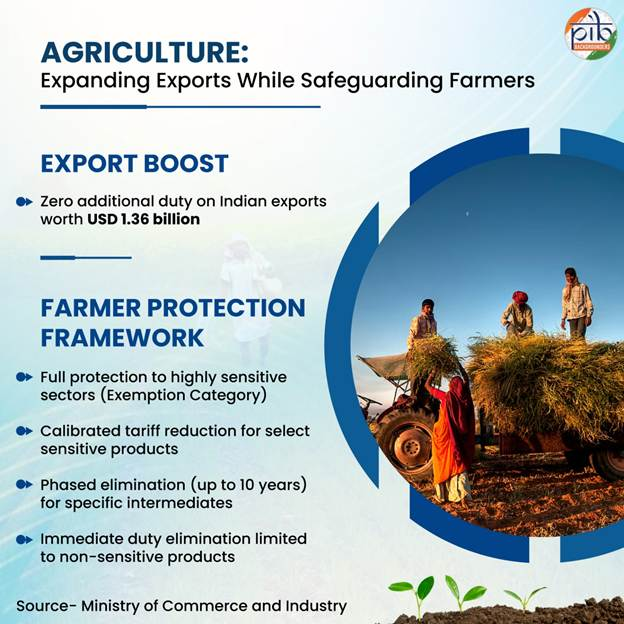
- The US will apply zero additional duty on Indian exports worth USD 1.36 billion.
- Additionally, a strict "negative list" has been maintained. No tariff relief has been granted to the US on sensitive agricultural products including:
- Meat, poultry, and dairy.
- Staple grains (wheat, rice, maize, millets).
- Fruits and vegetables (bananas, strawberries, cherries, citrus, green peas).
- Other commodities like soybean, sugar, oilseeds, ethanol, and tobacco.
- GM Ban Continues: India has firmly refused to open its doors to Genetically Modified (GM) items, specifically blocking American GM corn and soybean.
- Boost to Indian Farmers: India has secured duty-free entry into the US market for several sectors, with duties dropping from 50% to 0% in many cases.
- Agriculture Exports: Zero-duty access has been granted for Indian spices, tea, coffee, cashew nuts, Brazil nuts, and coconuts (including oil and copra).
- Fruits and Vegetables: Exports of mangoes, guavas, papayas, avocados, bananas, and mushrooms will benefit from tariff elimination.
- Processed Goods: Select processed foods and cereals like barley will also enter duty-free, encouraging value addition within India before export.
- Animal Feed Market: With India's domestic production of maize and soybean unable to keep pace with the rising demand from the poultry and livestock sectors, the deal opens specific windows for feed imports without compromising the ban on GM grains.
- The US can now export Sorghum (Red Sorghum) to India. It is seen as a vital non-GM alternative to corn for the Indian poultry industry.
- Distillers Dried Grains with Solubles (DDGS) is a by-product of ethanol production. Although it may be derived from GM corn, India is allowing it only as a processed feed input.
- It supports the protein requirements of livestock and poultry without opening the door to GM grains.
Calibrated Market Opening with Strong Safeguards
- For items that were opened, India used safeguards to prevent dumping:
- Tariff Rate Quotas (TRQs): Applied to items like apples and almonds, where only a specific quantity can be imported at lower rates.
- Phased Rollouts: Some tariffs will be reduced over a period (up to 10 years) to allow domestic industries to adjust.
- Minimum Import Price (MIP): Imposed on wines and spirits to ensure only high-value premium products enter, protecting the domestic mass-market industry.
India's Feed Market
- Current Output: According to the United States Department of Agriculture (USDA), India’s annual maize production is expected to be 43 million tonnes (mt) in 2025-26, with about 24 mt allocated specifically for feed use. Soybean output stands at approximately 12.5 mt.
- Compound Feed Industry: The total production of compound feed is pegged at 60 mt, comprising 40 mt for poultry, 18 mt for cattle, and 2 mt for aqua/shrimp feed.
- Domestic DDGS: Grain-based ethanol distilleries in India are currently supplying over 3 mt of DDGS to the feed industry, with a forecast of 4.2 mt in 2025-26.
- Yield Challenges: Domestic production struggles with low yields; maize yields average 3.75 tonnes/hectare (vs 11.25 in the U.S.), and soybean yields are below 1 tonne/hectare (vs 3.4 in the U.S.).
Demand Drivers
- Drivers: Rising incomes, urbanization, and a population expected to reach 1.5 billion by 2050 are driving a dietary shift toward protein (milk, eggs, meat), thereby increasing the demand for animal feed.
- Consumption Projections (USDA Report):
- Maize: From 34.7 mt (2022-23) to 93 mt (2050) under a moderate growth scenario, or up to 200.2 mt under a rapid growth scenario.
- Soybean Meal: From 6.2 mt (2022-23) to 28.3 mt (2050) under moderate growth, or up to 68.3 mt under rapid growth.
- Feed Composition: Maize is a critical component, making up 55-65% of broiler feed, 50-60% of egg-layer feed, and 15-20% of cattle feed.
US Role
- With India’s production unable to keep pace with demand, the U.S. is positioned to fill the deficit. The USDA projects India could need to import up to 46 mt of maize and 19 mt of soybean meal by 2040 under rapid growth scenarios.
|
Drishti Mains Question: How does the India–US Interim Trade Agreement balance export promotion with domestic farmer protection? |
Frequently Asked Questions (FAQs)
1. Why is the India–US Interim Trade Agreement significant?
It lowers U.S. tariffs on Indian goods to 18%, gives India preferential access to the U.S. market, and sets the stage for a full Bilateral Trade Agreement.
2. How are Indian farmers protected under the agreement?
Sensitive products like cereals, dairy, meat, pulses, oilseeds, fruits, ethanol and tobacco are kept on a strict negative list with no tariff concessions.
3. What agricultural exports gain zero-duty access to the U.S.?
Products such as spices, tea, coffee, cashew nuts, coconuts, mangoes, guavas, papayas, mushrooms and barley receive zero-duty access.
4. Does the deal allow imports of GM crops into India?
No, the ban on GM maize and GM soyabean remains intact; only non-GM sorghum and processed feed inputs like DDGS are permitted.
5. Why is the animal feed market important in this deal?
Rising demand for poultry and livestock feed, driven by income growth and dietary shifts, has outpaced domestic production, necessitating controlled imports.
UPSC Civil Services Examination, Previous Year Questions (PYQs)
Mains
Q. ‘What introduces friction into the ties between India and the United States is that Washington is still unable to find for India a position in its global strategy, which would satisfy India’s National self-esteem and ambitions’. Explain with suitable examples. (2019)


International Relations
India as Chair of the Kimberley Process 2026
For Prelims: Diamond, Kimberley Process, Krishna, Mahanadi, Panna, Lab-Grown Diamonds
For Mains: India’s diamond industry and global value chains, India’s diamond industry and global value chains
Why in News?
India has assumed the chair of the Kimberley Process (KP) for 2026, placing it at the forefront of global diamond governance. Coming at a crucial time for the diamond industry, the role positions India as a key Global South voice and a central hub in the diamond value chain to drive meaningful reforms.
What is the Kimberley Process?
- About: The Kimberley Process (KP) is an international forum initiated in 2000 by Southern African countries, to regulate the trade in rough diamonds. It aims to prevent the flow of conflict diamonds while helping to protect legitimate trade in rough diamonds.
- Conflict diamonds are rough diamonds used by rebel groups or their allies to finance armed conflicts aimed at undermining legitimate governments.
- KP is not a formal international organisation or a legally binding treaty. It has no permanent office or staff and functions on burden-sharing contributions from participating countries, with support from industry and civil society.
- Its rules are implemented through national laws, not international legal obligations.
- Participants: Today, the KP has 60 participants representing 86 countries. The KP members account for approximately 99.8% of global rough diamond production.
- Kimberley Process Certification Scheme (KPCS): Launched in 2003, the KPCS outlines the rules that govern the trade in rough diamonds.
- The KPCS has developed a set of minimum requirements that each participant must meet.
- The KPCS requires that every consignment of rough diamonds crossing an international border be accompanied by a tamper-resistant KP certificate.
- Trade in rough diamonds is permitted only between certified KP members who adhere to the scheme’s minimum requirements.
- Participant countries are legally obliged to share timely and accurate statistical data regarding their diamond production and trade to ensure transparency.
- India is one of the founding members of the Kimberley Process Certification Scheme (KPCS).
- Enforcement is carried out individually by participant countries to ensure that only legitimate, "conflict-free" diamonds enter the supply chain.
Diamonds in India
- Diamond Resources in India: Diamond mining in India dates back to the 5th century BCE, with large-scale mining and trade flourishing during the 16th–17th centuries.
- This era was vividly documented by Jean-Baptiste Tavernier, a French explorer and merchant, whose accounts highlight Golconda in present-day Telangana as a historic global diamond trading hub.
- Until the 19th century, diamonds were mainly recovered from river gravels and conglomerates, notably along the Krishna, Mahanadi, and Panna belts.
- The Majhgawan mine in the Panna diamond belt (Madhya Pradesh) remains India’s only commercially operating diamond mine, and diamonds from Panna district have been officially granted a Geographical Indication (GI) tag, recognising their unique origin and quality.
- Market Dominance: While India is not a major producer, it is a major importer of rough diamonds, sourcing mainly from the United Arab Emirates, Belgium, and Russia.
- As of 2024 around 90% of the world’s diamonds are processed in India, accounting for approximately 75% of global turnover by value, according to Industrial Extension Bureau (iNDEXTb), with industries concentrated in Surat and Mumbai.
- Lab-grown Diamonds: In 2023, India produced over 3 million Lab-Grown Diamonds (LGDs), accounting for over 15% of the world’s total output.
- LGDs are made using chemical vapour deposition (CVD) or high-pressure high temperature (HPHT) processes that replicate earth-like conditions. Under these controlled lab environments, carbon crystallizes into a diamond.
- Government Backing for LGDs: In the Union Budget FY24, a Rs 242 crore, five-year seed grant was announced to establish a lab-grown diamond research centre at IIT Madras.
- Further, the Union Budget FY26 removed customs duty on imported carbon seeds, lowering production costs and improving global competitiveness.
- The sector also allows 100% FDI, encouraging foreign investment. Alongside, clearer regulations and dedicated certification frameworks are being developed to boost consumer trust, positioning India as a global manufacturing hub for LGDs, not just a polishing centre.
- Strategic Leverage: India exports polished and LGDs to major markets like the US, China, UAE, and Hong Kong.
- Its position at the heart of the value chain gives it unique leverage to influence governance norms.
What are the Core Challenges and Criticisms Facing the KP?
- Narrow Definition: The current definition of "conflict diamonds" is limited to diamonds used by rebel groups to finance conflict.
- It ignores other critical issues such as diamonds used by Governments to fund foreign wars or human rights abuses.
- “Mixed origin” laundering loophole: Diamonds from multiple sources are mixed in trading hubs and re-certified as “Origin: Mixed”. This erases traceability, allowing conflict diamonds to re-enter legal supply chains.
- Veto Power: Its consensus-based decision-making allows a single country to block the identification of conflict diamonds or stall reforms, often paralysing the system and freezing its ability to evolve.
- No Permanent Institutional Structure: Absence of a permanent secretariat or staff weakens monitoring, continuity, and crisis response capacity.
- Ineffective Embargoes: The case of the Central African Republic (banned in 2013, rejoined in 2024) highlights that weak support measures led to increased smuggling and continued violence.
- While there is consensus on protecting mining communities, disagreement over addressing state-related violence highlights the need for a more inclusive and realistic KP mandate.
- Rough-only Jurisdiction Gap: KP applies only to rough diamonds. Even minimal polishing removes diamonds from KP oversight, enabling easy circumvention.
- LGDs: Rising ethical concerns over conflict diamonds and human rights abuses in mining are pushing consumers toward LGDs, risking reduced demand for natural diamonds and harming economies dependent on diamond mining.
What Measures can India take as Chair to Reform the KP?
- Broadening the Agenda: India can push to expand the scope of the KP by forming technical working groups to assess violence and human rights risks beyond just rebel insurgencies, building consensus before redefining "conflict diamonds."
- Technological Modernization: Leveraging its IT strength, India can promote blockchain-based certification.
- A digital, immutable ledger for each diamond shipment would drastically reduce fraud and improve traceability.
- Institutional Reform: India can advocate for independent third-party audits and the full public release of granular trade statistics to enhance transparency.
- Capacity Building: India can support African producer nations by establishing regional technical hubs that offer IT support, forensic capacity, and certification assistance, making compliance collaborative rather than punitive.
- Sustainable Development: India can push reforms to ensure diamond revenues directly support mining communities (funding health, education, and local infrastructure) instead of bypassing these regions.
- Such an approach aligns the Kimberley Process with Sustainable Development Goals (SDGs), especially poverty reduction and decent work.
Conclusion
As 2026 Chair, India has the opportunity to turn the Kimberley Process from a narrow conflict-prevention tool into a credible framework for ethical diamond governance. By combining digital traceability with a people-centric focus on African mining livelihoods, India can lead the Global South in making diamonds a driver of sustainable development, not conflict.
|
Drishti Mains Question: India’s chairmanship of the Kimberley Process comes at a time of structural crisis in global diamond governance. Examine the challenges and reform opportunities. |
Frequently Asked Questions (FAQs)
1. What is the Kimberley Process (KP)?
The KP is an international certification scheme launched in 2003 to prevent the trade in conflict diamonds by regulating cross-border trade in rough diamonds.
2. Why is India’s chairmanship of the KP in 2026 significant?
India is a central processing hub for diamonds and a key Global South voice, giving it strategic leverage to push reforms in global diamond governance.
3. What are the main criticisms of the Kimberley Process?
The KP has a narrow definition of conflict diamonds, consensus-based veto paralysis, weak traceability, and applies only to rough diamonds.
4. How do lab-grown diamonds challenge the KP framework?
Ethical concerns over conflict diamonds are shifting consumers toward lab-grown diamonds, reducing demand for natural diamonds and exposing governance gaps.
5. What reforms can India push as KP Chair?
India can promote blockchain-based traceability, expand the definition of conflict diamonds, strengthen audits, support African producers, and align KP with SDGs.
UPSC Civil Services Examination, Previous Year Question (PYQ)
Prelims
Q.Which one of the following foreign travellers elaborately discussed about diamonds and diamond mines of India? (2018)
(a) Francois Bernier
(b) Jean-Baptiste Tavernier
(c) Jean de Thevenot
(d) Abbe Barthelemy Carre
Ans: (b)


Important Facts For Prelims
Breakthrough in CAR T-Cell Therapy
Why in News?
A new study by the Indian Institute of Technology (IIT) Bombay, published in Biomaterials Science, has demonstrated a gentler method for recovering lab-grown T-cells.
- This development in cancer immunotherapy, particularly CAR T-cell therapy, could potentially make advanced cancer care more reliable and affordable in India.
What are T-cells and CAR T-cell Therapy?
- T-Cells: These are a type of white blood cell that act as the body’s frontline soldiers. They patrol the bloodstream to detect infections or abnormal cells like cancer.
- Upon detection, they either destroy the threat directly or signal other immune cells to assist.
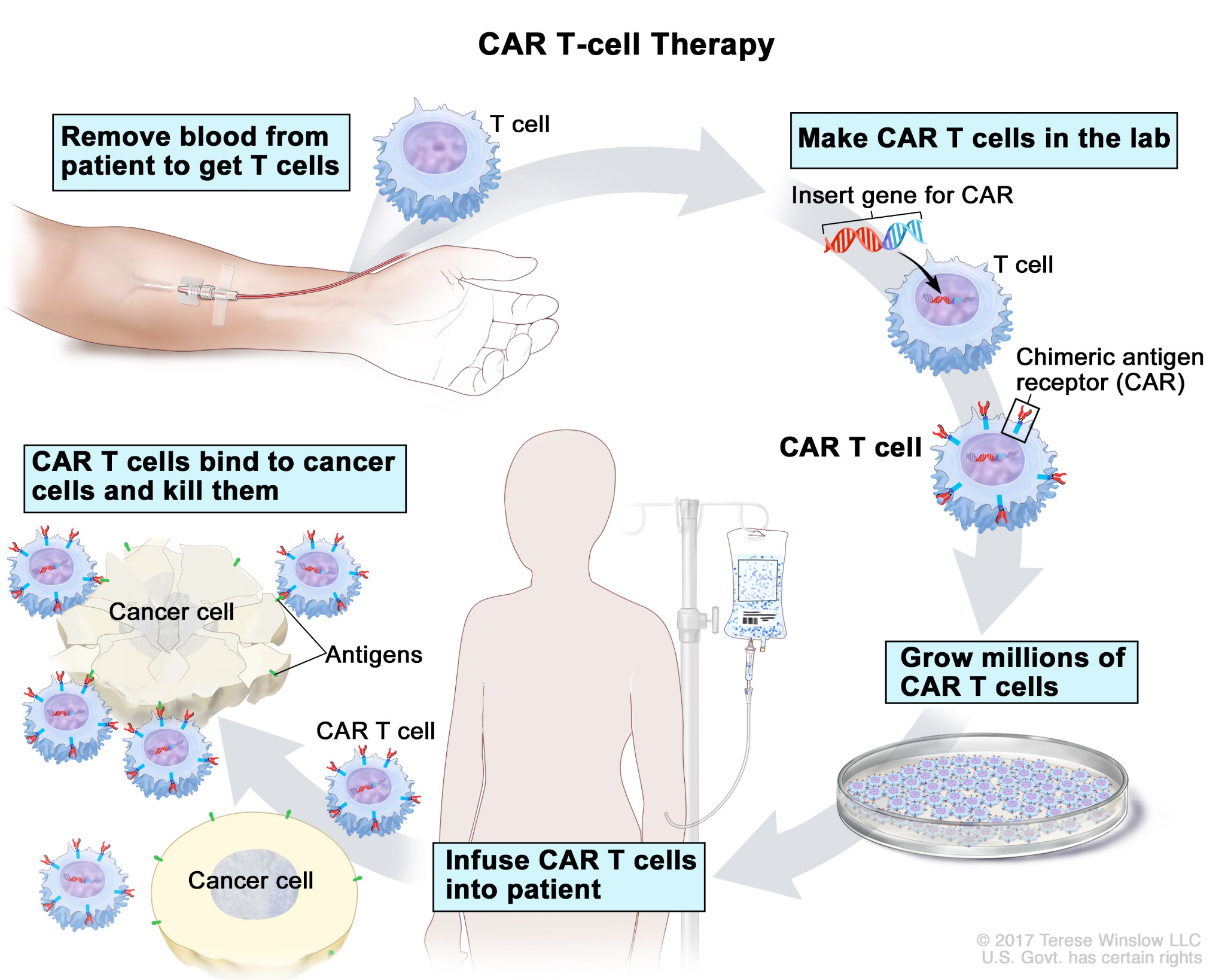
- CAR T-cell Therapy: This is a cutting-edge treatment where T-cells are collected from a patient and genetically engineered in a lab.
- Scientists add a gene to equip these cells with Chimeric Antigen Receptors (CARs).
- These receptors act like trackers, guiding the T-cells to recognize and destroy specific cancer cells.
- It is currently approved for certain blood cancers like leukemia and lymphoma.
- NexCAR19: In 2023, NexCAR19 became India’s first approved indigenous CAR-T cell therapy, developed through a collaboration between IIT Bombay, Tata Memorial Centre, and ImmunoACT (a company incubated at IIT Bombay).
- As the world's most affordable CAR-T therapy, it positions India on the global map for advanced cell and gene therapy.
What are the Key Findings of IIT Bombay Study on CAR T-cell Therapy?
- Cell Recovery: Growing T-cells in 3D scaffolds (which mimic the human body) is effective for cell growth but makes retrieval difficult.
- T-cells grip the fibrous scaffolds tightly, and harsh recovery methods (using trypsin) damage them.
- Traditional extraction methods use harsh enzymes (like Trypsin or TrypLE) which strip the cells of vital proteins, rendering them less effective or killing them.
- Efficient Recovery: IIT Bombay team found that using a commercially available enzyme called Accutase (instead of Trypsin) allows for the gentle detachment of cells.
- Accutase effectively releases the cells from the 3D scaffold without harming their outer membrane.
- Accutase-recovered cells showed higher survival, preserved immune function, and formed healthy clusters, indicating better readiness for cancer therapy.
Significance
- Current CAR T-cell therapies can cost Rs 3-4 crore globally. By reducing the waste of expensive lab-grown cells and improving efficiency, this method helps Indian initiatives (like ImmunoACT) bring the cost down to a fraction of the global price.
- A more consistent supply of healthy T-cells means the therapy is more likely to succeed when infused back into the patient.
- This highlights India's growing capability in biomedical engineering, moving from generic drug manufacturing to novel process innovation in complex therapies.
Frequently Asked Questions (FAQs)
1. What are T-cells?
T-cells are a type of white blood cell that play a central role in immune defence by identifying and destroying infected or cancerous cells
2. What is CAR T-cell therapy?
CAR T-cell therapy is a form of cancer immunotherapy in which a patient’s T-cells are genetically engineered to express Chimeric Antigen Receptors (CARs) that target specific cancer cells
3. Which cancers are currently treated using CAR T-cell therapy?
CAR T-cell therapy is approved for certain blood cancers, mainly leukemia and lymphoma
4. Why is T-cell recovery important in CAR T-cell therapy?
Damaged or non-functional T-cells reduce treatment effectiveness, making safe recovery of lab-grown cells critical.
5. What is NexCAR19?
NexCAR19 is India’s first indigenous CAR T-cell therapy, approved in 2023, developed by IIT Bombay, Tata Memorial Centre, and ImmunoACT
6. Why is CAR T-cell therapy expensive?
High costs arise from complex cell engineering, specialised lab infrastructure, and low recovery efficiency of viable T-cells
UPSC Civil Services Examination, Previous Year Question (PYQ)
Prelims
Q. Which one of the following statements best describes the role of B cells and T cells in the human body? (2022)
(a) They protect the environmental allergens. body
(b) They alleviate the body’s pain and inflammation.
(c) They act as immunosuppressants in the body.
(d) They protect the body from diseases caused by pathogens.
Ans: (d)


Important Facts For Prelims
India Semiconductor Mission 2.0
Why in News?
The Union Budget 2026–27 marked a decisive step in India’s technology strategy with the announcement of India Semiconductor Mission (ISM) 2.0. Building on the ecosystem created under ISM 1.0, the new phase reflects a transition from policy formulation and capacity creation to consolidation, technological depth, and global integration.
What is India Semiconductor Mission 2.0?
- About: ISM 2.0 aims to position India as a reliable and competitive player in the global semiconductor value chain while advancing the goals of Aatmanirbhar Bharat and Make in India–Make for the World. A budgetary provision of ₹1,000 crore has been made for FY 2026–27 to support this objective.
- Key Focus Areas:
- Indigenous Manufacturing: Production of semiconductor equipment, chemicals, gases, and materials within India to reduce import dependence and supply disruptions.
- Full-Stack IP Development: Promotion of end-to-end Indian semiconductor intellectual property for secure and globally competitive chip solutions.
- Research & Skills: Establishment of industry-led research and training centres to support applied R&D and advanced manufacturing skills.
- Supply Chain Resilience: Strengthening domestic and global semiconductor supply chains amid geopolitical uncertainties.
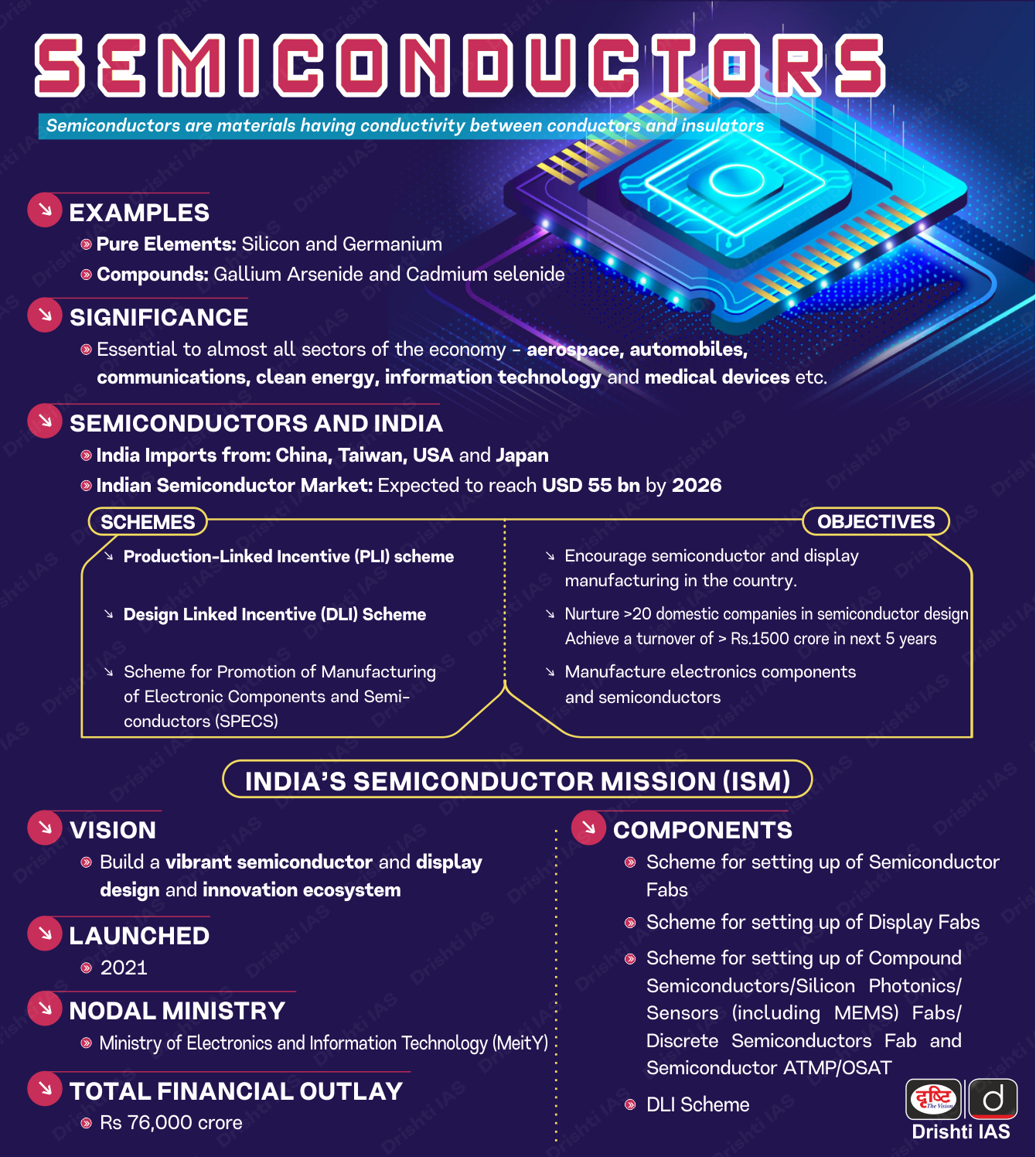
- Manufacturing: India has already laid a strong foundation under ISM 1.0, approved in December 2021 with an incentive outlay of ₹76,000 crore offering up to 50% fiscal support.
- As of December 2025, ten projects with investments of ₹1.60 lakh crore have been approved across six states, covering silicon fabs, compound semiconductors, advanced packaging, and testing facilities.
- Market Size: India’s semiconductor market has grown from $38 billion in 2023 to $45–50 billion in 2024–25 and is projected to reach $100–110 billion by 2030.
- India is emerging as a global semiconductor hub, targeting 70–75% self-sufficiency in domestic chip demand by 2029 and aiming to become a leading semiconductor nation with 3 nm and 2 nm manufacturing capabilities by 2035.
- Ecosystem: The Mission is complemented by the Modified Programme for Development of Semiconductor and Display Manufacturing Ecosystem, with a financial outlay of ₹8,000 crore for 2026–27.
- This programme aims to accelerate investments, expand fabrication and packaging capacity, and generate high-quality employment.
Key Initiatives For Semiconductors
- Design Linked Incentive Scheme: Supports fabless companies, semiconductor IP development, and expansion of design manpower.
- Digital India RISC-V Programme: Promotes open-source processor development without licence costs.
- Chips to Startup Programme: Enables access to advanced design tools and fabrication for universities and startups.
- Indigenous Microprocessor Development: Development of processors such as DHRUV64 to reduce dependence on imported chips.
Frequently Asked Questions (FAQs)
1. What is the budgetary allocation for ISM 2.0 in 2026–27?
₹1,000 crore has been allocated for India Semiconductor Mission 2.0 for FY 2026–27.
2. What is the primary shift from ISM 1.0 to ISM 2.0?
ISM 2.0 shifts focus from initial ecosystem setup to consolidation, advanced manufacturing, indigenous IP, and global integration.
3. Why is semiconductor self-reliance critical for India?
It ensures supply-chain security, economic stability, technological sovereignty, and resilience against global disruptions.
UPSC Civil Services Examination, Previous Year Question (PYQ)
Prelims:
Q. With reference to solar power production in India, consider the following statements:(2018)
- India is the third largest in the world in the manufacture of silicon wafers used in photovoltaic units.
- The solar power tariffs are determined by the Solar Energy Corporation of India.
Which of the statements given above is/are correct?
(a) 1 only
(b) 2 only
(c) Both 1 and 2
(d) Neither 1 nor 2
Ans: (d)


Rapid Fire
Colombo Security Conclave
At the India–Seychelles bilateral meeting, India highlighted the strategic significance of Seychelles joining the Colombo Security Conclave (CSC), describing it as a key expansion of India’s regional maritime security architecture.
- About: The CSC is a regional security grouping of Indian Ocean nations that focuses on addressing common security challenges in the Indian Ocean Region (IOR).
- In 2011, it began as a Trilateral Maritime Security Cooperation mechanism between India, Sri Lanka, and the Maldives.
- The group became dormant after 2014 due to strained relations between India and the Maldives. It was revived and rebranded as the Colombo Security Conclave in 2020.
- Membership expanded with Mauritius (2022), Bangladesh (2024) and Seychelles (2025).
- Secretariat: Permanent Secretariat is located in Colombo, Sri Lanka. The grouping brings together National Security Advisors (NSAs) and Deputy NSAs of member countries for coordinated security cooperation
- Five Pillars of Cooperation:
- Maritime Safety and Security (Core focus).
- Countering Terrorism and Radicalisation.
- Combating Trafficking and Transnational Organised Crime.
- Cyber Security and Protection of Critical Infrastructure.
- Humanitarian Assistance and Disaster Relief (HADR).
- Strategic Significance for India: The CSC is an operational manifestation of India’s vision of SAGAR (Security and Growth for All in the Region) and the new MAHASAGAR initiative.
- It cements India’s role as the "first responder" and net security provider in the IOR, reducing the reliance of smaller island nations on extra-regional powers (like China).
- Unlike the Indian Ocean Rim Association (IORA) which is a broad dialogue forum, the CSC is more security-focused and operational.
| Read more: India–Seychelles |


Rapid Fire
RBI Enhances Collateral-Free Lending for MSEs
The Reserve Bank of India, through the Lending to MSME Sector (Amendment) Directions, 2026, has directed banks not to insist on collateral security for loans up to ₹20 lakh extended to Micro and Small Enterprises (MSEs).
- Applicability: The amended directions will be applicable to all loans to MSE borrowers sanctioned or renewed on or after 1stApril 2026.
- Enhanced Collateral-Free Loan Limit: The collateral-free loan ceiling has been increased from ₹10 lakh to ₹20 lakh, aiming at strengthening last-mile credit delivery for small businesses with limited assets.
- Coverage under PMEGP: It will be applicable to all units financed under the Prime Minister Employment Generation Programme (PMEGP), implemented by the Khadi and Village Industries Commission (KVIC).
- PMEGP is a credit-linked subsidy scheme of the Government of India, launched in 2008 that promotes self-employment by supporting the setting up of micro enterprises and small units in both rural and urban areas.
- Additional Credit: Based on a borrower’s good track record and financial strength, banks may allow collateral-free loans up to ₹25 lakh, as per their internal policies, with credit guarantee cover where applicable.
- Exceptions: Voluntary pledging of gold or silver by borrowers for loans within the collateral-free limit will not be treated as a violation of RBI’s directions.
| Read more: Strengthening MSMEs for Economic Resilience |


Rapid Fire
Network Readiness Index Report 2025
India has improved its digital readiness by four ranks to 45th position in the Network Readiness Index (NRI) 2025, released by the Portulans Institute, a non-profit research institute based in Washington, DC.
- Methodology: The index maps the network-based readiness of 127 economies across 53 indicators grouped under four pillars: Technology, People, Governance, and Impact.
- India’s Score: India improved its overall score from 53.63 in 2024 to 54.43 in 2025.
- Global Leadership: India ranked 1st globally on key indicators such as annual investment in telecommunication services, AI scientific publications, ICT services exports, and e-commerce legislation.
- India secured 2nd rank on indicators including Fibre-To-The-Home (FTTH)/building internet subscriptions, mobile broadband internet traffic, and international internet bandwidth, and 3rd rank on indicators related to domestic market scale and income inequality.
- Income Group Performance: India is ranked 2nd among lower-middle-income countries, after Vietnam, performing better than expected in network readiness relative to its income level.
| Read more: Network Readiness Index 2024 |


Rapid Fire
India’s Next-Generation Tsunami Warning System
India plans to establish a ₹300-crore Regional Service Centre (RSC) in the Andaman and Nicobar Islands to strengthen its tsunami monitoring and early warning system.
- Location & Regional Role: The proposed Regional Service Centre (RSC) will be established at Vijaynagar on Swaraj Dweep in the Andaman and Nicobar Islands and will also provide tsunami warning services to Indian Ocean countries such as Sri Lanka.
- Current System Limitation: India’s existing tsunami warning system largely detects earthquake-triggered tsunamis, despite nearly one-fifth of global tsunamis being caused by non-seismic events like submarine landslides and volcanic activity.
- Next-Generation Capability: The upgraded system will detect both seismic and non-seismic tsunamis, enhancing the speed, accuracy and reliability of warnings across the Indian Ocean region.
- Technology & Infrastructure: The project includes laying about 270 km of sub-sea cables along tectonic subduction zones, enabling faster acoustic signal detection and reducing data gaps caused by damage or loss of surface buoys and satellite limitations.
- Nodal Agency: It is led by the Indian National Centre for Ocean Information and Services (INCOIS), which operates the Indian Tsunami Early Warning Centre (ITEWC).
| Read more:Tsunami Early Warning System in India |


Rapid Fire
Right to Disconnect Bill 2026
To address worsening work–life balance and rising mental health concerns, a Right to Disconnect Bill was introduced in Parliament as a Private Member’s Bill, following earlier attempts in 2019 and 2025.
- Objective: The Bill seeks to legally recognize an employee's right to disengage from work-related communication (emails, calls, messages) outside of official working hours without fear of reprisal.
- As per the International Labour Organization (ILO), Indians worked the highest average hours globally (56.2 hours per week in 2024), while constant after-hours communication creates “telepressure” (the psychological urge to immediately respond to work messages), leading to stress, sleep deprivation, and poor work–life balance.
- Provisions: Right to Disconnect Bill, 2026 proposes that workers should not face adverse consequences such as disciplinary action, poor performance appraisals, or denial of career opportunities for refusing to respond after work hours.
- Companies will be statutorily required to draft a comprehensive policy in consultation with trade unions or employee representatives. This policy must define:
- Working hours and permissible after-hours communication.
- Emergency protocols and grievance redressal mechanisms.
- Measures for digital wellness.
- Companies will be statutorily required to draft a comprehensive policy in consultation with trade unions or employee representatives. This policy must define:
- Global Precedents: The Bill draws inspiration from countries like France, Belgium, Portugal, and Australia, all of which have adopted legislation to protect personal time.
| Read more: Right to Disconnect Bill, 2025 |