Internal Security
Defence in Union Budget 2026–27
For Prelims: Union Budget 2026–27, Operation Sindoor, Border Roads Organisation,Ex-Servicemen Contributory Health Scheme, System for Pension Administration Raksha
For Mains: Defence Budget and National Security Preparedness, Capital vs Revenue Expenditure in Defence, Atmanirbhar Bharat in Defence Manufacturing
Why in News?
The Union Budget 2026–27 has drawn sharp attention for giving the highest-ever allocation of Rs 7.85 lakh crore to the defence sector, signalling India’s strategic focus on military modernisation, indigenous manufacturing and veterans’ welfare.
- The budget comes in the aftermath of Operation Sindoor, which tested India’s combat readiness in real conditions, and places national security at the centre of India’s long-term vision of self-reliance.
Summary
- The Union Budget 2026–27 strengthens India’s defence preparedness by prioritising modernisation, indigenous manufacturing, defence R&D and veterans’ welfare, building on operational lessons from recent military engagements.
- However, structural challenges such as high revenue expenditure, slow procurement processes, import dependence and a demanding two-front threat continue to limit the transformative impact of higher defence allocations.
How does the Union Budget 2026–27 Advance Defence Modernisation and Self-reliance?
- Modernisation Push: The Union Budget 2026–27 places strong emphasis on defence modernisation, with capital allocation to the Defence Forces crossing Rs 2.19 lakh crore.
- A major share is directed towards capital acquisition, enabling induction of next-generation aircraft, advanced weapons, naval platforms, submarines and unmanned systems.
- Enhanced funding for the Border Roads Organisation strengthens strategic infrastructure such as tunnels, bridges and airfields.
- Investment in optical fibre–based defence communication networks supports network-centric and joint operations, reflecting a shift towards a technology-driven military.
- Boosting Indigenous Defence Manufacturing: The Union Budget 2026–27 gives a strong push to Aatmanirbhar Bharat in defence by prioritising indigenous manufacturing and reducing import dependence.
- Rs 1.39 lakh crore has been earmarked for procurement from domestic defence industries, with about three-fourths of the capital acquisition budget reserved for Indian manufacturers.
- Customs duty exemptions on imported raw materials for aircraft maintenance, repair and overhaul further strengthen domestic capabilities.
- Together, these measures aim to deepen the defence industrial ecosystem, attract investment and generate skilled employment.
- Research, Development and Innovation: The Union Budget 2026–27 strengthens defence research, development and innovation by raising the allocation to the Defence Research and Development Organisation by about 8.5% over the previous year.
- A dominant share of this increase is directed towards capital expenditure, underscoring a focus on capability creation rather than routine spending.
- The budget also deepens collaborative R&D by opening a significant portion of defence research funding to industry, start-ups and academia, expanding Centres of Excellence, and accelerating technology transfers.
- Enhanced Healthcare and Pension Support for Veterans: The Ex-Servicemen Contributory Health Scheme (ECHS) has received Rs 12,100 crore, reflecting a 45.49% increase over the previous year to support medical treatment for ex-servicemen and their dependents.
- Defence pension allocation has increased by 6.56%, ensuring timely monthly disbursement to over 34 lakh pensioners through System for Pension Administration Raksha (SPARSH) and other authorised pension channels.
India’s Initiatives Related to Defence Indigenisation
What are the Key Challenges in India’s Defence Modernisation Despite Higher Allocations?
- Revenue Expenditure: The most significant constraint on modernisation is the high "Revenue" expenditure (salaries and pensions).
- Salaries and pension account for 50% of the estimated spending on defence in 2025-26. Consequently, the share of the budget available for Capital Outlay (modernisation) has remained below 30% in recent years, limiting modernisations.
- Declining Expenditure Relative: The total defence allocation over the years remains at approximately 2% of GDP.
- This falls significantly short of the 3% of GDP benchmark recommended by the Standing Committee on Defence (2018) to achieve meaningful modernization, signaling a potential lack of fiscal resolve to adversaries.
- Currency Depreciation: Since most defence purchases are transacted in dollars, the depreciation of the Rupee significantly reduces the actual buying power of the allocated funds.
- Committed Liabilities: A significant portion of the capital budget goes toward "committed liabilities" (payments for contracts signed in previous years). Shortages here can lead to defaults on contractual obligations.
- Import Dependence: India is the 2nd-largest arms importer, after Ukraine, as per the Stockholm International Peace Research Institute (SIPRI) report.
- A significant amount of modernisation expenditure goes to foreign sources. Dependence on foreign suppliers creates vulnerability during emergencies/wars.
- While the push for Atmanirbharta (self-reliance) is strong, the creation of "negative lists" (banning specific imports) has often blocked foreign options before domestic alternatives are fully mature, creating immediate capability gaps.
- Domestic Quality Issues: In 2022, the CAG (Comptroller and Auditor General of India) has flagged quality issues with Ordnance Factories (accidents due to faulty ammunition) and delays in 119 out of 178 DRDO projects.
- Critical Equipment Shortages: The financial and procedural delays have led to tangible gaps in operational readiness.
- In the Army, only 15% of equipment is "new generation" (target is 30%). There are reported shortages of basic gear like snow goggles and boots for high-altitude troops.
- In the Air Force, the authorized strength is 42 fighter squadrons, but currently, there are only 31 active squadrons. The phasing out of aging MiG fleets without immediate replacements threatens air superiority.
- Disparity in Spending Power: China’s defence spending is much higher than India’s, giving it greater technological and military depth.
- Although India outspends Pakistan, preparing for a two-front conflict forces India to spread its resources across land and maritime theatres, stretching its overall defence capacity.
- DAP 2020 Struggles: The Project 75(I) deal took nearly 6 years after the Defence Acquisition Procedure (DAP) 2020 to reach the contract stage (20 years total cycle), which is considered "functionally obsolete" in the age of AI warfare.
What Measures are Needed to Strengthen India's Defence Preparedness?
- Financial Restructuring: Operationalise the "Modernisation Fund for Defence and Internal Security" (recommended by the 15th Finance Commission).
- This non-lapsable fund would allow the Ministry to carry forward unspent capital budget, ensuring that committed liabilities for large contracts (like submarines or jets) are met without relying on fresh annual allocations.
- Incentivizing Private Sector R&D: Shift from a "buyer-seller" relationship to a "co-development" model with the private sector.
- The government must fund private sector R&D prototypes (under the 'Make-I' category) aggressively.
- This shift reduces dependence on DRDO’s monopolistic timelines, fosters a competitive private industrial base, and aligns with India’s defence export momentum (exports reached Rs 210 billion in 2023–24, with a Rs 500 billion target by 2028–29).
- Accelerating Procurement (Revamping DAP): Building on the Ministry of Defence declaration of 2025 as the Year of Reforms, defence acquisition must be streamlined to accelerate modernisation and strengthen self-reliance.
- This requires reducing bureaucratic layers in the Acceptance of Necessity (AoN) process and enabling fast-track, over-the-counter purchases for urgent capability gaps when indigenous platforms face delays, so operational readiness is not compromised.
- Theaterisation: Expedite the creation of Integrated Theatre Commands. This will ensure better resource utilization, jointness in operations, and a unified approach to threats from China and Pakistan.
- Realistic Indigenisation: A balanced approach is needed where import bans are synchronized strictly with the actual production timelines of domestic industries. If a domestic project (e.g., a light tank or drone) fails quality tests, interim emergency procurement powers must be exercised without hesitation to maintain operational readiness.
Conclusion
The Union Budget 2026–27 reflects a decisive shift towards building a modern, self-reliant and innovation-driven defence ecosystem. With sustained investments in indigenous manufacturing, research and strategic infrastructure, alongside strong support for veterans, the budget aligns defence preparedness with India’s long-term development goals and the vision of Viksit Bharat @2047.
|
Drishti Mains Question: Discuss the structural constraints limiting India’s defence modernisation despite increased capital expenditure. |
Frequently Asked Questions (FAQs)
1. Why is the Union Budget 2026–27 significant for the defence sector?
It provides the highest-ever defence allocation, focusing on modernisation, indigenous manufacturing and veterans’ welfare after recent operational experience.
2. How does the budget promote defence modernisation?
By increasing capital allocation for advanced platforms, strategic infrastructure and network-centric warfare capabilities.
3. What measures support Atmanirbhar Bharat in defence?
Priority to domestic procurement, reservation of capital acquisitions for Indian firms, and incentives for defence manufacturing and MRO activities.
4. What are the key challenges in defence modernisation?
High revenue expenditure, slow procurement cycles, import dependence, currency depreciation and persistent capability gaps.
5. Why is Defence Acquisition Procedure (DAP) 2020 criticised?
Due to prolonged procurement timelines, delays in strategic projects and inability to keep pace with rapid technological changes.
UPSC Civil Services Examination, Previous Year Questions (PYQs)
Mains
Q. Foreign Direct Investment (FDI) in the defence sector is now set to be liberalized: What influence this is expected to have on Indian defence and economy in the short and long run? (2014)
Q. “Increasing cross-border terrorist attacks in India and growing interference in the internal affairs of several member-states by Pakistan are not conducive for the future of SAARC (South Asian Association for Regional Cooperation).” Explain with suitable examples. (2016)
Q. The terms ‘Hot Pursuit’ and ‘Surgical Strikes’ are often used in connection with armed action against terrorist attacks. Discuss the strategic impact of such actions. (2016)


Science & Technology
Sodium-Ion Batteries
For Prelims: Lithium-ion technology, Electric vehicles, Critical minerals, National Critical Minerals Mission
For Mains: Battery Technology and India’s Energy Security, Critical Minerals and Strategic Autonomy
Why in News?
As batteries increasingly underpin modern infrastructure, India’s heavy reliance on lithium-ion technology exposes it to supply risks and import dependence. In this context, sodium-ion batteries (SiBs) are emerging as a safer and more resilient alternative, prompting calls for a strategic shift to strengthen India’s long-term energy security.
Summary
- India’s heavy reliance on lithium-ion batteries exposes it to import dependence and critical mineral risks, making sodium-ion batteries a safer, cost-effective and resource-secure alternative for EVs, grid storage and clean energy applications.
- While sodium-ion batteries offer strategic advantages, scaling them in India requires targeted policy support, supply-chain development, manufacturing ecosystem strengthening and early market deployment.
What are Sodium-ion Batteries?
- About: Sodium-ion (Na-ion) batteries are cost-effective, and safe alternatives to lithium-ion batteries, utilizing abundant sodium resources (e.g., sea salt) for energy storage.
- They offer rapid charging, excellent low-temperature performance, and a longer lifespan, making them ideal for electric vehicles (EVs), grid storage, and solar applications.
- Sodium-Ion Batteries Compare to Lithium-Ion:
- Energy Density: Historically, SiBs had lower specific energy because sodium is heavier than lithium.
- However, modern layered transition-metal oxide cathodes in SiBs are now approaching the energy density of Lithium Iron Phosphate (LFP) batteries.
- Safety Profile: SiBs are intrinsically safer. They exhibit significantly lower peak temperatures during thermal runaway events compared to lithium-ion cells.
- Transportation Benefits: Unlike lithium-ion batteries, which are dangerous goods and must be shipped at ~30% charge, SiBs can be stored and transported at zero volts without degradation.
- This eliminates fire risks during transport and lowers logistical costs.
- Energy Density: Historically, SiBs had lower specific energy because sodium is heavier than lithium.
- SiBs Significance for India:
- Reduces Import Dependence: The success of lithium-ion batteries hides key structural challenges, as they rely on scarce critical minerals like lithium, cobalt, nickel and graphite, making India heavily dependent on imports.
- Sodium is derived from abundantly available resources such as soda ash is high domestically, offering a pathway to strategic autonomy.
- SiBs can insulate India from global geopolitical risks and price volatility associated with critical minerals controlled by a handful of nations (like China).
- Cost Advantage for Mass Market: SiBs use aluminium instead of copper as current collectors, making them cheaper, lighter and easier to source.
- This makes SiBs ideal for India's price-sensitive markets, such as electric two-wheelers, three-wheelers, and grid energy storage.
- Ease of Adoption: Since SiBs can be manufactured using existing PLI-incentivized infrastructure (with minor tweaks), India can rapidly scale production without building entirely new ecosystems from scratch.
- Cost projections suggest sodium-ion batteries could become cheaper than lithium-ion batteries by the mid-2030s.
- With global manufacturing capacity expanding rapidly, early and decisive adoption is critical for India to stay competitive and secure its energy future.
- Reduces Import Dependence: The success of lithium-ion batteries hides key structural challenges, as they rely on scarce critical minerals like lithium, cobalt, nickel and graphite, making India heavily dependent on imports.
India’s Initiatives to Strengthen Battery Manufacturing
- Production Linked Incentive Scheme for Advanced Chemistry Cell (ACC) Battery Storage: Incentivises domestic manufacturing of advanced battery cells and promotes technology adoption, R&D and scale.
- Under PLI for ACC 50 GWh of domestic capacity is targeted, with 40 GWh awarded to four beneficiary firms, but only about 1 GWh has been commissioned so far, with no incentives claimed yet, underscoring slow on-ground progress.
- National Critical Minerals Mission: Secures supply chains for critical minerals through exploration, mining, processing, recycling and overseas assets.
- Overseas mineral partnerships via Khanij Bidesh India Limited: Acquisition and development of lithium and other critical mineral assets abroad.
- Battery Waste Management Rules 2022: Mandates Extended Producer Responsibility (EPR) for battery collection, recycling and refurbishment.
What are the Key Challenges in Scaling up SiBs in India?
- Weight Penalty: Higher weight compared to lithium-ion batteries reduces suitability for high-range and space-constrained applications like compact EVs.
- Manufacturing Complexities: Sodium-ion cells are highly sensitive to moisture, requiring deeper vacuum drying and tighter process control.
- Higher energy use during manufacturing can raise initial costs until advanced techniques mature.
- Underdeveloped Supply Chain: India lacks a mature ecosystem for sodium-specific cathodes, anodes, electrolytes and separators.
- Processing infrastructure for battery-grade materials remains nascent, demanding parallel investments beyond cell assembly.
- Policy and Regulatory Gaps: Existing incentives are largely lithium-centric, with no clear targets or support for sodium-ion chemistries.
- Absence of dedicated safety standards and certification pathways slows vehicle approval and commercial rollout.
- Low market Confidence: Limited real-world deployment compared to lithium-ion reduces Original Equipment Manufacturers (OEMs) confidence.
- Insufficient pilot projects and demonstrations delay large-scale adoption, especially in EV platforms.
What Measures are Needed to Scale SiBs in India?
- Farm-to-Battery Hard Carbon Strategy: Use agricultural waste instead of imported hard carbon (used as anode in SiBs).
- Set up high-temperature pyrolysis units near rice-growing belts (Punjab, Haryana) and coconut belts (Kerala, Tamil Nadu).
- This turns the "parali"(stubble burning) pollution problem into a raw material solution, creating a domestic supply of battery-grade Hard Carbon for anodes.
- Desert-Centric Manufacturing Clusters: Locate sodium-ion factories in arid regions like Rajasthan or Kutch.
- Low humidity reduces dry-room energy needs, cutting operating costs and easing moisture-related manufacturing challenges.
- Strategic Market Entry via Standardisation; Standardise sodium-ion battery pack sizes for three-wheelers and buses first. These segments can accommodate larger batteries and provide scale before expansion to two-wheelers.
- Hybrid Sodium–Lithium Battery Packs: Promote dual-chemistry packs combining sodium-ion for daily use and lithium-ion for peak performance. Lowers vehicle cost while retaining range and acceleration.
- Chemical Upgrading Incentives: Support domestic chemical firms to upgrade industrial soda ash to battery-grade sodium carbonate. This closes critical supply-chain gaps and reduces import dependence.
Conclusion
Sodium-ion batteries provide India a viable route to reduce import dependence and strengthen energy security. With targeted policy support and ecosystem development, they can complement lithium-ion technology. Early adoption is key to long-term competitiveness.
|
Drishti Mains Question: Discuss the technological and ecosystem challenges in scaling sodium-ion batteries in India. |
Frequently Asked Questions (FAQs)
1. What are sodium-ion batteries and why are they important for India?
Sodium-ion batteries use abundant sodium instead of lithium, reducing import dependence and enhancing energy security while offering safer and cost-effective storage.
2. How do sodium-ion batteries compare with lithium-ion batteries?
They have slightly lower energy density but offer higher safety, lower material risk, easier transportation and comparable performance to LFP batteries.
3. Which government initiatives support battery manufacturing in India?
Key initiatives include theProduction Linked Incentive Scheme for Advanced Chemistry Cell Battery Storage, National Critical Minerals Mission, and the Battery Waste Management Rules, 2022.
4. What are the main challenges in scaling sodium-ion batteries in India?
Lower energy density, moisture-sensitive manufacturing, underdeveloped supply chains, lithium-centric policies, and limited market confidence.
5. What measures can accelerate sodium-ion battery adoption in India?
Using agricultural waste for hard carbon, desert-based manufacturing clusters, hybrid battery packs, standardisation for public transport, and chemical upgrading incentives.
UPSC Civil Services Examination, Previous Year Question (PYQ)
Q. In the context of electric vehicle batteries, consider the following elements: ( 2025)
- Cobalt
- Graphite
- Lithium
- Nickel
How many of the above usually make up battery cathodes?
A. Only one
B. Only two
C. Only three
D. All the four
Ans: (c)
Q. Which one of the following pairs of metals constitutes the lightest metal and the heaviest metal, respectively? (2008)
(a) Lithium and mercury
(b) Lithium and osmium
(c) Aluminium and osmium
(d) Aluminium and mercury
Ans: (b)


Important Facts For Prelims
Sacred Groves
Why in News?
Communal tension between tribal communities and Christians in Kapena village, Odisha, has spoilt the practice and sanctity of the tribal sacred groves.
What are Sacred Groves?
- About: Sacred groves are patches of virgin or near-natural forests protected by local communities due to their religious, cultural, and spiritual significance.
- They are often associated with deities, ancestral spirits, burial grounds, or water sources. Community-based protection has ensured minimal human interference, resulting in the conservation of rich biodiversity without formal legal safeguards.
- Extent and Distribution: India is home to over 1 million sacred forests and approximately 100,000 to 150,000 sacred groves.
- Sacred groves are found across India especially in the Western Ghats, Himalayas, Northeast, and Central India with high concentrations in Maharashtra, Karnataka, Kerala, and Tamil Nadu.
- They are locally known as Sarna (Bihar), Dev Van (Himachal Pradesh), Devarakadu (Karnataka), Kavu (Kerala), Devrai (Maharashtra), Law Kyntang (Meghalaya), and Oran (Rajasthan).
- Unlike the forest-based groves elsewhere, sacred groves often take the form of alpine meadows at the Himalayan foothills.
- Cultural and Religious Foundation: Rooted in Hinduism and intertwined with tribal and indigenous belief systems such as animism, ancestor worship and reverence for nature spirits, these groves are conserved not by law but by a powerful moral duty to worship and protect nature.
- Communities believe in the coexistence of all creatures, a concept mirroring the scientific mechanism of a healthy ecosystem.
- Ecological Significance:
- Biodiversity Refuge: Known as the "secret wizards of conservation," these groves serve as refuges for various plant and animal species, resembling small natural forests.
- Water Conservation: These groves maintain high water quality (meeting WHO potable standards) and provide undisturbed habitats for diverse flora and fauna.
- Soil conservation: Dense vegetation and minimal disturbance prevent soil erosion, enhance soil fertility, and support long-term ecosystem stability.
- Strict Prohibitions: To preserve sanctity, activities like logging and hunting are strictly prohibited. These areas are typically managed by local religious communities, joint families, or temple trusts.
- Modern Challenges: There is a declining interest among younger generations, alongside threats from deforestation, urbanisation, and industrial development.
- Protection: The management of wildlife and its habitat is primarily the responsibility of the concerned State Government.
- Wild Life (Protection) Act, 1972 enables states to notify private or community lands as Community Reserves to conserve biodiversity and traditional cultural practices.
- Sacred groves, though small and community-protected, play an important role in local conservation, and under the Centrally Sponsored Scheme for Development of Wildlife Habitat, Kerala received funding for the Kadalundi–Vallikkunnu Community Reserve between 2020–23.
- Under the Forest Rights Act (FRA), 2006, sacred groves fall under 'Community Forest Resources' (customary common forest land within traditional boundaries).
- The FRA empowers the Gram Sabha as the statutory authority to protect, manage, and conserve these resources through its own Community Forest Resource Management Committees, independent of the Forest Department.
- However, the WLPA allows states to declare sacred groves as Community Reserves, bringing them under Forest Department control.
- This creates a legal conflict, as WLPA-led community reserves dilute and undermine the Gram Sabha’s autonomy guaranteed under the FRA,2006.
- Global Recognition: The preservation of these groves aligns with the IUCN Green List Standard, which mandates the preservation of cultural values.
- These areas potentially qualify as Other Effective Area-based Conservation Measures (OECMs).
Frequently Asked Questions (FAQs)
1. What are sacred groves?
Community-protected patches of natural forests preserved due to religious, cultural, and spiritual beliefs, with minimal human interference.
2. Under which law are sacred groves recognised as community forest resources?
Under theForest Rights Act, 2006, sacred groves fall within Community Forest Resources managed by the Gram Sabha.
3. Why is there a governance conflict over sacred groves?
WLPA-led community reserves undermine theGram Sabha’s statutory authority under the FRA to manage community forests.
4. What is the global conservation significance of sacred groves?
They align with theIUCN Green List standards and qualify as OECMs, conserving biodiversity while preserving cultural values.


Important Facts For Prelims
End of New START Treaty
Why in News?
The New Strategic Arms Reduction Treaty (New START) expired on 5th February 2026, bringing to an end the last legally binding nuclear arms control agreement between the United States and Russia.
- Its expiry leaves no legal limits on U.S.–Russia strategic nuclear weapons for the first time since 1972, heightening risks of arms buildup, miscalculation, and escalation while weakening prospects for future arms control.
What is the New START Treaty?
- About: START stands for “Strategic Arms Reduction Treaty.” The original START-I was signed between the US and USSR in 1991 and came into force in 1994.
- It was replaced by the Strategic Offensive Reductions Treaty (SORT) and later the New START Treaty (Signed in 2010, entered into force in 2011).
- Extension and Suspension: Though extended in 2021 till 2026, Russia suspended participation in 2023 amid the Ukraine war, leading both sides to halt inspections and data sharing.
- Key Provisions: It limits long-range weapons designed to influence the outcome of a war, targeting centers of power, command facilities, or critical infrastructure and ensures verifiable reductions in strategic arms.
- Russia and the US hold 87% of the world’s nuclear warheads, enough for multiple global destructions.
- Arms Limitations: The treaty set verifiable limits for the US and Russia: 700 deployed ICBMs, SLBMs, and bombers, 1,550 nuclear warheads, and 800 deployed and non-deployed launchers and bombers.
- Persistent Frictions: Disagreements over U.S. missile defence and conventional strike systems, along with Russia’s development of advanced weapons such as Kinzhal missiles and Avangard hypersonic glide vehicles, strained New START, as both sides viewed the other’s strategic capabilities as destabilising.
- Negotiations for a post–New START framework stalled in 2024–25, with mutual distrust and disagreement over scope and terms.
- Global Implications: The lapse complicates efforts to involve China and other nuclear powers, weakening prospects for broader arms control and non-proliferation.
Global Initiatives Related to Nuclear Weapons Management
- Treaty on the Non-Proliferation of Nuclear Weapons (NPT), 1968: Aims to prevent nuclear weapons spread, promote disarmament, and support peaceful nuclear energy use; recognizes five nuclear-weapon states (NWS): US, Russia, UK, France, China.
- Comprehensive Nuclear-Test-Ban Treaty (CTBT), 1996: Prohibits all nuclear explosions for testing purposes. (not yet entered into force).
- Treaty on the Prohibition of Nuclear Weapons (TPNW), 2017: Bans the use, possession, testing, and transfer of nuclear weapons under international law.
Frequently Asked Questions (FAQs)
1. What is the New START Treaty?
The New START Treaty is a strategic arms control agreement between the US and Russia, signed in 2010 and enforced in 2011, limiting deployed ICBMs, SLBMs, bombers, and nuclear warheads to ensure verifiable reductions in strategic arms.
2. What are the key limitations under the New START Treaty?
The treaty limits 700 deployed ICBMs, SLBMs, and bombers, 1,550 nuclear warheads, and 800 deployed/non-deployed launchers and bombers, verified through inspections, data sharing, and the Bilateral Consultative Commission.
3. Why was the New START Treaty considered significant for global security?
It was significant as the last major treaty ensuring verifiable reductions and transparency between the two nations holding 87% of global nuclear arsenals, thereby slowing the arms race and preventing miscalculation.
UPSC Civil Services Examination, Previous Year Questions (PYQs)
Q. The “New START” treaty was in the news. What is this treaty? (2011)
(a) It is a bilateral strategic nuclear arms reduction treaty between the USA and the Russian Federation.
(b) It is a multilateral energy security cooperation treaty among the members of the East Asia Summit.
(c) It is a treaty between the Russian Federation and the European Union for energy security cooperation.
(d) It is a multilateral cooperation treaty among the BRICS countries for the promotion of trade
Ans: (a)


Rapid Fire
India and GCC Sign Terms of Reference for FTA
India and the Gulf Cooperation Council (GCC) have officially signed the Terms of Reference (ToR) to guide negotiations for a comprehensive Free Trade Agreement (FTA), marking a significant step toward bolstering economic ties and strategic partnership.
- Objective: The ToR defines the scope and modalities of the upcoming FTA negotiations.
- Economic Impact: The agreement aims to enable the seamless flow of goods and services, attract investments, expand job opportunities, and ensure food and energy security.
- Trade Statistics:
- Bilateral Trade: India's trade with GCC reached USD 178.56 billion in FY 2024-25 (Exports: USD 56.87 billion; Imports: USD 121.68 billion), accounting for 15.42% of India’s global trade.
- Growth: Trade has grown at an annual average rate of 15.3% over the last five years.
- India’s Key Exports: Engineering goods, rice, textiles, machinery, gems, and jewellery.
- India’s Key Imports: Crude oil, LNG, petrochemicals, and gold.
- Investment & Diaspora: The GCC is a major source of Foreign Direct Investment (FDI) for India (cumulative USD 31.14 billion as of Sept 2025) and is home to nearly 10 million Indians.
Gulf Cooperation Council (GCC)
- The GCC, established in 1981, is a regional bloc of six Arab states (Saudi Arabia, the UAE, Bahrain, Qatar, Kuwait and Oman) formed to promote political, economic and cultural unity based on shared Islamic values, tribal ties and common security interests.
- Operating through the Supreme Council, Ministerial Council and a Secretariat in Riyadh, the GCC occupies a strategically vital location along the Persian Gulf, connecting major global trade routes.
- The bloc represents a combined market of around 61.5 million people with a GDP of approximately USD 2.3 trillion, ranking ninth globally, and plays a crucial role in global energy and trade markets.
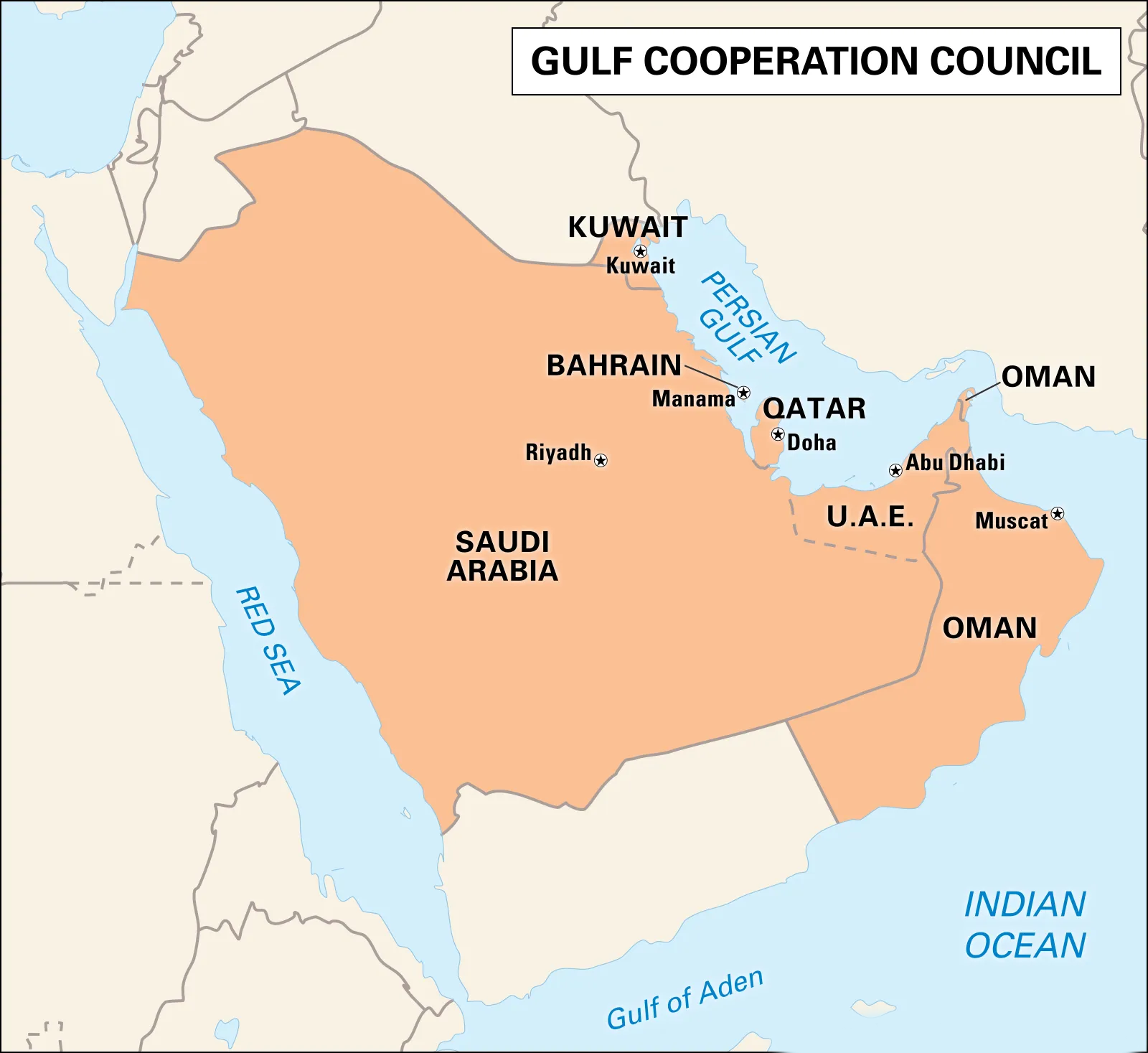
| Read more: India GCC Economic and Strategic Links |


Rapid Fire
India AI Stack
India introduced the India AI Stack to democratise AI and enable population-scale deployment across health, agriculture, education and governance.
India AI Stack
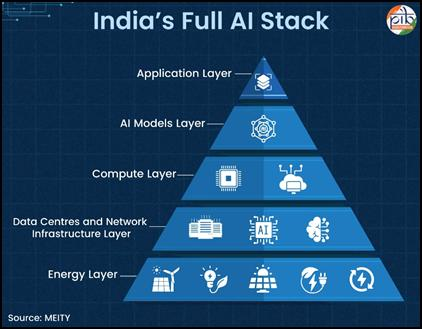
- About: The AI Stack is an integrated framework of five interlinked layers that enables the building, deployment and scaling of AI applications in a reliable, affordable and inclusive manner.
- It allows AI to move beyond experimentation and deliver real-world, population-scale impact across sectors.
- Key Layers:
- Application Layer: It represents the user-facing end of the stack, where AI delivers tangible value through tools such as health diagnostics, farm advisories, language translation, e-Courts services and AI-enabled weather forecasting.
- AI Model Layer: It forms the intelligence core of the stack, with India developing sovereign, India-centric models through initiatives like the IndiaAI Mission, BharatGen, Bhashini, and IndiaAIKosh to support Indian languages, public services and national priorities.
- Compute Layer: It provides the processing power required to train and run AI models, supported by subsidised access to Graphics Processing Unit (GPUs) and Tensor Processing Unit (TPUs) via the IndiaAI Compute Portal, national GPU clusters, supercomputers and a growing domestic semiconductor ecosystem.
- Data Centres & Network Infrastructure Layer: It acts as the backbone of AI deployment, enabled by nationwide optical fibre connectivity, near-universal 5G coverage and rapidly expanding domestic data centre capacity, with hubs like Mumbai, Bengaluru and Hyderabad.
- Energy Layer: Ensures reliable and sustainable power through 500+ GW installed capacity, over 51% non-fossil sources, battery storage, pumped storage projects and nuclear energy support.
- Significance: It promotes AI for Humanity by enabling inclusive, sovereign and affordable AI, reducing dependence on foreign models and compute, while aligning AI growth with sustainability, self-reliance and public welfare.
| Read more: India AI Mission and Emerging AI Ecosystem |


Rapid Fire
Jhodia Community and Soura Language
Recently, Odisha’s proposal to include the Jhodia community in the Schedule Tribe list and the demand for Soura language inclusion came into focus after the Centre informed the Lok Sabha that the proposal was not supported by the Office of the Registrar General of India (ORGI) and was referred back to the State.
Jhodia Community
- The Jhodia (Jhodia Paraja) community, mainly residing in Koraput, Rayagada and parts of Kalahandi districts of Odisha, was earlier recognised as a synonym of the Paroja tribe and received Scheduled Tribe benefits until 1997.
- The community is socially and economically backward, living in geographically isolated areas, with livelihoods largely dependent on subsistence agriculture and forest produce, and facing significant educational and economic deprivation.
Soura (Sora) Language
- The Soura (Saora) language, spoken by the Saora tribe, belongs to the Austroasiatic (Munda) language family and is also known as Sora, Savara, or Saura.
- It has a distinct script, Sorang Sompeng, developed in 1936 by Mangei Gomango, which holds cultural and religious significance.
- The language is not included in the Eighth Schedule, which limits its official recognition, institutional support and preservation efforts.
- The Government has clarified that there are no fixed criteria or timeline for inclusion of languages, as earlier attempts to frame such criteria by the Pahwa (1996) and Sitakant Mohapatra (2003) Committees remained inconclusive.
| Read more: Eighth Schedule of the Indian Constitution |


Rapid Fire
Sunlight-Powered Self-Charging Energy Device
Recently, Indian scientists have developed a sunlight-powered energy storage device that can both capture and store solar energy in a single unit, enabling self-charging power systems.
- About: The innovation, called a photo-capacitor, was developed at the Centre for Nano and Soft Matter Sciences (CeNS), Bengaluru, under the Department of Science and Technology.
- Unlike conventional solar setups, the device integrates energy harvesting and storage, reducing system size, complexity, cost, and energy losses.
- Technology Used: The technology uses binder-free nickel–cobalt oxide (NiCo₂O₄) nanowires grown on nickel foam via a simple hydrothermal process.
- These nanowires form a porous, conductive 3D network that efficiently absorbs sunlight while simultaneously storing electrical charge.
- Performance: The electrode shows enhanced capacitance under sunlight, strong durability over thousands of charge–discharge cycles, and stable performance across varying light conditions.
- Applications: The technology enables compact, self-charging power systems suitable for portable electronics, wearable devices, and off-grid energy solutions.
| Read more: Clean Energy: India’s Path to Sustainability |


Rapid Fire
India Expands Kavach 4.0 Coverage
Indian Railways recently commissioned a record 472.3 route kilometres of Kavach Version 4.0 in a single day, the highest-ever rollout achieved in a day and month.
- The commissioning covered key sections on Western, Northern, and East Central Railways, expanding total Kavach 4.0 coverage to 1,306.3 route kilometres across five railway zones.
Kavach
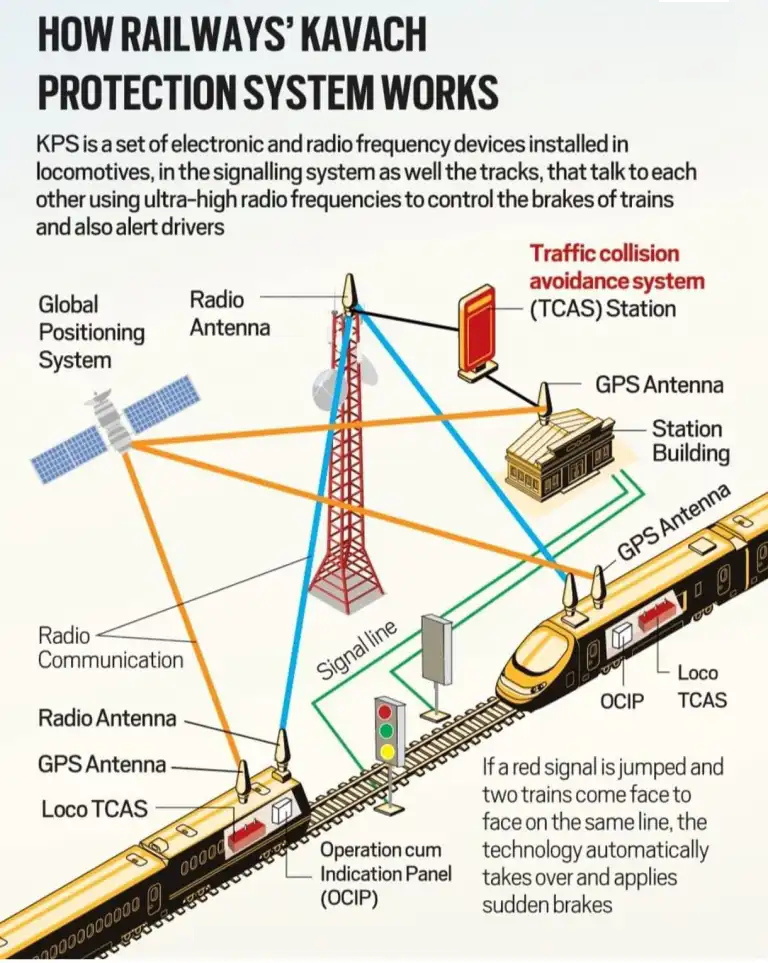
- About: Kavach is India’s indigenous Automatic Train Protection (ATP) system, developed since 2012 as the Train Collision Avoidance System (TCAS) and later rechristened as Kavach (meaning “armour”).
- Kavach Version 4.0 is the most advanced iteration of India’s indigenous Automatic Train Protection system, developed through continuous upgrades based on operational feedback.
- Design & Suitability: It is designed for India’s high-density, multi-line rail network, offering faster response, higher reliability, and seamless integration with existing signalling and interlocking systems.
- Technology Base: Kavach integrates microprocessors, Global Positioning System (GPS), and radio communication to continuously monitor train position, speed, and signalling status.
- Safety Functions: The system automatically prevents Signal Passing at Danger (SPAD), controls overspeeding, applies brakes to avert collisions, ensures safe operation in low visibility/adverse weather, and alerts the loco pilot about wrong-direction movements and level-crossing gates.
- It complies with Safety Integrity Level(SIL)-4, the highest global railway safety standard and is approved by the Research Designs and Standards Organisation (RDSO).
| Read more: Kavach: Automatic Train Protection System |