
Facts for UPSC Mains
India’s Low Public Health Spending
Why in News?
India's public health spending continues to fall critically short, as the Union government has failed to meet the spending targets set by the National Health Policy (NHP) 2017.
What is the Status of Public Health Spending in India?
- Missed National Targets: NHP 2017 target of raising public health spending to 2.5% of GDP by 2025 remains unfulfilled. The Union government's share, aimed at 40% of total public spending (1% of GDP), stands at a mere 0.29% of GDP (2025-26).
- Post-Covid-19, the Union government's health spending declined drastically from 0.37% (2020-21) to 0.29% (2025-26).
- State vs. Centre Trend: While states have increased their health spending from 0.67% (2017-18) to 1.1% of GDP (2025-26), the Centre has reduced its share, leading to a trend of financial hyper-centralisation.
- Also, the Union's share of health transfers to states for Centrally Sponsored Schemes has plummeted from 75.9% (2014-15) to 43% (2024-25), undermining state capacity to deliver healthcare.
- Cess Misallocation: Funds from the Health and Education Cess (HEC), intended to expand healthcare for the poor, are not supplementing but largely substituting the core health budget. In 2023-24, only one-fourth of HEC collection was allocated to health.
- Global Disparity: India's per capita public health spending is among the world's lowest, significantly less than neighbours like Bhutan (2.5 times more) and Sri Lanka (3 times more) in 2021, and far behind BRICS nations (14–15 times more) and Thailand/Malaysia (10 times more).
National Health Policy (NHP) 2017
- About: NHP 2017 is a comprehensive roadmap to achieve Universal Health Coverage (UHC) in India. It is designed to address the evolving disease burden, contain rising healthcare costs, and enhance public investment to ensure equitable, affordable, and quality healthcare for all citizens.
- Main Objective: Assuring comprehensive, free primary healthcare for all, linked to a health card.
- Improving access to affordable secondary and tertiary care via public hospitals and strategic purchasing from the private sector.
- Significantly reducing out-of-pocket expenditure and catastrophic health expenditures.
- Core Principles: The policy is guided by 10 key principles, including Equity, Affordability, Universality, Patient-Centered & Quality Care, and Accountability.
- Specific Quantitative Targets: The policy sets numerous time-bound goals, such as:
- Increase government health expenditure from 1.15% to 2.5% of GDP by 2025.
- Increase State health spending to >8% of their budgets.
- Reduce Maternal Mortality Ratio (MMR) to 100 by 2020 and Under-Five Mortality to 23 by 2025.
- Reduce premature mortality from Non-Communicable Diseases (NCDs) by 25% by 2025.
- Achieve TB elimination by 2025 and maintain elimination of Kala-Azar and Leprosy.
- Policy Thrust and Major Shifts:
- Preventive & Promotive Health: Advocates for a "Health in All" approach, institutionalizing inter-sectoral coordination. Prioritizes 7 areas including Swachh Bharat, balanced diets, tobacco control, and road safety.
- Organizing Healthcare Delivery: Proposes 7 key shifts, including moving from selective to comprehensive primary care via 'Health and Wellness Centers', and ensuring free drugs, diagnostics, and emergency care in public hospitals.
- Strengthening Systems: Emphasizes closing infrastructure and human resource gaps, especially in underserved areas, and developing a robust Health Management Information System (HMIS).
- Engaging the Private Sector: Aims to align the private sector with public health goals through strategic purchasing and regulation.
What are the Reasons for Low Public Health Spending in India?
- Political Economy of "Visible" Infrastructure: Electorally, spending on physical infrastructure (roads, bridges) or direct cash transfers yields more immediate and visible political returns than investing in the slow, systemic strengthening of public health, which is a long-term good with diffused benefits.
- Fragmented Health Financing Architecture: India lacks a unified, ring-fenced health financing pool. Health budgets are vulnerable to annual political bargaining and compete internally with other sectors, unlike systems with dedicated health taxes or insurance funds.
- Weak "Health in All Policies" Approach: The NHP 2017 advocates this, but in practice, major determinants of health—sanitation, nutrition, air pollution—are handled by separate ministries with separate budgets. This siloed approach underestimates the total public investment needed for health and prevents pooled resource allocation for holistic outcomes.
- Dominance of Private Healthcare Narrative: The massive growth of the private health sector creates a public perception and political rationale that healthcare is primarily a private consumer good, not a public good requiring state investment. This reduces demand-side pressure on the state to fund public systems.
- Absence of Cost, Time-Bound Roadmaps: While the NHP 2017 sets a GDP percentage target, there is no legally backed, year-on-year, cost implementation plan with mandatory milestones for central and state governments, allowing the target to remain aspirational rather than actionable.
What Steps are Necessary to Increase Public Health Spending in India?
- Enhance Fiscal Capacity: Strengthen government revenue by improving the tax-to-GDP ratio through tax reforms, base broadening, digital compliance, and GST rationalization, per NITI Aayog’s 2025 Fiscal Health Index. Establish a health cess or higher GST (e.g., 35%) on harmful goods to earmark funding for healthcare.
- Accelerate disbursement of the 15th Finance Commission’s health grants to build infrastructure like PHCs (Primary Health Centre), CHCs (Community Health Centres).
- Leverage Blended Finance: Expand blended finance models combining public, philanthropic, and private capital, as per NITI Aayog’s 2022 report. Strengthen PM-JAY by subsidizing premiums for the "missing middle" and covering indirect costs to reduce out-of-pocket burdens.
- Improve Efficiency and Accountability: Wastage must be reduced by strengthening procurement and adopting outcome-based budgeting, while leakages should be prevented through Direct Benefit Transfers and ensuring audit transparency with published health account reports.
- Reframe health as an economic investment to foster political will. Rebalance budgets toward primary and preventive care, allocating two-thirds to primary healthcare as per NHP 2017.
- Legal & Policy Reforms: A Right to Health Act should be enacted to legally mandate adequate health provisioning, and consideration should be given to amending the Constitution to place "public health" in the Concurrent List for stronger national standards.
Conclusion
India’s persistent underinvestment in public health reflects a critical policy–implementation gap in the National Health Policy 2017. Without enhanced Union government spending, better fiscal federalism, and legally backed financing mechanisms, goals such as Universal Health Coverage, reduced out-of-pocket expenditure, and equitable healthcare will remain unattainable.
|
Drishti Mains Question: Critically analyse India’s public health financing trends and suggest institutional, fiscal, and legal reforms required to sustainably increase public health spending in India. |
Frequently Asked Questions (FAQs)
1. What is the main target of the National Health Policy (NHP) 2017 regarding spending?
It aims to raise government health expenditure to 2.5% of GDP by 2025, with the Union share at 1% of GDP.
2. How has the Union government’s role in health financing changed post-pandemic?
The Union’s health spending fell from 0.37% of GDP (2020–21) to 0.29% (2025–26), alongside reduced transfers to states.
3. What is the issue with the Health and Education Cess (HEC)?
The HEC largely substitutes core health spending instead of supplementing it; only 25% of collections went to health in 2023–24.
UPSC Civil Services Examination, Previous Year Questions (PYQs)
Prelims
Q. Which of the following are the objectives of ‘National Nutrition Mission’? (2017)
- To create awareness relating to malnutrition among pregnant women and lactating mothers.
- To reduce the incidence of anaemia among young children, adolescent girls and women.
- To promote the consumption of millets, coarse cereals and unpolished rice.
- To promote the consumption of poultry eggs.
Select the correct answer using the code given below:
(a) 1 and 2 only
(b) 1, 2 and 3 only
(c) 1, 2 and 4 only
(d) 3 and 4 only
Ans: (a)
Mains
Q. “Besides being a moral imperative of a Welfare State, primary health structure is a necessary precondition for sustainable development.” Analyse. (2021)


Facts for UPSC Mains
US Exit from ISA
Why in News?
In January 2026, the US announced its withdrawal from the International Solar Alliance (ISA), 5 years after joining in 2021. This move threatens to weaken global climate efforts and impede the advancement of solar energy worldwide.
What is the International Solar Alliance (ISA)?
- About: It is an action-oriented collaborative platform and the first international intergovernmental organisation headquartered in India (Gurugram, Haryana).
- It was launched jointly by India and France on the sidelines of COP21 (UNFCCC) in Paris in 2015, coinciding with the landmark Paris Agreement.
- The Assembly is the apex decision-making body, where each member country is represented.
- Membership: Initially focused on countries lying between the Tropic of Cancer and the Tropic of Capricorn. Following a 2020 amendment to its Framework Agreement, membership was opened to all UN member states. It currently has over 100 signatory countries, with over 90 having ratified to become full members.
- Objective: It aims to make solar power affordable and accessible in developing countries by facilitating finance, reducing investor risk, and accelerating adoption. It does not build solar plants itself.
- Core Strategy: ISA is guided by its ‘Towards 1000’ strategy, which targets by 2030:
- Mobilizing USD 1,000 billion in investments.
- Delivering energy access to 1,000 million people using clean energy.
- Installing 1,000 GW of solar energy capacity.
- Mitigating 1,000 million tonnes of CO₂ annually.
- Key Initiatives:
- One Sun One World One Grid (OSOWOG): A programme to build regional solar interconnections across continents (Asia, Middle East, Europe, Africa).
- SUNRISE Network: Focuses on promoting a circular economy in the solar sector through solar waste management, recycling, and innovation.
- SIDS Solar Procurement Platform: A collaboration with Small Island Developing States (SIDS) and the World Bank for joint solar procurement and energy resilience.
- Global Capability Centre & ISA Academy: Established as a hub for excellence (Silicon Valley for Solar) and an AI-based e-learning platform for global solar skills training.
India’s Solar Industry
- Strong Manufacturing Base: India has developed significant domestic capacity, with solar module manufacturing close to 144 GW and solar cell manufacturing around 25 GW (and growing fast), reducing import dependency for key components.
- Reliance on Chinese Imports: For high-efficiency modules, the supply chain is dominated by China (70% global cell capacity), with India importing USD 1.7 billion worth of PV modules from China in FY25.
- Resilient Investment Pipeline: Investments are secure as projects are fueled by strong domestic demand, backed by long-term contracts with utilities, and funded primarily by Indian banks and global institutions, not US capital.
What could be the Potential Impact of the US Withdrawal from ISA and Steps Needed to Deal with it?
|
Potential Impact of US Withdrawal from ISA |
Way Forward |
|
Sends a signal of declining US commitment to multilateral climate action, particularly in the Global South. Weakens the perception of unified global cooperation on solar energy. |
Proactively position the ISA as the indispensable, neutral platform for the Global South's solar transition, filling the void left by the US. |
|
May dampen investor confidence and increase perceived risk for solar projects in developing countries (Africa, island nations). |
Accelerate partnerships with the EU, Japan, development banks (ADB, AIIB), and private funds for climate financing. Create de-risking instruments to attract investment. |
|
Loss of US technical expertise and innovation potential in areas like grid integration, storage, and project management. |
Deepen collaboration with other tech leaders within the ISA (e.g., France, Germany, Japan) and leverage Indian R&D institutions (like the National Institute of Solar Energy). |
|
Opens doors for Indian companies in ISA member countries seeking reliable, non-Chinese partners. |
Use ISA platforms to showcase Indian technology and project execution. Fast-track negotiations with ISA countries to secure better market access for Indian solar exports. |
|
Accelerates the bifurcation of global climate governance into competing blocs, complicating coordinated action. |
Use the ISA to maintain dialogue with all parties, including the US, on specific projects, ensuring it remains an inclusive, action-oriented body rather than an ideological one. |
Conclusion
The US withdrawal from the ISA is a diplomatic setback but also a strategic opportunity for India to reinforce its climate leadership, mobilize alternative finance, and solidify the ISA as the premier platform for the Global South's just solar transition.
|
Drishti Mains Question: The US withdrawal from the International Solar Alliance (ISA) presents both a challenge and an opportunity for India's climate diplomacy. Critically examine. |
Frequently Asked Questions (FAQs)
1. What is the International Solar Alliance (ISA)?
The ISA is an India–France-led intergovernmental organisation (2015) that promotes affordable solar energy in developing countries through finance facilitation, risk reduction, and capacity building.
2. What is the core objective of the ISA's 'Towards 1000' strategy?
It aims to mobilize USD 1,000 billion in investments and install 1,000 GW of solar capacity by 2030 to deliver clean energy access and mitigate emissions.
3. What is a key strength of India's solar industry?
India possesses a resilient, domestically-driven solar industry with a manufacturing capacity of 144 GW for modules, insulating it from such external decisions.
UPSC Civil Services Examination, Previous Year Questions
Q. Consider the following statements: (2016)
- The International Solar Alliance was launched at the United Nations Climate Change Conference in 2015.
- The Alliance includes all the member countries of the United Nations.
Which of the statements given above is/are correct?
(a) 1 only
(b) 2 only
(c) Both 1 and 2
(d) Neither 1 nor 2
Ans: (a)


Important Facts For Prelims
India Energy Week (IEW) 2026
Why in News?
India concluded India Energy Week (IEW) 2026 in Goa, highlighted India’s strong preparedness to tackle global energy volatility. The event underscored India’s twin strategy of securing conventional energy supplies while accelerating clean energy transitions to remain a key global energy player.
What are the Key Highlights of India Energy Week 2026?
- Paradigm Shift to "Energy Addition": India emphasised that the global energy transition is fundamentally about "energy addition" rather than just replacement, necessitating sustained investment in oil, gas, biofuels, Green Hydrogen, and liquefied natural gas (LNG).
- India highlighted its reforms-driven approach, specifically the opening of large sedimentary basins through the Open Acreage Licensing Policy (OALP) and Discovered Small Fields (DSF) bidding rounds to attract global investment.
- Despite global turmoil, price shocks have not been passed on to the Indian consumer. Through timely interventions by Oil Marketing Companies (OMCs), India has maintained some of the lowest energy prices globally for fuel and LPG.
- India-UAE Energy Partnership: During the IEW, 2026 UAE reinforced its role as a reliable supplier of crude and LPG to India, warning that underinvestment is the greatest risk to the global energy system.
- The UAE is India's fourth-largest source of India's oil imports, behind Russia, Iraq, and Saudi Arabia.
- UAE is also India's 3rd largest trading partner and 2nd largest export destination, with exports exceeding USD 36.63 billion in FY 2024-25. Both countries aim to double bilateral trade from USD 100.06 billion in FY25 to USD 200 billion by 2032.
- Drivers of Global Demand: The conclave noted that future global energy demand will be driven by emerging markets, digitalisation, and the integration of diverse energy systems, with India at the centre of these megatrends.
- Goa’s Renewable Vision: As the host state, Goa unveiled its roadmap to achieve 100% renewable energy by 2050, stressing the need to balance the Green Economy with the Blue Economy (sustainable use of ocean resources).
India Energy Week (IEW)
- First launched in 2023, India Energy Week (IEW) is India’s flagship global energy platform, held under the patronage of the Ministry of Petroleum and Natural Gas (MoP&NG), bringing together governments, industry leaders, and innovators to promote a secure, sustainable, and affordable energy future.
- IEM serves as a neutral international forum for policy dialogue, investment facilitation, and technological collaboration.
Energy Security in India
- As per IRENA Renewable Energy Statistics 2025, India ranks 3rd globally in solar power capacity, 4th in wind power, and 4th in total renewable energy capacity, reflecting rapid clean energy expansion.
- Despite being the 3rd largest net energy importer, India has achieved 50% of its cumulative installed electricity capacity from non-fossil fuel sources, five years ahead of its 2030 target.
- However, the country slipped to 71st out of 118 countries in the World Economic Forum’s Energy Transition Index 2025, down from 63rd in 2024.
- Energy Security Initiatives: India’s renewable energy transition is driven by initiatives such as PM Surya Ghar Muft Bijli Yojana and PM-KUSUM for decentralised solar adoption, the National Policy on Biofuels, 2018 (achieved 20% ethanol blending in petrol in 2025 under the Ethanol Blending Programme (EBP)), and the National Green Hydrogen Mission.
- These efforts are reinforced by solar diplomacy via the International Solar Alliance, the One Sun One World One Grid (OSOWOG), expansion under the Solar Parks Scheme, a major nuclear capacity push through the Nuclear Energy Mission, and global partnerships such as the Global Biofuel Alliance.
- Upstream Reforms:
- Oilfield (Regulation and Development) Amendment Act, 2025 to simplify regulations and boost domestic oil & gas production.
- Petroleum and Natural Gas Rules, 2025 for regulatory certainty and ease of doing business.
- Hydrocarbon Exploration Licensing Policy (HELP) and Open Acreage Licensing Policy (OALP) are aimed at boosting domestic oil and gas exploration and production.
- Downstream Reforms: Unified Pipeline Tariff (UPT) under One Nation, One Gas Grid to reduce regional gas price disparities.
Frequently Asked Questions (FAQs)
1. What is India Energy Week (IEW)?
IEW is India’s flagship global energy platform for dialogue on energy security, sustainability, investment, and technology collaboration.
2. What does “energy addition” mean in India’s energy strategy?
It emphasises expanding total energy supply by investing in both conventional fuels and clean energy, rather than replacing one with another.
3. How has India protected consumers from global energy price shocks?
Through timely interventions by Oil Marketing Companies, India has maintained low fuel and LPG prices despite global volatility.
4. What are India’s major achievements in renewable energy?
India ranks 3rd in solar, 4th in wind and total renewable capacity, and has achieved 50% non-fossil electricity capacity ahead of its 2030 target.
5. Why is India’s ranking in the Energy Transition Index a concern?
Despite capacity growth, challenges remain in affordability, grid integration, storage, and overall transition efficiency, reflected in its lower global ranking.
UPSC Civil Services Examination, Previous Year Question (PYQ)
Prelims:
Q. With reference to the Indian Renewable Energy Development Agency Limited (IREDA), which of the following statements is/are correct? (2015)
- It is a Public Limited Government Company.
- It is a Non-Banking Financial Company.
Select the correct answer using the code given below:
(a) 1 only
(b) 2 only
(c) Both 1 and 2
(d) Neither 1 nor 2
Ans: (c)
Mains:
Q. “Access to affordable, reliable, sustainable and modern energy is the sine qua non to achieve Sustainable Development Goals (SDGs)”.Comment on the progress made in India in this regard. (2018)


Important Facts For Prelims
Patent Law in Space
Why in News?
Earth-based intellectual property law clashes with the sovereignty-free, open innovation necessary for developing essential survival technologies (like water extraction) on the Moon or Mars. This creates a major legal challenge, despite the clear need for multinational collaboration.
Why is Current Patent Law ill-Suited for Outer Space?
- Current Patent Law in Outer Space: Currently, spacefaring nations have universally adopted the jurisdiction-by-registration approach (Article VIII of the Outer Space Treaty, 1967 (OST)) to apply their national patent laws to activities and inventions in outer space. An invention on a US-registered module is treated as occurring in US legal territory.
- Core Legal Conflict: Earth's patent law is built on territoriality—rights are tied to specific national jurisdictions. This clashes with international space law, which prohibits national sovereignty over celestial bodies (Article II of OST, 1967).
- ISS Model & Its Limits: The International Space Station (ISS) operates under an intergovernmental agreement that allocates jurisdiction module-by-module, treating each as the territory of its partner state.
- This works for a static, segmented facility but is ill-suited for integrated, shared lunar bases where multinational teams co-develop technologies across common platforms, blurring the lines of where invention occurs.
- Conflict with Space Law Principles: Patent exclusivity over essential survival technologies (e.g., life-support systems) could lead to de facto exclusion, potentially conflicting with the OST, 1967 mandate that space be used “for the benefit of all humankind” (Article I of the OST, 1967).
- Unresolved Doctrines and Legal Loopholes: It is unclear if the "temporary presence" doctrine from the Paris Convention for the Protection of Industrial Property, 1883 (which limits patent enforcement on goods in transit) applies to space equipment, creating uncertainty. The registration system also invites "flags of convenience" strategies, where entities use jurisdictions with weak enforcement to evade patent claims.
- Limits of Coordination: While operational coordination mechanisms like the NASA Artemis Accords can reduce interference, they do not constitute jurisdiction and thus cannot resolve questions of ownership and enforcement in permanently inhabited space.
- Despite growing discussions on space-specific IP mechanisms, coordination remains uneven, and most states remain rule-takers, leaving ownership and enforcement unresolved.
Outer Space Treaty, 1967
- About: The Outer Space Treaty, 1967, is the fundamental legal framework governing all celestial activity, establishing principles of peaceful use, non-appropriation, and international cooperation to prevent conflict and ensure space benefits all humanity.
- Origin & Status: Adopted by the United Nations (UN) in 1966, entered into force in 1967, and has more than 115 states parties, making it a near-universal arms-control and space-governance instrument. India signed the treaty in 1967 and ratified it in 1982.
- Foundational Principles:
- Article I: Mandates space exploration for the benefit of all mankind, with space free for all states.
- Article II: Establishes the non-appropriation principle, prohibiting sovereignty claims in space.
- Article IV: Enforces peaceful use, banning weapons of mass destruction and military bases on celestial bodies.
- Article VII: Establishes state liability for damage caused by its space objects.
- Article VI: Confirms state responsibility for all national space activities, including private ones.
Frequently Asked Questions (FAQs)
1. Why is patent law problematic in outer space?
Because patent law is territorial, while outer space is governed by the non-sovereignty principle under Article II of the Outer Space Treaty.
2. How does Article VIII of the Outer Space Treaty apply to patents?
It allows states to exercise jurisdiction over space objects they register, extending national patent laws into space.
3. Why is the ISS model unsuitable for future space habitats?
The ISS uses module-based jurisdiction, which fails in integrated, multinational lunar or Martian bases where inventions are jointly developed.
UPSC Civil Services Examination, Previous Year Question (PYQ)
Q. Consider the following statements: (2016)
- The Mangalyaan launched by ISRO
- is also called the Mars Orbiter Mission
- made India the second country to have a spacecraft orbit the Mars after USA
- made India the only country to be successful in making its spacecraft orbit the Mars in its very first attempt
Which of the statements given above is/are correct?
(a) 1 only
(b) 2 and 3 only
(c) 1 and 3 only
(d) 1, 2 and 3
Ans: (c)
Q. What is the purpose of the US Space Agency’s Themis Mission, which was recently in the news? (2008)
(a) To study the possibility of life on Mars
(b) To study the satellites of Saturn
(c) To study the colourful display of high latitude skies
(d) To build a space laboratory to study the stellar explosions
Ans: (c)


Important Facts For Prelims
34th Foundation Day of National Commission for Women
Why in News?
The National Commission for Women (NCW) observed its 34th Foundation Day on 31st January, reaffirming its role as India’s apex statutory body for protecting women’s rights.
- The event highlighted women’s health as a core pillar of empowerment and nation-building under the theme Swasthya hi Sashaktikaran.
What are the Key Facts About the National Commission for Women (NCW)?
- About: The NCW is a statutory body established on 31st January 1992 under the National Commission for Women Act, 1990.
- Its primary mandate is to review constitutional safeguards for women, recommend legislative measures, and facilitate the redressal of grievances.
- Background: The establishment of the NCW was the result of recommendations by the Committee on the Status of Women in India (CSWI) and the National Perspective Plan for Women (1988-2000).
- Constitution of the Commission: The Central Government nominates the body. The structure ensures representation from various fields relevant to women's welfare.
- A Chairperson: Committed to the cause of women.
- Five Members: Persons of ability and integrity with experience in law, trade unionism, management, women’s voluntary organizations, administration, or social welfare.
- At least one member must belong to the Scheduled Castes and one to the Scheduled Tribes.
- A Member-Secretary: An expert in management/sociology or a civil servant with appropriate experience.
- All hold office for three years or until the age of 65, whichever is earlier.
- Functions and Mandate
- Investigation: Examining matters relating to safeguards provided for women under the Constitution.
- Reporting: Presenting annual reports to the Central Government on the working of safeguards and recommending effective implementation.
- Legislative Review: Reviewing existing laws affecting women and suggesting amendments to fix lacunae or shortcomings.
- Suo Moto Notice: Taking initiative to look into matters of deprivation of rights, non-implementation of laws, and non-compliance with policy guidelines.
- Research and Studies: Undertaking research to identify factors impeding women's advancement (e.g., housing, health hazards) and funding litigation for issues affecting a large body of women.
- Inspections: Inspecting jails, remand homes, and women's institutions to ensure proper custody conditions.
- Powers of the Commission: The NCW enjoys powers of a civil court, including summoning individuals, examining witnesses on oath, calling for documents, requisitioning public records, and receiving evidence on affidavits.
- These powers strengthen its role as a quasi-judicial body.
- Despite its mandate, it is frequently characterized as a "toothless tiger" because it is a recommendatory body with limited enforcement powers.
- Initiatives:
- Helplines: Launched a WhatsApp helpline and a 24x7 Women Helpline to provide online support, psychological counseling, and links to police/hospitals.
- Mahila Jan Sunwai: A pilot project to facilitate speedy disposal of complaints via in-person and online hearings.
- Capacity Building: Collaborated with LBSNAA to train Protection Officers under the Domestic Violence Act, 2005 for gender sensitization of police personnel.
- “She is a Changemaker” – Women in Politics: NCW’s programme supports women’s leadership and political participation.
- It offers training on public policy, gender-responsive governance, communication, and leadership.
- Cyber Safety: Conducted research on cyber threats against women and launched awareness campaigns regarding "Misogyny Online" and social media responsibility.
Frequently Asked Questions (FAQs)
Q. What is the National Commission for Women (NCW)?
NCW is a statutory body established in 1992 under the National Commission for Women Act, 1990 to safeguard and promote women’s rights.
Q. What are the key functions of NCW?
It reviews legal safeguards, recommends legislative reforms, handles complaints, conducts research, and inspects custodial institutions.
Q. What powers does NCW enjoy?
NCW has civil court–like powers, including summoning individuals, examining witnesses, and calling for official records.
Q. What recent initiatives has NCW taken for women’s safety?
NCW launched 24×7 helplines, Mahila Jan Sunwai, cyber safety awareness programmes, and police capacity-building initiatives.
Q. Why is NCW relevant for women’s empowerment in India?
It acts as an apex watchdog ensuring gender justice through policy advocacy, grievance redressal, and institutional reforms.
UPSC Civil Services Examination, Previous Year Questions (PYQs)
Mains
Q. Is the National Commission for Women able to strategise and tackle the problems that women face at both public and private spheres? Give reasons in support of your answer. (2017)


Rapid Fire
Mahatma Gandhi's Death Anniversary
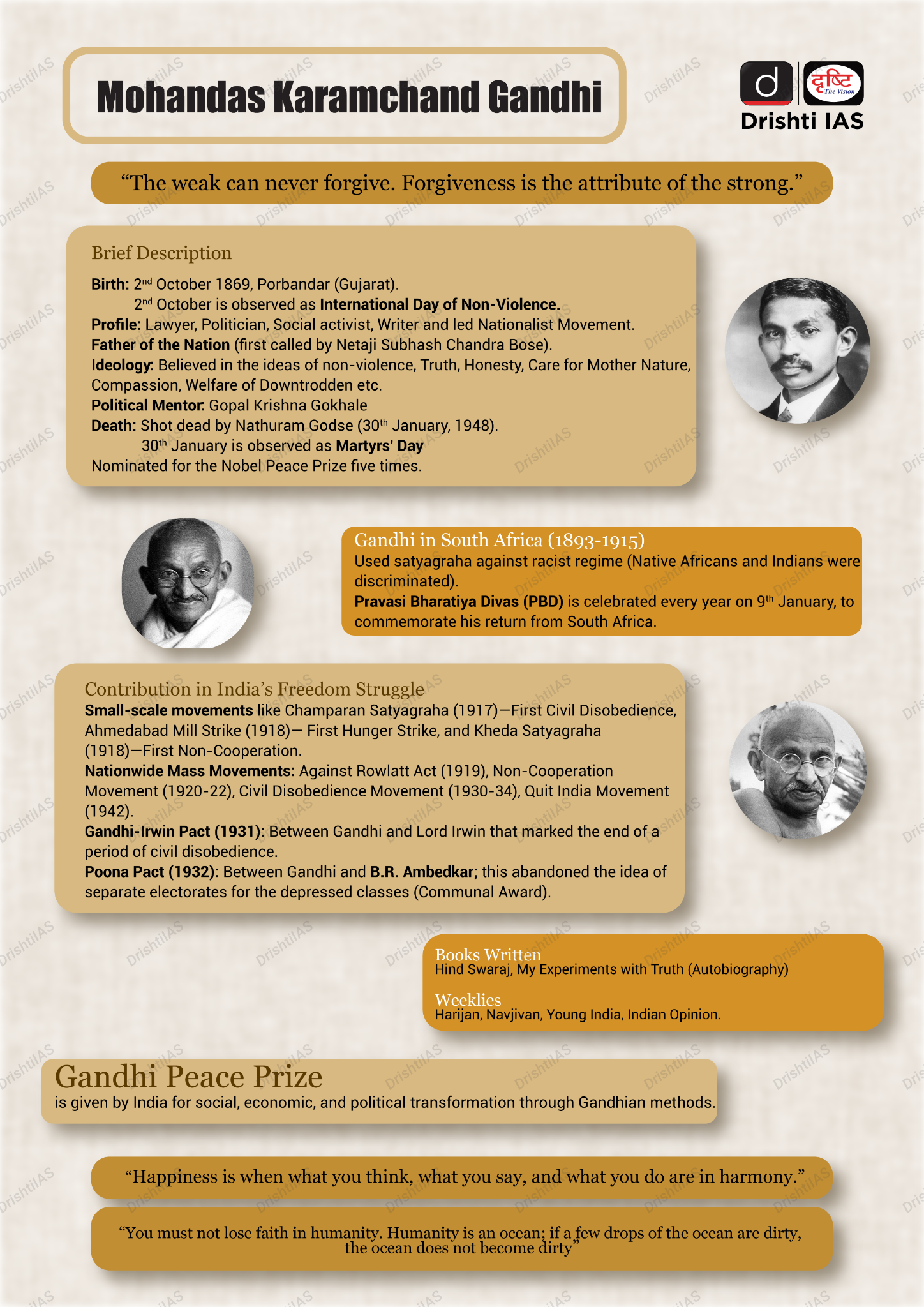
The Prime Minister paid homage at Gandhi Smriti on Mahatma Gandhi's 78th death anniversary (30th January), emphasising his legacy that continues to inspire generations.
- Historical Context: Mahatma Gandhi was assassinated on 30th January 1948 at Birla House (now Gandhi Smriti), New Delhi, by Nathuram Godse. For this, Godse was hanged in Ambala Jail on 15th November, 1949.
- Mahatma Gandhi was born on 2nd October 1869, a date now globally observed as the International Day of Non-Violence following its UN designation in 2007 to promote his principles of peace and non-violence.
- National Observance: The day is officially commemorated as Martyrs' Day (Shaheed Diwas) or Gandhi Punyatithi, marked by tributes at Raj Ghat (cremation site of Mahatma Gandhi). It is also observed as Sarvodaya Day (Sarvodaya means upliftment of all as advocated by Mahatma Gandhi).
| Read More: Mahatma Gandhi Jayanti |


Rapid Fire
Supreme Court Stays UGC's 2026 Regulations
The Supreme Court (SC) has issued an interim stay on the University Grants Commission (Promotion of Equity in Higher Education Institutions) Regulations, 2026, citing concerns of potential division of society and undermining campus unity.
- Judicial Intervention: Since the 2012 Regulations had been repealed, the Court, exercising its powers under Article 142, directed that the UGC (Promotion of Equity in Higher Educational Institutions) Regulations, 2012 would continue to apply until further orders.
- Background & Context: The 2026 Regulations were formulated in response to the ongoing case Abeda Salim Tadvi v. Union of India (2019), which seeks to establish a mechanism to end caste-based discrimination on campuses.
- Key Legal & Definitional Challenges to 2026 Regulations: The petitions specifically challenged Section 3(1)(c), which exclusively defines discrimination against SC, ST, and OBC members, thereby excluding the general category.
- The bench questioned the necessity of this narrow provision, as Section 3(1)(e) already provides a broader, inclusive definition of discrimination based on religion, race, caste, gender, place of birth, or disability.
- The SC raised questions on whether the UGC 2026 Regulations adequately cover harassment on regional lines, intra-caste harassment by economically privileged individuals, and incidents of ragging. Moreover, the Regulations contain no mechanism to penalize false complaints.
- Core Judicial Concerns: The SC invoked the "principle of no-regression" from environmental and social justice law, questioning why the 2026 rules were less inclusive than the 2012 version.
- The bench examined the regulation through the lens of Article 15(4) that enables the State to make special provisions for the advancement of socially and educationally backward classes, including SCs and STs.
| Read More: UGC New Rules Against Caste Discrimination |


Rapid Fire
Discombobulator
The US, under the codenamed Operation Absolute Resolve in Venezuela, reportedly used a classified weapon system called the Discombobulator to jam and disable enemy defenses.
- Nature of the Weapon: Experts suggest the "Discombobulator" is not a single device but a deployment of multiple non-lethal and electronic warfare technologies designed to incapacitate without necessarily killing.
- Anti-Personnel Capabilities (Disorientation):
- Active Denial System (ADS): A directed energy weapon (often called a "heat ray") that penetrates the skin to cause an intense burning sensation, forcing targets to flee.
- Acoustic Hailing Devices (Long-range Acoustic Device): Known as sonic cannons, these emit highly directional, high-pitched sounds causing nausea, vertigo, and confusion.
- Visual Dazzlers: High-intensity laser weapons that temporarily blind or disorient combatants.
- Vortex Ring Generator: Uses high-pressure pulses to deliver payloads like stink bombs or physical impact to cause nausea.
- Anti-Infrastructure Capabilities (Disabling Equipment):
- Electronic Warfare (EW): Systems designed to jam air defenses, radars, and sensors.
- High Power Microwave: The Counter-electronics High Power Microwave Advanced Missile Project (CHAMP) projects microwave pulses to fry electronic circuitry.
- Graphite Munitions: Non-lethal weapons used to short-circuit and disable power grids.
- Cyber Warfare Integration (Suter Programme): The US utilizes the Suter programme, an airborne cyber-attack system capable of penetrating enemy air defense networks.
- Suter 1 monitors enemy radar; Suter 2 can take control of enemy sensors; Suter 3 can seemingly hack into links controlling surface-to-air missile launchers.
| Read more: U.S. Actions in Venezuela and Crisis of Multilateralism |


Rapid Fire
Made in India C-295 Aircraft
The first 'Made in India' C-295 aircraft is scheduled to roll out before September 2026 from the Airbus-Tata Final Assembly Line (FAL) in Vadodara (Gujarat), marking a major milestone in defence indigenisation and India–Spain strategic cooperation.
- This is part of a Rs 21,935 crore deal (2021) with Airbus Defence and Space for 56 C-295 aircraft, with 16 to be supplied from Spain in ‘fly-away’ condition and 40 to be manufactured in India by Tata Advanced Systems Ltd (TASL).
- The C-295 is a twin-engine turboprop tactical transport aircraft designed for medium-range operations, enhancing the Indian Air Force's (IAF) capabilities.
- C-295 aircraft will replace the IAF's ageing British-origin Avro-748 transport planes.
India-Spain Ties
- Strategic Partnership Elevation: In 2026, India and Spain agreed to work towards elevating their relationship to a Strategic Partnership. Spain also joined the India-backed Indo-Pacific Oceans Initiative (IPOI).
- Economic & Trade Cooperation: Spain is India’s 6th largest trade partner in the European Union (EU). Bilateral trade reached USD 9.32 billion in 2024, while Spain is the 16th largest investor in India with cumulative FDI of USD 4.29 billion.
- India's top exports to Spain are mineral fuels, chemical products, iron and steel, textiles, machinery, seafood, and leather. Its major imports from Spain are mechanical appliances, chemicals, and plastics.
- Cultural & Diplomatic Milestones: The nations are celebrating 2026 as the 'Dual Year' of Culture, Tourism, and Artificial Intelligence, coinciding with 70 years of diplomatic relations.

| Read More: Perspective: Strengthening India-Spain Relations |


Rapid Fire
Classical Languages of India and the Enduring Legacy of the Tirukkural
Recently, the Union Education Minister released 55 literary works developed by centres for classical languages, along with a sign-language version of the Tirukkural.
- The initiative aims to place India’s linguistic heritage at the centre of education, research and cultural pride, in line with the vision of inclusive and multilingual India.
Classical Languages
- About: In 2004, the Government of India began recognising certain languages as Classical Languages (Shastriya Bhasha) to preserve their ancient literary, cultural and civilisational legacy.
- India currently recognises 11 Classical Languages- Tamil (2004), Sanskrit (2005), Kannada (2008), Telugu (2008), Malayalam (2013), Odia (2014), Marathi, Pali, Prakrit, Assamese and Bengali (all 2024).
- The Ministry of Home Affairs initially granted the status to Tamil and Sanskrit, and the Ministry of Culture took over the responsibility for further implementations and future recognition.
- India currently recognises 11 Classical Languages- Tamil (2004), Sanskrit (2005), Kannada (2008), Telugu (2008), Malayalam (2013), Odia (2014), Marathi, Pali, Prakrit, Assamese and Bengali (all 2024).
- Criteria for Classical Status: The criteria for Classical Language status were revised in 2005 and again in 2024 based on recommendations of Linguistic Experts Committees (LEC) under the Sahitya Akademi.
- The revised criteria introduced in 2024 are as follows:
- High antiquity of its early texts/recorded history over a period of 1500- 2000 years.
- A body of ancient literature/texts, which is considered a heritage by generations of speakers.
- Knowledge texts, especially prose texts in addition to poetry, epigraphical and inscriptional evidence.
- The Classical Languages and literature could be distinct from its current form or could be discontinuous with later forms of its offshoots.
- The revised criteria introduced in 2024 are as follows:
- Benefits of Classical Language Status: Classical Languages receive government support through national awards, UGC-funded academic chairs, and Centres of Excellence at Central Institute of Indian Languages (CIIL), Mysuru for research and preservation.
Tirukkural
- The Tirukkural, authored by Thiruvalluvar nearly two millennia ago, is a timeless Tamil classic that offers universal and secular wisdom on ethics, governance, economy, and human relationships through 1,330 concise couplets.
- Structured around Aram (virtue), Porul (wealth), and Inbam (love), it presents a holistic guide to righteous living and social harmony.
| Read more: 5 New Classical Languages and Change in Criteria |



