
-
Q. Climate change is acting as a risk multiplier for disasters.’ Analyse this statement in the context of disaster management in India. (250 words)
17 Dec, 2025 GS Paper 3 Disaster ManagementApproach:
- Introduce by highlighting causes and how they are risk multipliers.
- In the body, explain climate change as a risk multiplier.
- Write about the implications posed by it.
- Conclude accordingly.
Introduction:
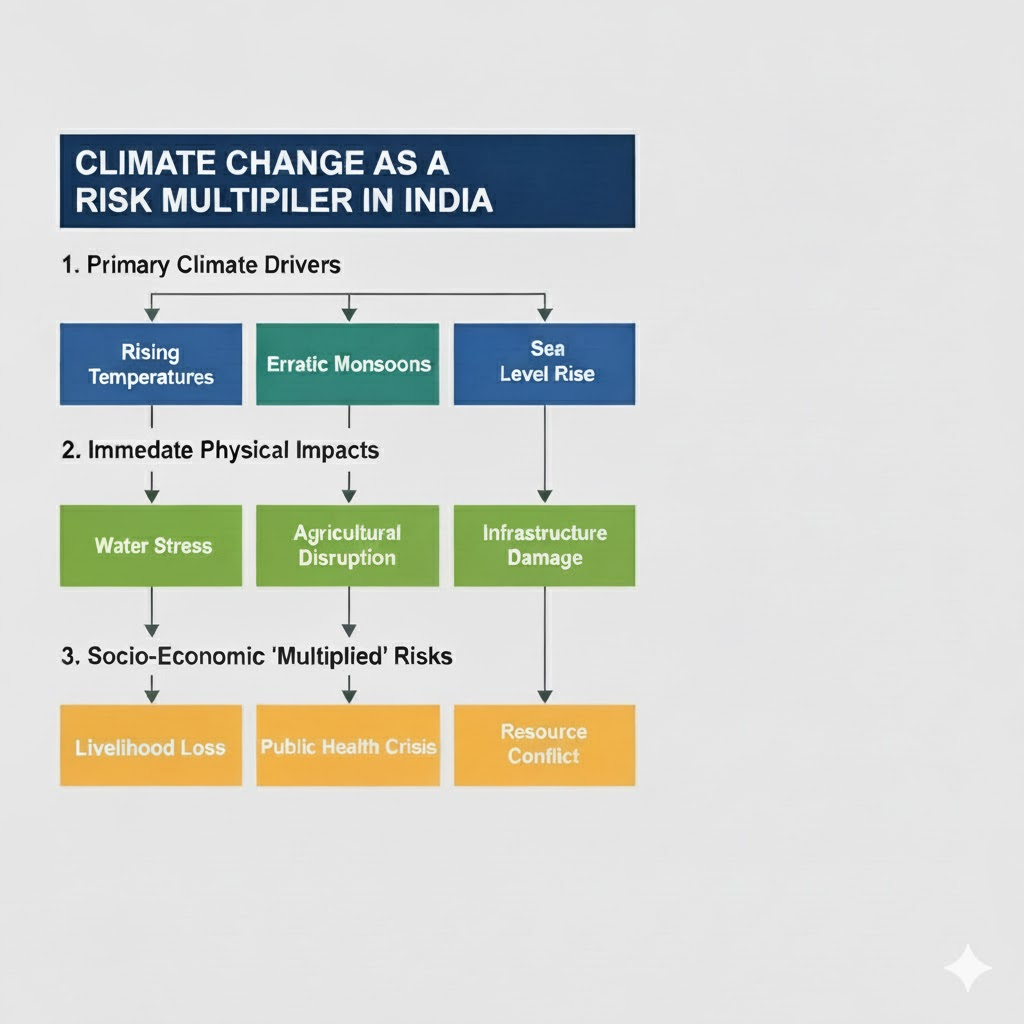
Climate change no longer acts as a standalone environmental issue but increasingly multiplies the frequency, intensity, and impact of disasters. In India, rising temperatures, erratic rainfall, sea-level rise, and extreme weather events have amplified existing vulnerabilities, complicating disaster management and development outcomes.
Body:
Climate Change as a Risk Multiplier for Disasters:
- Intensification of Extreme Weather Events: IMD data shows a sharp rise in extreme rainfall events, contributing to frequent floods (e.g., Himachal Pradesh floods, 2023).
- Heatwaves have become more severe and prolonged, 2024 recorded one of the longest heatwave spells, affecting health, productivity, and water security.
- Increased Flood and Landslide Risks: Changing monsoon patterns have led to short-duration, high-intensity rainfall, overwhelming urban drainage systems.
- NDMA highlights climate change as a key driver behind rising urban floods (Chennai 2015, Bengaluru recurring floods).
- Himalayan states face higher landslide risks due to glacial melt and unstable slopes.
- Amplification of Cyclones and Coastal Disasters: MoES reports an increase in severe cyclonic storms in the Arabian Sea, such as Cyclone Tauktae and Biparjoy.
- Sea-level rise and warmer oceans intensify storm surges, threatening coastal livelihoods and infrastructure.
- Droughts, Food and Water Insecurity: Climate variability has increased the frequency of drought-like conditions, affecting rainfed agriculture.
- NITI Aayog (Composite Water Management Index) warns of worsening water stress due to climate-induced variability.
- Compounding Socio-economic Vulnerabilities: Climate disasters disproportionately affect the poor, migrants, and informal workers, turning hazards into humanitarian crises.
- IPCC AR6 identifies South Asia as a hotspot where climate risks intersect with poverty and high population density.
Implications for Disaster Management in India
- Shift from reactive relief to anticipatory and risk-informed planning: Traditional disaster management focused on post-disaster relief and compensation. Climate change necessitates a predictive and preventive approach.
- For example, IMD’s impact-based forecasting and NDMA’s heatwave action plans (first implemented in Ahmedabad) enable early warnings, pre-positioning of resources, and public advisories, significantly reducing mortality during heatwaves.
- Similarly, forecast-based financing allows states to act before disasters strike, lowering human and economic losses.
- Climate-resilient infrastructure, early warning systems, and ecosystem-based solutions: The Ministry of Housing and Urban Affairs promotes climate-resilient urban planning under AMRUT and Smart Cities to address flooding and heat stress.
- India’s cyclone early warning system (IMD + NDMA) has reduced cyclone fatalities drastically, as seen during Cyclone Fani (2019).
- Ecosystem-based approaches: Mangrove restoration in Odisha and the Sundarbans has acted as a natural buffer against storm surges, recognised by NDMA as a cost-effective resilience strategy.
- Integration of climate adaptation with DRR frameworks: India’s National Disaster Management Plan (2019) aligns with the Sendai Framework, explicitly recognising climate change as a disaster risk multiplier.
- Ministries are encouraged to integrate climate adaptation into sectoral planning, such as climate-resilient agriculture, water management, and coastal zone regulation, ensuring that disaster risk reduction and sustainable development reinforce each other.
Conclusion:
Climate change acts as a potent risk multiplier for disasters in India by intensifying hazards and amplifying underlying vulnerabilities. Therefore, disaster management must be firmly integrated with climate science, resilience-building, and inclusive governance to protect lives and livelihoods, while advancing SDG 11 (Sustainable Cities and Communities), SDG and SDG13 (Climate Action), through sustainable and risk-informed development.
To get PDF version, Please click on "Print PDF" button.
Print PDF



