
International Relations
U.S. Actions in Venezuela and Crisis of Multilateralism
This editorial is based on “The Venezuela test for UN & international law” which was published in The Hindustan Times on 07/01/2026. The article brings into picture the U.S. operation in Venezuela, conducted without UN authorization, challenging international law and Global South protections. For India, it underscores concerns over the credibility of frameworks upholding sovereignty and multilateralism.
For Prelims: UN Security Council, Article 2(4) of the UN Charter, Monroe Doctrine, The Ker-Frisbie Doctrine, International Criminal Court, Operation Absolute Resolve.
For Mains: Potential Factors Behind the U.S. Actions Against Venezuela, Implications of the U.S.–Venezuela Tensions for India, Failure of Multilateral Organizations Like the United Nations to Prevent Unilateral Military Interventions
The recent U.S. Operation Absolute Resolve, resulting in the arrest of the Venezuelan President, has revived serious debates over the prohibition on the use of force in international law. Although Washington presents the action as law enforcement, it involved the use of military force on sovereign territory without UN Security Council authorization. Such unilateral actions disproportionately endanger Global South states that depend on Charter-based safeguards against power asymmetries. For India, a consistent advocate of multilateralism and territorial sovereignty and a leading voice seeking greater representation in the UN Security Council, this development raises serious concerns about the weakening credibility and effectiveness of international legal frameworks.
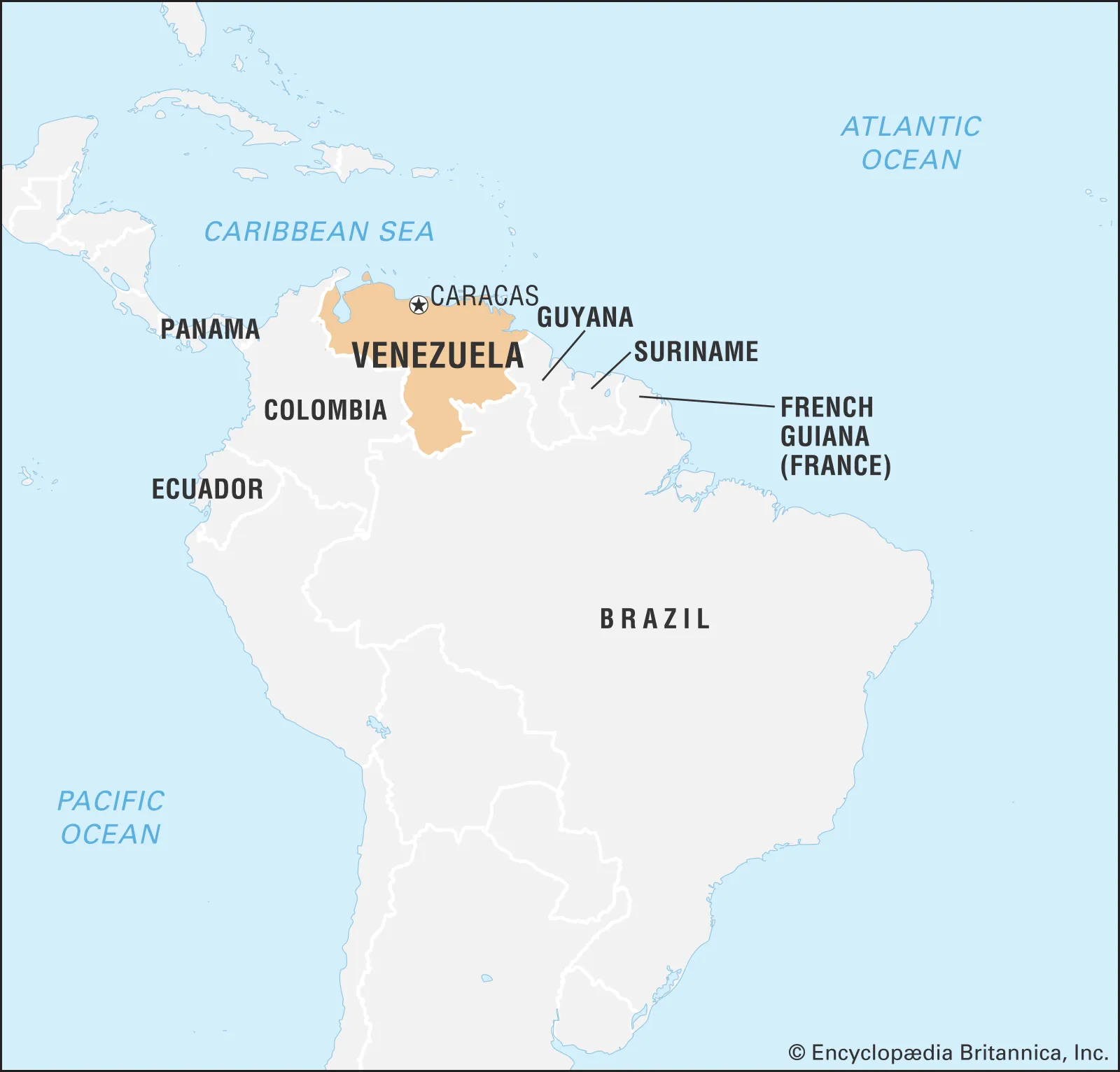
What are the Potential Factors Behind the U.S. Actions Against Venezuela?
- Geopolitical Strategy- The "Don-roe" Doctrine: A primary driver is the reassertion of U.S. dominance in the Western Hemisphere.
- The recent US administration has explicitly referenced the Monroe Doctrine (the 1823 policy opposing European/external interference in the Americas), which is now being called as "Don-roe Doctrine."
- The U.S. views Venezuela’s close ties with Russia, China, and Iran as a direct threat to regional security.
- For instance, China has loaned over $60 billion to Venezuela since 2007. The U.S. views these loans as "predatory lending" designed to create a permanent dependency.
- Resource Security and Oil Strategy: Venezuela sits atop the world’s largest proven oil reserves (estimated at 303 billion barrels). U.S. actions are heavily influenced by the desire to secure and stabilize these energy inputs.
- In December 2025, the U.S. President asserted that Venezuela should return oil, land, and other assets which he claimed had been taken from the United States.
- By "running" or overseeing the transition in Venezuela, the U.S. gains significant leverage over global oil prices.
- The administration’s goal is to increase production of heavy, sour crude, which U.S. Gulf Coast refineries are specifically designed to process, to lower energy costs for America.
- Law Enforcement and "Narco-Terrorism": The U.S. has increasingly framed its actions not just as diplomacy, but as a criminal justice matter.
- Nicolás Maduro and several high-ranking officials were indicted in U.S. federal courts on charges of narco-terrorism conspiracy.
- The U.S. claims the "Cartel of the Suns" (allegedly run by Venezuelan officials) collaborated with groups like the FARC to flood the U.S. with cocaine.
Does a "Law Enforcement" Objective justify the Use of Military Force on a Sovereign Territory?
Arguments In Favor:
- Proponents of the U.S. action argue that traditional laws of war must evolve to meet modern, "hybrid" threats that do not involve traditional armies.
- Functional Equivalence to an "Armed Attack": The U.S. argues that the "invasion" of fentanyl and the activities of state-sponsored gangs cause more American deaths annually than a conventional military strike.
- By labeling this "Narco-Terrorism," the administration frames the drug flow as an attack under Article 51 of the UN Charter, justifying a military response in self-defense.
- The "Unwilling or Unable" Doctrine: This legal theory suggests that if a sovereign state (Venezuela) is either unwilling to stop criminal groups on its soil or is actively collaborating with them, it forfeits its right to absolute sovereignty.
- In this view, the U.S. isn't "invading" a country; it is "neutralizing" a threat that the local government refuses to handle, effectively acting as a global policeman where the local system has failed.
- The Ker-Frisbie Doctrine: From a purely U.S. legal perspective, the "how" of a capture does not matter as much as the "who."
- Under the Ker-Frisbie precedent, U.S. courts have ruled that even if a defendant (like Maduro) is brought to the U.S. through a military force, the court still has the authority to try them.
- This creates a powerful domestic incentive to use force to bypass slow or blocked extradition processes.
- Functional Equivalence to an "Armed Attack": The U.S. argues that the "invasion" of fentanyl and the activities of state-sponsored gangs cause more American deaths annually than a conventional military strike.
Arguments Against:
- Critics, including the UN Secretary-General and various international legal bodies, argue that using the military for law enforcement is a "dangerous precedent" that destroys the global order.
- Violation of Article 2(4) of the UN Charter: The bedrock of international law is the prohibition of the use of force against the territorial integrity of any state.
- Law enforcement is a domestic power. Critics argue that if any nation can claim "crime" as a reason to invade a neighbor, the concept of a sovereign border becomes meaningless, leading to a "law of the jungle" where the strongest nations act without restraint.
- Lack of "Kinetic" Threshold: International law defines an "armed attack" as a physical military strike (bombs, troops, missiles).
- Most legal scholars reject the idea that narcotics or migration can be "re-branded" as an armed attack.
- By doing so, the U.S. is accused of "legal gymnastics", changing the definitions of words to justify an operation that is, in reality, a regime change mission.
- Evasion of the International Criminal Court (ICC): Opponents argue that if the U.S. were truly interested in "justice" and "human rights," it would have supported the ICC’s existing investigations into Venezuela rather than launching a unilateral raid.
- By capturing a head of state for trial in a New York court, the U.S. is seen as prioritizing its own political interests and narcotics laws over the established international framework for prosecuting mass atrocities.
- Violation of Article 2(4) of the UN Charter: The bedrock of international law is the prohibition of the use of force against the territorial integrity of any state.
What are the Implications of the U.S.–Venezuela Tensions for India?
- Energy Diversification and Refining Strategy: The immediate impact on India's energy security remains muted because India has proactively diversified its oil basket away from Venezuela to avoid secondary U.S. sanctions.
- Recent data shows Venezuela’s share in India’s crude basket has contracted drastically, falling to around 0.3% in FY2026 (April–October 2025) from a much higher share in earlier years due to sanctions and trade barriers.
- Now India awaits clarity on a possible new supply regime under U.S. oversight as India's refining sector, especially highly complex facilities such as Reliance Industries’ Jamnagar complex, is technically suited to process Venezuela’s heavy-sour “Merey” crude.
- Unlocking Stalled Upstream Sovereign Assets: India’s state-owned ONGC Videsh (OVL) has long-standing investments in Venezuelan oil fields that have been "zombie assets" due to payment blockades.
- For instance, OVL holds equity stakes in two Venezuelan oil fields: San Cristóbal (40% stake) and Carabobo-1 (11% stake). These projects have been troubled by low output and sanctions.
- A U.S.-led restructuring of the Venezuelan oil sector can allow for the repatriation of massive unpaid dividends.
- Geopolitical Balancing and Strategic Autonomy: The intensification of U.S. engagement in Venezuela places India in a diplomatic balancing act.
- New Delhi must carefully manage its relationship with Washington while also respecting its longstanding principles of sovereignty and non‑interference.
- Official Indian statements have expressed concern over developments without directly condemning any party, reflecting a cautious approach that prioritizes broader strategic interests.
- Macro‑Economic and Oil Market Effects: While India’s current direct trade with Venezuela is limited, any change in Venezuelan oil production and export dynamics could affect global crude pricing.
- Venezuela holds among the largest proven oil reserves globally, and increased output under a more stable framework could put downward pressure on international oil prices over the medium to long term.
- The situation also underscores the failure of multilateral institutions like the UN to check unilateral interventions, leaving India and other Global South nations vulnerable to disruptions in energy supplies and global strategic dynamics.
- Venezuela holds among the largest proven oil reserves globally, and increased output under a more stable framework could put downward pressure on international oil prices over the medium to long term.
Why are Multilateral Organizations Like the UN Failing to Prevent Unilateral Military Interventions?
- Structural Paralysis- The "Veto Trap": The UN Security Council (UNSC) is structurally incapable of acting when a Permanent Member (P5) is the aggressor or protects the aggressor.
- Because the U.S., Russia, and China utilize their veto to shield their respective strategic interests, the council has devolved from a security guarantor into a forum for deadlock.
- For instance, Between 2015 and 2024, a total of 47 vetoes were cast in connection with 37 draft resolutions and amendments.
- Legal Reinterpretation- "Law Enforcement" as a Loophole: Strong nations are increasingly bypassing the UN Charter’s prohibition on the use of force (Article 2(4)) by re-branding military invasions as "transnational law enforcement."
- By framing interventions as "surgical criminal extractions" rather than acts of war, states circumvent the need for UN approval while claiming a "moral" right to act.
- For instance, the U.S. justified "Operation Absolute Resolve" in Venezuela by citing Article 51 (Self-Defense) against "narco-terrorism”.
- Financial Coercion-The Liquidity Crisis: Multilateralism is failing because the UN is currently facing its worst liquidity crisis in history, leaving it without the "teeth" to monitor or intervene in fast-moving conflicts.
- When the world’s largest donors withhold assessed contributions to signal displeasure with UN policy, the organization loses the operational capacity to deploy peacekeepers or neutral observers.
- With a rising shortfall in contributions, $2.4 billion in unpaid regular budget dues and $2.7 billion in peacekeeping funds, the UN has been compelled to reduce spending, freeze recruitment, and scale back certain services.
- Rise of Regionalism: Multilateralism is also failing because the world has shifted from a "universal" security model to a fragmented one where regional blocs prioritize their own rules over UN mandates.
- As the UN is viewed as too slow and geographically disconnected, smaller, exclusive alliances are taking direct action to secure their own spheres of influence, often excluding the UN entirely.
- Interventions without UNSC approval have been conducted by a myriad of regional organizations, including the A.U., the North Atlantic Treaty Organization (NATO), and the Economic Community of West African States (ECOWAS).
- Normative Erosion- The "Accountability Vacuum": Multilateralism is fading because the nature of conflict has shifted toward "gray zone" aggression, including the use of Private Military Companies (PMCs) and cyber-warfare, which purposefully operates outside the UN's traditional definitions of "war."
- Because the UN Charter was designed to regulate visible state-on-state military action, it lacks a binding framework to hold states accountable for "deniable" force or non-kinetic attacks that cripple a nation's stability without firing a shot.
- For instance, the 2017 NotPetya cyber-attack, which originated in Ukraine but rapidly spread globally, disrupted businesses, hospitals, and government systems worldwide, causing billions in damages.
- It illustrates how cyber operations can inflict widespread harm, blur accountability, and challenge traditional frameworks for international intervention.
How Can Multilateralism be Reformed to Promote a Fair and Just Global Order?
- Strengthening Legal Clarity and Closing Loopholes: International law must evolve to explicitly distinguish between criminal law enforcement and the use of force, removing the “self-defense against non-state actors” ambiguity.
- Clearer codification can prevent powerful states from rebranding military aggression as counter-narcotics or counter-terrorism operations.
- Treaty-based reforms could incorporate a “threshold of harm” principle, defining what constitutes a justifiable cross-border intervention.
- Revitalizing the UN Security Council and Reforming the Veto: Reforming UNSC procedures, such as introducing a “veto override” mechanism for mass atrocities or egregious unilateral interventions, can restore credibility.
- Rotational or weighted veto systems could limit the ability of P5 states to shield themselves from accountability.
- Enhancing transparency in deliberations and obligating public justification for vetoes can pressure permanent members to act responsibly.
- Structural reform must align with the principle of collective security while protecting smaller nations’ voices. Strengthened decision-making ensures the UN is not sidelined by superpower impasses.
- Incentivizing Compliance Through Financial and Trade Levers: States that act in violation of multilateral norms can be subjected to calibrated economic disincentives, including access to international financial systems and trade forums.
- Embedding incentives into global economic architecture aligns national interests with collective rules.
- This approach leverages the interconnected global economy to enforce norms without relying solely on military checks. Financial leverage becomes a practical tool for norm adherence.
- Codifying Accountability for Gray-Zone and Hybrid Threats: Multilateral frameworks must explicitly address hybrid aggression, including cyber-attacks, proxy conflicts, and private military interventions.
- Creating a binding “gray-zone accountability protocol” ensures states cannot exploit technological or non-kinetic warfare to bypass legal scrutiny.
- Independent verification agencies could monitor violations and recommend proportionate sanctions. Such codification bridges the gap between traditional war law and modern realities. It protects vulnerable nations from subtle, destabilizing interventions.
- Embedding Transparency and Normative Surveillance in Global Governance: Multilateral institutions should adopt continuous monitoring of international military, economic, and cyber actions through open-access reporting platforms.
- Real-time data on troop movements, sanctions, and cyber incidents increases accountability and deters covert operations.
- Independent auditing by neutral experts can provide legitimacy to assessments. Transparency institutionalizes peer pressure as a tool of compliance. Normative surveillance strengthens adherence to rules while promoting trust among states.
Conclusion
The Venezuelan episode highlights the fragility of multilateralism when powerful states act unilaterally. Upholding sovereignty, legal clarity, and collective accountability is essential to prevent a lawless global order. Strengthened institutions, transparency, and enforceable norms can restore credibility to international frameworks. India’s commitment to multilateral principles exemplifies the need for principled diplomacy in a turbulent world. “Justice and rules are the true anchors of peace; without them, power alone rules, and no one is safe.”
|
Drishti Mains Question: “The increasing use of ‘law enforcement’ narratives to justify cross-border military actions reflects a deeper erosion of the UN Charter’s prohibition on the use of force.” Critically examine this trend in the context of recent U.S. actions against Venezuela, and discuss its implications for multilateralism and India’s strategic interests. |
UPSC Civil Services Examination, Previous Year Questions (PYQs)
Prelims
Q. Consider the following statements : (2024)
Statement-I: Recently, Venezuela has achieved a rapid recovery from its economic crisis and succeeded in preventing its people from fleeing/emigrating to other countries.
Statement-II: Venezuela has the world’s largest oil reserves.
Which one of the following is correct in respect of the above statements?
(A) Both Statement-I and Statement-II are correct and Statement-II explains Statement-I
(B) Both Statement-I and Statement-II are correct, but Statement-II does not explain Statement-I
(C) Statement-I is correct, but Statement-II is incorrect
(D) Statement-I is incorrect, but Statement-II is correct
Ans: D



