


Rapid Fire
INSV Kaundinya Reached Oman
- 24 Jan 2026
- 3 min read
INSV Kaundinya reached Muscat’s Port Sultan Qaboos after completing its maiden voyage from Porbandar (Gujarat), highlighting the shared maritime heritage of India and Oman.
- Eutelsat (French satellite operator) provided high-speed satellite connectivity to the INSV Kaundinya team via its OneWeb satellite constellation.
INSV Kaundinya
- About: INSV Kaundinya is India’s first ‘stitched ship’ built using the ancient stitched shipbuilding (Tankai) method. It aims to revive the 2000-year-old Tankai method, a forgotten indigenous technique.
- Tankai Method: An ancient technique using stitched planks (with coir ropes) and no metal fasteners (like iron nails), making ships flexible and rust-proof.
- Employs indigenous materials like coir, dammar resin, and animal fat for waterproofing.
- Involves a unique hull-first construction, unlike Western frame-first methods.
- Tankai Method: An ancient technique using stitched planks (with coir ropes) and no metal fasteners (like iron nails), making ships flexible and rust-proof.
- Design & Inspiration: Modeled after vessels depicted in the 5th-century Ajanta cave paintings. The design draws inspiration from the ancient Sanskrit text Yuktikalpataru (by King Bhoja, 9th century CE) and accounts of foreign travellers.
- Features symbolic motifs like the Gandabherunda (two-headed eagle of the Kadamba dynasty emblem), Sun motifs, Simha Yali (mythical lion), and a Harappan-style stone anchor.
- Historical Significance: Named after Kaundinya, a legendary 1st-century Indian mariner to make overseas voyages with global historical impact. Kaundinya is credited with sailing to the Mekong Delta and co-founding the Kingdom of Funan (modern Cambodia), one of the earliest Indianised states in Southeast Asia.
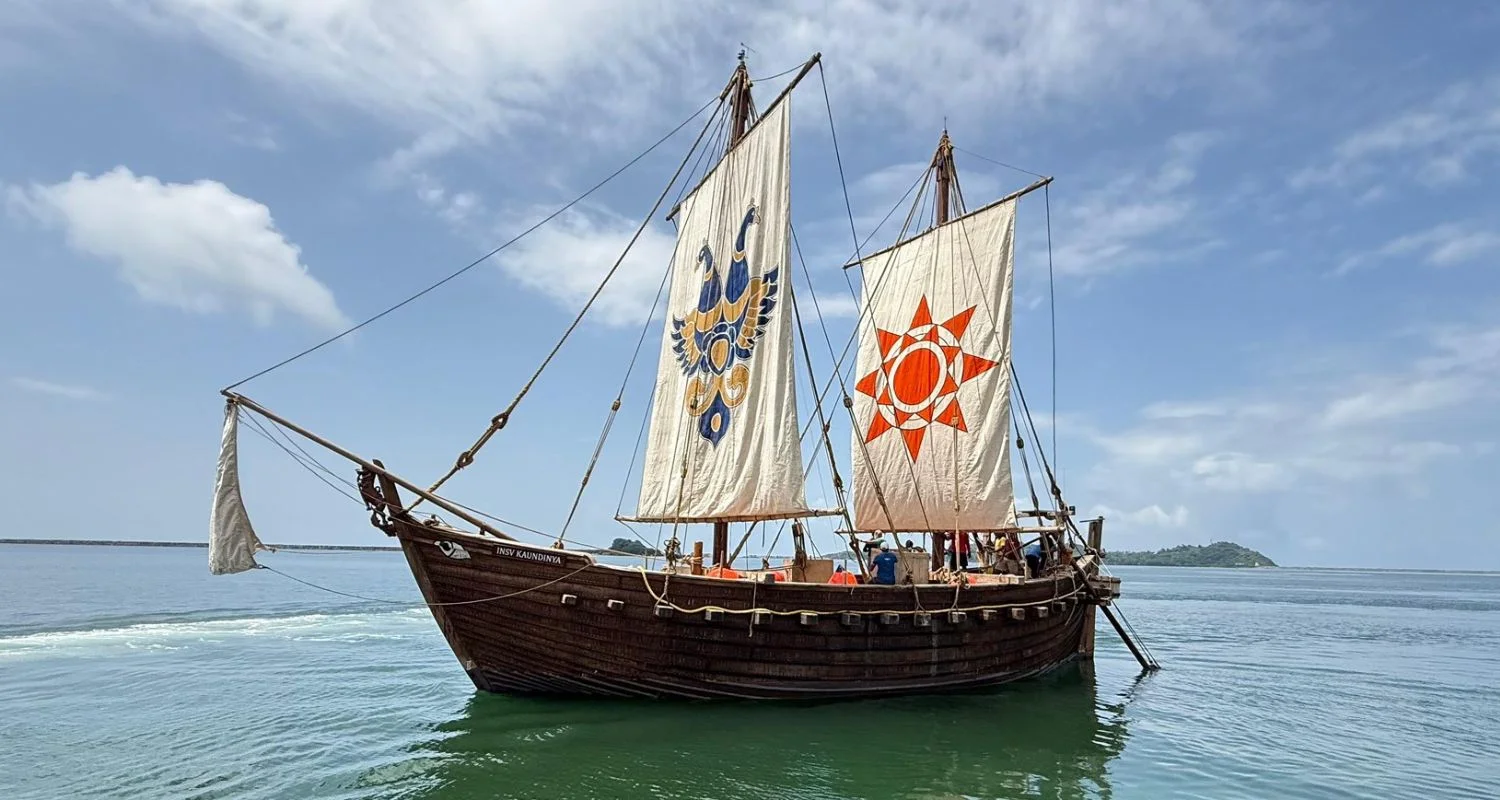
| Read More: INSV Kaundinya |



