


Important Facts For Prelims
Hoysala Temples
- 23 Feb 2026
- 9 min read
Why in News?
Several lesser-known 11th–13th century Hoysala-era temples across Karnataka are drawing fresh attention for their intricate soapstone carvings and distinctive star-shaped architecture.
What are Key Features of Hoysala Temples?
- About: The Hoysala temples were developed in the period from 1050-1300 A.D., with prominent seats at Belur, Halebid and Sringeri, though the dynasty's architectural influence spread across present-day Karnataka, including the regions near Mysore.
- Core Architectural Features
- Material: Hoysala architects favoured chloritic schist (soapstone), soft when quarried but hardening over time. Its pliability allowed microscopic detailing- jewellery, fingernails, hair curls, rendered in stone.
- Ground Plan Innovations:
- Ekakuta – Single sanctum
- Dvikuta – Two shrines
- Trikuta – Three shrines
- Chatushkuta/Panchakuta – Four or five shrines
These were often arranged on star-shaped platforms (jagati), creating rhythmic projections and recesses..
- Sculptural Narrative: Outer walls function like sculptural manuscripts:
- Friezes of elephants, horses, foliage, epics
- Celestial dancers (madanikas)
- Dynamic mythological battles
- Distinctive Stellate Plan: A defining feature is the stellate (star-shaped) plan of the sanctum and platform, creating multiple projecting angles that maximize surface area for ornamentation, differing from the crucified ground plan of the Panchayatan style.
- Ornamental Emphasis: Massive emphasis was laid on decoration through sculptures, with both interior and exterior walls, and even the jewellery worn by deities, being intricately carved.
- Exteriors feature horizontal friezes depicting elephants, mythical beasts, and narrative scenes.
- Shikhara Design: All chambers had Shikharas which were interconnected by an arrangement of horizontal lines and mouldings, resolving the tower into an orderly succession of tiers.
- Prominent Examples:
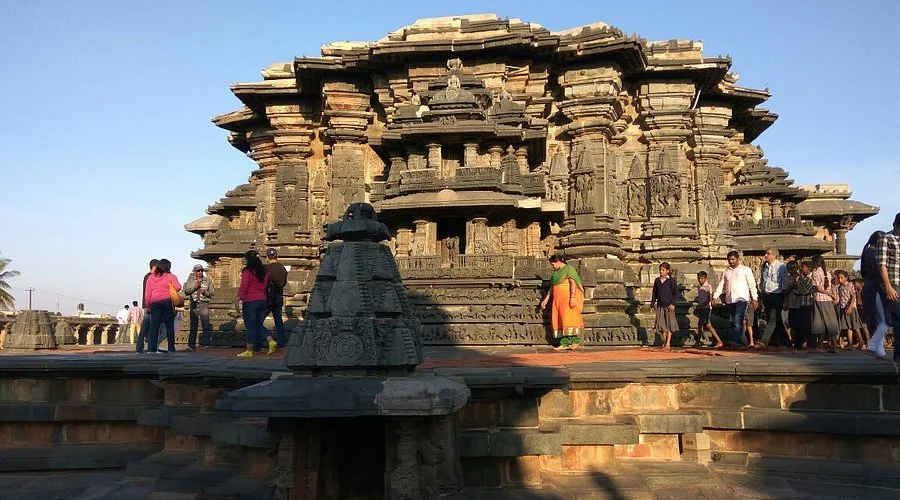
- Hoysaleswara Temple: The grand Hoysaleswara Temple at Halebidu stands as one of the most elaborate Shiva temples of the Hoysala age.
- Its walls unfold like sculpted epics, depicting mythological battles, celestial figures, and layered friezes of astonishing intricacy.
- Hoysaleswara Temple: The grand Hoysaleswara Temple at Halebidu stands as one of the most elaborate Shiva temples of the Hoysala age.
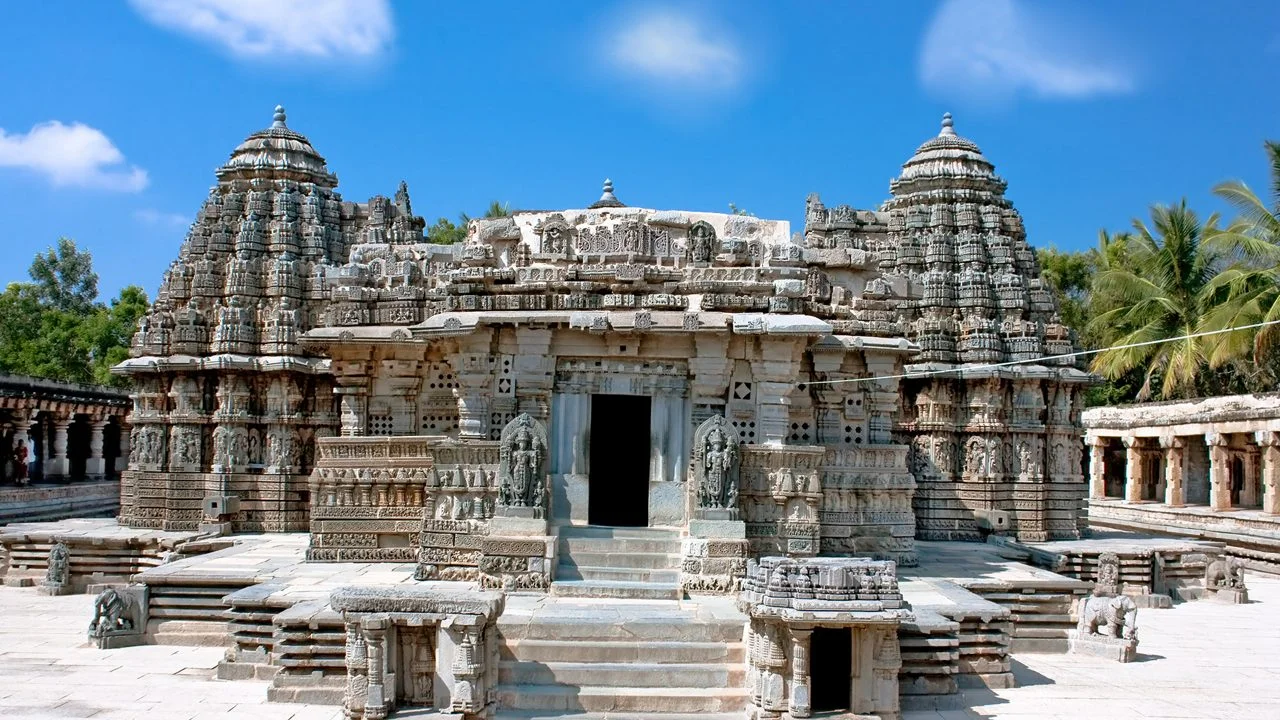
- Keshava Temple: It is a 13th-century Trikuta (three-shrined) Vaishnava temple in Somanathapura, known for its intricate Hoysala architecture and carvings.
- It was built by Somanatha Dandanayaka, a commander in the army of Hoysala King Narasimha III.
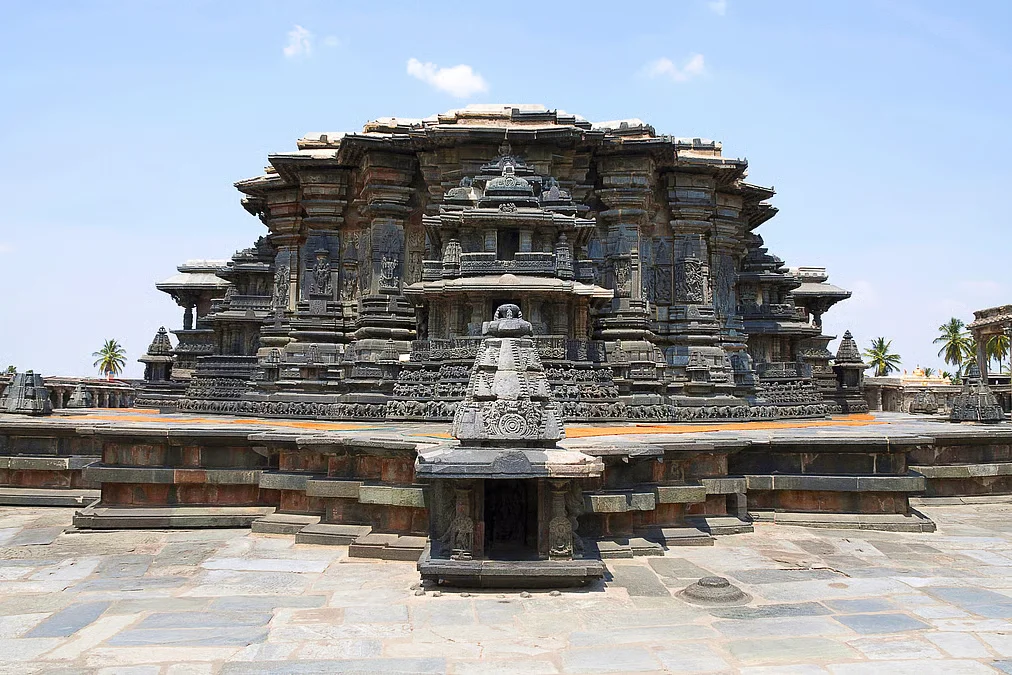
- Chennakeshava Temple: Located in Belur, it is renowned for its intricate Hoysala architecture. Commissioned by King Vishnuvardhana to celebrate his victory over the Cholas, this "living" temple is dedicated to Lord Vishnu.
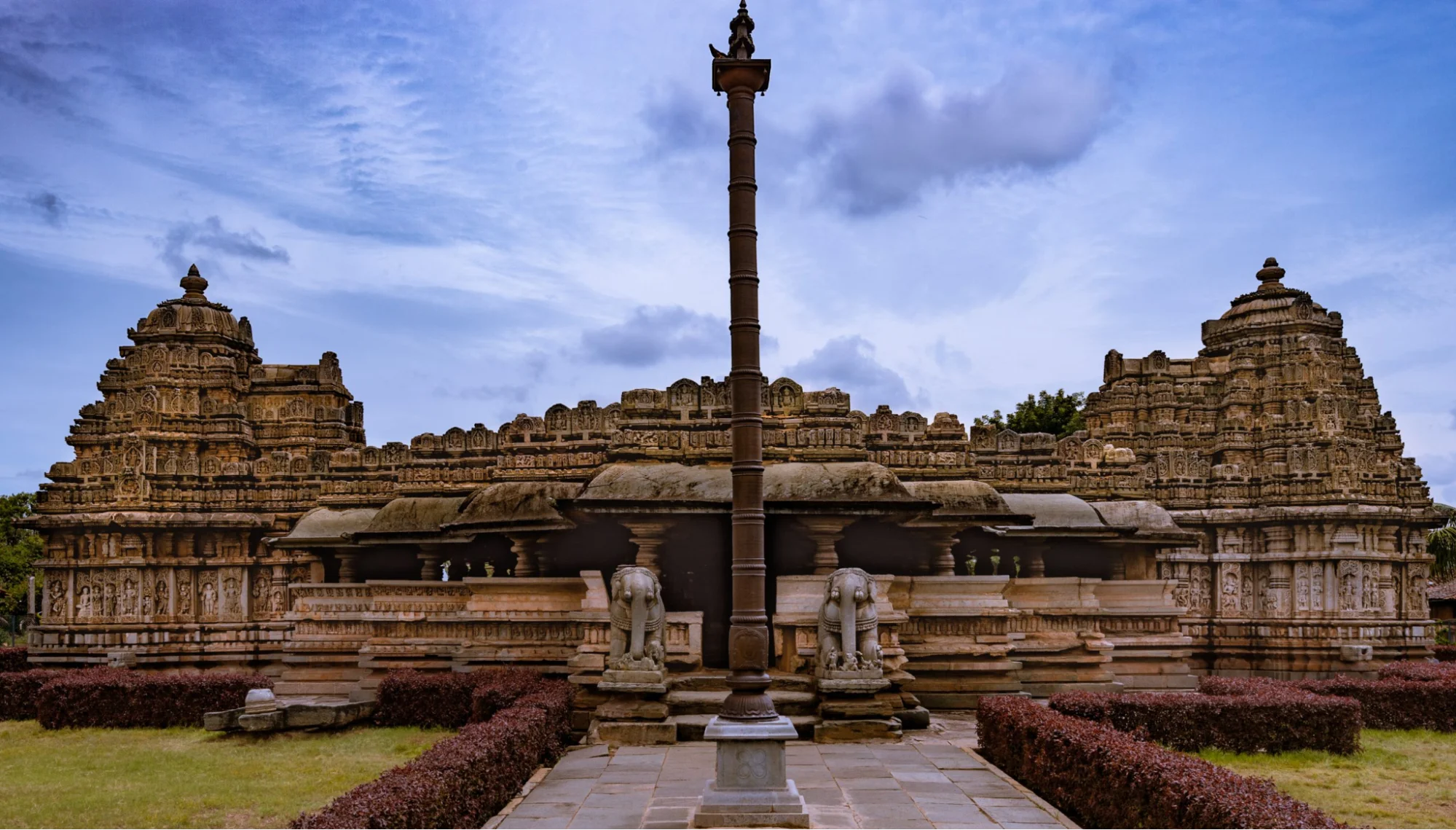
- Veera Narayana Temple: The Veera Narayana Temple, built around 1200 CE by Veera Ballala II, is renowned for its expansive ranga-mandapa and rows of uniquely carved elephants.
- Unlike heavily ornamented exteriors elsewhere, this temple emphasizes interior spatial grandeur and sculptural harmony.
- Nageshwara Temple: The Nageshwara Temple at Koravangala reflects an early phase of Hoysala experimentation. Its relatively restrained ornamentation and compact plan reveal a transition from Chalukyan influences toward the fully evolved Hoysala style.
- Standing beside it, the Govindeshwara Temple shares the same date but exhibits greater refinement in sculptural articulation.
- Dedicated to Vishnu, it demonstrates the growing confidence of Hoysala craftsmen in carving rhythmic wall projections and intricate friezes.
- Standing beside it, the Govindeshwara Temple shares the same date but exhibits greater refinement in sculptural articulation.
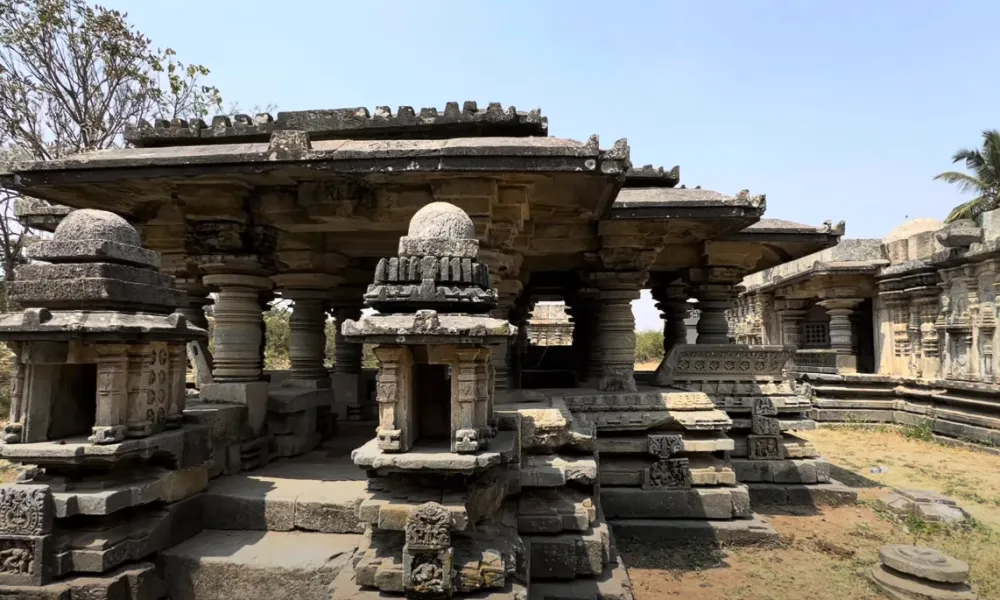
- Bucheshwara Temple: The Bucheshwara Temple, completed in 1173 CE in honour of King Veera Ballala II, marks the architectural high point of Koravangala. Its sculptural density, elegant star-shaped platform, and mature detailing signal the full flowering of Hoysala artistry.
- Lakshminarasimha Temple: The Lakshminarasimha Temple (1250 CE) at Javagal is a striking trikuta shrine known for its graceful elephant friezes and polished pillars. Built during the reign of Vira Someshwara, it reflects the prosperity of Javagal as a thriving medieval trade centre.
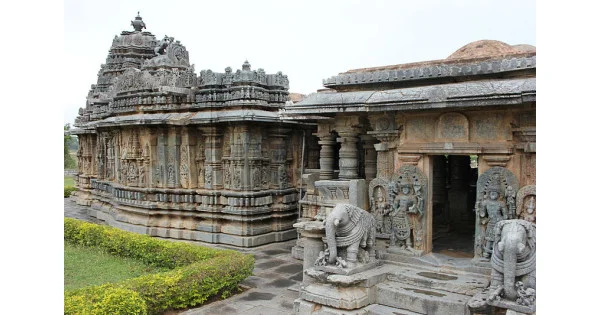
- Lakshmidevi Temple: The Lakshmidevi Temple (1114 CE) is among the earliest surviving Hoysala monuments and was commissioned by the merchant woman Sahaja Devi.
- Its four-shrine layout and rare Mahakali sanctum guarded by skeletal betalas hint at tantric influences and an experimental architectural phase.
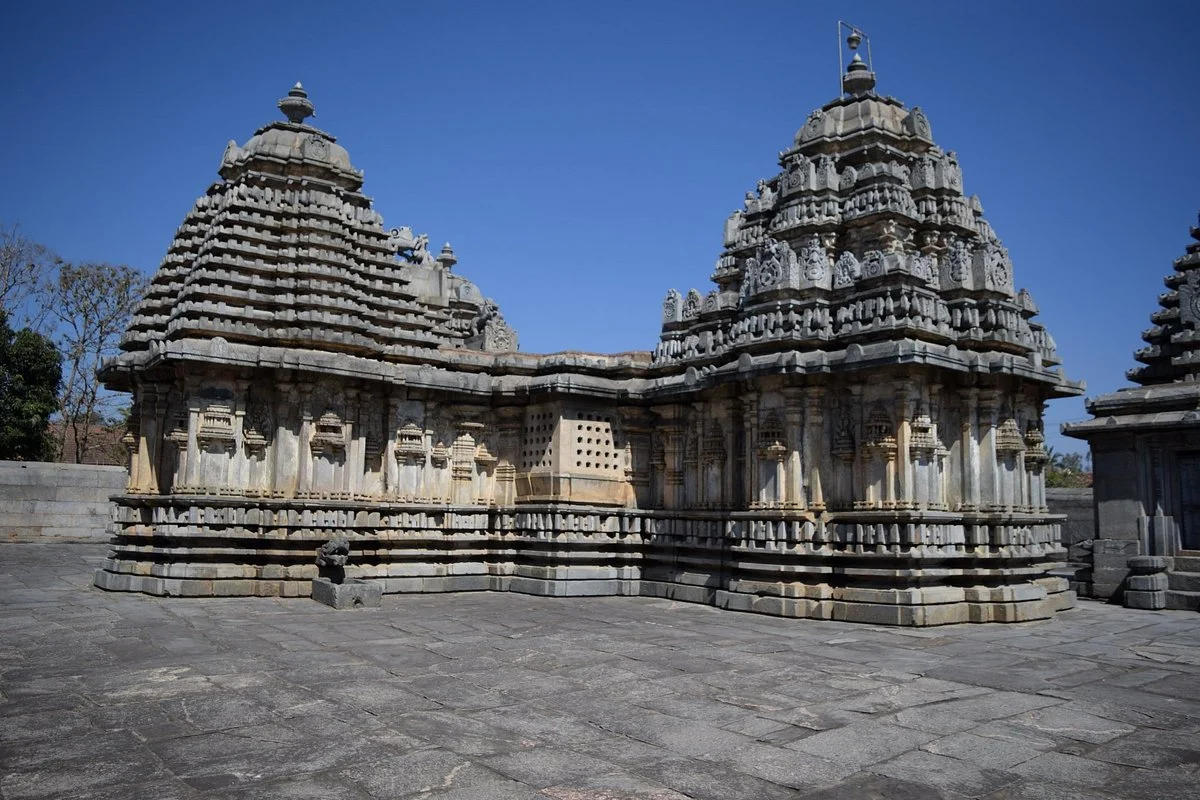
- Panchalingeshwara Temple: Located in Mandya, it features a rare Panchakuta design – five east-facing Shiva shrines aligned in a row and connected by a pillared hall.
- Jain Complex of Halebidu: It comprising the Parshvanatha Basadi, Shantinatha Basadi, and Adinatha Basadi, reflects a contrasting aesthetic of restraint and meditative stillness. Their clean lines and uncluttered interiors embody Jain ideals of clarity and spiritual contemplation.
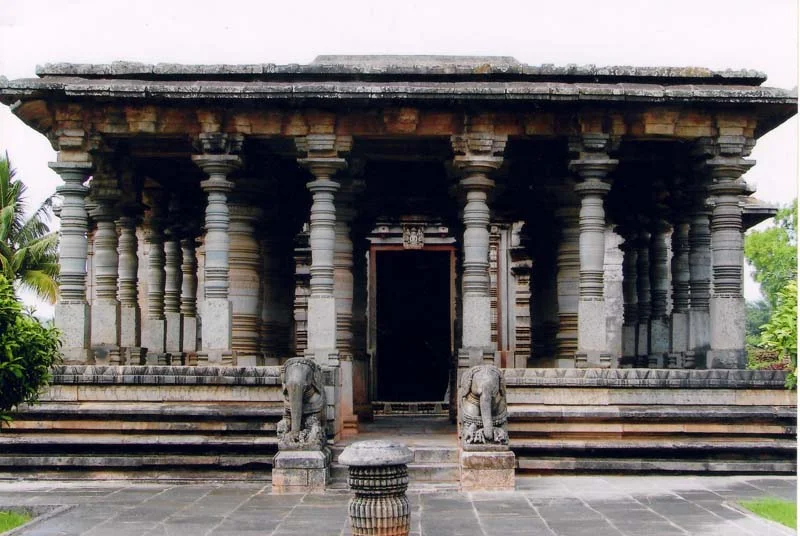
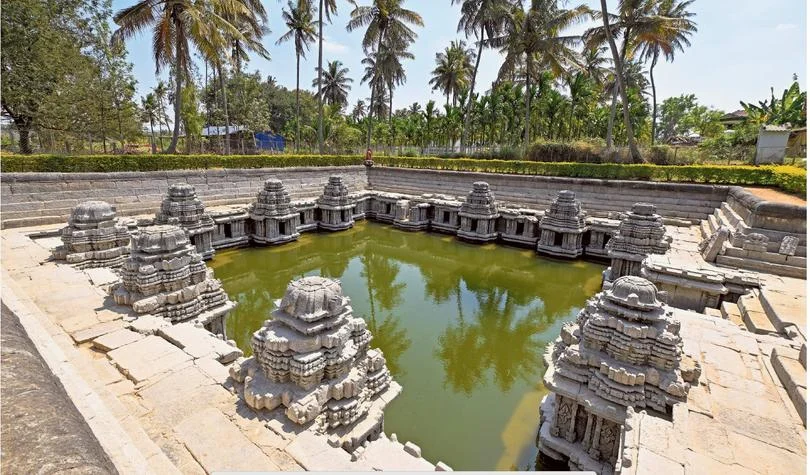
- Hulikere Kalyani: The 12th-century Hulikere Kalyani is a masterpiece of sacred water architecture built below ground level with symmetrical descending steps. With its constellation of miniature shrines symbolically linked to zodiac signs and nakshatras, it merges cosmology with hydraulic design.
- UNESCO Recognition: The Chennakeshava Temple, the Hoysaleswara Temple, and the Keshava Temple were collectively inscribed as a UNESCO World Heritage Site in 2023 under the title “Sacred Ensembles of the Hoysalas” during the 45th World Heritage Committee session.
Hoysala Dynasty
- About: Initially, the Hoysalas were feudatories of the Chalukyas of Kalyana, also known as the Western Chalukya Empire, before rising to independent power.
- The dynasty was founded by Nripa Kama II, who initially served as a vassal to the Western Chalukyas.
- Capital and Territory: The Hoysala dynasty's primary capital was Dwarasamudra (modern-day Halebidu), which served as the centre of their empire in Karnataka. Initially, the capital was located at Belur in the 11th century before being shifted to Halebidu.
- The Hoysalas governed areas spanning Karnataka and Tamil Nadu for over three centuries.
- Notable Rulers: The most notable rulers of the Hoysala dynasty were Vishnuvardhana, Veera Ballala II, and Veera Ballala III.
- Vishnuvardhana (also known as Bittideva) was the greatest king of the Hoysala dynasty, under whose reign the kingdom expanded significantly and witnessed prolific temple construction.
- King Vishnuvardhana was initially a Jain but later converted to Vaishnavism under the influence of the renowned Sri Vaishnava saint Ramanuja.
Frequently Asked Questions (FAQs)
1. What is the distinctive architectural plan of Hoysala temples?
Hoysala temples feature a distinctive stellate or star-shaped plan of the sanctum and platform, creating multiple projecting angles for extensive ornamentation.
2. What building material is characteristic of Hoysala temples?
They were constructed primarily from soft soapstone (chloritic schist) , which enabled extraordinarily intricate and detailed carvings.
3. Name three prominent examples of Hoysala temples.
Prominent examples include the Hoyasaleswara temple at Halebid, the Chennakesava temple at Belur, and the Keshava temple at Somanathapura.
UPSC Civil Services Examination Previous Year Question (PYQ)
Q. Which of the following is/are famous for Sun temples? (2017)
- Arasavalli
- Amarakantak
- Omkareshwar
Select the correct answer using the code given below:
(a) 1 only
(b) 2 and 3 only
(c) 1 and 3 only
(d) 1, 2 and 3
Ans: (a)
Q. The Nagara, the Dravida and the Vesara are the (2012)
(a) three main racial groups of the Indian subcontinent
(b) three main linguistic divisions into which the languages of India can be classified
(c) three main styles of Indian temple architecture
(d) three main musical Gharanas prevalent in India
Ans: (c)



