
International Relations
The India–UAE Strategic Arc
This editorial is based on “India, UAE deepen ties with mega defence plan, LNG deal” which was published in The Hindu on 20/01/2026. This article analyses the evolution of India–UAE relations from civilizational trade ties to a comprehensive strategic partnership, highlighting achievements, challenges, and the roadmap ahead in a shifting global order.
For Prelims:INDIA-UAE CEPA,IMEC, I2U2.,Organization of Islamic Cooperation, 'Bharat Mart', Sustainable Harnessing and Advancement of Nuclear Energy, Small Modular Reactors (SMRs)
For Mains: Recent development inIndia-UAE relations , Key issues, and measures to strengthen ties.
India–UAE relations have matured into a premier strategic partnership, with bilateral trade crossing $100 billion in FY 2024–25 under the INDIA-UAE CEPA and a new target of $200 billion by 2032. The UAE has emerged as India’s third-largest trading partner and a key source of FDI, while cooperation has moved beyond oil through a 10-year LNG pact and new domains such as fintech (UPI–AANI & RuPay-JAYWAN) , the India–Middle East–Europe Economic Corridor (IMEC) and recent talks on a Strategic Defence Partnership, including defence industrial collaboration and interoperability. Anchored in a 3.5 million–strong Indian diaspora, this partnership transforms economic interdependence into sustained geopolitical convergence.
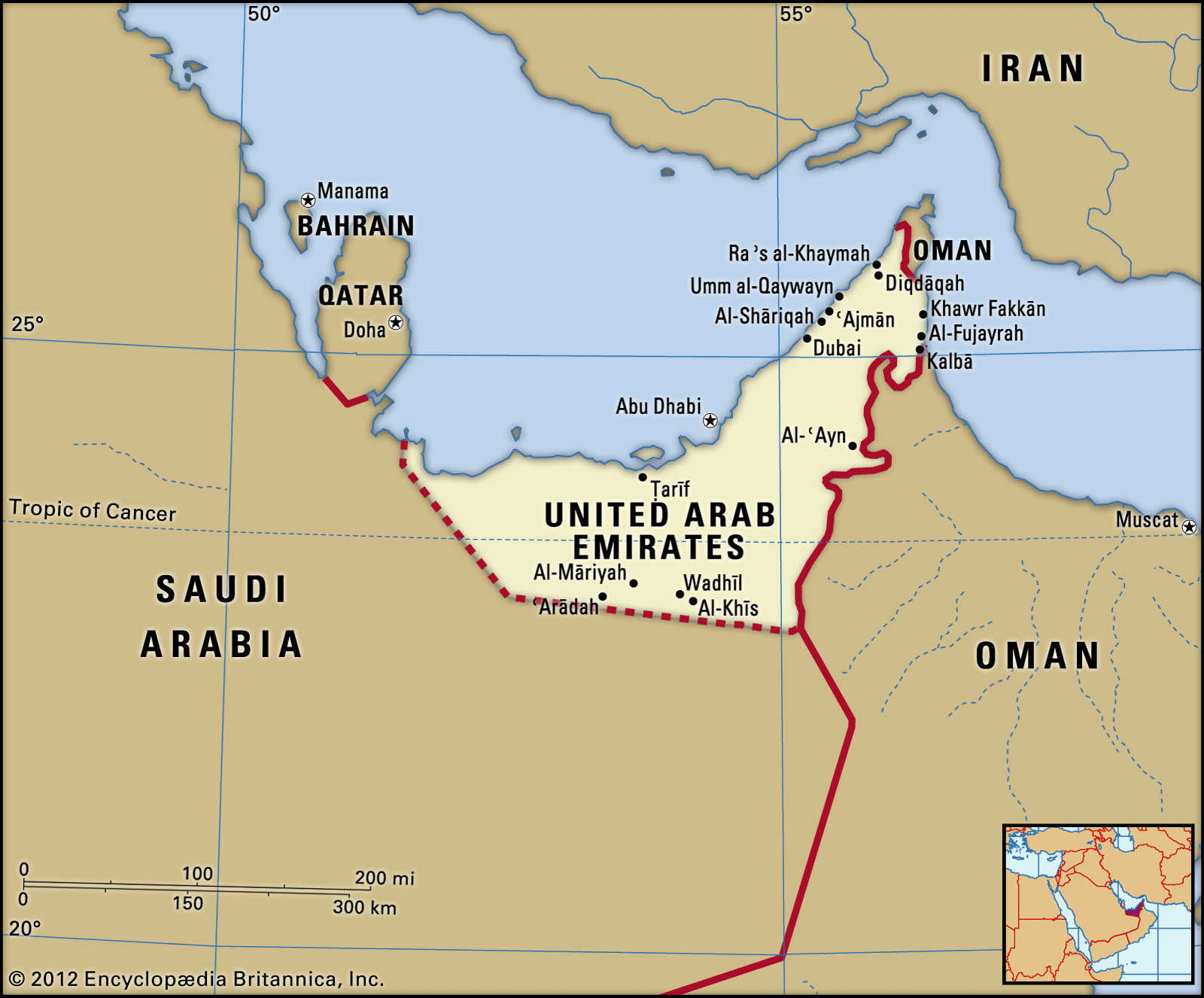
How India- UAE Relations Have Evolved Over Time ?
- Phase I: The Mercantile & Cultural Era (Pre-1971): This phase was shaped by geography-driven ties rather than formal diplomacy, with the Arabian Sea enabling a borderless maritime economy.
- India was the economic anchor, and the Indian Rupee functioned as the de facto currency in the Trucial States until 1966.
- Cultural links were sustained through the dhow trade (an ancient maritime network that has connected the Arabian Peninsula, East Africa, and South Asia for over 2,000 years), where Indian merchants were integral to Gulf society, not expatriates.
- This phase shows that India–UAE relations are civilizational and predate the oil boom, making today’s partnership a return to historical continuity.
- The 1966 devaluation of the Indian Rupee marked the first major economic decoupling, pushing Gulf states towards independent currencies and sovereignty.
- Phase II: The “Transaction” Era (1971–2000) : This phase saw India–UAE ties turn purely transactional after the UAE’s formation, centred on oil exports and Indian migrant labour.
- Geopolitically, Cold War alignments created distance, as the UAE leaned towards the US–Saudi bloc and viewed India through the Pakistan lens due to India’s proximity to the USSR.
- Security relations hit a low point, with Dubai emerging as a hub for smuggling and anti-India elements, deepening mistrust in New Delhi.
- Though, Indian workers fuelled the UAE’s growth during the “Gulf Dream” but were seen only as economic inputs, not as sources of soft power.
- This phase reflected strategic myopia, exemplified by the UAE’s support to Pakistan on Kashmir at forums like the Organization of Islamic Cooperation.
- Phase III: The Economic Awakening & “Benign Neglect” (2000–2014): This was marked by booming trade but stagnant political engagement between India and the UAE.
- Politically, a paradox of “high trade, low politics” prevailed, with strong commercial ties but minimal high-level diplomatic outreach.
- Energy relations remained transactional, locked in a simple buyer–seller model without strategic depth such as joint reserves or downstream investments.
- The 2002 deportation of Aftab Ansari signalled a quiet shift, marking the UAE’s break from being a terror safe haven and the beginning of covert security cooperation with India.
- Phase IV: The Strategic Realignment & “Golden Era” (2015–Present): This marks a decisive shift from transactional ties to a Comprehensive Strategic Partnership driven by shared realist interests in a post-American Middle East.
- The 2015 UAE visit of the Prime Minister broke a 34-year gap, condemned state-sponsored terrorism, and repositioned the UAE as India’s global connectivity hub through IMEC and I2U2.
- Geopolitically, the UAE de-hyphenated India from Pakistan, evident in inviting India as Guest of Honour to the Organization of Islamic Cooperation in 2019 despite Pakistan’s boycott.
- The Comprehensive Economic Partnership Agreement (CEPA) was signed in 2022 in record time (88 days of negotiation)
- In January 2026, the two nations signed a Letter of Intent for a formal Strategic Defence Partnership.
What are the Current Areas of Development in the India-UAE Relations ?
- Enhanced Economic Partnership: The bilateral economic strategy has shifted from mere commodity exchange to a deep institutional integration designed to shield both economies from global volatility, credited to the Comprehensive Economic Partnership Agreement (CEPA).
- In January 2026, both nations set a target of $200 billion in annual trade by 2032, building on the $100 billion milestone reached in FY 2024-25.
- By doubling the trade target, both nations are signaling a commitment to creating a corridor in the Global South that bypasses traditional Western trade dependencies.
- Initiatives like 'Bharat Mart' in Jebel Ali Free Zone (JAFZA)and the 'Bharat-Africa Setu' are being fast-tracked to integrate Indian MSMEs into the UAE’s global re-export network.
- In January 2026, both nations set a target of $200 billion in annual trade by 2032, building on the $100 billion milestone reached in FY 2024-25.
- The Strategic Defense Pivot: India and the UAE are moving toward a formal security architecture, reflecting a shared vision of strategic autonomy and a collective stance against cross-border terrorism.
- This shift indicates that the UAE now views India, rather than traditional regional allies, as its primary partner for maritime security and defense industrial innovation in the Indian Ocean.
- For instance, a Letter of Intent (LoI) for a Strategic Defence Partnership was signed in January 2026, covering defense industrial collaboration and interoperability.
- Joint exercises like Desert Cyclone and Desert Flag now feature complex combat scenarios involving multi-domain operations, real-time interoperability, and high-intensity air-land coordination, reflecting a shift from symbolic drills to realistic war-fighting preparedness.
- From Crude Trade to Clean Energy Partnership: The energy relationship has transcended the "transactional crude" phase to embrace long-term energy security and the "SHANTI" (Sustainable Harnessing and Advancement of Nuclear Energy) framework.
- By venturing into civil nuclear cooperation and Small Modular Reactors (SMRs), the UAE is positioning itself as a primary financier and partner in India’s green energy transition.
- For example, HPCL signed a 10-year LNG supply pact with ADNOC in 2026 for 0.5 million metric tonnes annually starting in 2028.
- Simultaneously, both nations are collaborating on Small Modular Reactors (SMRs) to capitalize on India’s new nuclear policies and the UAE's Barakah nuclear expertise.
- Complementing this shift, India and the UAE are aligning their climate strategies to co-develop a Green Hydrogen value chain, combining India’s manufacturing scale with the UAE’s capital to build a sustainable “Green Corridor” for the Global South.
- Fintech & Digital Alliance: Financial and digital connectivity has become the "new oil," with both nations aiming to create a sovereign digital payment corridor that challenges the hegemony of Western financial systems.
- The establishment of "Digital Embassies" and supercomputing clusters highlights a transition toward high-end technological interdependence.
- The integration of India’s RuPay card with UAE’s JAYWAN card stack has revolutionized remittances for the 3.5 million-strong diaspora.
- Furthermore, both sides have now agreed in principle to establish a supercomputing cluster in India through collaboration between C-DAC(India) and G42(UAE).
- Integrated with the AI India Mission, the facility will support public and private research, application development and commercial innovation.
- Infrastructure Cooperation-The "Greenfield" Asset Shift": The investment strategy has matured from passive portfolio holdings to active "greenfield asset creation," where UAE sovereign funds are now anchor investors in India's industrial backbone.
- This shift aims to physically integrate Indian manufacturing zones (like Gujarat) with the Jebel Ali transshipment hub, effectively operationalizing the IMEC corridor by owning the logistics chain end-to-end to bypass global chokepoints.
- For instance, the UAE committed to developing the Dholera Special Investment Region (Gujarat), including a new international airport and greenfield port. Simultaneously, DP World pledged an additional $5 billion to upgrade India’s port logistics network.
- Space Cooperation-From "Launch Client" to "Co-Developer": Space cooperation has graduated from a transactional "buyer-seller" model (UAE paying for launches) to a "co-development" partnership focused on capturing the global commercial payload market.
- The two nations are combining ISRO’s cost-effective engineering with UAE capital to build a shared industrial base, moving beyond state-level science missions to private-sector integration and human spaceflight training.
- For instance, in January 2026, IN-SPACe and the UAE Space Agency signed a landmark Letter of Intent (LoI) to jointly develop Commercial Launch facilities.
- The "Knowledge Corridor" & Skill Mobility: The relationship has shifted from a "labor-export" model to a high-end "knowledge partnership," aiming to create a seamless ecosystem for academic excellence and professional certification.
- This transition ensures that the Indian diaspora in the UAE is no longer just a workforce but a primary driver of the UAE’s transition into a post-oil, innovation-led economy.
- For Example, following the 2024 opening of IIT Delhi-Abu Dhabi, the campus is set to double its student strength to 400 by late 2026 while introducing specialized Master’s programs in AI.
- This is supported by the 2025 MoU on Mutual Recognition of Qualifications, facilitating the mobility of professionals across the 3.5 million-strong Indian community.
- Cultural & Sports Diplomacy: The relationship has evolved beyond transactional diplomacy into a civilizational partnership, with the UAE emerging as a cultural extension of India. This approach follows a dual strategy: affirming the Indian diaspora’s long-term belonging through unprecedented religious and cultural recognition, moving past the notion of a “temporary workforce”, while also providing a neutral and trusted platform for managing sensitive regional engagements between India and Pakistan.
- For instance, The BAPS Hindu Mandir, inaugurated in February 2024, built on 27 acres of land gifted by the UAE President. At the same time, the UAE has positioned itself as a consistent neutral venue for sensitive India–Pakistan sporting interactions.
What are the Key Areas of Friction in the India-UAE Relationship?
- Structural Trade Imbalance & CEPA Utilization Gaps: Despite the Comprehensive Economic Partnership Agreement (CEPA) operationalizing zero-duty access, India faces a persistent challenge in diversifying exports beyond low-value-added sectors like gems and jewelry to offset the heavy energy import bill.
- The structural asymmetry forces India to constantly negotiate non-tariff barriers and rules of origin to prevent the "pass-through" of third-party goods, while the UAE's trade surplus complicates the full adoption of local currency settlement mechanisms.
- For example, in FY2025, while bilateral trade crossed $100 billion, India’s trade deficit remained nearly $26 billion primarily due to oil imports.
- Also, India fears the UAE is becoming a conduit for third-party goods (like gold/silver) bypassing duties, forcing India to tighten scrutiny which frictionizes trade.
- Geopolitical Vulnerability of the IMEC Corridor: The stalling of the India-Middle East-Europe Economic Corridor (IMEC) exposes the fragility of India's regional connectivity strategy to West Asian volatility, specifically the Israel-Gaza conflict, which has frozen the physical integration of the UAE-Israel leg.
- This creates a strategic bottleneck where India’s "gateway to Europe" is held hostage by regional insecurity, forcing New Delhi to rely on longer, costlier maritime routes while simultaneously managing diplomatic tightropes with Iran and the Arab world.
- The "Hydrocarbon-Renewable" Energy Paradox: India faces the dual pressure of securing immediate fossil fuel supplies to power its growing economy while simultaneously partnering with the UAE on green hydrogen, creating a policy friction where long-term decarbonization goals compete with short-term energy security needs.
- The relationship is locked in a transition phase where India must deepen dependence on UAE's oil and LNG infrastructure even as it seeks to compete with the UAE as a global green hydrogen export hub.
- For instance, Indian entities signed a 10-year LNG supply agreement (1.2 MMTPA) with ADNOC, cementing fossil reliance even as both nations chase conflicting Net Zero 2070/2050 targets.
- Financial Interoperability & Rupee Accumulation Risks: The Local Currency Settlement System (LCSS) faces a liquidity hurdle where UAE exporters accumulate Indian Rupees (INR) from their trade surplus but lack sufficient avenues to reinvest them in India’s bond or equity markets at scale.
- This "trapped liquidity" creates hesitation among UAE banks to fully abandon the Dollar peg, limiting the mechanism's efficacy to symbolic transactions rather than becoming a mainstream trade settlement standard.
- Labor Market Nationalization vs. Diaspora Dependence: The UAE’s aggressive Emiratisation drive poses a structural risk to the 3.5 million-strong Indian workforce, especially in white-collar sectors that sustain India’s billions of annual remittance inflow.
- Large firms were mandated to achieve 8% Emiratisation by the end of 2025, non-compliance now triggers annual financial penalties, which indirectly penalise the Indian workforce by constraining hiring flexibility and increasing preference for national employment
- While blue-collar employment remains relatively insulated, shrinking professional opportunities signal long-term stress on India’s remittance-led forex buffer.
- The "Paper-to-Project" Investment Latency: A recurring friction is the execution gap between the UAE’s massive sovereign pledges (ADIA/Mubadala) and the slow pace of actual capital deployment, often bottled-necked by India's retrospective tax fears and lengthy dispute resolution mechanisms that deter long-term infrastructure bets compared to faster Western markets.
- Out of the pledged $75 billion investment target, realized FDI stands at only around $22 billion (as of March 2025) and the recent talks over Bilateral Investment Treaty review specifically focused on bypassing the "exhaustion of local remedies" clause to accelerate the remaining capital flow.
- For instance, the Ratnagiri Refinery remains stalled due to land disputes despite ADNOC’s committed capital.
- Defense Strategic Divergence- Kinetic vs. Diplomatic Posture: While maritime cooperation is growing, a strategic disconnect exists between India’s direct naval assertiveness in the Red Sea and the UAE’s preference for cautious, non-aligned diplomacy to manage regional proxies, limiting the scope of joint kinetic operations despite shared threats to critical shipping lanes.
- For instance, in the recent talks defense outcomes were limited to defense industrial manufacturing (drones/AI) rather than joint patrols.
- India’s 40-warship deployment in the Red Sea continues to operate independently of UAE naval assets, revealing a "coordination without integration" reality.
- For instance, in the recent talks defense outcomes were limited to defense industrial manufacturing (drones/AI) rather than joint patrols.
- The "China Factor" & Strategic Hedging: The UAE's deepening technological and military embrace of China (Huawei 5G, port infrastructure) creates a sharp Security Dilemma for India. This complicates the I2U2 framework and sensitive technology transfers.
- For instance, a number of Chinese companies have also invested in manufacturing and trading entities within Khalifa Economic Zones Abu Dhabi Group.
What Measures Can be Taken to Strengthen the India-UAE Relationship ?
- Institutionalize a "Sovereign Fast-Track" Arbitration Mechanism: To resolve the "investment latency" issue, India should establish a bespoke dispute resolution corridor within GIFT City specifically for UAE sovereign wealth funds (ADIA, Mubadala).
- This would operationalize the spirit of the Bilateral Investment Treaty by bypassing India's prolonged lower-judiciary delays, thereby converting hesitant capital into active, long-term "greenfield" infrastructure assets.
- Create a "Rupee-Dirham Corporate Bond" Market: To solve the LCSS liquidity trap, policy regulators should facilitate the listing of high-yield Indian "Masala Bonds" or green infrastructure bonds in the Abu Dhabi Global Market (ADGM).
- This financial innovation would allow UAE banks to reinvest their surplus accumulated Rupees into profit-generating Indian assets rather than converting them back to Dollars, transforming the Local Currency Settlement System from a symbolic trade tool into a robust, circular investment vehicle.
- Operationalize a "Strategic Food Security Treaty" with Ban-Exemptions: India must move beyond general assurances and sign a binding treaty that grants the UAE specific, quota-based exemptions from ad-hoc agricultural export bans (rice/wheat/sugar).
- In exchange for this "supply chain immunity," the UAE would be contractually bound to fully capitalize the stalled I2U2 Food Parks, creating a closed-loop "farm-to-port" corridor that guarantees price stability for Indian farmers and food sovereignty for the Emirates.
- Accelerate Transition to a "Co-Production" Defense Industrial Base: The defense partnership needs to pivot from "buyer-seller" dynamics to a "Joint Intellectual Property" model, specifically targeting drone warfare, AI-surveillance, and desert-warfare electronics.
- By merging India's frugal engineering and software prowess with the UAE's advanced component procurement networks, both nations can build a "Shared Strategic Autonomy" that reduces dependence on Western or Chinese OEMs for critical security needs in the Indian Ocean Region.
- Establish a "Transnational Skill Harmonization" Protocol: To counter the risks of Emiratisation, India should co-create a "Skills Passport" system where Indian vocational certifications are pre-validated by the UAE National Qualifications Authority.
- This measure would proactively upskill the Indian blue-collar workforce into "grey-collar" technicians (automation, HVAC, clean energy), ensuring they remain indispensable to the UAE's post-oil "Knowledge Economy" while securing higher-value remittances for the Indian economy.
- Construct a "Green Maritime Bridge" : Given the geopolitical stalling of the rail network, India and UAE should aggressively digitize and decarbonize the direct sea leg between JNPT/Mundra and Jebel Ali.
- Implementing a "Green Corridor" with e-Bills of Lading, harmonized customs integration, and preferential docking for green-fuel vessels will slash logistics costs and secure the bilateral trade route, ensuring connectivity thrives even if the broader IMEC regional integration remains frozen by West Asian instability.
- Interlink Digital Public Infrastructure (DPI) Beyond Payments: Moving beyond the UPI-AANI linkage, the two nations should integrate their broader digital stacks to create a "Cross-Border Digital Commons."
- This involves the mutual recognition of digital health records, portable credit histories for SMEs, and verified educational credentials, drastically reducing the compliance friction for the Indian diaspora and enabling seamless, paperless mobility for businesses operating in the Dubai-Mumbai corridor.
- Develop a "Green Hydrogen Grid" Partnership: To address the energy transition paradox, the partnership should evolve into a "Virtual Power Plant" model where India produces green hydrogen using its low-cost renewable geography, and the UAE invests in the cryogenic shipping infrastructure.
- This decouples the relationship from pure hydrocarbon dependency and positions the India-UAE axis as a primary "Green Energy Exporter" to Europe, leveraging the UAE's logistics dominance to market India's clean energy production.
Conclusion:
India–UAE relations have transcended transactional pragmatism to emerge as a model strategic partnership anchored in trust, technology, and shared geopolitical realism. As both nations navigate a volatile West Asian order, their convergence on connectivity, clean energy, and digital public infrastructure reflects a shift from dependence to co-creation. The real test ahead lies in converting visionary frameworks into executable projects that deliver mutual strategic autonomy. If sustained, this partnership can redefine South–West Asia integration and serve as a template for resilient cooperation in a multipolar world.
|
Drishti Mains Question “India–UAE relations have evolved from civilizational connectivity to a comprehensive strategic partnership.”Critically examine this transformation with reference to geopolitical realignments, economic integration, and security cooperation in the post-2015 period. |
FAQs
1. Why is India–UAE partnership considered strategic today?
It spans trade, defence, energy, technology, and regional security, moving beyond oil and labour ties.
2. What role does CEPA play in India–UAE relations?
It has institutionalised trade, helping bilateral commerce reach $100 billion and targeting $200 billion by 2032.
3. Why is the Indian diaspora important for the UAE?
The 3.5 million–strong community acts as a living bridge, supporting growth, remittances, and skill transfer.
4. What is IMEC’s significance for India?
It positions the UAE as India’s gateway to Europe, enhancing connectivity beyond traditional maritime routes.
5. What is the key challenge ahead in India–UAE ties?
Translating large strategic commitments and investment pledges into timely, on-ground execution.
UPSC Civil Services Examination Previous Year Questions (PYQs)
Prelims:
Q. Which of the following is not a member of ‘Gulf Cooperation Council’? (2016)
(a) Iran
(b) Saudi Arabia
(c) Oman
(d) Kuwait
Ans: (a)
Q. Consider the following statements: (2008)
- Ajman is one of the seven Emirates of the UAE.
- Ras al-Khaimah was the last Sheikhdom to join the UAE.
Which of the statements given above is/are correct?
(a) 1 only
(b) 2 only
(c) Both 1 and 2
(d) Neither 1 nor 2
Ans: (c)
Mains
Q. The question of India’s Energy Security constitutes the most important part of India’s economic progress. Analyse India’s energy policy cooperation with West Asian countries. (2017)



