


International Relations
Strengthening India-EU Ties
- 03 Jan 2026
- 21 min read
This editorial is based on “Between India and EU, a carbon gap and an FTA bridge” which was published in The Indian Express on 02/01/2026. The article highlights the impact of EU’s CBAM on Indian exporters and underscores the challenge lies in balancing climate ambition with fair trade, competitiveness, and the future of India’s export-driven growth.
For Prelims: FTAs, India- EU Trade and Technology Council, CBAM, NATO, Carbon Credit Trading Scheme,India-EU relations.
For Mains: India-EU relations, Key challenges in signing FTA, Measures to address the issue.
As the European Union’s Carbon Border Adjustment Mechanism reshapes global trade, India–EU economic ties are entering a critical phase. With bilateral trade exceeding €120 billion, new carbon-linked rules will directly affect key Indian exports such as steel, aluminium, and cement. While these measures pose short-term challenges, they also underscore the need for cleaner production and stronger carbon accounting frameworks in India. The ongoing India–EU Free Trade Agreement negotiations offer a timely platform to address these concerns. If leveraged wisely, this transition can deepen a more resilient, competitive, and sustainable India–EU partnership.
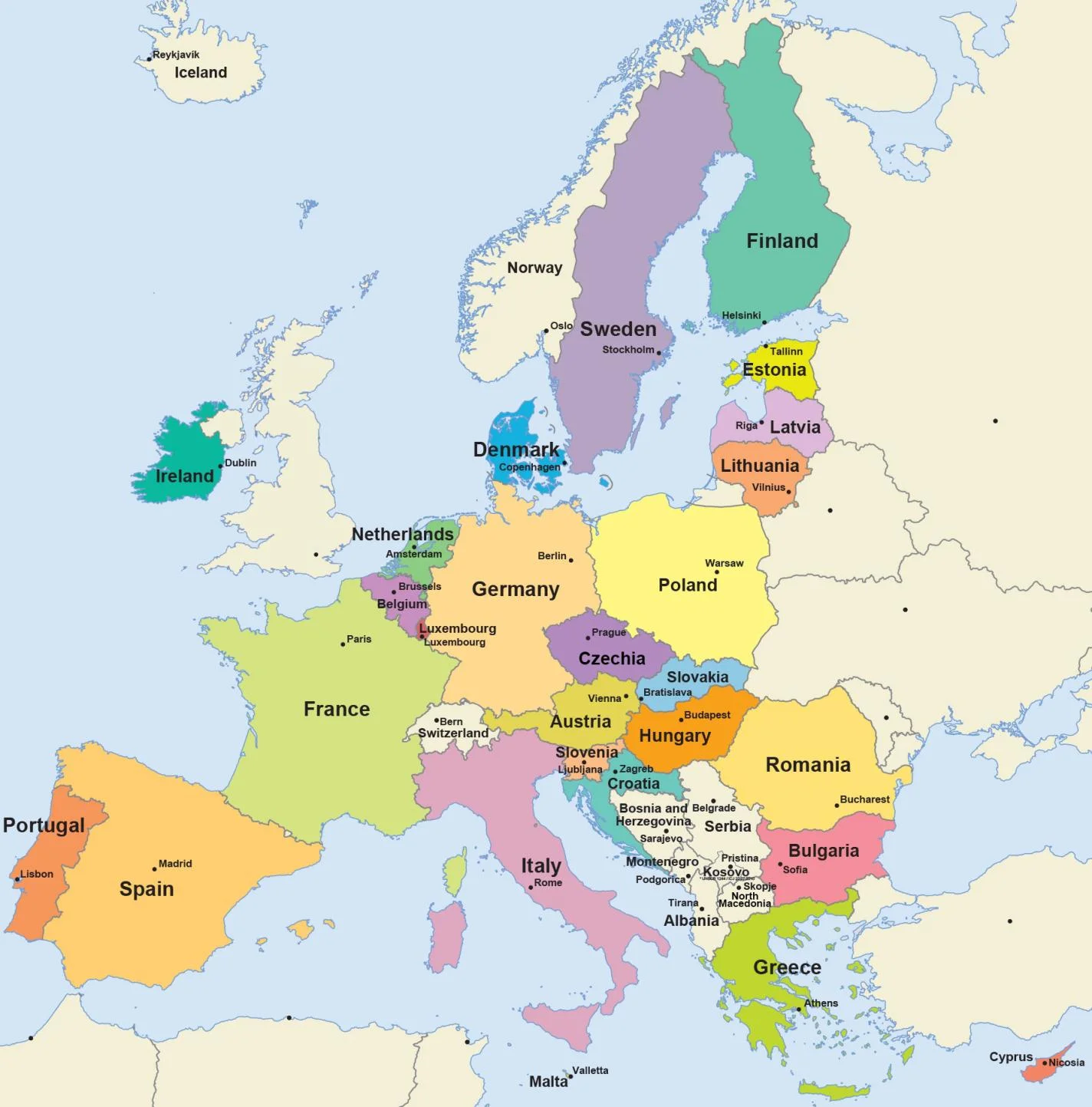
How India–EU Relations Have Evolved Over Time?
The history of India-EU relations has transitioned from a simple buyer-seller relationship to a sophisticated strategic partnership. While it began with trade, it now encompasses defense, technology, and global governance.
- Phase 1: Foundations (1960s – 1990s): The early years were defined by India seeking developmental aid and market access for its goods.
- 1962: India became one of the first countries to establish diplomatic relations with the European Economic Community (EEC).
- 1994: A landmark Cooperation Agreement was signed, broadening the scope from pure trade to include political and cultural exchanges.
- Phase 2: Upgradation to Strategic Partnership (2000 – 2010): As India’s economy liberalized, the EU recognized it as a global player.
- 2000: The First India-EU Summit was held in Lisbon, marking a watershed moment in institutionalizing the relationship.
- 2004: Relations were upgraded to a "Strategic Partnership" during the Hague Summit, placing India in the same category as the US and China for the EU.
- 2007: Negotiations for the Broad-based Trade and Investment Agreement (BTIA)—the FTA—began, though they would later stall for nearly a decade.
- Phase 3: Modern Strategic Realignment (2016 – Present): The current era is focused on the Indo-Pacific, green energy, and technology sovereignty.
- 2016: The Clean Energy and Climate Partnership was launched to align on the Paris Agreement goals.
- 2022: Formal resumption of FTA negotiations signaled a renewed commitment to de-risk from China.
- 2025: The European Union unveiled its "New Strategic EU-India Agenda" in September, 2025, to deepen ties across five pillars: Prosperity & Sustainability, Technology & Innovation, Security & Defence, Connectivity & Global Issues, and Enablers Across Pillars, focusing on trade, critical tech, security, climate action, and mobility, with a strong push to finalize the EU-India Free Trade Agreement (FTA) amidst global instability and rising geopolitical challenges, positioning India as a key partner.
What is the Current Development in the India EU-Relations?
- Anchoring Economic Resilience: India and the European Union share one of the world’s most significant economic partnerships, EU is India’s second-largest trading partner, accounting for trade in goods which is 11.5% of India's total trade.
- The EU remains a key destination for Indian exports such as engineering goods, pharmaceuticals, textiles and IT services.
- As global supply chains diversify post-pandemic and amid geopolitical tensions, India and the EU are increasingly viewing each other as reliable long-term economic partners.
- Renewed Push for the India–EU Free Trade Agreement (FTA): After remaining stalled for years, negotiations on the India–EU FTA resumed in 2022, reflecting mutual strategic urgency.
- The proposed agreement aims to boost market access, reduce tariffs, facilitate investment, and enhance cooperation in digital trade, sustainability and supply chains.
- For India, it offers access to advanced technology and markets and for the EU, it provides a trusted manufacturing and growth partner.
- The FTA is being fast-tracked as a "geopolitical necessity" to de-risk supply chains from China, though friction persists over the EU’s Carbon Border Adjustment Mechanism (CBAM).
- The proposed agreement aims to boost market access, reduce tariffs, facilitate investment, and enhance cooperation in digital trade, sustainability and supply chains.
- Collective March Toward Energy Transition: Energy cooperation has moved beyond policy dialogue to concrete infrastructure projects, specifically through the National Green Hydrogen Mission and the EU’s Hydrogen Bank.
- The focus is on creating a "Green Hydrogen Corridor" where India serves as a primary production hub for Europe’s decarbonization needs.
- This "natural alignment" leverages India’s low-cost renewable scale and Europe’s technology and capital to achieve mutual Net Zero targets.
- The AM Green-Rotterdam Corridor Agreement (May 2025) aims to export 1 million tonnes of green ammonia annually from India to Europe via the Port of Rotterdam.
- Accelerated Technology Cooperation: The India-EU Trade and Technology Council (TTC), established as only the second such platform for the EU (after the US), has become the primary vehicle for aligning digital standards.
- Both sides are focusing on "human-centric" AI and the interoperability of Digital Public Infrastructure (DPI) to create a global alternative to closed digital ecosystems.
- TTC serves as a strategic shield against technological dependencies, fostering co-development in frontier areas like 6G and semiconductors rather than mere buyer-seller ties.
- For instance, in 2025, both sides launched the GANANA project for High-Performance Computing (HPC).
- Enhanced Push for Connectivity: The India-Middle East-Europe Economic Corridor (IMEC), is being operationalized to create a seamless multimodal transport and energy link.
- This corridor is designed to bypass traditional "chokepoints" and offer a transparent, rules-based alternative to the Belt and Road Initiative (BRI).
- IMEC is evolving from a transport route into a "green and digital corridor" that will fundamentally lower the cost of Eurasian logistics while integrating energy grids.
- Projections indicate IMEC will reduce logistics costs by 30% and transit time by 40%.
- Geopolitical and Strategic Convergence: The launch of the "New Strategic EU-India Agenda" in late 2025 signals a shift toward making the partnership "actionable and cohesive."
- Both sides have transitioned from a relationship of "distant democracies" to "indispensable partners" in a multipolar world, specifically focusing on de-risking from China and navigating the unpredictability of US trade policies.
- This convergence is driven by the shared goal of "Strategic Autonomy," where India and the EU act as stabilising poles to prevent a G2-style bipolarity between the US and China.
- Cooperation on Indo-Pacific stability, maritime security, and multilateral reform reflects a shared interest in a rules-based international order and strategic autonomy from major power rivalries.
- People-to-People and Knowledge Partnerships: Beyond economics, India–EU relations are expanding through education, research, mobility, and skill development.
- Programs under Horizon Europe, Erasmus+, and research collaborations enhance knowledge exchange and strengthen long-term societal ties.
- Further joint research calls are planned for 2026, including on EV battery recycling and wastewater treatment, with total TTC-linked investments amounting to about €60 million.
What are the Key Areas of Friction in India-EU Relations?
- Trade and Market Access Disputes: The Free Trade Agreement (FTA) negotiations, restarted in 2022, are currently stalled over sensitive sectors like automobiles, dairy, and "Mode 4" labor mobility.
- The EU wants India to sharply reduce tariffs on automobiles, wines, dairy and luxury goods, while India seeks greater access for its pharmaceuticals, textiles, and IT services.
- India fears that sudden tariff cuts may hurt domestic industries, while the EU argues that deeper liberalisation is needed for a balanced partnership.
- The EU wants India to sharply reduce tariffs on automobiles, wines, dairy and luxury goods, while India seeks greater access for its pharmaceuticals, textiles, and IT services.
- "Green Protectionism": The EU’s Carbon Border Adjustment Mechanism (CBAM) has become a major friction point. By imposing a carbon cost on imports like steel, aluminium and cement, the EU is effectively increasing costs for Indian exporters.
- For example,In FY2025, Indian steel and aluminum exports to the EU dropped by 24% due to compliance uncertainty.
- Moreover it will reshape export contracts, with European buyers increasingly inserting clauses to pass on carbon costs, requiring verified plant-level emissions data, and renegotiating prices as EU carbon rates fluctuate.
- Many exporters now quote dual prices, a base price and a CBAM-adjusted price—to remain competitive.
- Since India’s industries are still transitioning to low-carbon technologies, this risks reducing export competitiveness
- Standards and Regulatory Barriers: Beyond tariffs, Indian exporters face difficulties due to strict EU technical, sanitary and environmental standards.
- For instance, Indian exports such as Basmati rice, dairy products, and chemicals frequently face EU non-tariff barriers, particularly over pesticide residue limits (e.g., Tricyclazole), contamination risks, and gaps in traceability and certification.
- Small and medium Indian firms often struggle to meet these requirements, making market entry expensive and complex despite tariff concessions.
- For instance, Indian exports such as Basmati rice, dairy products, and chemicals frequently face EU non-tariff barriers, particularly over pesticide residue limits (e.g., Tricyclazole), contamination risks, and gaps in traceability and certification.
- Geopolitical Differences: India and the EU do not always align on global geopolitical issues. Differences have surfaced over India’s energy ties with Russia, voting patterns at multilateral forums, and strategic autonomy.
- For instance, EU and U.K. sanctions were placed on the Indian-Russian joint venture Nayara Energy in late 2025, reflecting the EU's use of economic tools to pressure third-party ties with Moscow.
- The EU’s attempt to link trade and technology cooperation to India's foreign policy alignment creates a "trust deficit," as New Delhi perceives Brussels’ stance as Eurocentric and insensitive to Asia’s unique security dependencies.
- In this context, India's EAM quoted that "Europe has to grow out of the mindset that its problems are the world's problems but the world's problems are not Europe's problems".
- While both sides support a rules-based order, their approaches to global crises and sanctions sometimes diverge, affecting political trust.
- Differences in Data Governance: Digital trade is a growing area, but differences remain in data protection laws.
- A major point of contention within the Trade and Technology Council (TTC) is the mismatch between the EU’s GDPR (General Data Protection Regulation) and India’s DPDP Act 2023. While the EU pushes for "Free Flow of Data with Trust," India emphasizes "Data Sovereignty," requiring certain critical datasets to be stored locally for national security and economic growth.
- Since India lacks an EU adequacy status, cross-border data flows rely on complex legal mechanisms like Standard Contractual Clauses, increasing compliance costs and friction.
- This creates uncertainty for businesses in sectors like fintech, cloud services and digital platforms, slowing deeper digital integration.
- A major point of contention within the Trade and Technology Council (TTC) is the mismatch between the EU’s GDPR (General Data Protection Regulation) and India’s DPDP Act 2023. While the EU pushes for "Free Flow of Data with Trust," India emphasizes "Data Sovereignty," requiring certain critical datasets to be stored locally for national security and economic growth.
- Divergent Approaches to Investment Protection: While the EU seeks strong investor protections, India prefers a cautious approach to avoid excessive litigation and protect policy space.
- For instance, the EU seeks broader "Fair and Equitable Treatment" (FET) and "Most Favored Nation" (MFN) clauses to ensure its firms are not discriminated against compared to domestic or third-country firms.
- India is traditionally averse to including MFN in its investment treaties.
- For instance, the EU seeks broader "Fair and Equitable Treatment" (FET) and "Most Favored Nation" (MFN) clauses to ensure its firms are not discriminated against compared to domestic or third-country firms.
What Measures Can be Adopted to Strengthen India- EU Ties?
- Fast-Tracking a Balanced and Inclusive FTA: India and the EU should adopt a phased and flexible Free Trade Agreement, allowing sensitive sectors time to adjust.
- Special safeguard clauses, longer transition periods for Indian industries, and differential treatment for MSMEs can make the agreement politically and economically sustainable.
- A strong FTA can unlock market access, attract investments, and reduce trade uncertainty.
- Special safeguard clauses, longer transition periods for Indian industries, and differential treatment for MSMEs can make the agreement politically and economically sustainable.
- Aligning Climate Goals Without Penalising Development: To address concerns around CBAM, India and the EU should cooperate on mutual recognition of carbon accounting systems, technology sharing, and climate finance.
- The EU can support India through concessional green finance, technology transfer, and capacity building rather than trade penalties.
- This would ensure climate action remains equitable and development-friendly.
- The EU can support India through concessional green finance, technology transfer, and capacity building rather than trade penalties.
- Strengthening Industrial and Green Technology Cooperation: Joint initiatives in green hydrogen, electric mobility, renewable energy, semiconductors, and battery storage can help both sides reduce dependency on third countries.
- Establishing joint research hubs, innovation funds, and technology transfer platforms would enhance long-term industrial resilience.
- Improving Regulatory Compatibility and Standards: India and the EU should work toward mutual recognition of standards, conformity assessments, and certification systems.
- Capacity-building support for Indian MSMEs to meet EU technical, environmental and safety standards can reduce compliance costs and expand market access.
- Enhancing Mobility, Skills and People-to-People Ties: Easing visa regimes for students, professionals, researchers and skilled workers would unlock the full potential of the services sector.
- Expanding mutual recognition of qualifications and promoting academic exchanges can strengthen long-term social and economic linkages.
- Deepening Cooperation in Digital and Data Governance: Through the India–EU Trade and Technology Council, both sides can work toward trusted data-sharing frameworks, cyber security cooperation, and responsible AI governance.
- Alignment in digital standards will help unlock growth in fintech, AI, and digital services.
- Building Strategic Trust and Policy Dialogue: Regular high-level political dialogue, crisis communication mechanisms, and cooperation in multilateral forums can help manage differences on geopolitics, sanctions, and global governance.
- A transparent and consultative approach will strengthen confidence and long-term partnership.
Conclusion:
As global trade, climate action and geopolitics become increasingly interconnected, India and the EU must move beyond transactional engagement toward a partnership grounded in trust, sustainability and shared strategic interests. By aligning economic growth with climate responsibility, deepening technological and people-to-people linkages, and ensuring fairness in global rules, both sides can build a resilient, future-ready partnership. A balanced and forward-looking India–EU relationship will not only strengthen bilateral ties but also contribute to a more stable, inclusive and rules-based global order.
|
Drishti Mains Question Q. Discuss how climate-related trade measures such as the EU’s Carbon Border Adjustment Mechanism (CBAM) are reshaping India–EU economic relations. What policy responses should India adopt to safeguard its developmental interests? |
FAQs
1. What is the main focus of current India–EU relations?
Strengthening trade, climate cooperation, and strategic partnership.
2. Why is the EU’s CBAM important for India?
It increases costs for Indian exports by linking trade with carbon emissions.
3. What role does the India–EU FTA play?
It aims to boost trade, investment, and market access for both sides.
4. How do India and the EU cooperate beyond trade?
Through collaboration in technology, climate action, digital governance, and security.
5. What is the future direction of India–EU ties?
A shift towards a sustainable, strategic, and rules-based long-term partnership.
UPSC Civil Services Examination Previous Year Questions (PYQs)
Prelims:
Q. Consider the following statements: (2023)
The ‘Stability and Growth Pact’ of the European Union is a treaty that
- Limits the levels of the budgetary deficit of the countries of the European Union
- Makes the countries of the European Union to share their infrastructure facilities
- Enables the countries of the European Union to share their technologies
How many of the above statements are correct
(a) Only one
(b) Only two
(c) All three
(d) None
Ans: (a)
Mains:
Q.The expansion and strengthening of NATO and a stronger US-Europe strategic partnership works well for India.' What is your opinion about this statement? Give reasons and examples to support your answer.



