


Rapid Fire
National Leprosy Day
- 02 Feb 2026
- 2 min read
On National Leprosy Day (last Sunday of January), the Ministry of Health and Family Welfare conducted an Information, Education and Communication (IEC) outreach programme to promote awareness, early detection, and stigma reduction related to leprosy.
Leprosy
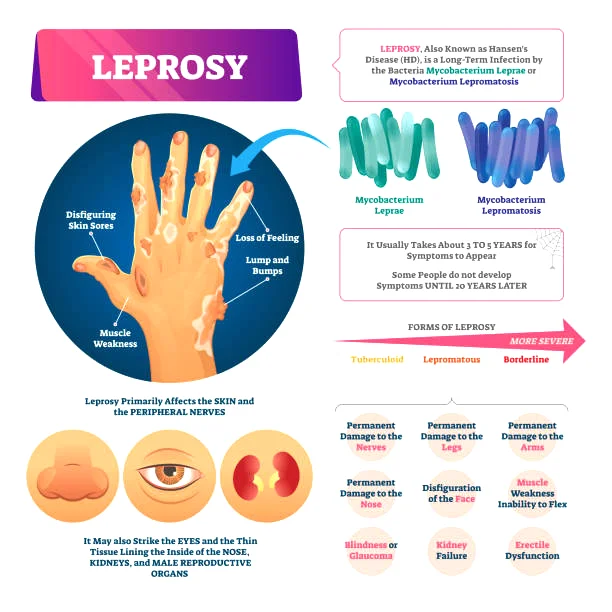
- About: It is a chronic infectious disease caused by Mycobacterium leprae (bacteria), affecting skin and peripheral nerves, transmitted via droplets from untreated cases, and is curable with Multidrug Therapy (MDT) provided free by WHO.
- India attained national leprosy elimination status (prevalence rate <1/10,000) in 2005 and sustained it. As of 2025, PR is 0.57 nationally.
- Key Symptoms: Reddish skin patches with sensory loss, thickened nerves, and resulting numbness that can lead to ulcers, muscle weakness, and paralysis (e.g., claw hand, foot drop).
- Advanced cases may present with facial nodules, nasal bleeding, and deformities such as loss of eyebrows.
- India's Leprosy Elimination Programme Evolution: India transitioned from the National Leprosy Control Programme (NLCP, 1954-55) to the National Leprosy Eradication Programme (NLEP) in 1983, which was pivotal in achieving national elimination in 2005.
- Current Strategy: The National Strategic Plan (NSP) 2023-2027 aligns with the Global Leprosy Strategy 2021-2030 and the WHO Neglected Tropical Diseases Roadmap.
- Its goal is to end leprosy transmission by 2030 and recover from the Covid-19 pandemic, outlining specific interventions and a roadmap to interrupt transmission by 2027.
| Read More: India's Fight Against Leprosy |



