
International Relations
Resetting India-Nepal Cooperation
This editorial is based on “The making of a new political order in Nepal” which was published in The Hindustan Times on 08/03/2026.This editorial examines the shift in India-Nepal relations following the 2026 electoral rise of technocratic leaders and Gen Z influence. It analyzes how modern infrastructure and digital integration must now reconcile with deep-seated frictions like the Agnipath scheme and territorial disputes.
For Prelims:Treaty of Peace and Friendship 1950,Mahakali Treaty,Motihari-Amlekhgunj Pipeline,Agnipath Scheme.
For Mains:Evolution of India-Nepal Relations, Key areas of cooperation, areas of frictions in relations, Measures needed to strengthen ties.
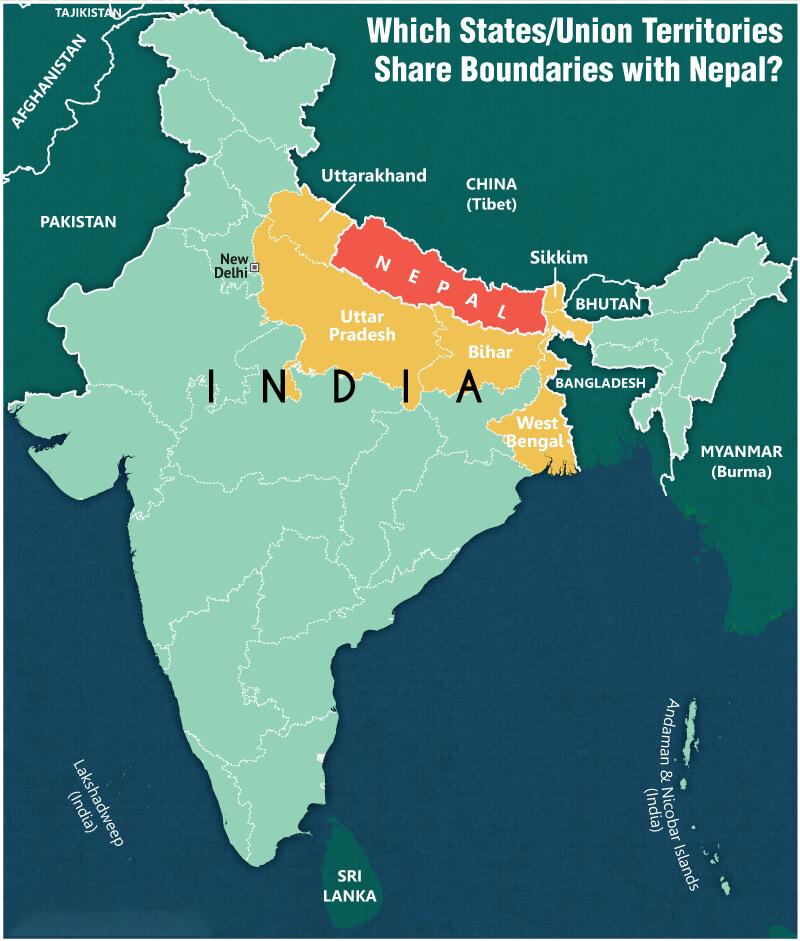
The recent electoral shift in Nepal, signals a changing political landscape in India’s neighbourhood. For India, such transitions highlight the evolving nature of its historically close ties with Nepal, rooted in shared civilisation, an open border, and deep people-to-people linkages. Over time, the relationship has expanded beyond cultural affinity to include strategic, economic, and developmental cooperation. In this context, India–Nepal relations must adapt to new political realities while sustaining their traditional partnership.
How India-Nepal Relations Have Evolved Over the Time ?
- Phase I: The Security Paternalism & Foundational Era (1950–1990)
- The 1950 Treaty Paradigm: The Treaty of Peace and Friendship established an "asymmetric reciprocity," granting Nepal security guarantees and economic access in exchange for alignment with India’s Himalayan security interests.
- Nepal as India’s Strategic Buffer: Following the 1962 Sino-Indian War, India reinforced its view of Nepal as a vital security buffer, particularly because the Himalayas are perceived as India's natural defense line against China.
- Infrastructure of Influence: Early cooperation was dominated by massive projects like the Kosi and Gandak barrages, which, while providing irrigation, also became early sources of "water nationalism" in Nepal.
- The 1989 Rupture: The first major shift occurred when King Birendra’s attempt to procure Chinese arms led to a 15-month economic blockade by India.
- Phase II: Democratic Transition & Post-Monarchy Realignment (1990–2015)
- Supporting Multi-Party Democracy: India moved away from supporting the Monarchy, facilitating the 12-point Agreement (2005) between the Maoists and mainstream parties.
- Shift from 'Twin Pillar' to Republic: India abandoned its "Twin Pillar" policy (Monarchy + Democracy) to support a secular federal republic, marking a departure from historical civilizational ties toward political realism.
- The 2015 Constitutional Crisis: The promulgation of the new Constitution led to a major fallout. India’s perceived support for the Madhesi protests and the subsequent "informal blockade" triggered a surge in Nepali ultra-nationalism.
- Institutionalizing Cooperation: Despite political friction, this era saw the conceptualization of Integrated Check Posts (ICPs) and the Pancheshwar Multipurpose Project, aiming to institutionalize trade.
- Phase III: Geopolitical Diversification & 'Cartographic War' (2015–2024)
- The 'China Card' Sophistication: Under K.P. Sharma Oli, Nepal signed the Transit and Transportation Agreement with China. This strategic move, finalized in 2018, aimed to diversify trade routes, reduce long-term dependence on India.
- Territorial & Cartographic Assertion: The 2020 dispute over the Kalapani-Lipulekh region led to Nepal’s "New Map" amendment, signaling that Nepal would no longer accept the "status quo" in border management.
- From Paternalism to Pragmatism: India pivoted to 'Quiet Diplomacy,' focusing on completing "High Impact Community Development Projects" (HICDPs) to regain "hearts and minds" without direct political interference.
- Connectivity as Diplomacy: The inauguration of South Asia's first cross-border petroleum pipeline (Motihari-Amlekhgunj) signaled a shift toward "hard-wired" interdependence.
- Phase IV: The Pragmatic Turn (2025–Present)
- 2025 Gen Z Uprising: Nepal witnessed a major political upheaval in September 2025, when the government’s ban on key social media platforms triggered widespread youth-led protests, popularly called the “Gen Z movement.”
- The crackdown on demonstrators forced Prime Minister K.P. Sharma Oli to resign.
- The crisis exposed a strategic vacuum for India, which had long relied on elite-level political engagement in Nepal, compelling New Delhi to adopt a cautious “wait-and-watch” approach amid concerns of instability along the open border.
- Nepal’s Electoral Shift and a New Political Order: The March 2026 elections brought a decisive shift in Nepal’s political landscape, with Nepal’s Rastriya Swatantra Party (RSP) securing a historic mandate and ending the dominance of traditional parties.
- Currently, India–Nepal relations are moving toward a more pragmatic and institutional framework, centered on economic cooperation in areas such as hydropower exports, digital connectivity, and fintech integration
- 2025 Gen Z Uprising: Nepal witnessed a major political upheaval in September 2025, when the government’s ban on key social media platforms triggered widespread youth-led protests, popularly called the “Gen Z movement.”
What are the Key Areas of Cooperation Between India and Nepal?
- Hydropower and Energy Integration: India's strategy with Nepal has pivoted decisively toward long-term energy security and economic integration, moving beyond traditional geopolitical balancing.
- By positioning itself as the primary market for Nepal's untapped hydro-potential, India is fostering a "hard-wired" economic dependency that neutralizes Chinese influence while advancing its own green energy transition.
- For instance, the 2024 Long-Term Power Trade Agreement guarantees India will import 10,000 MW from Nepal over 10 years.
- Key projects include the 900 MW Arun-III and the 490 MW Arun-4, significantly boosting Nepal's export revenue.
- Cross-Border Digital Connectivity: The expansion of India's Digital Public Infrastructure (DPI) into Nepal represents a novel dimension of soft-power diplomacy aimed at financial integration and ease of living.
- This seamless cross-border payment ecosystem undermines informal remittance channels (Hundi) and deeply integrates Nepal's consumer market and tourism sector with the Indian economy.
- The historic 2024 linkage of India’s Unified Payments Interface (UPI) with Nepal’s National Payments Interface (NPI) facilitates real-time cross-border transactions for millions of tourists and migrant workers.
- Transport and Transit Infrastructure: To counter China's Belt and Road Initiative (BRI) overtures, India has dramatically scaled up its execution of cross-border hard infrastructure, shifting from "promised" to "delivered" projects.
- This focus on "connectivity as diplomacy" aims to reduce Nepal's transit costs and permanently anchor the landlocked nation's trade routes to Indian ports.
- Recent milestones include the operationalization of the Kurtha-Bijalpura railway line, the construction of Integrated Check Posts (ICPs) at Rupaidiha-Nepalgunj, and the Motihari-Amlekhgunj petroleum pipeline.
- Defense and Security Cooperation: Despite political fluctuations in Kathmandu, the deep-rooted military-to-military relationship remains the strongest anchor of bilateral stability.
- India views the open 1,850 km border as a shared security parameter, requiring intense collaboration to mitigate non-traditional threats like smuggling, fake currency, and transnational terrorism.
- The annual "Surya Kiran" joint military exercise and the tradition of conferring the honorary rank of General to each other's Army Chiefs underscore this bond, alongside continuous equipment and training support.
- Agricultural Innovation and Food Security: Addressing Nepal’s agricultural vulnerabilities is a strategic imperative for India to ensure regional stability and mitigate economic migration.
- By sharing high-yield technologies and establishing joint research initiatives, India leverages its agricultural advancements to support Nepal's food security and modernize its agrarian economy.
- The 2026 Karnataka government pact to establish a "Centre of Excellence in Agri & Allied Innovation" provides a blueprint for subnational diplomacy sharing best practices with Nepal.
- Cultural and Religious Tourism: The shared civilizational heritage, often termed "Roti-Beti" is being strategically monetized through structured tourism circuits.
- This cultural diplomacy not only reinforces people-to-people ties but also generates substantial local employment, capitalizing on the immense religious significance both nations hold for each other's citizens.
- The development of the "Ramayana Circuit" connecting Ayodhya to Janakpur, and the "Buddhist Circuit" linking Lumbini with Sarnath and Bodh Gaya, aims to multiply the current volume of religious tourists.
- Disaster Management and Climate Resilience: Given their shared fragile Himalayan ecosystem, joint disaster response and climate mitigation are no longer optional but existential necessities.
- India’s role as the "first responder" during crises is a critical pillar of its neighborhood policy, building immense goodwill and institutionalizing coordinated responses to floods and earthquakes.
- India's rapid deployment during the 2015 earthquake (Operation Maitri) and ongoing collaboration on flood forecasting mechanisms for the Kosi and Gandak rivers highlight this life-saving cooperation.
- Trade and Economic Partnership: India remains Nepal’s undisputed economic lifeline, providing the vast majority of its foreign direct investment and serving as its primary transit route to global markets.
- India constitutes 65% of Nepalese international trade, including $8 billion of exports from India to Nepal. Also, India and Nepal signed a pact to enhance rail-based freight movement, boosting trade and connectivity between the two nations.
What are the Key Areas of Friction Between India-Nepal Relations?
- Territorial Disputes and Cartographic Assertion: The unresolved boundary dispute over the Kalapani-Lipulekh-Limpiyadhura triad remains the most potent emotional and political flashpoint in bilateral ties.
- Nepal’s 2020 constitutional amendment to include these territories in its official map, followed by the 2025 issuance of currency notes featuring the revised map, has institutionalized a territorial "status quo" that India categorically rejects as lacking historical basis.
- The dispute covers approximately 372 sq km of strategic high-altitude territory, India maintains administration via the Indo-Tibetan Border Police (ITBP) while Nepal’s 2025 banknote provocative move led to a complete freeze in formal boundary talks.
- The Agnipath Scheme and Gorkha Recruitment Halt: The introduction of India’s Agnipath scheme in 2022 has inadvertently paralyzed a century-old military tradition, creating a significant "social security" vacuum in Nepal’s hills.
- Kathmandu argues that the four-year "Agniveer" contract violates the 1947 Tripartite Agreement, which guaranteed permanent service and pensions, leading to a suspension of recruitment rallies from 2022.
- A little over 32,000 Gurkhas are currently serving in the Indian Army. And with gradual retirements of soldiers and no new intakes, estimates are that in about seven years, the strength of Gurkha battalions will be half of what it is today.
- Debate over the 1950 India–Nepal Treaty: The 1950 Treaty is increasingly viewed by Nepal’s younger, nationalist political class as an "unequal colonial relic" that compromises their sovereign autonomy.
- While the Eminent Persons Group (EPG) finalized a report with recommendations for a revision years ago, the refusal of the Indian leadership to formally receive the document has fueled perceptions of New Delhi’s "Big Brother" recalcitrance.
- Nepal seeks to amend key provisions of the treaty, including Article 5 (arms imports), to assert greater autonomy
- Expanding Chinese Strategic Footprint: Nepal’s strategic "diversification" through China’s Belt and Road Initiative (BRI) is perceived by New Delhi as a direct challenge to its traditional sphere of influence in the Himalayas.
- Following the 2025 political turmoil in Nepal, China provided a $4 million grant specifically to support the 2026 general elections.
- This move, along with broader "technical assistance," has been viewed by analysts and Indian officials as a sign of deepening Chinese leverage over Nepal's democratic processes.
- Further, China and Nepal have formalized the Trans-Himalayan Multi-dimensional Connectivity Network under the Belt and Road Initiative (BRI), a development that has generated strategic concerns in India regarding the evolving geopolitical dynamics in the Himalayan region.
- Following the 2025 political turmoil in Nepal, China provided a $4 million grant specifically to support the 2026 general elections.
- Trade Deficit and Economic Asymmetry: Nepal’s massive trade imbalance with India is frequently weaponized by local politicians as evidence of "economic hegemony" and exploitation.
- The concentration of Nepal’s exports in a few volatile commodities like soybean oil makes its economy highly vulnerable to changes in Indian tariff structures, leading to persistent demands for non-reciprocal trade concessions.
- In the first five months of FY 2025/26, Nepal’s trade deficit with India reached Rs 339 billion, leading to a ballooning current account crisis in Kathmandu.
- Water Sharing and the Pancheshwar Deadlock: Despite the signing of the Mahakali Treaty in 1996, the Pancheshwar Multipurpose Project remains stalled due to deep disagreements over "benefit sharing" regarding irrigation and flood control.
- A major sticking point is the "proportional benefit”. Nepal argues that water is a precious resource and India should pay for the "regulated water" benefits (irrigation and flood control) it receives downstream.
- India, meanwhile, focuses on the cost-sharing of electricity.
- A major sticking point is the "proportional benefit”. Nepal argues that water is a precious resource and India should pay for the "regulated water" benefits (irrigation and flood control) it receives downstream.
- Political Volatility Concern in Nepal: Constant shifts in leadership in Nepal forces New Delhi to navigate a maze of changing personal loyalties rather than institutional agreements.
- The fall of the Oli government in 2025 is a prime example that instability leads to a "policy of pauses" where major Indian-backed initiatives decelerate whenever a governing coalition collapses.
- Furthermore, the reliance on elite-level bargaining makes bilateral progress vulnerable to the populist whims of a rotating cast of leaders, often pushing transboundary cooperation to the backburner in favor of domestic political survival.
What Measures are Needed to Strengthen India-Nepal Relations?
- Modernizing Foundational Diplomatic Frameworks: To eliminate psychological friction, India must formally acknowledge and initiate phased deliberations on the Eminent Persons Group (Epg) report.
- Transitioning to constructive engagement regarding the 1950 Treaty Of Peace And Friendship will signal profound respect for Nepal’s Sovereign Equality.
- Modernizing this foundational framework into a reciprocal partnership model neutralizes domestic Ultra-Nationalist Rhetoric in Kathmandu.
- This proactive diplomatic recalibration replaces legacy paternalism with a forward-looking, equitable Security Architecture.
- Transitioning to constructive engagement regarding the 1950 Treaty Of Peace And Friendship will signal profound respect for Nepal’s Sovereign Equality.
- Designing a Strategic 'Gorkha Retention Protocol': New Delhi must urgently design a Gorkha Retention Protocol as a strategic carve-out within the Agnipath Scheme to salvage the century-old military symbiosis.
- Offering guaranteed post-retirement absorption for Nepali Agniveers within Indian Central Armed Police Forces is functionally imperative.
- This bespoke Military Diplomacy prevents a catastrophic socioeconomic vacuum and thwarts the redirection of martial talent to Adversarial Nations.
- Re-establishing this vital employment channel transcends defense cooperation, acting as a foundational pillar of Bilateral Social Security.
- Offering guaranteed post-retirement absorption for Nepali Agniveers within Indian Central Armed Police Forces is functionally imperative.
- Expanding Trans-Himalayan Digital Interoperability: India should aggressively expand its Digital Public Infrastructure (DPI) diplomacy by fostering deep interoperability between Indian and Nepali e-governance registries.
- Establishing a seamless digital corridor drastically reduces bureaucratic friction for migrant workers and cross-border businesses. Co-developing localized tech stacks ensures data security while binding the two economies through invisible, highly efficient digital tethers.
- This technocratic integration neutralizes geopolitical competition by creating an indispensable, user-centric ecosystem that daily benefits ordinary citizens.
- Depoliticizing Territorial Boundary Management: Territorial friction must be systematically decoupled from electoral politics by instituting an insulated, permanent joint technocratic boundary commission.
- Empowering this body with advanced geospatial mapping and binding arbitration protocols transforms emotional cartographic disputes into clinical exercises.
- Transferring discourse from political podiums to closed-door expert negotiations prevents the weaponization of geography for vote-bank consolidation. This institutionalized conflict-resolution mechanism acts as a vital geopolitical shock absorber, ensuring isolated disputes do not paralyze the economic agenda.
- Advancing Green Energy Co-ownership: The energy paradigm must evolve from a simplistic transactional model into a comprehensive green energy co-ownership framework.
- India should incentivize its corporate giants to form equitable joint ventures with Nepali entities, offering them equity stakes and technology transfers.
- Developing a deeply integrated sub-regional energy grid permanently aligns Kathmandu's economic interests with New Delhi's energy security.
- This transformation creates an unbreakable economic interdependence that naturally repels extra-regional strategic encroachment.
- Institutionalizing Sub-National Paradiplomacy: New Delhi must decentralize its neighborhood engagement by empowering bordering states to engage in formalized paradiplomacy with adjacent Nepali provinces.
- Establishing statutory cross-border provincial councils decentralizes the resolution of localized friction points like inundation management and micro-trade blockages.
- This localized diplomatic architecture bypasses bureaucratic bottlenecks, delivering rapid, culturally nuanced borderland governance.
- Facilitating direct dialogues fosters organic, bottom-up economic corridors that reflect the true socio-cultural realities of the Terai region.
- Building Climate-Resilient Ecological Corridors: Future bilateral infrastructure investments must be strictly re-engineered as climate-resilient economic corridors, acknowledging the vulnerabilities of the Himalayan ecosystem. Shifting focus to sustainable, disaster-proof inland waterways and ropeways ensures long-term infrastructure viability.
- India and Nepal must co-establish a himalayan climate mitigation fund dedicated to joint monitoring of glacial lake outburst floods (glof). Embedding environmental sustainability as a core mandate neutralizes domestic ecological backlash and fosters shared stewardship of the himalayan commons.
Conclusion:
The India-Nepal partnership is undergoing a structural transformation from a sentiment-driven "special relationship" to a pragmatic, technocratic alliance. By addressing the Gorkha recruitment deadlock and formalizing the EPG report, New Delhi can neutralize adversarial influences and secure its Himalayan frontier. Ultimately, the transition toward green energy co-ownership and digital integration will ensure that bilateral ties are defined by shared prosperity rather than historical grievances.
|
Drishti Mains Question How do domestic political developments in Nepal influence India–Nepal bilateral relations? Analyse with recent examples. |
FAQs
Q. What is the significance of the 10,000 MW Power Agreement?
It establishes a decade-long framework for Nepal to export surplus hydro-energy to India, fostering deep economic interdependence.
Q. Why is the Agnipath Scheme a point of friction?
Kathmandu argues the 4-year contract violates the 1947 Tripartite Agreement and lacks the long-term pension benefits traditional to Gorkha service.
Q. What is the 'Vishwa Bandhu' framework?
It is Nepal's current foreign policy doctrine emphasizing non-alignment and pro-development engagement with all global powers.
Q. How does UPI-NPI linkage help bilateral ties?
It facilitates instant, low-cost cross-border payments for tourists and migrant workers, integrating the two economies digitally.
Q. What is the 'Cartographic War' mentioned in the text?
It refers to the dispute over Kalapani, Lipulekh, and Limpiyadhura, intensified by Nepal’s 2025 currency notes featuring these territories.
UPSC Civil Services Examination Previous Year Question (PYQ)
Prelims
Q. Consider the following statements: (2020)
- The value of Indo-Sri Lanka trade has consistently increased in the last decade.
- “Textile and textile articles” constitute an important item of trade between India and Bangladesh.
- In the last five years, Nepal has been the largest trading partner of India in South Asia.
Which of the statements given above is/are correct?
(a) 1 and 2 only
(b) 2 only
(c) 3 only
(d) 1, 2 and 3
Ans: (b)
Mains
Q. How far are India’s internal security challenges linked with border management, particularly in view of the long porous borders with most countries of South Asia and Myanmar? (2013)
Q. What is meant by Gujral Doctrine? Does it have any relevance today? Discuss. (2013)



