






.jpg)


.png)

.jpg)

 PCS Parikshan
Uttar Pradesh Switch to Hindi
UP to Build Logistics Hub in Greater Noida
Why in News?
The Uttar Pradesh government has approved the development of the Bodaki Integrated Industrial Township and Logistics Hub in Greater Noida, which is set to become one of the most advanced multimodal logistics centers in North India.
Key Points
- About:
- The project, with an investment of Rs 8,000 crore, will span 800 acres and feature container terminals, warehousing complexes, and multimodal transport infrastructure, all of which will have direct connections to the Dedicated Freight Corridor (DFC).
- It is being developed as part of the Delhi-Mumbai Industrial Corridor (DMIC) and the Integrated Industrial Township (IIT) framework.
- Objectives:
- To improve logistics efficiency and reduce transit times across key regions like Delhi-NCR, western Uttar Pradesh, Haryana, and Rajasthan.
- To support India’s National Logistics Policy (NLP), which aims to reduce logistics costs and streamline freight management.
- Aligns with the Viksit Bharat by 2047 vision and supports India's goal of becoming a seven trillion dollar economy by 2035.
- Additional Infrastructure: In addition to the Bodaki hub, a Rs 1,200 crore logistics park is being developed in Dadri, together positioning Greater Noida as a key logistics and industrial hub in India.
- Impact:
- Job Creation: The logistics hub will generate thousands of direct and indirect jobs and attract global investments in logistics technology and warehousing.
- Industrial Growth: The hub will foster faster cargo movement, supporting industrial growth and improving connectivity to key ports and industrial centers.
Uttar Pradesh Switch to Hindi
UP Introduces Key Business Reforms
Why in News?
The Uttar Pradesh government has approved key decisions to improve the business environment, including an ordinance to decriminalise minor trade offences and the establishment of a Directorate for Environment and Climate Change.
Key Points
- Decriminalisation of Trade Offences:
- The Uttar Pradesh government has passed the Uttar Pradesh Sugamya Vyapar (Ease of Doing Business) Amendment Ordinance, 2025, which decriminalises minor trade-related offences.
- Imprisonment provisions have been replaced with monetary fines and administrative penalties for violations like illegal lockouts, lay-offs, and running unregistered businesses.
- The ordinance amends 13 industrial and trade laws, including the Factory Act, Shop and Commercial Establishment Act, Motor Transport Workers Act, and Contract Labour Act.
- The administrative adjudication process will replace criminal court proceedings, as seen in the Sugarcane Act, 1953 streamlining dispute resolution.
- Provisions allowing for arrest in cases that no longer warrant imprisonment, such as under the Fire Prevention & Emergency Services Act, 2022, have been replaced with administrative penalties.
- This move is expected to reduce regulatory burdens, promote ease of doing business, and improve investor confidence in the state.
- Creation of Directorate for Environment and Climate Change:
- Uttar Pradesh has established a Directorate for Environment and Climate Change, one of the first such bodies at the state level in India.
- The Directorate will focus on environmental conservation, sustainable development, and help the state align with India’s climate commitments under the Paris Agreement and COP28 outcomes.
- This initiative positions Uttar Pradesh as one of the most proactive states in climate governance, aiming to contribute to India’s net-zero emissions target by 2070.
Rajasthan Switch to Hindi
Rajasthan to Launch FCM Pink Drive
Why in News?
The Rajasthan Health Department is set to use Ferric Carboxymaltose (FCM) injection to combat anaemia among pregnant women in the state.
Key Points
- About:
- The Rajasthan Health Department will launch the FCM Pink Drive from 17th November to 30th November 2025, to combat anaemia, a leading cause of maternal deaths.
- The initiative aims to reduce maternal mortality by promoting the use of Ferric Carboxymaltose (FCM) injections, which are effective in treating iron deficiency anaemia.
- FCM injections, such as Orofer FCM, help increase iron levels in the body, boosting red blood cell formation and haemoglobin, essential for oxygen transport, and preventing complications in pregnant women.
- Launch of Digital Tool: Dr Amit Yadav, Mission Director of the National Health Mission, launched the FCM Pink Drive and introduced FCM usage guidelines, a poster, and the digital Garbh Sutra application, which calculates correct dosages for service providers.
- These digital tools are designed to improve capacity building, real-time monitoring, and data-driven decision-making to ensure better service delivery and improve maternal health outcomes.
- Collaboration: In collaboration with development partner Jhpiego, the Health Department also hosted a state-level workshop to train various stakeholders on effective FCM usage for anaemia management in pregnant women.
Anaemia
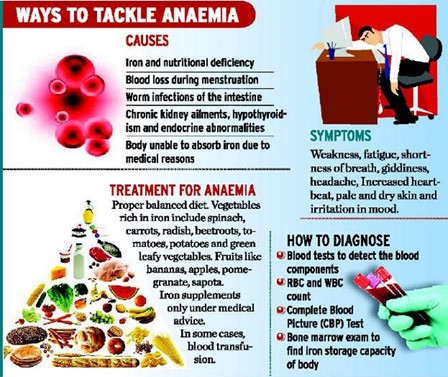
- Anaemia is a condition primarily caused by iron deficiency, leading to low haemoglobin levels and reduced oxygen supply to organs, resulting in fatigue, weakness, and impaired physical and cognitive function.
- According to the World Health Organisation (WHO), women in the reproductive age group and having haemoglobin levels lower than 12 grams per decilitre (g / dL), as well as children under 5 with haemoglobin levels lower than 11.0 g / dL, are considered anaemic.
Rajasthan Switch to Hindi
6 Cities in Rajasthan to Get Smart City Makeover
Why in News?
The Rajasthan government has approved a proposal by Jaipur Smart City Limited (JSCL) to develop six cities across the state as part of the Clean and Green Eco Cities initiative.
Key Points
- About: The project aims to enhance urban infrastructure and promote sustainability, aligning with the state’s Clean and Green Eco Cities initiative.
- The proposal will see the development of Mandawa, Khatu Shyamji, Bhiwadi, Alwar, Bikaner, and Bharatpur as Smart Cities.
- Jaipur Smart City Limited (JSCL) has been designated as the project management consultant for the development of these cities.
- Budget Allocation: In the 2025-26 budget, the Rajasthan government announced the development of over a dozen Clean and Green-Eco Cities over the next three years, with a fund allocation of Rs 900 crore. Among the proposed cities:
- Bikaner and Bharatpur will each receive a budget of Rs 80 crore.
- Mandawa and Khatu Shyamji will each receive Rs 30 crore.
- Bhiwadi and Alwar will be developed with tentative costs of Rs 50 crore and Rs 60 crore, respectively.
Clean and Green Eco Cities Initiative
- It is a major urban sustainability program launched in 2025 as part of the state's first 'Green Budget'.
- This initiative aims to develop 16 selected cities in Rajasthan into model urban centers with integrated environmental, technological, and infrastructural upgrades, focusing on climate resilience, green energy, and improved quality of urban life.
- The initiative is modelled after the national Smart Cities program but centers on eco-friendly expansion, sustainable infrastructure, and climate adaptation.
- A “Greenfield Model” will be used where 3–4 sq km 'lighthouse areas' in each city are developed with high standards for roads, solar energy, and integrated utilities.
Uttar Pradesh Switch to Hindi
UP Government Hikes SAP for Sugarcane
Why in News?
In a significant move aimed at benefiting sugarcane farmers, the Uttar Pradesh government has announced a Rs 30 per quintal increase in the State Advisory Price (SAP) for sugarcane for the 2025-26 crushing season.
Key Points
- About: The SAP for common sugarcane has been increased from Rs 360 to Rs 390 per quintal, while the SAP for early maturing varieties is now Rs 400 per quintal, marking the highest hike of Rs 30 since 2017.
- Impact: The increase in sugarcane prices is expected to result in an additional income of Rs 3,000 crore for around 46 lakh farmers in Uttar Pradesh.
- This will support the state's sugarcane farming community, which has seen the area under sugarcane cultivation grow from 20 lakh hectares to 29.51 lakh hectares.
- Other Measures: The state government has revived closed mills, established new ones, and expanded crushing capacities in existing mills, contributing to a rise in sugar production and ethanol production.
- Compressed biogas (CBG) plants have also been introduced in two sugar mills, promoting alternative energy in the sector.
- Digitisation of processes like acreage registration, calendaring, and slip issuance under the Smart Sugarcane Farmer system has removed intermediaries, benefiting farmers directly.
Sugarcane
- Geographical Conditions:
- Temperature: Between 21-27°C with hot and humid climate.
- Rainfall: Around 75-100 cm.
- Soil Type: Deep rich loamy soil.
- Top Producing States: Uttar Pradesh is the top producer with 122 operational sugar mills, the second highest in India after Maharashtra.
- Fair and Remunerative Price (FRP): FRP is the minimum price sugar mills are mandated to pay farmers for sugarcane.
- It is determined by the Central Government, based on the recommendations of the Commission for Agricultural Costs and Prices (CACP), in consultation with state governments and other stakeholders.
- State Advised Price (SAP): While FRP is set by the central government, state governments can set their own SAP, which sugar mills must pay farmers if higher than the FRP.
Maharashtra Switch to Hindi
Maharashtra to Set up Namo Tourism Centres
Why in News?
The Maharashtra government has approved the establishment of four 'Namo Tourism Information and Facility Centres' at heritage forts to boost regional tourism, with plans to expand to 75 locations in future phases.
- This initiative aligns with the state’s five-year tourism development plan, aiming to enhance Maharashtra’s position as a premier heritage and eco-tourism destination.
Key Points
- About: NaMo Tourism Centres will be established at Pratapgad, Raigad, Shivneri, and Salher forts under the Regional Tourism Development Scheme for 2025-26.
- The Tourism and Cultural Affairs Department has sanctioned Rs 20 crore for the project, of which Rs 5 crore will be released initially to the Directorate of Tourism for implementation.
- The centres will focus on sustainable design, emphasizing water and energy efficiency, while promoting local art, cuisine, and handicrafts to support nearby communities and enrich the cultural experience.
- Facilities: Each Namo centre will serve as a one-stop information and service point, highlighting the site's historical significance and offering essential facilities for visitors, including AI-based support.
- Implementation: The Directorate of Tourism will oversee the design, construction, and monitoring of these centres, which are expected to become key components of Maharashtra’s tourism landscape.
- Renowned contractors will be hired for execution, with strict monitoring and quality control, ensuring project completion within three years, no cost overruns, and high-quality work overseen by architectural experts.


