










.jpg)



.png)

.jpg)

 PCS Parikshan
Madhya Pradesh Switch to Hindi
India’s First Private Railway Station
Why in News?
Rani Kamalapati Railway Station in Bhopal has become India’s first railway station to be redeveloped and operated under the Public-Private Partnership (PPP) model, functioning as the city’s secondary transit hub.
- Located in the West Central Railway Zone, the station was renamed in 2021 after the Gond queen Rani Kamalapati, replacing its former name Habibganj.
Key Points
- The station was redeveloped at a cost of around ₹450 crore under a PPP arrangement between the Indian Railway Stations Development Corporation (IRSDC) and the Bansal Group.
- It features airport-like amenities such as a fully air-conditioned concourse, high-speed escalators, travellators, premium waiting lounges, food courts, and multi-level parking.
- The ownership remains with Indian Railways, while operations, maintenance and commercial management are handled by the private concessionaire.
- The design integrates solar power systems, energy-efficient lighting, and barrier-free facilities for differently-abled passengers.
- The station strengthens Bhopal’s role as a major transit hub and is considered a model for future station redevelopment under the National Station Redevelopment Programme.
Indian Railway Stations Development Corporation (IRSDC)
- It is a special purpose vehicle (SPV) of the Ministry of Railway that has been designed to develop new stations and redevelop existing Indian railway stations.
- It is a joint venture between Indian Railway Construction Company Limited (IRCON) and Rail Land Development Authority (RLDA).
- ISRDC was incorporated under the Companies Act, 1956 on 12th April 2012.
- Its core purpose is to build world-class railway stations that apply state of the art sustainable technologies. The redevelopment effort is being administered as a PPPP project, i.e. a Public Private Partnership People project.
Madhya Pradesh Switch to Hindi
Panna Diamonds Get Geographical Indication (GI) Tag
Why in News?
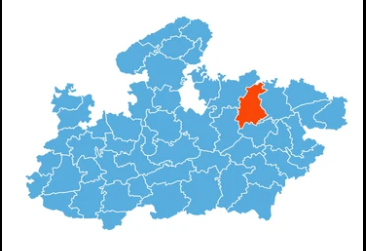
The diamonds mined in Panna district (Madhya Pradesh) have officially been granted a Geographical Indication (GI) tag, giving them a recognised identity and premium value in national and global markets.
Key Points
- About Panna Diamonds:
- Panna is India’s only diamond-producing district, and under this tag the stones will be marketed as “Panna Diamond” in the 14-Natural Goods Category.
- he Majhgawan Mine in Panna, operated by the National Mineral Development Corporation (NMDC), is the only organized, mechanized diamond mine currently operating in India.
- The diamond mining process in Panna involves small leased plots (commonly 8 × 8 metres) where soil is dug, sieved, washed and separated. Diamonds found there are deposited at the District Diamond Office for quarterly auctions.
- With the addition of Panna diamonds, Madhya Pradesh has reached 21 products with GI tags including Chanderi Saree, Ratlami Sev, Gond Painting, and others.
- Panna is India’s only diamond-producing district, and under this tag the stones will be marketed as “Panna Diamond” in the 14-Natural Goods Category.
- About Geographical Indication (GI) Tag:
- The Geographical Indications of Goods (Registration & Protection) Act, 1999 is the Indian law governing GI tags; it came into effect on 15th September 2003.
- A GI tag certifies that a good originates from a specific geographic region, and its quality, reputation or other characteristic is essentially attributable to that location.
- Only authorised users from that region may use the registered GI name, which helps protect the product from international misuse and fake substitutes.
National Mineral Development Corporation (NMDC)
- NMDC is India’s largest iron ore producer and a central public sector enterprise under the Ministry of Steel, established in 1958.
- It is engaged in the exploration, extraction, and production of a wide range of minerals, including iron ore, diamonds, copper, limestone, and dolomite
National Current Affairs Switch to Hindi
Exercise Ajeya Warrior-25
Why in News?
India and the United Kingdom have begun the 8th edition of Exercise Ajeya Warrior-25, a bilateral military training exercise between the Indian Army and the British Army.
Key Points
- About Ajeya Warrior Exercise:
- Ajeya Warrior is a bilateral military exercise between the Indian Army and the British Army, held biennially since 2011.
- It focuses on enhancing interoperability, improving tactical coordination, and sharing best practices in counter-terrorism and peacekeeping operations.
- It is conducted under a United Nations mandate, specifically aligned with Chapter VII of the UN Charter, which deals with peacekeeping duties related to threats to peace, breaches of peace, and counter-terrorism scenarios.
- About the 2025 Edition:
- The 8th edition is being held from 17th to 30th November, 2025, at the Foreign Training Node, Mahajan Field Firing Ranges, Rajasthan.
- A total of 240 personnel are participating, with equal representation from both armies. The Indian Army is represented by the Sikh Regiment.
- Training includes simulation-based scenarios, Brigade-level mission planning, and field exercises resembling real-life counter-terror contingencies.


