


International Relations
India–Bangladesh Ties Under Strategic Recalibration
- 12 Jan 2026
- 24 min read
This editorial is based on “Undermining India, Bangladesh relations” which was published in The Hindustan on 04/01/2026. The article highlights recent strain in India-Bangladesh Relations and how cooperation in water, trade, connectivity, security, and people-to-people exchanges can drive regional stability and shared growth.
For Prelims:Teesta River Dispute,India-Bangladesh Friendship Pipeline,Maitree Setu,
For Mains: India-Bangladesh Relations, Key issues, Measures to address the issue.
India and Bangladesh share deep historical, cultural, and strategic ties rooted in the 1971 Liberation War, with sustained cooperation in trade, connectivity, and security. In recent years, Bangladesh has emerged as one of India’s largest trade partners in South Asia, reflecting expanding economic engagement. However, recent targeted violence against minorities and law-and-order challenges in Bangladesh have drawn public and diplomatic attention, influencing perceptions and people-to-people exchanges. Symbolic disagreements have also emerged in sports diplomacy, such as the January 2026 BCCI directive for an IPL team to release pacer from Bangladesh and Dhaka’s request to the ICC to relocate Bangladesh’s T20 World Cup matches from India.
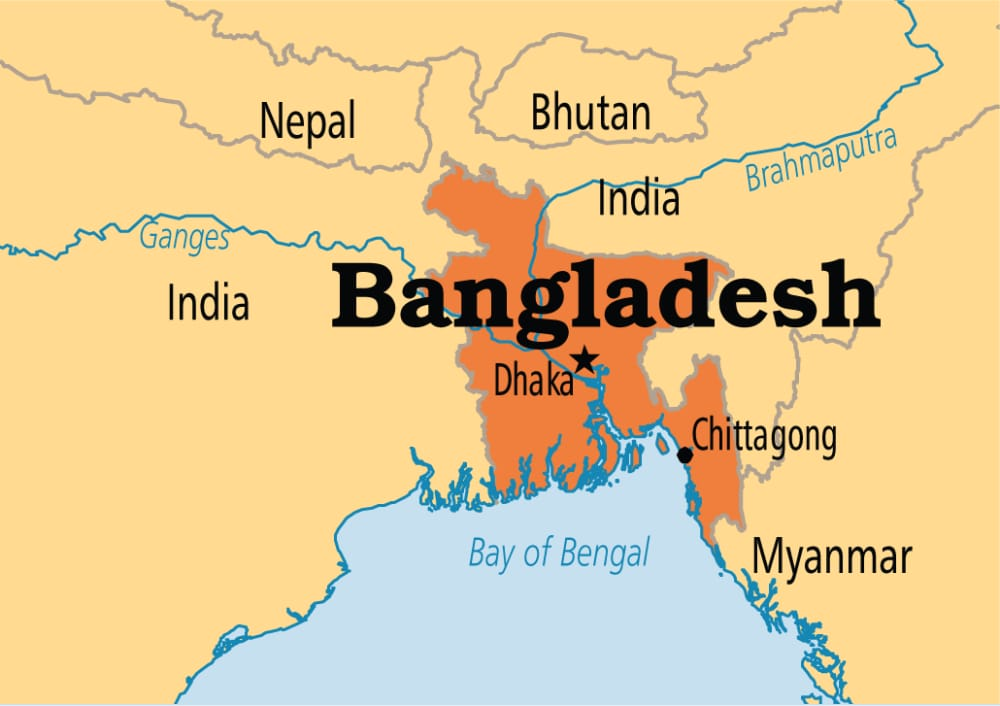
How India-Bangladesh Relations have Evolved Over Time?
- The Foundation and "Mujib-Indira" Era (1971–1975): The relationship began with India’s decisive military and diplomatic support during the 1971 Liberation War, cementing a bond based on shared secular values.
- This period saw the signing of the landmark 1972 Treaty of Friendship and the 1974 Land Boundary Agreement (LBA), establishing the initial legal framework for the new state.
- Moreover, India hosted nearly 10 million refugees, underscoring early people-centric cooperation and a strong civilizational bond with India.
- Strategic Divergence and Military Rule (1975–1996): Following the assassination of Sheikh Mujibur Rahman in 1975, military-led regimes shifted Bangladesh’s foreign policy closer ties with China/Pakistan to counterbalance India.
- This era was marked by the rise of anti-India rhetoric, disputes over the Farakka Barrage, and India’s concerns regarding insurgent groups from the Northeast operating out of Bangladeshi soil.
- Democratic Transition and "Golden Era" (1996–2024): The return of the Awami League, first in 1996 and then consistently from 2009 to 2024, saw the relationship rebranded as a "Shonali Adhyay" (Golden Chapter).
- Landmark achievements included the finalization of the 2015 Land Boundary Agreement (exchange of 162 enclaves) and the 2014 Maritime Boundary settlement via international arbitration, removing decades-old territorial irritants.
- Recent Transition and the 2026 Reset (2024–Present): The ouster of Sheikh Hasina in August 2024 and the rise of an interim government led by Muhammad Yunus have introduced a phase of "pragmatic recalibration."
- It has led to a significant surge in communal instability. India has repeatedly raised alarms over the "recurring pattern" of targeted violence against Hindus, viewing their safety as a non-negotiable metric.
- This friction has turned minority rights into a central diplomatic pivot, with New Delhi demanding swift legal action while Dhaka often attributes the unrest to "political vendettas" or "propaganda" rather than religious persecution.
What are the Key Areas of Convergence Between India and Bangladesh?
- Economic & Trade Deepening: Bilateral trade and development finance remain a central pillar. India–Bangladesh trade has been substantial and continues to be prioritized by both the countries.
- In FY 2023-24, the total bilateral trade is reported to be USD 14.01 billion with India exporting USD 12.05 billion and Bangladesh exporting USD 1.97 billion of goods.
- Further, India has extended multiple LoCs to Bangladesh amounting over USD 7-8 billion in recent years to support roads, railways, ports and other infrastructure, a major instrument of India’s development partnership.
- Connectivity & Transport: India’s effort to strengthen physical connectivity with Bangladesh is clearly visible on the ground, with several projects moving beyond MoUs to construction and operation.
- Cross-border rail links such as Agartala–Akhaura, the use of Chittagong and Mongla ports for Indian cargo, revival of old rail routes like Haldibari–Chilahati and Petrapole–Benapole, expanded inland waterways trade under the Protocol on Inland Water Transit and Trade, and the Maitri Setu over the Feni River (connecting Sabroom in India's Tripura state with Ramgarh in Bangladesh) have together improved connectivity.
- Energy & Resource Cooperation: Energy cooperation has emerged as one of the most successful pillars of India–Bangladesh relations, marked by practical interdependence and operational depth.
- The India–Bangladesh Friendship Pipeline (enables direct supply of diesel and petroleum products, reducing transport costs and ensuring fuel security for northern Bangladesh.
- Bangladesh has committed to importing 180,000 tonnes of diesel from India’s state-owned Numaligarh Refinery Limited (NRL).
- Cross-border electricity trade has expanded steadily, with India exporting power through multiple grid interconnections and facilitating sub-regional power flows, including the recent trilateral arrangement where Nepal supplies hydropower to Bangladesh via Indian transmission networks.
- Long-term cooperation is further reflected in projects such as the Maitree Super Thermal Power Plant, developed with Indian assistance, and enhanced grid links between eastern India and Bangladesh.
- The India–Bangladesh Friendship Pipeline (enables direct supply of diesel and petroleum products, reducing transport costs and ensuring fuel security for northern Bangladesh.
- People-to-People, Culture & Education: Cultural diplomacy and people-to-people initiatives give depth to India–Bangladesh relations beyond official engagements.
- Programmes such as the Indian Council for Cultural Relations (ICCR) scholarships for Bangladeshi students sustain everyday goodwill.
- Exchange programmes between Visva-Bharati University and Bangladeshi institutions, and cross-border travel under liberalised visa regimes (when operational) reinforce shared linguistic and cultural heritage.
- Further, the Indira Gandhi Cultural Centre (IGCC) in Dhaka serves as a vital bridge for people-to-people ties by promoting Indian art, culture, language, and shared heritage through exhibitions, festivals, and educational programmes.
- Medical tourism has become a key driver of people-to-people ties between India and Bangladesh, with thousands of Bangladeshi patients seeking affordable, high-quality treatment in Indian cities each year.
- Security & Defence Cooperation: Security cooperation between India and Bangladesh has evolved into a quiet but effective success story, based on trust and shared interests rather than formal alliances.
- Bangladesh’s historic action against anti-India insurgent groups has greatly improved security and stability in India’s Northeast, aiding development in states like Tripura, Assam, and Mizoram.
- At the operational level, coordinated border management between the Border Security Force and Border Guard Bangladesh, supported by regular DG-level talks, has reduced smuggling, trafficking, and border frictions.
- Defence cooperation has widened through Lines of Credit, training, and equipment support, while joint exercises such as Exercise Sampriti strengthen interoperability, disaster-response capacity, and mutual confidence.
- Political & Diplomatic Engagement: India and Bangladesh continue active high-level diplomacy focused on partnership rather than episodic friction.
- The unveiling of the “Maitri Satellite” cooperation and a shared vision for Green/Digital/Blue economy partnerships shows diplomacy being used to seed sectoral cooperation (space, climate, digital).
- However, recent political and strategic frictions have placed this engagement under strain, underscoring the need for timely recalibration to preserve trust and sustain momentum in the partnership.
- The unveiling of the “Maitri Satellite” cooperation and a shared vision for Green/Digital/Blue economy partnerships shows diplomacy being used to seed sectoral cooperation (space, climate, digital).
What are the Areas of Friction in India-Bangladesh Relations?
- Unresolved River Water-Sharing Disputes: Water sharing remains the most enduring structural irritant in India–Bangladesh relations.
- Despite functional cooperation under the Joint Rivers Commission covering over 50 shared rivers, the Teesta river water-sharing agreement remains unresolved.
- The delay deepens perceptions in Bangladesh of asymmetric benefit-sharing, particularly during the lean season when northern districts face acute irrigation stress, crop losses, and livelihood vulnerability.
- The expiration of the 1996 Ganga Water Sharing Treaty in December 2026 has turned resource management into a ticking time bomb amidst a climate of low diplomatic trust.
- Despite functional cooperation under the Joint Rivers Commission covering over 50 shared rivers, the Teesta river water-sharing agreement remains unresolved.
- Political Sensitivities: Bilateral relations are periodically filtered through domestic political narratives, particularly during election cycles in both countries.
- In Bangladesh, opposition forces at times frame India as an overbearing or asymmetrical partner, using sovereignty and water-sharing issues to mobilise public opinion.
- In India, especially in border states, electoral politics can harden stances on migration, border management, and river-water sharing, limiting diplomatic flexibility at the Union level.
- Also, the presence of former PM Sheikh Hasina in India has become a profound diplomatic irritant, with Dhaka's interim government viewing her "hospitality" as a barrier to domestic justice.
- Border Management Challenges: Although cooperation has improved markedly, the over 4,000 km-long India–Bangladesh border remains complex and porous, continuing to face challenges such as smuggling, human trafficking, cattle trade disputes, and sporadic use-of-force incidents.
- These issues are driven by socio-economic asymmetries, dense cross-border habitation, riverine and unfenced stretches, and the presence of informal border economies.
- Domestic debates in India over the National Register of Citizens (NRC) and the Citizenship Amendment Act (CAA), particularly during the Assam NRC exercise, have generated anxieties about possible displacement of undocumented or irregular migrants.
- Also, recent riots in Bangladesh have compelled India to recalibrate border vigilance and refugee-related responses to balance humanitarian concerns with internal security and social stability.
- The "China-Pakistan" Pivot and Strategic Encirclement: India faces a "strategic vacuum" as the interim government recalibrates its foreign policy toward a "multi-aligned" approach that visibly favors Beijing and Islamabad.
- The potential for Chinese-led infrastructure projects near the Siliguri Corridor ("Chicken’s Neck") and renewed defense talks with Pakistan are viewed by New Delhi as existential threats to its regional hegemony.
- Recently, Bangladesh secured $2.1 billion in new Chinese investments, and reports emerged of talks regarding the purchase of JF-17 Thunder fighter jets from Pakistan, signaling a sharp departure from Indian defense dependency.
- Trade Imbalance & Non-Tariff Barriers: Despite rising bilateral trade, Bangladesh continues to face a large trade deficit with India, sharpening concerns over equitable market access.
- Bangladeshi exporters frequently point to non-tariff barriers such as stringent BIS standards on food and plastic goods, delays due to limited testing and certification facilities at land ports.
- In April 2025, Bangladesh restricted Indian yarn and rice exports via land ports, prompting India to retaliate by banning ready-made garments (RMGs) from Bangladesh through its land ports.
- Delays in Project Implementation: Although India’s Lines of Credit (LoCs) and infrastructure assistance to Bangladesh are extensive, several projects have faced delays due to land acquisition challenges, inter-agency coordination gaps, and procedural bottlenecks on both sides.
- For example, Khulna–Mongla Port railway line has faced delays due to tendering, land acquisition, and approval clearances.
- Soft Power Breakdown: The recent humanitarian crisis in Bangladesh, marked by rising incidents of communal violence, including at least 51 reported cases in December 2025, has contributed to a soft power breakdown.
- People-to-people goodwill has weakened due to rising political mistrust, sporadic violence, and negative domestic narratives in Bangladesh, diluting the cultural, educational, and historical bonds that once underpinned the bilateral relationship.
- It has also impacted Cricket Diplomacy. The BCCI instructed an IPL Team to release pacer from Bangladesh, citing “external developments,” following which the Bangladesh Cricket Board formally approached the ICC seeking relocation of Bangladesh’s T20 World Cup matches from India to Sri Lanka, citing security concerns.
What Measures are Needed to Strengthen India-Bangladesh Relations?
- Calibrated Diplomatic Rebalancing: India should pursue a carefully calibrated diplomatic rebalancing by conveying firm yet discreet signals to Bangladesh to address the ongoing humanitarian and human rights concerns, particularly communal violence, while leveraging dialogue, development cooperation, and people-to-people engagement to gently project normative influence without appearing interventionist.
- India must clearly and consistently counter misinformation and anti-India propaganda in Bangladesh through proactive diplomatic communication, strategic media engagement, while avoiding escalation and reinforcing its image as a reliable and respectful partner.
- Resolving River Water Sharing through Cooperative Federalism: Water cooperation must move from episodic negotiation to institutionalised basin-level management. Early resolution of the Teesta water-sharing agreement through consensus-building with Indian states, especially West Bengal, would significantly strengthen trust.
- Joint hydrological data sharing, real-time flood forecasting, and river rejuvenation projects can convert water from a source of contestation into cooperation.
- Deepening Economic Integration Beyond Trade Volumes: Bilateral economic engagement should evolve from trade expansion to value-chain integration.
- Reducing non-tariff barriers, harmonising standards, and upgrading land ports into Integrated Check Posts (ICPs) will ease cross-border commerce.
- Promoting joint ventures in pharmaceuticals, and agro-processing can help Bangladesh move up the value chain while benefiting Indian manufacturers.
- Accelerating Connectivity & Project Delivery: Connectivity projects must prioritise time-bound execution and outcome monitoring. Strengthening coordination between executing agencies, faster dispute resolution, and capacity support for project management in Bangladesh will enhance credibility.
- Inland waterways, coastal shipping, and multimodal logistics should be scaled to integrate India’s Northeast with Bangladesh and beyond.
- Institutionalising Security & Defence Cooperation: Security cooperation should deepen through intelligence-sharing protocols, coordinated border patrolling, and capacity-building of law enforcement agencies.
- Joint exercises should expand to maritime security, cyber threats, and disaster response. A stronger HADR framework will address common climate and disaster vulnerabilities.
- Managing Migration & Border Issues Humanely: Border management must balance security with humanitarian concerns. Use of technology-based surveillance, non-lethal border management practices, and improved coordination between BSF and BGB can reduce civilian casualties.
- Regular border community interactions can ease tensions and build trust.
- Expanding Energy & Green Cooperation: The future trajectory of India–Bangladesh relations is closely tied to deepening energy interdependence. Expanding cross-border electricity trade, regional power pooling, and reliable gas supply linkages can enhance energy security for both sides.
- Joint cooperation in renewable energy, including solar parks, grid-scale storage, and emerging areas such as green hydrogen and offshore wind in the Bay of Bengal, can align bilateral growth with climate commitments. Such partnerships would not only lower carbon intensity but also position the two countries as key contributors to a regional clean-energy transition in South Asia.
- Enhancing People-to-People & Cultural Exchanges: Deepening people-to-people ties requires simpler and more predictable visa regimes, especially for students, patients, and business travellers.
- Cooperation in medical tourism and healthcare services directly benefits citizens while generating goodwill and service-sector growth. Together with collaboration in skill development and youth exchanges, these initiatives create durable social constituencies that anchor the bilateral relationship beyond politics.
Conclusion:
India–Bangladesh relations should be strengthened by transforming historical goodwill into institutionalised, people-centric cooperation. Addressing issues through dialogue, cooperative federalism, and timely project delivery will deepen trust and credibility. Expanding collaboration in connectivity, energy, security, and climate action can create shared prosperity and regional stability. Ultimately, a mature partnership anchored in mutual sensitivity, strategic autonomy, and societal linkages will define the future trajectory of bilateral ties.
|
Drishti Mains Question Despite strong historical and economic ties, India–Bangladesh relations face several structural challenges. Examine the key impediments and suggest measures to strengthen bilateral cooperation in the changing regional context. |
FAQ
1. Why are India–Bangladesh relations important for India?
They are crucial for regional stability, connectivity to the Northeast, and economic integration in South Asia.
2. What is the biggest unresolved issue in bilateral relations?
The Teesta river water-sharing agreement.
3. How does connectivity benefit both countries?
It reduces logistics costs, boosts trade, and integrates India’s Northeast with Bangladesh.
4. What role does security cooperation play?
It curbs insurgency, improves border stability, and strengthens strategic trust.
5. How can people-to-people ties be strengthened?
Through easier visas, cultural exchanges, education, and medical tourism.
UPSC Civil Services Examination, Previous Year Question (PYQ)
Prelims:
Q. With reference to river Teesta, consider the following statements: (2017)
- The source of river Teesta is the same as that of Brahmaputra but it flows through Sikkim.
- River Rangeet originates in Sikkim and it is a tributary of river Teesta.
- River Teesta flows into Bay of Bengal on the border of India and Bangladesh.
Which of the statements given above is/are correct?
(a) 1 and 3 only
(b) 2 only
(c) 2 and 3 only
(d) 1, 2 and 3
Ans: (b)
Mains
Q. Analyze internal security threats and transborder crimes along Myanmar, Bangladesh and Pakistan borders including Line of Control (LoC). Also discuss the role played by various security forces in this regard. (2018)



