


Rapid Fire
Zehanpora Stupa
- 22 Jan 2026
- 3 min read
Recent archaeological excavations in Zehanpora, Baramulla (North Kashmir), have uncovered a massive, over 2,000-year-old Buddhist stupa dating back to the Kushan-era (1st century CE to the 3rd century CE).
- Archaeological Significance: It is Kashmir's largest known Buddhist site, featuring a 10-acre excavation with a wooden superstructure and undisturbed mounds that offer unique historical insights.
- Link with International Archives: A historic photograph of the site, showing three Buddha stupas, was found in a French museum archive. Possibly captured by British travellers, it indicates the site’s early recognition in colonial-era travel records during the 19th or early 20th century.
- Buddhism in Kashmir: The introduction of Buddhism to Kashmir is traced back to King Ashoka's reign during the Mauryan period. However, Kalhana’s Rajatarangini references King Surendra (first Buddhist king of the region) building monasteries in Kashmir, while other historical records note the region hosted the Buddhist dialogue between the Indo-Greek ruler Menander and the monk Nagasena.
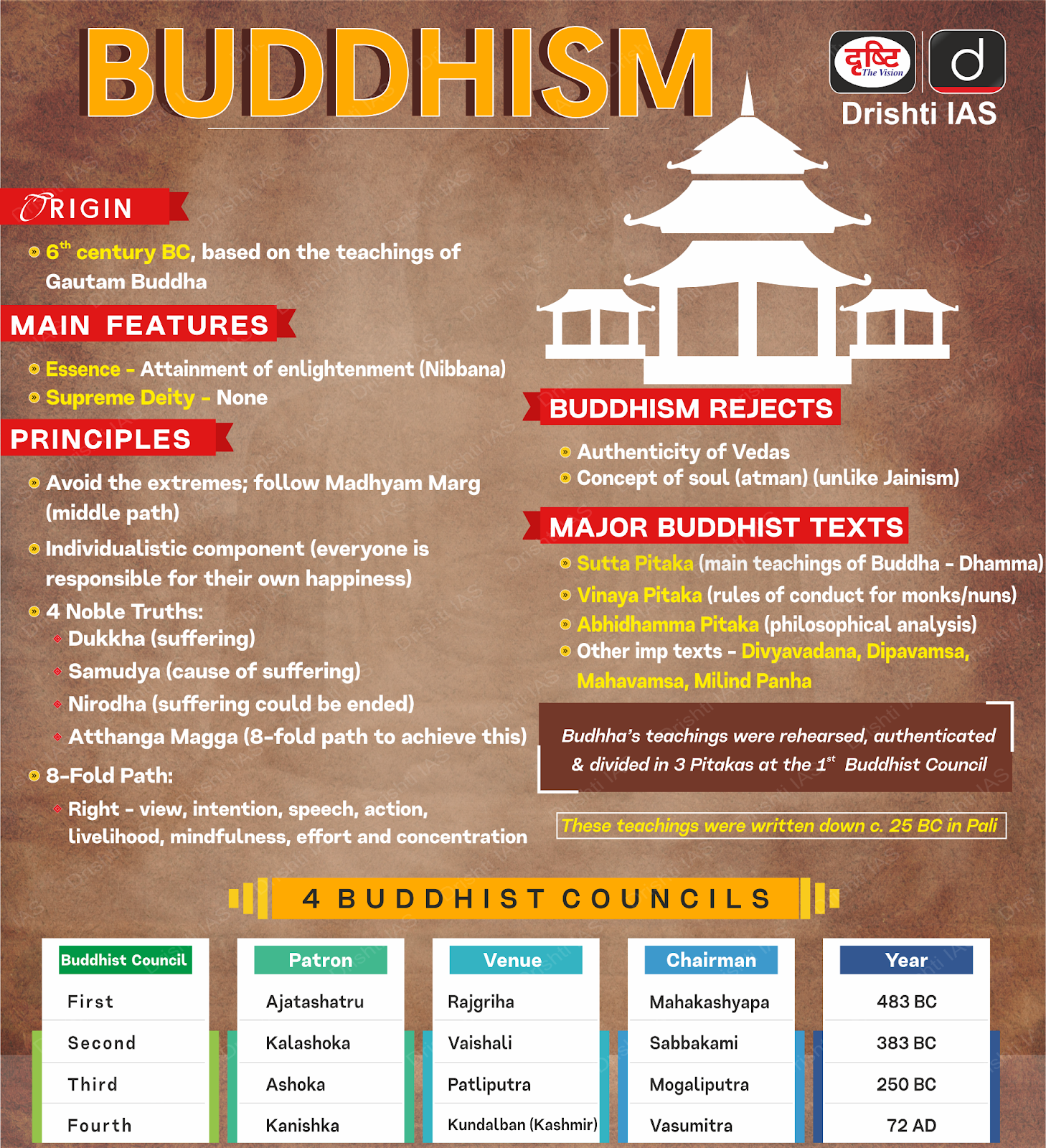
- Later, patronage from Kushan kings like Kanishka supported the rise of Buddhist practices, and Kashmir is considered the region where the Mahayana sect (4th Buddhist Council in Kashmir, around 72 AD) established its roots.
- As per Mahavamsa (Buddhist literary work of Sri Lanka), Ashoka invited Buddhist scholars of Kashmir for the 3rd Buddhist council he convened at Pataliputra around 250 BCE.
- Buddhist Legacy in Kashmir: Numerous archaeological sites across Kashmir reflect strong Buddhist affiliations:
- North Kashmir: Kanispora, Ushkur, Zehanpora, Parihaspora
- Central Kashmir: Harwan Buddhist complex (Srinagar)
- South Kashmir: Semthan, Hutmur, Hoinar, Kutbal.
| Read More: Buddhism in India |



