


Rapid Fire
SC Warns States Over Chambal Sand Mining
- 18 Apr 2026
- 3 min read
Recently, the Supreme Court warned Madhya Pradesh, Rajasthan and Uttar Pradesh to curb illegal sand mining in the National Chambal Gharial Sanctuary, failing which paramilitary forces may be deployed.
- Illegal mining is causing severe habitat degradation, threatening endangered species like the gharial and damaging river ecosystems.
- States have been asked to implement CCTV surveillance, GPS tracking of mining vehicles, joint patrols and strict enforcement measures.
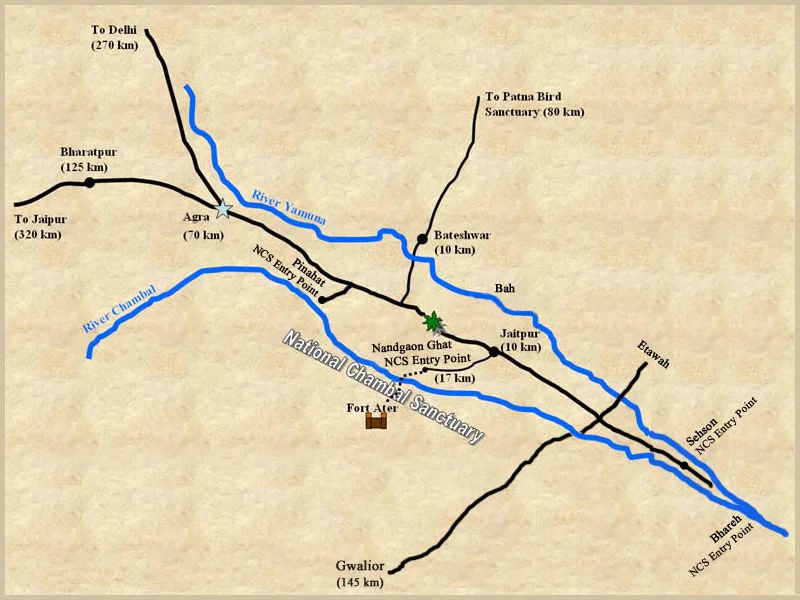
National Chambal Gharial Sanctuary
- About: The National Chambal Sanctuary, also known as the National Chambal Gharial Wildlife Sanctuary, is one of India's most ecologically significant riverine protected areas.
- It is the first and only tri-state protected area (Rajasthan, Madhya Pradesh, and Uttar Pradesh) in the country, spanning approximately 5,400 sq km along a 600 km stretch of the Chambal River (960-km).
- Biodiversity: It harbors nearly 90% of the world's remaining wild Gharial population and a significant number of endangered Ganges River Dolphins. Other key species are Marsh crocodile (mugger), Red-crowned roof turtle, Smooth-coated otter, striped hyena, and over 330 bird species e.g., Indian skimmer.
- It forms part of India's Project Crocodile initiative launched in 1975 to address the severe decline of crocodilian populations.
- Conservation Status: It is recognized as an Important Bird Area (IBA). It is a proposed Ramsar Site, a candidate for UNESCO World Heritage Site status, and classified as an IUCN Category IV protected area (habitat/species management area).
- Ecological Uniqueness: The Chambal River remains one of India's cleanest and most unpolluted rivers, creating a unique lotic ecosystem of deep channels, sandbanks, and ravines (beehad).
| Read more: National Chambal Sanctuary |



