


Important Facts For Prelims
OMO Purchases and Dollar–Rupee Swap
- 27 Dec 2025
- 5 min read
The Reserve Bank of India (RBI) has announced a dual intervention comprising Open Market Operation (OMO) purchases of government securities and a Dollar-Rupee buy/sell swap auction.
Summary
- Open Market Operations are RBI’s buying and selling of government securities to manage liquidity and money supply.
- Buying securities injects liquidity, while selling absorbs it.
- Rupee–dollar swaps involve RBI exchanging dollars and rupees with banks to manage liquidity while also influencing the exchange rate.
- RBI often uses both tools together to balance domestic liquidity, interest rates, and currency stability without relying on a single instrument.
What are Open Market Operations (OMOs)?
- Open Market Operations refer to the buying and selling of government securities by the Reserve Bank of India (RBI) in the open market to regulate liquidity and money supply in the economy.
- Types:
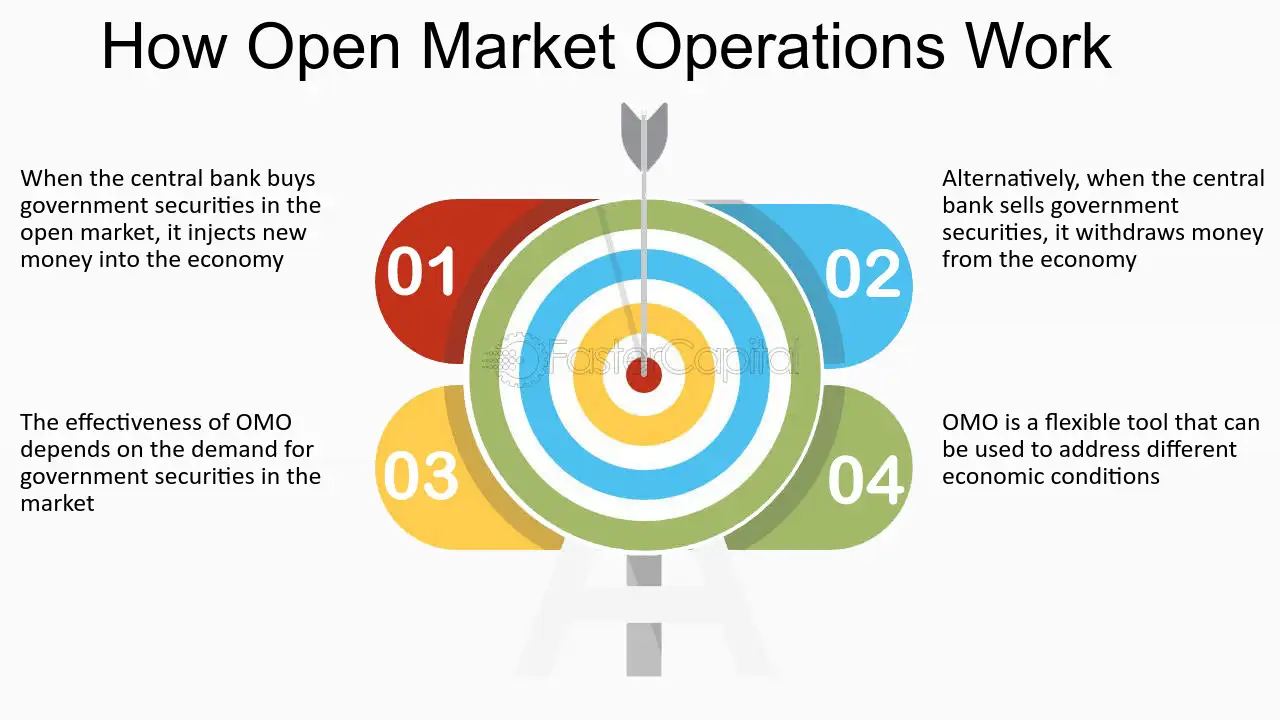
- OMO Purchase: RBI buys G‑secs → injects rupee liquidity (expansionary).
- OMO Sale: RBI sells G‑secs → absorbs rupee liquidity (contractionary).
- Types:
What are Rupee–Dollar Swap Operations?
- A Rupee–Dollar swap is a foreign exchange tool used by the RBI in which it exchanges US dollars for rupees with banks, with an agreement to reverse the transaction at a future date.
- Structure:
- Buy/sell swap: RBI buys dollars now (gives rupees) and agrees to sell the same dollars later → injects rupee liquidity now, withdraws it at maturity.
- Sell/buy swap: RBI sells dollars now (absorbs rupees) and buys them back later → sucks out rupee liquidity now, re‑injects later.
Why RBI uses Both Together?
- The RBI uses both tools simultaneously because they serve different but complementary purposes in managing liquidity, interest rates, and exchange rate stability.
- Short-term vs durable liquidity management: OMO helps RBI fine-tune liquidity permanently, while rupee–dollar swaps provide durable but reversible liquidity for longer periods.
- Separation of objectives: Using swaps allows RBI to inject rupee liquidity without directly altering domestic bond yields, while OMO directly influences the government securities market.
- Managing forex volatility alongside liquidity: Rupee–dollar swaps help stabilise the exchange rate and optimise forex reserves, while OMO focuses purely on domestic monetary conditions.
- Flexibility in monetary policy transmission: Together, they give RBI greater operational flexibility to control liquidity surplus/deficit without overusing a single instrument.
- Objectives: It aims to ease domestic liquidity, manage the inflated dollar rupee forward premium, and support the RBI's foreign exchange reserves, which have been depleted due to its recent market interventions.
- A forward premium means the future exchange rate is higher than the current rate, showing the market expects the rupee to weaken.
- A persistently high forward premium prompts importers to rush for dollars, further pushing up the premium and creating a negative sentiment loop around the rupee.
- Forex Pressure: This action follows substantial dollar sales by the RBI (e.g.,a net USD 11.88 billion in October 2025) to arrest the rupee's fall amid pressure from factors like U.S. tariffs.
| Read More: Open Market Operations by RBI |



