


Place In News
National Chambal Sanctuary
- 16 Mar 2026
- 3 min read
The Supreme Court has taken suo motu cognisance to protect the fragile lotic ecosystem of the National Chambal Sanctuary from rampant and well-organized illegal sand mining by the "sand mafia."
National Chambal Sanctuary
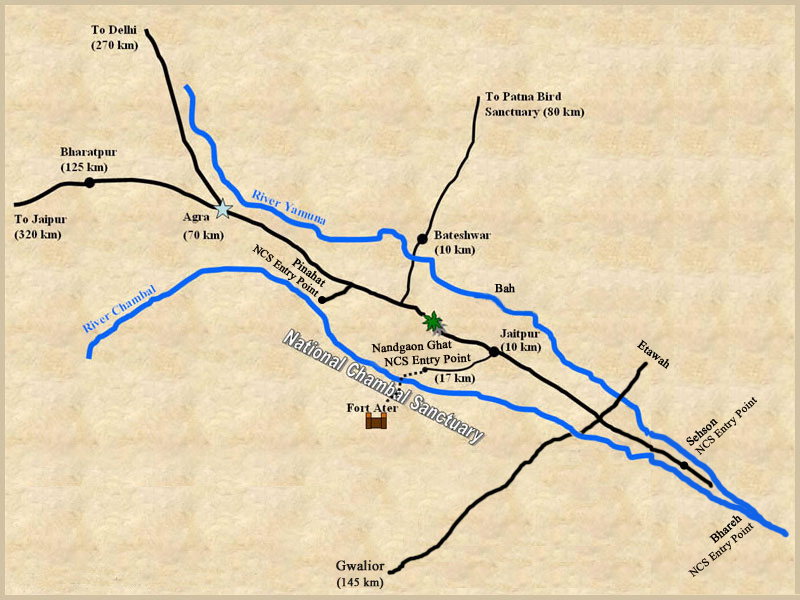
- About: The National Chambal Sanctuary, also known as the National Chambal Gharial Wildlife Sanctuary, is one of India's most ecologically significant riverine protected areas. It is the first and only tri-state protected area (Rajasthan, Madhya Pradesh, and Uttar Pradesh) in the country, spanning approximately 5,400 sq km along a 600 km stretch of the Chambal River (960-km).
- Biodiversity: It harbors nearly 90% of the world's remaining wild Gharial population and a significant number of endangered Ganges River Dolphins. Other key species are Marsh crocodile (mugger), Red-crowned roof turtle, Smooth-coated otter, striped hyena, and over 330 bird species e.g., Indian skimmer.
- It forms part of India's Project Crocodile initiative launched in 1975 to address the severe decline of crocodilian populations.
- Conservation Status: It is recognized as an Important Bird Area (IBA). It is a proposed Ramsar Site, a candidate for UNESCO World Heritage Site status, and classified as an IUCN Category IV protected area (habitat/species management area).
- Ecological Uniqueness: The Chambal River remains one of India's cleanest and most unpolluted rivers, creating a unique lotic ecosystem of deep channels, sandbanks, and ravines (beehad).
- Threats and Challenges: Critical threats include illegal sand mining, which, which degrades nesting grounds for sand-nesting species such as the gharial and certain turtles, alongside water extraction and illegal fishing that diminish both water levels and available prey.
| Read More: Illegal Sand Mining in National Chambal Sanctuary |



