


International Relations
India-Malaysia Relations
- 09 Feb 2026
- 14 min read
For Prelims: India–Malaysia Comprehensive Strategic Partnership, United Nations Peacekeeping Operations, Employees' State Insurance Corporation, International Big Cat Alliance , International Solar Alliance, South China Sea
For Mains: Evolution of India–Malaysia relations from civilisational to strategic partnership, India’s Act East Policy and ASEAN centrality
Why in News?
The Prime Minister of India paid an official visit to Malaysia. The visit reaffirmed and operationalised the India–Malaysia Comprehensive Strategic Partnership (CSP), with wide-ranging agreements covering trade, digital economy, defence, energy, education, health, and regional cooperation, reflecting a clear intent to deepen ties amid shifting regional and global dynamics.
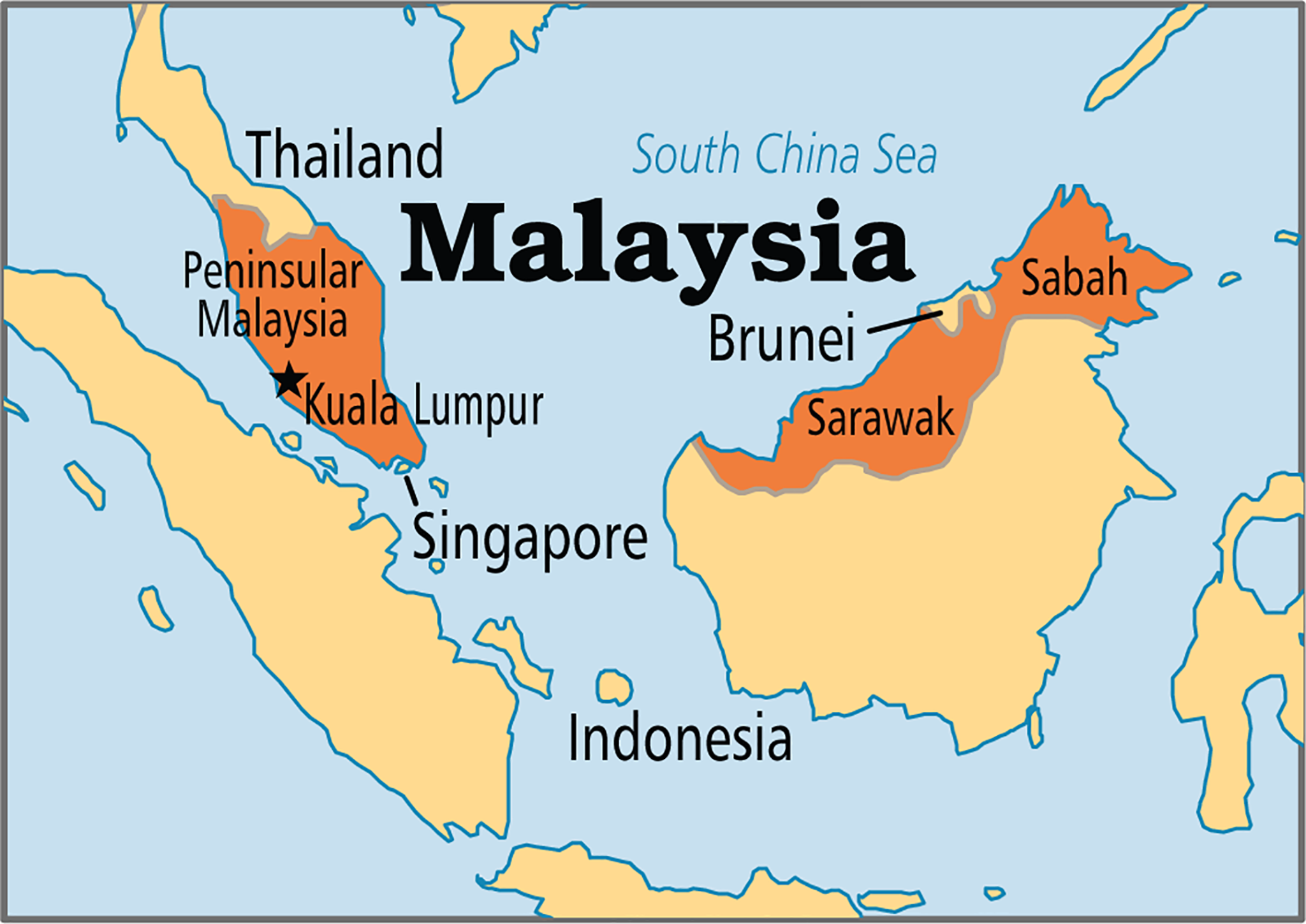
What are the Key Outcomes of the Prime Minister’s Visit to Malaysia?
- Digital & Fintech: The leaders formalised the Malaysia–India Digital Council (MIDC) to drive cooperation in fintech, AI, cybersecurity, e-governance, and Digital Public Infrastructure.
- They also welcomed the NPCI International Limited (NIPL) –PayNet partnership to enable low-cost cross-border digital payments, boosting ease of business and people-to-people ties.Signed an agreement between
- Trade & Finance: Agreed to advance local-currency trade settlement (INR–MYR) through cooperation between the Reserve Bank of India and Bank Negara Malaysia.
- Energy and Semiconductor Cooperation: Agreed to expand cooperation in renewable energy and green hydrogen and to strengthen semiconductor value-chain collaboration focusing on R&D, skills, and supply-chain resilience.
- Public Administration: Signed an MoU on Combating and Preventing Corruption between India’s Central Bureau of Investigation (CBI) and the Malaysian Anti-Corruption Commission (MACC).
- Disaster Management: MoU signed on Disaster Management Cooperation between the National Disaster Management Authorities of India and Malaysia.
- UN Peacekeeping: Renewed cooperation on United Nations Peacekeeping Operations.
- Education and Skill Development: India and Malaysia agreed to expand student and faculty exchanges under Malaysia Technical Cooperation Programme (MTCP) and Indian Technical and Economic Cooperation Programme (ITEC), with India inviting Malaysian students to the Study in India programme.
- They also committed to strengthening Technical and Vocational Education and Training (TVET) cooperation to build a skilled workforce and boost employability aligned with future economic needs.
- Healthcare: Reaffirmed cooperation in healthcare and traditional medicine, including plans to deploy Traditional Indian Medicine experts under the ITEC programme.
- Welcomed the Central Council for Research in Homeopathy, India and the University of Cyberjaya MoU to boost research and training in homeopathy.
- Social Security: Signed an MoU between India’s Employees' State Insurance Corporation (ESIC) and Malaysia’s Social Security Organisation to extend social security coverage to Indian workers in Malaysia.
- Cultural Connect: Welcomed the operationalisation of the Thiruvalluvar Chair and Centre at Universiti Malaya to promote Tamil studies.
- Launched Thiruvalluvar Scholarships for Malaysian nationals, strengthening cultural and academic ties. to promote Tamil studies.
- The leaders acknowledged the popularity of Tamil cinema in Malaysia, with special reference to the legacy of M.G. Ramachandran (MGR)
- Diplomatic Expansion: India announced the decision to open a new Consulate General in Malaysia to boost consular access and trade.
- Global Alliances: Malaysia formally acceded to the International Big Cat Alliance (IBCA), an India-led initiative.
- Malaysia welcomed India’s 2026 BRICS Chairmanship, while India supported Malaysia’s role as a BRICS Partner Country and its membership aspirations, viewing this cooperation as a step toward a more balanced and representative global order.
- Both leaders reaffirmed support for ASEAN unity and centrality, with India appreciating Malaysia’s ASEAN Chairmanship in 2025.
- They also committed to a free, open, and rules-based Indo-Pacific, advancing cooperation between the ASEAN Outlook on the Indo-Pacific (AOIP) and India’s Indo-Pacific Oceans Initiative (IPOI).
- Combating Terrorism: Both leaders reaffirmed zero tolerance for terrorism, including cross-border terrorism, and called for sustained international cooperation to combat it.
- They also welcomed India–Malaysia co-chairmanship of the ASEAN Defence Ministers’ Meeting (ADMM)-Plus Expert Working Group Meeting (EWG) for the 2024-2027 term.
How are India-Malaysia Bilateral Relations?
- Historical Ties: India–Malaysia ties date back over a millennium to the Chola period (9th–13th centuries), when extensive maritime trade linked South India with the Malay Peninsula.
- Under rulers like Rajaraja Chola I and Rajendra Chola I, Chola naval power extended into Southeast Asia, including parts of present-day Malaysia, laying early foundations of sustained India–Southeast Asia interaction.
- Economic Partnership: Malaysia is India’s 3rd largest trading partner in ASEAN. Bilateral trade reached USD 19.86 billion in 2024-25
- Both nations are actively promoting trade settlement in local currencies (INR and Ringgit) to reduce dependency on the US Dollar.
- Economic engagement is guided by the Malaysia-India Comprehensive Economic Cooperation Agreement (MICECA) and the ASEAN-India Trade in Goods Agreement (AITIGA).
- Defence & Security: Joint military exercises include Harimau Shakti (Army) and Samudra Lakshmana (Navy), and Udara Shakti (Air Force).
- Malaysia-India Security Dialogue is a platform to discuss cooperation and mutual assistance on security matters.
- Malaysia is a key potential market for Indian defense platforms, including the Tejas LCA and BrahMos missiles.
- Strategic Convergence: Malaysia is a pillar of India’s Act East Policy and a crucial partner in the Indo-Pacific architecture. Malaysia plays a pivotal role in steering ASEAN-India relations.
- Strengthening ties with key ASEAN nations like Malaysia is crucial for maintaining a Rules-Based Order in the South China Sea.
- Diaspora: Malaysia hosts the world’s second-largest Person of Indian Origin (PIO) community (about 2.7 million), after the US, predominantly originating from Tamil Nadu.
What are the Major Challenges in India-Malaysia Relations?
- Persistent Trade Deficit: In FY 2024-25, while bilateral trade stood at nearly USD 20 billion, it was heavily skewed in Malaysia's favor.
- India primarily imports high-value commodities like palm oil, electronics, and crude oil, while its exports (meat, aluminum, petroleum products) have not kept pace.
- The "Palm Oil" Diplomacy & Volatility: Malaysia is a top supplier of palm oil to India.
- This dependency has previously been weaponized, for instance in 2019-20, political friction led India to restrict Malaysian palm oil imports, impacting trade stability.
- Increasing global scrutiny on sustainable palm oil production (deforestation concerns) adds a layer of complexity to future trade, potentially raising costs for Indian importers.
- Political & Diplomatic Irritants: Past comments by former Malaysian leaders on Article 370 and the Citizenship Amendment Act strained bilateral ties and despite a more constructive stance by the current leadership, sensitivities persist.
- At the UN General Assembly in 2019, Malaysia accused India of "invading and occupying" Kashmir.
- The "China Factor" & Geopolitics: China is Malaysia's largest trading partner and a key investor in its infrastructure (Belt and Road Initiative (BRI) projects like the East Coast Rail Link).
- While both nations support freedom of navigation, Malaysia prefers a quiet, diplomatic approach to Chinese aggression in the South China Sea, whereas India (along with the Quad) advocates for a more assertive stance against Beijing's expansionism.
What Steps can Enhance India-Malaysia Relations?
- Defense as a Pillar: Deepening military-to-military cooperation and becoming a reliable defense exporter to Malaysia can act as a strategic counterweight to China's influence in the region.
- Cultural Soft Power: Leverage the "Shared Affection" for Tamil and the new Thiruvalluvar Centre to strengthen people-to-people connect beyond state-level diplomacy.
- Maritime Domain Awareness (MDA): Given Malaysia’s location along the critical Strait of Malacca (where 60% of India’s trade passes), India should integrate Malaysia into its IFC-IOR (Information Fusion Centre) grid to share real-time intelligence on hostile naval movements.
- Accelerate AITIGA Review: The current trade deficit is a structural irritant. India must push for the swift conclusion of the ASEAN-India Trade in Goods Agreement (AITIGA) review by 2026-27 to correct inverted duty structures that hurt Indian manufacturing.
- Long-term Contracts: Both sides should move towards long-term G2G import contracts for palm oil, ensuring price stability for India and demand security for Malaysia.
Conclusion
The future of India-Malaysia ties lies in moving from a transactional relationship (buying oil) to a strategic one (making chips and jets together), both nations can secure their autonomy in the volatile Indo-Pacific century.
|
Drishti Mains Question: Despite strong civilisational and strategic ties, India–Malaysia relations face structural challenges. Analyse. |
Frequently Asked Questions (FAQs)
1. What is the India–Malaysia Comprehensive Strategic Partnership (CSP)?
It is a high-level bilateral framework upgraded in 2024, covering defence, trade, digital economy, energy, education, and regional cooperation.
2. Why is Malaysia important for India’s Act East Policy?
Malaysia is a key ASEAN partner, strategically located near the Strait of Malacca, and plays a pivotal role in ASEAN–India engagement.
3. What is the significance of the Malaysia–India Digital Council (MIDC)?
MIDC institutionalises cooperation in fintech, AI, cybersecurity, and Digital Public Infrastructure, strengthening economic and people-to-people ties.
4. What are the major economic challenges in India–Malaysia relations?
Persistent trade deficit, over-dependence on palm oil imports, and non-tariff barriers faced by Indian exporters.
5. How does the China factor affect India–Malaysia relations?
Malaysia’s deep economic ties with China and cautious South China Sea posture create strategic divergence with India’s more assertive Indo-Pacific approach.
UPSC Civil Services Examination, Previous Year Questions (PYQs)
Mains
Q. Evaluate the economic and strategic dimensions of India’s Look East Policy in the context of the post-Cold War international scenario. (2016)



