


Rapid Fire
Frontier Nagaland Territorial Authority
- 07 Feb 2026
- 3 min read
The Union Government, Nagaland State Government, and the Eastern Nagaland People’s Organisation (ENPO) have signed a historic tripartite agreement to establish the Frontier Nagaland Territorial Authority (FNTA), aimed at fulfilling the political and developmental aspirations of Eastern Nagaland.
- Peace Efforts: This marks one of 12 important agreements signed in the Northeast since 2019, contributing to a dispute-free region.
- Background and Necessity: ENPO (apex body representing eight recognised Naga tribes of the six eastern districts of Nagaland) had been demanding a separate state since 2010, citing prolonged neglect, lack of development, and socio-economic backwardness compared to the rest of the state.
- Instead of dividing the state, the Centre proposed the FNTA to provide financial autonomy and enhanced decision-making while keeping the geographical integrity of Nagaland intact.
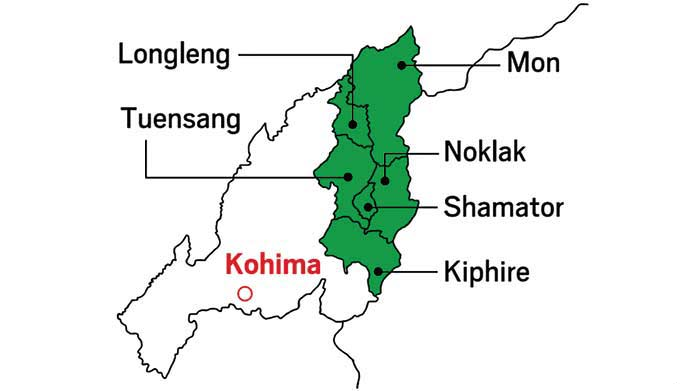
- Territorial Jurisdiction: The FNTA covers six eastern districts of Nagaland (Tuensang, Mon, Kiphire, Longleng, Noklak, Shamator).
- Key Features of FNTA:
- Autonomy: The FNTA has been granted executive and legislative powers over 46 subjects (e.g., land, rural development, agriculture) to manage local affairs independently.
- Administrative Structure: It will have a mini-Secretariat located within the region.
- The administration will be headed by an officer of the rank of Additional Chief Secretary or Principal Secretary.
- Financial Mechanism: Development funds will be allocated proportional to the population and area of the region.
- The MHA will provide the initial establishment expenditure. This ensures that funds meant for the region are not diverted or delayed by the state capital.
- Constitutional Status: The agreement explicitly states that the FNTA does not affect Article 371(A) of the Indian Constitution.
- Article 371(A) gives special protection to Naga religious/social practices, customary law, and land ownership.
- The FNTA operates within this framework, ensuring that the unique cultural rights of the Nagas are preserved.
| Read more: Demand For Frontier Nagaland Territory |



